
深圳数据交易所

Search documents
要素市场化配置改革:加速破壁清障释放发展活力
Zhong Guo Fa Zhan Wang· 2025-07-27 05:47
Group 1: Market Reform and Development - The smooth flow and efficient allocation of factor resources are essential for promoting high-quality development [1] - The reform of data factor marketization is a large-scale systemic project, with significant progress made since the implementation of relevant policies in 2020 [2][4] - The Shenzhen Data Exchange has emerged as a pioneer in the national data trading field, breaking regional barriers and accelerating the realization of data value [3] Group 2: Data Factor Market - The national data market transaction scale is expected to exceed 160 billion yuan in 2024, with a year-on-year growth of over 30% [4] - The establishment of a data factor market is crucial for enhancing the efficiency of factor flow and reducing institutional costs [4] - The Shenzhen Data Exchange has achieved a compound annual growth rate of over 50% in transaction scale since its establishment [3] Group 3: Electricity Market Reform - The unified electricity market in southern China has started trial operations, marking a significant step towards a national unified market [6] - The southern regional electricity market covers over 22,000 registered entities and has a daily trading volume of 3.8 billion kilowatt-hours [6] - The electricity market reform aims to enhance market-driven pricing mechanisms, with market transactions expected to account for 63% of total electricity consumption by 2024 [5] Group 4: Talent and Land Factor Flow - Promoting the rational and orderly flow of talent is a key aspect of factor marketization, with policies encouraging urban talent to return to rural areas [8][9] - The efficient circulation and revitalization of land factors are also essential, with online platforms facilitating the leasing of previously idle projects [9][10] - Recent reforms have led to significant improvements in the flow of labor, land, capital, and technology factors, enhancing the overall market efficiency [10]
不断畅通要素流动“血脉”——加快建设全国统一大市场一线观察之五
Xin Hua Wang· 2025-07-10 16:07
Core Viewpoint - The construction of a unified national market is essential for the smooth flow and efficient allocation of resources, which is a cornerstone for high-quality development [1] Group 1: Policy and Reform Initiatives - The Central Committee and State Council have emphasized the need to promote the free flow of goods and resources across a larger scope, aiming to create a unified market for factors and resources [1] - Various regions are intensifying reforms for market-oriented allocation of factors, continuously improving the institutional framework to enhance the flow of resources [1][3] - A series of reform measures are being implemented to address issues such as rural land utilization, urban settlement policies, and the integration of capital markets for small and medium enterprises [5][9] Group 2: Talent Mobility and Development - The facilitation of talent mobility is a critical aspect of building a resource market, with significant reforms in regions like Shenzhen and Chongqing to attract and retain skilled professionals [2][3] - In Shenzhen, over 12,000 Hong Kong residents have benefited from relaxed employment regulations, enhancing the local talent pool [2] - In Chongqing, reforms have led to the recognition of 645 rural talents with senior titles, addressing talent shortages in public services and engineering [2] Group 3: Market Mechanisms and Efficiency - The establishment of unified trading rules and standards is crucial for breaking down barriers and enhancing the efficiency of resource transactions [6][10] - The electricity market in Shanxi exemplifies the shift towards a competitive pricing mechanism, allowing for real-time price adjustments and promoting the utilization of renewable energy [7] - The data market is projected to exceed 160 billion yuan in transaction volume by 2024, reflecting a 30% year-on-year growth, indicating positive trends in the factor market [6] Group 4: Ecosystem Development and Collaboration - A robust ecosystem is vital for the orderly flow of resources, with initiatives aimed at attracting diverse participants to create complete industrial chains [11] - The Shenzhen Data Exchange has seen a compound annual growth rate of over 50% in transaction volume, indicating a thriving data trading environment [11] - Collaborative efforts across regions, such as the G60 Science and Technology Innovation Corridor, aim to integrate supply chains and enhance innovation ecosystems [12]
★"尖兵"再探路 深圳综合改革试点迎来重磅政策
Zheng Quan Shi Bao· 2025-07-03 01:56
Core Viewpoint - Shenzhen is set to deepen its comprehensive reform pilot program, as highlighted in the recent policy document issued by the central government, which aims to enhance high-quality development and provide replicable experiences for other regions in China [1][2][6]. Group 1: Reform Acceleration - The new policy document represents a "second acceleration" of Shenzhen's comprehensive reform pilot, building on the achievements of the previous five years [2][3]. - Shenzhen has implemented 48 reform measures that have been promoted by the National Development and Reform Commission, showcasing its role as a model for reform [2][3]. Group 2: Key Areas of Focus - The document emphasizes four key areas: integrated reform of education, technology, and talent systems; empowering the real economy through finance, technology, and data; establishing a higher-level open economy; and improving governance models [3][5]. - The first focus area highlights the need for efficient collaboration between education, technology, and talent, aiming to create a comprehensive mechanism for talent cultivation, technological research, and industrial transformation [3][4]. Group 3: Financial and Economic Empowerment - Specific measures include enhancing financial services for the real economy, innovating support mechanisms for emerging industries, and deepening market-oriented reforms for data elements [5][6]. - The document aims to optimize trade and improve the facilitation of personnel movement, reflecting Shenzhen's strategic focus on adapting to new foreign trade conditions [6][7]. Group 4: Contribution to National Strategy - The policy aims to create more replicable and scalable experiences that can contribute to the construction of a modern socialist country and enhance Shenzhen's role in the Guangdong-Hong Kong-Macao Greater Bay Area [6][7]. - The document also indicates a shift towards deeper integration of financial markets, allowing companies listed on the Hong Kong Stock Exchange to also list on the Shenzhen Stock Exchange, which could enhance capital market connectivity [7].
深圳数据交易所发力“医数融合” 赋能药械高质量发展
Zheng Quan Shi Bao Wang· 2025-06-25 03:09
Group 1 - The AI-enabled Shenzhen Pharmaceutical and Medical Device Industry High-Quality Development Conference successfully took place, focusing on how data and algorithms can assist in drug and medical device research, precision medicine, and health management [1] - The conference marked the launch of the "Clinical Empowerment for Ten Million Population Scenarios" platform, establishing Shenzhen as a leader in creating an AI medical application ecosystem covering a super-large city population [1] - The platform aims to enhance the efficient collaboration of medical resources and accelerate the application of AI drug and medical device technologies from laboratories to real-life scenarios [1] Group 2 - The Shenzhen Data Exchange's establishment is a key initiative for implementing the Shenzhen Comprehensive Reform Pilot Plan (2020-2025), focusing on data empowerment for high-quality economic development [2] - The Shenzhen Data Exchange has created a full-process service system for data rights confirmation, pricing, trading, usage, and regulation, aiming to explore market-oriented data element allocation paths [2] - Five high-quality medical data products were listed at the event, focusing on public health, chronic disease management, vaccination, and treatment behaviors, providing a solid data foundation for AI drug and medical device companies [2] Group 3 - Huasheng Medical, the first certified data vendor in the medical device sector at the Shenzhen Data Exchange, has launched both data set and data tool assets, creating a complete value chain from "data raw materials" to "intelligent tools" [3] - The company aims to collaborate with China Unicom, Shenzhen Data Exchange, and hospitals to enhance hardware and data training, providing more intelligent devices [3]
数据资产化赋能新篇:深汕企业共探转型新路径
Sou Hu Cai Jing· 2025-06-21 14:00
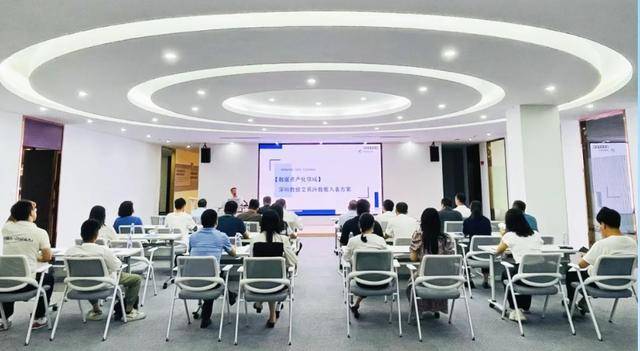
Group 1 - The event on "data assetization" was successfully held, enhancing the understanding of data assets among over twenty participating companies in the Shenzhen-Shanwei Special Cooperation Zone [1] - The expert emphasized that we are in an era of explosive data growth, where data is recognized as the fifth key production factor alongside land, labor, capital, and technology [3] - The cultivation of a data factor market and acceleration of data value transformation are crucial for the high-quality development of the digital economy [3] Group 2 - The expert addressed the practical challenges companies face in the process of data asset recognition and accounting, providing insights into relevant policies and compliance points [3] - A standardized solution for data asset recognition was introduced, showcasing how to transform data resources into measurable, tradable, and financeable assets [3] - The event facilitated discussions on data governance, rights assessment, cost aggregation, and practical implementation, with particular concerns raised by representatives from the water, electricity, and gas supply sectors [4]

“数据”改革 深圳的这个“试验”将影响数字经济与AI产业
2 1 Shi Ji Jing Ji Bao Dao· 2025-06-11 04:17
Core Insights - The central viewpoint of the news is the issuance of the "Opinions" by the Central Committee and the State Council, which aims to deepen the reform and innovation of the data factor market in Shenzhen, promoting its role in the digital economy and enhancing data circulation mechanisms [1][2]. Group 1: Data Factor Market Development - The data factor market in China is projected to grow at a compound annual growth rate of over 20%, reaching 904 billion yuan in 2022 and expected to exceed 1,749 billion yuan by 2025 [1]. - The "Opinions" emphasize the need for market-oriented reforms in data factor allocation, supporting Shenzhen in exploring data trading, trusted circulation, and revenue distribution mechanisms [1][3]. - The establishment of a market-oriented mechanism for data factor allocation is crucial for the development of the digital economy, artificial intelligence, and digital transformation [1][4]. Group 2: Public Data Open Access - The "Opinions" propose a gradual and lawful classification and opening of public data in sectors such as transportation, geography, satellite remote sensing, meteorology, and healthcare, while ensuring safety [5][6]. - The introduction of market operators in public data access is suggested to enhance the marketization of public data, linking government data with market demand [4][6]. - The need for a sustainable mechanism for public data usage is highlighted, advocating for transparency and fairness in the public data ecosystem [6]. Group 3: Cross-Border Data Flow - Shenzhen's geographical proximity to Hong Kong and Macau creates a significant demand for cross-border data flow, which is essential for multinational enterprises [7]. - The "Opinions" call for improved data security governance and the exploration of efficient and safe cross-border data flow mechanisms [7]. - Shenzhen Data Exchange has initiated a cross-border data trading zone, offering over 200 cross-border data products to support the global expansion of enterprises in the Greater Bay Area [7].
华大基因重磅发布!
Zhong Guo Ji Jin Bao· 2025-06-11 03:04
Core Viewpoint - BGI Genomics has officially established a strategic partnership with the Shenzhen Data Exchange, launching its first comprehensive tumor database, marking a significant step towards transforming into a data-driven intelligent medical ecosystem [2][9]. Group 1: Strategic Cooperation - The partnership aims to deepen collaboration in key areas such as data product innovation, industry data standard construction, data compliance and security, financialization of data assets, and data space development [2]. - BGI Genomics is transitioning from a traditional genetic testing service provider to a data-driven intelligent medical ecosystem, leveraging its proprietary platform and technological advantages to build a comprehensive database reflecting the genetic characteristics of the Chinese population [9][11]. - The cooperation is seen as a critical move to construct an autonomous data ecosystem and implement the national strategy of "data elements × healthcare" [9]. Group 2: Industry Context - The global precision medicine market is experiencing rapid growth, and China's data element market reform is making significant breakthroughs, with Shenzhen leading the way by establishing a data exchange and regulatory framework for compliant data circulation [4][5]. - The collaboration is positioned as a key starting point for the value development of genetic data, aiming to explore innovative paths for compliant development and application of genetic data [11]. - The initiative addresses critical industry challenges such as data security, privacy protection, and complex regulatory compliance, providing a systematic framework to enhance overall governance in the sector [13]. Group 3: Product Launch - BGI Genomics has launched a gene data product, the comprehensive tumor database, which integrates authoritative global genetic variation and treatment data while focusing on clinical guidelines and practice data unique to China [13]. - This product aims to provide high-value data services for precision medicine research and alleviate challenges associated with reliance on international databases [13].

重磅解读!“尖兵”再探路,深圳综改试点政策信息量满满
证券时报· 2025-06-11 00:05
Core Viewpoint - Shenzhen is positioned as a "vanguard" in the comprehensive reform pilot, receiving new policy empowerment from the central government to further deepen reforms and promote modernization in China [1][4]. Group 1: Reform Background - The issuance of the "Opinions" on June 10 marks a significant policy boost for Shenzhen, reflecting the central government's expectations for this reform pilot area [1]. - Since the implementation of the comprehensive reform pilot in 2020, Shenzhen has made substantial progress in various key reform measures, with 48 experiences promoted by the National Development and Reform Commission [3][4]. Group 2: Significance of the New Opinions - The new "Opinions" serve as a "second acceleration" for Shenzhen's reform efforts, affirming past achievements and outlining future measures [4]. - The "Opinions" are seen as an upgraded version of the previous framework, aiming to enhance Shenzhen's role in national strategies and provide replicable experiences for other regions [4][10]. Group 3: Key Areas of Focus - The "Opinions" emphasize four main areas: integrated reform of education, technology, and talent systems; empowering the real economy through finance, technology, and data; establishing a higher-level open economy; and improving governance models [6]. - The first focus area highlights the need for efficient collaboration between education, technology, and talent, aiming to create a comprehensive mechanism for talent cultivation, technological research, and industrial transformation [6]. Group 4: Financial and Data Empowerment - Specific measures include enhancing financial services for the real economy, innovating support mechanisms for emerging industries, and deepening market-oriented reforms for data elements [7][8]. - Shenzhen is recognized as a "testbed" for data market reforms, having established comprehensive management and regulatory frameworks to support data trading [8]. Group 5: Open Economy Initiatives - The "Opinions" outline initiatives to optimize trade, enhance service trade, and facilitate personnel movement, reflecting Shenzhen's proactive approach to new trade dynamics [8][10]. - The document encourages the integration of international high-standard trade rules, positioning Shenzhen as a pioneer in national high-level opening-up [10]. Group 6: Contribution to National Development - The "Opinions" aim to create more replicable and scalable experiences for national reform, enhancing Shenzhen's role as a key engine in the Guangdong-Hong Kong-Macao Greater Bay Area [10][11]. - The focus on financial collaboration within the Greater Bay Area is expected to strengthen regional financial integration and support the broader capital market reforms in China [11].

“尖兵”再探路 深圳综合改革试点迎来重磅政策
Zheng Quan Shi Bao· 2025-06-10 19:20
Core Viewpoint - The issuance of the "Opinions" by the Central Committee and the State Council marks a significant policy empowerment for Shenzhen, reinforcing its role as a "reform pilot" and providing a clearer path for high-quality development and reform innovation [1][2] Group 1: Reform Acceleration - Shenzhen's comprehensive reform pilot program, initiated in 2020, has seen significant advancements, with 48 experiences promoted by the National Development and Reform Commission [2][3] - The latest "Opinions" serve as a "second acceleration" for Shenzhen's reform efforts, emphasizing the ongoing nature of reform [2][3] Group 2: Key Areas of Focus - The "Opinions" prioritize four key areas: integrated reform of education, technology, and talent systems; empowering the real economy through finance, technology, and data; establishing a higher-level open economic system; and enhancing governance models [4][5] - The emphasis on integrating education, technology, and talent reflects a systematic approach to fostering innovation and economic development [4] Group 3: Financial and Data Empowerment - Specific measures include improving financial services for the real economy, innovating support mechanisms for emerging industries, and deepening market-oriented reforms for data elements [5][6] - Shenzhen's data trading platform has established comprehensive management and regulatory frameworks to support data market transactions, positioning it as a national pilot for data element marketization [5] Group 4: Open Economic System - The "Opinions" outline initiatives to optimize trade, enhance service trade, and facilitate personnel movement, aiming to position Shenzhen as a leader in high-level openness [6][7] - The focus on aligning with international trade rules indicates Shenzhen's strategic role in national economic integration [6] Group 5: Contribution to National Development - The "Opinions" aim to create replicable and scalable experiences that can contribute to the broader national strategy of modernization and reform [7][8] - The inclusion of measures for cross-border financial cooperation and dual listings for companies in the Greater Bay Area signifies a move towards deeper financial integration [8]

广州数据交易所(汕尾)服务基地揭牌
Nan Fang Ri Bao Wang Luo Ban· 2025-05-12 07:58
5月9日,广州数据交易所(汕尾)服务基地(下称"汕尾服务基地")正式揭牌运营,标志着全省一体化 数据要素市场进一步发展壮大。 这为数据要素市场的蓬勃发展提供了重要平台,也是汕尾主动融入数字经济发展浪潮、对接粤港澳大湾 区数据产业协同布局的重要举措。近年来,汕尾创新构建"政府引导+市场运作"模式,推动广州、深圳 数据交易所在汕尾设立服务基地,成为粤东西北唯一拥有2家数据交易所服务基地的地市。 深圳数据交易所汕尾数据要素服务工作站于2024年8月揭牌成立,是深圳数据交易所在粤东地区设立的 首个数据要素服务工作站。汕尾服务基地是广州数据交易所在粤东片区设立的首个数据服务基地,于去 年11月成立,5月9日正式挂牌。 汕尾服务基地构建了"3+8+N"数据服务体系,将围绕汕尾市重点发展规划,聚焦文旅康养、海洋牧场、 数字经济、新能源、数字金融、数字农业等领域精耕细作,不断创新数据要素服务领域的新产品、新业 态。该基地依托自主研发的从数据采集到应用全链条的一站式服务平台,实现数据"通、治、管、用、 营、安"全生命周期管理,挖掘和孵化特色数据产品。同时,其为市场主体提供基础配套、会员管理、 数据资产合规登记指引等三大基础服务 ...