
Azure

Search documents
这些芯片,爆火
半导体芯闻· 2025-08-18 10:48
Core Insights - Data centers are becoming the core engine driving global economic and social development, marking a new era in the semiconductor industry driven by AI, cloud computing, and large-scale infrastructure [1] - The demand for semiconductors in data centers is evolving from simple processors and memory to a complex ecosystem encompassing computing, storage, interconnect, and power supply [1] AI Surge: Arms Race in Data Centers - The explosion of artificial intelligence, particularly generative AI, is the most powerful catalyst for this transformation, with AI-related capital expenditures surpassing non-AI spending, accounting for nearly 75% of data center investments [3] - By 2025, AI-related investments are expected to exceed $450 billion, with AI servers rapidly increasing from a few percent of total computing servers in 2020 to over 10% by 2024 [3] - The global semiconductor market for data centers is projected to reach $493 billion by 2030, with data center semiconductors expected to account for over 50% of the total semiconductor market [3] GPU and ASIC Race - GPUs will continue to dominate due to the complexity and processing demands of AI workloads, with NVIDIA transforming from a traditional chip designer to a full-stack AI and data center solution provider [5] - Major cloud service providers are developing their own AI acceleration chips to compete with NVIDIA, intensifying competition in the AI chip sector [5] HBM Market Growth - The HBM market is experiencing explosive growth, expected to reach $3.816 billion by 2025, with a CAGR of 68.2% from 2025 to 2033 [6] - Key trends in the HBM market include increased bandwidth and capacity, energy efficiency, integration with AI accelerators, and the rise of standardized interfaces [6] Disruptive Technologies - Silicon photonics and co-packaged optics (CPO) are redefining data center performance and efficiency, with industry giants actively investing in this area [8] - The introduction of TFLN modulators is enhancing optical communication capabilities within data centers [9] Next-Generation Data Center Design - The shift to direct current (DC) power supply is becoming essential due to the rising power density demands of AI workloads, with modern AI racks requiring up to 600 kW [11] - Wide bandgap (WBG) semiconductor materials like GaN and SiC are crucial for high-frequency, high-voltage power conversion systems [12] - Liquid cooling technology is projected to grow at a CAGR of 14%, expected to exceed $61 billion by 2029, addressing the cooling challenges posed by high-density AI workloads [12] Advanced Thermal Management - Advanced cooling solutions, including direct chip liquid cooling and immersion cooling, are becoming necessary as traditional air cooling methods are insufficient for high-density AI workloads [13][14] - The industry is at a "thermal tipping point," necessitating fundamental adjustments in data center design to accommodate liquid cooling requirements [15] Future Outlook - The future of data centers will be characterized by increased heterogeneity, specialization, and energy efficiency, with a focus on advanced packaging technologies and comprehensive sensor systems [15]


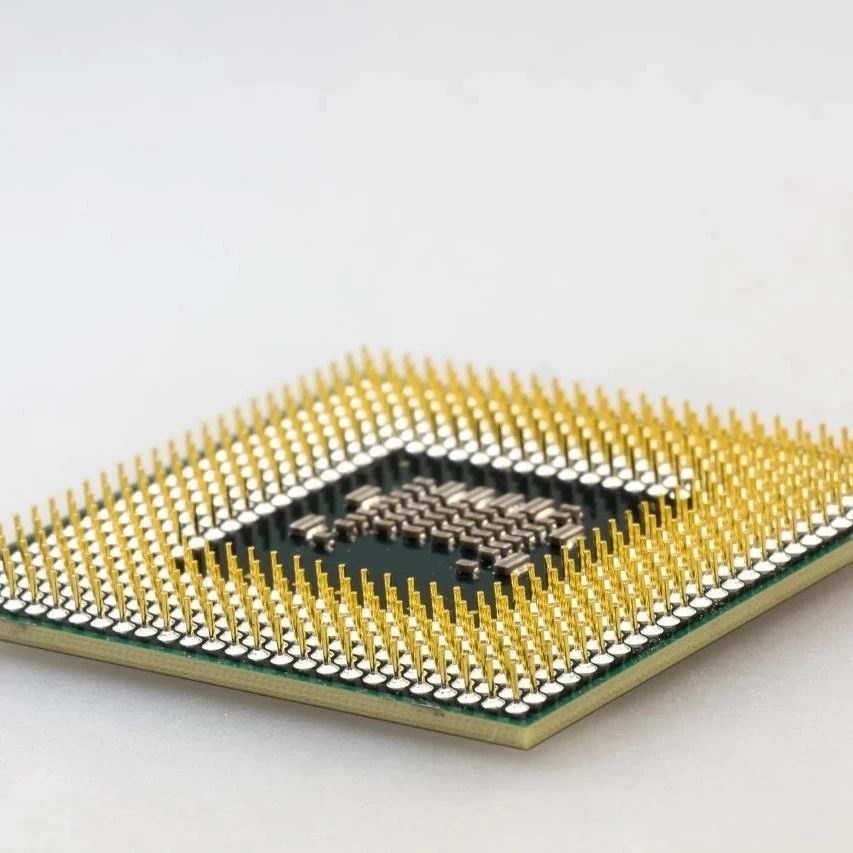
这些芯片,爆火
半导体行业观察· 2025-08-17 03:40
Core Insights - Data centers are becoming the core engine driving global economic and social development, marking a new era for the semiconductor industry, driven by AI, cloud computing, and large-scale infrastructure [2] - The demand for chips in data centers is evolving from simple processors and memory to a complex ecosystem encompassing computing, storage, interconnect, and power supply [2] AI Surge: The Arms Race in Data Centers - The explosion of artificial intelligence, particularly generative AI, is the strongest catalyst for this transformation, with AI-related capital expenditures surpassing non-AI spending, accounting for nearly 75% of data center investments [4] - By 2025, AI-related investments are expected to exceed $450 billion, with AI servers rapidly increasing from a few percent of total computing servers in 2020 to over 10% by 2024 [4] - Major tech giants are engaged in a fierce "computing power arms race," with companies like Microsoft, Google, and Meta investing hundreds of billions annually [4] - The data center semiconductor market is projected to expand significantly, reaching $493 billion by 2030, with data center semiconductors expected to account for over 50% of the total semiconductor market [4] Chip Dynamics: GPU and ASIC Race - GPUs will continue to dominate due to the increasing complexity and processing demands of AI workloads, with NVIDIA transforming from a traditional chip designer to a full-stack AI and data center solution provider [7] - Major cloud service providers are developing their own AI acceleration chips to compete with NVIDIA, intensifying competition in the AI chip sector [7] - High Bandwidth Memory (HBM) is becoming essential for AI and high-performance computing servers, with the HBM market expected to reach $3.816 billion by 2025, growing at a CAGR of 68.2% from 2025 to 2033 [8] Disruptive Technologies: Redefining Data Center Performance - Silicon photonics and Co-Packaged Optics (CPO) are key technologies addressing high-speed, low-power interconnect challenges in data centers [10] - The adoption of advanced packaging technologies, such as 3D stacking and chiplets, allows semiconductor manufacturers to create more powerful and flexible heterogeneous computing platforms [12] - The shift to direct current (DC) power supply is becoming essential due to the rising power density demands of modern AI workloads, with power requirements for AI racks expected to reach 50 kW by 2027 [13] Cooling Solutions: Liquid Cooling Technology - Liquid cooling technology is becoming a necessity for modern data centers, with the market projected to grow at a CAGR of 14%, exceeding $61 billion by 2029 [14] - Various types of liquid cooling methods, including Direct Chip Liquid Cooling (DTC) and immersion cooling, are being adopted to manage the heat generated by high-performance AI chips [15] - Advanced thermal management strategies, including software-driven dynamic thermal management and AI model optimization, are crucial for maximizing future data center efficiency [16] Future Outlook - The future of data centers will be characterized by increasing heterogeneity, specialization, and energy efficiency, with chip design evolving beyond traditional CPU/GPU categories [17] - Advanced packaging technologies and efficient power supply systems will play a critical role in shaping the next generation of green and intelligent data centers [17]
他救了OpenAI、年赚过亿、三家明星CTO,却自曝跟不上AI发展了,硅谷大佬告诫:不是马斯克,就别碰大模型
3 6 Ke· 2025-08-07 10:47
Core Insights - Bret Taylor's involvement in OpenAI's crisis management highlights the complexity of decision-making in high-stakes environments, emphasizing the importance of understanding the nuances of the situation [2][3] - The AI market is expected to evolve into three main segments: foundational models, AI tools, and application-based AI, with a particular focus on the potential of AI agents [30][31][34] Group 1: Bret Taylor's Background and Role - Bret Taylor has a diverse background, having held multiple leadership roles in various tech companies, including Salesforce and Google, and is currently the chairman of OpenAI [1] - Taylor's decision to re-engage with OpenAI's board was influenced by personal reflections on the significance of the organization in the AI landscape [2] - His reputation as a "board problem fixer" positioned him uniquely to mediate the crisis at OpenAI, showcasing his ability to navigate complex corporate dynamics [2][3] Group 2: OpenAI Crisis Management - During the crisis, OpenAI employees expressed their discontent through a public letter, demanding the return of Sam Altman, which prompted a restructuring of the board [3] - Taylor's approach to resolving the crisis involved a thorough and independent review process to ensure transparency and accountability [3] Group 3: AI Market Segmentation - The foundational model market is characterized by high capital requirements, making it difficult for startups to compete, leading to a consolidation of major players [31][32] - The AI tools market, while promising, faces risks from larger infrastructure providers who may introduce competing products [33] - The application-based AI market is seen as the most promising, with a focus on AI agents that can deliver measurable business outcomes, thus aligning closely with customer goals [34][40] Group 4: Insights on Product Development and Management - Taylor emphasizes the importance of understanding user needs and creating differentiated products, as demonstrated by his experience with Google Maps [8] - The shift towards AI-driven solutions necessitates a reevaluation of traditional software development practices, focusing on system thinking and user experience [24][25] Group 5: Future of Software Development - The emergence of AI is expected to transform software development, with a shift towards code generation and system-level thinking becoming increasingly important [23][29] - The concept of "results-based pricing" is gaining traction, where companies charge based on the outcomes delivered by AI solutions, rather than traditional usage metrics [40]
X @Avi Chawla
Avi Chawla· 2025-08-04 06:35
That's a wrap!If you found it insightful, reshare it with your network.Find me → @_avichawlaEvery day, I share tutorials and insights on DS, ML, LLMs, and RAGs.Avi Chawla (@_avichawla):A simple technique makes RAG ~32x memory efficient!- Perplexity uses it in its search index- Azure uses it in its search pipeline- HubSpot uses it in its AI assistantLet's understand how to use it in RAG systems (with code): ...
X @Avi Chawla
Avi Chawla· 2025-08-04 06:33
A simple technique makes RAG ~32x memory efficient!- Perplexity uses it in its search index- Azure uses it in its search pipeline- HubSpot uses it in its AI assistantLet's understand how to use it in RAG systems (with code): ...
Amazon shares sink despite beat on revenue and earnings
CNBC Television· 2025-07-31 20:44
report. Amazon is out. Mackenzie Seagalos has the numbers for us.Hi, Mac. >> Hey there, Morgan. Amazon shares moving lower about threequarters of a percent despite a beat on both the top and bottom line.You've got EPS coming in at $168 versus A$133. Revenue also a beat at 167.7% billion versus 162.09% billion. cloud AWS.This was a big number that analysts were looking for and that came in at a growth rate in Q2 of 17.5% just beating that 17.2% estimate there. We've also got a number on revenue for AWS at 30 ...


CoreWeave抢跑GB300商用部署,收购CoreScientific强化电力资源掌控
Haitong Securities International· 2025-07-11 06:26
Investment Rating - The report does not explicitly state an investment rating for the industry or specific companies involved Core Insights - CoreWeave has become the first cloud provider to commercially deploy the NVIDIA GB300 NVL72 platform, featuring a fully integrated system with significant performance improvements, achieving 1.1 ExaFLOPS for inference and 0.36 ExaFLOPS for training, representing a 50% performance uplift over the previous generation [2][12] - The acquisition of Core Scientific allows CoreWeave to control over 1.3 GW of power resources, expected to save approximately $500 million annually in operational costs and avoid $10 billion in future rental expenses, marking a strategic shift towards a vertically integrated infrastructure platform [5][14] - CoreWeave's partnerships with major clients like OpenAI and Google position it to become a leading vendor in the AI cloud infrastructure market, contingent on its ability to deliver compute commitments consistently [5][15] Summary by Sections Event Summary - In July 2025, CoreWeave announced its commercial deployment of the NVIDIA GB300 NVL72 platform, utilizing a fully integrated rack system with advanced components, achieving significant performance and efficiency improvements [2][12] Technical Architecture - The GB300 NVL72 architecture includes 72 Blackwell Ultra GPUs, Grace CPUs, and BlueField-3 DPUs, enabling high-speed communication and efficient power management through liquid cooling [3][17] Strategic Moves - The acquisition of Core Scientific for $9 billion enhances CoreWeave's control over data center resources, reducing reliance on third-party providers and lowering deployment costs, establishing a competitive advantage in the AI cloud sector [5][14] - The report highlights the increasing divergence in the Neocloud landscape, with CoreWeave's rapid deployment capabilities and integration of hardware and software setting it apart from traditional cloud service providers [6][17]
深度|前脸书CTO,现Sierra联创:用十分之一的成本交付高价值成果,这就是商业模式的降维打击;成果定价是软件演化的必然
Z Potentials· 2025-05-31 03:46
Core Insights - The article discusses the evolution of software business models in the AI era, emphasizing the shift from traditional pricing models to outcome-based pricing [4][13][12] - Bret Taylor, co-founder of Sierra, highlights the importance of self-awareness and adaptability for entrepreneurs to maintain competitiveness [5][6][4] - The future of digital interfaces for businesses is predicted to be dominated by AI agents, which will unify customer experiences [7][8] Business Model Transformation - Sierra employs a "results pricing" model where clients are charged only when AI agents complete tasks autonomously, while human intervention is free [4][13] - This model represents a significant shift from traditional software sales, which often involved distant relationships between suppliers and clients [13][12] - The article suggests that the software industry is entering a new era where the focus is on delivering high-value outcomes at a fraction of the traditional costs [12][10] Market Segmentation - The AI market is divided into three main segments: foundational models, tools, and application markets, with the latter being the most exciting due to the emergence of AI agents [9][10] - Companies like Sierra are positioned to capitalize on the growing demand for specialized AI agents tailored to specific industries [7][10] Entrepreneurial Insights - Entrepreneurs are encouraged to focus on their unique value propositions and avoid being bogged down by non-core activities [18][19] - The article emphasizes the importance of understanding customer needs and decision-making processes to design effective pricing strategies [27][24] Future Outlook - The potential for a trillion-dollar software company in the AI agent space is highlighted, as the market shifts from selling efficiency tools to selling results [11][12] - The article concludes that the true value of AI lies in its ability to solve complex business problems, rather than the technology itself [12][10]

AI-Native 的 Infra 演化路线:L0 到 L5
海外独角兽· 2025-05-30 12:06
Core Viewpoint - The ultimate goal of AI is not just to assist in coding but to gain control over the entire software lifecycle, from conception to deployment and ongoing maintenance [6][54]. Group 1: AI's Impact on Coding - The critical point where AI will replace human coding is expected to arrive within the next 1-2 years [7]. - AI's capabilities should extend beyond coding to encompass the entire software lifecycle, including building, deploying, and maintaining systems [7][10]. - Current backend systems are designed with the assumption of human programmer involvement, making them unsuitable for AI use [7][12]. Group 2: Evolution of AI-Native Infrastructure - An evolutionary model (L0-L5) is proposed to describe the progression of AI infrastructure [7][14]. - The future software paradigm will trend towards "Result-as-a-Service," where human roles shift from engineers to quality assurance, while AI handles generation and maintenance [7][54]. - AI is transitioning from being a tool user to becoming a system leader, indicating a significant shift in its role within software development [18][54]. Group 3: Challenges in Current Systems - Existing backend tools are fundamentally designed for human interaction, which limits AI's operational efficiency [12][13]. - Current systems often present ambiguous error messages that are not machine-readable, creating barriers for AI [12][13]. - The lack of standardized error codes and automated recovery mechanisms in traditional systems hinders AI's ability to function autonomously [12][13]. Group 4: Stages of AI Capability Development - The L0 stage represents AI being constrained by traditional infrastructure, functioning like an intern mimicking human actions [18][20]. - The L1 stage allows AI to perform actions through standardized interfaces but lacks a comprehensive understanding of system architecture [21][22]. - The L2 stage enables AI to assemble systems by understanding module relationships, marking a shift from task execution to system assembly [27][30]. Group 5: Future Infrastructure Requirements - To achieve true AI-Native infrastructure, systems must be designed to eliminate human-centric assumptions and allow AI to operate independently [14][57]. - The infrastructure must provide a complete system view, enabling AI to query and manage all components effectively [31][45]. - AI must have the autonomy to design and manage the entire infrastructure, transitioning from a service manager to a system architect [39][45].

通义千问 Qwen3 发布,对话阿里周靖人
晚点LatePost· 2025-04-29 08:43
以下文章来源于晚点对话 ,作者程曼祺 晚点对话 . 最一手的商业访谈,最真实的企业家思考。 阿里云 CTO、通义实验室负责人 周靖人 "大模型已经从早期阶段的初期,进入早期阶段的中期,不可能只在单点能力上改进了。" Qwen3 旗舰模型,MoE(混合专家模型)模型 Qwen3-235B-A22B,以 2350 亿总参数、220 亿激活参数,在 多项主要 Benchmark(测评指标)上超越了 6710 亿总参数、370 亿激活参数的 DeepSeek-R1 满血版。更小 的 MoE 模型 Qwen3-30B-A3B,使用时的激活参数仅为 30 亿,不到之前 Qwen 系列纯推理稠密模型 QwQ- 32B 的 1/10,但效果更优。更小参数、更好性能,意味着开发者可以用更低部署和使用成本,得到更好效 果。图片来自通义千问官方博客。 (注:MoE 模型每次使用时只会激活部分参数,使用效率更高,所以有 总参数、激活参数两个参数指标。) Qwen3 发布前,我们访谈了阿里大模型研发一号位,阿里云 CTO 和通义实验室负责人,周靖人。他 也是阿里开源大模型的主要决策者。 迄今为止,Qwen 系列大模型已被累计下载 3 ...
