Zendesk

Search documents
AI越繁荣,经济越萧条,一夜爆火2028推演长文,引发华尔街巨头恐慌
3 6 Ke· 2026-02-25 08:28
就在这两天,由 CitriniResearch 执笔的文章《2028年全球智能危机》在美国投资者间引发病毒式传播,阅读一夜间已迅速达到千万级! 这篇文章通过推演,构想了两年后Agent大规模普及,对人类社会与经济结构的剧烈冲击: 在2028年,尽管人工智能带来的生产力提升超出预期,但由于其彻底颠覆了传统白领就业市场,最终引发了「经济瘟疫」。 企业利润与算力霸权大幅扩张,但普通家庭收入急剧收缩,导致核心消费动力衰竭,形成了仅有数字繁荣而缺乏广泛收益的「幽灵GDP」。 同时,随着SaaS服务、中介行业及传统金融支付模式因「交易摩擦消失」而面临结构性崩塌,风险经由私募信贷市场蔓延至人寿保险与住房按揭领域,最 终可能将全球经济拖入系统性重定价的深渊。 文章的核心逻辑链条是: 第一轮负反馈发生在实体经济:AI能力提升 → 裁员增加、工资降级 → 消费疲弱 → 企业利润被挤压 → 企业购买更多AI能力 → AI能力继续提升。 随后它进入金融层面:收入降低开始侵蚀房贷 → 银行损失、收紧信贷 → 财富效应破裂 → 反馈回路加速。 而这两条回路又被迟缓的政策响应进一步放大。 市场对此推演迅速作出反应。 截至昨日收盘,文中点名 ...


美股暴跌800点的元凶找到了,AI末日预演,从“斩杀”白领开始
3 6 Ke· 2026-02-25 07:41
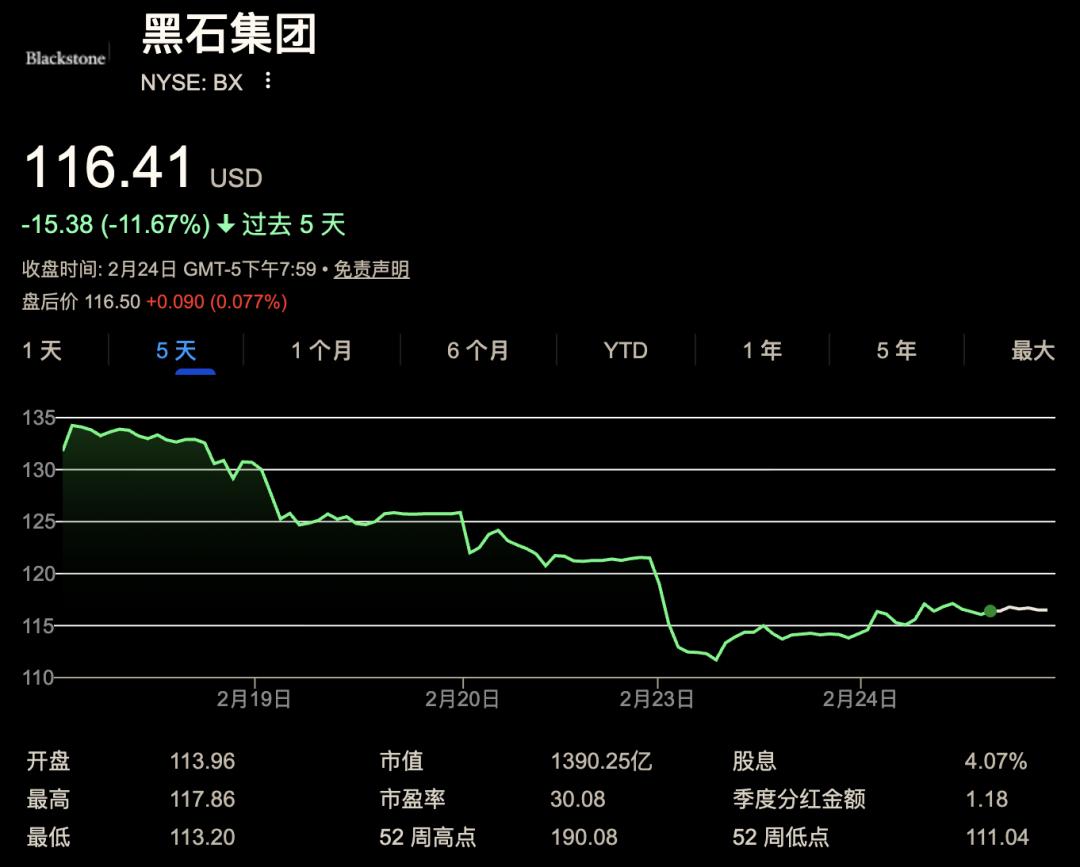
昨天,美股又大跌了,道琼斯跌了800多点,全市场只有27%的股票收涨。 时间来到2028 年 6 月 30 日。 失业率10.2%,高于预期 0.3 个百分点。数据公布后,市场下跌 2%,标普 500 较 2026 年 10 月高点回撤 38%。六个月前,这样的数据会触发熔断。但今天,交易员已经麻木了。 其中,软件股跌得最狠。科技软件ETF(IGV)创下了52周新低,当日下跌5%,年初至今已经跌了近 30%,把ChatGPT发布以来的涨幅都跌没了。 此外,DoorDash跌了7%,MongoDB跌了6%。金融行业也跌了不少,美国运通、KKR、黑石都跌超 8%。 而触发这场抛售的,是一篇Substack上的一篇名为《2028全球智能危机》文章。 文章构建了一个情境:到2028 年,AI 的发展速度远超预期。企业利润因自动化提升而走高,但白领岗 位被替代,工资与消费承压。 需求端走弱,冲击 SaaS 模式与中介型商业,支付与信贷体系出现连锁反应,最终形成经济负反馈螺 旋,而现有政策与制度无法及时调整。 这篇文章之所以引发市场共振,并非因为写的有多好,而在于它捕捉到了当下AI行业微妙的情绪变 化。 在长期"AI 提 ...
让美国股市陷入恐慌,这份末日式的AI报告内容披露
Sou Hu Cai Jing· 2026-02-25 07:13
投资者对此感到不安。标准普尔指数23日下跌超过1%,其软件和服务指数跌至去年4月美国总统特朗普 宣布"解放日"关税以来的最低水平。科技股受到打击,纳斯达克综合指数一度下跌超过1%。 24日,美国白宫经济顾问委员会代理主席皮埃尔·亚雷德表示,Citrini Research近日发布的报告是"一篇 有趣的科幻小说"。 智通财经记者 南博一 美国一份病毒式传播且完全基于猜测的报告,让美国股市23日遭遇一波AI恐慌。 这篇名为《2028年全球智能危机》的报告,由鲜为人知的美国公司Citrini Research发布在在线写作平台 Substack上,虚构了从现在开始到2028年6月结束的情景,称届时美国失业率将突破10%,"占领硅谷"运 动的参与者将在AI企业OpenAI和Anthropic的办公场所外扎营。一系列广泛使用AI代理的事件将冲击软 件公司,并向外扩散,波及到私人信贷和抵押贷款,导致经济陷入恶性循环,出现螺旋式下滑。 据《卫报》报道,Citrini设定的情景如下: AI代理消除所有中介服务 情景始于AI代理实现能力大幅提升。Citrini提到了Anthropic的Claude Code、OpenAI的Co ...
《2028全球智能危机》:一篇雄文引发股市恐慌背后的十个逻辑
3 6 Ke· 2026-02-25 05:52
一篇雄文(熊文?),把市场砸出了一个坑。 2026年2月23日,周一,美股开盘。(你看,咱们这春节不开盘也有好处) 道琼斯跌了800多点,收在了日内最低点,全市场只有27%的股票收涨。 而触发这场抛售的,是一篇Substack上的一篇名为《2028全球智能危机》文章。 作者自己写了三遍:这只是思想实验,但市场不管这些,崩了! DoorDash跌了7%,MongoDB跌了6%,ServiceNow和Salesforce各跌4%。 金融行业的跌幅更狠,美国运通、KKR、黑石都跌超8%,阿波罗全球、Capital One也跌了至少3%。 当天,科技软件ETF(IGV)创下了52周新低,当日下跌5%,年初至今已经跌了近30%,把ChatGPT发布以来的涨幅都跌没了。 更戏剧化的是IBM,跌近12%。(当然,客观地说,这大概率和Anthropic旗下产品会支持COBOL维护有关) 这件事值得我专门发一篇文章的点在于——这TM完全一篇想象出来的未来推演。 这说明市场早已绷紧了一根弦,而Citrini这篇文章,成了那个出口。 很显然,文章没有瞎扯,对未来推演的逻辑是让人信服的(至少说服了市场),这就值得我们一块来仔细盘一盘 ...


一份末日式的AI报告搅动美国股市,它说了什么?
Xin Lang Cai Jing· 2026-02-25 03:33
美国一份病毒式传播且完全基于猜测的报告,让美国股市23日遭遇一波AI恐慌。 这篇名为《2028年全球智能危机》的报告,由鲜为人知的美国公司Citrini Research发布在在线写作平台 Substack上,虚构了从现在开始到2028年6月结束的情景,称届时美国失业率将突破10%,"占领硅谷"运 动的参与者将在AI企业OpenAI和Anthropic的办公场所外扎营。一系列广泛使用AI代理的事件将冲击软 件公司,并向外扩散,波及到私人信贷和抵押贷款,导致经济陷入恶性循环,出现螺旋式下滑。 投资者对此感到不安。标准普尔指数23日下跌超过1%,其软件和服务指数跌至去年4月美国总统特朗普 宣布"解放日"关税以来的最低水平。科技股受到打击,纳斯达克综合指数一度下跌超过1%。 24日,美国白宫经济顾问委员会代理主席皮埃尔·亚雷德表示,Citrini Research近日发布的报告是"一篇 有趣的科幻小说"。 据《卫报》报道,Citrini设定的情景如下: 开发者和普通人不再使用外卖应用DoorDash,而是编写自己的应用,这些应用相互竞争,使市场碎片 化,摧毁了传统企业的利润。 Uber等拼车应用的商业模式也随之消失 ...
An AI doomsday Substack post sparks a mini stock market crash
Yahoo Finance· 2026-02-24 14:30
Core Viewpoint - A recent Substack post from Citrini Research suggested a potential market downturn driven by AI disruption, leading to significant declines in SAAS stock prices and broader economic implications [1][2]. Group 1: Market Impact - The Dow Jones Industrial Average fell by 1.7%, with individual stocks like Monday.com and DoorDash experiencing declines of approximately 7% each [1]. - The post outlined a scenario where declining SAAS stock prices in late 2025 and early 2026 could initiate a larger market rout due to AI's impact on the U.S. economy [2]. Group 2: Mechanism of Disruption - Companies traditionally reliant on software services from providers like Zendesk and Monday.com are increasingly able to replicate these services in-house using AI, leading to renegotiated contracts or complete contract terminations [3]. - To maintain profit margins, software companies may resort to layoffs, which could accelerate white-collar job losses and result in wage deflation for remaining employees [4][6]. Group 3: Economic Consequences - The cycle of AI improvement leading to reduced workforce needs, increased layoffs, and decreased consumer spending could create a feedback loop that exacerbates economic pressures [5]. - The concept of "agentic commerce" suggests that AI could undermine traditional business advantages, such as customer loyalty, by driving down associated premiums [5]. Group 4: Job Market Outlook - The post challenges the optimistic belief that AI will create as many jobs as it displaces, contrasting it with historical technological revolutions and highlighting concerns raised by Federal Reserve Chair Jerome Powell [7].

2028 年全球情报危机 --- THE 2028 GLOBAL INTELLIGENCE CRISIS
2026-02-24 14:17
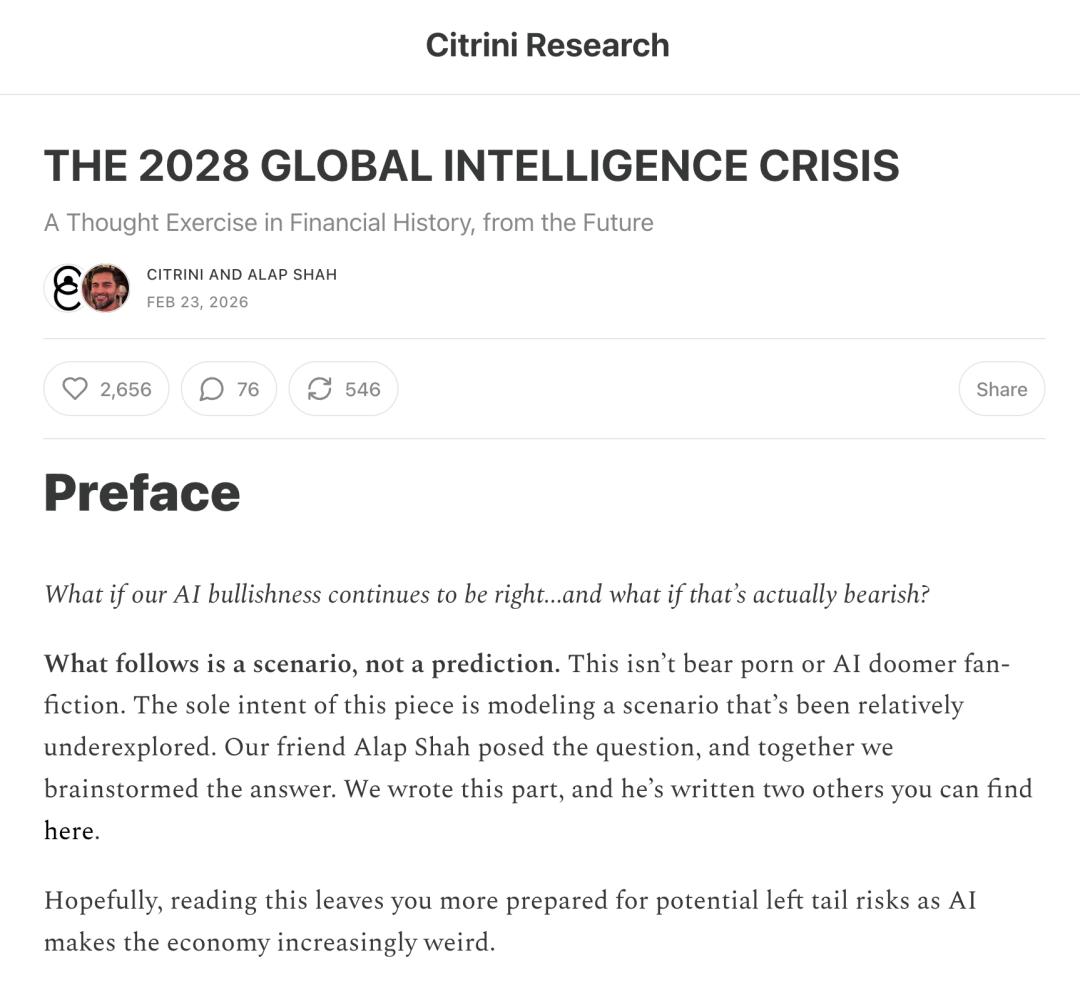
2028 年全球情报危机 --- THE 2028 GLOBAL INTELLIGENCE CRISIS substack.com/home/post/p-188821754 Substack Preface 序言 What if our AI bullishness continues to be right...and what if that's actually bearish? 倘若我们对人工智能的乐观情绪持续正确 …… 而这种 " 正确 " 本身反而预示着悲观前景,又当如 何? What follows is a scenario, not a prediction. This isn't bear porn or AI doomer fan-fiction. The sole intent of this piece is modeling a scenario that's been relatively underexplored. Our friend Alap Shah posed the question, and together we brainstormed the answer ...
来自“2028年6月的研究报告”:当AI超越预期,经济却崩了
Hua Er Jie Jian Wen· 2026-02-23 03:53
CitriniResearch与Alap Shah一份"来自未来的宏观备忘录"提出一个虚构的命题:AI多次超越乐观预期并不必然利多资产与经济,相反,充沛的机器 智能可能通过挤压劳动收入与消费循环,触发一场由"生产率繁荣"引出的需求收缩与金融再定价。 在这份以"2028年6月"为时间锚点的思想实验中,美国失业率升至10.2%,较预期高0.3个百分点,数据公布后市场下跌2%,标普500从"2026年10月 高点"累计回撤38%。备忘录称,交易员对冲击已趋于麻木,六个月前类似数据本可能触发熔断。 报告将危机路径拆解为两条相互强化的链条:一条发生在实体经济,AI能力提升推动白领岗位被替代,实际工资增速塌陷,消费占比高的"以人为 中心"的经济萎缩,形成"没有自然刹车"的负反馈回路,市场一度只看AI、但经济本身开始变形,催生所谓"Ghost GDP",即产出计入国民账户却 难以在真实经济中循环。 另一条发生在金融体系,收入预期的结构性受损开始侵蚀私募信贷与住房按揭等建立在白领现金流之上的资产定价,并迫使监管与政策讨论加 速,但报告同时强调,政策响应持续滞后,公众对政府"救援能力"的信心下降,正在放大通缩螺旋风险。 或许, ...
SaaS Markets Have Crashed in 2026. But Is Private Credit the Even Bigger Risk?
SaaStr· 2026-02-20 15:10
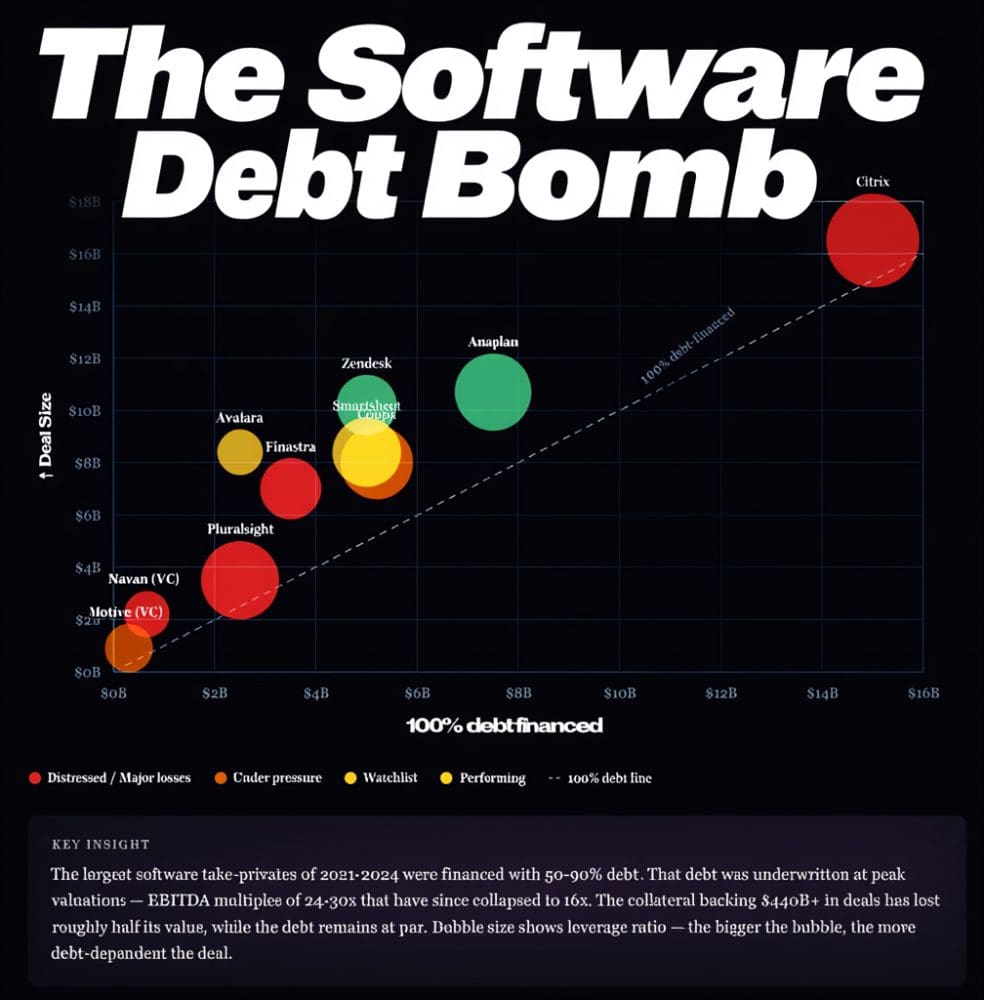
SaaS Markets Have Crashed in 2026. But Is Private Credit the Even Bigger Risk? We all know software stocks have entered a bear market in 2026. But the debt side of software might end up being a much bigger deal.IGV is down 23%+ year-to-date. $285 billion in market cap wiped out in a single day. Software P/S ratios compressed from 9x to 6x — levels we haven’t seen since the mid-2010s. But it’s more than just stocks going down.It puts huge stress on private credit’s $600-750 billion exposure to software comp ...

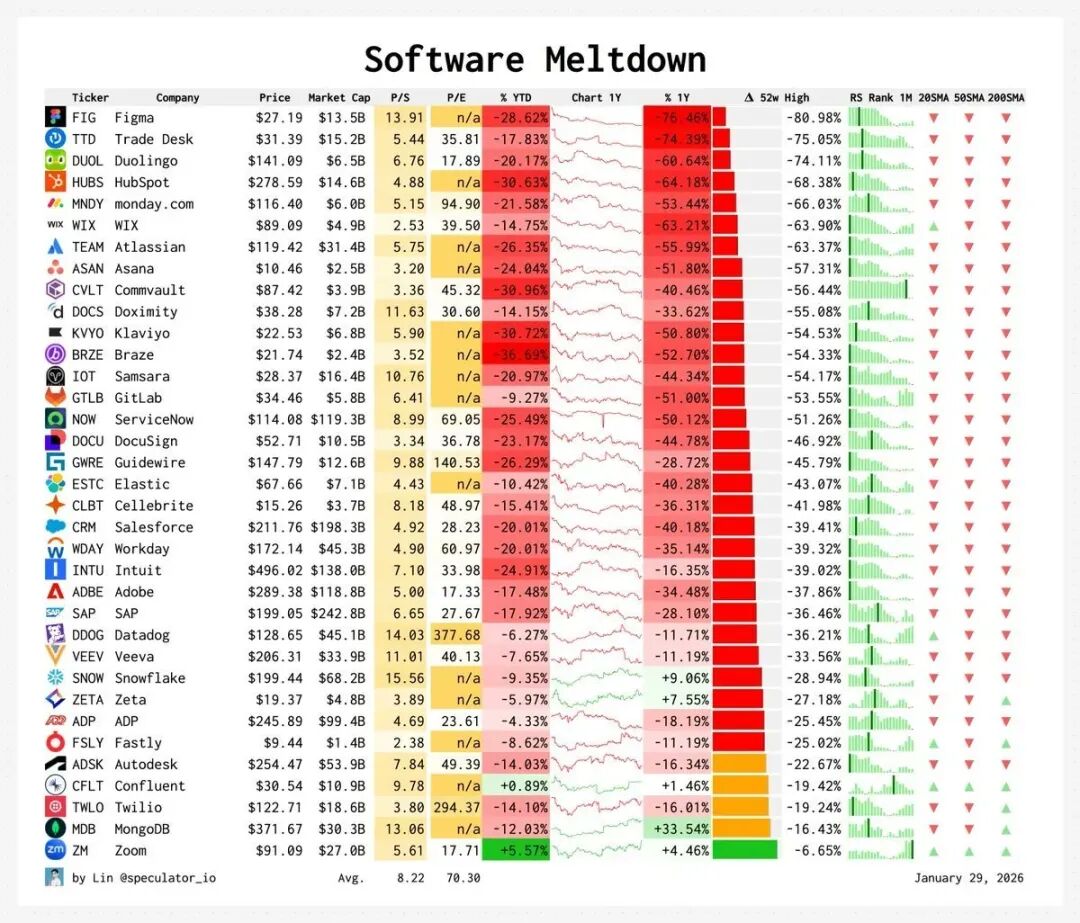
软件没有死,但“通用软件”已死
3 6 Ke· 2026-02-09 01:58
Core Insights - The software sector is experiencing a significant downturn, characterized by a broad sell-off rather than a tactical adjustment, indicating a potential capitulation phase across various software companies [1][4] - The current market sentiment reflects a loss of confidence in the business models of software companies, leading investors to simplify their holdings and view software stocks as a single trading entity rather than a diverse collection of business models [5] Market Performance - A detailed analysis of several software companies reveals substantial declines in stock prices, with many experiencing over 60% drops from their recent highs, indicating severe market distress [2] - Companies like Figma, Trade Desk, and Duolingo have seen year-to-date declines of 80.98%, 75.05%, and 60.64% respectively, highlighting the widespread impact of the downturn [2] Industry Dynamics - The competitive boundaries within the software industry are shifting, with companies like Robinhood expanding their service offerings beyond traditional brokerage functions to include comprehensive financial services [6][8] - The integration of software with financial and professional services is blurring traditional lines, prompting investors to focus on where disruptions may occur and their potential impact on existing profit pools [8] Disruption Framework - A framework for assessing software companies' vulnerability to disruption has been proposed, focusing on five key dimensions: record systems vs. surface tools, seat-based pricing vs. data-based economics, timeless data vs. ephemeral information, deep workflows vs. shallow automation, and durable structural advantages vs. shallow ones [47] - This framework encourages a nuanced understanding of software companies, moving beyond the assumption that all software stocks are equally at risk to a more detailed analysis of their underlying value structures [43][58] Strategic Considerations - Companies with core systems that are deeply embedded in client operations face higher switching costs and risks, while those that are merely supplementary tools may be more easily replaced [45] - The pricing model of a software company can indicate its resilience; those tied to human labor are at greater risk of being undermined by AI advancements, while those linked to long-term data or critical processes may be more secure [24][29] - The longevity of data value is crucial; companies that generate data with a long half-life are better positioned against disruption compared to those with rapidly depreciating data [30][31] Conclusion - The current sell-off in the software sector is not irrational but reflects a rational reassessment of the risks posed by AI and changing market dynamics [47][56] - Understanding the structural vulnerabilities and strengths of software companies is essential for investors navigating this turbulent landscape, as some companies are inherently more resilient than others due to their foundational business models and data assets [58][59]