华大智造

Search documents
发挥极限潜能,怎么给基因测序仪“越狱”?
仪器信息网· 2025-12-24 09:02
Core Viewpoint - The article discusses how advanced algorithms can unlock the potential of expensive sequencing hardware in the biotechnology field, moving beyond traditional closed-source software to enhance sequencing accuracy, speed, and sensitivity through software upgrades alone [4][5]. Group 1: Algorithmic Enhancements - Traditional sequencing instruments, such as those from Illumina and Oxford Nanopore, use conservative algorithms that limit performance, creating a significant opportunity for improvement through advanced neural networks [4][5]. - By developing powerful Signal-to-Base models, third-party companies can bypass the limitations of official software, allowing for direct interpretation of raw signals and significantly reducing analysis time from hours to minutes [5][6]. Group 2: Compliance and Implementation - Instead of directly modifying firmware, a compliant "Sidecar" architecture is proposed, which allows for independent processing of data without voiding warranties or breaching regulations [6][21]. - This Sidecar approach enables real-time data processing, enhancing base calling and variant detection while adhering to medical quality standards [6][21]. Group 3: Market Focus and Opportunities - The article suggests focusing on the less saturated third-generation nanopore sequencing market, where algorithm optimization can yield high returns due to the raw and noisy nature of the data [7]. - Specific clinical applications, such as the development of the "Panel-VarBoost" module, can significantly lower the limit of detection for low-frequency variants, which is crucial for liquid biopsies and early screening [7][9]. Group 4: Performance Metrics - The performance of the Panel-VarBoost module shows a significant improvement in sensitivity, maintaining 91.8% at a variant allele frequency (VAF) of 0.5%, compared to a drastic drop to 35.4% for traditional methods [9][19]. - The introduction of a Sidecar architecture reduces turnaround time (TAT) from 12 hours to just 0.2 hours for final report generation, which is critical for time-sensitive clinical scenarios [16][21]. Group 5: Future Implications - The establishment of a third-party software ecosystem will redefine the perception of sequencing hardware, emphasizing that true competitive advantage will come from software rather than hardware [21]. - This shift allows hospitals and pharmaceutical companies to adapt existing equipment for various applications by simply loading different algorithm modules, representing a significant evolution in business models [21].


粤商·省长面对面协商座谈会召开孟凡利林克庆出席
Nan Fang Ri Bao Wang Luo Ban· 2025-12-23 02:14
Group 1 - The meeting focused on promoting high-quality development in the biopharmaceutical industry through reform and innovation [1][2] - Key representatives from various biopharmaceutical companies provided suggestions and insights on industry development policies and measures [1][2] - The provincial government aims to create a comprehensive ecosystem to support the entire biopharmaceutical value chain, including R&D, clinical trials, manufacturing, and market application [2][3] Group 2 - The provincial government recognizes the solid foundation and positive momentum of the biopharmaceutical industry, while also acknowledging existing weaknesses [2] - There is a strong emphasis on enhancing the role of enterprises in technological innovation and attracting high-growth biopharmaceutical companies to Guangdong [2] - The government plans to optimize financial services and improve market access for innovative drugs and medical devices [2][3]
香港科学园7家企业分享“出海”故事
Nan Fang Du Shi Bao· 2025-12-22 23:14
Group 1 - The 2025 Shenzhen International High-Performance Medical Device and Innovative Pharmaceutical Exhibition aims to create an efficient ecosystem platform for "industry, academia, research, medicine, and finance" while focusing on financial empowerment and overseas expansion as key drivers for industry development [2] - The exhibition featured deep discussions on how finance can empower innovation in the medical device industry, with insights from industry leaders like Lang Tao from China Resources Pharmaceutical Group, who outlined two clear paths: strategic investments in innovative medical device companies and mergers to quickly acquire mature product lines and core technologies [2] - A series of high-profile investment and financing matchmaking activities were held, including the "Breaking the Deadlock · Establishing New" CGT project financing roadshow, which selected eight leading companies in gene editing and cell therapy to engage with investors [3] Group 2 - Jingtai Technology signed a $59.9 billion cooperation order with an overseas pharmaceutical company, marking the largest order in the field of AI-enabled drug development [3] - The "Intelligent Medical, Riding the Waves Overseas" forum focused on the core issues of intelligent and global development in the medical industry, gathering over 80 industry leaders and experts to discuss how AI and digital technologies can empower Chinese medical enterprises for high-quality overseas expansion [4] - The "Breaking the Deadlock · Going Overseas" forum highlighted case studies of seven pioneering companies from the Hong Kong Science Park, emphasizing collaboration and experience sharing to provide replicable pathways for mainland innovative products to enter the global market [4]



医药行业周报(25/12/15-25/12/19):CTLA-4药物展现亮眼数据,关注相关机会-20251221
Hua Yuan Zheng Quan· 2025-12-21 07:51
Investment Rating - The investment rating for the pharmaceutical industry is "Positive" (maintained) [4] Core Insights - The report highlights the promising data from CTLA-4 drugs, suggesting potential investment opportunities in related areas [3][5] - The pharmaceutical index experienced a slight decline of 0.14% from December 15 to December 19, 2025, but showed a relative outperformance of 0.14% against the CSI 300 index [5] - The report emphasizes the importance of innovative drugs as a key investment theme for 2026, with a focus on companies that are expected to show clear performance trends and potential reversals in operations [5][41] Summary by Sections 1. CTLA-4 Target - CTLA-4 is identified as a significant immune checkpoint that can inhibit T cell activation, presenting potential value in cancer immunotherapy [8][9] - The CTLA-4 monoclonal antibody Gotistobart shows promising clinical trial results for squamous non-small cell lung cancer (sqNSCLC) patients who are resistant to immunotherapy [14][15] - Gotistobart's innovative mechanism targets Treg cells in the tumor microenvironment, potentially leading to a new paradigm in tumor immunotherapy [20][24] 2. Industry Perspective - The report maintains that innovative drugs should be the main focus for the year, while also considering manufacturing exports and aging-related consumption as relatively undervalued assets [25][41] - The pharmaceutical index has shown a year-to-date increase of 14.49%, with a notable number of stocks experiencing significant gains [25][26] - The report suggests that the Chinese pharmaceutical industry has completed a transition from old to new growth drivers, with innovative drugs opening new growth avenues for companies [41][42] 3. Investment Recommendations - Recommended stocks include innovative drug companies such as Xinyi Tai, Zai Jian Pharmaceutical, and others, as well as companies in the medical device sector [5][45] - The report advises focusing on companies with strong performance trends and those expected to benefit from the aging population and outpatient consumption [42][44] - The report also highlights the potential of AI in the pharmaceutical sector, suggesting that related stocks may perform well in the coming years [42][44]





重磅利好!国常会定调,绿色制造风口来袭!12只潜力股曝光
Zheng Quan Shi Bao Wang· 2025-12-21 04:22
Group 1 - The core viewpoint of the news is that the green manufacturing sector is set to receive significant support from government policies aimed at promoting low-carbon development in the manufacturing industry [1] - The State Council has approved the "Green Low-Carbon Development Action Plan for Manufacturing Industry (2025-2027)", emphasizing the need for green technology innovation and the promotion of advanced green technologies [1] - By 2024, the number of national-level green factories in China is expected to reach 6,430, accounting for approximately 20% of the total output value of the manufacturing industry, an increase of 2 percentage points from the previous year [1] Group 2 - In the A-share manufacturing sector, 12 stocks have been identified as potential green manufacturing stocks based on specific criteria, including high ESG ratings and significant expected revenue growth [2] - BYD has received the highest number of positive ratings from institutions, with 48 firms rating it positively, and it has established 6 national-level green factories [2] - The company reported a net profit of 9.155 billion yuan in the first quarter, a year-on-year increase of 100.38%, and sold 1.3809 million new energy vehicles in the first four months of 2025, a growth of 46.98% [2] Group 3 - Among the identified potential stocks, BGI Genomics, China National Materials, and Aiko Solar have seen significant net purchases from institutional investors, each exceeding 150 million yuan [3] - BGI Genomics has received a net purchase amount of 267 million yuan, with its stock price increasing by 57.28% this year [4] - Aiko Solar has been continuously favored by institutional investors, with net purchases of 21.3187 million yuan in 2024 and 158 million yuan in 2025 [5]



仪器公司“组团”布局海南自贸港,图什么?
仪器信息网· 2025-12-19 09:28
Core Viewpoint - The article discusses the strategic shift of numerous instrument companies establishing operations in Hainan Free Trade Port, driven by the upcoming full island closure and favorable policies such as zero tariffs and simplified customs procedures [3][4]. Group 1: Instrument Companies' Movement to Hainan - Multiple instrument companies have set up branches in Hainan, including notable firms like杰莱美, 瑞赛司, and 迈瑞医, with establishments planned from 2021 to 2025 [6][7]. - Leading scientific instrument companies, such as Thermo Fisher, are accelerating their strategic layouts in Hainan by establishing collaborative innovation laboratories and research centers [7]. Group 2: Benefits of Hainan Free Trade Port - The Hainan Free Trade Port's zero-tariff policy is a key attraction, with the number of zero-tariff items expanding from over 1,900 to more than 6,600, covering 74% of all product categories, including medical devices and precision instruments [9][10]. - The new policies will simplify customs processes, significantly reducing the time required for importing scientific instruments and lowering procurement costs for companies [12][13]. Group 3: Advantages for Scientific Instrument Companies - The closure of Hainan will enhance operational efficiency for scientific instrument companies by streamlining customs procedures and reducing the complexity of import documentation [12][13]. - The expansion of zero-tariff categories will lower one-time procurement costs and long-term operational burdens, facilitating equipment upgrades and technological advancements [12][13]. - The influx of scientific instrument and medical device manufacturers will create a clustering effect, promoting domestic production and innovation in high-end research instruments [12][13]. Group 4: Export Opportunities for Domestic Instruments - Domestic instruments exported from Hainan can benefit from zero-tariff treatment on imported components, reducing manufacturing costs and enhancing profitability through a 15% corporate income tax reduction [16]. - The policies also encourage foreign instrument manufacturers to establish local production in Hainan, allowing them to benefit from favorable trade conditions when exporting or selling to the mainland [16]. Group 5: Conclusion - The full closure of Hainan is viewed as a new starting point for industrial advancement, with leading companies' concentration in the region highlighting the potential for technological development and market expansion [18].

苹果应用榜被AI攻占了
财联社· 2025-12-19 05:52
Core Viewpoint - The article highlights the significant growth and market acceptance of the AI health application "Ant Financial's Aifu," which has rapidly gained popularity and user engagement since its launch, indicating a strong potential in the AI healthcare sector [2][4]. Group 1: Market Performance - The AI healthcare concept has seen a rebound, with companies like Luyuan Pharmaceutical achieving a three-day stock increase, and others like Huaren Health and Meinian Health also experiencing notable gains [2]. - "Ant Financial's Aifu" has surpassed 15 million monthly active users and processes over 5 million health inquiries daily, ranking second in the Apple App Store's free app category [2][4]. Group 2: Application Features - "Ant Financial's Aifu" offers three main functions: health companionship, health Q&A, and health services, featuring a high level of AI integration [4]. - The app allows users to receive clear medical advice through AI simulations and facilitates direct appointment scheduling with doctors [4]. Group 3: User Demographics and Market Need - 55% of "Ant Financial's Aifu" users come from third-tier cities and below, highlighting the uneven distribution of medical resources in China [5]. - The app addresses a significant gap in the healthcare sector, as the demand for AI solutions in healthcare remains largely unmet [4][5]. Group 4: Policy and Industry Trends - The Chinese government is promoting AI in healthcare, with initiatives aimed at establishing high-quality health data and AI applications by 2027 [5]. - The number of AI models and algorithms in the healthcare sector is increasing, indicating a growing investment in AI healthcare solutions [5]. Group 5: Investment Opportunities - Investment focus is recommended on companies within the AI healthcare industry, including those specializing in medical models, medical imaging, and medical data [7]. - Specific companies to watch include iFlytek Medical Technology, JunDa Medical, KingMed Diagnostics, and BGI Genomics, which are positioned to benefit from advancements in AI healthcare applications [7].

千余款“黑科技”闪耀鹏城,引领全球药械创新浪潮
Nan Fang Du Shi Bao· 2025-12-18 10:35
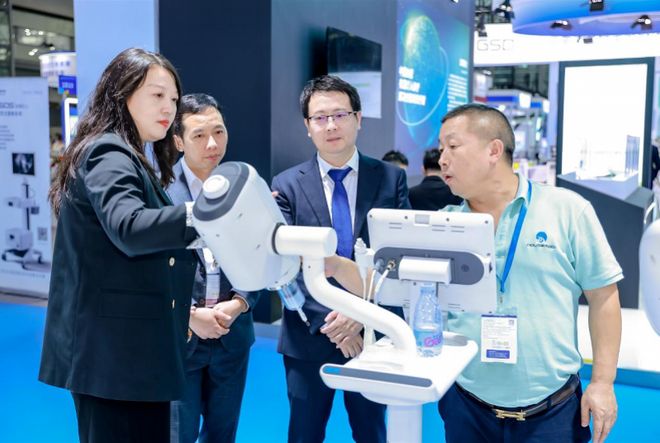
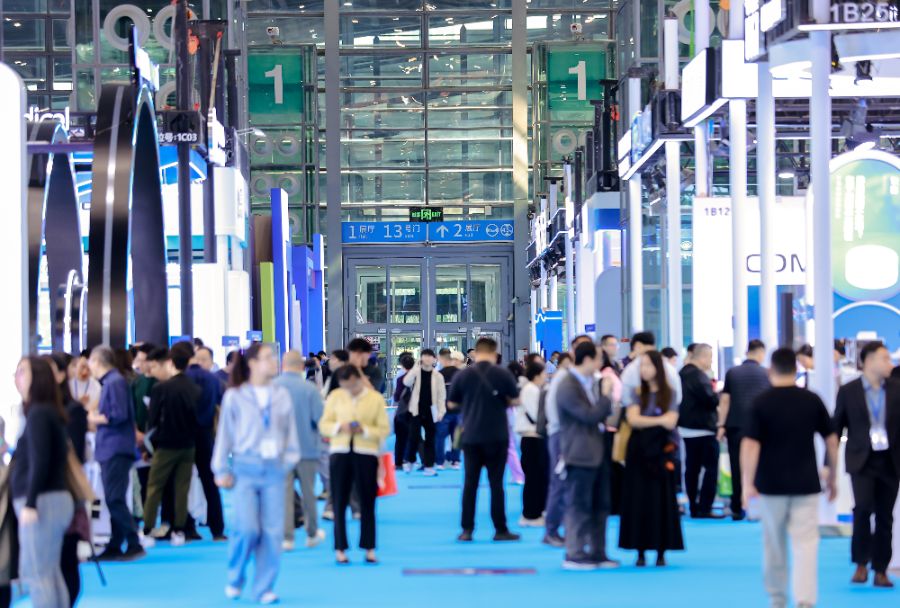
Core Insights - The 2025 Shenzhen International High-Performance Medical Device and Innovative Pharmaceutical Exhibition showcases the future of healthcare technology, highlighting advancements in surgical robotics, brain-computer interfaces, and innovative pharmaceuticals [1][3] Group 1: Exhibition Overview - Over 300 companies and institutions participated in the exhibition, covering an area of 30,000 square meters and presenting over 1,000 products that define the future of the medical device and pharmaceutical industry [3][5] - The exhibition emphasizes the acceleration of healthcare technology towards more intelligent, precise, and integrated solutions [3][5] Group 2: Key Innovations - Notable innovations include the intelligent autonomous experimental platform by Crystal Technology, the Class I new drug "Xinglitin" by Xinlitai, and the fully automated cell morphology analyzer by Mindray Medical, showcasing a range of advancements from AI-driven drug development to high-end medical devices [5][12] - Surgical robots have evolved from single-procedure tools to comprehensive intelligent surgical platforms that cover multiple departments and integrate various modalities, marking a revolutionary change in the surgical field [5][7] Group 3: Brain-Computer Interface Developments - Brain-computer interface products are gaining attention, with companies like Qiangnao Technology showcasing smart bionic hands and feet that translate neural and muscle signals into movement, demonstrating the potential for enhanced health interventions [9][11] - Weiling Medical presented a full-implantable brain-computer interface system and other core technologies, indicating a strong focus on high-end implantable solutions [9][11] Group 4: Diagnostic Innovations - The in vitro diagnostic sector is advancing towards multi-disciplinary approaches, with companies like New Industry Biology and Yihuilong presenting fully automated laboratory solutions that significantly enhance testing efficiency and quality [11][12] - The collaboration between pharmaceuticals and medical devices is becoming a crucial trend, exemplified by the Hezhi® proton therapy system from CGN Medical, which applies nuclear technology to improve cancer treatment outcomes [11][12] Group 5: Industry Ecosystem and Collaboration - The exhibition also highlighted the entire industry chain of medical device design and manufacturing, showcasing a wide range of resources and solutions for research and production [12][14] - The integration of academia and industry was evident, with institutions like the Chinese University of Hong Kong (Shenzhen) presenting numerous medical devices and clinical applications, reflecting the latest achievements in medical research and technology innovation [14]
深圳创新药械不断加速 重点布局四大新兴赛道
2 1 Shi Ji Jing Ji Bao Dao· 2025-12-18 10:05
Market Overview - The Chinese medical equipment market is projected to reach 1.35 trillion yuan in 2024, with an average growth rate exceeding 12% over the past decade, making it the second-largest market globally [2][6] - Shenzhen's pharmaceutical and medical device industry is expected to achieve a production value of 157.6 billion yuan in 2024, with medical devices alone surpassing 102.8 billion yuan, maintaining its position as the leading region in China for ten consecutive years [3] Industry Innovation - China is increasingly focusing on quality improvements in its medical equipment sector, with one-third of global medical equipment patents originating from the country, indicating a strengthening of domestic innovation capabilities [2][6] - Shenzhen has nurtured 35 listed companies in the pharmaceutical and medical device sectors, along with over 1,000 enterprises above designated size, showcasing a robust industrial ecosystem [3] Recent Developments - Notable recent collaborations include a 47 billion HKD (approximately 5.99 billion USD) partnership between Crystal Technology and DoveTree for AI drug development, marking a significant milestone in the commercialization of AI in pharmaceuticals [4] - Health元's innovative drug, Marpacisavir capsules, has received approval for market launch, representing a breakthrough in flu treatment with a unique mechanism requiring only one oral dose [5] Future Directions - Shenzhen aims to focus on four emerging sectors: cell and gene therapy, biomanufacturing, AI in pharmaceuticals, and health consumer products, to enhance its competitive edge in the medical equipment industry [6][7] - The establishment of an "AI + Biomanufacturing Public Service Platform" is set to accelerate the R&D cycle for biomanufacturing companies, significantly reducing development time from years to months [7]
58起交易!一文看懂中国医疗器械BD的秋季节奏




思宇MedTech· 2025-12-15 08:59
Core Insights - The article highlights the acceleration of business development (BD) activities in the medical device sector from September to November 2025, with a total of 58 transactions identified across various subfields, including cardiovascular, nuclear medicine, and AI-enabled devices [2][3][4]. Group 1: Mergers and Acquisitions - Mergers and acquisitions have become a prominent form of BD, with companies leveraging capital control and product integration for rapid market positioning [7][8]. - Notable acquisitions include HeartLink's $680 million all-stock acquisition of Micro-Invasive Cardiology, enhancing its structural heart disease and rhythm management capabilities [7]. - Hua'an Zhonghui's acquisition of Bangni Medical marks its entry into the absorbable suture market, indicating a shift in surgical instrument competition towards material innovation [7]. Group 2: Strategic Collaborations - Strategic partnerships have been formed during the China International Import Expo, with companies like Shanghai Pharmaceuticals collaborating with international giants such as Boston Scientific and Medtronic to enhance their supply chain and academic promotion systems [7][8]. - The collaboration between GuoYao Medical and BDI Medical aims to deepen market penetration in the biomedicine and medical device sectors, focusing on compliance and distribution channel construction [13]. Group 3: Cross-Border Cooperation - Cross-border transactions have become more active, with foreign companies establishing local R&D and production systems in China, while domestic firms are exporting their solutions globally [9][10]. - The partnership between Trasis SA and Beijing Pait Biotechnology to establish a joint venture reflects a trend towards localized production and phased integration in the Chinese market [12]. Group 4: Ecosystem Building and Channel Expansion - The integration of supply chains and ecosystem building is a key theme, with companies focusing on collaborative agreements to enhance their market presence [11][15]. - The collaboration between Baxter and Neusoft Medical aims to create a comprehensive surgical solution by integrating their respective technologies [12]. Group 5: AI and Smart Healthcare - AI and data-driven approaches are becoming central to BD collaborations, with companies increasingly focusing on smart healthcare solutions [16][17]. - The partnership between Kefu Medical and Tencent Cloud to develop AI-powered hearing aids exemplifies the trend of integrating technology into healthcare products [21]. Group 6: Research and Diagnostic Synergy - The frequency of research-oriented collaborations is rising, indicating a shift from manufacturing-driven to research-driven industry dynamics [18][19]. - The collaboration between BGI and Infinera to enhance clinical applications of sequencing technology highlights the growing importance of research in driving innovation in the medical device sector [21].