
华电国际

Search documents
公用事业行业周报(2025.12.22-2025.12.26):用电增速维持高位,长协电价或存压力-20251228
Orient Securities· 2025-12-28 05:41
Investment Rating - The report maintains a "Positive" investment rating for the utility sector [4] Core Views - Electricity consumption growth remains high, but there are signs of pressure on long-term contract electricity prices due to falling coal prices and high inventory levels [7] - The utility sector is viewed as a defensive asset, with low-priced utility assets worth attention [7] - The report suggests that the electricity market will gradually allow for better pricing of electricity attributes to support the complex new power system [7] Summary by Sections Electricity Consumption - In November 2025, total electricity consumption increased by 6.2% year-on-year, a recovery from October's 4.2 percentage point decline, with a cumulative growth of 1.0% for January to November 2025 [10] - The growth rates for different sectors in November 2025 were: primary industry +7.9%, secondary industry +4.4%, tertiary industry +10.3%, and residential consumption +9.8% [10] - The report anticipates that December 2025 will see electricity consumption growth maintain around 5-6% due to ongoing growth in sectors like charging services and information technology [10] Electricity Prices - From December 19 to December 26, 2025, the average clearing price in Guangdong's electricity market was 308 RMB/MWh, up by 3.9% year-on-year [21] - In contrast, Shanxi's average market price dropped to 179 RMB/MWh, down 54.9% year-on-year [21] Coal Prices - Port coal prices continue to decline, with the Qinhuangdao Q5500 coal price at 672 RMB/ton, down 4.4% week-on-week [24] - The report notes a divergence in pit coal prices, with Shanxi's Q5500 coal price stable at 550 RMB/ton, while Inner Mongolia's price fell by 1.7% [24] Hydrology - The Three Gorges Reservoir's water level was 171 meters, with a year-on-year increase of 3.1 meters, while inflow rates decreased by 13.7% year-on-year [31] Market Performance - The utility sector index rose by 0.8% but underperformed compared to the Shanghai and Shenzhen 300 index, which increased by 1.9% [40] - Among sub-sectors, gas showed the highest weekly increase at +2.6%, while hydropower decreased by 0.8% [42] Investment Recommendations - The report recommends focusing on utility stocks, particularly in thermal power, hydropower, and nuclear power, citing improved business models and growth potential [7]




奋勇争先,决战决胜“十四五”︱人民日报头版:新型能源体系加快建设
国家能源局· 2025-12-28 04:07
Core Viewpoint - The article emphasizes the accelerated construction of a new energy system in China, highlighting the importance of transitioning to renewable energy sources and enhancing energy security to support economic development and carbon neutrality goals [15][16][19]. Group 1: New Energy Development - The Ningxia Tengger Desert New Energy Base has successfully launched its first batch of 3 million kilowatts of solar capacity, showcasing a significant expansion in renewable energy production [17]. - The Ningxia-Hunan UHV project, spanning over 1,600 kilometers, can transmit green electricity in approximately 0.0054 seconds, significantly enhancing energy distribution efficiency [17]. - The project is expected to deliver over 36 billion kilowatt-hours of electricity annually to Hunan, with renewable energy accounting for over 50% of this supply [17][18]. Group 2: Energy Supply Structure - During the "14th Five-Year Plan" period, China's renewable energy generation capacity is projected to increase from 40% to around 60%, marking a substantial shift in the energy supply structure [21]. - The share of non-fossil energy in national energy consumption is expected to exceed the 20% target set for the "14th Five-Year Plan," with green electricity accounting for nearly 40% of total electricity consumption [21]. Group 3: Technological Innovations - China has developed a 26-megawatt offshore wind turbine with a rotor diameter exceeding 310 meters, capable of generating 62 kilowatt-hours per rotation, representing a significant technological advancement in renewable energy [20]. - The country is also implementing various innovative energy solutions, including the first domestic 220 kV flexible low-frequency transmission project and the world's first grid-connected sodium-ion energy storage system [23]. Group 4: Fossil Energy Transition - The domestic oil and gas production capacity has reached over 400 million tons, maintaining a rapid growth trend, while efforts are being made to enhance the efficiency and environmental sustainability of fossil fuel usage [22]. - The implementation of energy-saving and carbon-reduction modifications in coal-fired power plants is part of the broader strategy to transition towards greener energy sources [22].


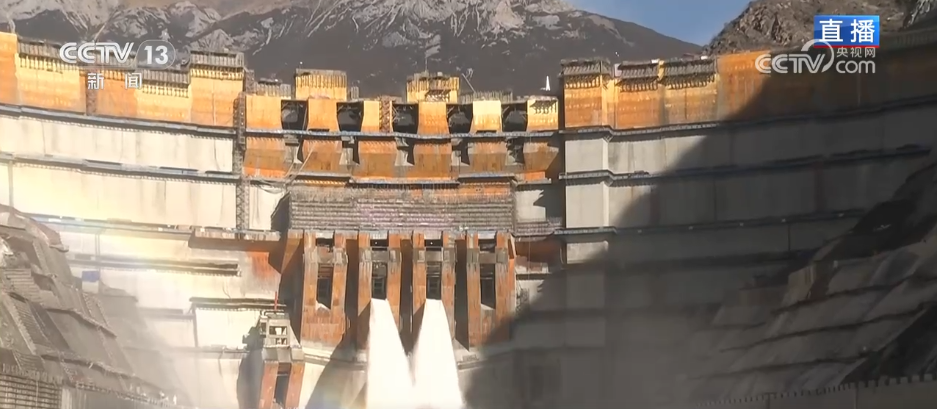
我国在建海拔最高双曲拱坝电站 叶巴滩水电站首批机组投产发电
Ren Min Ri Bao· 2025-12-27 22:00
Core Viewpoint - The Yebatan Hydropower Station, the highest arch dam power station under construction in China, has officially commenced power generation with the first batch of units, marking a significant milestone in the country's "14th Five-Year Plan" major projects [1] Group 1: Project Overview - The Yebatan Hydropower Station is located on the Jinsha River, at the border of Baiyu County in Sichuan and Gongjue County in Tibet, and has the largest installed capacity of 2.24 million kilowatts in the upper reaches of the Jinsha River [1] - The dam has a maximum height of 217 meters and features characteristics such as high altitude, high cold, ultra-high arch dam, high ground stress, deep burial, and large-span underground powerhouses [1] Group 2: Technological Innovations - The project team has conducted research on concrete construction technology for ultra-high arch dams in high-altitude cold regions, achieving uninterrupted concrete pouring year-round for the first time in such conditions in China [1] Group 3: Environmental Impact - The first units to commence operation are Units 3 and 4, with the project expected to generate an average annual power output exceeding 10.2 billion kilowatt-hours, saving approximately 3.1 million tons of standard coal annually and reducing carbon dioxide emissions by over 8.3 million tons [1] - The clean electricity generated will be transmitted to Central China through the Jinshang-Hubei ±800 kV ultra-high voltage direct current transmission project [1]

官方严查电力交易违规行为,全球海洋油气勘探开发投资连续5年增长
Xinda Securities· 2025-12-27 08:18
Investment Rating - The investment rating for the utility sector is "Positive" [2] Core Insights - The utility sector has shown a weekly increase of 0.8%, underperforming the broader market, which rose by 1.9% [4][12] - The power sector specifically increased by 0.65%, while the gas sector saw a larger increase of 2.59% [4][16] - The report highlights a continuous growth in global offshore oil and gas exploration and development investments, with a compound annual growth rate of 11% over the past five years [5] Summary by Sections Market Performance - As of December 26, the utility sector's performance was below the market average, with the power sector up by 0.65% and the gas sector up by 2.59% [4][12] - The top-performing sub-sectors included thermal power generation, which rose by 2.45%, while hydropower saw a decline of 0.77% [16] Power Industry Data Tracking - The price of thermal coal at Qinhuangdao Port (Q5500) was 677 CNY/ton, down 34 CNY/ton week-on-week [4][21] - Coal inventory at Qinhuangdao Port decreased to 6.97 million tons, a drop of 310,000 tons week-on-week [30] - Daily coal consumption in inland provinces increased to 3.967 million tons, up 5.56% week-on-week [30] Natural Gas Industry Data Tracking - Domestic LNG prices decreased to 3,937 CNY/ton, a 3.39% decline week-on-week [57] - European TTF gas prices rose by 5.4% week-on-week, while U.S. HH prices fell by 10.4% [61] - The EU's natural gas supply for week 50 was 6.11 billion cubic meters, a 0.9% increase week-on-week [65] Key Industry News - Guangdong Electric Trading Center reported a total transaction volume of 359.44 billion kWh for 2026, with an average transaction price of 372.14 CNY/kWh [5] - The report indicates that the power sector is expected to see profitability improvements and value reassessment due to ongoing supply-demand tensions [5] Investment Recommendations - The report suggests focusing on national coal power leaders such as Guodian Power, Huaneng International, and Huadian International, as well as regional leaders in tight supply areas [5] - For natural gas, companies with low-cost long-term gas sources and receiving station assets are recommended for potential profit growth [5]
大国工程进行时 | 投产发电!“云端电站”彰显我国水电建设“硬核”实力
Yang Shi Wang· 2025-12-27 07:23
Core Viewpoint - The Yebatan Hydropower Station, the highest arch dam in China, has officially commenced power generation with its first two units, marking a significant milestone in the country's "14th Five-Year Plan" for major engineering projects [1][3]. Group 1: Project Overview - The Yebatan Hydropower Station is located at an altitude of 2,894 meters and has taken nearly 10 years to construct [3][5]. - The dam features a unique double-curved arch design, allowing it to effectively manage the immense water pressure by transferring it to the surrounding mountains and solid rock foundation [5][7]. - A record-breaking concrete core sample, measuring 38.1 meters, was extracted from the dam, showcasing the robust construction quality and the advanced capabilities of China's hydropower engineering [7]. Group 2: Environmental and Ecological Impact - The hydropower station not only contributes to carbon reduction but also supports a thriving local ecosystem, with various protected wildlife species present in the area [7]. - The construction methods employed, including winter insulation measures, ensure the dam's integrity and safety during extreme temperature fluctuations, which can reach over 30 degrees Celsius [13]. Group 3: Future Developments - The remaining three units of the Yebatan Hydropower Station are currently being installed and tested, with full capacity expected to be achieved by the second half of next year [9]. - The power generation capacity of the station is substantial, with the current units capable of supplying electricity to over 40,000 households annually [15].
华电金上叶巴滩水电站首批机组正式投产发电
Xin Hua Cai Jing· 2025-12-27 06:26
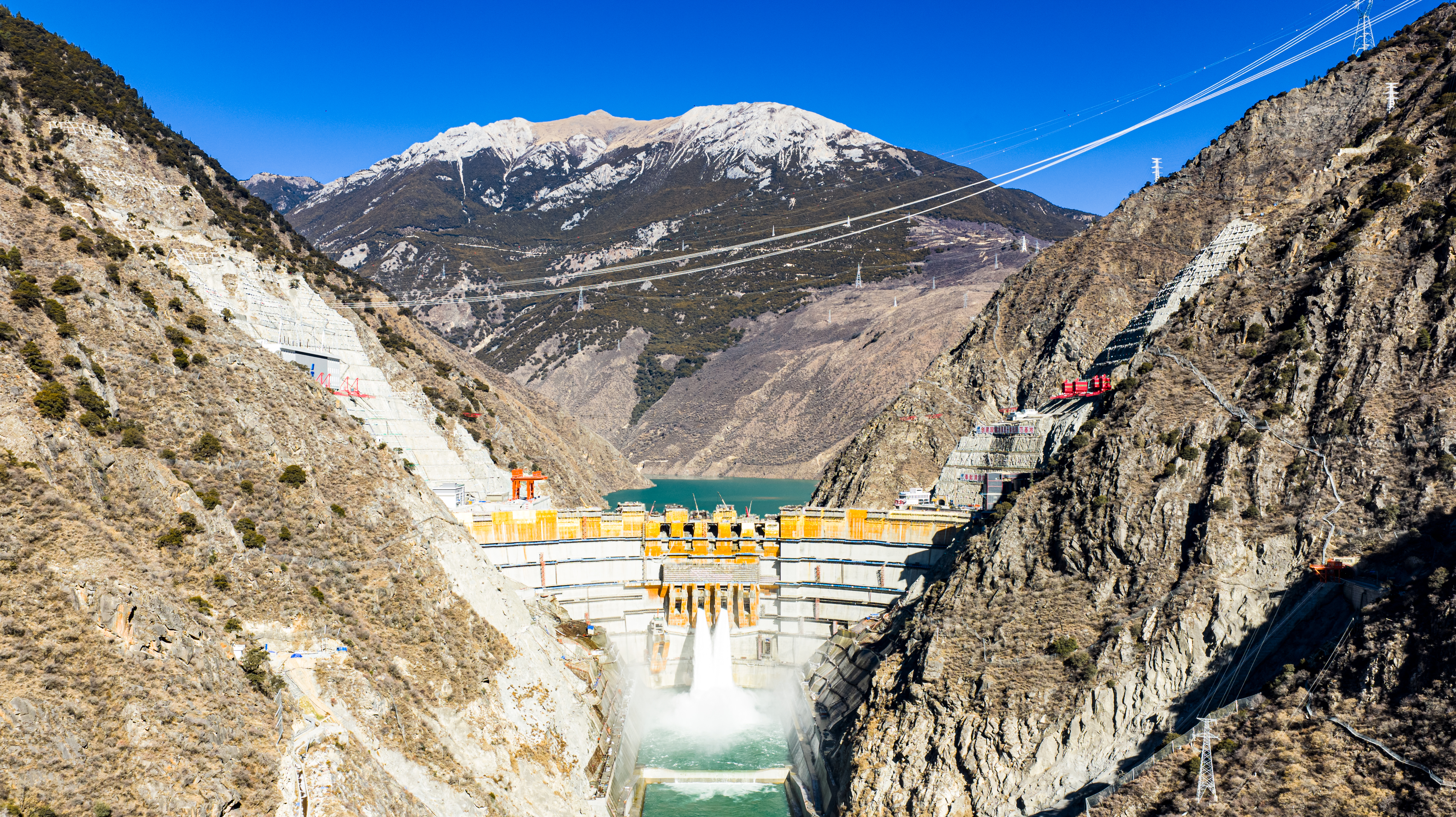
Core Insights - The first batch of units at the Yebatan Hydropower Station, the highest arch dam power station under construction in China, officially commenced operation on December 27, contributing to the development of a new energy system and the construction of an energy powerhouse [1] Group 1: Project Overview - The Yebatan Hydropower Station is located on the Jinsha River, straddling the counties of Baiyu in Sichuan and Gongjue in Tibet, and is a major project under China's 14th Five-Year Plan [1] - It has a total installed capacity of 2.24 million kilowatts and a maximum dam height of 217 meters, characterized by five high and one large features: high cold, high altitude, ultra-high arch dam, high ground stress, high burial depth, and large-span underground powerhouse [1] Group 2: Operational Impact - The first units to be put into operation are units 4 and 3, achieving a "double launch" in one month [1] - Once fully operational, the station is expected to generate an average annual electricity output of over 10.2 billion kilowatt-hours, saving approximately 3.1 million tons of standard coal and reducing carbon dioxide emissions by over 8.3 million tons annually [1] Group 3: Energy Transmission and Environmental Benefits - The clean electricity generated will be transmitted through the world's first large-capacity water-solar complementary direct current transmission line, the Jinsha to Hubei ±800 kV DC project, to the central China region [1] - This project is significant for optimizing China's energy structure, promoting green and low-carbon energy transition, and enhancing national energy security [1]
11月电力数据:火电出力由增转降,用电增速同比+6.2%
CHINA DRAGON SECURITIES· 2025-12-26 13:41
Investment Rating - The industry investment rating is "Recommended" (maintained) [2] Core Viewpoints - In November, electricity consumption increased by 6.2% year-on-year, with total electricity consumption reaching 835.6 billion kilowatt-hours [6] - The report highlights a shift in electricity generation, with thermal power output declining while hydropower and renewable energy sources like nuclear, solar, and wind power showed growth [6] - The report suggests that the demand for electricity across various industries has remained stable, with significant growth in sectors such as high-tech and equipment manufacturing [6] Summary by Relevant Sections Electricity Generation Data - In November, the industrial electricity generation was 779.2 billion kilowatt-hours, a year-on-year increase of 2.7%. The average daily generation was 25.97 billion kilowatt-hours [6] - For the first eleven months, the total industrial electricity generation was 8,856.7 billion kilowatt-hours, up 2.4% year-on-year [6] - Breakdown of generation types in November: - Thermal power decreased by 4.2% year-on-year - Hydropower increased by 17.1% - Nuclear power grew by 4.7% - Wind power increased by 22.0% - Solar power surged by 23.4% [6] Electricity Consumption Data - Total electricity consumption for the first eleven months was 94,602 billion kilowatt-hours, reflecting a year-on-year growth of 5.2% [6] - Breakdown of consumption by sector in November: - Primary industry: 11.3 billion kilowatt-hours, up 7.9% - Secondary industry: 5,654 billion kilowatt-hours, up 4.4% - Tertiary industry: 1,532 billion kilowatt-hours, up 10.3% - Urban and rural residential consumption: 105.7 billion kilowatt-hours, up 9.8% [6] Investment Recommendations - The report recommends focusing on companies in the thermal and renewable energy sectors, including Huaneng International, Huadian International, Guodian Power, and Datang Power, as well as hydropower companies like Huaneng Hydropower and State Power Investment Corporation [6]


国家发改委、国家能源局重磅发布!
中国能源报· 2025-12-26 12:45
Core Viewpoint - The article discusses the release of the "Basic Rules for the Medium and Long-term Electricity Market" by the National Development and Reform Commission and the National Energy Administration, emphasizing the need for a unified national electricity market and the importance of balancing long-term supply and demand in the electricity sector [1][2]. Group 1: General Principles - The rules aim to accelerate the construction of a unified national electricity market system, standardize medium and long-term trading behaviors, and protect the legitimate rights and interests of market participants [5]. - The medium and long-term electricity market is defined as a market where registered entities conduct electricity trading for future delivery periods, including various time dimensions such as years, months, and weeks [5][6]. Group 2: Overall Requirements - The rules promote the integration of medium and long-term electricity markets with spot markets, ensuring smooth transitions in trading sequences, clearing, and market settlements [8]. - There is a focus on adapting to the volatility of renewable energy output, enabling flexible continuous trading, and promoting long-term power purchase agreements to stabilize consumption [8]. Group 3: Market Participants - Market participants include generation companies, electricity users, and new types of operators, all of whom must adhere to market rules and avoid manipulating prices [12][15]. - Generation companies have rights to participate in the market, sign contracts, and receive fair access to grid services [13]. Group 4: Trading Types and Price Mechanism - Medium and long-term trading includes various delivery periods, with different trading methods such as centralized trading and bilateral negotiations [25][30]. - The pricing mechanism for the medium and long-term market is determined by market forces, with specific provisions for green electricity trading [29][30]. Group 5: Trading Organization - Cross-regional electricity trading will be organized by designated electricity trading centers, with a focus on ensuring continuous operation and timely publication of trading calendars [32][34]. - The rules stipulate that key parameters for trading must be clearly defined before trading begins, and adjustments cannot be made during the trading process [44]. Group 6: Contract Management - All market participants must sign medium and long-term trading contracts, which serve as the basis for execution and help stabilize market expectations [64]. - Green electricity trading contracts must specify the traded electricity volume and pricing, including the environmental value of green electricity [66]. Group 7: Measurement and Settlement - The settlement of the medium and long-term market will generally occur on a monthly basis, with provisions for different types of settlements [72][76]. - Green electricity trading will involve separate settlements for energy and environmental value, ensuring compliance with sustainability pricing mechanisms [78]. Group 8: Information Disclosure - Market information will be disclosed periodically, with a retention period of at least two years, ensuring transparency for all market participants [81][83]. Group 9: Technical Support System - The electricity trading platform must include various functional modules to support market operations, ensuring interoperability and data exchange among different systems [84][88].
关于印发《电力中长期市场基本规则》的通知
国家能源局· 2025-12-26 11:07
Group 1 - The article outlines the issuance of the "Basic Rules for the Long-term Electricity Market" by the National Development and Reform Commission and the National Energy Administration to accelerate the establishment of a unified national electricity market [2][3] - The revised rules aim to deepen the construction of the long-term electricity market and standardize trading behaviors in response to the needs of electricity reform and development [3][4] - Local electricity trading institutions are required to draft implementation details for the long-term electricity market by March 1, 2026, and submit them for record to the National Development and Reform Commission and the National Energy Administration [4]

我国氢能领域首个CCER方法学,撬动绿氢的巨大减排潜力|CCER方法学解读
Zhong Guo Huan Jing Bao· 2025-12-26 08:12
Core Viewpoint - The release of the "Renewable Energy Electrolysis Hydrogen Production Methodology" marks a significant step in China's hydrogen energy sector, aiming to promote decarbonization and enhance the trading of carbon assets through clean hydrogen production [1][2]. Group 1: Importance of Renewable Hydrogen - Hydrogen is recognized as a clean and efficient energy source, essential for future energy systems, with global hydrogen consumption projected to reach 105 million tons by 2024 [2]. - China produces over 36.5 million tons of hydrogen, accounting for 24% of global production, but 98% of this is derived from fossil fuels, highlighting the need for renewable hydrogen production [2]. - The new methodology aims to convert emission reductions from clean hydrogen projects into tradable carbon assets, significantly impacting sectors like steel, chemicals, and transportation in achieving carbon neutrality goals [2]. Group 2: Current Development Status - The electrolysis hydrogen production industry in China is rapidly developing, with over 600 planned projects and more than 90 completed projects, yielding an annual capacity of approximately 125,000 tons [3]. - Alkaline electrolysis technology is currently dominant, while proton exchange membrane technology is catching up; however, the cost of green hydrogen remains significantly higher than traditional fossil fuel methods [3]. - The application of hydrogen is expanding from transportation to industrial sectors, exploring integrated projects that combine renewable energy with hydrogen production [3]. Group 3: Policy Support - The Chinese government has prioritized hydrogen energy, including it in the 2024 government work report and the Energy Law, with plans for large-scale applications in industries by 2027 [4]. - Policies are designed to support the hydrogen industry, particularly in industrial applications, providing clear guidance for development and investment [4]. Group 4: Project Eligibility and Potential - The methodology applies to new renewable energy electrolysis hydrogen projects that primarily use self-owned wind or solar power, excluding existing facilities and projects using purchased green certificates [5]. - Current eligible projects are estimated to have an annual emission reduction potential of about 1.57 million tons of CO2 equivalent, with projections suggesting this could rise to 6 million tons by 2030 [5]. Group 5: Economic Viability - Participation in the voluntary carbon market through emission reduction credits (CCER) is seen as a key method to enhance project economics, with significant potential to shorten investment recovery periods [8]. - For example, a project in Inner Mongolia with an investment of approximately 1 billion yuan could see its payback period reduced from 9.21 years to 8.77 years with CCER income [8]. Group 6: Data Quality and Monitoring - The methodology emphasizes high standards for data quality, requiring real-time monitoring of key parameters and ensuring traceability of data through connections to national carbon trading platforms [11]. - Project owners must establish robust internal data management systems and maintain comprehensive records to ensure compliance and data integrity [11]. Group 7: Challenges in Project Development - Key challenges include ensuring project compliance, maintaining the uniqueness of environmental benefits, and establishing a comprehensive monitoring and quality control system from the outset [12]. - Projects must also navigate resource management and ecological constraints, ensuring that water usage does not impact local communities and ecosystems [12].