圣邦股份

Search documents
10月23日锁定京东11.11“上新惊喜日”,iPhone Air、泡泡玛特等重磅新品抢购
Cai Fu Zai Xian· 2025-10-22 06:42
Core Insights - JD.com is launching its "New Product Surprise Day" on October 23, featuring significant discounts on flagship products like iPhone and Huawei, with ample stock available for immediate purchase [1][3] - The event includes various promotional activities such as zero-yuan draws for new products, one-yuan grabs for popular items, and discounts up to 50% on best-selling products, creating a strong shopping experience [1][8] Product Highlights - The event showcases several highly anticipated tech products, including the iPhone Air, Honor Magic8 Pro, and Xiaomi REDMI K90 Pro Max, all available for immediate purchase [3] - Additional products include Huawei FreeClip 2 and ROG Xbox handheld, catering to digital product enthusiasts [5] - Fashion items like On Cloudmonster 2 shoes and North Face Summit series jackets are also featured, aligning with seasonal consumer needs [5] Promotional Activities - JD.com is offering various incentives such as "1 yuan draws for premium products" and "1 penny grabs for new brand trials," allowing consumers to access high-demand items at minimal costs [10] - The "JD Youth Sales" live streaming event will feature interactive elements, including product showcases and celebrity appearances, enhancing consumer engagement [11][13] Consumer Engagement - The live streaming will include themed segments like "Healing New Moments" and "Technology New Moments," utilizing advanced 3D technology for immersive product presentations [13][14] - Consumers can participate in real-time interactions during the live stream, with opportunities to win exclusive merchandise and discounts [14]






500亿芯片龙头,买下一张入场券
是说芯语· 2025-10-22 04:12
Core Viewpoint - The semiconductor industry is experiencing a wave of mergers and acquisitions, with the recent acquisition of 77.54% of Yicun Semiconductor by Shengbang Co., indicating a need for new growth stories and strategies in the face of declining financial performance [4][15]. Company Overview - Shengbang Co., founded by Zhang Shilong, has evolved from a domestic startup to a leading player in the analog chip market, focusing on high-quality products and innovation [6][7]. - The company has expanded its product line significantly since its inception, partnering with TSMC for manufacturing, and has aimed to become a world-class analog IC company [7][8]. Recent Mergers and Acquisitions - Shengbang has been active in acquisitions to bolster its capabilities, including the recent purchase of Yicun Semiconductor, which specializes in non-volatile memory chips, enhancing its product matrix in the storage chip sector [4][16]. - Other notable acquisitions include companies in power management and RF fields, indicating a strategic approach to fill gaps in its product offerings [8][13]. Financial Performance - Shengbang's 2025 mid-year report showed revenue of 1.819 billion, a year-on-year increase of 15.37%, but with a significant slowdown in growth rates [12]. - Net profit was reported at 201 million, with a notable decline in non-recurring net profit, indicating a need for new growth drivers [12]. Market Position and Growth Potential - Shengbang's products are recognized for their diversity and specialization, with over 5,200 sales-ready SKUs and a projected compound annual growth rate of 26.2% from 2014 to 2024, significantly outpacing the industry average [9]. - The company is well-positioned in the domestic market, ranking first among Chinese manufacturers in the analog chip sector and sixth globally [9]. Strategic Direction - The company is shifting resources towards high-growth sectors such as automotive electronics, AI, and renewable energy, reflecting a proactive approach to market demands [13][17]. - Shengbang's substantial investment in R&D, amounting to 5.08 billion in the first half of the year, underscores its commitment to innovation and long-term product lifecycle management [13]. Future Outlook - The recent acquisition and strategic moves suggest that Shengbang is preparing for a potential listing in Hong Kong, aiming to enhance its market narrative and valuation amid increasing competition [15][17]. - The demand for automotive-grade storage chips and the push for domestic semiconductor production present significant opportunities for Shengbang to capitalize on emerging market trends [16][17].

圣邦股份跌2.04%,成交额2.37亿元,主力资金净流出2411.07万元
Xin Lang Cai Jing· 2025-10-22 02:06
Core Viewpoint - The stock of Shengbang Co., Ltd. has experienced fluctuations, with a recent decline of 2.04% and a year-to-date increase of 15.31%, indicating volatility in its market performance [1][2]. Financial Performance - For the first half of 2025, Shengbang Co., Ltd. achieved a revenue of 1.819 billion yuan, representing a year-on-year growth of 15.37%, and a net profit attributable to shareholders of 201 million yuan, up 12.42% year-on-year [2]. - The company has distributed a total of 557 million yuan in dividends since its A-share listing, with 250 million yuan distributed over the past three years [3]. Stock Market Activity - As of October 22, the stock price was 72.36 yuan per share, with a market capitalization of 44.719 billion yuan. The trading volume was 2.37 billion yuan, with a turnover rate of 0.55% [1]. - The stock has appeared on the "Dragon and Tiger List" three times this year, with the most recent net purchase of 52.677 million yuan on September 15 [1]. Shareholder Structure - As of June 30, 2025, the number of shareholders increased by 31.13% to 48,400, with an average of 12,245 shares held per shareholder, a slight decrease of 0.51% [2][3]. - Major shareholders include Hong Kong Central Clearing Limited and several mutual funds, with notable increases in holdings among these institutional investors [3].

2026-2032年中国集成电路(IC)市场前景研究与市场分析预测报告
Sou Hu Cai Jing· 2025-10-21 06:35
Core Insights - The report titled "2026-2032 China Integrated Circuit (IC) Market Outlook Research and Market Analysis Forecast" provides a comprehensive analysis of the IC industry in China, including market trends, regulatory environment, and competitive landscape [2][3][4]. Chapter Summaries Chapter 1: Overview of the Integrated Circuit (IC) Industry - Defines the electronic device manufacturing industry and its classifications [2]. - Provides definitions and classifications of integrated circuits (IC), including technical complexity and application breadth [2][3]. - Explains the terminology used in the IC industry and the classification within the national economic industry codes [2]. Chapter 2: Macro Environment Analysis of China's IC Industry (PEST) - Analyzes the policy environment, including regulatory frameworks and standard systems in the IC industry [2][3]. - Discusses the economic environment, including GDP growth and structural changes in China's economy [2][3]. - Examines the social environment, focusing on urbanization, disposable income, and consumer spending patterns [2][3]. - Reviews the technological environment, including key processes, research investments, and innovation outcomes in the IC sector [2][3]. Chapter 3: Global IC Industry Development and Market Trends - Provides an overview of the global IC industry, including historical development and macroeconomic background [4]. - Analyzes global market size, shipment volumes, and competitive landscape [4]. - Discusses regional market dynamics, focusing on key players in the US and South Korea [4]. Chapter 4: Supply and Demand Conditions in China's IC Industry - Reviews the development history and trade status of China's IC industry, including import and export dynamics [5][6]. - Analyzes market supply conditions, including production capacity and output levels [5][6]. - Discusses market demand characteristics and sales performance of IC enterprises [5][6]. Chapter 5: Competitive Landscape and M&A Analysis in China's IC Industry - Examines the competitive layout and market concentration in the IC industry [6][7]. - Analyzes the investment and merger trends within the industry, highlighting significant transactions [6][7]. Chapter 6: Structure and Layout of the IC Industry Chain - Analyzes the structure and value chain of the IC industry, including upstream supply markets [7][8]. - Discusses the market analysis of IC chip design, manufacturing, and packaging/testing [7][8]. Chapter 7: Case Studies of Key Enterprises in China's IC Industry - Provides detailed case studies of major IC companies in China, including their business structures and market strategies [9][10]. Chapter 8: Market and Investment Strategy Recommendations - Conducts a SWOT analysis of the IC industry and evaluates its development potential [11][12]. - Offers strategic recommendations for investment opportunities and sustainable development in the IC sector [11][12].

量化数据说话:利好利空谁说了算
Sou Hu Cai Jing· 2025-10-20 13:11
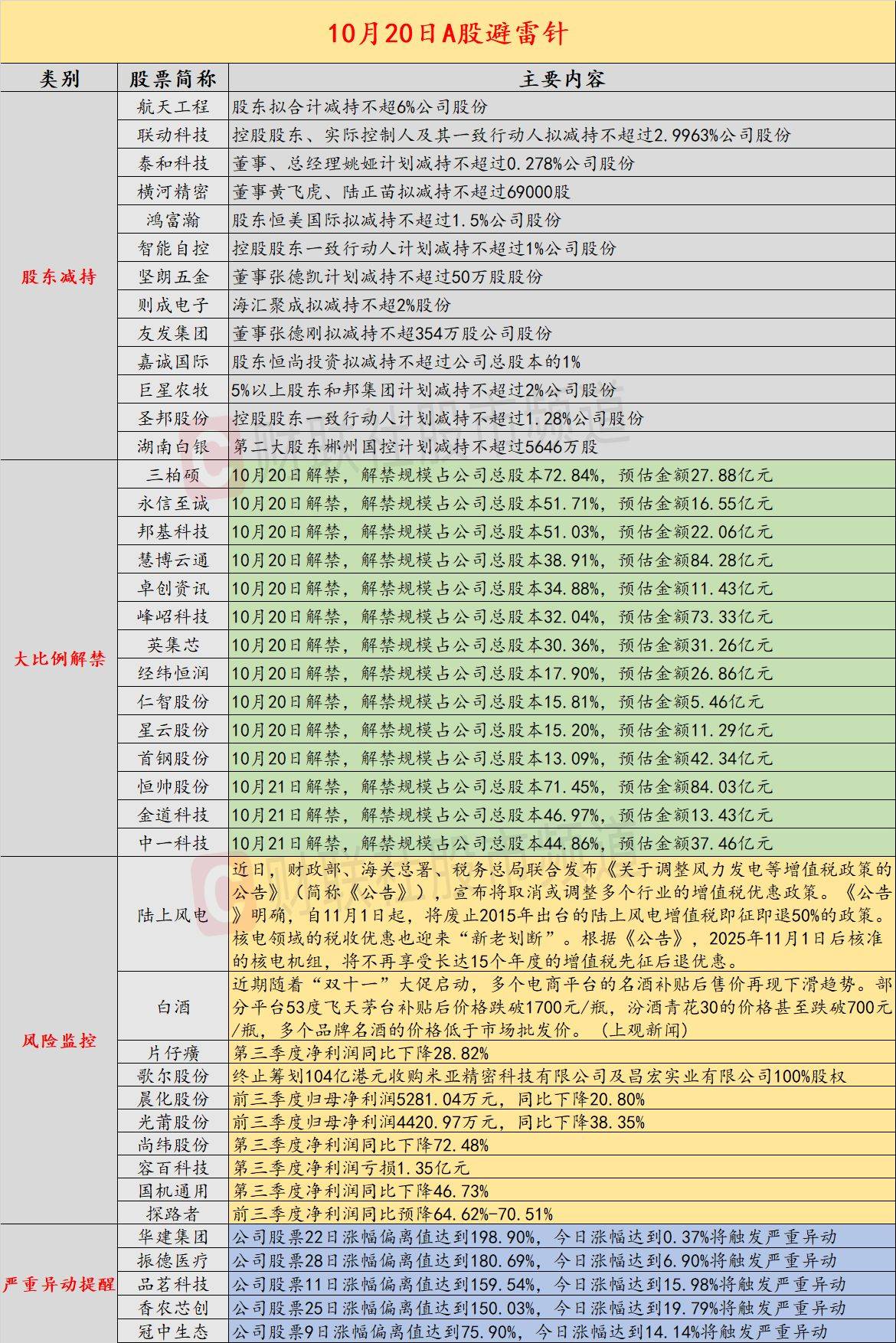
Group 1 - The recent announcement by the Ministry of Finance to abolish tax incentives for the wind power industry, which have been in place for eight years, and the countdown for nuclear power subsidies, indicates significant policy shifts in the energy sector [1][3] - The price of Moutai has dropped below 1700 yuan per bottle ahead of the "Double Eleven" shopping festival, suggesting a potential price war among e-commerce platforms [1][3] - The article highlights the historical context of market behavior, noting that during previous bull markets, retail investors often faced significant losses despite apparent gains in stock prices [4][6] Group 2 - The article discusses the implications of the recent tax policy changes on the wind and nuclear power sectors, emphasizing that these adjustments are not coincidental and may lead to market volatility [3][4] - It mentions that the price drop of premium liquor brands, including Moutai, reflects broader market dynamics and consumer behavior during promotional events [1][3] - The text emphasizes the importance of understanding institutional trading behavior and market sentiment, suggesting that retail investors should not be swayed by surface-level news [15][12]

投资200亿,士兰微挑战高端模拟芯片制造
3 6 Ke· 2025-10-20 12:55
Core Viewpoint - The announcement by Silan Microelectronics to invest 20 billion RMB in building a 12-inch high-end analog chip production line in Xiamen highlights the company's ambition to enhance its capabilities in the analog chip market, which is currently dominated by foreign firms like Texas Instruments and Analog Devices [1][9]. Company Overview - Silan Microelectronics, established in 1997 and listed in 2003, has evolved into a comprehensive semiconductor company involved in chip design, manufacturing, and packaging, with projected revenues of 12.68 billion RMB for 2024 and total assets of approximately 24.8 billion RMB [1][4]. Investment Details - The project involves a total investment of 20 billion RMB, with a planned capacity of 45,000 wafers per month, implemented in two phases. The first phase will cost 10 billion RMB, aiming for a monthly capacity of 20,000 wafers, while the second phase will add an additional 25,000 wafers per month [6][8]. Market Context - The global analog chip market is projected to reach 79.43 billion USD in 2024, with a forecasted growth to 83.16 billion USD in 2025, indicating a 4.7% increase [8]. In China, the analog chip market is expected to grow significantly, with a projected size of 195.3 billion RMB in 2024, accounting for about 35% of the global market [9]. Competitive Landscape - The analog chip market is heavily influenced by major players such as Texas Instruments and Analog Devices, which dominate both the global and Chinese markets. The domestic self-sufficiency rate for analog chips is currently around 16%, with even lower rates for automotive-grade chips [9][10]. Strategic Partnerships - Silan Microelectronics has entered into strategic cooperation agreements with local governments and investment groups to facilitate the establishment of the new production line, indicating a collaborative approach to enhance local semiconductor manufacturing capabilities [4][5]. Future Outlook - The investment in the analog chip production line is seen as a critical step for Silan Microelectronics to capture market share in a rapidly growing sector, particularly as demand for specialized chips in automotive and industrial applications continues to rise [8][9].


圣邦股份董事林林拟套现约5.9亿元 此前已套现15.7亿
Zhong Guo Jing Ji Wang· 2025-10-20 07:09
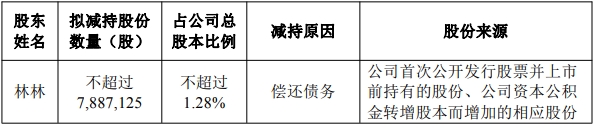
Core Viewpoint - The controlling shareholder's action person, Lin Lin, plans to reduce his shareholding in Shengbang Co., Ltd. through block trading and centralized bidding, with a maximum reduction of 7,887,125 shares, accounting for 1.28% of the total share capital [1][2]. Shareholding Reduction Plan - Lin Lin currently holds 31,548,497 shares, representing 5.10% of the total share capital [1]. - The reduction period is set from November 10, 2025, to February 9, 2026, which is 15 trading days after the announcement [1]. - The estimated amount from the reduction, based on the closing price of 74.48 yuan per share, is up to 587 million yuan [2]. Background Information - The controlling shareholder of Shengbang Co., Ltd. is Hongshun Xiangtai, with Zhang Shilong as the actual controller [2]. - Lin Lin has previously reduced his holdings, having initially held 13,786,000 shares (8.81% of total shares) and has cumulatively reduced 8,868,300 shares, realizing approximately 1.573 billion yuan [2].
500亿芯片龙头,买下一张入场券
投中网· 2025-10-20 06:45
Core Viewpoint - The semiconductor industry is experiencing significant merger and acquisition activity, exemplified by the acquisition of 77.54% of Yicun Semiconductor by Shengbang Co., which highlights the industry's consolidation and evolution [5][6]. Group 1: Company Overview - Shengbang Co. was founded by Zhang Shilong, who returned to China after studying in the U.S. and aimed to fill the domestic gap in the analog chip market [8][9]. - The company has expanded its product line from operational amplifiers and LDOs to cover a wide range of applications, partnering with TSMC for high-quality production [8][9]. - Shengbang Co. became the first A-share listed company focused on analog chip design in China, abandoning plans for overseas listing in favor of domestic growth [9]. Group 2: Financial Performance - In 2021, Shengbang Co. achieved significant financial growth, with revenue and net profit increasing by 87.07% and 142.41%, respectively, reaching a market cap of over 900 billion [10]. - However, from 2022 to 2024, the company faced declining revenue and net profit due to a downturn in the global semiconductor market and weak demand in downstream sectors [10][11]. - The 2025 mid-year report showed revenue of 1.819 billion, a 15.37% increase, but net profit growth slowed to 12.42%, with a notable decline in non-recurring net profit [13][14]. Group 3: Strategic Moves - Shengbang Co. is actively investing in high-growth emerging applications, with a focus on automotive electronics, AI, and renewable energy, while increasing R&D spending to 5.08 billion, representing 27.9% of total revenue [15][16]. - The recent acquisition of Yicun Semiconductor aims to enhance Shengbang's product matrix in storage chips, addressing the growing demand for automotive-grade storage solutions [18]. - The company is also seeking to list in Hong Kong, indicating a need for a compelling narrative to attract investors amid competition from established global players [19].

圣邦股份跌2.08%,成交额11.54亿元,主力资金净流出1.30亿元
Xin Lang Cai Jing· 2025-10-20 06:00
Core Viewpoint - Shengbang Microelectronics has experienced a decline in stock price recently, with significant trading activity and changes in shareholder composition, indicating potential volatility and investor interest in the semiconductor sector [1][2][3]. Financial Performance - As of June 30, 2025, Shengbang Microelectronics reported a revenue of 1.819 billion yuan, representing a year-on-year growth of 15.37%, and a net profit attributable to shareholders of 201 million yuan, up 12.42% year-on-year [2]. - The company has distributed a total of 557 million yuan in dividends since its A-share listing, with 250 million yuan distributed over the past three years [3]. Stock Market Activity - On October 20, 2023, Shengbang's stock price fell by 2.08% to 72.93 yuan per share, with a trading volume of 1.154 billion yuan and a turnover rate of 2.62%, leading to a total market capitalization of 45.072 billion yuan [1]. - The stock has increased by 16.22% year-to-date but has seen a decline of 14.68% over the past five trading days [1]. Shareholder Composition - As of June 30, 2025, the number of shareholders increased by 31.13% to 48,400, with an average of 12,245 shares held per shareholder, a slight decrease of 0.51% [2]. - Major shareholders include Hong Kong Central Clearing Limited and several mutual funds, with notable increases in holdings among these institutional investors [3].
全球影像,进入中国时间
雷峰网· 2025-10-20 04:06
Core Viewpoint - The article emphasizes the transformation of the imaging industry, highlighting China's emerging dominance in this sector through technological advancements and market dynamics [1][2]. Group 1: Evolution of the Imaging Industry - The imaging industry has undergone significant changes, transitioning from traditional camera dominance to mobile imaging, driven by technological breakthroughs and market demands [2][3]. - The shift from cameras to smartphones as the primary imaging device marks the third transition in the industry, with Chinese companies leading this change [7][8]. - The global camera sales peaked at 120 million units in 2010 but are projected to decline to 8.3 million units by 2024, while smartphone shipments are expected to rise from 297 million units in 2010 to 1.24 billion units by 2024 [5][6]. Group 2: Technological Advancements - The rapid iteration of smartphone sensors, particularly the transition from CCD to CMOS technology, has allowed for significant advancements in pixel density and processing speed [9][10]. - The processing capabilities of smartphones have surpassed those of traditional cameras, with smartphones utilizing advanced 3nm/5nm chips for complex image processing, while cameras often rely on older technology [11][12]. - The integration of a complete ecosystem for mobile imaging, including shooting, processing, and sharing, has created a unique advantage for Chinese companies in the imaging market [13][14]. Group 3: China's Competitive Advantages - China's massive mobile imaging market is a key driver of innovation and investment, fostering a robust supply chain and manufacturing capabilities [16][17]. - The vertical integration of the supply chain in China enhances efficiency and reduces costs, allowing for rapid innovation and responsiveness to market demands [18][19]. - The combination of AI and large-scale manufacturing capabilities in China supports the development of advanced imaging technologies and products [21][22]. Group 4: User-Centric Innovation - The focus on user needs drives innovation in the imaging sector, with companies like OPPO leveraging consumer insights to enhance product offerings [29][30]. - OPPO's Find X9 series exemplifies the integration of high pixel counts with superior image quality, addressing specific user demands for clarity and emotional resonance in photography [32][33]. - The article highlights the importance of understanding user behavior and preferences in shaping the future of imaging technology [30][31]. Group 5: Future Outlook - The article concludes with a positive outlook for China's imaging industry, anticipating significant advancements and global recognition in the coming decade [51].