
OPPO

Search documents
库克暗示,iPhone Ultra 要来了
Sou Hu Cai Jing· 2026-02-02 04:17
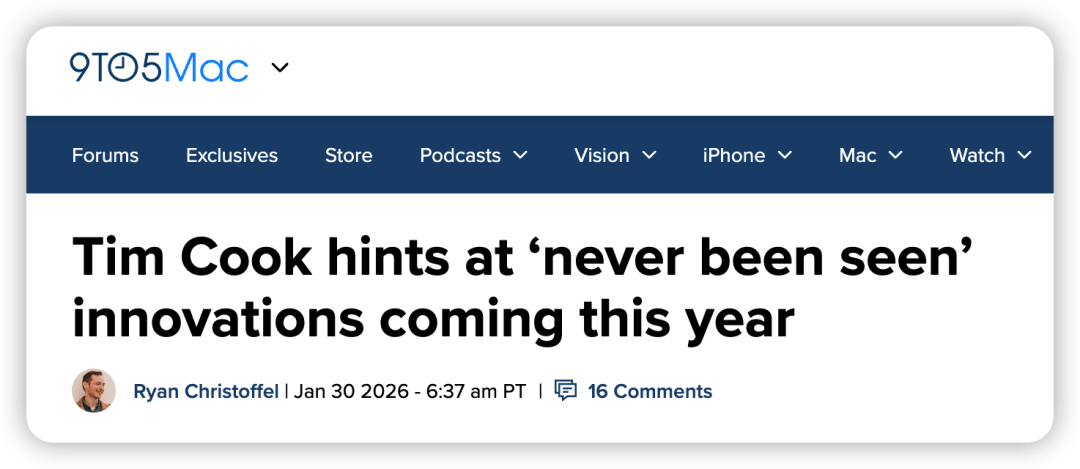
Core Insights - Apple has reported a record quarterly revenue of $143.8 billion, marking a 16% year-over-year increase, driven by the success of the iPhone 17 series [1] - CEO Tim Cook emphasized the significance of the quarter and hinted at unprecedented innovations coming in the next year, aiming to enhance user experiences [1] Financial Performance - The quarterly revenue reached $143.8 billion, approximately 1 trillion yuan, achieving the highest quarterly revenue in the company's history [1] - Year-over-year growth of 16% indicates strong market performance and consumer demand for Apple products [1] Product Innovations - Apple is expected to launch over 20 new hardware products this year, with most being routine upgrades for iPad, Mac, and Apple Watch [2] - The highly anticipated products include a foldable iPhone and Apple smart glasses, which are expected to be groundbreaking [2] Foldable iPhone Details - The foldable iPhone, potentially named iPhone Ultra, is rumored to feature an inward folding design with a 7.8-inch external display and a 5.5-inch internal display [2] - The device is expected to have a thickness of 9mm when fully folded, slightly thicker than the iPhone 17 Pro Max [2] Technical Specifications - The iPhone Ultra is anticipated to be powered by the A20 Pro chip, utilizing TSMC's new 2nm process, offering a 15% performance boost and a 30% increase in energy efficiency compared to the A19 chip [4] - The foldable iPhone may also incorporate design elements from the OPPO Find N5, indicating a shared component sourcing strategy [4] - A battery capacity of approximately 5500mAh is expected, which would be the largest ever for an iPhone [4] Release Timeline - The foldable iPhone is expected to be released as early as September this year, generating significant anticipation in the market [4]


手机产业链全线走低 12月手机销量同比下滑20% 内存涨价或抑制手机出货量
Zhi Tong Cai Jing· 2026-02-02 04:06
Core Viewpoint - The smartphone supply chain is experiencing a significant downturn, with major companies seeing declines in stock prices and forecasts indicating a drop in smartphone sales in China by approximately 20% year-on-year by December 2025 [1] Group 1: Company Performance - QiuTai Technology (01478) shares fell by 5.91%, trading at HKD 8.75 [1] - BYD Electronics (00285) shares decreased by 4.13%, trading at HKD 32.02 [1] - GoerTek (01415) shares dropped by 3.76%, trading at HKD 29.14 [1] Group 2: Market Forecasts - China's smartphone sales are projected to reach approximately 21 million units by December 2025, reflecting a year-on-year decline of about 20% [1] - Goldman Sachs has revised its global smartphone shipment forecasts for 2026/27 down by 6% and 5% to 1.2 billion units for both years, indicating a year-on-year change of -6% and +2% respectively [1] Group 3: Market Share - The top five smartphone brands in China by market share are Huawei (20%), OPPO (17%), Honor (14%), Vivo (14%), and Apple (13%) [1]

港股异动 | 手机产业链全线走低 12月手机销量同比下滑20% 内存涨价或抑制手机出货量
智通财经网· 2026-02-02 04:04
Group 1 - The smartphone industry is experiencing a decline, with major companies like Q Technology, BYD Electronics, and GoerTek seeing significant stock price drops of 5.91%, 4.13%, and 3.76% respectively [1] - By December 2025, China's smartphone sales are projected to reach approximately 21 million units, representing a year-on-year decrease of about 20% [1] - The top five smartphone brands in China by market share are Huawei (20%), OPPO (17%), Honor (14%), vivo (14%), and Apple (13%) [1] Group 2 - Goldman Sachs has revised its global smartphone shipment forecasts for 2026/27 down by 6% and 5% to 1.2 billion units for both years, indicating a year-on-year change of -6% and +2% respectively [1] - The decline in smartphone shipments is attributed to rising memory prices impacting the overall market [1]
华为Mate80销量超上代同期,苹果均价突破1000美元
Guan Cha Zhe Wang· 2026-02-02 03:51
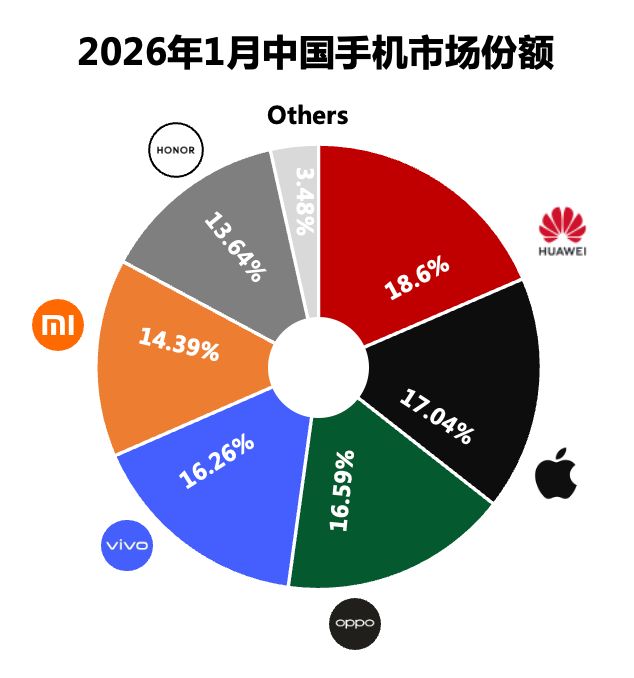
2月2日,第三方调研机构公布的销量数据(Sell out)显示,今年1月,华为以18.6%的的份额再度成为 中国手机市场第一,苹果没有被甩开太大差距,以17.04%的份额紧随其后,OPPO和vivo的份额均在 16%以上,而小米和荣耀分别以14.39%和13.64%的份额位列第五和第六名。 但长期来看,苹果也并非没有难题。 而在华为Mate80上市前,苹果iPhone17系列已在中国打出亮眼表现。根据IDC数据,2025年四季度,苹 果手机在国内市场出货量达1600万台,同比增长21.5%,份额增长至21.2%,均排名市场第一。同期, 苹果大中华区营收达255.26亿美元,同比大增38%。 国外科技媒体 Appleinsider 指出,苹果此前在中国市场已经历了一段漫长的"阵痛期"。面对华为、小米 等本土竞争对手的竞争,iPhone的市场份额曾一度遭到挤压,销量持续呈现下滑趋势,甚至在"双十 一"等关键促销节点,即便采取降价策略也未能完全止住跌势,然而iPhone17系列"加量不加价",叠加 国补的助推扭转了这一局面,帮助苹果重新夺回了市场主导权。 从全球格局来看,苹果不仅市占率第一,也牢牢主导着高端市场。C ...
高价值专利助力培育新质生产力(新春走基层)
Ren Min Ri Bao· 2026-02-02 03:19
开栏的话 今年是中国共产党成立105周年,是"十五五"开局之年。新的一年,新的奋斗,新的进发。"一起为梦想 奋斗、为幸福打拼,把宏伟愿景变成美好现实"的殷殷期望催人奋进。 人民日报今起开设"新春走基层"专栏,编辑记者践行"四力",奔赴基层一线采访,看山河壮丽、大地丰 饶的大国气象,听心有所悦、业有所成的百姓故事,展现中国式现代化的壮美华章。 临近春节,在消费品以旧换新政策带动下,各地商场的手机店吸引了大量客流,新品销售火热。 湖北武汉楚河汉街一家手机店里,消费者张先生正在体验折叠屏手机,"既方便携带,还能'尝鲜'新功 能。" 门店工作人员介绍,随着折叠屏等创新形态逐步进入主流手机市场,再加上人工智能语音助手等功能上 新,消费者购机热情高涨。2025年,我国手机市场规模突破万亿元。折叠屏手机市场出货量超过1000万 台,同比增长9.2%。 "折叠屏手机融合材料科学、先进制造和软件生态创新,我们在该领域持续研发超过8年,累计获得超过 3500件相关专利。今年,我们还将推出新一代产品。"OPPO首席知识产权官冯英介绍,截至2025年底, OPPO全球专利申请量超过11.8万件,全球专利授权数量超过6.6万件。其中, ...
苹果大中华区表现靓丽,上海市“火箭星城”方案发布
Ping An Securities· 2026-02-02 02:00
证券研究报告 苹果大中华区表现靓丽, 上海市 "火箭星城"方案发布 电子行业 强于大市(维持) 平安证券研究所 电子团队 分析师:杨钟 S1060525080001(证券投资咨询) 徐勇 S1060519090004(证券投资咨询) 邮箱: YANGZHONG035@pingan.com.cn XUYONG318@pingan.com.cn 2026年2月2日 请务必阅读正文后免责条款 核心摘要 苹果财报发布,关注产业链新品。苹果公司发布了截至2025年12月27日的2026财年第一季度财务业绩,2026年第一季 度苹果营收达1437.56亿美元,同比增长16%;净利润420.97亿美元,同比增长16%。iPhone作为核心增长引擎,表现 亮眼,营收达852.69亿美元,同比增长23%,占总营收比重为59.3%。服务业务收入达300.13亿美元,同比增长14%; iPad业务收入85.95亿美元,同比增长6%。Mac业务收入83.86亿美元,同比下降7%;可穿戴、家居及配件业务收入 114.93亿美元,同比下降2%。区域市场表现上,大中华区营收为255.26亿美元,同比增长38%;美洲区营收同比增长 11%, ...
未知机构:存储芯片核心要点1HBF在AI服务器中用于部分替代HBM-20260202
未知机构· 2026-02-02 02:00
Summary of Key Points from Conference Call Records Storage Chips 1. HBF is expected to partially replace HBM in AI servers, balancing performance and cost, with mass production anticipated between Q4 2026 and Q1 2027 at a price of approximately $10–11 per GB [1] 2. HBF is beneficial for SanDisk and Kioxia as they do not engage in HBM business, allowing them to expand their market through HBF [1] 3. The supply and demand for HBM is currently balanced, with plans to increase production capacity to 476,000 wafers per month by 2026, suggesting a stable decline in HBM prices in 2026 [1] RF Chips 1. The RF chip industry is expected to experience moderate recovery in 2026, with intense price competition in the 4G sector, while the 5G sector's L-PAMiD modules maintain a profit margin exceeding 20%, indicating relatively eased competition [2] 2. Satellite direct connection for mobile phones is emerging as a new growth driver, with the Mate80 series supporting low-altitude direct connection in collaboration with Zhaoshengwei; Xiaomi, Vivo, OPPO, and Samsung are following suit [2] AI Programming 1. Current AI programming tools are categorized into three main types: plugin-based, AI-native IDEs, and agent-based, represented by GitHub Copilot, Cursor, and Claude Code respectively [2] 2. GitHub Copilot is leading in commercialization with a monthly active user payment rate exceeding 20%; Cursor's latest ARR has reached $1 billion; Claude Code's API call volume is approximately 60% of Anthropic's, indicating significant revenue potential [2] 3. Leading domestic programming models include DeepSeek, Zhiyu, Alibaba Qianwen, and Kimi, with a focus on the B2B market, while C2C offerings remain free and IDE products are currently underperforming [2] Tires 1. The global demand for giant tires is projected to grow by 35% from 2025 to 2029, primarily driven by increased demand from overseas mining projects [3] 2. Foreign brands like Michelin, Bridgestone, and Goodyear plan to raise giant tire prices by over 10% in 2026, while domestic brands like Haian will not increase prices to capture market share [3] 3. Haian's growth in overseas markets this year is mainly focused on Russia, Northwest Africa, and South Africa, with other domestic brands like Sailun and Zhongce also accelerating their international expansion [3] Pharmacies 1. Recent policy documents appear macro in nature and lack specific measures, but they provide a framework and space for subsequent detailed regulations from various ministries [4] 2. The industry is still undergoing a natural clearance process, with an expected annual exit of 10,000 to 20,000 stores, suggesting a dynamic balance may be reached when the total number of stores stabilizes around 600,000 [4] 3. The average order value for O2O has increased from below 50 yuan to approximately 55 yuan, with future O2O growth expected to maintain over 20% [4]
2月新机前瞻汇总:次世代手机出现,折叠再细分,新机不再走同一条路
3 6 Ke· 2026-02-02 00:22
Core Insights - The mobile market in 2026 is expected to focus on differentiation rather than uniformity, with manufacturers exploring various strategies to address core issues like user experience and battery life [1][4][42] Group 1: Product Innovations - iQOO 15 Ultra marks the brand's first foray into the high-end market, emphasizing performance and user experience with features like a 2K Samsung screen and advanced cooling systems [5][8][11][14] - Samsung's Galaxy S26 series, set to launch on February 25, will include the Exynos 2600 processor, which is the first mobile chip using 2nm technology, although its real-world performance may not match competitors [15][18][20][21] - Huawei's Pura X2 is anticipated to enhance the user experience of foldable phones through improved software and system adaptations, alongside hardware upgrades [22][23][25][26] - The iPhone 17e aims to capture a broader user base by offering a more affordable option while maintaining essential features, potentially impacting the market significantly [27][29][33] - OPPO Find N6 is positioned as a strong competitor to Apple's foldable offerings, featuring advancements that address common issues like screen creases [34][37][39] Group 2: Market Trends - The upcoming product releases indicate a shift from a "one-size-fits-all" approach to more targeted offerings that cater to specific user needs [4][42] - The differentiation strategy allows consumers to make more informed choices based on their preferences rather than being overwhelmed by technical specifications [42] - The new product launches are expected to coincide with promotional events, providing opportunities for consumers to purchase devices at more accessible price points [40][41]
推动科技创新和产业创新深度融合 高价值专利助力培育新质生产力(新春走基层)
Ren Min Ri Bao· 2026-02-01 22:31
开栏的话 今年是中国共产党成立105周年,是"十五五"开局之年。新的一年,新的奋斗,新的进发。"一起为梦想 奋斗、为幸福打拼,把宏伟愿景变成美好现实"的殷殷期望催人奋进。 本报今起开设"新春走基层"专栏,编辑记者践行"四力",奔赴基层一线采访,看山河壮丽、大地丰饶的 大国气象,听心有所悦、业有所成的百姓故事,展现中国式现代化的壮美华章。 临近春节,在消费品以旧换新政策带动下,各地商场的手机店吸引了大量客流,新品销售火热。 湖北武汉楚河汉街一家手机店里,消费者张先生正在体验折叠屏手机,"既方便携带,还能'尝鲜'新功 能。" 门店工作人员介绍,随着折叠屏等创新形态逐步进入主流手机市场,再加上人工智能语音助手等功能上 新,消费者购机热情高涨。2025年,我国手机市场规模突破万亿元。折叠屏手机市场出货量超过1000万 台,同比增长9.2%。 "折叠屏手机融合材料科学、先进制造和软件生态创新,我们在该领域持续研发超过8年,累计获得超过 3500件相关专利。今年,我们还将推出新一代产品。"OPPO首席知识产权官冯英介绍,截至2025年底, OPPO全球专利申请量超过11.8万件,全球专利授权数量超过6.6万件。其中,发明 ...
AI周观察:腾讯元宝开启AI入口战,12月国内消费电子表现不佳
SINOLINK SECURITIES· 2026-02-01 12:14
Investment Rating - The report does not explicitly state an investment rating for the industry Core Insights - The report highlights a significant decline in China's smartphone sales, projecting approximately 21 million units sold in December 2025, representing a year-on-year decrease of about 20% [12] - Major smartphone brands such as Huawei, OPPO, Honor, vivo, and Apple hold market shares of approximately 20%, 17%, 14%, 14%, and 13% respectively, with Huawei's Mate X6 being the top-selling model [12][18] - The domestic PC market shows a mixed performance, with desktop sales increasing by about 9% to approximately 1.92 million units, while laptop sales decreased by about 9% to around 2.15 million units [19] Summary by Sections Overseas Market Review - The report notes the ongoing rise in activity for overseas AI-related stocks, with companies like Meta, Apple, and Broadcom showing positive weekly performance [6] Consumer Electronics Dynamics - The report emphasizes the severe decline in the domestic smartphone market, with Huawei leading in market share and specific models like Mate X6 and Mate X7 performing well [12][18] - The report also indicates a downturn in laptop sales while desktop sales have shown some recovery [19]