宁波银行

Search documents
资本市场丨证券板块:估值弹性待政策催化
Sou Hu Cai Jing· 2025-08-18 05:55
Core Viewpoint - The financial sector, including banking, insurance, and securities, is experiencing varied performance in the first half of 2025, with potential for steady growth if the economy continues to recover [1][3]. Banking Sector - In the first half of 2025, commercial banks achieved a net profit of 1.2 trillion yuan, a decrease of 1.2% compared to the same period in 2024 [13]. - The performance of banks is expected to remain differentiated, with larger banks facing pressure from shrinking interest margins, while smaller regional banks may perform better due to their agility in serving local economies [13][15]. - The net interest margin is projected to stabilize slightly in the second half of 2025, supported by potential monetary policy adjustments [15][16]. Insurance Sector - The insurance sector showed steady growth in the first half of 2025, with total premium income reaching 3.74 trillion yuan, a year-on-year increase of approximately 5% [16]. - The sector is characterized by a shift towards more sustainable products and increased equity investments, with life insurance companies' stock investments rising nearly 50% year-on-year [16][17]. - The insurance industry is expected to maintain a valuation recovery of 10% to 15% in the medium term, driven by improved investment returns and regulatory support [17][18]. Securities Sector - The securities industry saw significant improvement, with 45 listed brokerages having a total market capitalization of approximately 4.32 trillion yuan, accounting for 7.1% of the total A-share market [4][19]. - The average daily trading volume in the Shanghai and Shenzhen markets reached about 1.36 trillion yuan, a nearly 30% increase year-on-year, indicating heightened market activity [4][19]. - The sector is anticipated to benefit from policy catalysts and a potential 20% valuation recovery if key economic policies are implemented [3][22].


二季度末商业银行净息差降至1.42%
Zheng Quan Ri Bao· 2025-08-17 16:44
Core Viewpoint - The overall performance of China's banking industry shows strong operational resilience and development momentum, with stable growth in scale, profitability, and improving asset quality as of the second quarter of this year [1][7]. Group 1: Financial Indicators - As of the end of Q2, the total assets of China's banking financial institutions reached 467.34 trillion yuan, a year-on-year increase of 7.9% [1]. - The non-performing loan (NPL) ratio for commercial banks was 1.49%, a decrease of 0.02 percentage points from the previous quarter [1][3]. - In the first half of the year, commercial banks achieved a cumulative net profit of 1.2 trillion yuan [1]. Group 2: Net Interest Margin - The net interest margin (NIM) for commercial banks was 1.42% at the end of Q2, down by 0.01 percentage points from the end of Q1 [2]. - Different types of banks experienced varying degrees of NIM decline, with private banks seeing the largest drop [2]. - The NIMs for large commercial banks, joint-stock commercial banks, and private banks were 1.31%, 1.55%, and 3.91%, respectively [2]. Group 3: Asset Quality - The non-performing loan balance for commercial banks was 3.4 trillion yuan, a decrease of 2.4 billion yuan from the previous quarter [3]. - The provision coverage ratio for commercial banks was 211.97%, an increase of 3.84 percentage points from the previous quarter [4]. Group 4: Asset Growth by Bank Type - As of the end of Q2, the total assets of large commercial banks, joint-stock commercial banks, urban commercial banks, rural financial institutions, and other financial institutions were 204.22 trillion yuan, 75.73 trillion yuan, 64.32 trillion yuan, 60.16 trillion yuan, and 62.91 trillion yuan, respectively [5]. - Large commercial banks and urban commercial banks had total asset growth rates exceeding the industry average of 7.9% [5]. - The asset share of large commercial banks and urban commercial banks increased compared to the previous quarter, reaching 43% and 14.0%, respectively [5][6]. Group 5: Market Structure and Future Outlook - The current structure of China's banking industry is characterized by a multi-tiered development pattern, with large commercial banks leading, medium-sized banks developing unique features, and small banks competing differently [7]. - The concentration of asset share among large commercial banks is expected to strengthen this layered competitive structure [7]. - Large commercial banks are well-positioned to meet the financing needs of major national strategies and the real economy due to their strong capital and risk resistance capabilities [7].

银行业周报(20250811-20250817):结构比总量更重要,银行信贷结构有望调优-20250817
Huachuang Securities· 2025-08-17 13:46
Core Insights - The report emphasizes that the structure of bank credit is more important than the total amount, indicating a potential adjustment in the credit structure of banks [1][7] - The report suggests that the effective credit demand from enterprises is expected to recover as the adjustment of excess production capacity comes to an end [2] Industry Overview - The report highlights the need for industry structure optimization to accelerate the elimination of excess capacity, particularly in sectors like automotive, photovoltaic, lithium batteries, steel, and cement [2] - The central bank has increased the quota for re-loans for technological innovation and technical transformation by 300 billion yuan, with the balance of technology loans reaching 44.1 trillion yuan, growing by 12.5% year-on-year [2] - The loan structure has shifted from over 60% in real estate and infrastructure loans in 2016 to approximately 70% in the "five major articles" of finance currently [2] Market Performance - The report notes that during the week of August 11 to August 17, 2025, the major indices saw significant increases, with the Shanghai Composite Index rising by 1.70% and the ChiNext Index by 8.58% [7] - The banking index experienced a weekly decline of 3.19%, underperforming the CSI 300 index by 5.57 percentage points [7] Investment Recommendations - The report recommends focusing on the banking sector for medium to long-term investments, highlighting that the overall allocation to banks has increased but remains insufficient [3][8] - Specific banks recommended for investment include state-owned banks (A+H) and stable joint-stock banks such as China Merchants Bank (A+H), CITIC Bank (A+H), and Industrial Bank, as well as high-quality regional banks with strong provisioning coverage [8] Profit Forecasts and Valuations - The report provides earnings per share (EPS) and price-to-earnings (PE) ratios for several banks, indicating a positive outlook for banks like Ningbo Bank, Jiangsu Bank, and China Merchants Bank, with recommendations to buy [9]



本周聚焦:25Q2银行经营数据、货币政策执行报告:利润降幅收窄,信贷结构持续优化
GOLDEN SUN SECURITIES· 2025-08-17 10:24
Investment Rating - The report maintains an "Overweight" rating for the banking sector, indicating a positive outlook for the industry. Core Insights - The banking sector is experiencing a narrowing decline in profit growth, with a cumulative net profit of 1.24 trillion yuan in the first half of 2025, representing a year-on-year decrease of 1.2%, which is an improvement from the 2.3% decline in the first quarter [1][2] - The asset growth rate of commercial banks accelerated to 8.88% year-on-year in Q2 2025, up 1.7 percentage points from Q1 2025, driven by a low base effect from the previous year [1][2] - The report highlights a continuous optimization of credit structure, with significant increases in loans to technology, green, inclusive, and digital sectors, which now account for approximately 70% of new loans [7] Summary by Sections Banking Sector Performance - Profit growth decline narrowed to 1.2% in H1 2025, with non-interest income rising to 25.8% [1] - Asset growth rate reached 8.88% in Q2 2025, with state-owned banks showing a 10.4% growth [1][2] - Net interest margin slightly decreased to 1.42%, with state-owned banks at 1.31% [2] - Non-performing loan (NPL) ratio improved to 1.49%, with a notable decrease in rural commercial banks' NPL ratio to 2.77% [2] - Capital adequacy ratio increased to 15.58%, with all bank types showing improvements [2] Monetary Policy Execution - New loan interest rates decreased to 3.29% in June 2025, with significant drops in various loan categories [3] - The central bank's outlook on the macro economy has become more positive, indicating solid support for stable growth in the second half of 2025 [3] - The monetary policy remains moderately accommodative, focusing on maintaining stability and flexibility [3][6] Credit Structure Optimization - The report emphasizes the need for continuous optimization of credit structure, with a significant shift in loan distribution over the past decade [7] - Small and micro-enterprise loans have seen an annual growth rate of about 15%, increasing their share in corporate loans from 30.4% in 2014 to 38.2% in 2025 [7] - Technology loans reached a balance of 44.1 trillion yuan, growing by 12.5% year-on-year, with an average interest rate of 2.90% [7] Sector Outlook - The banking sector is expected to benefit from policy catalysts, with a focus on stocks that show positive fundamental changes and continuous improvement in financial statements [8] - Specific banks such as Ningbo Bank are recommended for their positive fundamental changes, while Jiangsu Bank and others are highlighted for their dividend strategies [8]



帮主郑重:银行二季报暗藏金矿!这三类银行要起飞?
Xin Lang Cai Jing· 2025-08-17 09:03
Core Insights - Recent bank earnings reports reveal hidden opportunities despite a seemingly stable surface, with particular attention on a city commercial bank that saw a 16% increase in net profit in Q2, attracting interest from UBS [1] Group 1: "Hardcore Players" with Profit Growth - A-share listed banks reported a 0.4% year-on-year increase in net profit in the first half of the year, driven by cost-cutting measures despite revenue pressures from interest rate cuts [3] - For instance, Shanghai Pudong Development Bank achieved a 16% year-on-year increase in net profit in Q2 by reducing liability costs to 1.39%, saving 2 billion in interest payments compared to last year [3] - UBS's global wealth management business earned $2.4 billion, with client assets soaring to $6.6 trillion, indicating a trend where even Warren Buffett is increasing his stake in these "easy money" banks [3] Group 2: "Sweeping Monks" with Improved Asset Quality - An unusual trend has emerged where the net interest margin (1.42%) is lower than the non-performing loan (NPL) ratio (1.49%), indicating a challenging environment for banks [4] - However, 12 out of 15 state-owned banks reported improvements in corporate NPL ratios, particularly in real estate-related loans, with a 0.3 percentage point decrease in bad debt rates as housing projects progress [4] - For example, China Merchants Bank's NPL ratio dropped to 0.94%, with a provision coverage ratio of 410%, suggesting strong financial backing for potential bad debts [4] Group 3: "Hidden Kings" with Strong Non-Interest Income - Banks are increasingly generating significant income from non-lending activities, with Changshu Rural Commercial Bank's wealth management fees surging by 39% in Q2 [5] - Ningbo Bank's fund distribution income doubled, and insurance sales increased by 27%, showcasing diverse revenue streams [5] - Notably, technology loans reached a balance of 44.1 trillion, with rates 0.32 percentage points lower than standard loans, aligning with policy responses while enhancing reputation [5] - A city commercial bank has utilized AI to automate 80% of standardized operations, reducing loan processing time from 15 days to 3 days and cutting labor costs by 60%, indicating a strong potential for profit growth driven by technology and wealth management [5]


4 张表看信用债涨跌(8/11-8/15)
SINOLINK SECURITIES· 2025-08-16 15:27
Report Summary 1. Core Viewpoints The report presents the valuation price deviations of different types of bonds, including AA-rated urban investment bonds, individual bonds with top net price declines, individual bonds with top net price increases, and Tier 2 and perpetual bonds with top net price increases [2]. 2. Summary by Category 2.1 Discounted AA Urban Investment Bonds - Among the top 50 AA urban investment bonds (by subject rating) with the largest discount margins, "25 Dongtou Group PPN001B" has the largest valuation price deviation, with a remaining term of 4.66 years, a valuation price deviation of -0.29%, a valuation net price of 102.18 yuan, and a valuation yield of 2.78% [2][4]. 2.2 Individual Bonds with Top Net Price Declines - Among the top 50 individual bonds with the largest net price declines, "21 Ningzhuan 01" has the largest valuation price deviation, with a remaining term of 3.00 years, a valuation price deviation of -23.99%, a valuation net price of 63.43 yuan, and a valuation yield of 1.99% [2][5]. 2.3 Individual Bonds with Top Net Price Increases - Among the top 50 individual bonds with the largest net price increases, "H1 Bidi 02" has the largest valuation price deviation, with a remaining term of 1.84 years, a valuation price deviation of 7.48%, a valuation net price of 4.31 yuan, and a valuation yield of 2468.03% [2][7]. 2.4 Tier 2 and Perpetual Bonds with Top Net Price Increases - Among the top 50 Tier 2 and perpetual bonds with the largest net price increases, "23 Weifang Bank Tier 2 Capital Bond 01" has the largest valuation price deviation, with a remaining term of 3.05 years, a valuation price deviation of 0.08%, a valuation net price of 105.36 yuan, and a valuation yield of 2.92% [2][9].
最高达6139亿元!一图了解银行个人消费贷款TOP10
天天基金网· 2025-08-15 11:22
Core Viewpoint - The recent implementation of the personal consumption loan interest subsidy policy by the Ministry of Finance, the People's Bank of China, and the financial regulatory authority aims to stimulate consumer spending through subsidized loans, with a focus on major banks and specific financial institutions [4]. Group 1: Policy Overview - The personal consumption loan subsidy policy will be effective from September 1, 2025, to August 31, 2026, allowing residents to receive a subsidy of 1% per year on loans used for consumption, capped at 50% of the loan contract interest rate [4]. - A total of 23 lending institutions are included in the policy, comprising 6 large state-owned commercial banks, 12 national joint-stock commercial banks, and 5 other personal consumption loan providers [4]. Group 2: Loan Balances - In 2024, 16 banks reported personal consumption loan balances exceeding 100 billion yuan, with the top ten banks surpassing 300 billion yuan, indicating a significant concentration of loan balances among leading banks [4]. - Postal Savings Bank leads with a loan balance of 613.9 billion yuan, followed by China Construction Bank at 544.9 billion yuan and Agricultural Bank of China at 491.4 billion yuan [3][4]. Group 3: Bank Rankings - Among the top ten banks, five are large state-owned commercial banks, while three national joint-stock commercial banks also made the list: Ping An Bank (4th), China Merchants Bank (6th), and CITIC Bank (10th) [5]. - Notable performances include Ping An Bank with a balance of 474.7 billion yuan, surpassing Industrial and Commercial Bank of China at 421.2 billion yuan, and Ningbo Bank at 357.5 billion yuan, slightly ahead of Bank of Communications at 330.3 billion yuan [5].


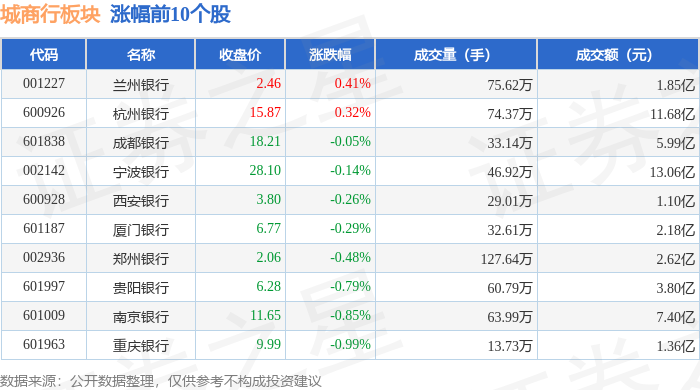
城商行板块8月15日跌0.92%,齐鲁银行领跌,主力资金净流出3.14亿元
Zheng Xing Xing Ye Ri Bao· 2025-08-15 08:37
证券之星消息,8月15日城商行板块较上一交易日下跌0.92%,齐鲁银行领跌。当日上证指数报收于 3696.77,上涨0.83%。深证成指报收于11634.67,上涨1.6%。城商行板块个股涨跌见下表: | 代码 | 名称 | 收盘价 | 涨跌幅 | 成交量(手) | 成交额(元) | | | --- | --- | --- | --- | --- | --- | --- | | 001227 | 兰州银行 | 2.46 | 0.41% | 75.62万 | | 1.85亿 | | 600926 | 杭州银行 | 15.87 | 0.32% | 74.37万 | | 11.68亿 | | 601838 | 成都银行 | 18.21 | -0.05% | 33.14万 | | 5.99亿 | | 002142 | 宁波银行 | 28.10 | -0.14% | 46.92万 | | 13.06亿 | | 600928 | 西安银行 | 3.80 | -0.26% | 29.01万 | | 1.10亿 | | 601187 | 厦门银行 | 6.77 | -0.29% | 32.61万 | | 2.18亿 | | ...

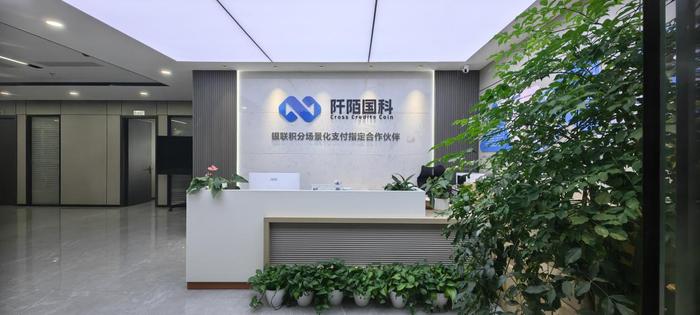
阡陌数字:以积分场景化支付创新 赋能贵阳贵安数字经济新生态
Huan Qiu Wang· 2025-08-15 02:52
在贵阳贵安数字经济加速崛起的浪潮中,一批新业态企业正以创新动能激活产业发展活力。作为贵州 省"强省会"战略引进的数字经济新业态企业,贵州阡陌数字科技有限公司(以下简称阡陌数字)自2023 年7月成立以来,通过积分场景化支付,将沉睡的银行积分变成拉动消费的"活资金",不仅成为激活消 费潜力的新引擎,更成为贵阳贵安数字经济发展的重要参与者。 图 阡陌数字这种"技术+运营"的双重服务,目前已吸引中国银行、平安银行、宁波银行、贵阳银行等近70 家银行接入,覆盖京东、网易严选、永辉超市、沃尔玛等2500+国民级消费品牌,为银行、电信运营 商、航空、保险、证券、石油石化、连锁商超、连锁酒店等八大行业客户提供个性化数字解决方案。 如何更好地挖掘消费潜力,激活消费内生动力,提升与用户之间的黏性?阡陌数字的破局之道则是创新 推出了积分场景化支付模式,通过自建系统打通支付结算终端,让用户在微信、支付宝、美团、淘宝等 全场景支付时可直接用积分抵扣现金。 据介绍,阡陌数字主要为银行积分提供场景化解决方案并负责具体运营管理,其业务模式大致分为三 步:第一步,银联用户在线上线下消费支付时,可选择用自身银联卡积分替代货币进行支付;第二步, ...
江苏球迷专属!宁波银行宁苏锡三城联动打造“苏超能量站”
Jiang Nan Shi Bao· 2025-08-15 02:21
Core Viewpoint - Ningbo Bank is leveraging financial innovation to activate the consumption market in Jiangsu, creating a comprehensive service network that integrates work, life, and flow circles to enhance consumer experiences and drive regional economic growth [3][5][12]. Group 1: Financial Innovation and Consumer Engagement - Ningbo Bank has implemented various consumer engagement activities, such as the "Our Home Ground" event for soccer fans, which combines financial services with sports and entertainment to enhance customer loyalty and participation [4][5]. - The bank's strategy includes a three-dimensional approach of "scene ecology + digital platform + inclusive finance," which has established it as a key player in Jiangsu's new consumption market since its establishment in 2008 [3][5]. Group 2: Consumption Ecosystem Development - The bank has created a consumption ecosystem that includes over 6000 high-frequency consumption scenarios across its branches in Nanjing, Suzhou, and Wuxi, focusing on local consumer needs and preferences [9][10]. - In Nanjing, the bank's deposit balance has exceeded 150 billion yuan, with total assets reaching 220 billion yuan, while in Suzhou, the deposit scale has reached 151.4 billion yuan, and total assets have surpassed 250 billion yuan [9][10]. Group 3: Digital Empowerment and Service Integration - The "Beautiful Life" platform serves as the core of Ningbo Bank's consumption ecosystem, integrating consumer discounts, merchant traffic, and financial services into a single local life service platform [15]. - The platform has introduced various promotional activities, such as "Thursday Half Price" and "Brand Chain List," which have successfully attracted significant consumer attention and engagement [15]. Group 4: Inclusive Finance and Community Impact - Ningbo Bank's approach to inclusive finance emphasizes expanding service coverage to unlock the consumption potential of low-income groups, thereby contributing to economic growth [16][17]. - The bank aims to play multiple roles, including being a financial advisor, a digital manager for businesses, and a value partner for customers, thereby fostering a symbiotic relationship between finance and the real economy [17].