
零跑汽车

Search documents
蓝海华腾:新能源汽车旺季叠加订单稳增,2025年四季度迈入跨年增长周期
Quan Jing Wang· 2025-11-12 07:58
Group 1 - The core viewpoint of the article highlights the robust growth in the new energy vehicle (NEV) industry, with a strong production and sales momentum expected as the sector enters the peak consumption season [1][3] - In October 2025, several NEV manufacturers achieved record delivery volumes, with BYD's monthly sales surpassing 440,000 units and Leap Motor experiencing over 84% year-on-year growth, driving significant demand for upstream components [1][2] - Blue Ocean Huaten (300484) is positioned as a key supplier in the NEV sector, benefiting from a solid product portfolio and stable partnerships, ensuring high order fulfillment and production capacity during the peak season [1][2] Group 2 - The company's product strength is a critical factor for growth during the peak season, with its electric vehicle motor controllers featuring proprietary vector control technology, ensuring fast torque response and high speed accuracy [2] - In 2025, the company achieved breakthroughs in technology, including small-scale production of solid-state lithium batteries and successful flight of an eVTOL prototype, indicating new growth opportunities [2] - The company has deepened collaborations with major automotive players like BYD and Shaanxi Automobile Group, maintaining a stable order ratio from its top three clients, while also exploring new markets in the low-altitude economy [2] Group 3 - The synergy between policy incentives and industry trends is driving the steady increase in NEV penetration rates, with Blue Ocean Huaten leveraging core technologies and diverse partnerships to deliver value during the peak season [3] - As the company expands its supply scale and launches new business initiatives, it is expected to achieve sustained performance breakthroughs during the industry's high-growth cycle [3]

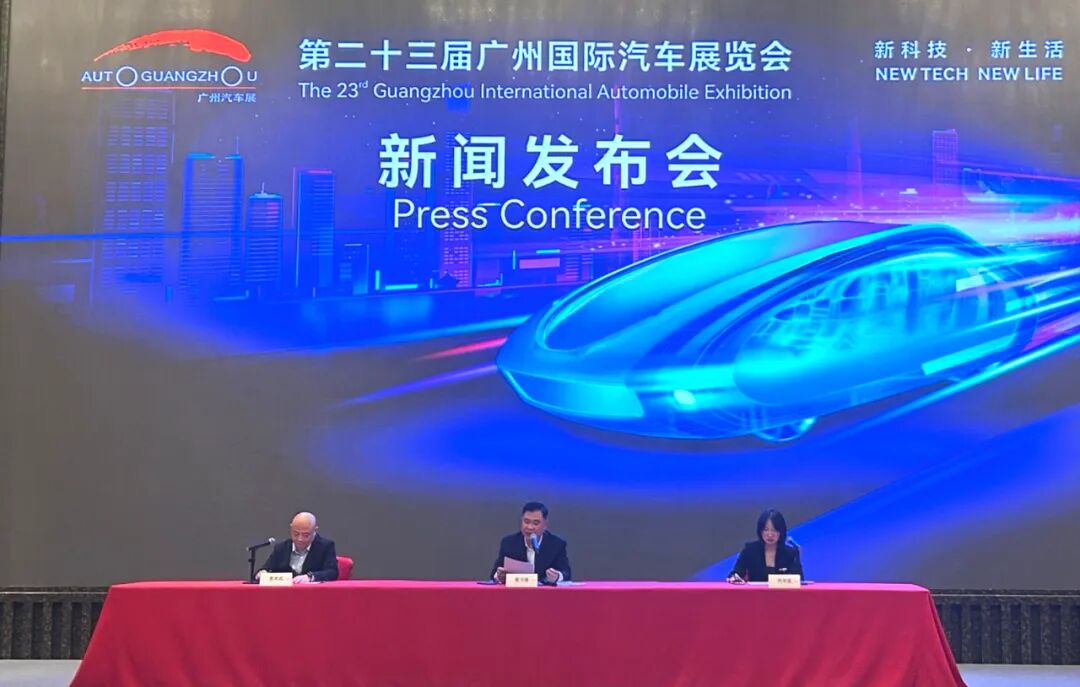
首发新车93台 第二十三届广州国际汽车展览会11月21日开幕
Zhong Guo Zhi Liang Xin Wen Wang· 2025-11-12 07:36
Core Points - The 23rd Guangzhou International Automobile Exhibition will be held from November 21 to 30, 2025, at the China Import and Export Fair Complex, with the automotive industry chain and culture exhibition running from November 21 to 24, 2025, and November 21 designated as Media Day [1] Group 1 - A total of 93 new car debuts and 1,085 vehicles will be showcased at the exhibition, including 629 new energy vehicles [3] - Major global automotive brands such as BMW, Mercedes-Benz, Volkswagen, Ford, and General Motors will participate with their latest products [3] - Domestic brands including Hongqi, Changan, BAIC, and GAC will also present their full range of products at the event [3] Group 2 - New energy vehicle manufacturers and tech companies like NIO, Xpeng, Xiaomi Auto, and CATL will be featured at the exhibition [3]

国际五大车展,中国车企偏偏对东京“无感”?
Jing Ji Guan Cha Bao· 2025-11-12 07:23
Core Insights - Chinese automotive brands have significantly increased their presence at international auto shows, yet they have largely been absent from the Tokyo Motor Show, highlighting a paradox in their global strategy [1][4][5] Group 1: Participation in International Auto Shows - The 2025 Munich Motor Show saw 116 Chinese exhibitors, making up nearly one-third of all overseas participants, showcasing a full range of automotive technologies [2] - Chinese brands have also made notable appearances at the Paris Motor Show, outnumbering other countries' exhibitors, with companies like BYD and Geely gaining recognition [3] - Despite historical participation, no Chinese companies attended the recent North American International Auto Show, although they had previously made significant impacts in earlier years [2] Group 2: Challenges in the Japanese Market - Japan's automotive market has been described as one of the most closed globally, with a long history of protective policies that have hindered foreign brands [4][5] - Non-Japanese brands accounted for only 5% of new vehicle registrations in Japan from August 2024 to July 2025, indicating a strong domestic market preference [4] - The K-Car regulations create additional barriers for foreign brands, requiring unique product designs and significant investment for market entry [5] Group 3: Emerging Opportunities - The shift towards electric vehicles presents a potential breakthrough for Chinese brands in Japan, as local manufacturers lag in electric technology [6] - Sales of Chinese brands like BYD and Tesla in Japan have seen significant growth, with BYD's sales tripling in September 2023 [6] - The Tokyo Motor Show featured Chinese elements, including Nissan's new electric vehicle developed by a Chinese team, indicating a growing acceptance of Chinese automotive technology [7][8] Group 4: Changing Perceptions - A survey indicated that 28% of Japanese consumers under 35 are open to considering Chinese electric vehicles, a 12 percentage point increase since 2020, reflecting a shift in consumer attitudes [8] - Chinese companies are beginning to establish a foothold in Japan, with plans for localized products and partnerships to enhance market entry strategies [8]

中汽协:10月销售新能源汽车171.5万辆,渗透率首次超50%
Ju Chao Zi Xun· 2025-11-12 06:05
Overall Industry Performance - In October, China's automotive production and sales reached 3.359 million and 3.322 million units respectively, with month-on-month growth of 2.5% and 3%, and year-on-year growth of 12.1% and 8.8% [2] - Cumulatively from January to October, production and sales totaled 27.692 million and 27.687 million units, reflecting year-on-year growth of 13.2% and 12.4%, indicating a steady development pace in the industry [2] Passenger Vehicle Segment - In October, passenger vehicle production and sales were 2.995 million and 2.961 million units, with month-on-month growth of 3.3% and 3.6%, and year-on-year growth of 10.7% and 7.5% [2] - From January to October, passenger vehicle production and sales reached 24.237 million and 24.209 million units, with year-on-year growth of 13.5% and 12.9%, slightly above the overall automotive industry growth rates [2] New Energy Vehicles (NEVs) - NEVs continued to lead the market, with production and sales in October reaching 1.772 million and 1.715 million units, marking year-on-year growth of 21.1% and 20% [3] - NEVs accounted for 51.6% of total new vehicle sales in October, indicating that they have become a mainstream force in the automotive market [3] - Cumulatively, from January to October, NEV production and sales were 13.015 million and 12.943 million units, with year-on-year growth of 33.1% and 32.7%, and a cumulative market share of 46.7% [3] Export Performance - In October, total automotive exports reached 666,000 units, with month-on-month growth of 2.1% and year-on-year growth of 22.9% [4] - Cumulatively from January to October, automotive exports totaled 5.616 million units, reflecting a year-on-year increase of 15.7% [4] - NEV exports showed significant growth, with 256,000 units exported in October, representing month-on-month growth of 15.4% and year-on-year growth of 99.9% [4] - From January to October, NEV exports totaled 2.014 million units, with a year-on-year increase of 90.4%, showcasing strong competitiveness in the global market [4]
坐拥百万用户后,零跑再战轿跑市场
Guo Ji Jin Rong Bao· 2025-11-12 04:03
Core Insights - Leap Motor is rapidly expanding its user base and targeting younger consumers with its new electric sedan, Lafa 5, which is set to launch soon [1][2] Product Launch and Market Strategy - Lafa 5 is available for pre-sale with five models priced between 105,800 and 131,800 yuan, aimed at the young, personalized electric vehicle market [3] - The vehicle was showcased at the Munich Auto Show, where it garnered significant attention, achieving a test drive conversion rate of 38% [3] - The design of Lafa 5 was a collaborative effort between Leap Motor's design centers in Shanghai and Munich, the latter being the company's first overseas design center [3] Design and Features - The Lafa 5 is built on the LEAP 3.5 architecture B platform, featuring a hatchback and coupe design, with a low drag coefficient of 0.256 [4] - It offers two battery options with CLTC ranges of 515 km and 605 km, and can achieve 30%-80% fast charging in 18 minutes [5] - The vehicle is equipped with Qualcomm 8295P chips and laser radar, supporting 26 advanced driver-assistance features [5] Sales Expectations and Future Plans - The company aims to sell over 10,000 units monthly, with a balanced sales distribution between domestic and international markets in the long term [6] - Leap Motor plans to expand its product lineup with four series (A, B, C, D) and the Lafa model, targeting a production capacity of 2 to 3 million units [6] - In October, Leap Motor delivered 70,289 vehicles, setting a new record for monthly deliveries among new energy vehicle companies, with a total of over 465,000 units delivered this year [6]
观车 · 论势 || 全球份额稳定提升,中国汽车持续释放活力
Zhong Guo Qi Che Bao Wang· 2025-11-12 02:53
Group 1 - Global automobile sales reached 8.55 million units in September 2025, marking a 10% year-on-year increase and a 12% month-on-month increase, with China's global market share rising to 38%, up 2 percentage points from the previous year [1] - Major Chinese automakers, including SAIC, BYD, and Geely, reported monthly sales exceeding 300,000 units in October, showing significant year-on-year growth, while new entrants like Leap Motor, Xiaomi, and Xpeng also achieved record sales [1][2] - The Chinese automotive industry is experiencing a robust growth driven by favorable domestic policies, particularly in the new energy vehicle sector, which has led to increased consumer demand and a diverse product offering [2] Group 2 - Chinese automakers have established a comprehensive supply chain and have achieved self-research capabilities in key components such as power batteries and electric control systems, enhancing their competitiveness in the domestic and global markets [2] - Two Chinese companies, BYD and Geely, ranked 6th and 9th respectively among the world's top 10 automakers, reflecting the growing influence of Chinese brands in the global automotive market [3] - Chinese automakers are adapting their products to meet the specific needs of different regional markets, moving away from a one-size-fits-all approach to a more localized product strategy [3][4] Group 3 - The "going out" strategy of Chinese automakers has evolved from simple exports to establishing local production facilities overseas, which helps comply with local regulations and reduces trade barriers [4] - The new model of "ecological going out" emphasizes systematic output, localized research and development, and supply chain collaboration, enhancing the overall competitiveness of Chinese automotive brands in international markets [4] - Future growth in global market share for Chinese automobiles will depend on continued technological innovation, industry collaboration, and the establishment of a comprehensive global service ecosystem [4]

港股三大指数悉数上涨,机构:市场有望在盘整后打开上涨空间
Mei Ri Jing Ji Xin Wen· 2025-11-12 02:49
Group 1 - The Hong Kong stock market indices experienced an overall increase, with mixed performance in tech stocks and a majority of innovative drug concepts rising [1] - The largest ETF in the A-share sector, the Hang Seng Tech Index ETF (513180), saw a slight increase, with leading stocks including JD Health, Xiaomi, and Midea, while NIO, Baidu, and Alibaba faced declines [1] - According to the November strategy report from China Merchants Securities, the recent volatility in the Hong Kong market presents investment opportunities, driven by factors such as breakthroughs in China's tech industry, improved US-China relations, the implementation of the "14th Five-Year Plan," and anticipated interest rate cuts by the Federal Reserve [1] Group 2 - The Hong Kong Stock Connect Automotive ETF (159323) focuses on the new energy vehicle sector, featuring a leading proportion of passenger cars and covering automotive parts and smart technology, benefiting from the robotics technology wave [2] - The Hang Seng Tech Index ETF (513180) includes a mix of hard and soft tech, showcasing high growth potential with core Chinese tech assets like Xiaomi, NetEase, and Tencent, providing an accessible option for investors without a Hong Kong Stock Connect account [2]
博俊科技拟10亿投建生产基地扩规模 上市近5年营收增幅持续超40%
Chang Jiang Shang Bao· 2025-11-12 01:36
Core Viewpoint - Bojun Technology is capitalizing on the growth of the electric vehicle (EV) market, with plans to expand its production capacity through a new manufacturing base in Hangzhou, with a total investment of 1 billion yuan [2][3][4]. Financial Performance - In the first three quarters of 2025, Bojun Technology achieved a revenue of 4.075 billion yuan, representing a year-on-year growth of 42.36%, and a net profit of 627 million yuan, up 70.47% [2][6]. - Since its listing nearly five years ago, the company has consistently reported revenue growth exceeding 40% annually [7]. - The company's revenue increased from 549 million yuan in 2020 to 4.227 billion yuan in 2024, marking a growth of approximately 670% [5]. Investment and Expansion Plans - The new production base project in Hangzhou is expected to have a fixed asset investment of no less than 5 million yuan per mu, with an anticipated annual output value of no less than 10 million yuan per mu and tax revenue of 500,000 yuan per mu [4]. - The project aligns with national industrial policies and the company's future development plans, aiming to enhance production capacity in the automotive parts sector [4]. Clientele and Market Position - Bojun Technology serves notable clients in the automotive industry, including Li Auto, Geely, BYD, and Xpeng Motors, indicating a strong market presence [2][7]. - The company has established itself as a specialized manufacturer of precision automotive components and molds, with a diverse product range [3]. Research and Development - The company emphasizes R&D, with R&D expenses accounting for at least 3.5% of its revenue, and has seen significant increases in R&D spending, with 161 million yuan in 2024 and 110 million yuan in the first three quarters of 2025 [4][8]. - Bojun Technology has developed key production technologies, including mold design, stamping, welding, and injection molding, which are critical for maintaining competitiveness in the EV market [8].
博俊科技拟10亿投建生产基地扩规模 行业景气上市近5年营收增幅持续超40%
Chang Jiang Shang Bao· 2025-11-11 23:28
Core Viewpoint - Bojun Technology is capitalizing on the growth of the electric vehicle market, with plans to invest 1 billion yuan in a new automotive parts production base in Hangzhou, which is expected to enhance its production capacity and align with national industry policies [2][4]. Financial Performance - For the first three quarters of 2025, Bojun Technology reported a revenue of 4.075 billion yuan, a year-on-year increase of 42.36%, and a net profit attributable to shareholders of 627 million yuan, up 70.47% [2][8]. - Since its listing, Bojun Technology has consistently achieved revenue growth exceeding 40% annually, with a significant increase in net profit [3][9]. Investment and Expansion Plans - The company plans to establish a new production base with a total investment of 1 billion yuan, focusing on precision automotive components and molds, which will enhance its production capabilities [4][5]. - The project aims for a minimum annual output value of 10 million yuan per mu and a tax contribution of 500,000 yuan per mu once operational [4]. Client Base and Market Position - Bojun Technology serves notable clients in the automotive industry, including Li Auto, Geely, BYD, and Xpeng Motors, indicating a strong market presence and customer base [3][9]. - The company emphasizes its commitment to R&D and innovation, having mastered key production technologies essential for the automotive sector [9][10]. R&D Investment - R&D expenditures for 2024 and the first three quarters of 2025 were 161 million yuan and 110 million yuan, reflecting year-on-year growth of 90.17% and 9.96%, respectively [10]. - The company aims to increase its R&D investment to maintain a competitive edge in the rapidly evolving electric vehicle market [10].
十月新能源汽车销量首超新车总销量一半
Zheng Quan Shi Bao· 2025-11-11 17:49
Core Insights - The core viewpoint of the articles highlights the rapid growth of China's new energy vehicle (NEV) market, with NEV sales surpassing 50% of total vehicle sales for the first time in October 2025, indicating a significant shift in consumer preferences towards electric vehicles [1][2]. Group 1: Market Performance - In the first ten months of this year, China's total vehicle production and sales reached 27.69 million units, with a year-on-year growth of over 10% [1]. - NEV production and sales during the same period were 13.015 million and 12.943 million units, respectively, reflecting year-on-year increases of 33.1% and 32.7% [1]. - In October, NEV monthly sales exceeded 50% of total vehicle sales for the first time, reaching 51.6% [1]. Group 2: Export Growth - NEV exports from January to October amounted to 2.014 million units, marking a year-on-year growth of 90.4%, and representing the first time annual exports surpassed 2 million units [1]. Group 3: Company Performance - Xpeng Motors delivered 42,000 new vehicles in October, setting a monthly record and surpassing 40,000 units for two consecutive months, with total deliveries reaching 355,200 units in the first ten months, a year-on-year increase of 190% [1]. - Leap Motor achieved a delivery of 70,300 units in October, a year-on-year growth of over 84%, marking the first time its monthly deliveries exceeded 70,000 units [1]. Group 4: Market Drivers - The high growth of the NEV market this year is attributed to several factors, including effective vehicle trade-in subsidy policies, which have broad coverage and significant impact [2]. - The upcoming halving of the NEV purchase tax in the next year is expected to create a consumer rush to purchase vehicles, leading to a new consumption peak in the NEV market [2]. - Continuous innovation in product offerings, technological upgrades, and improvements in charging infrastructure have also contributed to the robust growth of the NEV market [2].
