
沐曦

Search documents
多只半导体ETF周涨超7%丨ETF基金周报
2 1 Shi Ji Jing Ji Bao Dao· 2025-09-22 03:18
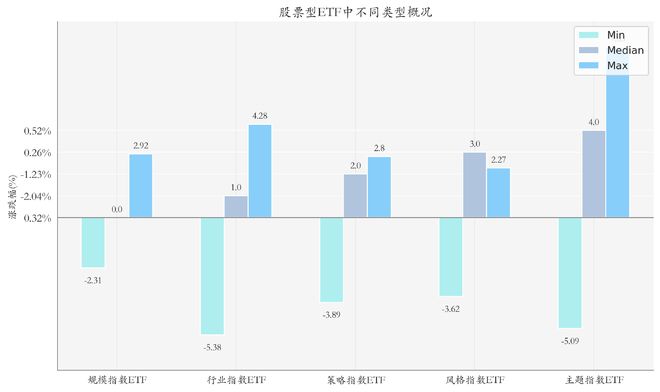
Market Overview - The Shanghai Composite Index fell by 1.3% to 3820.09 points, with a weekly high of 3899.96 points [1] - The Shenzhen Component Index rose by 1.14% to 13070.86 points, reaching a high of 13328.1 points [1] - The ChiNext Index increased by 2.34% to 3091.0 points, with a peak of 3168.68 points [1] - Global markets saw major indices rise, with the Nasdaq Composite up by 2.21%, the Dow Jones Industrial Average up by 1.05%, and the S&P 500 up by 1.22% [1] - In the Asia-Pacific region, the Hang Seng Index rose by 0.59% and the Nikkei 225 Index increased by 0.62% [1] ETF Market Performance - The median weekly return for stock ETFs was 0.08% [2] - The highest weekly return among scale index ETFs was 2.92% for the Jiashi ChiNext 50 ETF [2] - The highest weekly return among industry index ETFs was 4.28% for the China Tai Zhongzheng 800 Automotive and Parts ETF [2] - The highest weekly return among thematic index ETFs was 7.83% for the Huaxia Shanghai Stock Exchange Sci-Tech Innovation Board Semiconductor Materials Equipment Theme ETF [2] ETF Liquidity and Fund Flow - Average daily trading volume for stock ETFs increased by 26.0%, while average daily turnover remained unchanged [6] - The top five stock ETFs with the highest fund inflows included the Southern Zhongzheng 500 ETF with an inflow of 728 million yuan [8] - The top five stock ETFs with the highest fund outflows included the E Fund ChiNext ETF with an outflow of 658 million yuan [9] ETF Financing and Margin Trading - The financing balance for stock ETFs decreased from 45.329 billion yuan to 43.734 billion yuan [10] - The highest financing buy amount was 764 million yuan for the Huaxia Shanghai Stock Exchange ChiNext 50 Component ETF [10] ETF Market Size - The total market size for ETFs reached 5267.037 billion yuan, an increase of 23.954 billion yuan from the previous week [14] - Stock ETFs accounted for 66.9% of the total ETF market size, with a total size of 3526.187 billion yuan [16] New ETF Issuance - No new ETFs were issued last week, but 19 new ETFs were established, including various thematic and bond ETFs [17] Industry Insights - The advanced packaging industry is expected to see significant growth opportunities due to the slowdown of Moore's Law and limitations in advanced process technology [17] - The semiconductor industry is projected to experience a bottom reversal in its economic cycle, with Q2 2025 revenues reaching 1700.23 billion yuan, a year-on-year increase of 15.2% [19]

都是大事!重要通话、英伟达投资Intel、摩尔线程上会、OpenAI和果链2巨头合作设备、OCS爆单…
是说芯语· 2025-09-20 00:34
Core Insights - The article discusses the potential for collaboration between major tech companies like Nvidia and Intel, indicating a shift in the landscape of AI and semiconductor industries, particularly in relation to China [5][6] - It highlights the upcoming IPO of Moore Threads, which is expected to exceed previous expectations and reflects strong support for the semiconductor sector in China [7] - The collaboration between OpenAI and companies like Luxshare and GoerTek is noted as a significant development, despite previous tensions regarding AI technology [8] Group 1: Nvidia and Intel Collaboration - Nvidia's investment in Intel is seen as a pivotal move that could reshape the AI landscape, emphasizing the importance of collaboration among top companies in the U.S. [6] - The article suggests that this partnership could lead to advanced chips entering China, indicating a more flexible approach to technology trade [5] Group 2: Moore Threads IPO - Moore Threads has completed its second round of inquiries and is set for an IPO on September 26, which is ahead of previous expectations [7] - The rapid approval process for Moore Threads is indicative of strong governmental support for the semiconductor industry in China, which could positively impact other companies like Cambricon [7] Group 3: OpenAI Collaborations - OpenAI's partnerships with Luxshare and GoerTek are highlighted as significant, especially given the previous stance of OpenAI on limiting China's AI advancements [8] - This collaboration is viewed as a positive catalyst for Luxshare, potentially enhancing its valuation and market opportunities [8] Group 4: OCS Technology - OCS (Optical Circuit Switch) technology is discussed, showcasing its advantages such as low latency, low power consumption, and high bandwidth capabilities [9] - The cost structure of OCS is favorable, with a single device priced at approximately $40,000 to $50,000, which is significantly lower than high-end electronic switching devices [9] - The article notes that the OCS technology could exceed the capacity of electronic switches by 3-4 times, benefiting various suppliers in the optical components industry [9]






算力租赁价格「腰斩」或引发大厂退租;IDC项目批复通过率仅约三成;数十亿收入的AI芯片公司没有销售?;消纳国产算力最高补贴60%
雷峰网· 2025-09-18 09:58
Group 1 - The article highlights the favorable policies and subsidies for domestic computing power, with subsidies reaching up to 60% for certain regions [2] - A city in the southwest has established a funding pool of 100 million yuan for domestic computing power projects, offering subsidies of 10%-15% based on construction costs [2] - The market for computing power leasing is also being driven by companies collaborating with major internet firms, indicating a strong push for domestic computing power projects [2] Group 2 - The rental price for computing power has significantly decreased, with a major company having spent 1.6 billion yuan on H800 servers, which are now facing a price drop [3][4] - The monthly rental price for H800 servers has nearly halved, leading to concerns that large companies may opt to terminate their leases due to lower cost-effectiveness [4] - The decline in rental prices is accelerating the turnover of server equipment, making lease termination a critical issue in the computing power market [4] Group 3 - The NVIDIA 4090 GPU is currently the most cost-effective option for leasing, priced around 7,000 yuan per month for an 8-card server [5] - The upcoming NVIDIA 5090 is expected to take time to surpass the 4090 in terms of market acceptance due to software compatibility issues [5] Group 4 - The Shanghai Lingang computing power project has streamlined its approval process, allowing project approvals to be completed within a week [7] - A company has delivered 1,057 B200 servers to a major firm in East China, with a total investment of approximately 4.25 billion yuan [8] Group 5 - Leading domestic chip manufacturers are employing strict regional management and reporting mechanisms to secure projects, limiting competition from other teams [9] - A domestic AI chip company has achieved significant revenue but operates with minimal visibility in the market, leading to misconceptions about its sales force [9] Group 6 - Japan's data centers are in high demand, surpassing those in Singapore and Malaysia, driven by stable resources and operational experience [11] - A major internet company has established a large H200 cluster in Japan, utilizing a strategy of contracting local integrators for project execution [11] Group 7 - The approval rate for IDC projects has dropped significantly, with some regions reporting only a 30% approval rate for applications submitted to national levels [13] - To navigate strict approval processes, some projects are adopting phased construction plans to avoid exceeding regulatory thresholds [14] Group 8 - The rental prices for IDC have decreased, with rates in prime areas dropping to around 200-300 yuan per kilowatt per month, leading to longer investment recovery times [16] - Despite the decline in rental prices, the market for data center REITs is booming, with subscription rates reaching 300-500 times for recent projects [16]

海光信息20250915
2025-09-15 14:57
Summary of Haiguang Information Conference Call Company Overview - Haiguang Information is a leading company in China's server CPU sector, holding a market share of 40% to 50% in the domestic information technology market [2][11] - The company has a market space of approximately 100 billion yuan in the domestic server market, which could expand to 200 billion to 300 billion yuan when considering industries like PC and industrial control [2][11] Key Points and Arguments - **HSL Interconnect Protocol**: - Haiguang has introduced the HSL interconnect protocol, which includes protocol layer, transport layer, and compatibility with industry-standard physical layers [2][6] - HSL reduces access latency by about 50% compared to PCIe, supports customizable simplified protocol stacks, and allows for free multi-link expansion and cache coherence [2][7] - The protocol is designed to enhance efficiency and scalability in interconnect systems [4][7] - **Technological Advancements**: - The company is advancing its chip technology, focusing on CPUs and DCOs (full precision acceleration cards) [3][13] - Haiguang is the only domestic provider of DCOs, which have broad development prospects, including large government projects and breakthroughs in the internet sector [2][13] - **Market Potential**: - The heterogeneous technology is expected to significantly enhance the value of Haiguang's CPU business, potentially doubling the number of CPUs in AI servers designed with two AI chips and one CPU [12] - The theoretical market value of Haiguang's CPU business could exceed 250 billion yuan, potentially reaching 300 billion yuan when considering various sectors [11][12] - **Supply Chain and Operational Strength**: - Haiguang demonstrates strong supply chain capabilities, with inventory and prepayments leading among A-share semiconductor companies, reflecting robust operational capacity and market competitiveness [5][13] Risks and Challenges - Key risk factors affecting Haiguang's development include macroeconomic impacts, fluctuations in downstream demand, slower-than-expected AI development, intensified Sino-U.S. tensions, and challenges in new product development [5][14][15] Future Directions - The company aims to continue increasing bandwidth and expanding its capabilities, reflecting its technological maturity and commitment to national strategic goals [9][10] Additional Insights - The development of a domestic computing ecosystem is crucial for building a self-controlled computing foundation, enhancing domestic technological levels and industry competitiveness [10] - HSL empowers ecosystem partners, enabling tighter integration of AI chips with Haiguang CPUs, accelerating platform development, and supporting a unified memory programming model [8]

定制化AI芯片订单井喷频抢风头,英伟达酝酿“反攻”
Nan Fang Du Shi Bao· 2025-09-13 04:59
Group 1 - The demand for lower computing costs and diversified supply chain risks is driving the performance surge of overseas ASIC chip giants like Broadcom and Marvell, while domestic ASIC chip companies are also experiencing a significant increase in orders [1] - Chipone Technology (688521.SH), known as "China's first semiconductor IP stock," reported new orders of 1.205 billion yuan from July 1 to September 11, marking an 85.88% increase compared to the entire third quarter of 2024, with AI computing-related orders accounting for approximately 64% [1] - The AI computing-related orders primarily refer to ASIC chip design services, catering to customized chip demands from chip design companies, internet firms, and cloud service providers [1] Group 2 - A cost comparison by Southwest Securities shows that the unit computing costs of Google's fifth-generation TPU and Amazon's Trainium 2 ASIC chips are 70% and 60% of NVIDIA's H100 chip, respectively [2] - General-purpose GPUs are favored for model training due to their versatility, while ASIC chips are more efficient for specific tasks, leading to a fragmented market where NVIDIA dominates model training but faces competition in model inference from ASIC players [2][3] - NVIDIA is responding to the competition by releasing a new chip designed specifically for AI inference, aimed at improving cost-effectiveness by reducing unnecessary high-cost configurations [2] Group 3 - Chipone Technology, founded in 2001, has established itself as a leading ASIC chip service provider in China, with a comprehensive IP system that includes various types of processors and over 1,600 mixed-signal and RF IPs [3] - The demand for AI ASICs is surging due to the large-scale deployment of large models, with the Chinese AI chip market projected to reach 142.537 billion yuan in 2024, where GPU chips will hold approximately 69.9% of the market share [3] Group 4 - In the first half of 2025, AI computing-related revenue is expected to account for about 52% of Chipone Technology's chip design business [4] - Traditional general-purpose GPUs are increasingly unable to meet the specific demands of certain scenarios, while AI ASICs offer high cost-effectiveness and low power consumption due to their customized architecture [5] Group 5 - Chipone Technology is seeking to acquire RISC-V architecture CPU IP provider Chipone Technology, which is expected to enhance its AI ASIC business [5] - The company relies on a partnership with UK IP giant Alphawave for high-speed SerDes IP, which is crucial for high-speed data transmission [5] Group 6 - The domestic AI ASIC landscape includes major players like Huawei, Alibaba, and Baidu, with products such as Huawei's Ascend series and Alibaba's Pingtouge [6] - The rapid expansion of domestic AI chips is driven by technological breakthroughs from large internet companies and local suppliers [8] Group 7 - The global AI ASIC market is projected to grow from approximately $6.6 billion in 2023 to $55.4 billion by 2028, with a compound annual growth rate of 53% [9] - Major cloud providers like Google and Amazon are leading the self-developed ASIC chip trend, significantly boosting the performance of ASIC service providers [10] Group 8 - Broadcom's AI business reported $5.2 billion in revenue for the third quarter of 2025, a 63% year-on-year increase, with a new major customer ordering over $10 billion in custom AI chips [10] - The competitive landscape is shifting, with concerns that NVIDIA's clients may pivot from GPUs to ASICs as the latter gain traction [11] Group 9 - Despite NVIDIA's skepticism about the flexibility of ASICs, the company is actively developing new GPU architectures to compete in the inference market [12][18] - The coexistence of ASICs and general-purpose GPUs is expected, with each technology serving different application scenarios effectively [18]


国产类脑大模型适配国产沐曦GPU!长序列推理提速超百倍,仅用2%数据匹敌主流模型
量子位· 2025-09-11 10:19
Core Insights - The article discusses the development of SpikingBrain-1.0, a brain-inspired large model that aims to reduce the computational costs associated with long sequence reasoning [1][2]. Group 1: Model Architecture and Performance - SpikingBrain-1.0 leverages a brain-like information processing mechanism, achieving linear/near-linear complexity, which significantly enhances speed for long sequences. For instance, it shows a 26.5x speed improvement on a 1M length sequence compared to mainstream models [2][18]. - The model is designed to be compatible with domestic GPU clusters, indicating the feasibility of creating a new ecosystem for non-Transformer large models in China [2][28]. - The architecture includes SpikingBrain-7B and SpikingBrain-76B, which utilize a linear (mixed) model structure and a hybrid linear MoE model, respectively [10][14]. Group 2: Theoretical Foundations - The research team has established that complex endogenous dynamics in spiking neurons can mathematically equate to combinations of simpler spiking neurons, suggesting the potential for smaller networks to replace larger ones [5][6]. - A new approach based on "endogenous complexity" is proposed, aiming to integrate the rich dynamical characteristics of biological neurons into model development [7][8]. Group 3: Efficiency and Training - SpikingBrain-1.0 demonstrates significant training efficiency for long sequences, achieving comparable performance to many open-source Transformer models with only about 2% of the data [18]. - The model supports multi-card parallel inference and can handle up to 4M length sequences, with substantial acceleration in time-to-first-token (TTFT) compared to standard attention mechanisms [21][22]. Group 4: Future Directions - The team aims to further explore the relationship between endogenous dynamics of neurons and foundational AI operators, seeking to bridge neuroscience and artificial intelligence [28]. - The model is expected to provide significant efficiency advantages in scientific tasks involving long sequences, such as complex multi-agent simulations and molecular dynamics [28].

新架构芯片公司,缘何赢得全球资本押注?-财经-金融界
Jin Rong Jie· 2025-09-05 11:38
Core Insights - The AI chip industry is witnessing a significant shift with the rise of non-GPU architectures, attracting substantial capital investments, as exemplified by Groq's recent funding rounds totaling $6 billion and a valuation nearing $60 billion [1][4][5] - The competition is intensifying between two main technological factions: the traditional GPU-based centralized computing architecture led by Nvidia and the emerging innovative data flow architectures favored by companies like Groq, SambaNova, and Google [3][4][5] - Non-GPU chip companies are gaining traction in the market, with their unique advantages in AI computation, leading to increased interest from both policy and industry capital [3][4][5] Investment Trends - Non-GPU chip companies are receiving significant investments, with Groq's valuation skyrocketing from $28 billion to nearly $60 billion within a year [4] - SambaNova has also seen its valuation rise to $50 billion within five years, showcasing the potential of innovative architectures in the AI chip sector [5] - The domestic AI chip market in China is evolving to support both GPU and non-GPU architectures, with a focus on long-term strategic value and commercial potential [6][7] Technological Developments - Groq's self-developed data flow processor (LPU) claims to be ten times faster than Nvidia's GPUs while costing only one-tenth, indicating a significant technological edge [4] - SambaNova's reconfigurable data flow chip can support training of models with 50 trillion parameters, outperforming Nvidia's H100 in performance while maintaining lower total ownership costs [5] - Companies like Qingwei Intelligent are developing reconfigurable computing architectures, with their TX8 series AI chips set to launch by the end of 2024, further enhancing the competitive landscape [8][9] Market Dynamics - The market is characterized by a "factional struggle" between traditional GPU architectures and innovative non-GPU architectures, with the latter gaining recognition from major players like OpenAI [3][5] - The emergence of new architectures is seen as a long-term strategy to build competitive barriers in the domestic AI chip market, despite the challenges posed by the need for ecosystem development and customer migration [10][11] - The investment landscape is shifting towards high originality and low homogeneity projects, with companies like Qingwei Intelligent and SambaNova being highlighted for their unique technological propositions [8][11]

国产AI推理芯片的双重博弈:围攻4090,谁能卡位成功?
雷峰网· 2025-09-04 06:04
Core Viewpoint - The article discusses the competitive landscape of the AI inference chip market, particularly focusing on the domestic players in China and their strategies to challenge NVIDIA's dominance, especially the 4090 model, while navigating the complexities of cloud, edge, and on-device AI inference markets [2][4][16]. Group 1: AI Inference Market Dynamics - The demand for AI inference has surged due to the popularity of products like DeepSeek, leading to differing opinions on the future of edge versus cloud inference [2][3]. - There is a significant divide in opinions regarding the growth potential of edge AI inference, with some experts predicting a decline while others foresee continued growth [7][8]. - The AI inference market is characterized by a dual competition: domestic chips versus NVIDIA's 4090, and a strategic positioning battle for market share [4][16]. Group 2: Market Segmentation and Opportunities - The article outlines the definitions of cloud, edge, and on-device AI inference based on computational power, with a shift in boundaries due to advancements in large models [7]. - The traditional edge and on-device inference markets are described as saturated, with slow growth, while new applications driven by generative AI are emerging [11][14]. - The generative AI wave is expected to create new demand for edge AI chips, particularly in consumer electronics and smart hardware [14][15]. Group 3: Competitive Strategies - Domestic AI chip companies are focusing on achieving superior cost-performance ratios to compete with NVIDIA's offerings, particularly in specific application areas [4][17]. - The importance of software optimization and ecosystem partnerships is emphasized as critical for domestic companies to enhance their competitive edge [18][24]. - Companies are exploring various market segments, including the信创 market, healthcare, and energy, to find viable opportunities for AI chip deployment [22][23]. Group 4: Future Outlook - The article suggests that the competition among domestic AI chip manufacturers is just beginning, with upcoming products expected to leverage large memory and cost-performance advantages [26]. - The success of these companies will depend on their ability to establish deep partnerships with major clients and effectively navigate the evolving AI landscape [24][26].

【私募调研记录】彤源投资调研中科蓝讯
Zheng Quan Zhi Xing· 2025-09-04 00:09
Core Insights - Tongyuan Investment, a well-known private equity firm, recently conducted research on a listed company, Zhongke Lanyun, revealing significant financial growth in Q2 [1] Group 1: Financial Performance - In Q2, Zhongke Lanyun achieved a sales revenue of 444.45 million yuan, representing a quarter-on-quarter increase of 21% [1] - The net profit for the same period was 86.23 million yuan, showing a remarkable quarter-on-quarter growth of 92.10% [1] Group 2: Product Development - The company launched new products such as BT897X and BT891X, which have been adopted by brands like OnePlus, realme, and Honor [1] - The Wi-Fi + Bluetooth + audio tri-mode chip B6003G has been showcased, targeting applications in smart speakers and toys [1] Group 3: Strategic Holdings and Future Plans - Zhongke Lanyun holds a 0.50% stake in Moer Thread and a 0.24% stake in Muxi [1] - The company plans to expand to ten product lines, focusing on AI empowerment and global layout, while maintaining a reasonable gross margin through high-margin products and a stable supply chain [1]

【私募调研记录】煜德投资调研中科蓝讯
Zheng Quan Zhi Xing· 2025-09-04 00:09
Group 1 - The core viewpoint of the news is that YuDe Investment has conducted research on a listed company, Zhongke Lanyun, which has shown significant growth in sales and net profit in the second quarter [1] - Zhongke Lanyun achieved a sales revenue of 444.45 million yuan in Q2, representing a quarter-on-quarter increase of 21% [1] - The company's net profit reached 86.23 million yuan, with a remarkable quarter-on-quarter growth of 92.10% [1] Group 2 - Zhongke Lanyun has launched new products such as BT897X and BT891X, which have been adopted by brands like OnePlus, realme, and Honor [1] - The company showcased its Wi-Fi + Bluetooth + audio integrated chip B6003G, which is applicable in smart speakers and toys [1] - Zhongke Lanyun holds a 0.50% stake in Moer Thread and a 0.24% stake in Muxi, indicating its investment diversification [1] Group 3 - The company plans to expand into ten product lines, focusing on AI empowerment and global layout [1] - Zhongke Lanyun aims to maintain a reasonable gross margin through high-margin products and a stable supply chain [1]