上海银行

Search documents
银行ETF鹏华(512730)涨超1.3%,高股息+低估值+红利属性持续吸引长线资金
Xin Lang Cai Jing· 2026-01-29 06:25
Group 1 - Qingdao Bank reported a net profit attributable to shareholders of 5.188 billion yuan for the year 2025, representing a year-on-year growth of 21.66% [1] - Eight listed banks, including China Merchants Bank, Industrial Bank, and Ningbo Bank, have also reported positive net profit growth for the year 2025 [1] - The China Galaxy Securities noted that the overall market style in the fourth quarter continues from the previous quarter, with relatively low investor preference for the banking sector [1] Group 2 - The China Banking Index (399986) rose by 1.68%, with Qingdao Bank increasing by 9.94%, Chongqing Rural Commercial Bank by 3.86%, and Ningbo Bank by 3.70% [1] - The Penghua Bank ETF closely tracks the China Banking Index and serves as an analytical tool for investors [2] - As of December 31, 2025, the top ten weighted stocks in the China Banking Index accounted for 65.61% of the index, including major banks like China Merchants Bank and Industrial and Commercial Bank of China [2]





“三年存款到期,续作利率腰斩,钱存哪里?”银行主推这类产品
Zhong Guo Zheng Quan Bao· 2026-01-28 14:53
Core Insights - The banking industry is shifting its focus from traditional deposit products to insurance products, particularly dividend insurance, in response to declining deposit interest rates [1][2][3] Group 1: Market Trends - Banks are no longer emphasizing deposit renewals but are instead promoting insurance products like dividend insurance and annuity insurance to customers [1][2] - The trend reflects a resurgence of the bank-insurance channel, as insurance products offer long-term yield locking advantages in a low-interest-rate environment [1][3] Group 2: Product Details - The recommended dividend insurance products provide a fixed return of 1.75% plus potential floating returns, appealing to customers seeking long-term value [3][4] - For example, a specific dividend insurance product offers a total account benefit of approximately 54.72 million yuan after five years and 88.02 million yuan after twenty years, highlighting the potential for significant returns over time [2] Group 3: Consumer Behavior - Consumers are increasingly considering insurance products when faced with reduced deposit rates, with many opting for these products if they do not need immediate access to their funds [2][4] - The insurance products are seen as a way to secure current interest rates, making them attractive to clients with a longer investment horizon [2][4]
2025Q4基金持有可转债行为分析:基金持有转债规模下降,有色金属行业转债被减持较多
EBSCN· 2026-01-28 12:09
1. Report Industry Investment Rating - No relevant content provided. 2. Core Viewpoints of the Report - In Q4 2025, the market showed mixed performance with the Shanghai Composite Index and Wind All - A Index rising, while the Shenzhen Component Index and ChiNext Index falling. The CSI Convertible Bond Index rose by 1.32%. The equity and convertible bond markets fluctuated at high levels with weaker overall gains than in Q3. The conversion premium rate increased from 44.73% on September 30 to 46.57% on December 31 [1][10]. - At the end of Q4 2025, the scale of convertible bonds held by funds decreased, but the proportion of the market value of convertible bonds held by funds to the balance of the convertible bond market increased. Different - type funds had differentiated changes in the scale of convertible bonds held, with mixed - bond - type secondary funds increasing their holdings and passive - index - type bond funds reducing their holdings [2][11]. - Convertible bond funds' scale increased quarter - on - quarter. Their performance was weaker than the CSI Convertible Bond Index and the Wind All - A Index in Q4 2025. The average return rate was 0.86%, and the median return rate was 1.09% [3][40]. 3. Summary by Relevant Catalogs 3.1 2025 Q4 Market Review - The Shanghai Composite Index rose 2.22%, the Wind All - A Index rose 0.97%, the Shenzhen Component Index fell 0.01%, and the ChiNext Index fell 1.08%. The CSI Convertible Bond Index rose 1.32%. The conversion premium rate increased from 44.73% on September 30 to 46.57% on December 31 [1][10]. 3.2 Fund Holding Convertible Bond Behavior Analysis 3.2.1 Fund Holding Convertible Bond Total Scale Change - By the end of Q4 2025, the balance of the convertible bond market was 552.999 billion yuan, a decrease of 55.551 billion yuan from the end of the previous quarter. The scale of newly issued convertible bonds was 15.035 billion yuan. The scale of convertible bonds held by funds was 308.256 billion yuan, a reduction of 8.362 billion yuan from the end of the previous quarter, a 2.64% quarter - on - quarter decrease. The proportion of the market value of convertible bonds held by funds to the balance of the convertible bond market was 55.74%, a 3.71 - percentage - point increase from the end of Q3 2025 [11]. 3.2.2 Various Funds' Holding Convertible Bond Scale Change - In Q4 2025, mixed - bond - type secondary funds held the largest scale of convertible bonds (110.566 billion yuan), followed by mixed - bond - type primary funds (66.391 billion yuan) and passive - index - type bond funds (60.141 billion yuan). Mixed - bond - type secondary funds increased their holdings by 39.28 billion yuan, and mixed - bond - type primary funds increased by 16.07 billion yuan. Passive - index - type bond funds reduced their holdings by 90.87 billion yuan, and other types of funds also had different changes in holdings [15][19]. 3.2.3 Fund Positioning Behavior Analysis - **Fund Positioning Industry Distribution**: The top five industries with the largest scale of convertible bonds held in Q4 2025 were banking (55.014 billion yuan), power equipment (47.634 billion yuan), basic chemicals (24.739 billion yuan), electronics (24.298 billion yuan), and agriculture, forestry, animal husbandry, and fishery (17.188 billion yuan). Non - ferrous metals had the largest reduction in holdings (4.636 billion yuan), and the electronics industry had a relatively large increase in holdings (2.853 billion yuan) [23][24]. - **Fund Positioning Individual Bond Distribution**: Among the top 5 convertible bonds held by funds, 3 were bank - related (Industrial Bank Convertible Bond, Shanghai Bank Convertible Bond, and Chongqing Bank Convertible Bond). Industrial Bank Convertible Bond had the largest increase in holdings (1.905 billion yuan) [29][30]. - **Fund Holding Convertible Bond Rating**: AA - rated convertible bonds had the highest proportion (30.81%) among those held by funds [33]. 3.3 Convertible Bond Fund Holding Convertible Bond Behavior Analysis 3.3.1 Convertible Bond Fund Scale Change - By the end of Q4 2025, there were 38 existing convertible bond funds, with a holding scale of 51.287 billion yuan, a quarter - on - quarter increase of 2.15 billion yuan [34]. 3.3.2 Convertible Bond Fund Positioning Behavior Analysis - **Convertible Bond Fund Positioning Industry Distribution**: The convertible bond funds held the largest market value of convertible bonds in the power equipment industry (7.331 billion yuan). The banking industry had the largest increase in holdings (659 million yuan), and non - ferrous metals had the largest reduction in holdings (1.553 billion yuan) [35]. - **Convertible Bond Fund Performance**: In Q4 2025, the average return rate of convertible bond funds was 0.86%, the median return rate was 1.09%, and the average return rate of the top - ten convertible bond funds was 2.79%. Their performance was weaker than the CSI Convertible Bond Index and the Wind All - A Index [40].


上海味道背后的金融密码 | 上海银行从田间到蒸屉的助农之路
Zhong Guo Jin Rong Xin Xi Wang· 2026-01-28 11:01
Core Insights - The article highlights the role of finance in preserving local culture and empowering rural revitalization through real stories, showcasing how financial services enhance the quality of life in both urban and rural areas [1] Group 1: Cultural Heritage and Agriculture - The story of Lu Yongfei, a 62-year-old inheritor of the intangible cultural heritage of Chongming cake, emphasizes the meticulous process of making traditional cakes, which relies on high-quality rice sourced from a local cooperative [1][2] - Song Jiakun, a "post-90s" new farmer, has taken over the Qi Mao Grain Professional Cooperative, focusing on maintaining the quality of Chongming rice and implementing a traceable system from field to table, which has led to the brand "Tian Li Jiu Xiang" being recognized as a national geographical indication product [2] Group 2: Financial Support and Solutions - Shanghai Bank's Chongming branch proactively engaged with the cooperative to understand its challenges, leading to the creation of a tailored loan solution of 5 million yuan to address short-term liquidity needs, demonstrating a commitment to supporting local agriculture [3] - The bank's financial support is complemented by educational initiatives, such as credit knowledge and fraud prevention training, and adjustments to repayment plans based on agricultural cycles, ensuring that financial services align with the rhythms of farming [4] Group 3: Broader Impact and Future Plans - The financial assistance provided not only supports rice production but also extends to other sectors like fisheries and vegetables, reflecting a comprehensive approach to rural development [5] - Shanghai Bank aims to continue innovating its financial support models to ensure that more financial resources flow into rural areas and support local industries [4][5]
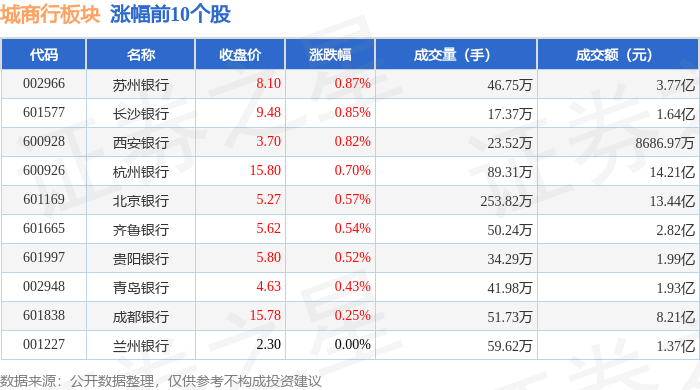
城商行板块1月28日跌0.35%,宁波银行领跌,主力资金净流入7.24亿元
Zheng Xing Xing Ye Ri Bao· 2026-01-28 09:04
从资金流向上来看,当日城商行板块主力资金净流入7.24亿元,游资资金净流入8565.32万元,散户资金 净流出8.1亿元。城商行板块个股资金流向见下表: | 代码 | 名称 | 主力净流入(元) | 主力净占比 游资净流入 (元) | | 游资净占比 散户净流入(元) | | 散户净占比 | | --- | --- | --- | --- | --- | --- | --- | --- | | 600919 江苏银行 | | 2.49 Z | 13.77% | -2499.87万 | -1.38% | -2.24 Z | -12.39% | | eoilea | 北京银行 | 2.15 Z | 16.03% | -3997.26万 | -2.97% | -1.75 Z | -13.06% | | 601229 上海银行 | | 1.08亿 | 13.65% | 4314.61万 | 5.44% | -1.51 Z | -19.09% | | 6000009 | 南京银行 | 8171.13万 | 11.53% | 3568.90万 | 5.04% | -1.17 Z | -16.56% | | 601838 ...





上海味道背后的金融密码|上海银行从田间到蒸屉的助农之路
Zhong Jin Zai Xian· 2026-01-28 06:15
Core Insights - The article emphasizes the importance of preserving local culinary heritage in Shanghai through financial support, showcasing how traditional flavors can thrive in modern contexts [1] Group 1: Cultural Heritage and Local Products - The article highlights the significance of "Shanghai flavor," which is deeply rooted in local agricultural practices and culinary traditions [1] - The preparation of Chongming cake, a local delicacy, is described in detail, showcasing the craftsmanship and dedication of artisans like Lu Yongfei [2] - The use of high-quality local rice from Chongming Island is essential for making authentic Chongming cake, emphasizing the connection between local agriculture and culinary heritage [2] Group 2: Agricultural Innovation and Challenges - Song Jiakun, a young farmer, has taken over the family rice cooperative and is focused on maintaining the quality of Chongming rice while modernizing agricultural practices [3] - The cooperative has established over 5,000 acres of standardized rice fields and a traceable supply chain, enhancing the brand "Tianli Jiuxiang" [3] - The cooperative faces financial challenges, particularly during the harvest season, due to the need for significant capital investment in agricultural operations [3] Group 3: Financial Support and Collaboration - Shanghai Bank's Chongming branch has initiated a "government-bank-insurance" collaboration to support the rice cooperative, providing a tailored loan of 5 million yuan to address short-term liquidity needs [4] - The bank's proactive approach includes regular visits to the cooperative and customized financial solutions that align with agricultural cycles [5] - The financial support extends beyond loans, with initiatives aimed at educating farmers on credit and fraud prevention, demonstrating a commitment to holistic agricultural support [5][6] Group 4: Broader Impact and Future Plans - The financial services provided by Shanghai Bank are designed to support not only rice production but also other local industries such as fisheries and vegetables, promoting sustainable agricultural practices [6] - The bank aims to continue innovating its financial assistance models to ensure that more resources flow into local agricultural sectors, thereby preserving the ecological and cultural identity of Chongming [6]
【独家发布】2025年中国中小银行行业政策梳理及上下游产业链全景分析
Xin Lang Cai Jing· 2026-01-28 04:49
Core Insights - The article emphasizes the positive role of small and medium-sized banks in supporting China's long-term economic development, particularly in fostering private enterprises and local economies while advancing financial market reforms [2][16] - It highlights the significant growth in total assets and liabilities of small and medium-sized banks, indicating their expanding market presence and competitiveness [16] Summary by Sections Overview of the Small and Medium-Sized Banking Industry - Small and medium-sized banks are defined as those excluding the six major state-owned banks, encompassing various types such as national joint-stock banks, urban commercial banks, rural commercial banks, and private banks [3][17] - These banks play a crucial role in providing diverse financial services, including cash management, online banking, investment banking, and microfinance [5][19] Industry Policies - The Chinese government has shown strong support for the development of small and medium-sized banks, with policies aimed at enhancing their operational environment and promoting rural revitalization [7][21] - Key policies include the "Opinions on Further Deepening Rural Reform" and measures to support micro-enterprise financing, which guide these banks to leverage their local advantages [21][23] Industry Chain - The upstream of the small and medium-sized banking industry includes IT service providers, payment platforms, and financial market participants, which support banks in digital transformation and service innovation [10][24] - The midstream consists of the banks themselves, which provide essential financial services to meet the diverse needs of consumers and businesses [10][24] - The downstream includes consumers and enterprises that utilize banking services for consumption, investment, and financing, reflecting a growing demand for financial services [11][25] Financial Performance - In 2024, the total assets of small and medium-sized banks reached 192.25 trillion yuan, a year-on-year increase of 6.39%, while total liabilities were 177.36 trillion yuan, up 6.27% [16] - By November 2025, total assets are projected to grow to 201.6 trillion yuan, with liabilities increasing to 186.07 trillion yuan, indicating a continued upward trend in the sector [16]

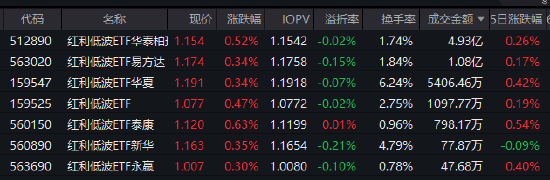
震荡市资金偏爱谁?红利低波ETF华泰柏瑞(512890)成交居首,近60日吸金超45亿元
Xin Lang Cai Jing· 2026-01-28 04:24
Core Viewpoint - The report highlights the mixed performance of the top holdings in the Huatai-PineBridge Low Volatility ETF (512890), with various banks and companies showing different price movements during the trading session [1][5]. Group 1: Top Holdings Performance - As of the midday session, Shanghai Bank decreased by 0.54%, while Nanjing Bank increased by 0.29%. Other notable movements include Ping An Bank down by 0.09%, and Minsheng Bank up by 0.27% [1][5]. - The top ten holdings include Shanghai Bank, Nanjing Bank, Ping An Bank, and others, with varying performance metrics [2][9]. Group 2: Fund Flow and Market Trends - The Huatai-PineBridge Low Volatility ETF has seen significant net inflows, with 1.03 billion yuan over the last five trading days, 2.33 billion yuan over the last twenty days, and 4.58 billion yuan over the last sixty days [2][9]. - The fund's total circulation size reached 28.313 billion yuan as of January 27, 2026 [2][9]. Group 3: Market Analysis and Predictions - According to GF Securities, passive funds have significantly reduced their holdings in the banking sector, leading to weaker performance, with a total reduction of approximately 72.5 billion yuan, accounting for about 2% of the free float market value [4][11]. - Analysts suggest that the banking sector has adjusted to some pessimistic expectations, and the valuation is expected to stabilize, with large banks and wealth management banks likely to outperform [4][11]. - China Galaxy Securities indicates that the dividend distribution from listed banks remains strong and is expected to attract long-term capital [6][11]. Group 4: ETF Performance Metrics - The Huatai-PineBridge Low Volatility ETF has achieved a return of 36.04% over the past three years, outperforming its benchmark [6][11]. - The ETF is positioned as a stable investment tool in a volatile market, with options for investors to participate through regular investment plans or through its associated funds [6][11].
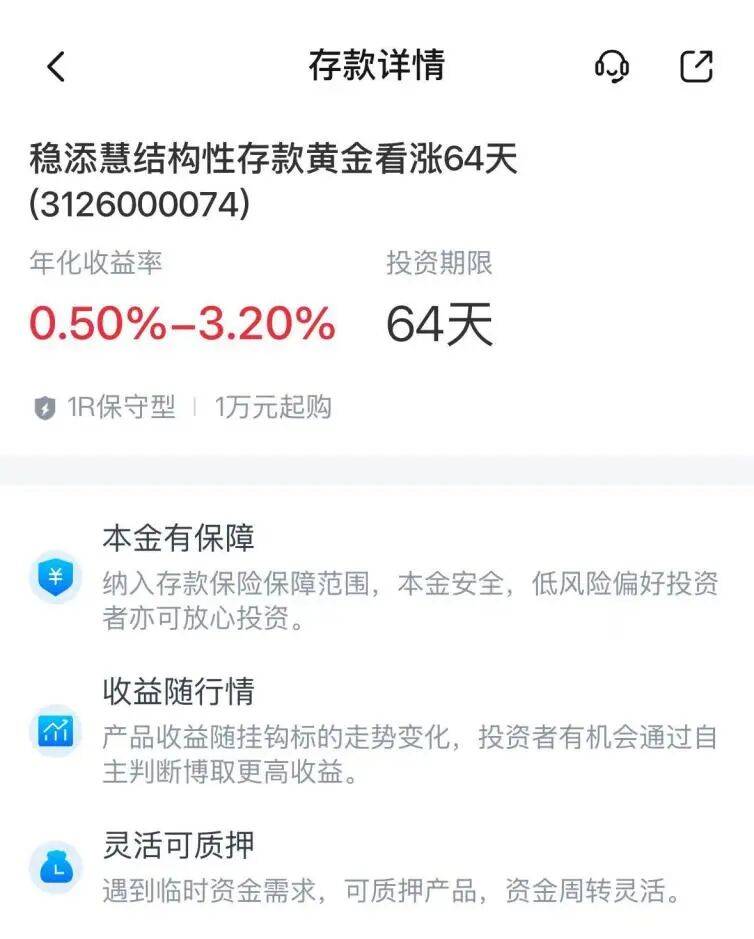
金价大涨,银行黄金挂钩结构性存款火了
Sou Hu Cai Jing· 2026-01-28 02:46
Core Viewpoint - The demand for gold-linked structured deposits is surging among banks and companies in China, driven by rising international gold prices, with many products selling out quickly [1][6]. Group 1: Bank Offerings - Multiple banks, including China Construction Bank, China Merchants Bank, and others, have launched gold-linked structured deposit products, with some experiencing high sales rates [1][6]. - The typical investment threshold for these products is around 10,000 yuan, with some popular offerings starting at 50,000 yuan, and most have a maturity of less than one year [6]. - Expected annualized returns for these products generally range from 1% to 4%, with some banks offering higher rates for foreign bank products [6][7]. Group 2: Company Participation - Numerous listed companies have begun investing in gold-linked structured deposits, with a total subscription amount reaching 1.728 billion yuan, significantly higher than the same period last year [8]. - For instance, Sujiao Technology announced a purchase of 90 million yuan in structured deposits linked to gold prices, with a maturity of 364 days and an expected annualized return of 0.30% to 2.35% [8]. Group 3: Market Analysis - Analysts suggest that the surge in gold-linked structured deposits is a response to increasing investor interest in gold as a safe-haven asset amid rising geopolitical uncertainties and economic fluctuations [9]. - The expectation is that gold prices may challenge the $6,000 mark by 2026, driven by ongoing market conditions and investor sentiment [9]. - The current market environment is characterized by high prices and volatility, prompting recommendations for investors to adopt strategies like dollar-cost averaging [10].

【行业深度】一文洞察2026年中国中小银行行业发展前景及投资趋势研究报告
Sou Hu Cai Jing· 2026-01-28 02:35
Core Insights - The article emphasizes the significant role of small and medium-sized banks in supporting China's long-term economic development through flexible market mechanisms and high service efficiency [2] - It highlights the ongoing transformation and competitive pressures faced by these banks, leading to strategies aimed at enhancing market competitiveness and expanding their asset base [2][8] Group 1: Industry Overview - Small and medium-sized banks are defined as all banks excluding the six major state-owned banks, and they include various types such as national joint-stock banks, urban commercial banks, rural commercial banks, and private banks [4] - These banks have become a crucial part of China's financial ecosystem, holding a substantial share of total assets in the banking sector [2] Group 2: Financial Performance - In 2024, the total assets of China's small and medium-sized banks reached 192.25 trillion yuan, marking a year-on-year growth of 6.39%, while total liabilities were 177.36 trillion yuan, up 6.27% [2] - By November 2025, total assets increased to 201.6 trillion yuan, reflecting a growth of 6.49%, with total liabilities at 186.07 trillion yuan, a rise of 6.66% [2] Group 3: Policy Environment - The Chinese government has shown strong support for the development of small and medium-sized banks, with policies aimed at enhancing their role in financing small and micro enterprises and promoting rural revitalization [8] - Key policies include the "Opinions on Further Deepening Rural Reform" and measures to support small and micro enterprise financing, which guide these banks to leverage their local advantages [8][10] Group 4: Industry Chain - The upstream of the small and medium-sized banking industry chain includes IT service providers, payment platforms, and financial market participants, which support banks in innovation and service delivery [11] - The midstream consists of the banks themselves, which provide essential financial services to meet diverse consumer and business needs [11][12] Group 5: Competitive Landscape - As competition intensifies, small and medium-sized banks are adopting strategies such as capital supplementation, attracting strategic investors, and differentiated operations to enhance their market position [2][8] - The focus on small and micro enterprise financing has led to significant achievements in expanding the industry’s total assets [2]