
九识智能

Search documents
万马科技:优咔科技高阶网联赋能Robotaxi,无人驾驶加速商业落地
Zheng Quan Shi Bao Wang· 2025-09-15 07:47
Core Insights - The 2025 Inclusion Bund Conference in Shanghai marked the global debut of Hello Robot1, the first mass-produced Robotaxi model from Hello, alongside the announcement of its Robotaxi strategic plan [1] - The autonomous driving industry is transitioning from concept validation to large-scale commercial operations, with significant developments from companies like Waymo, Tesla, Uber, and local players like LuoBo Kuaipao [2] - Youka Technology, a subsidiary of Wanma Technology, is establishing a comprehensive solution for Robotaxi services, focusing on four core areas: intelligent networking, computing-network integration, data closure, and global operations [3] Industry Developments - The autonomous driving sector is witnessing a surge in demand across logistics, sanitation, and public transport, with companies like Jiushi Intelligent demonstrating significant operational cost reductions and efficiency improvements [2] - Youka Technology has developed advanced technologies in intelligent networking, including 5G dual SIM capabilities, ensuring stable connections for Robotaxi operations [3] - The company has established a global operational capability, supporting eSIM standards and enabling seamless connectivity across nearly 130 countries [3] Technological Advancements - Youka Technology's self-developed "Aoyun" platform integrates NVIDIA H20 computing clusters and DeepSeek models, significantly reducing algorithm iteration cycles to hours [4] - The company leverages 5G private networks and edge computing to provide low-latency network support for Robotaxi services [4] Strategic Collaborations - Youka Technology has formed strategic partnerships with leading autonomous driving companies, including Hello and Zhixingzhe, to enhance the commercial viability of Robotaxi services [5][6] - The collaboration with Hello signifies Youka's entry into the core service area of Robotaxi, validating its technological capabilities and establishing a foundation for future cooperation [5] - The partnership with Zhixingzhe extends the application of "5G + autonomous driving" to broader Robo X scenarios, ensuring high reliability and low latency for their autonomous vehicles [6] Market Positioning - Youka Technology's collaborations are designed to achieve "complementary advantages," linking its technological capabilities with the strengths of partners like Hello and Zhixingzhe [7] - As the smart driving industry enters a phase of large-scale commercialization, the value of vehicle networking as a core infrastructure is becoming increasingly prominent [7] - Youka Technology's strategic positioning in the vehicle networking sector is expected to drive its performance growth and open new avenues for its parent company, Wanma Technology [7]
苏州工业园区崛起“智驾”新坐标
Xin Hua Ri Bao· 2025-09-11 23:13
Core Insights - The Suzhou Industrial Park has signed a memorandum of cooperation with Nexteer Automotive (China) to invest 1 billion RMB in establishing an Asia-Pacific headquarters, R&D center, and smart manufacturing base, focusing on electric vehicle steering systems and autonomous driving technology, expected to generate an annual output value exceeding 10 billion RMB post-2026 [1] - Bosch, the world's largest automotive technology supplier, has also signed a memorandum with the Suzhou Industrial Park to invest 10 billion RMB over the next five years in smart driving assistance and smart cockpit fields, aiming to foster key technological innovations and industrialization [1] - The automotive industry is a core component of high-end equipment manufacturing and plays a crucial role in promoting high-quality development in manufacturing, with significant foreign investment indicating the strong appeal of the Suzhou Industrial Park in the electric and intelligent connected vehicle sectors [1] Industry Developments - The Suzhou Industrial Park is accelerating the transformation and upgrading of the automotive industry towards electrification, intelligence, and connectivity, establishing a comprehensive industrial chain covering new energy vehicles, core components, and intelligent vehicle networking [2] - The park has attracted major foreign companies such as Bosch, Aptiv, BorgWarner, and TE Connectivity, while also nurturing innovative domestic enterprises like Zhixing Technology, Haige Electric Control, and Zhilv Technology, focusing on various fields including chassis electronic systems and electric vehicle controllers [2] - The park has developed a "vehicle-road-cloud integration" system, deploying 1,300 road testing facilities covering 114 kilometers, and creating a regional intelligent connected vehicle cloud control platform for data sharing and regulatory functions [2] Local Innovations - Domestic automotive brands are also establishing a presence in the Suzhou Industrial Park, with Great Wall Motors launching an intelligent platform R&D center focused on smart driving and intelligent cockpit technologies [3] - Local innovative companies are expanding internationally, with Zhixing Technology establishing a joint venture in Malaysia and Jiushi Intelligent partnering with Emirates Post to provide L4-level autonomous delivery services [3] - The park aims to leverage the automotive industry's advantages in supply scenarios and production services, enhancing collaboration with industries like integrated circuits and robotics to drive high-end development across the entire industry [3]



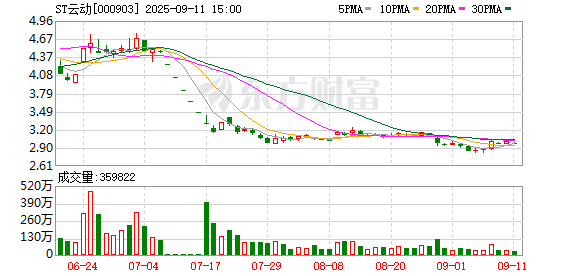
ST云动:目前无人车产品已实现小批量销售
Mei Ri Jing Ji Xin Wen· 2025-09-11 12:53
Group 1 - The company is actively exploring the unmanned vehicle market and has achieved small-scale sales of its products [2] - The technology route of the unmanned vehicle products focuses on the autonomous driving field and is not directly related to humanoid robot business [2] - The company is inquiring about its collaboration with Jiushi Intelligent on the L4-level robot project and its competitive advantage over industry competitor Yushu Technology [2]


以新型物流底座构建城市新基建,多产业协同的苏州产业园区或催生新爆点
Hua Xia Shi Bao· 2025-09-06 03:28
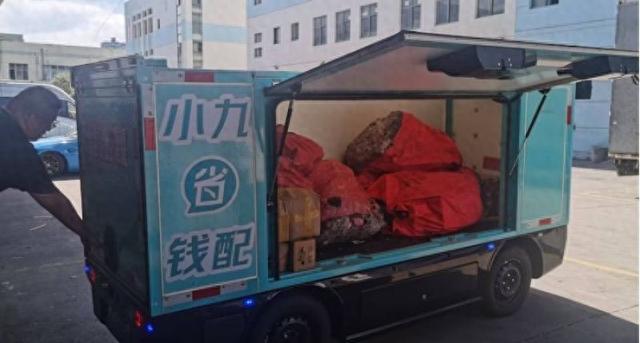
Core Viewpoint - The development of urban infrastructure is expanding beyond traditional construction to include digital, networked, and intelligent systems, with a focus on creating resilient cities capable of rapid recovery and enhanced risk management [2]. Group 1: Urban Infrastructure and New Technologies - The logistics unmanned vehicle industry is seen as an extension of new urban infrastructure, which can drive the growth of related industries [2]. - The introduction of unmanned logistics vehicles has improved delivery efficiency by 27%, with approximately 80,000 packages delivered in three months by a specific logistics center [4]. - The commercial application of unmanned logistics vehicles is still in its early stages, with over 7,000 units expected to be delivered by August 2025 [4]. Group 2: Industry Development in Suzhou - Suzhou has a strong industrial foundation and ecosystem, with the potential for significant economic growth, comparable to that of Hangzhou [3][10]. - Suzhou's GDP reached 1,300.235 billion yuan in the first half of the year, leading the province, while Hangzhou's GDP was 1,130.3 billion yuan [7]. - The Suzhou Industrial Park ranks 4th in the national high-tech zone evaluation, indicating its strong performance in fostering innovation [7]. Group 3: Policy Support and Collaboration - The local government in Suzhou has implemented supportive policies for autonomous driving, facilitating the development of companies like Jiushi Intelligent [8]. - Jiushi Intelligent has accumulated extensive road condition data, with over 30 million kilometers of safe operation recorded, enhancing its operational capabilities [5]. - The company collaborates with Shanghai Jiao Tong University to establish a joint laboratory, aiming to attract talented individuals and promote high-quality development [9].
以新型物流底座构建城市新基建 多产业协同的苏州产业园区或催生新爆点
Hua Xia Shi Bao· 2025-09-06 03:10
Core Viewpoint - The concept of urban infrastructure is expanding beyond traditional construction to include digital, networked, and intelligent systems, aiming to enhance urban resilience and risk management capabilities [1]. Group 1: Urban Infrastructure Development - The Chinese government has issued guidelines to promote new urban infrastructure that supports digital transformation and high-quality urban development [1]. - The logistics autonomous vehicle industry is seen as an extension of new urban infrastructure, requiring significant capital for development and operation [1][2]. Group 2: Company Insights - NineSight Intelligent has delivered over 7,000 autonomous logistics vehicles as of August 2025, significantly improving delivery efficiency by 27% in recent months [2]. - The company leverages the Baidu Apollo open-source system for its autonomous vehicle development, benefiting from a supportive community and substantial data accumulation [3][4]. Group 3: Economic Context - Suzhou's GDP reached 1.3 trillion yuan in the first half of the year, positioning it competitively alongside Hangzhou, which recorded a GDP of 1.13 trillion yuan [6]. - Suzhou's industrial parks are performing well, with notable rankings in national high-tech zone evaluations, indicating a robust industrial ecosystem [6]. Group 4: Policy and Support - The local government in Suzhou has implemented supportive policies for autonomous driving, facilitating the growth of companies like NineSight Intelligent [7]. - The collaboration between NineSight Intelligent and Shanghai Jiao Tong University aims to attract talent and foster high-quality development in the AI sector [7]. Group 5: Future Potential - Experts suggest that Suzhou has the potential for significant economic breakthroughs due to its strong industrial foundation and supportive government policies [8]. - The city is well-positioned to capitalize on the rapid growth of the global electric vehicle industry, promoting local companies towards high-end and intelligent manufacturing [8][9].
徐州公交场站将变身智慧物流枢纽
Xin Hua Ri Bao· 2025-09-05 22:15
Core Viewpoint - Xuzhou Public Transport Group and Jiushi Intelligent signed a strategic cooperation agreement to promote the application and development of unmanned driving equipment in the smart logistics sector of Xuzhou City [1] Group 1: Strategic Cooperation - The partnership aims to integrate logistics application scenarios with autonomous delivery vehicle technology to create a new model for unmanned logistics delivery services [1] - This collaboration follows the recent innovation of the "Bus + Logistics" business model by Xuzhou Public Transport Group, leveraging the advantages of the bus network to activate transport resources and explore diversified development paths [1] Group 2: Implementation and Results - The first "Bus + Logistics" county-level unmanned driving equipment was delivered and began trial operations in Peixian County at the end of last month, with positive results reported [1] - Following the signing of the agreement, Xuzhou Public Transport Group plans to optimize existing resources and transform multiple bus stations across the city into smart logistics hubs, accelerating the transformation and upgrading of urban logistics [1]
蹲点调查|“反内卷”下的招商之变
Sou Hu Cai Jing· 2025-09-01 00:22
Core Viewpoint - The article discusses the transformation of investment attraction strategies in Shandong, moving from traditional "policy competition" to a focus on "ecological win-win" approaches, driven by the implementation of the "Fair Competition Review Regulations" in August 2024, which aims to eliminate unfair competition in local investment attraction [9][11][12]. Group 1: Changes in Investment Attraction Logic - The traditional methods of attracting investment, such as offering land, tax breaks, and subsidies, have led to unhealthy competition and market fragmentation [9][11]. - The new approach emphasizes understanding what enterprises truly value, shifting focus from mere policy incentives to the overall industrial layout and resource advantages [11][12]. - Successful case studies, such as the Ningde Times project in Dongying, highlight the importance of local market potential and industry chain support over just policy benefits [11][12]. Group 2: Collaborative and Chain-based Investment Strategies - The article outlines a shift from "project thinking" to "chain thinking," focusing on attracting key enterprises that can enhance the entire industrial chain [14][15]. - Collaborative investment strategies are being explored, such as shared assessment mechanisms between regions to promote joint investment efforts [13][14]. - The concept of "chain-based investment" is gaining traction, where attracting a leading enterprise can significantly benefit the local economy by bringing in related businesses [15][16]. Group 3: Capital Leverage and Scenario Testing - The use of investment funds to attract quality projects is emphasized, with examples like the establishment of a semiconductor investment fund in Dezhou [19][22]. - Scenario-based investment strategies are emerging, where local governments provide testing grounds for innovative technologies, as seen with the autonomous vehicle manufacturing center in Qufu [25][26]. - The article suggests that the focus is shifting from merely providing financial incentives to creating market opportunities through practical applications and collaborations [25][26]. Group 4: Enhancing the Business Environment - Improving the business environment is identified as a core competitive advantage for attracting investment, with a focus on providing comprehensive support throughout the project lifecycle [26][29]. - The article highlights the importance of government officials adopting a partnership mindset, offering strategic support in areas like market expansion and technology upgrades [27][29]. - Successful examples include the establishment of specialized investment teams that understand industry dynamics and can effectively engage with potential investors [28][29].
全市软件业务37%来自苏州工业园区 金鸡湖软件产业园入选市级及以上重点软件企业数全市领先
Su Zhou Ri Bao· 2025-08-28 22:46
Group 1 - The Suzhou Industrial Park's software industry has 221 registered software companies and generated over 91.3 billion yuan in software business revenue, accounting for 37% of Suzhou's total software business revenue [1] - The software industry in the park has seen a value-added increase of over 8.89 billion yuan last year, with more than 140 key software enterprises recognized at the municipal level or above [1] - The park has been approved for several significant initiatives, including the National New Generation Artificial Intelligence Innovation Development Pilot Zone and the Provincial Industrial Big Data Application Demonstration Zone [1] Group 2 - The Jinji Lake Software Industrial Park covers 35 industrial categories and has established a comprehensive industrial software service capability across the manufacturing sector [2] - Key enterprises in the park have made significant advancements in various fields, including high-end equipment, automotive, electronic information, textiles, fiber optics, and electrical industries [2] - In the field of autonomous driving, Jiushi Intelligent has achieved over 90% market share in urban distribution autonomous vehicle sales and completed a significant financing round of nearly 300 million dollars [2]
融资技术双驱动 自动驾驶商业化持续提速
Zhong Guo Zheng Quan Bao· 2025-08-28 22:06
Group 1 - The autonomous driving industry is rapidly evolving, with a focus on the commercialization of applications like unmanned logistics vehicles, driven by advancements in artificial intelligence and other cutting-edge technologies [1] - Baixin Rhino, an L4 autonomous driving company, recently completed a B+ round of financing, raising nearly 500 million yuan, with funds aimed at product development, AI technology iteration, and expanding commercial scenarios [2] - The number of active unmanned logistics vehicles operated by Baixin Rhino has grown from nearly 100 at the end of 2024 to a current scale of 1,000, covering over 100 cities and serving major logistics companies [2][3] Group 2 - The commercialization of unmanned logistics vehicles is progressing rapidly, with significant growth expected in order volumes as leading manufacturers expand their applications beyond express delivery to retail distribution [3] - The State Council has issued policies promoting the use of intelligent logistics solutions, including unmanned delivery vehicles, indicating strong governmental support for the industry [3] - Industry experts predict that the express delivery sector alone will deploy over 200,000 unmanned vehicles within the next three to five years, marking a significant market expansion [4] Group 3 - Companies are advancing towards higher levels of autonomous driving technology, with Yuanrong Qixing launching a new generation of assisted driving platform, DeepRoute IO 2.0, which features a self-developed VLA model [4][5] - The VLA model is gaining traction among automotive manufacturers, with companies like Li Auto, Xpeng Motors, and Chery integrating it into their vehicles, reflecting the industry's shift towards high-tech solutions [5] - The development of VLA technology is expected to accelerate the application of intelligent driving solutions, as companies transition from traditional automotive roles to technology-driven enterprises [5]
融资技术双驱动自动驾驶商业化持续提速
Zhong Guo Zheng Quan Bao· 2025-08-28 20:17
Core Insights - The autonomous driving industry is rapidly evolving, with a focus on the commercialization of applications like unmanned logistics vehicles, driven by advancements in artificial intelligence and other cutting-edge technologies [1][2]. Group 1: Unmanned Logistics Vehicles - The L4 autonomous driving company, White Rhino, recently completed a B+ round of financing, raising nearly 500 million yuan, with existing investors like SF Express and new investors joining [2]. - The funds will be directed towards the development of vehicle-grade unmanned vehicle products, continuous iteration of AI technology, and expansion into commercial scenarios, aiming for large-scale implementation in last-mile logistics [2]. - White Rhino has expanded its active vehicle fleet from nearly 100 units at the end of 2024 to around 1,000 units currently, covering over 100 cities and serving major logistics companies like SF Express and China Post [2][3]. Group 2: Market Trends and Government Support - The commercial application of unmanned logistics vehicles is progressing rapidly, with significant financing occurring in the sector since 2025, indicating strong market confidence [2][3]. - The Ministry of Commerce and other departments have issued plans to promote smart supply chains, including the use of unmanned delivery vehicles, highlighting government support for the industry [3]. - Major logistics companies, including SF Express and JD Logistics, are actively promoting the use of unmanned delivery vehicles, with over 6,000 units deployed by the end of 2024, delivering over 10 million orders across various scenarios [3]. Group 3: Advanced Driving Technologies - Yuanrong Qihang has launched a new generation of assisted driving platform, DeepRoute IO 2.0, featuring its self-developed VLA (Visual Language Action) model, which is better suited for complex road conditions [4]. - The VLA model is being adopted by various automakers, including Li Auto and Xpeng Motors, indicating a trend towards integrating advanced AI technologies in vehicles [4][5]. - The development of the VLA model signifies a shift in the automotive industry towards higher-level autonomous driving technologies, with companies increasingly transforming into tech-oriented enterprises [5].