云深处科技

Search documents
“六小龙”首次齐聚乌镇 他们都谈了些什么?记者探访
Yang Shi Wang· 2025-11-07 17:23
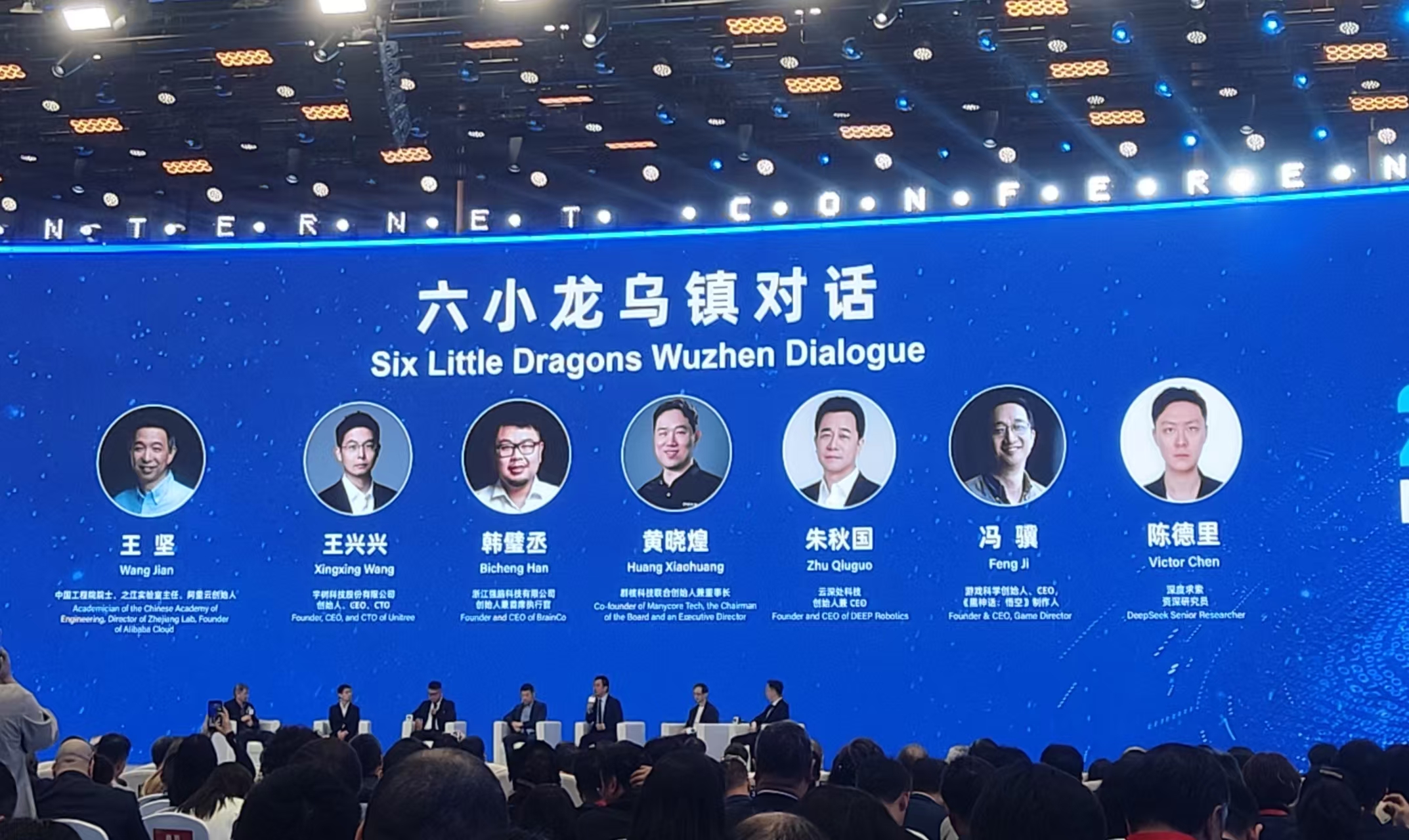
Core Insights - The "Six Little Dragons" of Hangzhou, representing cutting-edge industries like artificial intelligence and brain-computer interfaces, gained prominence at the World Internet Conference in Wuzhen [1][3] - The emergence of innovative companies like the "Six Little Dragons" is attributed to the integration and expansion of China's internet and various technologies and industrial ecosystems [3] Group 1: Company Perspectives - Huang Xiaohuang, co-founder and chairman of Qunke Technology, noted that the company's growth parallels the dynamic evolution of China's internet, marking a transition from the internet era to the AI era [3] - Feng Ji, founder and CEO of Game Science, highlighted that China's gaming industry has the largest user base and market size globally, fostering talent and innovation [3] - Wang Xingxing, founder and CEO of Yushu Technology, expressed optimism about the rapid advancement of embodied intelligence, which is supported by China's strong manufacturing capabilities and favorable entrepreneurial environment [3] Group 2: Industry Trends - Chen Deli, a senior researcher at Deep Exploration, emphasized the importance of open cooperation and shared technology as a core advantage for company development [4] - Han Bicheng, founder and CEO of Qiangnao Technology, pointed out that brain-computer interfaces have been included in China's 14th Five-Year Plan as a key area for future industrial development [4] - Zhu Qiuguo, founder and CEO of Yunshe Technology, mentioned that robots are increasingly applicable in various scenarios, with aspirations for quadruped robotic dogs to reach any land area in the future [4]

乌镇时间丨杭州“六小龙”首次齐聚乌镇对话
Sou Hu Cai Jing· 2025-11-07 17:15
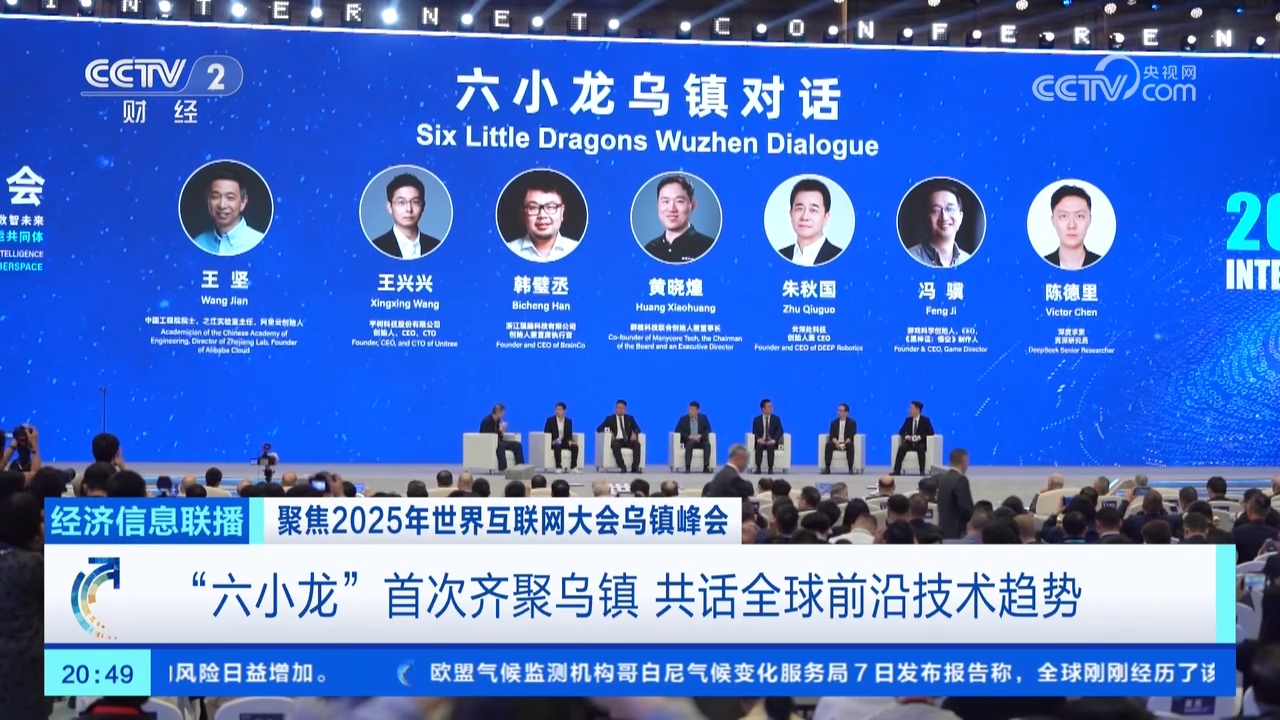
Core Insights - The "Six Little Dragons" dialogue at the World Internet Conference highlighted the opportunities and challenges in artificial intelligence development, featuring leaders from six innovative tech companies [1][3]. Group 1: Company Growth and Ecosystem - Yushutech has grown from a three-person team to a thousand-strong workforce in over nine years, exporting humanoid robots to top global laboratories, benefiting from China's supportive entrepreneurial ecosystem [3]. - Qiangnao Technology, after relocating its headquarters to Hangzhou, has rapidly developed products aimed at helping disabled individuals and plans to expand into sleep improvement and weight management [3]. - Qunkua Technology transitioned from an internet company to a spatial intelligence enterprise, leveraging GPU technology and vast data accumulated over the past decade in China [3]. Group 2: Technological Innovations and Challenges - Game Science emphasized the integration of science and art in gaming, showcasing the success of "Black Myth: Wukong" as a testament to the fusion of Chinese culture and technology [4]. - Yundongchu Technology shared its journey from developing robotic dogs to creating outdoor-capable robots, focusing on safety and functionality in hazardous environments [4]. - Yushutech pointed out challenges in embodied intelligence, such as the lack of unified model structures and data collection standards, while Qiangnao Technology highlighted the difficulties in fine motor control for neural prosthetics [4]. Group 3: Future Perspectives on AI - DeepSeek is focused on developing stable generalization learning algorithms for AI, expressing optimism about overcoming current challenges in the next 10-20 years [5]. - The rapid advancement of AI capabilities is noted, with examples illustrating significant improvements in performance over a short period [5]. - The Game Science representative stated that AI should empower more ordinary people, suggesting that widespread access to technology can create a better development environment [5].
杭州“六小龙”在乌镇罕见同台,他们聊了什么?
Nan Fang Du Shi Bao· 2025-11-07 16:36
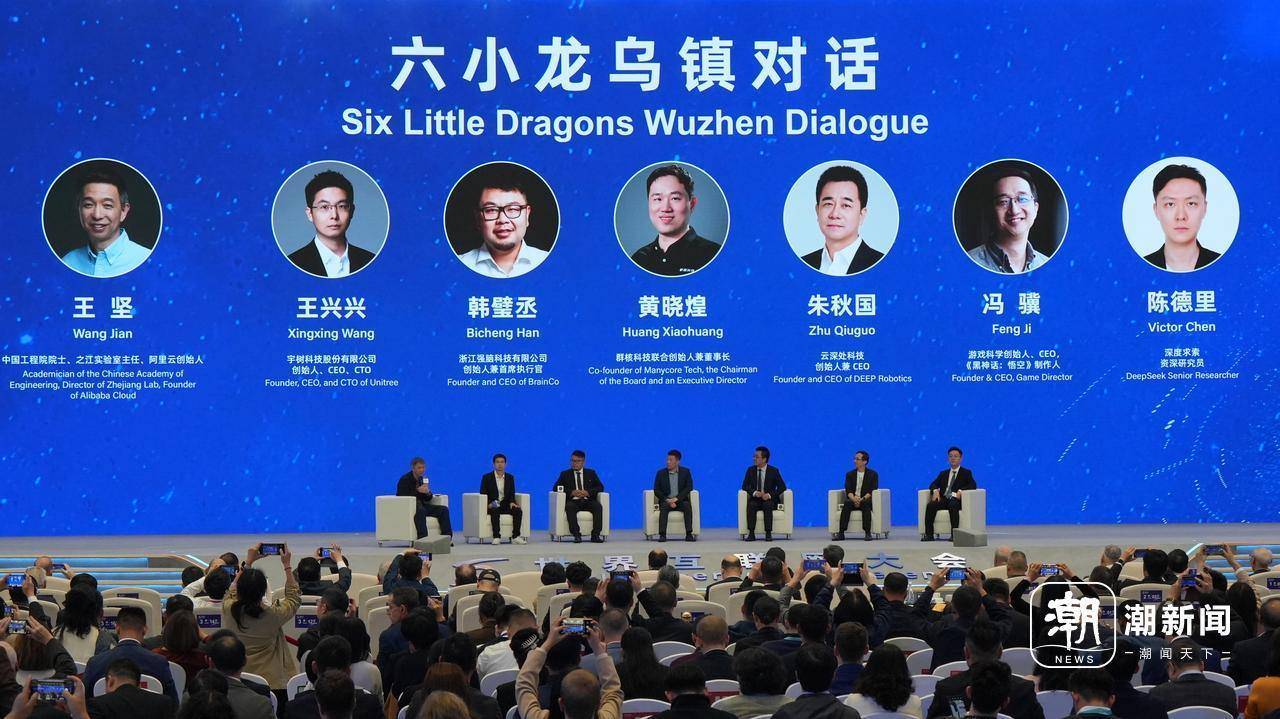
Group 1 - The "Six Little Dragons" of Hangzhou, representing six emerging tech companies, were formally introduced at the World Internet Conference in Wuzhen on November 7 [1] - The event featured discussions on AI, with DeepSeek's representative emphasizing the company's long-term focus on achieving Artificial General Intelligence (AGI) and prioritizing core technological breakthroughs over short-term tasks [3][4] - The representative from DeepSeek expressed optimism about the next 3 to 5 years, predicting a "honeymoon period" where AI will help solve complex problems and create greater value [3] Group 2 - Concerns were raised about the potential job displacement due to AI advancements in the next 5 to 10 years, with tech companies needing to act as "whistleblowers" to inform society about the risks of job replacement [4] - The discussion highlighted the difference between the current AI revolution and past industrial revolutions, noting that AI could surpass human intelligence, leading to significant societal impacts [5] - Companies like Yushu Technology and Cloud Deep Technology acknowledged the challenges in developing embodied intelligent robots, particularly in data collection and model training [5][6] Group 3 - Group Core Technology, which is seeking a listing on the Hong Kong stock market, has shifted its strategy to focus on providing services to robotics hardware companies, leveraging its expertise in spatial intelligence [6] - Strong Brain Technology is pursuing non-invasive brain-computer interface technology, facing challenges in data collection and analysis due to the complexity of the human brain [7] - Game Science, known for developing "Black Myth: Wukong," highlighted the growing appreciation for domestic products among Chinese consumers when they meet high-quality standards [8]
财经聚焦丨“六小龙乌镇对话”,他们如何思考AI和未来
Xin Hua Wang· 2025-11-07 16:35
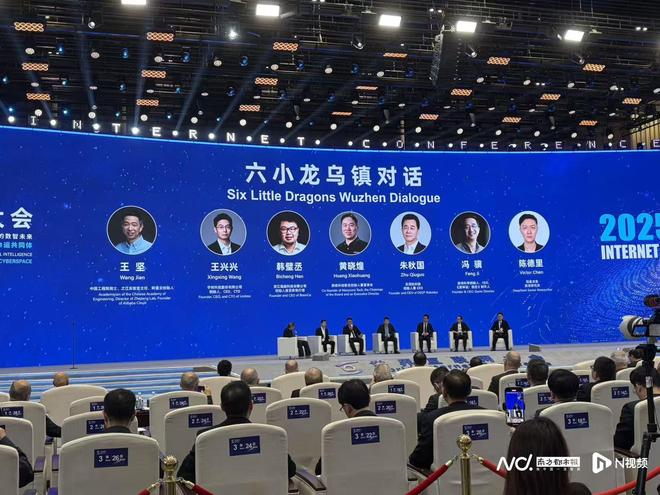
Core Insights - The "Six Little Dragons" of Hangzhou are gaining global attention for their rapid advancements in artificial intelligence (AI) [1][2] - The dialogue at the World Internet Conference in Wuzhen focuses on the collaborative and open-source approach to AI development [3][4] Group 1: Open Source Collaboration - Open source is a key theme in the discussions, with companies like DeepSeek emphasizing its importance for achieving Artificial General Intelligence (AGI) [3] - Companies such as Qunke Technology have benefited from open-sourcing their spatial datasets, which has facilitated their growth in the spatial intelligence sector [3] - The rapid development of the robotics industry is attributed to open-source algorithms, enabling collaboration among top laboratories and universities [3] Group 2: Internet Development Foundation - The rapid growth of the Chinese internet over the past decade has created a vast user base and data pool, essential for training AI models [5] - The supportive entrepreneurial environment in China has fostered innovation, allowing startups to transition from technology exploration to product implementation [5] - Companies are making significant strides in developing practical applications, such as humanoid robots designed to assist in hazardous situations [5] Group 3: Challenges in Embodied Intelligence - Despite advancements, embodied intelligence faces challenges related to data collection and standardization, which hinder industry progress [6] - The industry lacks consensus on fundamental issues like camera placement for data collection, impacting the development of effective models [6] - The exploration of data collection methods and training techniques is still ongoing, indicating a need for further research and development [6] Group 4: Emerging Technologies - Brain-computer interfaces are opening new dimensions in perception, with applications such as neuro-controlled prosthetics that allow users to perform intricate tasks [7] - The technology is advancing from experimental stages to practical applications, with potential benefits for individuals with disabilities [7] - Despite challenges in data processing and system stability, brain-computer interfaces hold promise for treating neurological conditions [7] Group 5: Responsible AI Development - Companies recognize the importance of establishing technical standards and being aware of potential negative impacts of AI advancements [8] - The dual nature of AI's impact is highlighted, where it can empower individuals while also posing risks of concentrated technological advantages [8] - The industry expresses confidence in the future of AI, emphasizing the need for collaboration between innovation and regulation to ensure safety [8]
“杭州六小龙” 乌镇同台
Shang Hai Zheng Quan Bao· 2025-11-07 15:08
Core Insights - The "Six Little Dragons of Hangzhou" gathered at the World Internet Conference in Wuzhen, showcasing their growth and innovation in the tech industry, highlighting the supportive ecosystem fostered by the conference [1][2][3] Company Highlights - Yushut Technology has grown from three employees in 2016 to over 1,000, attributing its success to the support from Hangzhou for startups [2] - Qiangnao Technology moved its headquarters back to Hangzhou in 2018, experiencing rapid development in the brain-computer interface sector, which is now recognized as a key technology in China's 14th Five-Year Plan [3] - Qunke Technology transitioned from an internet company to a spatial intelligence company, reflecting the broader trends in China's internet development [3] - Yundong Technology has successfully developed quadruped robots that can operate in various environments, aiming to make them capable of reaching any land area [3] - Game Science, known for its game "Black Myth: Wukong," emphasizes the potential of Chinese teams to compete with international standards, benefiting from a large user base and talent pool [4] Industry Trends - The robotics industry is experiencing accelerated growth due to advancements in AI, with expectations for significant developments in the coming years [5][6] - Brain-computer interface technology is evolving from experimental stages to products that can impact daily life, with a focus on helping those in need before expanding to general consumers [6] - The future is envisioned as a world filled with robots, necessitating advancements in spatial intelligence to manage and coordinate these machines effectively [6][7] Technical Challenges - The robotics sector faces challenges related to the inadequacy of embodied intelligence AI models, including data discrepancies and the need for unified data collection methods [12] - Brain-computer interfaces encounter difficulties in data collection and analysis, requiring AI models to learn neural control logic [12][13] - The industry is urged to innovate to reduce reliance on computational power and data, facilitating the integration of robots into factories and homes [13]
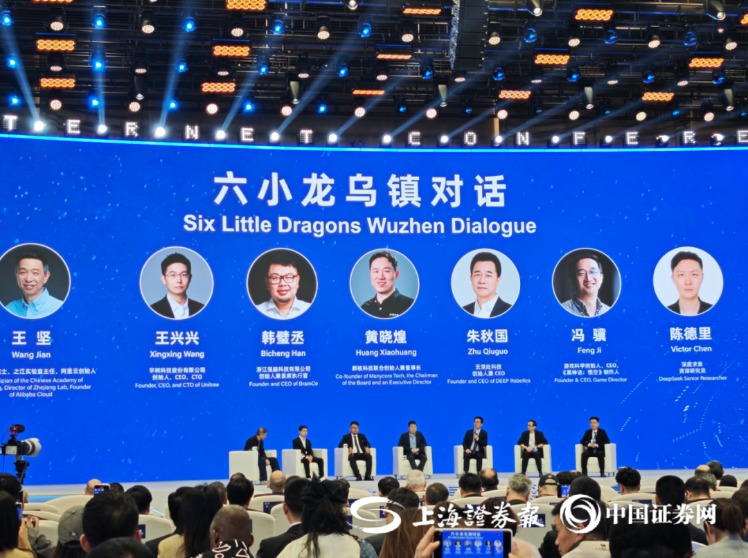
“杭州六小龙”乌镇论道:AI创业十年路与未来破局点
Zhong Guo Zheng Quan Bao· 2025-11-07 14:56
Core Insights - The emergence of the "Hangzhou Six Little Dragons" has drawn global attention to China's AI innovation capabilities and has prompted exploration of the underlying innovation patterns [1] - The dialogue at the World Internet Conference highlighted the entrepreneurial experiences and governance of AI development among these six companies [1][3] Group 1: Past Achievements - The founding of the "Hangzhou Six Little Dragons" primarily occurred within the last decade, coinciding with rapid growth in China's internet and technology sectors [3] - Wang Xingxing from Yushu Technology noted significant advancements in embodied intelligence, stating that recent developments in robotics have made previously sci-fi concepts a reality [4] - Han Bicheng, founder of Qiangnao Technology, emphasized the commercialization of brain-computer interface technology, which has gained momentum in recent years [4] - Huang Xiaohuang of Qunhe Technology discussed the transformation from internet-focused initiatives to AI-driven solutions, reflecting the broader shift from the internet era to the AI era [5] - Zhu Qiuguo expressed optimism about the future of intelligent robotics, aiming for widespread application across various scenarios [5] - Feng Ji highlighted the importance of the gaming industry in showcasing technological advancements and the growing trust in domestic teams [6] Group 2: Future Challenges and Responsibilities - Wang Xingxing identified the main challenge in embodied intelligence as the lack of unified standards and sufficient model structures and data [7] - Zhu Qiuguo mentioned the need for innovation to reduce computational and data requirements for robotics [7] - Han Bicheng pointed out the challenges in data collection and analysis in the brain-computer interface field, emphasizing the need for AI to enhance brain science research [7] - Chen Deli from DeepSeek stated that the AI revolution is still in its early stages, urging tech companies to promote technology accessibility while being aware of potential risks [8] - Feng Ji raised concerns about the concentration of AI technology within a few companies and advocated for embracing advanced AI technologies to enhance human capabilities [8]

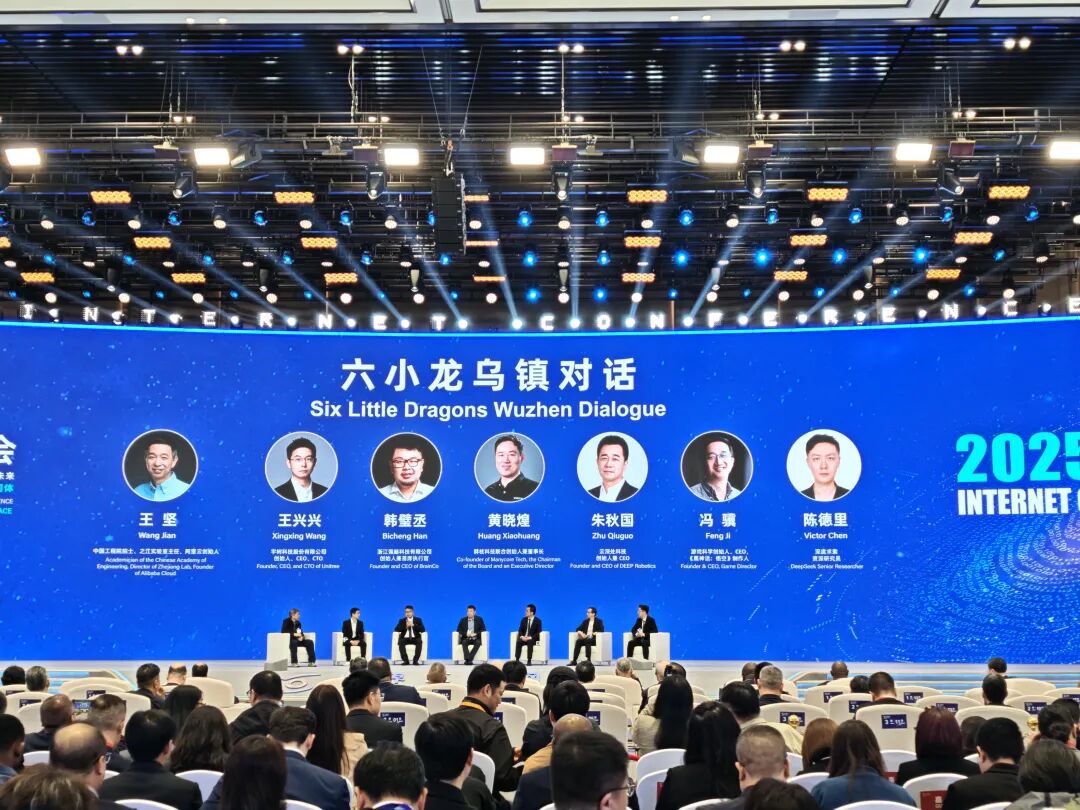
“六小龙”乌镇对话:从英伟达“冷板凳”到《黑神话》破圈
Di Yi Cai Jing Zi Xun· 2025-11-07 14:43
Core Insights - The 2025 World Internet Conference in Wuzhen highlighted the rapid advancements in technology over the past decade, particularly in AI and related fields, showcasing six leading tech companies that are leveraging the internet's data accumulation to explore cutting-edge directions [2][3]. Group 1: Industry Trends - The "Six Little Dragons" represent companies in fields such as embodied intelligence, brain-computer interfaces, spatial intelligence, large models, and gaming, all benefiting from the technological and data foundation built over the last ten years [2]. - The gaming industry in China has become the largest market globally, with a significant number of top-grossing games developed by Chinese teams, indicating a strong domestic user base and potential for future growth [4][6]. Group 2: Technological Advancements - Companies like Yushut Technology and Qiangnao Technology are optimistic about the future of embodied intelligence and robotics, noting that many previously sci-fi concepts are becoming reality, with expectations for significant advancements in the coming years [5]. - The brain-computer interface field is seen as a potential solution for various brain-related diseases, with ongoing challenges in data collection and analysis, but promising developments are underway, such as a weight management product expected by 2027 [7]. Group 3: Future Outlook - Experts predict that AI will create more opportunities in the short term but may pose risks in the long run, with expectations that AI will begin to replace certain jobs within 5 to 10 years, fundamentally altering the workforce landscape [6]. - The healthcare sector is heavily impacted by brain-related conditions, with a significant portion of medical expenses related to brain health, highlighting the urgent need for advancements in brain-computer interface technologies [7].

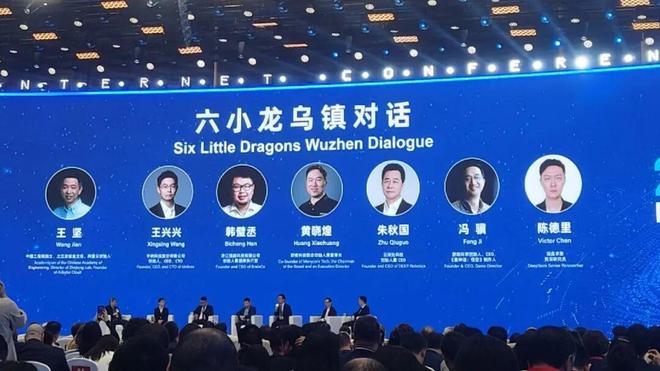
“六小龙”乌镇对话:从英伟达“冷板凳”到《黑神话》破圈
第一财经· 2025-11-07 13:46
Core Viewpoint - The article discusses the significant advancements in technology over the past decade, particularly in the fields of AI, robotics, and gaming, highlighting the emergence of innovative companies that are leveraging the internet's data and technological foundation to explore new frontiers [3][4][6]. Group 1: Technological Advancements - The "Six Little Dragons" of cutting-edge technology, including companies like Yushut Technology and Game Science, are benefiting from the data accumulation of the past decade, transitioning from the internet era to the AI era [3][4]. - The robotics industry has seen substantial progress, with the first untethered robotic dog developed in 2018, overcoming previous challenges related to stability and application [4][5]. - The gaming industry has grown significantly, with China becoming the largest market for gaming, as evidenced by the fact that four of the top ten highest-grossing games globally were developed by Chinese teams [5][6]. Group 2: Future Outlook - Experts predict that the field of embodied intelligence and humanoid robots is closer to realizing its potential than other advanced fields, with expectations for significant advancements in the next few years [6]. - AI is anticipated to create more opportunities in the short term, but may pose greater risks in the long term, with predictions that AI could replace a significant portion of jobs within the next 10 to 20 years [7]. - The brain-computer interface technology is seen as a potential solution for treating brain-related diseases, with ongoing challenges in data collection and analysis [8].
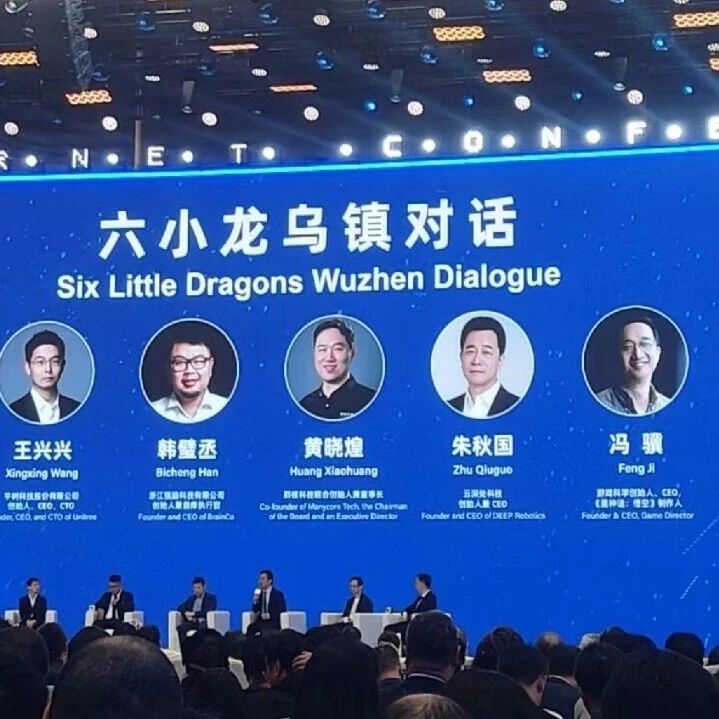
“杭州六小龙”首次同框乌镇对话,DeepSeek梁文锋缺席现场 | 巴伦精选
Tai Mei Ti A P P· 2025-11-07 13:12
Group 1 - The "Six Little Dragons" of Hangzhou refers to six innovative tech companies emerging in Zhejiang, recognized for their influence in AI and advanced technologies [2] - The dialogue at the World Internet Conference focused on global AI technology innovation and development trends, featuring prominent figures from the "Six Little Dragons" [2][3] - Wang Xingxing, a key figure in embodied intelligence, emphasized the importance of global collaboration in the rapid development of robotics, comparing it to the early days of computers [3] Group 2 - Chen Deli, a senior researcher at DeepSeek, highlighted the current "honeymoon period" between humans and AI, predicting potential job displacement in the mid-term as AI capabilities advance [4] - The gaming industry, represented by Feng Ji, is seen as a high-tech field that integrates various technological advancements, with a focus on AI applications and content innovation [4][5] - Companies like Qiangnao Technology, Qunhe Technology, and Yunsenchu Technology are optimistic about their respective fields, with advancements in brain-computer interfaces, spatial intelligence, and robotics [5]

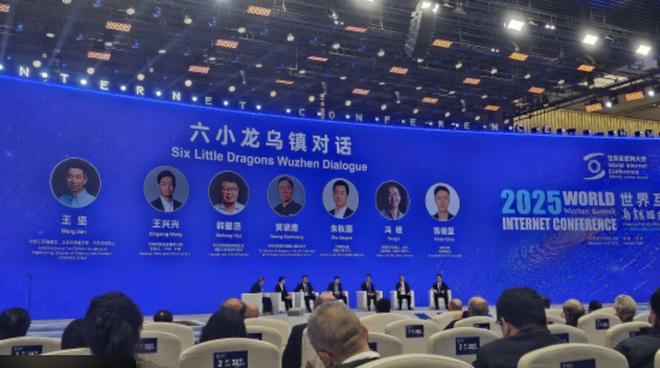
“六小龙”乌镇对话:从英伟达“冷板凳”到《黑神话》破圈
Di Yi Cai Jing· 2025-11-07 12:49
Core Insights - The 2025 World Internet Conference in Wuzhen highlights advancements in embodied intelligence and other cutting-edge technologies, showcasing the potential for significant developments in the coming years [1] - The evolution from the internet era to the AI era is seen as a global technological wave, with Chinese internet data serving as a crucial resource for AI development [4] - The robotics industry has made substantial progress over the past decade, with applications becoming more viable and expanding beyond initial limitations [5][6] Group 1: Industry Trends - The "Six Little Dragons" dialogue at the conference features six pioneering tech companies exploring fields such as embodied intelligence, brain-computer interfaces, and large models, benefiting from a decade of internet technology and data accumulation [1] - The gaming industry in China has grown to become the largest market globally, with significant contributions from Chinese teams in the development of top-grossing games [6] - The potential for embodied intelligence and humanoid robots is closer to realization compared to other advanced fields, with expectations for remarkable advancements in the next few years [6][7] Group 2: Technological Challenges and Opportunities - The robotics sector faces challenges related to model structure and data collection, with a lack of consensus on optimal configurations for sensors and data training [7] - AI is projected to bring more opportunities in the short term, but long-term risks may arise as it begins to replace certain jobs, necessitating a rethinking of societal roles [7][8] - Brain-computer interfaces are seen as a promising technology for addressing neurological diseases, with ongoing research aimed at developing solutions for conditions like Alzheimer's and obesity management [8]