
通威股份

Search documents
银河期货每日早盘观察-20260205
Yin He Qi Huo· 2026-02-05 01:47
1. Report Industry Investment Rating No relevant content provided. 2. Core Views of the Report The report provides a daily morning observation of various futures markets, covering financial derivatives, agricultural products, black metals, non - ferrous metals, shipping, and energy chemicals. It analyzes the market conditions, influencing factors, and provides corresponding trading strategies for each sector [5][7]. 3. Summary by Related Catalogs 3.1 Financial Derivatives 3.1.1 Stock Index Futures - Market performance: On Wednesday, the stock index showed differentiation. The Shanghai Composite 50 Index rose 1.14%, the CSI 300 Index rose 0.83%, the CSI 500 Index rose 0.15%, and the CSI 1000 Index slightly fell 0.02%. The total market turnover was 2.5 trillion yuan. Stock index futures rebounded across the board [20]. - Core logic: Overnight U.S. technology stocks fell, affecting A - share technology stocks. However, the market remained stable and improved overall, with a style shift occurring. The short - term market is expected to remain oscillating strongly [20]. - Trading strategy: Unilateral trading should be oscillating strongly, buying on dips; for arbitrage, conduct IM/IC long 2609 + short ETF cash - and - carry arbitrage; for options, use a bull spread strategy [21]. 3.1.2 Treasury Bond Futures - Market performance: On Wednesday, treasury bond futures closed down across the board. The 30 - year main contract fell 0.23%, the 10 - year main contract fell 0.01%, the 5 - year main contract fell 0.04%, and the 2 - year main contract fell 0.02% [22]. - Core logic: The central bank's net withdrawal of short - term liquidity and the increase in risk appetite have slightly suppressed the bond market. In the short term, the market lacks a clear driver, and the bond market sentiment may become more cautious [22]. - Trading strategy: Unilateral trading should consider buying TF and T contracts on dips; for arbitrage, stay on the sidelines [23]. 3.2 Agricultural Products 3.2.1 Protein Meal - Market performance: CBOT soybean index rose 2.39% to 1099.75 cents per bushel, and CBOT soybean meal index rose 2.38% to 300.9 dollars per short ton [25]. - Core logic: The improvement of trade relations has boosted the U.S. soybean market. South American dry weather also provides some support, but overall supply and demand are relatively loose. The domestic soybean meal cost is under pressure, but spot prices may be supported in the short term [26]. - Trading strategy: Unilateral trading should be on the sidelines in the short term; for arbitrage, expand the MRM spread; for options, sell a wide - straddle strategy [26]. 3.2.2 Sugar - Market performance: The previous trading day, the ICE U.S. raw sugar main contract price dropped 1.5% to 14.41 cents per pound, and the London white sugar main contract fell 1.46% to 411.2 dollars per ton [27]. - Core logic: Internationally, the Brazilian sugar influence is declining, and the northern hemisphere is in an increasing production cycle. However, sugar prices have reached a low level, and some institutions' forecasts for the 2026/27 sugar production and consumption are favorable. Domestically, the supply is under pressure, but the international price rebound and improved macro - sentiment may lead to a bottom - oscillating price [30]. - Trading strategy: Unilateral trading should expect international and domestic sugar prices to oscillate at the bottom; for arbitrage and options, stay on the sidelines [31]. 3.2.3 Oilseeds and Oils - Market performance: Overnight, the CBOT U.S. soybean oil main price changed by 2.15% to 55.69 cents per pound, and the BMD Malaysian palm oil main price changed by - 0.07% to 4219 ringgit per ton [33]. - Core logic: The market is affected by trade and policy expectations. Malaysian palm oil may reduce production and inventory in January, but the high - base inventory may remain at a relatively high level. The U.S. biodiesel demand is expected to be good, which is beneficial to soybean oil. However, soybean oil supply pressure may shift later. Rapeseed oil may have some support [33]. - Trading strategy: Unilateral trading should expect oils to oscillate widely; for arbitrage, consider shorting the y59 spread at high levels; for options, stay on the sidelines [34]. 3.3 Black Metals 3.3.1 Steel - Market performance: The night - trading session of the black sector was oscillating weakly. On the 4th, the construction steel trading volume was 3.61 million tons, and the trading volume continued to decline approaching the Spring Festival [57]. - Core logic: The demand is marginally weakening, and the steel price follows the raw materials to oscillate. The steel inventory is accumulating, and the winter demand is declining. However, the cost is supported by the steel mill's replenishment demand. The short - term steel price may oscillate strongly following coal [57]. - Trading strategy: Unilateral trading should follow the raw materials to oscillate strongly; for arbitrage, short the coil - coal ratio at high levels and continue to hold the short coil - rebar spread; for options, stay on the sidelines [58]. 3.3.2 Coking Coal and Coke - Market performance: Recently, the coking coal futures have fluctuated greatly due to news of Indonesia's coal policy [60]. - Core logic: The actual impact of Indonesia's coal production reduction policy remains to be seen. The current market is dominated by funds and emotions, and the coking coal valuation is not high. The supply - side events may be repeatedly traded [60]. - Trading strategy: Unilateral trading should be mainly for band trading, and cautious investors should stay on the sidelines. Consider buying on dips after a pull - back; for arbitrage and options, stay on the sidelines [61]. 3.3.3 Iron Ore - Market performance: The night - trading iron ore price fell 1.02%. The current macro - sentiment and capital game are significant, and the iron ore valuation is moderately high [63]. - Core logic: The supply is increasing, and the demand may be less than expected in the first half of the year. The domestic iron ore fundamentals are weakening, and the high valuation is difficult to sustain. The iron ore price is expected to run weakly [63]. - Trading strategy: Unilateral trading should expect a weak operation; for arbitrage and options, stay on the sidelines [63]. 3.4 Non - Ferrous Metals 3.4.1 Gold and Silver - Market performance: London gold rose 0.36% to 4964.69 dollars per ounce, and London silver rose 3.44% to 88.13 dollars per ounce. The Shanghai gold main contract fell 0.64% to 1114 yuan per gram, and the Shanghai silver main contract rose 1.03% to 22955 yuan per kilogram [67]. - Core logic: The gold and silver markets first rose and then fell. The weak U.S. ADP employment data initially supported the prices, but then the market was affected by the performance of U.S. technology stocks. In the short term, caution should be exercised, especially during the Spring Festival [68]. - Trading strategy: Unilateral trading should hold long positions in Shanghai gold based on the 20 - day moving average support and hold long positions in Shanghai silver cautiously based on the 30 - day moving average; for arbitrage, stay on the sidelines; for options, use a bull call spread strategy [70]. 3.4.2 Platinum and Palladium - Market performance: The outer - market platinum and palladium fluctuated widely. The Guangzhou Futures Exchange platinum main contract PT2606 rose 3.54% to 572.95 yuan per gram, and the palladium main contract PD2606 rose 8.62% to 450.55 yuan per gram [70]. - Core logic: The strong U.S. dollar has a negative impact on non - ferrous and precious metals. Platinum is in a tight - balance pattern, and palladium has shifted from a supply - demand gap to a supply surplus. Platinum has a stronger upward drive [70]. - Trading strategy: Unilateral trading should be cautiously bullish on platinum and palladium, buying on dips and paying attention to position management; for arbitrage and options, stay on the sidelines [71]. 3.4.3 Copper - Market performance: The main contract of Shanghai copper 2603 closed at 102590, down 2.22%, and LME copper closed at 13040 dollars per ton, down 2.76% [72]. - Core logic: The Sino - U.S. leaders' call and AI - related stock fluctuations have led to a slight decline in copper prices. The downstream replenishment has slowed down the inventory accumulation. The strategic reserve demand and supply disturbances provide long - term support for copper prices [73]. - Trading strategy: Unilateral trading should take a long - on - dips approach, but control the position before the Spring Festival; for arbitrage and options, stay on the sidelines [74]. 3.5 Shipping 3.5.1 Container Shipping - Market performance: The spot freight rates of the SCFI European line and SCFIS European line showed a downward trend [108]. - Core logic: The resumption of some shipping routes is offset by geopolitical tensions. The demand is peaking and then declining, and the supply in March is expected to increase. The traditional off - season is approaching, and the freight rate is expected to decline after the Spring Festival [108]. - Trading strategy: Unilateral trading should stay on the sidelines; for arbitrage, take profit on the 6 - 10 positive spread at high levels and then stay on the sidelines, waiting for opportunities to operate on dips [109]. 3.6 Energy and Chemicals 3.6.1 Crude Oil - Market performance: WTI crude oil futures rose 3.05% to 65.14 dollars per barrel, and Brent crude oil futures rose 3.2% to 69.46 dollars per barrel [111]. - Core logic: The uncertainty of the U.S. - Iran nuclear negotiation has led to wide - range oscillations in international oil prices. The Brent main contract is expected to oscillate between 66 - 69 dollars [113]. - Trading strategy: Unilateral trading, arbitrage, and options should all stay on the sidelines [113]. 3.6.2 Asphalt - Market performance: The outer - market WTI and Brent crude oil prices rose, and the asphalt futures showed a small increase. The spot prices in various regions were stable [114]. - Core logic: The geopolitical risk has increased the volatility of asphalt, which follows the crude oil price. There are still concerns about the long - term raw material cost increase and supply gap. The supply is low, and the demand is weakening [115]. - Trading strategy: Unilateral trading should expect high - level oscillations and go long on BU2606 on dips; for arbitrage, pay attention to the long BU - short LU spread; for options, stay on the sidelines [116]. 3.6.3 Fuel Oil - Market performance: The FU03 contract closed at 2800 (+0.86%), and the LU04 contract closed at 3266 (+0.62%) [118]. - Core logic: High - sulfur fuel oil is supported by high - price transactions in the Singapore spot window. Geopolitical factors are the main bullish drivers. The low - sulfur fuel oil supply has increased recently [119]. - Trading strategy: Unilateral trading should expect a strong oscillation and pay attention to geopolitical fluctuations; for arbitrage, hold the FU59 positive spread and pay attention to the LU near - month reverse spread; for options, stay on the sidelines [120].
2025年A股1442家公司预亏,行业“亏损王”浮出
Di Yi Cai Jing Zi Xun· 2026-02-04 15:12
Core Insights - Nearly 50% of the 2957 A-share listed companies that disclosed their 2025 annual performance forecasts are expected to incur losses [2][3] - The real estate sector is identified as the most affected, with Vanke A (000002.SZ) being the largest loss-maker, projecting a net loss of approximately 82 billion yuan [6][7] Provincial Distribution of Losses - The provinces with the highest proportion of companies expecting losses are Hainan (44.44%), Jilin (41.67%), and Qinghai (40%) [4][5] - Guangdong has the highest number of companies expecting losses at 257, followed by Beijing (172), Jiangsu (160), and Zhejiang (133) [3][4] Industry Analysis - The IT services and software development sectors have the highest number of companies forecasting losses, with 60 companies each, followed by the real estate sector with 54 companies [6] - The top ten companies with the highest expected losses include five from the real estate sector, with Vanke A leading the list [6][7] Notable Loss-Makers - Vanke A is projected to incur a net loss of about 82 billion yuan due to decreased project settlement scale and increased business risks [6][7] - Other significant loss-makers in the real estate sector include China Fortune Land Development (华夏幸福) with expected losses between 16 billion to 24 billion yuan and Greenland Holdings (绿地控股) with losses of 16 billion to 19 billion yuan [7] - In the retail sector, M.K. Home (美凯龙) is expected to report a loss of 15 billion to 22.5 billion yuan, primarily due to investment property valuation losses [7][8] Sector-Specific Losses - The home appliance sector's largest loss-maker is Shenzhen Konka (深康佳A), projecting losses of 12.58 billion to 15.57 billion yuan [8] - The vaccine leader Zhifei Biological Products (智飞生物) is also expected to report a first-time loss of 10.7 billion to 13.73 billion yuan due to decreased public vaccination willingness [8] - In the photovoltaic sector, Tongwei Co. (通威股份) is projected to incur losses of 9 billion to 10 billion yuan due to industry oversupply and rising raw material costs [9]




2025年A股1442家公司预亏,行业“亏损王”浮出
第一财经· 2026-02-04 14:59
Core Viewpoint - In the 2025 annual performance forecast disclosure for A-share listed companies, nearly half of the 2957 companies are expected to report losses, indicating a significant downturn in various sectors, particularly in real estate [5][6]. Group 1: Overall Performance Forecast - A total of 2957 A-share listed companies disclosed their performance forecasts, with 623 companies expecting profit increases and 378 expecting profit decreases [5][6]. - Among the companies, 1442 are expected to incur losses, accounting for 49% of those disclosing forecasts, while 1863 companies (63%) are either expecting losses or profit reductions [6]. - The provinces with the highest number of companies forecasting losses include Guangdong (257), Beijing (172), and Jiangsu (160) [7]. Group 2: Provincial Distribution of Losses - Hainan province has the highest loss ratio, with 44.44% of its companies (12 out of 27) expecting losses [9]. - Jilin and Qinghai follow with loss ratios of 41.67% and 40%, respectively [9]. - Other provinces with significant loss ratios include Liaoning (39.29%) and Xinjiang (37.10%) [9]. Group 3: Industry-Specific Losses - The IT services and software development sectors have the highest number of companies forecasting losses, with 60 companies each, followed by the real estate sector with 54 companies [11]. - Vanke A is identified as the "loss king" of A-shares, expecting a net profit loss of approximately 82 billion yuan due to declining project settlement scales and increased business risks [11][12]. - Other notable companies with high expected losses include China Fortune Land Development (160-240 billion yuan) and Greenland Holdings (160-190 billion yuan), both from the real estate sector [12]. Group 4: Notable Losses in Other Sectors - The retail sector's "loss king" is Meikailong, expecting a net profit loss between 150 billion and 225 billion yuan, primarily due to losses in investment properties [13]. - In the home appliance sector, Shenkangjia A anticipates a loss of 125.81 billion to 155.73 billion yuan, driven by increased impairment provisions and declining sales [13]. - The vaccine industry is also facing challenges, with Zhifei Biological Products forecasting a loss of 106.98 billion to 137.26 billion yuan due to decreased public willingness to receive vaccinations [13].




A股2025亏损画像:1442家公司预亏 行业“亏损王”浮出
Di Yi Cai Jing· 2026-02-04 13:19
Core Viewpoint - Nearly half of the 2957 A-share listed companies that disclosed their 2025 annual performance forecasts are expected to incur losses, indicating a significant downturn in the market [1][2]. Provincial Distribution - The provinces with the highest proportion of companies expecting losses are Hainan (44.44%), Jilin (41.67%), and Qinghai (40%) [3][4]. - Guangdong has the highest number of companies expecting losses at 257, followed by Beijing (172), Jiangsu (160), and Zhejiang (133) [3]. Industry Analysis - The real estate sector is identified as the most affected, with Vanke A (000002.SZ) projected to be the "loss king" with an expected net profit loss of approximately 82 billion yuan [6][7]. - Other industries with significant losses include IT services, semiconductors, and chemical pharmaceuticals, with the number of companies expecting losses in these sectors ranging from 40 to 60 [6][8]. Notable Companies - Vanke A leads the losses in the real estate sector, followed by China Fortune Land Development (华夏幸福) with expected losses between 16 billion to 24 billion yuan, and Greenland Holdings (绿地控股) with losses estimated at 16 billion to 19 billion yuan [6][7]. - In the retail sector, M.K. Home (美凯龙) is projected to incur losses between 15 billion to 22.5 billion yuan, primarily due to investment property valuation losses [7]. - In the electronics sector, Deep Kangjia A (深康佳A) is expected to report losses of 12.58 billion to 15.57 billion yuan, attributed to increased impairment provisions and declining revenue [7]. Sector-Specific Losses - The photovoltaic industry is also facing challenges, with Tongwei Co. (通威股份) expected to incur losses of 9 billion to 10 billion yuan due to supply surplus and rising raw material costs [8]. - In the semiconductor sector, Wentai Technology (闻泰科技) anticipates losses of 9 billion to 13.5 billion yuan, influenced by significant investment losses and asset impairments [8].
马斯克团队调研中国头部光伏企业!“太空光伏”概念股再爆发
Sou Hu Cai Jing· 2026-02-04 13:17
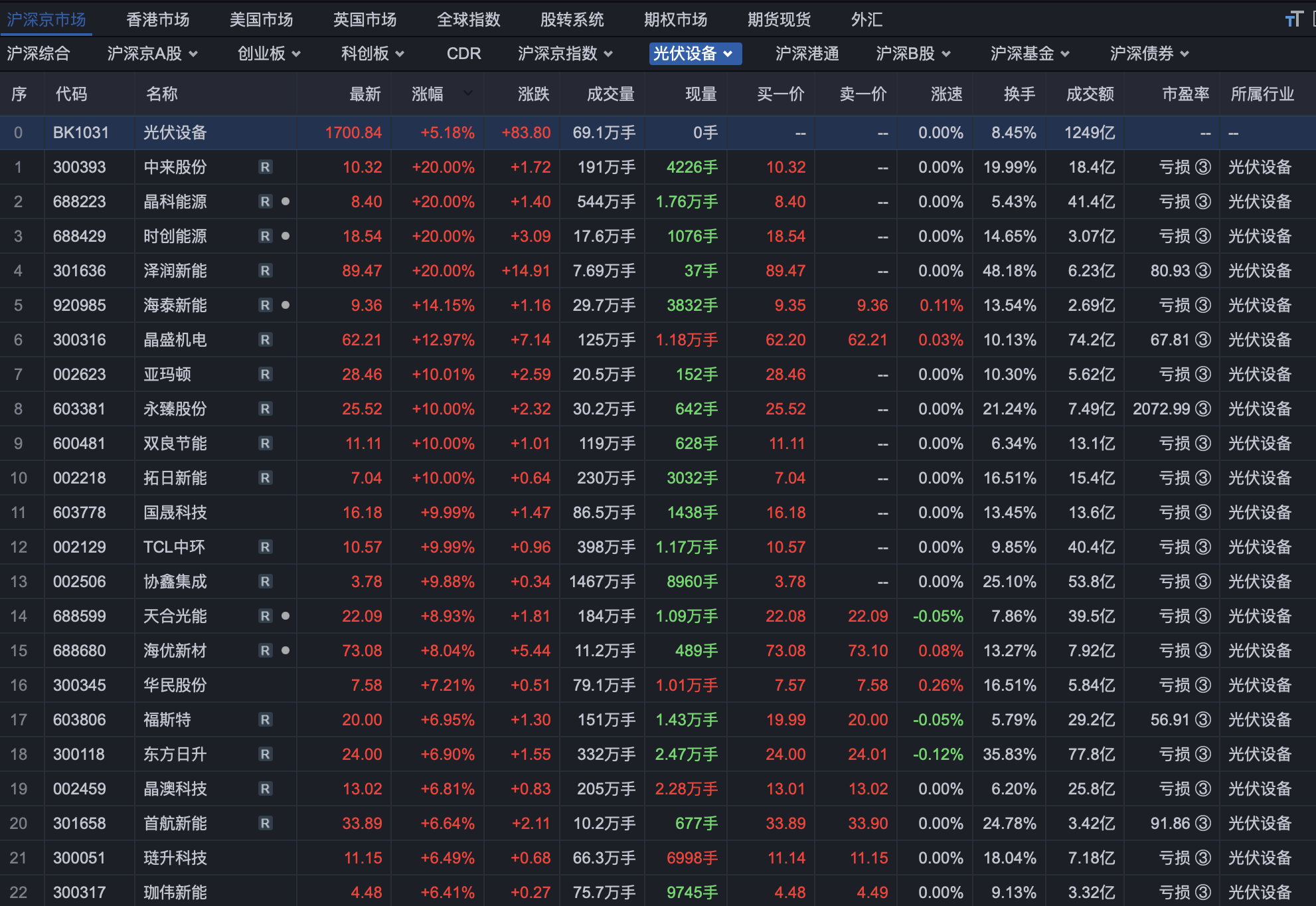
"太空光伏"概念股再次爆发。 截至2月4日收盘,光伏ETF(515790)报收1.157,涨幅3.12%,这已是该ETF连续两个交易日大涨,2月3日光伏ETF涨幅超6%。个股方面,截至4日收盘,晶 科能源(688223.SH)、协鑫集成(002506.SZ)等多只光伏个股涨停。 消息面上,有市场传闻称,马斯克团队近期走访了中国多家光伏企业,考察项目涉及设备、硅片、电池组件等环节,其中重点考察了有异质结、钙钛矿技术 路线的光伏企业。晶科能源相关工作人员回应称,公司近期确实与马斯克团队相关考察团有过接触,考察团对公司的技术储备、生产设备等展开了解,马斯 克团队对国内主流光伏企业也均有考察。对于考察细节、具体合作进展等,南都湾财社记者联系晶科能源并发函,对方仅表示:"不方便回应"。 马斯克为何力挺太空光伏?据南都湾财社记者了解,在太空极端环境下,可选择的持续能源极为有限:化学电池的能量密度有限,无法实现自主补充;核电 系统成本高昂、审批复杂,并且技术仍处于试验阶段。 | 沪深京市场 | | 香港市场 | 美国市场 | 英国市场 | 全球指数 | | 股转系统 | 期权市场 | | --- | --- | --- | ...

A股2025亏损画像:1442家公司预亏,行业“亏损王”浮出
Di Yi Cai Jing· 2026-02-04 13:07
Core Viewpoint - Nearly half of the A-share listed companies are expected to report losses for the 2025 fiscal year, with significant regional and industry disparities in the distribution of these losses [2][3]. Group 1: Regional Distribution of Losses - A total of 2,957 A-share companies disclosed their performance forecasts, with 1,442 companies expected to incur losses, representing 49% of the total [3]. - Hainan, Jilin, and Qinghai have the highest proportions of companies forecasting losses, exceeding 40%, with Hainan at 44.44% [4][5]. - Guangdong has the highest number of loss-making companies at 257, followed by Beijing (172), Jiangsu (160), and Zhejiang (133) [4]. Group 2: Industry Analysis - The real estate sector is the most affected, producing the highest number of loss-making companies, including the "loss king" Vanke A, which is expected to report a loss of approximately 82 billion yuan [7][8]. - Other industries with significant losses include IT services, semiconductors, and chemical pharmaceuticals, with 60, 50, and 40-50 companies respectively forecasting losses [7]. - The top ten companies with the highest expected losses include five from the real estate sector, with notable losses from China Fortune Land Development and Greenland Holdings [7][8]. Group 3: Specific Company Losses - Vanke A's losses are attributed to a significant decline in project settlement scale and increased business risks, leading to credit and asset impairment provisions [7]. - Other major loss-makers include China Fortune Land Development, expected to lose between 16 billion to 24 billion yuan, and Greenland Holdings, with losses projected between 16 billion to 19 billion yuan [8]. - In the retail sector, M.K. Home is expected to report losses of 15 billion to 22.5 billion yuan due to investment property valuation losses [8]. - Semiconductor company Wentech Technology anticipates losses of 9 billion to 13.5 billion yuan, primarily due to significant investment losses and asset impairments [9].


A股2025年业绩预告收官!券商、有色金属迎来红利期,地产、光伏承压,AI引领新质生产力
Jin Rong Jie· 2026-02-04 11:32
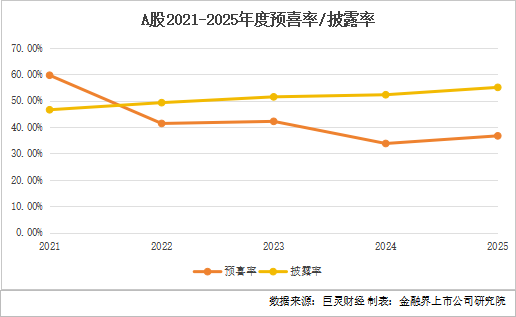
随着2025年度A股上市公司业绩预告披露正式收官,中国经济新旧动能加速转换的图景也愈发清晰。巨灵财经数据显示,截 至2026年1月30日,A股5352家上市公司中(剔除上市未满一年公司),共有2963家发布了2025年年报、快报或业绩预告, 披露率达55.36%。其中,1069家公司实现预喜(含预增、略增、扭亏、续盈),预喜率为36.08%,较2024年的33.38%实现 小幅回升,盈利态势逐步回暖。 从整体数据来看,2025年A股行业分化态势尤为突出。非银金融、有色金属等行业表现亮眼,盈利增速显著;房地产、光伏 等传统行业则深陷调整期,持续承受业绩压力;而以半导体、通信设备为代表的新质生产力相关板块,更是迎来业绩爆发 期。这种行业增减的鲜明对比,不仅直观反映了各行业景气度的差异,更清晰展现出中国经济正逐步摆脱传统要素依赖模 式,向创新驱动的高质量发展稳步迈进。 非银金融、有色金属领衔,优势赛道表现亮眼 从各行业具体表现来看,2025年预喜率排名前五的行业分别是非银金融、有色金属、美容护理、汽车和公用事业。这些行业 凭借自身核心优势或行业周期红利,跻身业绩预喜的核心阵营,其中非银金融板块的集体预增表现最为突出 ...




马斯克团队来“摸底”,光伏设备全线拉升,晶科能源20cm涨停
2 1 Shi Ji Jing Ji Bao Dao· 2026-02-04 09:19
Core Viewpoint - The recent surge in the stock market, particularly in the photovoltaic (PV) sector, is driven by interest from Elon Musk's SpaceX and Tesla teams exploring partnerships with Chinese PV companies, although the overall industry still faces significant financial challenges ahead [1] Industry Summary - The three major stock indices saw a late rally, with the Shanghai Composite Index returning to the 4100-point mark, driven by strong performance in the photovoltaic equipment sector [1] - Key companies in the PV sector, such as JinkoSolar, Zhonglai Co., Shichuang Energy, and Zerun New Energy, experienced a 20% surge in stock prices, while others like Haitai New Energy and Optec saw gains exceeding 10% [1] - Despite the positive market movement, major PV companies are projected to incur substantial losses in 2025, with leading firms like Longi Green Energy, Tongwei Co., and TCL Zhonghuan expected to report losses exceeding 6 billion yuan [1] - The industry is under significant survival pressure, and the anticipated recovery in the PV sector will depend on the effective implementation of measures to counteract excessive competition [1]


[安泰科]多晶硅周评-市场观望情绪浓厚 供需双弱格局延续(2026年2月4日)
中国有色金属工业协会硅业分会· 2026-02-04 07:27
Group 1 - The core viewpoint of the article indicates that the polysilicon market is currently experiencing a stalemate, with no quotations or transactions reported for mainstream products this week. The market sentiment has worsened, leading to a complete halt in new contract signings, with only a few companies engaging in minor exploratory inquiries [1] - The deepening market deadlock is attributed to high absolute prices of key materials like silver paste, which continue to exert cost pressure on battery production. This has limited the downstream acceptance of polysilicon prices. Additionally, the uncertainty surrounding the operational plans of downstream silicon wafer and battery manufacturers ahead of the Spring Festival has delayed short-term procurement needs [1] - In January, domestic polysilicon production was approximately 102,000 tons, a month-on-month decrease of 8.3%. The reduction mainly came from companies like Yongxiang Co., GCL-Poly Energy, and Lihau Qingneng, while increases were noted from companies like Nanfang Glass and Tianrui. The production plan for February is set to further decrease to below 85,000 tons, aligning supply with demand [1] Group 2 - The polysilicon market is expected to maintain a weak supply and demand balance in the short term, with sluggish demand before the Spring Festival and supply contraction continuing to dominate the market outlook. Significant price fluctuations are unlikely [2] - After the Spring Festival, as some downstream companies gradually release their rigid procurement needs, order transactions are expected to slowly resume, with prices fluctuating within a narrow range based on the cost lines of enterprises [2]
光伏ETF鹏华(159863)涨近3%,行业迎来密集催化
Xin Lang Cai Jing· 2026-02-04 07:01
截至2026年2月4日 14:37,中证光伏产业指数(931151)强势上涨3.03%,成分股晶科能源上涨20.00%,晶 盛机电上涨13.33%,TCL中环上涨9.99%,协鑫集成,天合光能等个股跟涨。光伏ETF鹏华(159863)上涨 2.97%,最新价报0.76元。 光伏ETF鹏华紧密跟踪中证光伏产业指数,中证光伏产业指数从主营业务涉及光伏产业链上、中、下游 的上市公司证券中,选取不超过50只最具代表性的上市公司证券作为指数样本,以反映光伏产业上市公 司证券的整体表现。 消息面上,多晶硅N型复投料报价48-59元/千克,颗粒硅报价49-51元/千克,多晶硅价格指数52.45元/千 克,多晶硅价格上涨,周六多晶硅企业会议以及2月5日光伏会议叠加着白银价格大跌给到多晶硅企业抬 价信心。最高企业报价提升至63元/千克。此外,马斯克近期密集调研国内光伏设备厂商,尤其关注HJT 与钙钛矿新技术路线,提振板块情绪。 中信证券指出,太空光伏的发展可以分为短、中、长期三个阶段。短期阶段:2025-2030年——预计太 空光伏仍以砷化镓电池为主、P型HJT电池和钙钛矿电池逐步导入应用。中期阶段:2030-2035年——预 ...