
星巴克

Search documents
深度|星巴克“易主”博裕:2万门店野心下,咖啡巨头能否真正“下沉”?
Di Yi Cai Jing· 2025-11-06 04:08
Core Insights - The competitive landscape of China's coffee market has dramatically changed, with Luckin Coffee surpassing Starbucks in both store count and revenue, becoming the new market leader [2][4] - Starbucks has entered a strategic partnership with Boyu Capital, marking the first time in 26 years that it has relinquished control of its core business in China [1][7] - The partnership aims to enhance Starbucks' operational efficiency and accelerate its expansion in the Chinese market, particularly in lower-tier cities [10][11] Market Dynamics - Luckin Coffee's revenue for the first half of 2025 reached 21.2 billion yuan, with a net profit of nearly 1.8 billion yuan, while Starbucks reported revenue of 18.2 billion yuan and a net profit of approximately 1.2 billion yuan for the same period [4] - The rapid rise of local brands like Luckin and Kudi Coffee, which has opened over 14,000 stores since its establishment in 2022, has intensified competition for Starbucks [2][4] - Price wars initiated by local brands have altered consumer expectations, with prices for coffee now commonly ranging from 10 to 15 yuan per cup [4] Financial Performance - Starbucks China reported a revenue increase of 6% year-on-year in the fourth quarter of fiscal year 2025, amounting to $831.6 million [5] - However, the company faced challenges with a decline in average transaction value by 8% and a 14% drop in same-store sales in the fourth quarter of 2024 [4] Strategic Partnership with Boyu Capital - Boyu Capital acquired a 60% stake in Starbucks China for $4 billion, valuing the business at over $13 billion [7][8] - Boyu Capital's extensive local market experience and investment portfolio, including successful ventures in retail, are expected to enhance Starbucks' operational capabilities [9][10] - The partnership aims to accelerate store openings and improve localization strategies, with a target of expanding the number of Starbucks locations in China to 20,000 [10][11] Future Outlook - The newly formed joint venture will manage approximately 8,000 existing Starbucks stores and focus on expanding into lower-tier markets [10] - Starbucks aims to balance its high-end brand image with aggressive expansion, which poses challenges in maintaining service quality while scaling operations [11][12] - The coffee market in China is entering a new phase, with the relinquishment of control being just the beginning of a more complex competitive landscape [12]


星巴克找了个中国合伙人
Zhong Guo Xin Wen Wang· 2025-11-06 03:28
Core Insights - Starbucks is forming a joint venture with Chinese asset management company Boyu Capital, with Boyu holding up to 60% equity and Starbucks retaining 40% [1][2] - The deal values Starbucks' China business at approximately $4 billion, excluding cash and debt, with Boyu acquiring corresponding equity [2] - Starbucks' estimated valuation for its China operations exceeds $13 billion, suggesting Boyu's acquisition may be advantageous [3] Company Strategy - The joint venture aims to expand Starbucks' store count in China from around 8,000 to 20,000, focusing on penetrating smaller cities and emerging regions [4][12] - Boyu's experience in local market operations is expected to accelerate Starbucks' growth in these areas, indicating a strategic shift to leverage local expertise for expansion [6][12] Market Context - Starbucks, once a pioneer in the Chinese coffee market, now faces intense competition from local brands like Luckin Coffee and Kudi Coffee, which have significantly more stores [7][10] - The rise of local brands is attributed to their efficient supply chains and competitive pricing, challenging Starbucks' traditional pricing strategy [9][11] Operational Challenges - Starbucks' recent performance raises concerns about its ability to generate operating income from the joint venture, as it must adapt to a rapidly changing market landscape [4][12] - The company is undergoing a "second localization" effort, which involves ceding control while attempting to maintain brand integrity and market relevance [12][15] Future Outlook - The partnership with Boyu signifies a shift in Starbucks' identity from a market leader to a challenger in the evolving Chinese coffee landscape [15] - The future competition will hinge on supply chain efficiency, digitalization, regional insights, and organizational agility rather than just pricing or brand recognition [15]

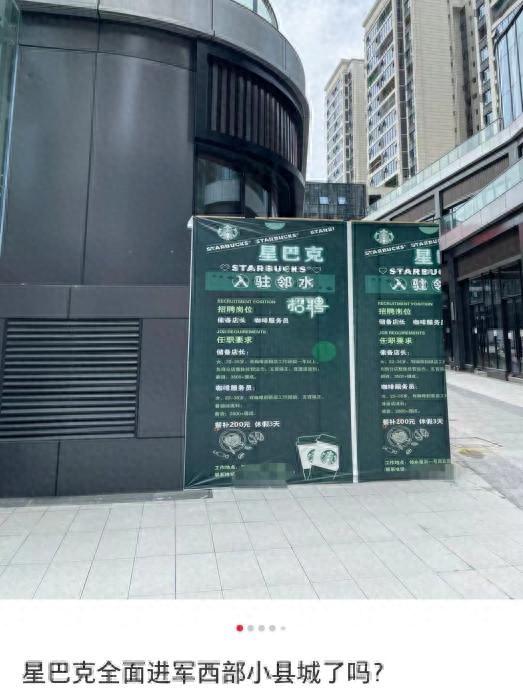
中国真的需要20000家星巴克吗?
3 6 Ke· 2025-11-06 02:43
Core Insights - Starbucks has finalized a deal with Boyu Capital to establish a joint venture for its retail operations in China, valuing the venture at approximately $4 billion, with Boyu holding 60% and Starbucks 40% [1] - The total value of Starbucks' retail business in China is expected to exceed $13 billion over the next decade, comprising three components: the value from the joint venture, retained equity, and ongoing licensing fees [1] - The emphasis on Starbucks as a "premium brand" raises questions about the feasibility of its goal to open 20,000 stores in China, especially in a competitive market with numerous affordable alternatives [1][4] Company Strategy - Starbucks aims to leverage Boyu's local market expertise to accelerate its expansion, particularly in smaller cities and emerging regions, while maintaining its brand culture [4][6] - The CEO has called for a return to Starbucks' core values, focusing on creating a warm coffeehouse environment that fosters community [17][18] - The joint venture is seen as a way to enhance market penetration and provide innovative, localized experiences for Chinese consumers [6][12] Market Dynamics - The Chinese coffee market has become increasingly competitive, with brands like Luckin Coffee and Manner offering lower-cost options that appeal to consumers [1][16] - Starbucks' market share in China has declined from 42% in 2017 to an estimated 14% by 2024, indicating a significant shift in consumer preferences [9] - The current strategy may require Starbucks to adapt its pricing and store formats to compete effectively, potentially including smaller store formats and localized product offerings [9][11][12] Expansion Challenges - The ambitious target of 20,000 stores implies a need for significant investment in infrastructure, labor, and rental costs, raising concerns about the sustainability of such a rapid expansion [7][8] - The challenge of maintaining a "premium" brand image while expanding into lower-tier markets may lead to conflicting operational strategies [4][7] - The necessity for Starbucks to differentiate its product offerings in a crowded market is critical, as current offerings lack significant differentiation compared to competitors [7][12] Consumer Engagement - Starbucks is exploring ways to enhance customer experience, potentially by offering more affordable and localized menu items to attract a broader customer base [12][20] - The company may consider a franchise model to accelerate growth, similar to successful strategies employed by other brands in the market [12][21] - Engaging with consumers in a meaningful way, such as through community-focused initiatives, could help Starbucks regain its competitive edge [19][20]
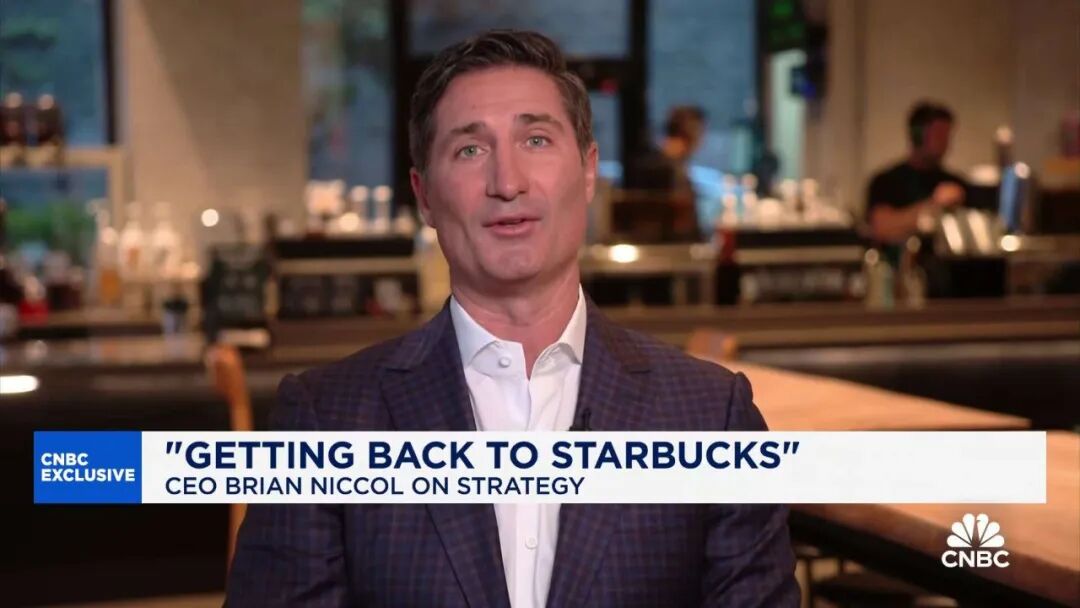
星巴克中国估值要跑到130亿美元,还得看博裕能帮多大忙
Xin Lang Cai Jing· 2025-11-06 02:39
Core Insights - Starbucks has finalized a deal to form a joint venture with Boyu Capital, where Boyu will hold up to 60% of the equity, while Starbucks retains 40% and continues to own the brand and intellectual property [1][2] Group 1: Valuation and Financial Aspects - The joint venture is valued at $4 billion, with Starbucks estimating its total retail business in China to exceed $13 billion, composed of three parts: proceeds from the equity transfer, retained equity value, and future licensing fees [3][7] - Starbucks needs to generate $6.6 billion in licensing fees over the next ten years to meet the $13 billion valuation expectation, which typically ranges from 3% to 8% of GMV [7][8] - Starbucks China has 8,011 stores and has entered 1,091 county-level markets, with active membership in the Starbucks Rewards program reaching 25.5 million [9] Group 2: Market Strategy and Adaptation - The partnership with Boyu Capital aims to enhance Starbucks' local market adaptability and accelerate expansion into smaller cities and emerging markets [5][19] - Starbucks has recently adjusted its pricing strategy, implementing significant price reductions on popular products, which has positively impacted sales [10][11] - The company plans to expand its store count to 20,000, necessitating a shift towards lower-tier markets while maintaining quality and brand standards [20][21] Group 3: Boyu Capital's Role - Boyu Capital is recognized for its strong local market experience and has previously invested in notable companies, making it a suitable partner for Starbucks' expansion [15][16] - The collaboration is expected to leverage both parties' resources to enhance customer experience, accelerate product innovation, and deepen local market integration [18][19] - Boyu's higher bid may have contributed to its selection as the partner for this venture, indicating confidence in the potential for growth in the Chinese market [16]
星巴克中国卖了,它要走麦当劳的老路
Mei Ri Jing Ji Xin Wen· 2025-11-06 02:37
Core Insights - Starbucks China has finalized a strategic partnership with Boyu Capital, a leading alternative asset management firm in China, to establish a joint venture for operating Starbucks' retail business in the Chinese market [1] Group 1 - The partnership marks a significant step in the localization of capital for international dining brands in China, following the paths of McDonald's and KFC [1]
星巴克美国门店员工计划下周发动罢工
Ge Long Hui A P P· 2025-11-06 01:33
格隆汇11月6日|星巴克美国门店的工会员工准备于下周发动罢工,锁定假日销售旺季"红杯日",要求 公司签订集体劳动合约。代表全美约550间门店、4%自营店的星巴克工人联合会表示,成员已投票授权 领导层可随时发动罢工。工会计划于11月13日在超过25个城市同步行动,并警告若谈判无进展,罢工规 模可能进一步扩大。星巴克发言人Jaci Anderson回应称,对工会选择授权罢工而非重返谈判桌感到失 望,目前已为员工提供零售业中最具竞争力的待遇,平均时薪逾19美元,连同福利则超过每小时30美 元。 ...
咖啡和空间,谁才是130亿美元星巴克中国的原点
3 6 Ke· 2025-11-06 00:32
Core Insights - Starbucks China has finalized a strategic partnership with Boyu Capital to establish a joint venture, with a valuation of $4 billion, aiming to expand its store count to 20,000 in the future [1][3] - The average store valuation in China is approximately $500,000, significantly lower than the global average of $2.24 million, indicating underutilization of store space value [1][3] - The competitive landscape in China's coffee market has shifted, with local brands like Luckin and Manner outperforming Starbucks in product innovation and cost efficiency [5][6] Group 1: Strategic Partnership and Expansion Plans - The joint venture will see Boyu holding up to 60% equity while Starbucks retains 40%, focusing on retail operations in China [1] - Both parties emphasize the goal of expanding Starbucks' store count in China to 20,000, particularly in smaller cities and emerging regions [3][20] - Starbucks anticipates that its retail business in China will exceed $13 billion in total value [3] Group 2: Market Dynamics and Competitive Landscape - The coffee market in China has evolved into a highly competitive space, with consumers increasingly prioritizing affordability over the premium experience Starbucks traditionally offered [4][5] - Local competitors are leveraging cost control and rapid product innovation, making it challenging for Starbucks to maintain its market position [5][6] - Starbucks' average transaction value has been declining for 12 consecutive quarters, indicating a shift in consumer behavior towards lower-priced options [3][12] Group 3: Brand and Space Strategy - Starbucks' core strength lies in its ability to create a "third space" for consumers, which is more than just a coffee shop but a community gathering place [2][14] - The brand's identity has shifted from being a premium coffee provider to a space-focused business, necessitating a reevaluation of its product offerings and pricing strategies [14][15] - The company is exploring new themes for its stores, such as interest-based community spaces, to enhance customer engagement and redefine its value proposition [21][23]
一连收购了SKP与星巴克中国的博裕资本是谁?
Xin Lang Cai Jing· 2025-11-05 14:36
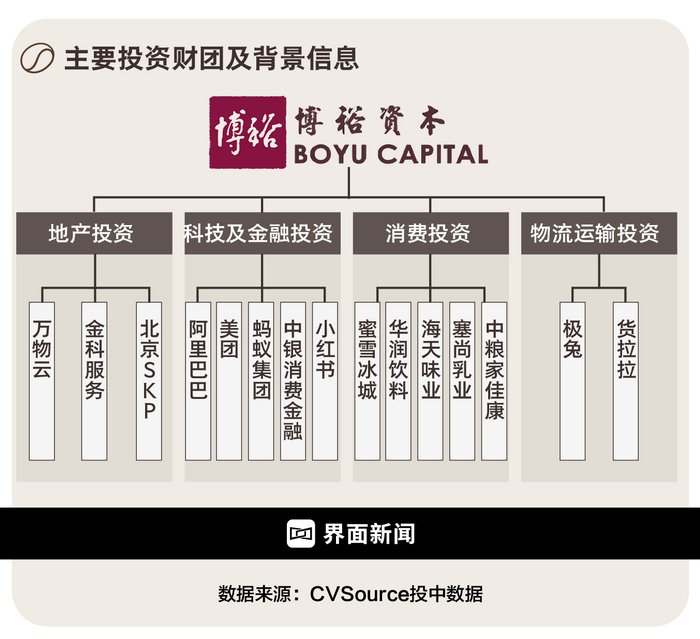
Core Viewpoint - The acquisition of Starbucks China by Boyu Capital marks a significant development in the consumer market, with the new joint venture valued at approximately $4 billion, where Boyu Capital holds a 60% stake [1]. Company Overview - Boyu Capital, founded in 2011, is a prominent alternative asset management firm focused on private equity, public market investments, logistics, data centers, and venture capital, primarily targeting technology innovation, consumer retail, and healthcare sectors [1][2]. - The firm manages nearly $10 billion in funds, making it one of the largest private investment companies in China [1]. Management Team - Boyu Capital boasts a distinguished management team, including former executives from Lenovo, TPG Capital, Ping An Insurance, and Atlantic Investment Group, enhancing its credibility and operational expertise [2]. Investment Strategy - Initially focused on private equity, Boyu Capital expanded into secondary market investments in 2016 and ventured into real estate and new infrastructure investments in 2020 [2]. - The firm has invested in over 200 companies, including major Chinese internet giants, and has a history of participating in significant transactions, enhancing its reputation in the private equity space [3][4]. Notable Investments - Boyu Capital's investment portfolio includes strategic stakes in companies like Shanghai and Beijing International Airport's duty-free operator and participation in Alibaba's pre-IPO restructuring [4][5]. - The firm has also been involved in high-profile projects in various sectors, including logistics, technology, and consumer goods, which have bolstered its market position [5]. Competitive Advantages - Boyu Capital's strengths lie in its extensive LP (limited partner) network, proactive investment judgment, and a track record of successful exits, which provide it with a competitive edge over other potential buyers [9]. - The firm is known for its hands-on approach in supporting portfolio companies, offering strategic planning, operational efficiency improvements, and governance enhancements [9]. Strategic Fit with Starbucks - Starbucks requires a local partner that understands operations without being overly dominant, making Boyu Capital's approach suitable for balancing capital structure and control [10]. - The partnership is expected to leverage Boyu Capital's capabilities in consumer retail and operational execution, enhancing Starbucks' market presence in China [12][14]. Future Prospects - Acquiring a stake in Starbucks aligns with Boyu Capital's strategy to strengthen its investment portfolio in the food and beverage sector, complementing its existing investments like Mixue Ice Cream and others [15][17]. - The collaboration is anticipated to create synergies that enhance brand value and operational efficiency across Boyu Capital's investment ecosystem [17].
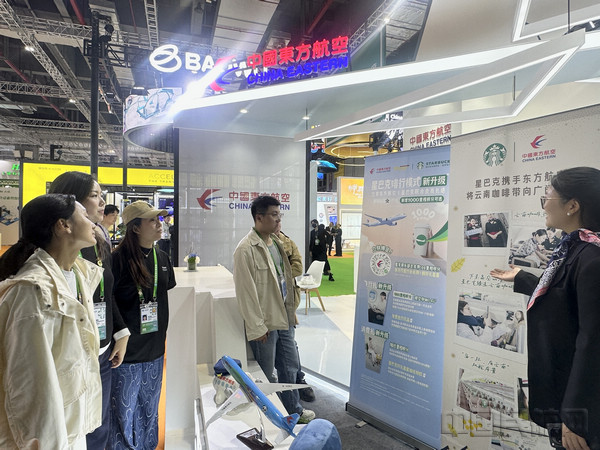
积分会员已领取“10万+”咖啡权益 东航携手星巴克亮相进博
Zhong Guo Min Hang Wang· 2025-11-05 08:28
Core Points - The eighth China International Import Expo (CIIE) commenced on November 5, showcasing a collaboration between China Eastern Airlines and Starbucks China, highlighting their "Aviation + Coffee" cross-industry ecosystem [1][2] - During the expo, China Eastern Airlines and Starbucks China set up a Yunnan coffee tasting area, allowing guests to experience high-quality domestic coffee beans, and introduced enhanced member benefits for their joint loyalty program [1][2] Summary by Sections Collaboration and Events - China Eastern Airlines and Starbucks China have been in a comprehensive partnership since July 14, 2025, allowing nearly 200 million members to share the "Aviation + Coffee" ecosystem [2] - Over 100,000 cups of Starbucks coffee have been redeemed by China Eastern Airlines' "Eastern Miles" platinum and gold card members at Starbucks locations in airports nationwide [2] Member Benefits - As of November 1, 2023, the joint member benefits have been further optimized, with Starbucks' Diamond members continuing to enjoy in-flight Wi-Fi benefits and a new option to earn 1,000 points in the "Eastern Miles" program [2] - On the day of flying with China Eastern Airlines or Shanghai Airlines, platinum and gold card members can still receive complimentary coffee beverages at Starbucks locations in domestic airports [2]

星巴克卖身,一次“换打法”的进攻!
Jin Tou Wang· 2025-11-05 08:09
Core Viewpoint - Starbucks has sold 60% of its stake in its China operations to a local private equity firm, Boyu Capital, for 28.5 billion yuan, marking a significant shift in its business strategy in China [1][4] Group 1: Company Actions - Starbucks is transferring control of over 8,000 stores in China to local management, similar to the strategies employed by McDonald's and KFC [1] - Decathlon is also considering selling 30% of its stake in its China operations, while Häagen-Dazs is looking to sell its Chinese ice cream stores [3][5] - The trend of foreign brands divesting from their Chinese operations is becoming increasingly common, indicating a broader industry shift [3] Group 2: Market Challenges - The profitability of foreign brands in China has significantly declined, with Starbucks reporting an 85.4% drop in net profit, leaving it with less than 1 billion yuan, and its market share plummeting from 42% to 14% [4] - Decathlon's net profit fell by 15.5% last year, and Häagen-Dazs has seen its store count decrease from over 400 to around 200, reflecting a broader decline in customer traffic [4][7] - Foreign brands are struggling to adapt to the changing consumer environment in China, particularly in lower-tier cities, where local brands are gaining traction [8][10] Group 3: Local Brand Strategies - Local brands are effectively utilizing online marketing and competitive pricing to attract consumers, creating a closed-loop system of online engagement and offline experience [8][10] - The success of local brands is attributed to their deep understanding of the Chinese market and their ability to adapt to local consumer preferences [10] Group 4: Future Outlook - The sale of stakes by foreign brands is not necessarily a retreat but a strategic shift towards a lighter asset model, allowing for collaboration with local operators who better understand the market [11] - Historical examples, such as McDonald's and KFC, show that divesting to local management can lead to significant growth in store numbers and improved market performance [11]
