
三全食品

Search documents
食品加工板块9月26日跌0.04%,味知香领跌,主力资金净流出1835.41万元
Zheng Xing Xing Ye Ri Bao· 2025-09-26 08:42
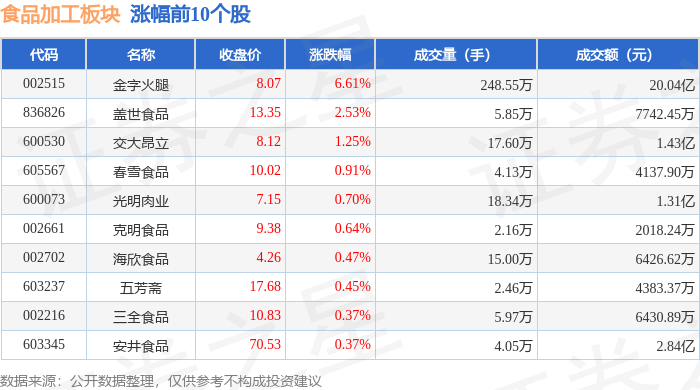
Market Overview - On September 26, the food processing sector experienced a slight decline of 0.04% compared to the previous trading day, with Wei Zhi Xiang leading the drop [1] - The Shanghai Composite Index closed at 3828.11, down 0.65%, while the Shenzhen Component Index closed at 13209.0, down 1.76% [1] Stock Performance - Jinzi Ham (002515) saw a significant increase of 6.61%, closing at 8.07 with a trading volume of 2.4855 million shares and a transaction value of 2.004 billion [1] - Wei Zhi Xiang (605089) led the declines with a drop of 4.53%, closing at 27.61 with a trading volume of 41,000 shares and a transaction value of 115 million [2] - Other notable performers included Gai Shi Food (836826) with a 2.53% increase and Longda Meishi (002726) with a 2.42% decrease [2] Capital Flow Analysis - The food processing sector experienced a net outflow of 18.3541 million from institutional investors, while retail investors saw a net inflow of 65.5132 million [2] - The capital flow data indicates that Jinzi Ham had a net inflow of 94.3197 million from institutional investors, while it faced a net outflow of 56.9452 million from speculative funds [3] - The overall trend shows that while institutional and speculative funds are withdrawing, retail investors are actively buying into the sector [2][3]


2025年1-8月全国农副食品加工业出口货值为1404.7亿元,累计下滑5.5%
Chan Ye Xin Xi Wang· 2025-09-26 03:47
相关报告:智研咨询发布的《2025-2031年中国农副食品加工专用设备制造行业市场动态分析及发展前 景研判报告》 数据来源:国家统计局,智研咨询整理 知前沿,问智研。智研咨询是中国一流产业咨询机构,十数年持续深耕产业研究领域,提供深度产业研 究报告、商业计划书、可行性研究报告及定制服务等一站式产业咨询服务。专业的角度、品质化的服 务、敏锐的市场洞察力,专注于提供完善的产业解决方案,为您的投资决策赋能。 上市公司:黑芝麻(000716),双汇发展(000895),千味央厨(001215),青岛食品(001219),三 全食品(002216),得利斯(002330),金字火腿(002515),洽洽食品(002557),五芳斋 (603237),安井食品(603345),绝味食品(603517),惠发食品(603536),有友食品 (603697),良品铺子(603719),来伊份(603777),桃李面包(603866) 根据国家统计局数据可知:2025年8月全国农副食品加工业出口货值为168.5亿元,同比下降9.6%;2025 年1-8月全国农副食品加工业累计出口货值为1404.7亿元,累计同比下降5.5%。 ...

食品加工板块9月25日跌0.87%,金字火腿领跌,主力资金净流出6552.75万元
Zheng Xing Xing Ye Ri Bao· 2025-09-25 08:37
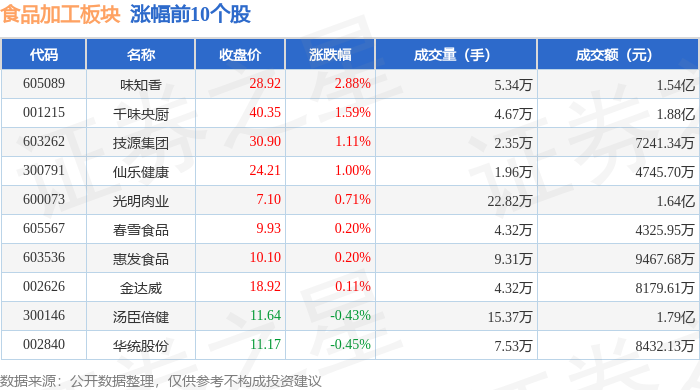
Market Overview - On September 25, the food processing sector declined by 0.87%, with Jinzi Ham leading the drop [1] - The Shanghai Composite Index closed at 3853.3, down 0.01%, while the Shenzhen Component Index closed at 13445.9, up 0.67% [1] Stock Performance - Notable gainers in the food processing sector included: - Weizhi Xiang (Code: 605089) with a closing price of 28.92, up 2.88% [1] - Qianwei Yangchu (Code: 001215) with a closing price of 40.35, up 1.59% [1] - Jiyuan Group (Code: 603262) with a closing price of 30.90, up 1.11% [1] - Jinzi Ham (Code: 002515) experienced the largest decline, closing at 7.57, down 3.69% [2] Trading Volume and Capital Flow - The food processing sector saw a net outflow of 65.53 million yuan from institutional investors, while retail investors experienced a net outflow of 17.77 million yuan [2] - Retail investors contributed a net inflow of 83.29 million yuan [2] Individual Stock Capital Flow - Jinzi Ham had a net inflow of 19.15 million yuan from institutional investors but a net outflow of 35.80 million yuan from retail investors [3] - Light Meat Industry (Code: 600073) saw a net inflow of 6.44 million yuan from institutional investors [3] - Other stocks like Huifang Food (Code: 603536) and Xianle Health (Code: 300791) also showed mixed capital flows with varying net inflows and outflows [3]
食品加工板块9月24日跌0.16%,味知香领跌,主力资金净流出5.67亿元
Zheng Xing Xing Ye Ri Bao· 2025-09-24 08:39
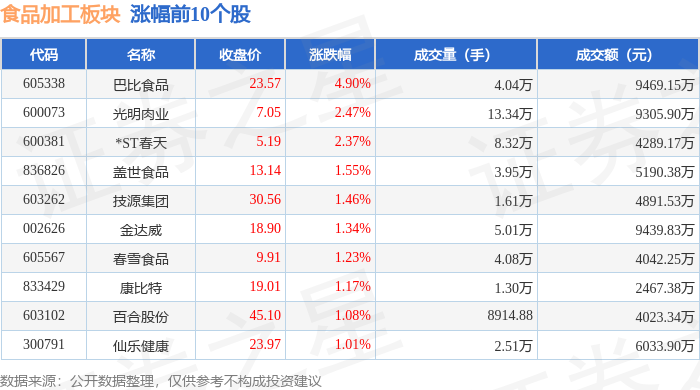
Core Insights - The food processing sector experienced a slight decline of 0.16% on September 24, with Weizhi Xiang leading the drop [1][2] - The Shanghai Composite Index closed at 3853.64, up 0.83%, while the Shenzhen Component Index closed at 13356.14, up 1.8% [1] Stock Performance - Notable gainers in the food processing sector included: - Baba Foods (605338) with a closing price of 23.57, up 4.90% [1] - Guangming Meat (600073) at 7.05, up 2.47% [1] - ST Chuntian (600381) at 5.19, up 2.37% [1] - Conversely, Weizhi Xiang (605089) closed at 28.11, down 1.54% [2] - The sector saw a total trading volume of 5.67 billion yuan in net outflow from major funds, while retail investors contributed a net inflow of 2.49 billion yuan [2][3] Fund Flow Analysis - Major funds showed a net outflow of 5.67 billion yuan, while speculative funds had a net inflow of 3.18 billion yuan [2] - Retail investors contributed a net inflow of 2.49 billion yuan [2] - Specific stock fund flows included: - Guangming Meat (600073) with a net inflow of 17.05 million yuan from major funds [3] - Jindawi (002626) with a net inflow of 11.20 million yuan from major funds [3] - Xianle Health (300791) had a net inflow of 2.03 million yuan from retail investors [3]


蜜雪冰城,如何度过柠檬水危机?丨消费参考
2 1 Shi Ji Jing Ji Bao Dao· 2025-09-24 02:47
Group 1 - The core issue is a supply crisis of lemons affecting the flagship product, lemon water, of the company Mixue Ice City [1][7] - The shortage of lemons has been reported in multiple cities including Zhengzhou, Shanghai, and Changsha [2] - The internal discussions regarding the lemon supply issue began as early as May this year [4] Group 2 - Climate change has led to significant fluctuations in lemon production, with major production areas like Sichuan experiencing a reduction of 30%-60% due to adverse weather conditions [5] - The wholesale price of lemons has surged to 14.98 yuan per kilogram, nearly double the price of 7.87 yuan per kilogram from the previous year [6] - The demand for lemons has increased by 200% due to rising summer temperatures, further exacerbating the supply issue [5] Group 3 - The lemon shortage is expected to persist due to limited domestic production areas [8] - The company remains optimistic about overcoming the lemon water crisis, with expectations of imported lemons arriving soon [9] - Some leading tea brands are considering using concentrated lemon juice as a substitute during the supply crisis [10][11]
痛骂西贝的年轻人,转头捧火了河南“预制菜之王”
商业洞察· 2025-09-23 09:48
Core Viewpoint - The article discusses the rapid growth and acceptance of the prepared food industry in China, highlighting the success of Anjii Foods as a leading player in this market despite negative perceptions surrounding pre-prepared meals [11][30]. Group 1: Industry Background - The prepared food industry is thriving, with Anjii Foods emerging as a dominant player, achieving revenue growth from 3.4 billion in 2017 to 15.1 billion in 2022 [28]. - The industry has its roots in Zhengzhou, where significant companies like Sanquan and Si mian originated, establishing a strong foundation for the prepared food market [19][17]. - Anjii Foods strategically avoided direct competition with established brands by focusing on less prioritized food categories and leveraging regional distribution channels [21][24]. Group 2: Consumer Behavior - Despite a growing trend towards freshly cooked meals, consumer demand for prepared foods remains strong, with Anjii's prepared food revenue share increasing from 28% to 31% in 2023 [40]. - The company capitalizes on consumer preferences by offering low-priced, high-quality prepared meals, which resonate well with the market [42][44]. - Anjii Foods has successfully identified and produced popular dishes, adapting to regional tastes and preferences, thus enhancing its market appeal [48][50]. Group 3: Market Dynamics - Controversies surrounding prepared foods have paradoxically benefited companies like Anjii, as public discussions lead to increased awareness and acceptance of the category [60][62]. - The upcoming national standards for prepared foods are expected to further legitimize the industry, potentially boosting market growth [61][64]. - Anjii Foods is also exploring international markets, aiming to address challenges like chef shortages and standardization in overseas Chinese cuisine [64][65].

36氪精选:罗永浩大战贾国龙,预制菜闷声发大财
日经中文网· 2025-09-20 00:33
Core Viewpoint - The recent surge in stock prices of pre-prepared food companies in A-shares is attributed to the upcoming national food safety standards for pre-prepared dishes, which will provide a unified identity and safety baseline for the industry [12][13]. Industry Overview - The pre-prepared food industry in China has a history dating back to the 1990s, with significant developments occurring between 2000 and 2005 when many current leading companies were established [13]. - Regulatory frameworks for pre-prepared foods have only begun to take shape in recent years, with standards being introduced by various governmental bodies [13][14]. Market Dynamics - The stock prices of companies such as Deli Foods, Longda Food, and Huifa Foods have seen increases of over 5%, with Deli Foods hitting a 10.10% rise [7][11]. - The rise in stock prices is linked to the public's renewed interest in the pre-prepared food debate, sparked by recent comments from industry figures [12]. Consumer Perception - There is a disconnect between the regulatory definition of pre-prepared foods and consumer understanding, leading to concerns about food safety and transparency [14]. - Consumers express frustration over the lack of knowledge regarding the preparation of their meals, reflecting a deeper societal issue of time constraints and the desire for authentic dining experiences [14][17]. Operational Trends - The adoption of pre-prepared foods is becoming widespread among restaurants, as they are more cost-effective than hiring chefs and allow for a diverse menu without extensive culinary skills [16]. - The rise of central kitchens and cold chain logistics post-2008 has facilitated the expansion of pre-prepared foods, standardizing offerings across various dining establishments [16].



日本为何爱吃预制菜?
3 6 Ke· 2025-09-18 09:29
Core Viewpoint - The dispute between Luo Yonghao and Jia Guolong regarding pre-prepared dishes has concluded, with West Be acknowledging the need for transparency in the use of pre-prepared ingredients in restaurants [1][2] Industry Overview - The pre-prepared dish sector has seen a rise in stock prices despite consumer backlash, with companies like Delisi and established brands such as Weizhi Xiang and Sanquan Foods experiencing significant gains [1][2] - The National Health Commission's draft for national food safety standards for pre-prepared dishes is expected to provide clarity on the definition and usage of these products in the restaurant industry [1][2] Definitions and Concepts - The distinction between central kitchens and pre-prepared dishes is crucial, with pre-prepared dishes being fully cooked and frozen for direct consumption, while central kitchens provide semi-finished products that require further cooking [3][4] - The official definition of pre-prepared dishes by the State Administration for Market Regulation excludes dishes made in central kitchens, highlighting the need for clarity in industry standards [2][3] Market Dynamics - The development of central kitchens is seen as a trend in the restaurant industry, driven by the need for efficiency and quality control in food preparation [4][6] - The pre-prepared dish market in China is still in its early stages, with significant differences compared to Japan, where a well-established market exists with strict food production standards [7][9][10] Future Outlook - The pre-prepared dish industry in China is projected to grow rapidly, with estimates suggesting a market size of 674.9 billion yuan by 2030 and a compound annual growth rate (CAGR) exceeding 10% [12] - Companies are recognizing the challenges in gaining consumer trust and are implementing quality management measures to address food safety and regulatory issues [11][12]
2025冻品预制菜销量及最新趋势出炉,冷链物流有哪些新机遇?
Sou Hu Cai Jing· 2025-09-17 08:28
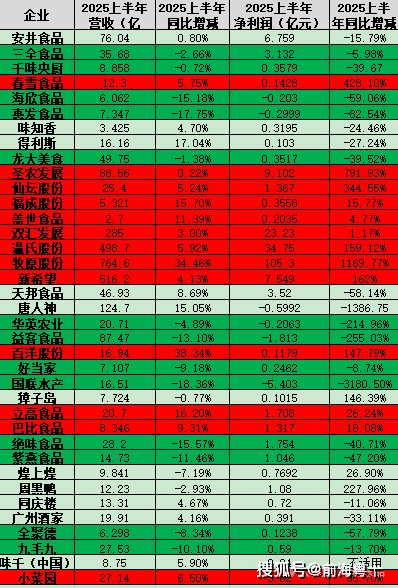
Industry Overview - More than half of the frozen food companies reported a decline in both revenue and net profit in the first half of 2025, with some experiencing increased losses [1] - The industry is facing challenges such as weakened terminal demand and intense price competition, leading to a common strategy of "exchanging price for volume" [1][6] - Despite the overall downturn, some companies achieved counter-cyclical growth, highlighting pockets of resilience within the industry [1] Financial Performance - In the first half of 2025, 12 companies reported growth in both revenue and net profit, with the top five revenue growth companies being Baiyang Co. (38.34%), Muyuan Foods (34.46%), Lihigh Foods (16.2%), Fucheng Co. (15.70%), and Gais Foods (11.39%) [2] - The top five companies with the highest net profit growth were Muyuan Foods (1169.77%), Shengnong Development (791.93%), Chunxue Foods (428.10%), Xiantan Co. (344.55%), and New Hope (162%) [2] - Conversely, 12 companies experienced a decline in both revenue and net profit, with Guolian Aquatic (-18.36%) and Huifa Foods (-17.75%) showing the largest revenue drops, while Guolian Aquatic also reported a significant net profit decline of -3180.50% [3] Segment Performance - The prepared dishes segment performed notably well, with Qianwei Central Kitchen's frozen prepared dishes revenue increasing by 67.31%, driven by significant sales growth [5] - Three Full Foods' refrigerated and short-shelf-life products also showed strong performance, with a revenue increase of 44.49% [5] - The frozen food industry is undergoing adjustments due to channel changes and cost pressures, with traditional supermarket channels seeing a decline in foot traffic [5][6] Market Trends - The industry is under cost pressure, with Three Full Foods reporting a gross margin of 22.7%, down 2.2 percentage points year-on-year due to increased promotional efforts and changes in product mix [6] - The Chinese frozen food industry is projected to reach a scale of approximately 221.2 billion yuan in 2024, making it the second-largest market globally [6] - The global frozen food market is also expanding, expected to reach 417.7 billion USD by 2024, with a compound annual growth rate of 6.0% from 2024 to 2029 [6] - Future industry consolidation is anticipated, with market share increasingly concentrating among leading companies, driven by the rise of restaurant chains and the expansion of new channels [6]
预制菜:从企业缺位到规范加速
Huachuang Securities· 2025-09-17 05:27
Investment Rating - The industry investment rating is "Recommended" with expectations that the industry index will rise more than 5% over the next 3-6 months compared to the benchmark index [18]. Core Insights - The recent public discourse surrounding prepared dishes has highlighted a significant misunderstanding between consumers and businesses regarding the definition and pricing of these products. Consumers are not opposed to prepared dishes but are concerned about being charged high prices under the guise of freshly made meals [7]. - National standards for prepared dishes have been established, and further detailed regulations are expected to be implemented. The definition of prepared dishes includes pre-packaged meals that do not contain preservatives and require heating or cooking before consumption [7]. - Future policies are anticipated to accelerate the implementation of standards, leading to greater transparency in the restaurant industry regarding the use of prepared dishes. Some restaurants are already taking steps to disclose their cooking processes and ingredient sourcing [7]. - The trend towards a more efficient and standardized food supply chain is expected to continue, with a focus on industrialization in food production. Successful companies will likely adopt high standards for supplier entry, transparent ingredient sourcing, and clear production processes [7]. - Investment recommendations suggest that the acceleration of industry standardization will benefit leading companies. The report highlights potential beneficiaries such as frozen food leader Anjijia and custom meal companies like Baoli, while also noting that lower-end small workshops may gradually exit the market [7]. Summary by Sections Industry Overview - The food and beverage industry consists of 126 listed companies with a total market capitalization of approximately 48,214.68 billion [4]. - The circulating market value is around 46,997.67 billion [4]. Performance Metrics - Absolute performance over the last 12 months is reported at 26.9%, while relative performance shows a decline of 16.3% [5]. Related Research Reports - Previous reports include insights on the liquor industry and the functional food sector, indicating ongoing trends and opportunities within the food and beverage landscape [7].