
九识智能

Search documents
九识智能携手上海交大成立联合实验室 校企联合提升无人车应用渗透率
Huan Qiu Wang Zi Xun· 2025-08-08 07:05
Core Insights - The establishment of the "Shanghai Jiao Tong University - Jiushi Intelligent Autonomous Driving Technology Joint Laboratory" marks a significant step for Jiushi Intelligent in integrating industry, academia, and research in the autonomous driving sector [1][2] - The collaboration aims to leverage the research strengths of Shanghai Jiao Tong University and the practical experience of Jiushi Intelligent to advance cutting-edge autonomous driving technologies and cultivate high-end talent [1][2] Group 1: Collaboration and Academic Support - Jiushi Intelligent's core team includes several members who graduated from Shanghai Jiao Tong University, indicating a strong historical connection and mutual trust [2] - The university's strong ranking in computer science (11th in US News, 27th in QS, and 3rd in CS Ranking) highlights its global reputation, particularly in visual models [2] - The joint laboratory is expected to provide a practical platform for students, enabling them to explore cutting-edge technologies while addressing real-world challenges [2] Group 2: Technological Advancements and Market Position - Jiushi Intelligent has deployed its L4-level autonomous logistics vehicles in over 300 cities across China, achieving an average operational cost reduction of 66% for clients [3] - The collaboration with Shanghai Jiao Tong University is anticipated to enhance model training and validation, crucial for breakthroughs in autonomous driving technology [3][6] - Jiushi Intelligent has become the first global company to achieve high-level autonomous driving without relying on high-precision maps, indicating a significant technological advancement [5][6] Group 3: Global Expansion and Regulatory Challenges - Jiushi Intelligent has made notable progress in international markets, including obtaining Singapore's first unmanned logistics vehicle license and participating in the revision of the TR-68 autonomous driving standards [4] - The establishment of the joint laboratory is expected to provide academic credibility that will assist Jiushi Intelligent in overcoming regulatory barriers in overseas markets [4] - The company's strategy focuses on creating real value in collaboration with local markets rather than engaging in price wars, aiming to enhance local production and logistics efficiency [4] Group 4: Future Outlook and Strategic Focus - Jiushi Intelligent plans to focus on logistics delivery as its core market, leveraging large-scale vehicle operations to continuously collect data for technological iteration [5] - The company aims to achieve profitability across the industry within the next two years, driving the upgrade of urban logistics towards intelligence and efficiency [6] - The long-term vision includes promoting autonomous driving capabilities across society, laying the groundwork for future developments in passenger services and other commercial sectors [6]
AI,从辅助向协同深刻进化
Xin Hua Ri Bao· 2025-08-05 23:04
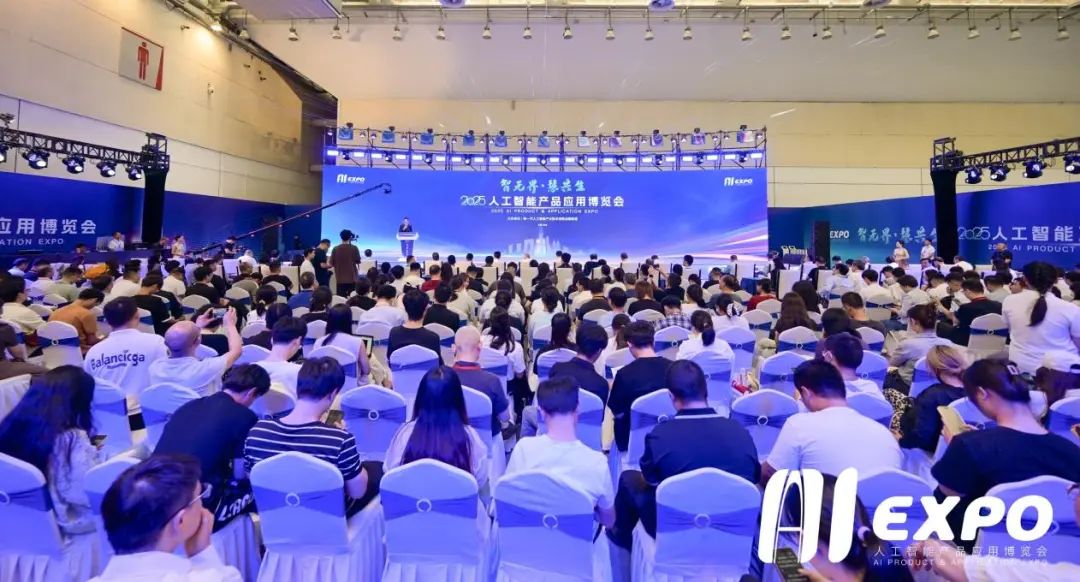
Group 1 - The 2025 Artificial Intelligence Product Application Expo was held in Suzhou, showcasing the latest achievements in the AI field and promoting deep integration of AI with the real economy [1] - AI technology is becoming the core engine deeply penetrating various industries, as demonstrated by applications in sports, manufacturing, and life sciences [1][3] - The event highlighted the evolution of AI from an "auxiliary tool" to a "collaborative partner," emphasizing the importance of multi-modal integration and AI's role in scientific innovation [4][5] Group 2 - AI applications in sports include automated broadcasting, data analysis, and real-time score tracking, significantly reducing costs by over 90% compared to traditional methods [3] - Suzhou's enterprises are actively developing human-machine collaboration, with examples like humanoid robots assisting in laboratory tasks and accelerating drug development [5][6] - The collaboration between Shanghai and Suzhou aims to enhance the AI ecosystem, with strategic partnerships formed to improve regional AI capabilities [7] Group 3 - Reports released at the expo indicate that the AI industry ecosystem and governance structures are rapidly evolving, with Suzhou ranking among the top five cities in China for AI industry competitiveness [8]
2025智博会:AI从“辅助工具”迈向“协同伙伴”
Shang Hai Zheng Quan Bao· 2025-07-30 15:53
Core Insights - The 2025 Artificial Intelligence Product Application Expo (referred to as "2025 Smart Expo") took place from July 28 to 30 in Suzhou, showcasing the rapid integration of AI into various industries and daily life [1][11] - Industry experts emphasized the need to focus on multi-modal deep integration, embodied intelligence breakthroughs, and AI for Science as key directions for future AI development [1][11] Group 1: AI Applications and Innovations - A new photovoltaic panel cleaning robot was demonstrated, utilizing drones for automated cleaning, specifically designed for large-scale photovoltaic stations in the northwest regions of China [3][4] - The logistics sector is seeing rapid growth with thousands of autonomous delivery vehicles from Jiushi Intelligent, which have delivered around 3,000 units by 2024 and are expected to exceed 10,000 units in 2025 [4][7] - The "black technology space station" at the expo featured various AI products, allowing attendees to interact and purchase items directly [8] Group 2: Challenges and Future Directions in AI - The AI for Science sector faces significant challenges, as highlighted by former Vice Minister of Industry and Information Technology Wang Jiangping, who noted a gap between AI's predictive capabilities and human verification processes [11][12] - Recommendations for overcoming these challenges include establishing evaluation standards for AI predictions, enhancing high-quality research data sets, and developing autonomous experimental technologies [12] - Key future directions for AI development include unified understanding and generation of various information types, the transformation of production processes through humanoid robots and unmanned systems, and AI's role in accelerating scientific discoveries [12] Group 3: Industry Collaboration and Talent Development - The expo served as a global hub for AI industry collaboration, with representatives from various countries engaging with exhibitors [13] - The establishment of a China-Singapore AI joint exhibition group showcased innovations in fields like AI in life sciences and manufacturing [14] - Suzhou is evolving into a manufacturing hub for AI, with significant talent development initiatives, having introduced 3,862 leading talents over 18 years, including 46 projects in the AI sector [15][18]

1 万台,无人城配规模之战打响了
3 6 Ke· 2025-07-29 12:50
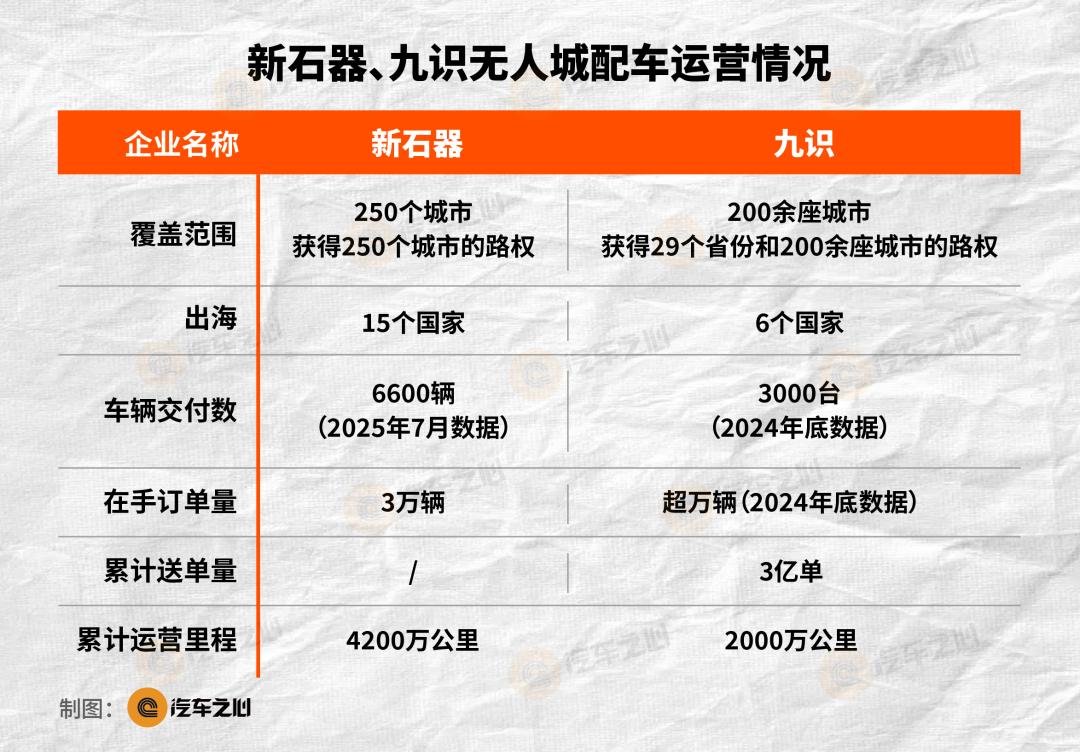
Core Insights - The article discusses the rapid growth and commercialization of autonomous delivery vehicles in China, particularly focusing on companies like New Stone and NineSight, which are leading the charge in this sector [1][2][3] Market Overview - As of 2024, over 6,000 autonomous delivery vehicles have been deployed in China, significantly outpacing the nearly 3,000 Robotaxi vehicles [2] - The market for autonomous delivery vehicles in China grew from 4 billion to 6.5 billion yuan between 2022 and 2023, with a compound annual growth rate exceeding 62%, and is projected to reach 17 billion yuan in 2024 [2] Company Performance - New Stone and NineSight are the first companies to reach the milestone of 10,000 units in production, with New Stone delivering over 6,600 vehicles and NineSight over 5,000 vehicles as of July 2024 [2][3] - New Stone's monthly delivery rate has increased tenfold compared to the previous year, with April 2024 alone surpassing the total deliveries for the entire year of 2024 [2] Competitive Landscape - The article highlights that major players like JD, Meituan, and Cainiao, which initially led the development of autonomous delivery vehicles, are lagging in scaling production compared to New Stone and NineSight [3][4] - New Stone and NineSight have developed strong capabilities in technology maturity, cost control, and operational maintenance, which are critical for achieving large-scale production [5][6] Technological Advancements - Both companies have achieved L4 level autonomous driving capabilities, allowing them to operate in various road conditions and scenarios [5] - New Stone's vehicles can reduce transportation costs from 0.15 yuan per delivery to 0.06 yuan, while NineSight's vehicles can lower costs from 0.17 yuan to 0.1 yuan [9][11] Product Strategy - New Stone and NineSight have diversified their product lines to cater to different transportation needs, offering various models that can handle different load capacities and road conditions [12][14] - New Stone focuses on large clients for bulk sales, while NineSight emphasizes small and medium-sized customers and niche markets [15][16] Financial Backing - Both companies have secured significant funding, with New Stone raising 1 billion yuan in February 2024 and NineSight raising 100 million USD in April 2024, which supports their technology development and production capabilities [16] Industry Challenges - The article notes that achieving the 10,000-unit milestone is a critical point for the industry, as it signifies a transition from small-scale validation to large-scale application [17][18] - The competition is expected to intensify as companies strive to optimize costs, enhance technology, and expand customer bases [27][28] Future Outlook - The next milestone for the industry is projected to be the sale of 100,000 units, with the potential for significant market transformation [42][43] - The article emphasizes the need for patience and observation as the industry navigates through its growth phase and faces challenges in technology validation and business model verification [44][45]
未来智造局 | 智能辅助驾驶,是否正在陷入瓶颈?
Zhong Guo Jin Rong Xin Xi Wang· 2025-07-29 09:22
Core Viewpoint - The smart assisted driving industry in China is experiencing rapid growth, with over 5,500 companies involved, but transitioning from smart assistance to fully autonomous driving remains a significant challenge [1] Industry Insights - The testing of over 30 mainstream models by Dongchedi has sparked widespread attention and debate regarding the capabilities of smart assisted driving technologies [2] - Domestic companies like Huawei and Momenta are utilizing multi-sensor visual fusion solutions, combining lidar and cameras, to enhance decision-making models, addressing limitations of Tesla's purely visual approach [2] - Data accumulation is crucial for the advancement of smart assisted driving technologies, with companies like BYD generating over 30 million kilometers of "smart driving" data daily, creating the largest vehicle cloud database in China [3] Technology Limitations - Current smart assisted driving systems are still classified as Level 2, providing only assistance rather than full autonomy, with the responsibility remaining on human drivers [5][7] - The AI's learning capabilities are limited, as it relies on data fitting rather than the dynamic knowledge restructuring that humans can perform [4][8] - Despite advancements, the public remains cautious about the safety of smart assisted driving systems, especially following recent accidents involving companies like Xiaomi and Tesla [3][4] Market Opportunities - The operational domain for autonomous vehicles, particularly in the work vehicle sector, is seen as a potential breakthrough for smart driving applications, with significant commercial prospects [9] - Companies like Waymo and Baidu have demonstrated successful commercial operations of Level 4 autonomous vehicles in complex urban environments, indicating progress in the field [6][7]

开放协同 将加速苏州人工智能产业跃升
Su Zhou Ri Bao· 2025-07-28 22:34
Core Insights - The sixth Artificial Intelligence Product Application Expo (智博会) was held in Suzhou from July 28 to 30, coinciding with the 2025 World Artificial Intelligence Conference (WAIC) in Shanghai, highlighting a focus on efficient, intelligent, and secure AI development [1][2] - The "Yangtze River Delta Intelligent Manufacturing Twin Cities Summit" initiated by Suzhou during WAIC aims to deepen collaboration in the AI sector between Shanghai and Suzhou, providing new opportunities for the acceleration of Suzhou's AI industry [1][2] Group 1 - The "Yangtze River Delta Intelligent Manufacturing Twin Cities Summit" reflects Suzhou's pragmatic actions, with six leading companies, including Huaxing Yuanchuang and Xinda Biopharmaceutical, releasing 16 specific AI technology demands across various fields such as industrial inspection and autonomous driving [2] - The event resulted in substantial cooperation, with a strategic agreement signed among Suzhou Technology Development Co., Shanghai Artificial Intelligence Research Institute, and Shanghai State-owned Capital Operation Research Institute to form the "Yangtze River Delta AI Ecological Partners" [2] - The initiative emphasizes open cooperation and international collaboration, with the establishment of a China-Singapore AI exhibition group showcasing innovations in "AI + life sciences," "AI + intellectual property protection," and "AI + manufacturing" [2] Group 2 - The need for an "open, inclusive, and beneficial" AI ecosystem was emphasized by Chinese Academy of Engineering academician Gao Wen, advocating for deepened technical exchanges and industry integration to ensure the safe and reliable development of AI technology [3] - The dual-city AI events and the launch of the "Yangtze River Delta Intelligent Manufacturing Twin Cities Summit" provide an efficient platform for Suzhou's AI industry to showcase its strengths and deepen collaboration [3] - Leveraging the synergy between Shanghai and Suzhou, along with international cooperation, Suzhou is expected to accelerate breakthroughs in AI technology, enhancing efficiency, intelligence, and safety, thus driving high-quality development in the AI industry regionally and nationally [3]
人工智能:2025年二季度投融市场报告
Lai Mi Yan Jiu Yuan· 2025-07-28 03:35
Investment Rating - The report does not explicitly state an investment rating for the artificial intelligence industry Core Insights - China's AI technology has made significant progress, contributing 61.5% of the global patents in generative AI, but still lags behind the US in core technologies [9] - The market for AI applications is rapidly expanding, with notable growth in user engagement and revenue generation [10][11] - The investment landscape is becoming increasingly active, with a notable increase in financing cases and amounts in Q2 2025 compared to previous quarters [21][22] Summary by Sections Industry Overview - The report highlights a significant increase in AI patent filings in China, with 27,000 out of 45,000 global patents in 2024 [9] - The competitive landscape shows a "duopoly" emerging in general AI assistants, with DeepSeek and Doubao dominating the market [10] - AI commercialization is accelerating, with several companies reporting substantial annual recurring revenue (ARR) [11] Q2 Investment Dynamics - In Q2 2025, there were 332 financing cases in the AI sector, a 37.8% increase from the previous quarter, with a total disclosed financing amount of 20.19 billion yuan [21] - Robotics and AI software platforms led in financing cases, with robotics receiving the most investments [21] - The report notes a shift towards later-stage financing, with early-stage investments decreasing in both number and amount [22] Active Investors - A total of 486 institutions invested in AI projects in Q2 2025, with 40 institutions making three or more investments [40] - The report lists several active investors and their focus areas, particularly in robotics and AI software [41] Key Financing Events - Significant financing events include Anysphere's $900 million Series C round and the $1 billion B3 round for Jiushi Intelligent [42] - The report details various companies and their respective financing rounds, highlighting the growing interest in AI technologies [42] Industry Trends - The report discusses the emergence of AI programming tools, which are transforming software development processes [44][49] - AI programming tools are gaining traction, with a projected market size of $29.57 billion in 2025, expected to grow to $64.68 billion by 2030 [51][53] - The competitive landscape in AI programming features both large tech companies and innovative startups [49][50]
园区企业沪上发布AI需求榜
Su Zhou Ri Bao· 2025-07-27 23:01
Core Insights - The 2025 World Artificial Intelligence Conference (WAIC) is taking place, showcasing China's advancements in AI and promoting global governance in the field [1] - The "Yangtze River Delta Intelligent Manufacturing Twin Cities Summit" was launched, aiming to connect AI technology demands with global AI enterprises [1][2] - Six leading companies released 16 AI technology demands, targeting various sectors including industrial defect detection, antibody discovery, and autonomous logistics [2] Group 1 - The WAIC serves as an international platform for AI technology exchange and aims to enhance the global governance system [1] - The event is supported by the Suzhou Industrial Park and aims to create a precise platform for intelligent manufacturing supply and demand [1] - The focus is on high-quality development of the AI industry in the Yangtze River Delta region [1] Group 2 - Leading companies like Huaxing Yuanchuang and Innovent Biologics are focusing on specific AI applications, such as generative AI for industrial defect detection and AIDD technology for antibody discovery [2] - The collaboration between Suzhou Industrial Park, Shanghai AI Research Institute, and Shanghai State-owned Capital Operation Research Institute aims to strengthen resource integration and create an innovation community [2] - The "Unlocking Suzhou's Intelligent Manufacturing Code" initiative will invite WAIC participants to deepen cooperation between Shanghai and Suzhou [2]
上半年江苏披露的私募投融资事件数量全国居前
Xin Hua Ri Bao· 2025-07-22 23:48
Group 1 - The core viewpoint of the article highlights the recovery of the primary market in Jiangsu, with a significant increase in private equity financing events, totaling over 530 in the first half of the year, indicating a strong preference for "hard technology" sectors and a rational return to early-stage investments [1][2] Group 2 - Advanced manufacturing and healthcare are the two favored sectors, accounting for over half of the total financing events in Jiangsu, with 270 occurrences in the first half of the year [2] - Notable investments include Jiushi Intelligent's $100 million B3 round financing, marking the largest single round in the autonomous driving sector in nearly two years, with a total of nearly $300 million raised in B rounds [2] - NuoLing Bio completed a multi-hundred million C round financing, focusing on portable inhalation therapy devices for cardiovascular treatment, which have been deployed in hundreds of hospitals [3] Group 3 - The trend of "investing early and small" has become mainstream, with early-stage investments (seed, angel, Pre-A, A rounds) accounting for nearly 60% of total investment events in Jiangsu [4] - Yanwei Semiconductor, established in 2022, has completed four rounds of financing totaling nearly 1 billion yuan, showcasing the effectiveness of early-stage funding [4] Group 4 - The "+ round" investment model is increasingly common, allowing companies to secure additional funding within the same round, which helps alleviate cash flow pressures and allows investors to manage risks more effectively [5] Group 5 - The Jiangsu mother fund has emerged as a strong engine for the growth of the venture capital market, with a total scale of 500 billion yuan and the establishment of 41 specialized funds within a year, covering all 13 districts in the province [7][8] - Various cities in Jiangsu are employing a combination of "one mother fund + several sub-funds" to target their key industries, resulting in a fast-paced and high-density investment environment [7] Group 6 - Recent regulatory innovations, such as the revised management measures for the Jiangsu strategic emerging industry mother fund, have facilitated collaboration with central enterprises and social security funds, broadening the scope for industry-specific fund applications [8] - The mother fund system has already invested in 86 projects, focusing on "hard technology" sectors, with the potential for further aggregation effects as more specialized funds are launched [8]
苏州21家“独角兽”全国排第四
Su Zhou Ri Bao· 2025-07-18 23:58
Group 1 - The report indicates that there are 372 unicorn companies in China, with Jiangsu province having 49, and Suzhou ranking fourth nationally with 21 unicorns, an increase of two positions from the previous year [1] - Suzhou's unicorn companies are concentrated in strategic emerging industries, including autonomous driving, new energy, biomedicine, and artificial intelligence, leveraging core competencies in technological originality, industrial synergy, and global market reach [1] - Suzhou has established a comprehensive nurturing system for enterprises, categorized into technology-based SMEs, high-tech enterprises, gazelle companies, unicorns, and listed companies, leading the province with 32 provincial unicorns, 220 potential unicorns, and 486 gazelle companies [1] Group 2 - Hengtong Huahai is the largest marine communication system integrator and network service provider in China, offering solutions for transoceanic communication, underwater observation networks, and offshore oil and gas platforms, with several research and development platforms [2] - Denglin Technology is the first GPU company in China to achieve large-scale commercial deployment, focusing on the development of domestically produced high-performance AI chips, with products applied in edge and cloud computing scenarios [2] - Pufei Kete aims to empower small and micro logistics with technology, establishing a nationwide "door-to-door" transportation system with over 210 parks, 14,000 dedicated routes, and 10,000 outlets [2] - Jiusi Intelligent is a leading global autonomous driving technology company with R&D and operational centers in Beijing, Singapore, and the United States, offering scalable L4 autonomous driving solutions [3]