
众安在线

Search documents
百保君“高额返利”暴雷,曾由众安保险孵化
Di Yi Cai Jing· 2025-11-11 08:35
Core Viewpoint - Recent reports indicate that users of Baibaokun have not received promised rewards, leading to complaints and investigations into the company's operations and business model [1][4][7]. Group 1: Company Overview - Baibaokun is a health service vertical search engine established in October 2020 by Zhong An Technology, a subsidiary of Zhong An Insurance, which is China's first internet insurance company [1][20]. - The company operates through a WeChat mini-program and has been involved in various financing rounds, raising over 100 million yuan in total [22][24]. Group 2: Business Model - Baibaokun's business model involves users purchasing rights with promises of high returns in the form of JD.com gift cards and points, which can be redeemed or withdrawn [4][9]. - For example, a product priced at 89 yuan promises a return of 100 yuan in JD.com gift cards, creating an almost risk-free arbitrage opportunity for users [4][12]. Group 3: User Complaints and Legal Issues - Users have reported that they did not receive the promised JD.com gift cards upon the expiration of their purchased rights, leading to a surge in complaints [7][9]. - The company has reportedly been placed under investigation, with claims that the total amount involved may exceed 100 million yuan [4][9]. Group 4: User Experience and Incentives - Users have expressed confusion regarding the company's profit model, as the high returns and points system seem unsustainable [19][20]. - Many users have engaged in the platform primarily for the points system, which allows for significant earnings through referrals and purchases [19][20]. Group 5: Relationship with Zhong An Insurance - Baibaokun's connection to Zhong An Insurance has been a point of trust for users, as the latter's brand is seen as a form of endorsement [20][22]. - The ownership structure shows that Zhong An Technology holds a significant stake in Baibaokun, further linking the two entities [20][21].

新能源汽车乘风破浪,车险服务扬帆起航
Zhong Guo Qi Che Bao Wang· 2025-11-10 02:15
Core Viewpoint - The rapid growth of China's new energy vehicle (NEV) exports has led to an increasing demand for overseas insurance services, particularly in the NEV insurance sector, which is becoming a new growth point for domestic insurance companies [2][3][11]. Group 1: Market Performance and Trends - In 2023 and 2024, China's NEV exports are projected to reach 1.203 million and 1.284 million units, respectively, representing year-on-year growth of 77.6% and 6.7% [3]. - The penetration of NEVs in global markets is creating new risk protection demands, prompting Chinese insurance companies to leverage their experience in NEV insurance to support emerging markets [2][4]. Group 2: Challenges in Overseas Markets - There is a notable lack of supporting services for NEVs in overseas markets, including insurance, which is critical for consumer confidence [3][4]. - High insurance premiums for NEVs in markets like the UK and Australia are discouraging consumers, with reports indicating that premiums for Chinese NEVs can be higher than those for traditional fuel vehicles [3][4]. - Local insurance companies in markets like Thailand are often reluctant to underwrite NEVs, further complicating the situation for Chinese manufacturers [3][4]. Group 3: Strategic Initiatives by Insurance Companies - China Pacific Insurance (CPIC) has partnered with Mitsui Sumitomo Insurance and several leading NEV manufacturers to establish a presence in the Thai market, marking a significant step in the internationalization of NEV insurance [2][5]. - Ping An Insurance is collaborating with Geely International to explore new financial protection models for NEVs going overseas, indicating a trend towards comprehensive risk management solutions [2][8]. - Major domestic insurers are focusing on creating localized service networks and solutions to better meet the needs of NEV manufacturers in international markets [4][9]. Group 4: Policy and Regulatory Support - Recent regulatory guidance from Chinese authorities aims to enhance the quality and efficiency of NEV insurance, promoting data sharing and risk classification [12][17]. - The government is encouraging insurance companies to innovate and adapt their products to better serve the growing NEV market, both domestically and internationally [12][17]. Group 5: Future Outlook - The shift from traditional insurance products to comprehensive service offerings is seen as essential for the future competitiveness of NEV insurance in global markets [17]. - Domestic insurers are expected to leverage their technological advantages and operational experience to establish a strong foothold in the overseas NEV insurance market [7][11].

非银周报:保险非车险报行合一细则落地,利好大型险企盈利能力与市占率提升-20251109
SINOLINK SECURITIES· 2025-11-09 12:28
Investment Rating - The report suggests a focus on two main lines: (1) Listed securities firms with better-than-expected Q3 performance and (2) multi-financial companies with impressive growth rates, particularly recommending Hong Kong Exchanges and Clearing [2] Core Insights - The average daily trading volume of A-shares in 2025 from January to October reached 2.02 trillion yuan, a year-on-year increase of 92% [1] - The margin trading balance continues to grow, with financing and securities lending balances as of November 6 being 248.05 billion yuan and 183 billion yuan, respectively, marking increases of 33.8% and 75.3% compared to the end of last year [1] - The insurance sector saw a cumulative original premium income of 5.21 trillion yuan in the first nine months of 2025, reflecting a year-on-year growth of 8.8% [36] Summary by Sections Securities Sector - The average daily margin trading balance in 2025 is projected to be 1.999 trillion yuan, a year-on-year increase of 32% [1] - New account openings in October decreased significantly, with 2.31 million new accounts opened, a 66% drop compared to October last year [35] Insurance Sector - The introduction of unified reporting guidelines for non-auto insurance is expected to enhance the profitability and market share of large insurance companies [3] - The report anticipates a double-digit growth in new premium income for the insurance sector in 2026, driven by strong investment performance in 2025 [4] - The insurance asset management sector has seen a 25.1% year-on-year increase in the registration scale of asset-backed securities (ABS) in the first three quarters of 2025 [40]




众安在线(06060.HK):盈利高增 保险业务向好、香港银行蓄势待发
Ge Long Hui· 2025-11-08 05:15
Core Insights - The company reported better-than-expected performance in Q3 2025, with net profit increasing by 176.4% year-on-year to 1.291 billion yuan, driven by higher-than-expected investment returns [1] - The company continues to see steady premium growth and improvement in the combined cost ratio, with insurance business revenue up 5.6% year-on-year to 26.93 billion yuan [1] - The company maintains a positive outlook on its health insurance and auto insurance sectors, benefiting from healthcare reform and expansion opportunities in the new energy vehicle insurance market [1] Financial Performance - Q3 2025 net profit reached 1.291 billion yuan, while the net profit for the first nine months of 2025 was 1.859 billion yuan, reflecting a year-on-year increase of 206.9% [1] - The company's net assets increased by 22.7% quarter-on-quarter to 25.261 billion yuan [1] - Investment returns for Q3 2025 were 1.53%, up 1.1 percentage points year-on-year, while the comprehensive investment return was 2.97%, up 2.4 percentage points year-on-year [1] Business Development - The company’s Hong Kong virtual bank, ZA Bank, has launched Hong Kong stock trading services and surpassed 1 million users, achieving profitability for the first half of 2025 [2] - The strategic development of the Hong Kong banking business is seen as forward-looking, with potential for strong financial flexibility as wealth management services continue to upgrade [2] Earnings Forecast and Valuation - The company is currently trading at 0.9x 2025 estimated price-to-book ratio, with an upgraded earnings per share (EPS) forecast for 2025 and 2026 by 68% and 12% to 1.22 yuan and 0.94 yuan respectively [2] - The target price is maintained at 23.0 HKD, corresponding to a 1.3x 2025 estimated price-to-book ratio and a 42% upside potential [2]

新能源车险出海,国内险企如何破解多维度壁垒?
Huan Qiu Wang· 2025-11-07 05:48
Core Insights - China's new energy vehicle (NEV) exports reached 1.758 million units from January to September 2025, marking a year-on-year growth of 89.4%, indicating strong competitiveness and recognition in overseas markets [1] - The rapid growth of NEV exports has spurred the development of related insurance markets, with several domestic insurance companies actively pursuing opportunities in the overseas NEV insurance sector [1][4] Industry Trends - The NEV insurance market is entering an accelerated phase of expansion, primarily through pilot projects and localized approaches, with a focus on Southeast Asia and the Asia-Pacific region [5][10] - Domestic insurers are adopting various models for overseas expansion, including co-insurance or reinsurance mechanisms, partnerships with local insurance companies, and collaborations with international insurers [5][6][7] Company Strategies - China Pacific Insurance has implemented a three-step regional development strategy focusing on Hong Kong, Asia, and global markets, successfully launching its first NEV insurance policy in Hong Kong and Thailand [4] - ZhongAn Insurance has announced its first overseas NEV insurance policy, while China Re and Hyundai Insurance have signed a cooperation framework to integrate resources and share data for NEV insurance [5] Challenges and Barriers - Insurers face significant challenges in terms of technical, data, ecological, and compliance capabilities when entering overseas markets [3][9] - Key difficulties include data isolation, regulatory barriers, cultural differences, and the establishment of a reliable repair network for NEVs in foreign markets [9][10] Long-term Development Strategies - To achieve sustainable growth in overseas NEV insurance, insurers should focus on key markets where Chinese car manufacturers are investing, deepen ecological collaboration with automakers, and enhance technology output and localization [10][11]

打折、抽奖、送攻略 “双11”“淘保”热潮再起
Bei Jing Shang Bao· 2025-11-06 12:00
Core Insights - The insurance industry is actively participating in the "Double 11" shopping festival, utilizing diverse marketing strategies to attract consumers [1][2] - Major insurance companies are offering discounts, giveaways, and promotional guides to encourage insurance purchases during this shopping event [2][3] - The trend of significant discounts on insurance products has decreased due to stricter regulations and a shift towards rationality in the industry [4] Marketing Strategies - Insurance companies are employing various promotional tactics, including direct premium discounts, lottery draws, and shopping card giveaways [2][3] - The marketing campaigns are designed to integrate insurance into the shopping experience, making it more appealing to consumers [2][3] - Some companies are focusing on health insurance products, offering discounts on critical illness and children's medical insurance to address consumer concerns about health risks [2][3] Regulatory Environment - The insurance sector is facing stricter regulations that discourage unreasonable price competition and emphasize the core function of insurance as protection rather than a promotional commodity [4] - Companies are recognizing that relying solely on price competition is unsustainable, especially for long-term life insurance products [4] Consumer Considerations - Consumers are advised to focus on the core value of insurance, which is protection, rather than just the price [6][7] - It is essential for consumers to compare key terms such as coverage, exclusions, and renewal conditions when selecting insurance products during promotional periods [6][7] - The "Double 11" promotions can serve as an opportunity for consumers to learn about and purchase insurance, but they should prioritize their needs and carefully evaluate the terms of the products [7]
打折、抽奖、送攻略,“双11”“淘保”热潮再起
Bei Jing Shang Bao· 2025-11-06 11:56
Core Insights - The insurance industry is actively participating in the upcoming "Double 11" shopping festival, employing diverse marketing strategies to attract consumers [3][4] - Insurers are offering various promotional activities, including premium discounts, giveaways, and educational content to encourage insurance purchases during the shopping frenzy [4][5] - The trend of significant discounts on insurance products has diminished due to stricter regulations and a shift towards rationality in the industry [6][7] Group 1: Marketing Strategies - Insurers are utilizing a range of promotional tactics, such as direct premium discounts, lottery draws, and shopping card giveaways, to engage consumers [4][5] - The marketing approach has become more scenario-based and entertaining, combining insurance education with incentives for consumers [5] - Major insurance companies like China Life, New China Life, and Ping An Property & Casualty are launching targeted campaigns for "Double 11" [4] Group 2: Regulatory Environment - The decline in substantial insurance discounts is attributed to increased regulatory scrutiny and a focus on the core function of insurance as protection rather than a promotional commodity [6][7] - Regulatory bodies have emphasized the importance of avoiding unreasonable low-price competition, leading insurers to seek sustainable strategies beyond price wars [7] Group 3: Consumer Considerations - Consumers can benefit from lower costs during promotional periods, but should prioritize coverage quality over price alone [8][9] - Key factors for consumers to consider include coverage scope, exclusions, premium amounts, and the insurer's service capabilities [9] - The types of discounted insurance products mainly include travel accident insurance, medical insurance, and home insurance, which typically have shorter terms and simpler clauses [9]

港股AI反攻
Xin Lang Cai Jing· 2025-11-06 11:47
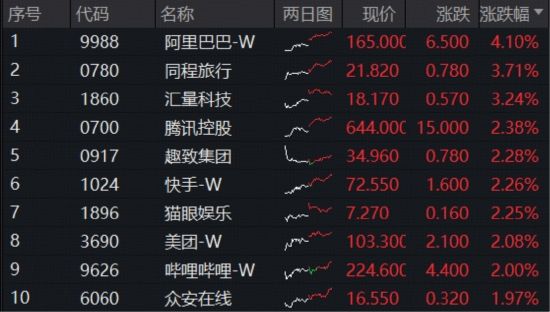
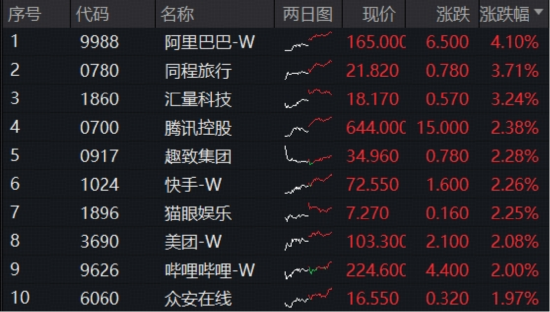
Core Viewpoint - The Hong Kong stock market experienced a rebound on November 6, with the Hang Seng Index and Hang Seng Tech Index both rising over 2%, driven primarily by AI-related stocks and major tech companies like Alibaba and Tencent showing strong performance [1]. Group 1: Market Performance - The Hong Kong Internet ETF (513770) opened high and closed up 1.73%, indicating a positive buying sentiment with a wide premium throughout the day [1]. - The Hang Seng Tech Index saw a cumulative decline of 8.62% in October, reflecting a period of volatility since reaching a peak at the end of September [5]. - The cumulative net inflow into the Hong Kong Internet ETF over the past 5 and 10 days was 5.07 billion and 10 billion respectively, indicating strong investor interest [3]. Group 2: Company Performance - Alibaba's stock (9988) rose by 4.10%, closing at 165.000, while Tencent (0700) and other tech stocks like Kuaishou (1024) and Meituan (3690) also saw gains of over 2% [2]. - The net buying amount for Alibaba reached 1.774 billion HKD, making it the top stock in terms of net inflow, followed by Meituan and Tencent [8]. Group 3: Investment Drivers - Three key factors are expected to drive the recovery of Hong Kong tech stocks: 1. Improvement in fundamentals due to cost reduction and AI applications enhancing profitability [6]. 2. Competitive valuation of Hong Kong tech stocks, with the latest PE ratio of the Hong Kong Internet Index at 24.44, significantly lower than that of the Nasdaq 100 and ChiNext [6]. 3. High certainty of incremental capital inflow, with a cumulative net inflow of over 1.27 trillion HKD from southbound funds this year, creating a supportive environment for a "slow bull" market [7]. Group 4: AI Development - Hong Kong internet companies are categorized into two groups based on AI advancements: those focusing on general large models and cloud computing (e.g., Alibaba, Tencent) and those targeting niche applications (e.g., Meitu, Kuaishou) [9]. - The Hong Kong Internet ETF tracks major internet leaders, with Alibaba, Tencent, and Xiaomi being the top three holdings, collectively accounting for over 73% of the ETF [9].
港股AI反攻,阿里巴巴涨超4%!百亿港股互联网ETF(513770)溢价上涨1.7%,机构:前期回调基本到位
Xin Lang Ji Jin· 2025-11-06 11:46
Core Viewpoint - The Hong Kong stock market experienced a rebound on November 6, with the Hang Seng Index and Hang Seng Tech Index both rising over 2%, driven primarily by AI-related stocks and leading tech companies [1] Group 1: Market Performance - The Hong Kong Internet ETF (513770) opened high and closed up 1.73%, indicating strong buying sentiment, with a two-day price increase [1][2] - The Hang Seng Tech Index saw a cumulative decline of 8.62% in October, following a period of consolidation since late September [5] - The Hong Kong Internet ETF has seen net inflows of 5.07 billion and 10 billion over the past 5 and 10 days, respectively [3] Group 2: Fundamental Improvements - Expectations for improved fundamentals are driven by cost-cutting measures, reduced competition, and AI applications enhancing corporate profitability [7] - The revenue and profit growth rate for non-financial Chinese companies is projected to reach 13% by 2026, with profit growth expected to outpace revenue growth [7] Group 3: Valuation Advantages - The valuation of Hong Kong tech stocks is competitive globally, with the latest PE ratio for the China Internet Index at 24.44, significantly lower than the NASDAQ 100 (36.95) and ChiNext Index (41.11) [8] - The current PE ratio is at a low historical percentile, providing ample room for upward movement in the Hong Kong tech sector [7][8] Group 4: Capital Inflows - As of November 4, net inflows from southbound capital have exceeded 1.27 trillion HKD this year, marking a historical high and supporting the Hong Kong market [7] - There is an expected additional inflow of 1.54 trillion HKD by the end of 2026, bolstering the "slow bull" market trend [7] Group 5: AI Development - Hong Kong internet companies are categorized into two groups based on AI advancements: those focusing on general large models and cloud computing (e.g., Alibaba, Tencent) and those targeting niche applications (e.g., Meitu, Kuaishou) [10] - The Hong Kong Internet ETF tracks major internet leaders, with Alibaba, Tencent, and Xiaomi being the top three holdings, collectively representing over 73% of the ETF [10]

金融科技大厂,在香港寻找「第二春」
3 6 Ke· 2025-11-05 03:12
Core Insights - Hong Kong's fintech market is experiencing a resurgence, with major players like Ant Group and JD.com making significant investments and expansions in the region [2][3][7] - The city is positioning itself as a hub for fintech innovation, particularly in areas like Web3 and virtual currencies, aiming to attract capital and facilitate the overseas expansion of mainland companies [2][6][12] Group 1: Market Developments - In October, Ant Group and Alibaba made headlines by purchasing properties in Hong Kong and establishing Ant's overseas headquarters there [2] - JD.com quickly obtained an insurance brokerage license, indicating a competitive push into the market [2] - The Hong Kong Monetary Authority has issued a total of 8 virtual bank licenses since 2019, with many shareholders being major mainland internet and fintech giants [4][5] Group 2: Financial Performance and Trends - As of the end of 2024, the total assets of the 8 virtual banks established in Hong Kong are less than 80 billion HKD, serving only a few million customers [5] - In Q1 2025, new insurance policy premiums in Hong Kong surged to 93.4 billion HKD, a year-on-year increase of 43.4%, marking a record high since data collection began in 2001 [6] Group 3: Strategic Moves by Major Players - Ant Group is investing 7.2 billion HKD in real estate and acquiring the largest Hong Kong-based brokerage, Yau Ching Securities, for 2.814 billion HKD, gaining multiple SFC licenses [7][8] - JD.com is also actively pursuing SFC licenses to enhance its operational capabilities in Hong Kong [8] Group 4: Opportunities for Expansion - Hong Kong is seen as a testing ground for mainland fintech companies to refine their products and business models before entering other overseas markets [9] - The establishment of the "Mainland Enterprises Going Global Task Force" aims to assist companies in leveraging Hong Kong as a platform for international expansion [9] Group 5: Regulatory Environment and Future Outlook - The development of stablecoins is emerging as a significant variable in the fintech sector, with Hong Kong poised to lead in this area following the approval of the "GENIUS Act" in the U.S. [11][12] - Hong Kong's regulatory framework is evolving to support the issuance of stablecoins, with the first licenses expected to be issued soon [12][13] - The city aims to become a resilient international fintech hub, focusing on the tokenization of real-world assets as a key area of investment [13]

