蔚来

Search documents
苹果大跌5%
财联社· 2026-02-12 23:41
Core Viewpoint - Concerns over the disruptive potential of artificial intelligence (AI) have led to a decline in major stock indices, with the Nasdaq falling by 2% and the S&P 500 and Dow Jones also experiencing significant drops [1][4]. Group 1: Market Performance - The Dow Jones index closed down 1.34% at 49,451.98 points, the S&P 500 index fell 1.57% to 6,832.76 points, and the Nasdaq index dropped 2.03% to 22,597.15 points [4]. - Major technology stocks saw declines, with Apple down 5%, erasing its gains for the year, and Nvidia down 1.64% [9]. Group 2: Sector Impact - The introduction of AI tools has negatively impacted various sectors, including software companies, publishers, and financial services, raising concerns about potential business model replication and profit margin erosion [5]. - Financial stocks, such as Morgan Stanley, faced pressure due to fears that AI could disrupt wealth management services [5]. - Trucking and logistics companies, like C.H. Robinson, saw a 14% drop in stock price as AI is expected to optimize freight operations, potentially reducing revenue sources [5]. Group 3: Real Estate and Defensive Sectors - The real estate sector is also affected, with concerns that higher unemployment rates will reduce demand for office space, leading to declines in stocks like CBRE and SL Green Realty [6]. - Investors are shifting towards more defensive sectors, with Walmart and Coca-Cola seeing stock price increases of 3.8% and 0.5%, respectively [7]. - In the S&P 500, the consumer staples and utilities sectors outperformed, both rising over 1%, with the consumer staples sector reaching a historical closing high [8].



蔚来汽车正在定日珠峰换电站进行换电补能 公司供图
Zhong Guo Zheng Quan Bao - Zhong Zheng Wang· 2026-02-12 22:58
Group 1 - The article discusses the recent performance of a specific company in the investment banking sector, highlighting its revenue growth and market positioning [1] - It notes that the company has achieved a significant increase in its market share, attributed to strategic acquisitions and enhanced service offerings [1] - The financial results indicate a year-over-year revenue increase of 15%, reaching $1.5 billion, which reflects strong demand in the investment banking industry [1] Group 2 - The article emphasizes the competitive landscape, mentioning that the company is outperforming its peers in key financial metrics [1] - It outlines the company's plans for future expansion, including entering new markets and diversifying its service portfolio [1] - The article concludes with a positive outlook for the company, suggesting that it is well-positioned to capitalize on emerging opportunities in the investment banking sector [1]

蔚来换电迈过亿次里程碑 技术验证收官 迎规模化拐点
Zhong Guo Zheng Quan Bao· 2026-02-12 22:15
2026年2月6日,蔚来迎来完成第1亿次换电服务的行业标志性时刻,这是国内换电模式从技术验证走向 规模化普及的重要节点。从2018年首次推出换电服务到亿次目标落地,蔚来历时2819天的探索,不仅印 证了换电模式的商业可行性与用户价值,更折射出国内充换电基础设施建设的跨越式发展。 事实上,在行业"充换电并行"政策导向与"三年倍增"行动方案托底下,补能基建已成为新能源汽车产业 高质量发展的核心支撑,以蔚来为代表的企业实践,正推动行业从"造好车"向"建好网"进阶,助力新能 源汽车产业价值链持续上移,同时为国家新型能源体系构建注入新动能。 ● 本报记者 龚梦泽 换电模式规模化成行业共识 中国证券报记者获悉,蔚来第1亿次换电于2月6日22时33分18秒在嘉兴海宁完成,这一数字的背后,是 对换电模式历经市场检验后的认可,也为行业交出了一份可复制的补能解决方案答卷。 蔚来方面数据显示,截至亿次换电达成,蔚来在全国布局换电站3729座,其中高速公路换电站1020座, 建成9纵11横16大城市群高速换电网络,连通全国超550城,整体充换电站数量达8627座,位居行业首 位。如今蔚来日均换电单量已突破10万次,平均0.8秒就有一 ...
蔚来换电迈过亿次里程碑技术验证收官 迎规模化拐点
Zhong Guo Zheng Quan Bao· 2026-02-12 20:27
事实上,在行业"充换电并行"政策导向与"三年倍增"行动方案托底下,补能基建已成为新能源汽车产业 高质量发展的核心支撑,以蔚来为代表的企业实践,正推动行业从"造好车"向"建好网"进阶,助力新能 源汽车产业价值链持续上移,同时为国家新型能源体系构建注入新动能。 2026年2月6日,蔚来迎来完成第1亿次换电服务的行业标志性时刻,这是国内换电模式从技术验证走向 规模化普及的重要节点。从2018年首次推出换电服务到亿次目标落地,蔚来历时2819天的探索,不仅印 证了换电模式的商业可行性与用户价值,更折射出国内充换电基础设施建设的跨越式发展。 为实现换电模式的规模化,蔚来持续加大技术研发和基础设施投入,累计在充换电领域投入超180亿 元,拥有超2100项相关专利,推动换电站从一代到四代持续进化,全栈核心技术的自研能力成为换电网 络迭代的核心支撑。 赋能产业升级与能源转型 蔚来1亿次换电的完成,是国内充换电基础设施建设提速的缩影,更是新能源汽车产业与能源行业深度 融合的体现。 ● 本报记者 龚梦泽 换电模式规模化成行业共识 中国证券报记者获悉,蔚来第1亿次换电于2月6日22时33分18秒在嘉兴海宁完成,这一数字的背后,是 ...
深夜巨震!美股三大指数高开低走,芯片股却逆势大涨,美光科技暴涨近10%,黄金白银原油价格同步飙升!
Sou Hu Cai Jing· 2026-02-12 17:02
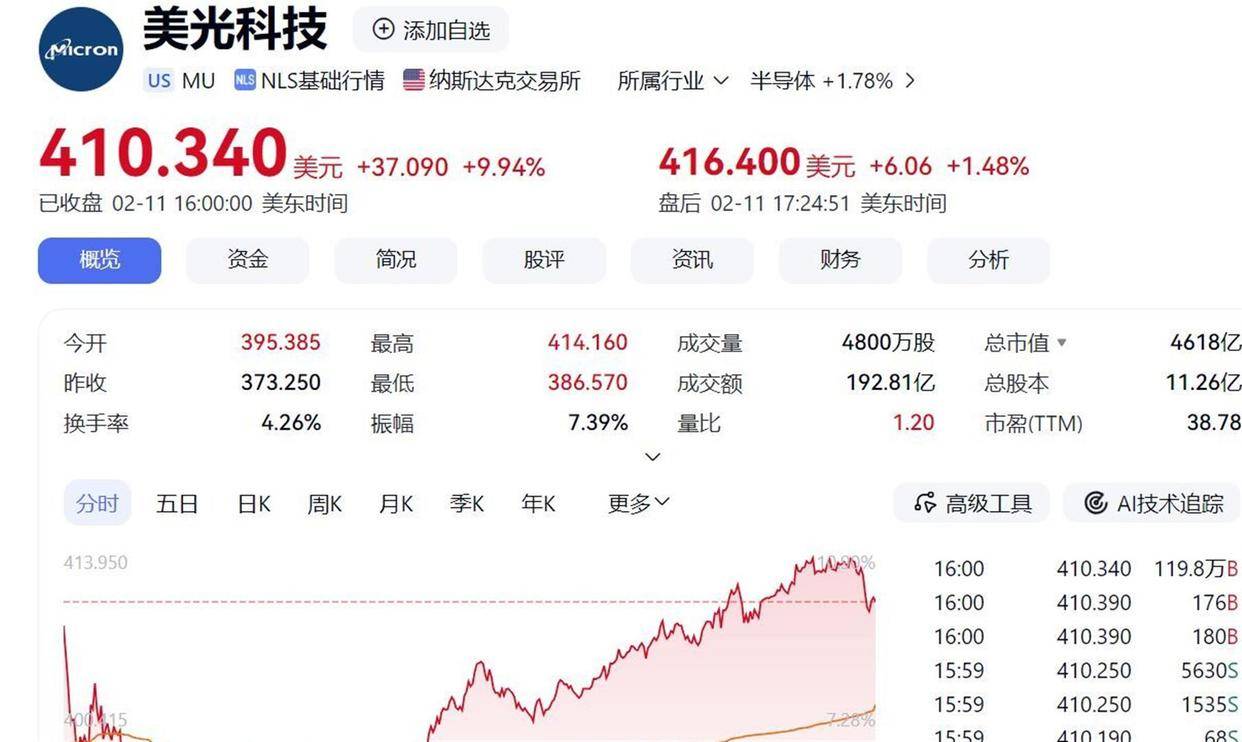
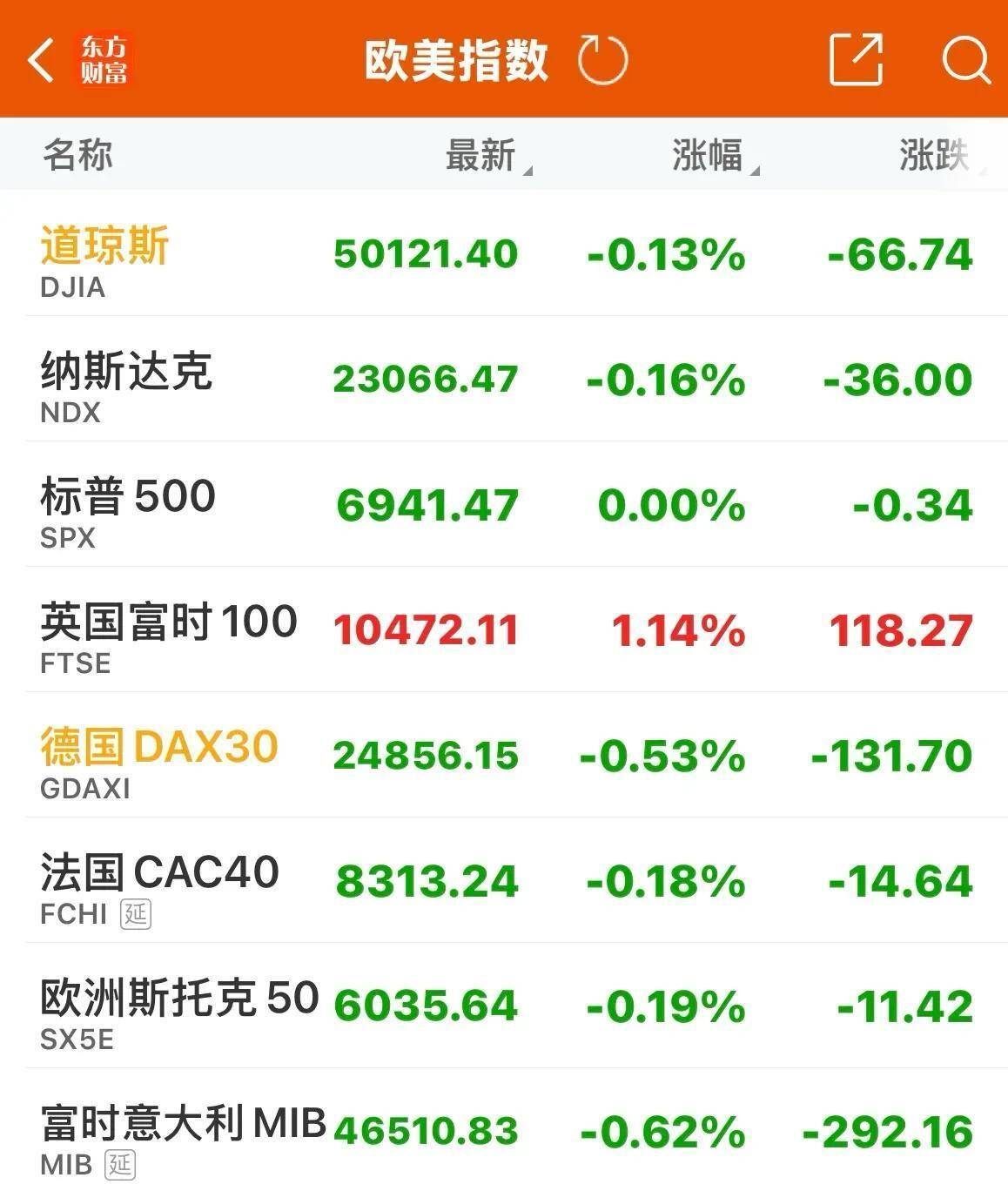
Economic Data and Market Reaction - The U.S. non-farm payrolls increased by 130,000 in January, significantly exceeding the market expectation of 55,000, marking the largest increase in over a year [1][2] - The unemployment rate slightly decreased from 4.4% in December to 4.3%, the lowest since August 2025 [2] - Despite the strong employment report, U.S. stock markets experienced volatility, with the Dow Jones Industrial Average down 0.13%, S&P 500 nearly flat, and Nasdaq Composite down 0.16% [1][4] Sector Performance - Semiconductor stocks performed exceptionally well, with the Philadelphia Semiconductor Index rising by 2.28% and Micron Technology's stock surging nearly 10% [1][5] - The healthcare sector added 124,000 jobs, double the normal level for January 2025, indicating strong growth in this industry [2] - Large tech stocks showed mixed results, with Google and Microsoft down over 2%, while Nvidia and Tesla saw gains of 0.78% and 0.8%, respectively [5] Commodity Market Movements - Gold and silver prices surged due to increased risk aversion, with spot gold rising over 1% to $5,083.7 per ounce and silver up over 4% to $84.3 per ounce [7] - International oil prices also increased, with WTI crude oil futures up 1.05% to $64.63 per barrel, driven by geopolitical tensions [8] Geopolitical Developments - U.S. President Trump emphasized the need for continued negotiations with Iran after a meeting with Israeli Prime Minister Netanyahu, indicating a preference for diplomatic solutions [9][10] - The geopolitical climate remains tense, with military deployments in the Middle East and ongoing sanctions against Iran, which could impact market stability [11][12] Semiconductor Industry Insights - South Korea's semiconductor exports reached $6.73 billion in the first ten days of February, a year-on-year increase of 137.6%, reflecting strong global demand [13] - Micron Technology's stock price target was raised significantly by Morgan Stanley, indicating confidence in the company's future performance amid supply shortages [6][13] - The semiconductor industry is transitioning from quarterly business to long-term collaborative agreements, driven by increasing demand for advanced memory chips [14]
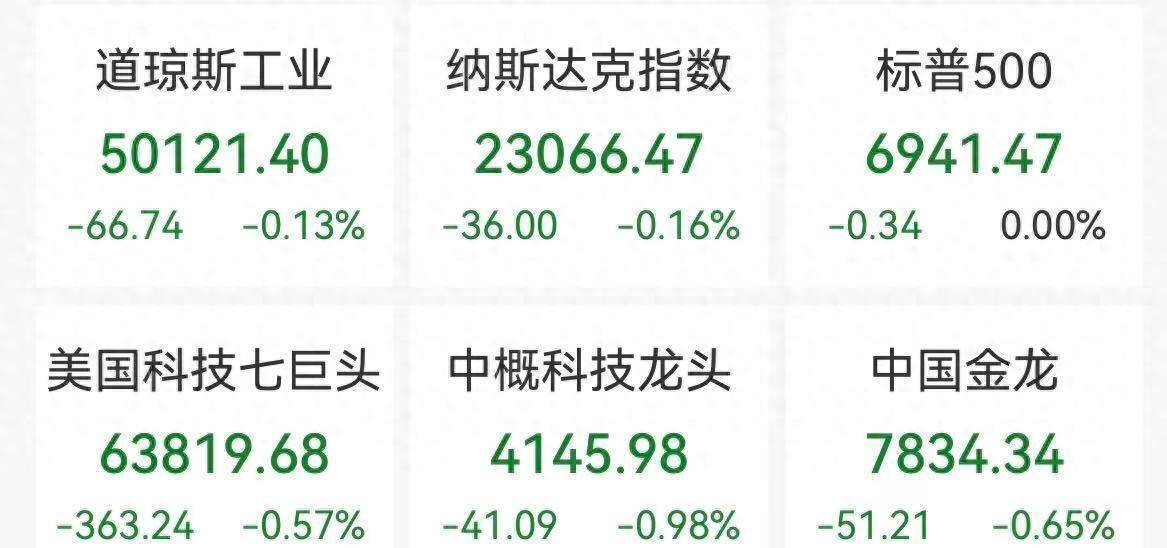
美国就业数据爆了!强劲非农打击降息预期,美股三大指数集体收跌!芯片巨头,大涨近10%!金银、原油收涨
Sou Hu Cai Jing· 2026-02-12 16:56
Employment Data - The U.S. added 130,000 jobs in January, significantly exceeding the market expectation of 55,000, marking the highest monthly increase in over a year [3][4] - The unemployment rate slightly decreased to 4.3%, better than economists' predictions [3] Market Reaction - The strong employment report led to a reassessment of the Federal Reserve's policy path, cooling earlier expectations for interest rate cuts [4] - The probability of a rate cut in June dropped below 50% according to the Chicago Mercantile Exchange's FedWatch tool [4] Sector Performance - The healthcare sector was the biggest winner in the employment report, contributing 124,000 new jobs, which is double its normal growth rate [8] - Micron Technology saw a significant stock increase of 9.94%, driven by strong demand for storage chips due to artificial intelligence [6] Commodity Market - The commodity market experienced a broad increase, with gold prices rising by 1.53% to $5,107.8 per ounce and silver prices soaring over 4.6% [8] - International oil prices also rose, with WTI crude increasing by 1.05% to $64.63 per barrel and Brent crude up by 0.87% to $69.40 per barrel [8] Economic Outlook - Concerns were raised about the quality of the employment data, with some analysts suggesting seasonal adjustments may have exaggerated the figures [9] - The Federal Reserve officials expressed differing views on the current economic situation, indicating ongoing discussions that could influence future interest rate expectations [9]
一份报告让美股已经分裂!三大指数高开低走集体收跌,存储芯片板块却逆势狂飙,闪迪单日暴涨近11%,美光也涨近10%,中概股内部分化
Sou Hu Cai Jing· 2026-02-12 16:21
Market Overview - US stock indices opened higher due to better-than-expected employment data but closed lower, with the Dow Jones down 66.74 points, S&P 500 nearly flat, and Nasdaq down 36.01 points [1][2] Employment Data - The US Labor Department reported that 130,000 non-farm jobs were added in January, significantly exceeding market expectations of 55,000 to 75,000 and surpassing the revised previous month's figure of 48,000 [3] - The unemployment rate fell from 4.4% to 4.3%, the lowest since August 2025 [3] - Average hourly wages increased by 0.4%, above the expected 0.3% [3] Market Reaction - The strong employment report initially boosted market sentiment but led to a shift in expectations regarding the Federal Reserve's interest rate cuts, pushing the anticipated timing from June to July [4] - The probability of a 25 basis point rate cut by March dropped from 19.6% to 6%, while the likelihood of maintaining current rates surged from 80.4% to 94% [4] Semiconductor Sector Performance - The semiconductor sector, particularly storage chips, saw significant gains, with the Philadelphia Semiconductor Index rising over 2% [4] - Notable performers included SanDisk, which surged 10.65%, and Micron Technology, which rose 9.94% [5] - The demand for high-performance storage driven by AI infrastructure is a key factor behind the sector's strength [5][7] Price Trends in Memory Market - According to Counterpoint Research, memory prices increased by 80% in Q1 2026 compared to Q4 2025, with DRAM, NAND, and HBM prices reaching historical highs [7] - UBS analysts predict meaningful supply relief in the global storage industry will not occur until around 2028, indicating sustained demand from AI data center construction [7] SanDisk's Financial Performance - SanDisk reported Q2 2026 revenue of $3.025 billion and a non-GAAP net profit of $967 million, with data center business revenue soaring 64% quarter-over-quarter [7] - Analysts have raised SanDisk's target price significantly, projecting a strong earnings outlook for FY 2027 [7] Broader Market Dynamics - The semiconductor sector's strength contrasts with declines in other tech and emerging sectors, reflecting a complex market landscape [16][17] - The overall market is characterized by a mix of strong and weak performances across various sectors, indicating a cautious investor sentiment [14][17]
任泽平带你看前沿科技:2026研学计划
泽平宏观· 2026-02-12 16:06
Core Viewpoint - The article emphasizes the importance of practical learning experiences in cutting-edge technology sectors, highlighting the value of direct engagement with leading companies and experts to enhance investment insights and opportunities [12][24]. Schedule Overview - The schedule for 2025 includes visits to major technology companies such as Huawei, BYD, Tencent, and others, focusing on sectors like artificial intelligence, new energy, and biotechnology [23][24]. - Specific events are planned, including closed-door investment research meetings and thematic explorations in various cities, showcasing advancements in robotics, autonomous driving, and digital ecosystems [8][9][10]. Learning Experience - Participants will engage in deep explorations of technology companies, gaining insights into the full chain of technology development from laboratory to industrialization [12]. - The program includes face-to-face dialogues with founders and executives, providing critical insights into strategic decisions and industry disruptions [12]. Participant Feedback - Feedback from participants highlights the transformative impact of the program on their understanding of macroeconomic trends and investment strategies, emphasizing the importance of continuous learning and adaptation in a rapidly changing environment [46][47][48].




深夜,存储概念股大涨!巨头最新回应:供不应求,都在涨价!
Xin Lang Cai Jing· 2026-02-12 15:54
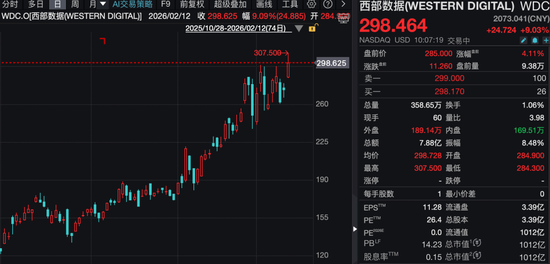
Core Viewpoint - The U.S. stock market showed mixed performance, with storage-related stocks continuing to strengthen, particularly Western Digital and SanDisk, both rising over 9%, and Micron Technology increasing over 6% [1][2]. Group 1: Micron Technology and NAND Flash Market - Micron Technology is advancing its new NAND flash wafer factory as planned, expecting the first batch of wafers to be shipped in the second half of 2028. The HBM4 customer shipment volume is also on track to increase in the first quarter of 2028, one quarter ahead of the original schedule [3][11]. - The CFO of Micron indicated that market demand significantly exceeds supply, with supply tightness expected to persist until after 2026 [3][11]. - TrendForce analysts predict that DRAM contract prices for various applications will rise by over 40% by the fourth quarter of 2025, with significant price increases continuing into the first quarter of 2026, particularly in the DDR4 market [3][11]. Group 2: Semiconductor Market Insights - Semiconductor company SMIC reported that its memory and BCD products are in high demand, leading to price increases, while supply in the market is declining [3][11]. - Prices for certain categories like CIS and LCD Drivers have stabilized, but competitive and iterative products are seeing price increases, while non-iterative standard products may experience price declines [3][11]. Group 3: Tesla and Energy Business - Tesla's stock rose over 1% following a Morgan Stanley report suggesting that its plan to build 100 GW of vertically integrated solar manufacturing capacity could increase its energy business valuation by $20 billion to $50 billion [4][12]. - The report noted that much of the solar capacity will be directed towards space data centers, aligning with Elon Musk's space strategy [4][12]. Group 4: Cisco and AI Demand - Cisco's stock fell nearly 10% despite reporting double-digit growth in revenue and earnings for the last fiscal quarter and raising its guidance for the current fiscal year. Concerns arose over weak gross margin guidance for the current quarter, as AI demand, while boosting revenue, is also increasing related expenses that could erode profitability [5][12]. Group 5: AI Application Software Stocks - AI application software stocks showed mixed results, with Fastly surging over 60% post-earnings, while Applovin dropped over 14% [7][14]. - The Nasdaq Golden Dragon China Index fell over 1%, with companies like NIO, Xpeng Motors, Baidu, Weibo, and New Oriental all declining by over 1% [7][14]. Group 6: Financing and Growth Initiatives - Yika Technology's stock rose over 7% after announcing the completion of a $100 million convertible bond issuance, which included refinancing a previous $65 million bond and securing an additional $35 million in funding [9][16]. - Kingsoft Cloud's stock increased over 6% after announcing the integration of the new Zhiyu GLM-5 model, with Goldman Sachs indicating that Kingsoft Cloud could benefit from Xiaomi's increased investment in AI [9][16]. - WeRide announced the launch of the first Robotaxi commercial service in downtown Abu Dhabi, covering about 70% of the core area, with a fourfold increase in fleet size since the service began in December 2024 [9][16].
美股中概股,集体下跌
第一财经· 2026-02-12 14:48
Market Overview - On February 12, US stock indices opened higher, with the Nasdaq up 0.38%, the Dow Jones up 0.36%, and the S&P 500 up 0.34% [1][2]. Chinese Stocks Performance - Chinese concept stocks collectively declined, with the Nasdaq China Golden Dragon Index down 0.4%. Notable declines included Ctrip Group down over 4%, Tencent Music and Beike down over 2%, and Pinduoduo, Li Auto, Dingdong Maicai, and JD Group down over 1%. Alibaba fell nearly 1% [2][3]. Storage Sector Performance - Storage concept stocks continued their upward trend, with Seagate Technology and Western Digital both rising over 9%, and SanDisk increasing over 8% [4][5]. Technology Stocks Performance - Technology stocks showed mixed results, with AMD, Tesla, and NVIDIA rising over 1%. However, Cisco experienced a significant drop of over 6%, and Netflix fell over 2% [5][6].