迈瑞医疗

Search documents
脑机接口商业化可期,医疗创新ETF(516820)交投活跃
Sou Hu Cai Jing· 2026-01-20 03:59
Group 1 - The core viewpoint is that the brain-computer interface (BCI) industry is experiencing significant policy support and technological breakthroughs, leading to a promising commercialization outlook [2] - The National Medical Products Administration has prioritized the approval of implantable BCI medical devices, with expected registration certificates to be issued gradually in the first quarter of 2026 [1][2] - The National Healthcare Security Administration is guiding local authorities to establish pricing standards for invasive and non-invasive BCI procedures, facilitating clinical application and payment pathways [1][2] Group 2 - The China Securities Medicine and Medical Device Innovation Index (931484) shows mixed performance among its constituent stocks, with New Hope leading at a 1.99% increase, while Gan Li Pharmaceutical is the biggest loser [1] - The top ten weighted stocks in the China Securities Medicine and Medical Device Innovation Index account for 63.75% of the index, including companies like WuXi AppTec and Mindray [3] - The Medical Innovation ETF closely tracks the China Securities Medicine and Medical Device Innovation Index, reflecting the overall performance of profitable and growth-oriented companies in the pharmaceutical and medical device sectors [2]
中国医院调研:对 2026 年持谨慎乐观态度-China Healthcare-China Hospital Survey Cautiously Optimistic for 2026
2026-01-20 03:19
Summary of China Healthcare Conference Call Industry Overview - **Industry**: China Healthcare - **Survey**: AlphaWise survey conducted with 80 hospital executives in November 2025, focusing on hospital capital expenditures (capex), procedure volumes, and brand preferences for 2026 [1][26] Key Findings Hospital Capex Outlook - **Cautiously Optimistic**: 59% of hospital executives expect higher capex in 2026, up from 43% in 2025, but still below 85% in 2024 [3][51] - **Expected Growth**: Average capex growth projected at 4.7% YoY for 2026, compared to 3.0% for 2025 [3][51] - **Actual Growth in 2025**: Estimated capex growth for 2025 was 5.8% YoY, indicating better-than-expected performance [3][51] - **Key Drivers**: Hospital surplus (69%), patient demand (50%), and local fiscal budgets (44%) are primary factors influencing capex decisions [31] Equipment Spending Trends - **Top Equipment Categories**: Surgical and soft endoscopes expected to see the highest unit growth at 26% and 16% respectively, followed by CT, ultrasound, and CLIA analyzers with high-teens growth [32][93] - **AI and Digitization**: AI, digitization, and cloud capabilities are the top investment priorities, with 84% of executives planning to increase spending in these areas [33][78] Brand Preferences and Market Dynamics - **Domestic Brands**: Mindray and United Imaging maintain strong positions in brand preference, with Mindray expected to gain share in surgical endoscopes and ultrasound [36][38] - **Foreign Brands**: Siemens Healthineers, GE Healthcare, and Philips show mixed performance, with potential share losses due to domestic competition [17][19][20] - **Market Shifts**: United Imaging is expected to gain significant share in CT and MR equipment, while Mindray is anticipated to strengthen its position in various categories [38] Pricing and Procurement - **Pricing Pressures**: Continuous pricing pressure expected in clinical testing, negatively impacting the IVD segment [10][42] - **Procurement Changes**: Increased expectations for centralized procurement and shorter tender cycles, which could lead to downward pricing pressures [30][61][62] Procedure Volume Expectations - **Moderating Growth**: Only 17% of executives expect growth in procedure volumes, down from 31% in the previous year, primarily due to budget constraints [39] - **Specialty Procedures**: Expected growth across major specialties is clustered in the mid-single-digit range, indicating stable demand [40] Stock Implications - **Positive Outlook for Certain Companies**: - **Mindray**: Expected to recover to positive revenue growth in 2026 due to stable capex environment [11] - **United Imaging**: Positioned to benefit from high-end imaging demand [12] - **APT Medical**: Anticipated to capture growth in cardiac ablation procedures [14][15] - **Zylox-Tonbridge**: Expected to see growth in neuro and peripheral intervention procedures [16] Risks and Challenges - **Market Uncertainty**: Hospital executives express caution regarding capex decisions, with procurement timing expected to be back-loaded into the second half of 2026 [68] - **Regulatory Pressures**: Ongoing regulatory scrutiny and tighter budgets continue to pose challenges for lower-tier hospitals [56] Conclusion The 2026 outlook for the China healthcare sector is cautiously optimistic, with expected growth in hospital capex and a focus on advanced medical technologies. However, challenges such as pricing pressures and market competition from domestic players remain significant factors influencing the landscape.




华安基金:AI应用爆发!上周创业板50指数涨0.80%
Xin Lang Cai Jing· 2026-01-20 02:44
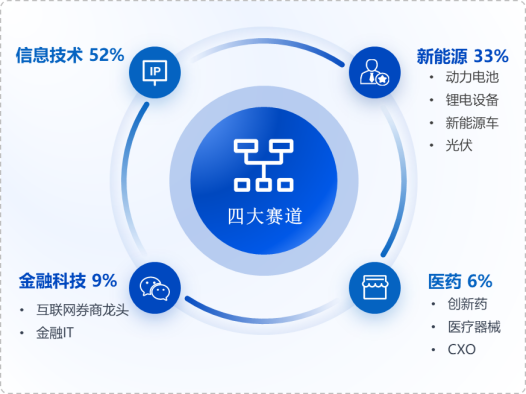
Market Overview - The A-share market exhibited a mixed performance last week, with major indices showing varied results: CSI 300 down 0.57%, CSI 500 up 2.18%, CSI 1000 up 1.27%, ChiNext 50 up 0.80%, and Sci-Tech 50 up 2.58% [1][10] - The average daily trading volume in the A-share market was approximately 3.4 trillion yuan, indicating high investor enthusiasm [1][10] - Key market hotspots included AI applications, commercial aerospace, controllable nuclear fusion, AI healthcare, power grid equipment, computing hardware, tourism and hotels, and non-ferrous metals, showcasing rapid rotation and localized activity [1][10] Investment Recommendations - It is suggested to focus on sectors supported by policy and experiencing a rebound in sentiment, particularly growth assets with performance backing, such as those in AI applications and AI healthcare [1][10] ChiNext 50 Index Insights - The ChiNext 50 Index serves as a direct financing platform for innovative and entrepreneurial companies, focusing on "three innovations (innovation, creation, creativity)" and "four new (new technologies, new industries, new business formats, new models)" [1][10] - The index emphasizes four key sectors: information technology, new energy, financial technology, and pharmaceuticals, reflecting a pure technology growth attribute [1][10] Sector Analysis Technology, AI, and Communication - The ChiNext 50 Index includes 52% of the information technology sector, with a recent surge in AI applications [3][12] - Notable developments include Alibaba's new Qianwen App integrating with its ecosystem for a seamless shopping experience and OpenAI's announcement of testing advertising features in the U.S. [3][12] - The long-term outlook for AI models and ecosystem collaboration is expected to open new commercial avenues, with increasing penetration in e-commerce, healthcare, and manufacturing [3][12] New Energy and Photovoltaics - The power equipment sector received significant positive news as the State Grid announced a projected fixed asset investment of 4 trillion yuan during the 14th Five-Year Plan, a 40% increase from the previous plan [4][12] - The Ministry of Industry and Information Technology emphasized accelerating breakthroughs in solid-state battery technology, with multiple companies investing in related materials [4][12] - The substantial investment by the State Grid is anticipated to enhance new energy consumption capacity, leading to a potential explosion in new energy installations [4][12] Pharmaceuticals and Biotechnology - The recent JPM Healthcare Conference highlighted several Chinese pharmaceutical companies, showcasing their R&D and operational progress to the international market [5][14] - The innovative drug sector is experiencing multiple catalysts, including corporate collaborations and advancements in technology, which are boosting market sentiment [5][14] - The global competitiveness of Chinese innovative drugs is strengthening, with ongoing internationalization and gradual realization of commercial profits [5][14] ChiNext 50 ETF Overview - The ChiNext 50 ETF (code: 159949) tracks the ChiNext 50 Index, focusing on high-quality leading companies in five key technology sectors: new energy vehicles, biomedicine, electronics, photovoltaics, and internet finance [6][15] - The ETF has a robust liquidity profile, with an average daily trading volume of 1.505 billion yuan over the past year, ranking among the top ETFs on the Shenzhen Stock Exchange [6][15] - The latest fund size is 26.981 billion yuan, making it one of the largest funds tracking the ChiNext-related indices [6][15]







早参丨迈瑞医疗披露十年增长蓝图!医疗器械ETF(562600)流通规模八连增
Sou Hu Cai Jing· 2026-01-20 01:40
Group 1 - The A-share medical device sector experienced fluctuations, with the medical device ETF (562600) declining by 0.54% on January 19. Notable stock performances included Hualan Co., which rose by 7.84%, and Yirui Technology, which increased by 2.57% [1] - The medical device ETF (562600) has seen a continuous increase in circulation scale for eight consecutive trading days, totaling an increase of 182 million yuan. On January 19, the trading volume for the ETF was 25.93 million yuan [1] - Mindray Medical revealed its growth blueprint for the next decade at the 44th JPM Global Healthcare Conference, focusing on globalization, cash flow business, and digital intelligence as key pillars for empowering the medical industry. The company's "Qiyuan" medical model has been implemented in multiple clinical scenarios, reducing surgery time and misdiagnosis risks, gaining global hospital recognition [1] Group 2 - The medical device industry is rapidly developing, and investors can leverage the medical device ETF (562600) to capture growth opportunities. The ETF tracks the CSI All-Share Medical Device Index, with brain-computer interface stocks accounting for 23.8%, the highest among listed ETFs, effectively covering core targets in this segment [2] - The medical device industry accounts for 89.2% of the ETF's composition, indicating a high concentration that can effectively capture growth opportunities in niche markets. Investors can also consider the Huaxia CSI All-Share Medical Device ETF Initiated Link A (021250) and Link C (021251) for convenient investment [2]
迈瑞医疗大宗交易成交1581.50万元
Zheng Quan Shi Bao Wang· 2026-01-19 10:08
Group 1 - The core transaction on January 19 involved a block trade of 79,000 shares of Mindray Medical, with a transaction value of 15.815 million yuan and a transaction price of 200.19 yuan per share [1][2] - Over the past three months, Mindray Medical has recorded a total of 13 block trades, amounting to a cumulative transaction value of 169 million yuan [1] - The closing price of Mindray Medical on the day of the transaction was 200.19 yuan, reflecting a decrease of 0.50%, with a daily turnover rate of 0.59% and a total trading volume of 1.439 billion yuan [1] Group 2 - The latest margin financing balance for Mindray Medical is 3.933 billion yuan, which has increased by 150 million yuan over the past five days, representing a growth rate of 3.97% [2] - Mindray Medical was established on January 25, 1999, with a registered capital of 1.212 billion yuan [2]
迈瑞医疗1月19日现1笔大宗交易 总成交金额1581.5万元 其中机构买入1581.5万元 溢价率为0.00%
Xin Lang Cai Jing· 2026-01-19 09:44
Group 1 - The core point of the article highlights the trading activity of Mindray Medical, which experienced a decline of 0.50% in its stock price, closing at 200.19 yuan [1] - A significant block trade occurred, with a total volume of 79,000 shares and a transaction amount of 15.815 million yuan, indicating a premium rate of 0.00% [1] - Over the past three months, Mindray Medical has recorded 13 block trades, with a cumulative transaction amount of 169 million yuan [1] Group 2 - In the last five trading days, the stock has seen a cumulative decline of 3.77%, while the net inflow of main funds amounted to 317 million yuan [1]
医疗板块三大主线:脑机接口+AI医疗+出海!医疗器械ETF(562600)小幅下行,华兰股份涨逆势领涨7.29%
Mei Ri Jing Ji Xin Wen· 2026-01-19 07:01
Group 1 - The A-share market experienced fluctuations on January 19, with the medical device ETF (562600) declining by 0.54% in the afternoon session [1] - Notable stock performances included Hualan Biological Engineering rising by 7.29%, Yirui Technology by 2.34%, Dian Diagnostics by 1.94%, and Aidi Te by 1.82% [1] - The medical device ETF (562600) has seen significant capital inflow, with a net inflow of 125 million yuan over the past five days and 256 million yuan over the past ten days [1] Group 2 - The medical device sector is expected to benefit from opportunities in overseas expansion, brain-computer interfaces, and AI healthcare by 2026 [2] - The overseas business revenue of the second-largest weight stock in the medical device ETF, United Imaging Healthcare, grew by 41.97% year-on-year in the first three quarters of 2025, becoming a significant source of revenue for the company [1][2] - The brain-computer interface market is at a critical turning point, with demand expected to be released, supported by China's 14th Five-Year Plan [2] - AI applications in healthcare are gradually being implemented, with Ant Group's AI health manager AQ reaching over 30 million monthly active users by January 2026 [2] - The medical device ETF (562600) tracks the CSI All-Share Medical Device Index, with a 23.8% allocation to brain-computer interfaces, the highest among similar ETFs, effectively capturing growth opportunities in niche markets [2]
迈瑞医疗董秘李文楣现身JPM大会,阐释数智化解决方案的五层架构
Quan Jing Wang· 2026-01-18 03:03
Core Insights - The 44th J.P. Morgan Global Healthcare Conference highlighted the growth strategy of Mindray Medical, focusing on three core pillars: accelerated globalization, expansion of recurring revenue business, and digital transformation [1][10]. Group 1: Globalization Strategy - Mindray Medical has achieved a compound annual growth rate of 15% in international business over the past decade, with operations in over 190 countries and regions [2]. - The company aims to increase the proportion of international revenue from 50% to over 60% in the future [2]. - Mindray emphasizes deep localization in emerging markets, establishing over 20 ultrasound training schools in the Middle East and Africa to enhance local medical capabilities [2]. Group 2: Recurring Revenue Business - The recurring revenue business, which includes IVD reagents and minimally invasive surgical consumables, is projected to contribute 40% of total revenue by mid-2025 [3]. - Mindray's market share in the Chinese IVD market is currently below 15%, and only about 4% globally, indicating significant growth potential [3]. - The company is expanding its recurring revenue business through local supply chain development and strategic acquisitions, such as entering the cardiovascular intervention field [3]. Group 3: Digital Transformation - Mindray's digital transformation aims to address the "impossible triangle" of quality, accessibility, and cost in healthcare [5][6]. - The company has developed a five-layer architecture for its digital solutions, with the first four layers already implemented [6]. - The "Qiyuan" medical model serves as the core of Mindray's digital solutions, providing real-time patient monitoring and decision support across various medical scenarios [7]. Group 4: Practical Applications and Future Outlook - Real-world applications of Mindray's digital solutions have shown significant improvements in healthcare efficiency and patient management in various countries, including Norway and Saudi Arabia [8]. - The company plans to focus on "embodied intelligence," integrating devices, IT, and AI to create a self-reinforcing medical ecosystem [9]. - Mindray aims to lead the global healthcare digital transformation by continuously innovating and enhancing the precision, accessibility, and efficiency of medical services [10].
华创医药投资观点&研究专题周周谈·第159期:隐形正畸行业近况更新-20260117
Huachuang Securities· 2026-01-17 12:20
Investment Rating - The report maintains a "Recommended" rating for the innovative drug sector, highlighting the potential for value re-evaluation as the proportion of innovative products increases [44]. Core Insights - The report emphasizes the transition of the innovative drug industry from quantity to quality, with a focus on differentiated and internationalized pipelines by 2025 [10]. - The medical device sector is experiencing a recovery in bidding volumes for imaging equipment, with a notable increase in home medical device markets due to subsidy policies [10]. - The report identifies a significant growth opportunity in the invisible orthodontics market, with penetration rates expected to rise from 14% in 2023 to 25% by 2030 [18]. Summary by Sections Market Overview - The report notes a 0.72% decline in the CITIC Medical Index, underperforming the CSI 300 Index by 0.15 percentage points, ranking 16th among 30 primary industries [6]. - The top ten performing stocks include Baolait, Hualan, and Tianzhihang, while the bottom ten include Xiangrikui and *ST Changyao [6]. Innovative Drugs - The innovative drug sector is expected to see a significant increase in the number of products, with projections of 30 products by 2027, including over 20 innovative drugs [44]. - The revenue share from innovative products is anticipated to exceed 50% by 2025, indicating a successful transition from generic to innovative products [44]. Medical Devices - The report highlights a recovery in bidding for imaging devices, with a projected significant increase in market size from Q4 2024 onwards [48]. - Home medical devices are benefiting from government subsidies, with companies like Yiyue expected to see sustained growth [48]. Invisible Orthodontics - The penetration rate of invisible orthodontics in China is significantly lower than in the U.S., with expectations for rapid growth due to rising economic levels and aesthetic demands [18]. - The market size for invisible orthodontics is projected to grow from 70 billion to 130 billion yuan from 2018 to 2023, with a CAGR of 13.4% [27]. Market Dynamics - The report indicates that the competitive landscape in the invisible orthodontics market is shifting towards leading manufacturers, with a focus on product differentiation and cost optimization [32]. - The report also notes that the domestic market is experiencing a consolidation phase, with smaller manufacturers facing challenges due to price competition [32].
2026年,要想清楚该如何面对牛市
雪球· 2026-01-17 03:46
Group 1 - The article discusses the potential bullish trend in the A-share market by 2026, supported by factors such as low interest rates and the attractiveness of stock dividends compared to government bonds [5][6][10] - It highlights the concept of "asset scarcity," where capital is expected to flow into higher-yielding investments as traditional options like real estate and bank deposits lose their appeal [7][8] - The article emphasizes the importance of strategic focus on stimulating consumption and internal demand through asset appreciation rather than direct cash distribution [9][10] Group 2 - The article outlines four key investment strategies for navigating a bull market, applicable to both institutional and retail investors [11] - The first strategy is to embrace index ETFs, particularly the CSI 500, which represents a diversified selection of leading companies [12][13] - The second strategy stresses the importance of balanced asset allocation to mitigate risks associated with heavy concentration in specific stocks or sectors [14] - The third strategy advises investors to adopt a long-term perspective and avoid short-term trading, as retail investors typically lack advantages in quick market movements [15][16] - The fourth strategy suggests waiting for price corrections to find good entry points for investments, emphasizing the need for a positive mindset [17][19] Group 3 - The article identifies three key criteria for selecting high-quality companies in the high-end manufacturing sector: price increases, overseas expansion, and innovation [22][23] - It discusses the importance of evaluating both relative and absolute price metrics, including PE/PB ratios and historical performance, to determine good pricing [25][26] - The article categorizes leading manufacturing companies into five groups based on their fundamentals and valuation metrics, providing a framework for investment decisions [28]