Databricks

Search documents
10万美元一张,美国H-1B暴涨引爆硅谷与学界
3 6 Ke· 2025-10-22 02:15
Core Points - The announcement of a $100,000 application fee for H-1B visas by Trump has caused significant concern in both academia and industry, particularly in the tech sector, where it may lead to a talent shortage and hinder research projects [1][3][17] - Major tech companies like Amazon, Google, and Microsoft are in turmoil, with many recalling global employees due to the new policy [3][5] - A list of 20 startups, including OpenAI and Stripe, has been identified as potentially facing severe challenges due to the new visa fee [3][7] Industry Impact - The new fee is expected to create a barrier for many small startups, which rely on H-1B visas to attract international talent, leading to hiring freezes and increased competition with larger firms [5][10] - The academic sector is particularly alarmed, as the increased costs could jeopardize research projects and lead to a "research winter," with many STEM programs facing potential course cancellations [17][27] - Universities like Stanford, which employs over 500 H-1B visa holders, may face additional costs of at least $27 million annually to maintain hiring levels, further straining their budgets [21][24] Reactions from Key Players - Some industry leaders, including Netflix co-founder Reed Hastings, view the fee as a way to filter for top talent, suggesting it could benefit high-value positions [10][12] - Conversely, many in academia and smaller startups express that the fee will deter international talent and could lead to a decline in innovation and research capabilities in the U.S. [20][30] - The policy has been criticized as a potential disaster for U.S. scientific leadership, with experts warning that it may accelerate talent loss to global competitors [28][30][32]


当前Agent赛道:热度之下隐现落地难题,如何破局?
雷峰网· 2025-10-22 00:51
Core Viewpoint - The article discusses the rapid development and challenges of the Agent application market, highlighting the divergence of leading players into two distinct paths: full-stack AI service providers and specialized players focusing on vertical markets [1][4][11]. Group 1: Market Overview - The Agent application market is predicted to reach $27 billion in China by 2028 according to IDC [3]. - The current landscape shows a surge in investment and competition among companies eager to adopt Agent technology [2]. Group 2: Player Strategies - Major players in the Agent space include AI giants and cloud service providers, who are lowering the barriers for enterprises to adopt Agent technology [6][7]. - AI giants like OpenAI leverage their foundational model capabilities to gain a first-mover advantage, while cloud providers like Google and AWS are focusing on comprehensive solutions for enterprise Agent development [8][9]. Group 3: Application Scenarios - The primary application scenarios for Agents in enterprises include processing complex multi-modal content, interactive scenarios like chatbots, and high-value intelligent inspection and risk control [15]. - The consumer electronics industry has been the first to adopt Agent technology, with traditional sectors like agriculture gradually following suit [15]. Group 4: Technical Challenges - There are significant technical challenges in the deployment of Agents, including issues with model hallucination, multi-modal integration, and memory management [16]. - The integration of Agents with existing enterprise systems like ERP and CRM is complex, and the need for multi-Agent collaboration is becoming increasingly important [17][18]. Group 5: Solutions for Implementation - To overcome the challenges of Agent deployment, continuous technological innovation is essential, focusing on enhancing model capabilities and system engineering [22]. - The industry is exploring new development paradigms to improve the breadth and depth of Agent tasks, with protocols like MCP and A2A being tested to facilitate communication between different Agents [23][24]. Group 6: Industry Collaboration - Collaboration between vendors and enterprises is crucial for successful Agent implementation, with a focus on aligning business needs with Agent technology [25]. - The sharing of experiences and best practices among developers is encouraged to address complex scenarios and improve Agent development [26].

Veeam acquires data security company Securiti AI for $1.7B
Yahoo Finance· 2025-10-21 14:08
Core Insights - Veeam has signed a definitive agreement to acquire Securiti AI for $1.725 billion, aiming to enhance customer control and security over data in the AI era [1][2] - The acquisition is part of a broader trend of consolidation in the data industry, driven by the need for improved data infrastructure to support AI adoption [4][5] Company Overview - Securiti AI, founded in 2019, has raised over $156 million in venture capital and provides a command center for enterprise data management [2] - Following the acquisition, Securiti's product will be integrated into Veeam's offerings, with Securiti's founder Rehan Jalil taking on the role of president of security and AI at Veeam [2] Industry Trends - The data industry is experiencing significant consolidation, with notable acquisitions such as Databricks acquiring Neon for $1 billion and Salesforce acquiring Informatica for $8 billion [5] - There is a growing demand from enterprises to streamline their data infrastructure, particularly as they seek to adopt AI technologies, highlighting the issue of data fragmentation [6]
X @Nick Szabo
Nick Szabo· 2025-10-20 02:04
RT unusual_whales (@unusual_whales)World's most valuable private companies, per MB:1. OpenAI: $500 billion2. SpaceX: $400 billion3. ByteDance: $330 billion4. Anthropic: $183 billion5. xAI: $113 billion6. Databricks: $100 billion7. Stripe: $92 billion8. Revolut: $75 billion9. Shein: $66 billion ...
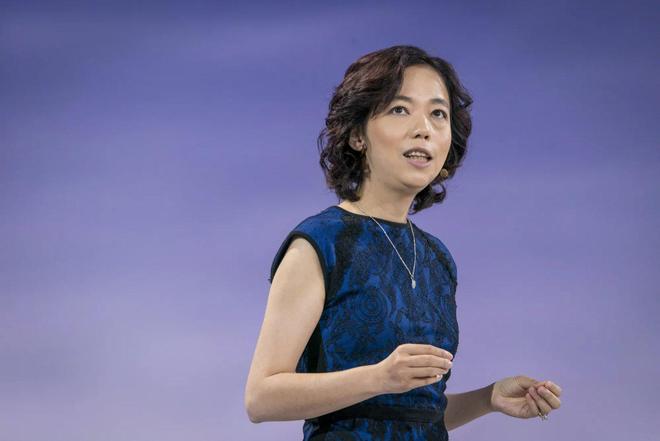
“AI教母”李飞飞的全新世界模型问世!一张英伟达AI芯片就能生成无限3D世界
Tai Mei Ti A P P· 2025-10-17 02:53
Core Insights - World Labs, co-founded by Fei-Fei Li, has launched a new real-time generative world model called RTFM (Real-Time Frame Model) which utilizes large-scale video data for efficient end-to-end training [3][4] - RTFM can generate new 2D images from one or more 2D inputs without relying on explicit 3D representations, marking a significant advancement in AI rendering capabilities [3][4] - The model can render persistent and 3D-consistent scenes in real-time using a single NVIDIA H100 GPU, enabling interactive experiences in both real and virtual environments [4][10] Company Overview - World Labs was founded in March 2023 by Fei-Fei Li and three other scholars, focusing on developing efficient, scalable, and persistent world models [8][10] - The company raised $230 million in September 2023, achieving a valuation of $1 billion within three months of its establishment [10] - The team consists of approximately 24 members, with a significant representation of Chinese individuals [10] Technology and Innovation - RTFM addresses scalability issues that have long plagued world models, enhancing spatial intelligence in machines, which allows for better navigation and decision-making in complex 3D environments [6][7] - The model's efficiency is highlighted by its ability to support interactive frame rate inference with a single H100 GPU, while its scalability allows for continuous optimization as data and computational power grow [8][10] - Future plans include developing a large model (LWM) that comprehensively understands three-dimensional, physical, and temporal concepts, with applications in AR and robotics [10][12] Research and Development - Fei-Fei Li is also spearheading the Behavior 1K challenge, aimed at standardizing tasks in embodied intelligence and robotics research, providing a platform for training and evaluation [11][12] - The Behavior 1K challenge includes 1,000 tasks focused on long-horizon tasks in everyday environments, promoting collaboration and comparison among researchers [12] - The integration of various AI technologies is seen as a transformative moment for society, emphasizing a human-centered approach in AI development [12][13]

Palantir, Snowflake Reverse Down Amid New AI Data Partnership
Investors· 2025-10-16 16:38
Core Insights - Palantir Technologies and Snowflake have announced a partnership aimed at modernizing data for AI applications, which is expected to enhance data pipelines and analytics for both commercial and public sectors [1][2] - Palantir's stock has seen a significant increase of 139% in 2025, while Snowflake's stock has jumped 53% [2][3] - Palantir's stock is approaching a buy point of 185.75, currently trading at approximately 181.50, while Snowflake is nearing a flat-base entry of 249.99, trading at nearly 256 [2][3] Company Performance - Palantir's stock holds a Composite Rating of 99 out of a best-possible 99, indicating strong performance, with an Accumulation/Distribution Rating of C-plus [6] - Snowflake's stock has an IBD Composite Rating of 97 out of 99 and an Accumulation/Distribution Rating of B, suggesting solid institutional buying [5] Market Context - The partnership between Palantir and Snowflake is already in action with Eaton, a power management company, indicating practical applications of their collaboration [2] - Palantir aims to leverage generative AI to expand its presence in the U.S. commercial market, particularly in healthcare and financial services [4]


“AI盛世”还是“AI泡沫”?10家AI独角兽,估值1年增长1万亿,VC一年投入超2000亿美元,利润为0
Hua Er Jie Jian Wen· 2025-10-16 12:39
Core Insights - The surge in AI investments has led to a dramatic increase in valuations of unprofitable AI startups, totaling nearly $1 trillion in the past year, marking the fastest wealth expansion in history [1] - U.S. venture capital (VC) investments in AI are projected to exceed $200 billion this year, significantly surpassing previous tech bubbles, indicating a strong market focus on AI [2] - The current investment climate is characterized by a "winner-takes-all" mentality, with expectations that only a few companies will dominate the market, reminiscent of the internet era [3] Investment Trends - The AI sector has attracted over $200 billion in VC funding this year, which is more than the $135 billion invested during the SaaS bubble in 2021 [2] - AI companies are experiencing inflated valuations, with some startups valued at 100 times their annual revenue, driven by a fear of missing out (FOMO) among investors [2] - The expectation is that while a significant amount of AI investment may be wasted, the technology could ultimately create tenfold value [3] Market Dynamics - The valuations of private AI companies are beginning to impact public markets, with major tech firms like AMD and NVIDIA seeing substantial market cap increases due to their associations with AI startups [3] - The competition among AI companies, particularly between OpenAI and tech giants like Microsoft and Google, is intensifying, leading to high operational costs and uncertain profitability timelines [4] - The current capital frenzy in AI resembles previous market bubbles, with valuations detached from actual earnings, raising concerns about the sustainability of this growth [5]



AI不再“卖梦想”,Anthropic教会行业用CFO的语言讲价值
3 6 Ke· 2025-10-16 09:51
Core Insights - Anthropic has demonstrated an unprecedented growth model, skyrocketing its annual recurring revenue (ARR) from $1 billion to $7 billion in a matter of months, showcasing a new "AI-native" growth paradigm [1] - The company’s growth strategy is built on a well-designed "growth flywheel" consisting of three core components: an API-driven revenue model, a focus on enterprise-level applications, and leveraging ecosystem partnerships [2][5] Growth Flywheel Components - The "engine" of Anthropic's growth is its API-centric consumption revenue model, with 85% of its revenue derived from developer and enterprise API calls, allowing for rapid value validation and bypassing traditional sales cycles [3] - The "fuel" for this growth is the identification of code generation as a key enterprise application, which has a token consumption rate 10 to 50 times higher than typical chat applications, thus maximizing revenue potential [4] - The "accelerator" aspect involves leveraging partnerships with cloud giants like AWS and Google to access their customer networks, significantly reducing market education and sales costs [5] Value Proposition - Anthropic effectively communicates its value proposition to enterprises by providing quantifiable ROI, demonstrating that its solutions are not merely cost centers but significant value creators [6][7] - The company has showcased numerous client success stories, such as Novo Nordisk reducing clinical report writing time from over 10 weeks to 10 minutes, highlighting the efficiency gains and financial benefits of using its AI models [6][7] Market Comparison and Implications for Chinese AI - A comparison with OpenAI reveals that while OpenAI focuses on consumer-driven growth, Anthropic targets the enterprise market, achieving higher profitability per user despite lower overall revenue [9] - The rise of Anthropic serves as a wake-up call for Chinese AI companies, suggesting a shift from a focus on model parameters to a focus on ROI, identifying killer applications, restructuring business models, and adopting ecosystem strategies [10][11][12]
X @Bloomberg
Bloomberg· 2025-10-16 09:39
Business Strategy - Databricks focuses on "boring AI" to drive meaningful business output [1] - The company's co-founder believes that using AI as the sole goal is not sensible [1]
一位芯片老兵,再战英伟达
半导体行业观察· 2025-10-16 01:00
Core Insights - The article discusses the journey of Naveen Rao and his team from founding Nervana Systems to their new venture, Unconventional, highlighting the evolution of the AI hardware market and the challenges faced by startups in this space [1][30]. Group 1: Founding of Nervana Systems - In 2014, the founders of Nervana, including Naveen Rao, Amir Khosrowshahi, and Arjun Bansal, recognized the potential of deep learning and aimed to address the hardware limitations in AI processing [2][3]. - The team, all with backgrounds in neuroscience, was motivated by a fascination with intelligent machines and aimed to design specialized chips for machine learning [4][7]. Group 2: Acquisition by Intel - In 2016, Intel acquired Nervana for approximately $350 million to strengthen its position in the deep learning chip market, which was being dominated by NVIDIA [10][11]. - Following the acquisition, Rao led Intel's AI platform division, where they developed the Nervana NNP series of chips aimed at competing with NVIDIA's offerings [13][15]. Group 3: Challenges and Setbacks - Despite initial success, Intel announced in 2020 that it would cease development of the Nervana chips in favor of the technology acquired from Habana Labs, which posed a direct competition to Nervana's products [21][22]. - The performance of Habana's chips significantly outperformed Nervana's, leading to doubts about the future of Nervana within Intel's product lineup [19][21]. Group 4: Launch of Unconventional - After leaving Intel, Rao founded Unconventional, aiming to raise $1 billion with a target valuation of $5 billion, significantly higher than Nervana's previous valuation [26][30]. - Unconventional seeks to rethink the foundations of computing, potentially leveraging neuromorphic computing principles to create more efficient AI hardware [27][28]. Group 5: Market Dynamics - The AI hardware market has dramatically changed since 2014, with NVIDIA's market cap soaring to over $4 trillion and a surge in competition from both established companies and new startups [30][31]. - The current landscape presents both opportunities and challenges for new entrants like Unconventional, including the need to compete against NVIDIA's established ecosystem and address customer inertia [31][32].