
SanDisk

Search documents
Nvidia, Intel Deal Creates Risk for AMD, Arm: Mizuho's Klein
Youtube· 2025-09-18 18:49
Group 1: Competitive Landscape - AMD is facing increased competitive pressure from Intel and NVIDIA in the PC desktop market, which could impact its market position [1][2] - Intel is gaining credibility in the data center market as it has been lagging behind AMD in server processors, which has allowed AMD to gain market share [2][4] - ARM, as a major licensee for non-x86 server processors, has a strong relationship with NVIDIA, which may influence its market dynamics [3][5] Group 2: Market Reactions - ARM and AMD are currently the only chip stocks experiencing declines, while the broader semiconductor index is up over 3.5% [4][15] - The investment by SoftBank in Intel, amounting to $2 billion, indicates a strategic diversification across the semiconductor industry [6][7] - The semiconductor sector is experiencing a positive shift, with Intel's strengthening position potentially benefiting NVIDIA and the overall market [7][10] Group 3: Future Outlook - The introduction of x86-based server processors by Intel could provide customers with more flexibility in running workloads, impacting AMD's competitive stance [10][11] - The semiconductor industry is evolving rapidly, creating both opportunities and challenges for companies involved [12][18] - Upcoming earnings reports in October will be crucial in determining whether the current rally in semiconductor stocks can be sustained [18]


存储芯片,价格飙升20%
半导体行业观察· 2025-09-18 02:09
Core Viewpoint - The article highlights a significant increase in NAND and DRAM contract prices expected in Q4 2025, driven by AI infrastructure demands and supply constraints [2][3]. Group 1: Price Trends - NAND and DRAM contract prices are projected to rise by 15-20% in Q4 2025, contrasting with typical seasonal price declines [2]. - SanDisk has increased NAND prices by approximately 10% in September, indicating tightening supply conditions [2]. - The demand for high-density 3D NAND products is surging, with cloud service providers actively procuring these products due to their faster read speeds and larger capacities [2][3]. Group 2: Supply Chain Dynamics - Samsung's next-generation V9 NAND is reportedly close to being sold out, as cloud customers are securing capacity early due to its advantages [3]. - TrendForce has noted that traditional DRAM types are under significant pressure, and if cloud orders continue to rise, typical winter discounts on NVMe drives may be less than expected [3]. Group 3: Market Performance - Phison Electronics reported record revenue of NT$59.34 billion in August, a 23% year-over-year increase, attributed to non-consumer demand and closer collaboration with NAND manufacturers [4]. - The article emphasizes that AI is reshaping the cloud storage landscape, leading to stronger pricing power for flash memory manufacturers compared to previous years [4].
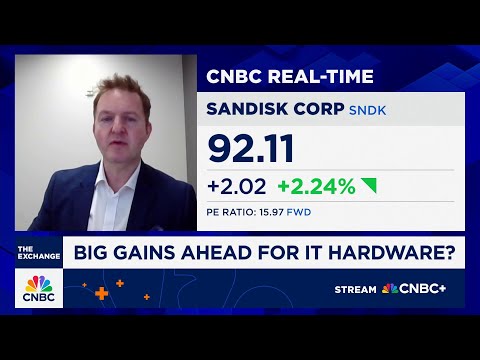
The Street is undervaluing these tech hardware names, says Bernstein's Mark Newman
CNBC Television· 2025-09-16 17:45
Investment Ratings & Recommendations - Bernstein initiated coverage with an outperform rating on Apple, Dell, SanDisk, and Seagate, anticipating significant gains due to increased AI spending [1] - Bernstein is most positive on Seagate, expecting continued outperformance despite a 142% increase in 2025 [2] Market Drivers & Trends - The intelligence revolution and the resulting data explosion are driving performance for storage companies [3] - Data storage needs are increasing, benefiting both hard disk drive (Seagate) and NAND flash (SanDisk) manufacturers [3][9] Company-Specific Analysis - Seagate is a leader in next-generation hard disk drive technology, expected to drive down costs and expand margins [4][5] - Seagate is projected to have a 28% compound annual growth rate (CAGR) in earnings per share (EPS) over the next five years [5] - SanDisk is considered underappreciated after its spin-off from Western Digital [6] - SanDisk's valuation is approximately half of its fab replacement value, with its intellectual property effectively valued at zero [7][8] Financial Outlook - Bernstein is ahead of the street on earnings expectations for both Seagate and SanDisk [9]

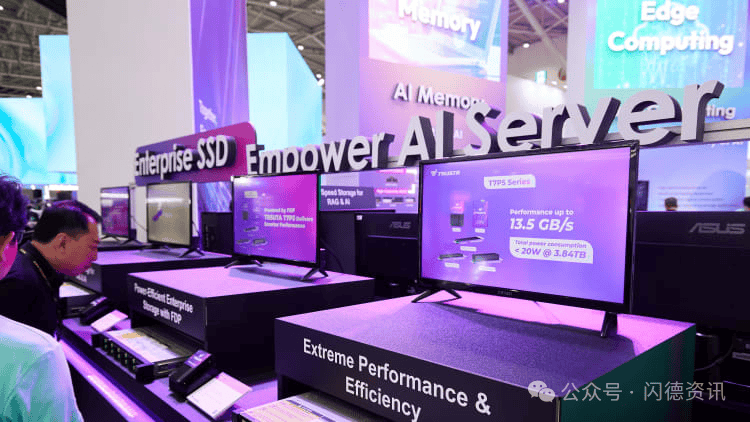
供不应求,eSSD全球大缺货
Sou Hu Cai Jing· 2025-09-16 04:42
Group 1 - The demand for QLC NAND Flash is increasing due to the growth of AI data centers, leading to a global shortage [1] - Major cloud service providers (CSPs) are negotiating large-scale eSSD orders, with Microsoft and Google being the most active, aiming to replace HDDs with eSSDs by 2026 [3] - The estimated procurement volume for a single CSP could reach several tens of Exabytes (EB), with potential shortages reaching 150-200 EB [4] Group 2 - The price of NAND products is expected to increase, with SanDisk announcing a price hike of approximately 10% [4] - The price gap between eSSDs and HDDs is projected to narrow to around three times as CSPs shift towards eSSD adoption [1][3]


科技行业周报:推理应用驱动算力投资,中美博弈持续利好国产半导体-20250915
First Shanghai Securities· 2025-09-15 12:34
Investment Rating - The report maintains a strong positive outlook on the AI application-driven demand for computing power, indicating a sustained high growth trajectory in this sector [2]. Core Insights - The report emphasizes the critical growth in AI applications, suggesting that both domestic and international AI applications are reaching a tipping point for widespread adoption. Investors are advised to select high-quality targets and focus on companies with consistent performance [2]. - The ongoing U.S.-China competition is expected to benefit domestic semiconductor companies, as the demand for computing power continues to rise [2][6]. Summary by Sections Communication Capability Upgrade Opportunities - Oracle's recent performance showed a significant increase in remaining performance obligations (RPO), up 359% year-on-year to $455 billion, reflecting strong long-term demand from AI giants like OpenAI and Meta [3]. - Broadcom's earnings report has heightened interest in XPU, with increased demand from major clients like Google for TPU and the announcement of a $10 billion order from a new customer [3]. - The expected shipment of optical modules is projected to exceed 10 million units for 1.6T and 40 million units for 800G in 2026, suggesting robust growth in this segment [3]. Cabinet Communication Scale-up Opportunities - The trend towards GPU scale-up in next-generation training clusters is leading to the adoption of customized PCIe switches for improved chip interconnectivity [4]. - A specific U.S. company is expected to significantly increase its 5nm wafer production in 2026, indicating a positive outlook for domestic competitors as well [4]. Domestic Computing Power Supply Chain - The report notes that the domestic computing power supply chain is in a tight balance, with critical bottlenecks being gradually addressed, which is expected to catalyze investment opportunities in the latter half of the year and into next year [6]. - The U.S. Department of Commerce has added 32 entities to its control list, which may further accelerate the upgrade of domestic computing power [6]. NAND Storage Price Increase Opportunities - SanDisk announced a 10% price increase for NAND Flash modules, with domestic leader Yangtze Memory expected to follow suit in Q4 2025 [9]. - The report highlights a significant price increase for consumer SSD modules, driven by supply constraints and seasonal demand [9]. iPhone Supply Chain Expectation Adjustments - Following the release of the iPhone 17, market expectations for overall shipments have been revised from a 9% decline to flat year-on-year growth, indicating a more optimistic outlook [10]. Investment Recommendations - The report suggests a buy rating for several companies, including Cambricon (688256), SMIC (0981.HK), and Huahong Semiconductor (1347.HK), among others, indicating strong potential in the domestic computing power sector [13].
这类芯片,将供不应求
半导体行业观察· 2025-09-15 02:14
Core Viewpoint - The global demand for DRAM and NAND flash memory is expected to exceed supply in 2024, driven by the surge in AI-related storage needs, leading to price increases and market opportunities for major memory manufacturers like Micron, SanDisk, Samsung, and SK Hynix [1][2][3] Group 1: Market Dynamics - The memory market is experiencing a significant shift due to the rapid increase in AI cloud demand, with DRAM manufacturers focusing on High Bandwidth Memory (HBM) and facing challenges in production capacity [2] - Micron has announced a price increase of 20% to 30% for DRAM products, indicating a strong demand that exceeds expectations, with a potential new wave of purchasing activity in the market [1][2] - SanDisk has also raised prices by over 10% across all channels, signaling the start of a new round of price increases in the NAND market [2] Group 2: Price Trends and Projections - The DRAM price index has increased by approximately 72% in less than six months, while NAND prices remain relatively low compared to last year, indicating a widening gap between the two price indices [3] - The overall market value for NAND flash memory is projected to reach $65 billion in 2026 and $70 billion in 2027, with a growing contribution from AI demand [2] Group 3: Sector-Specific Insights - The server market is seeing a recovery in demand for enterprise-level NAND due to inventory depletion and a strong need for profitability, leading to a more aggressive pricing strategy from manufacturers [4] - With Micron exiting the mobile NAND market, domestic manufacturers are expected to benefit from the resulting market opportunities, leading to a slight increase in mobile NAND prices in Q4 [5]


存储观点更新 - 行业涨价、供需和后续展望
2025-09-15 01:49
Summary of Storage Industry Conference Call Industry Overview - The storage industry is benefiting from rapid growth in AI, cloud, and end-user demand, with significant increases in consumer demand and stable enterprise demand, leading to an expected substantial increase in overall profit margins in the second half of the year [1][2][3] - Structural changes in supply, such as HBM occupying capacity leading to DDR4 production halts, and a significant price increase of low-power DDR by approximately 150%, indicate a shift in market supply-demand dynamics [1][3][4] Key Insights and Arguments - Domestic storage companies are actively developing main control chips and transitioning from consumer markets to enterprise markets, while memory chip companies are advancing towards 3D DRAM, indicating a profound change in the competitive landscape [1][4][5] - The storage market is expected to have greater sustainability and elasticity in 2025 compared to 2024, with a notable increase in investor interest [1][6] - Recent price increases by SanDisk and Micron are driven by rising storage demand in AI applications, data centers, client devices, and mobile sectors, signaling an upward price trend in the storage market [1][8] Price Trends and Demand Changes - Storage prices in Q3 are significantly higher than in Q2, indicating a strong profit margin for storage companies in the second half of the year [2] - The demand for consumer-grade storage has shown notable growth in 2025, with mobile memory increasing from 4GB to 16GB and new Apple video devices starting at 256GB [3] - The second half of the year is expected to see price increases for NAND and DDR4 driven by changes in industry demand, with traditional consumer replenishment needs and AI high-performance storage demands contributing to this trend [1][9] Investment Opportunities - Investment opportunities in the storage sector are concentrated on new demand growth, particularly in edge AI applications (e.g., AI glasses) and the domestic replacement of enterprise storage [1][10] - The market for AI glasses is expected to see explosive growth, with significant storage module value, while the enterprise storage market is projected to increase its domestic production rate from 20% to 50%, creating a market space worth hundreds of billions [10] Additional Important Points - The storage industry's valuation is typically forecasted based on historical peaks, with this cycle expected to outperform 2024 but likely not reach 2021 levels [7] - The price increases in the second half of the year are supported by strong demand from cloud service providers and the need for higher capacity in AI training and inference stages [9]
每周观察 | 2Q25前五大企业级SSD品牌厂营收;二季度全球智能手机生产总数达3亿支;Micro LED芯片市场;牵引逆变器…
TrendForce集邦· 2025-09-13 02:04
Group 1: Enterprise SSD Market - The revenue of the top five enterprise SSD brands reached over $5.1 billion in Q2 2025, showing a quarter-over-quarter increase of 12.7% [2][3] - Samsung led the market with a revenue of $1,899 million, holding a market share of 34.6%, although it experienced a slight increase of 0.5% compared to the previous quarter [3] - SK Group (SK hynix + Solidigm) saw significant growth with a revenue increase of 47.1%, reaching $1,461.7 million and capturing a market share of 26.7% [3] Group 2: Smartphone Production - Global smartphone production reached 300 million units in Q2 2025, reflecting a quarter-over-quarter increase of approximately 4% and a year-over-year increase of 4.8% [4][5] - Oppo and Transsion brands contributed to the recovery in production after inventory adjustments, indicating a positive trend in the market despite ongoing economic challenges [4] Group 3: Micro LED Technology - The penetration of Micro LED technology in consumer electronics is accelerating, with significant products like the Garmin Fenix 8 Pro smartwatch expected to adopt this technology by 2025 [7] - The Micro LED chip market is projected to grow to $461 million by 2029, driven by the introduction of key products in various sectors [7] Group 4: Electric Vehicle Inverter Market - The global installation of electric vehicle traction inverters reached 7.66 million units in Q2 2025, marking a year-over-year increase of 19% [10] - Battery Electric Vehicles (BEVs) accounted for 52% of the installed inverters, surpassing hybrid vehicles for the second consecutive quarter [10]



全球科技 - 闪存(NAND)-人工智能时代终于降临闪存领域-Global Technology-NAND – AI Era Finally Comes to NAND
2025-09-11 12:11
Summary of the Conference Call on NAND Industry and AI Impact Industry Overview - The NAND industry is experiencing a resurgence due to the increasing demand from AI inference applications, with an estimated incremental Total Addressable Market (TAM) of **US$29 billion** by **2029** [1][13][22]. - The AI NAND market is projected to account for **34%** of the global NAND market by **2029**, with AI-related NAND usage expected to reach **431EB**, representing **20%** of global NAND bit shipments [13][22]. Key Insights - The demand for high-speed, high-capacity storage solutions, particularly QLC eSSD, is becoming critical for AI applications, as it meets the requirements for randomized I/O access [12][21]. - A NAND shortage is anticipated to emerge in the second half of **2026**, driven by a combination of AI infrastructure deployment and consumer demand weakness [14][24]. - Major Cloud Service Providers (CSPs) are already in discussions with suppliers for large orders of AI NAND and nearline SSDs, indicating a shift in procurement strategies [14][24]. Market Dynamics - The NAND industry has been in oversupply since **2022**, but a more balanced supply-demand dynamic is expected moving into **2026** [14][24]. - The introduction of nearline SSDs is expected to take market share from HDDs, with a potential **5%** market share shift translating into an **8%** NAND shortage in a bullish scenario [13][23]. Stock Recommendations - **SanDisk** has been elevated to a Top Pick with a price target raised from **$70** to **$96**, reflecting confidence in its ability to capitalize on the AI-driven demand [12][41]. - Other recommended stocks include **KIOXIA** and **Samsung Electronics**, which are expected to benefit significantly from the growth in the NAND sector [15][27]. - Within Greater China, module makers **Phison** and **Longsys** are favored due to better NAND pricing tailwinds [15][27]. Financial Projections - The 2026 EPS estimates for key recommended stocks are projected to be **26%** higher than consensus estimates, indicating a bullish outlook on the AI NAND growth story [30][41]. - SanDisk's EPS is expected to reach **$8.64** next year, compared to consensus estimates of **$6.11**, suggesting that the stock is undervalued given the potential for improved earnings [41][48]. Risks and Considerations - There is caution regarding potential inventory corrections in early **2026**, as demand may not fully overshadow the PC/mobile markets in the near term [47]. - The NAND industry is facing challenges from conservative capital expenditure plans and geopolitical tensions, particularly concerning China [35][44]. Conclusion - The NAND industry is poised for significant growth driven by AI applications, with key players like SanDisk, KIOXIA, and Samsung Electronics positioned to benefit. The anticipated shortage in **2026** and the shift towards eSSD solutions present compelling investment opportunities, although caution is warranted regarding potential market corrections and geopolitical risks.
闪存(NAND)更新 - 好于预期-NAND Updates - Better Than Feared_
2025-09-11 12:11
Summary of Key Points from the Conference Call Industry Overview - **Industry**: NAND Flash Memory and Semiconductor Industry in South Korea - **Key Companies Mentioned**: SanDisk, Kioxia, Samsung Electronics, SK hynix, Micron, Longsys, Winbond, DoSilicon Core Insights and Arguments 1. **NAND Pricing Outlook**: 4Q NAND contract pricing is expected to be better than previously feared, with strong eSSD orders compensating for weakness in consumer products. The anticipated upcycle is driven by AI demand after two years of oversupply, with potential upside from NL SSD due to HDD shortages [2][4][5] 2. **SanDisk Price Hikes**: SanDisk has announced price increases for NAND Flash across all channels starting September 4, 2025, due to rising AI demand tightening overall supply as suppliers prioritize premium eSSD products. This led to significant stock price increases for SanDisk and Kioxia [3] 3. **Market Consensus**: Current market consensus predicts a decrease in prices for smartphone and PC-related NAND products in 4Q, with blended contract pricing down 0-5% QoQ. However, eSSD customers are willing to accept further price hikes due to increasing AI demand and supply constraints [4] 4. **Sustainability of Demand**: Hyperscalers have placed large orders for eSSD recently, indicating strong demand. Discussions are ongoing regarding NL SSD, which could alleviate future HDD supply constraints. Final pricing negotiations are expected to conclude by late October/early November for 2026 [5] 5. **Stock Recommendations**: - Samsung Electronics is favored due to its significant eSSD revenue contribution (40% of NAND business) - Longsys is rated Overweight as favorable NAND pricing is expected to benefit its consumer-related business - Winbond is also rated Overweight, while DoSilicon is rated Underweight until market sentiment stabilizes [6] Additional Important Insights 1. **Market Dynamics**: The NAND market is experiencing a shift with AI and hyperscale data center growth driving demand, which could lead to a longer-lasting memory upcycle [20] 2. **Risks**: Potential risks include lower-than-expected DRAM pricing due to oversupply, prolonged commodity down-cycles affecting memory prices, and competition from new entrants in the Chinese memory market [21] 3. **Valuation Methodology**: Samsung Electronics is valued using a residual income model with a target P/B multiple of 1.3x for 2026e, reflecting its mid-cycle valuation [16] 4. **Earnings Revision Trends**: Earnings revision breadth for Samsung and SK hynix shows significant fluctuations, indicating market volatility and potential investment risks [10][15] This summary encapsulates the key points discussed in the conference call, providing insights into the NAND Flash memory market, pricing trends, and stock recommendations for key players in the industry.