
华润啤酒

Search documents
宜宾2025雪花勇闯杯王者荣耀争霸赛圆满落幕 电竞热潮与勇闯精神燃动宜宾
Zhong Guo Shi Pin Wang· 2025-12-25 08:32
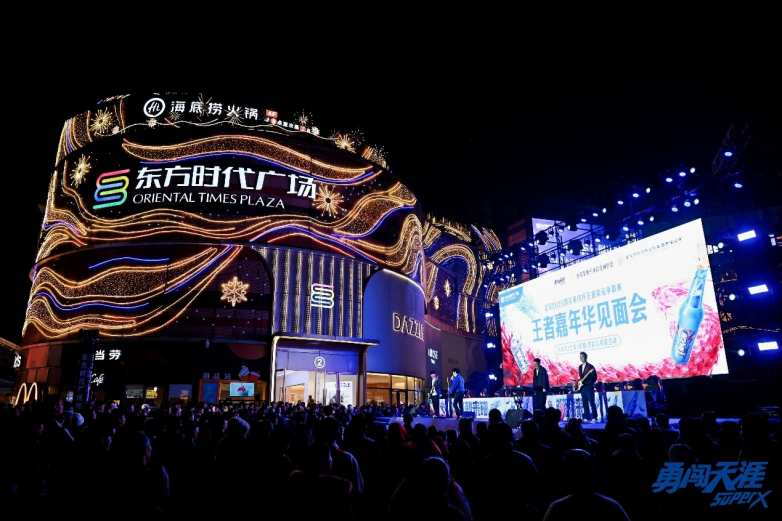
Core Insights - The Yibin 2025 Snow Beer "Brave Challenge" King of Glory Championship concluded successfully on December 20, showcasing top esports talent and engaging the audience with a theme of "Shining Together for Ten Years" [2] Group 1: Event Highlights - The event featured four prominent esports figures, including a renowned player from AG Super Play and a top shooter from Beijing WB, who interacted with participants and showcased their skills [4] - The competition format was upgraded with simultaneous 5V5 matches on main and secondary stages, enhanced by real-time battle screens to create an immersive atmosphere [6] Group 2: Brand Engagement - Snow Beer "Brave Challenge" resonated with the youth, merging the brand's spirit of "Bravery" with the esports ethos of perseverance and fighting spirit [8] - The event not only provided a platform for esports enthusiasts to compete but also effectively communicated the brand's core message of courage and energy to the younger demographic [9]

内升老将换下空降兵,金沙酒业能否盘活困局?
Xin Lang Cai Jing· 2025-12-25 08:25
Core Viewpoint - The recent personnel changes at Jinsha Liquor reflect a strategic adjustment in response to performance challenges, with the appointment of Han Yuguo as the new Vice General Manager and Marketing Center General Manager being a notable shift from external hires to internal promotions [1][4][5]. Group 1: Personnel Changes - Han Yuguo, a long-time employee of Jinsha Liquor, has been promoted from the position of General Manager of the Hunan, Hubei, and Jiangxi sales region to Vice General Manager and Marketing Center General Manager [3]. - The company has experienced frequent management changes since the acquisition by China Resources, with the chairman position changing three times and multiple high-level executives from the China Resources system joining the board [4][5]. - The frequent personnel changes are seen as part of a strategy to optimize management for long-term development and to enhance organizational efficiency [4][5]. Group 2: Performance Challenges - Jinsha Liquor's revenue has significantly declined from a peak of 3.64 billion yuan in 2021 to 2.149 billion yuan in 2024, with projected revenue for the first half of 2025 at 781 million yuan, indicating a nearly 60% reduction from its peak [9][11]. - The core product, the Zhai Yao liquor, has faced pricing issues, with its market wholesale price dropping from 485 yuan at the beginning of the year to 355 yuan, a decrease of 130 yuan [9][10]. - The company has attempted various marketing initiatives to boost sales, including partnerships with large corporations and nationwide tasting events, but these efforts have not yielded significant financial improvements [7][9]. Group 3: Strategic Adjustments - Jinsha Liquor's management has acknowledged the need for strategic adjustments in response to market conditions, including a shift in brand positioning and product offerings [12][14]. - The company has introduced new products aimed at the lower price segment, but faces intense competition from established brands in this market [14]. - The recent personnel changes, particularly the appointment of experienced internal candidates, are seen as a potential means to stabilize the company and address ongoing market challenges [15].

华润啤酒,一路向“南”
Sou Hu Cai Jing· 2025-12-25 03:26
Core Viewpoint - China’s largest beer giant, China Resources Beer, has officially relocated its headquarters from Beijing to Shenzhen, marking a strategic shift towards southern markets and high-end product development [2][6][10]. Group 1: Company Strategy and Relocation - The relocation to Shenzhen is part of a broader strategy to enhance collaboration within the supply chain and tap into the growing market potential in Guangdong, which is projected to produce 4.75 million kiloliters of beer in 2024, making it the largest beer province in China [7][10]. - The new headquarters will not only serve as a decision-making center but will also integrate research, development, and brand experience, facilitating innovation and internal collaboration [10][12]. - The move is seen as a response to the challenges faced in the northeastern market, where the company has been closing inefficient factories and reducing its operational footprint [6][12]. Group 2: Market Performance and Financials - The company has experienced a decline in sales and profits due to market saturation and operational adjustments, with a reported revenue of 38.635 billion RMB in 2024, a slight decrease of 0.76% year-on-year, and a net profit of 4.739 billion RMB, down 8.03% [18][19]. - The beer segment showed a revenue increase of 2.6% in the first half of 2025, while the white wine segment saw a significant decline of nearly 34%, indicating a disparity in performance across product lines [18][20]. - The company has faced challenges in its high-end product strategy, with its own brands lagging behind partners like Heineken, which saw over 30% growth in high-end products [21][22]. Group 3: Challenges and Future Outlook - The exit from the northeastern market has not been without difficulties, including high costs associated with asset disposals and the impact on local employment and tax revenues [12][16]. - The company is exploring new product categories, such as yellow wine, in an attempt to innovate and expand its market presence, although the long-term success of these initiatives remains uncertain [23][24]. - As competition intensifies from both traditional beer rivals and new entrants from other industries, the company must navigate the complexities of market dynamics while maintaining a focus on high-end product development and operational efficiency [26].
“独好优品”首发仪式暨小红花家乡公益行启动仪式在会昌举行
Jin Tou Wang· 2025-12-25 02:27
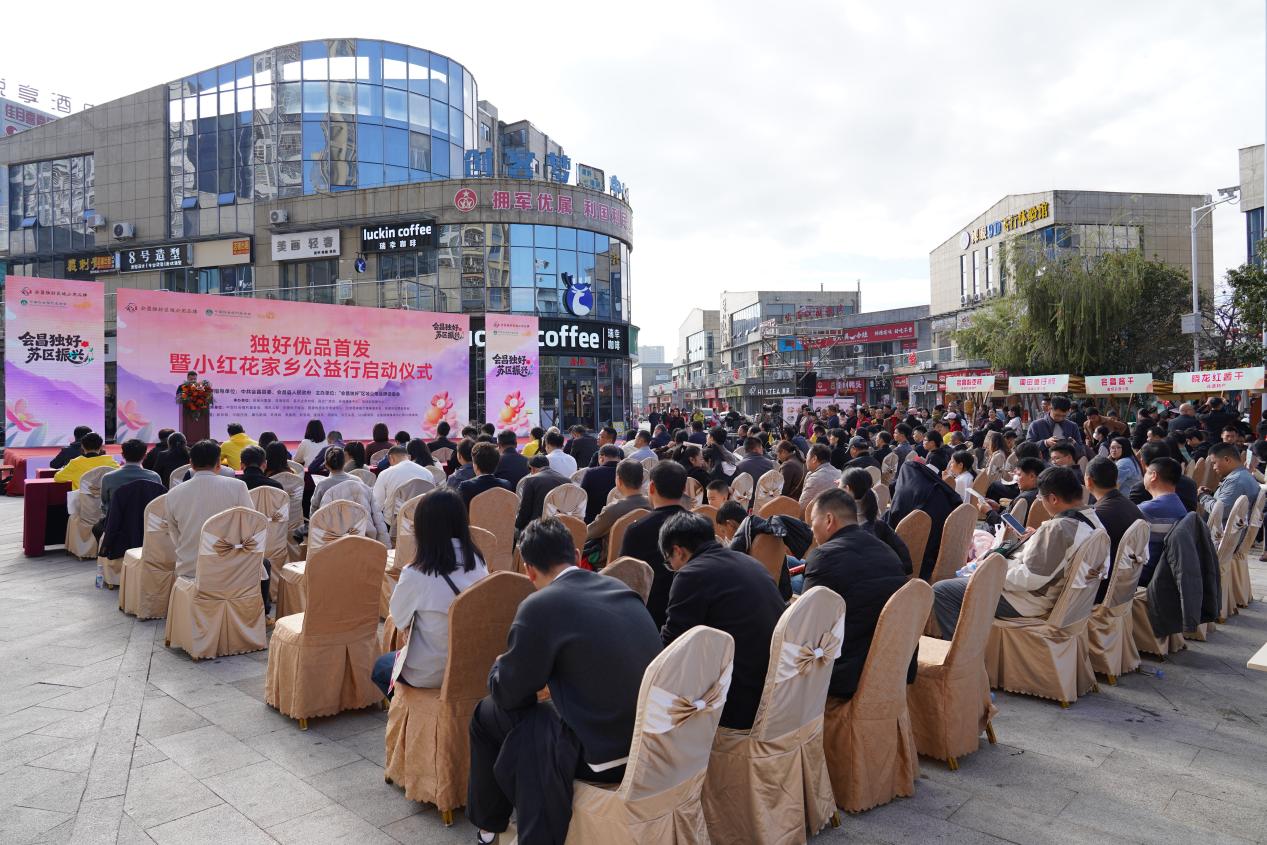
Core Viewpoint - The event marks a collaborative effort between local government, social enterprises, and public welfare platforms to implement the rural revitalization strategy, exploring a beneficial model of "public welfare + brand + industry" integration [3][19]. Group 1: Event Overview - The "Duhau Youpin" launch ceremony and the "Xiaohonghua Hometown Public Welfare" initiative took place in Huichang County, featuring notable attendees from various governmental and social organizations [1][4]. - The event included the introduction of high-quality agricultural products and cultural tourism resources from Huichang, aiming to promote local products and attract visitors [4][10]. Group 2: Key Messages from Speakers - Summer Gengsheng emphasized the importance of brand building and the development of "Duhau" products and standards to enhance quality and cultural value, while promoting deep integration of agriculture with tourism, health, and e-commerce [3][4]. - Ma Zhongsheng highlighted the role of the China Social Welfare Foundation in resource integration and collaboration with local entities to revitalize the red old area and realize the vision of rural revitalization through public welfare [4][19]. Group 3: Product Promotion - The event showcased a variety of local products, including Huichang zinc rice, 6% oranges, Jiangxi rice noodles, and more, emphasizing their unique qualities and health benefits [8][10]. - The "Duhau Youpin" series aimed to present the distinctiveness of Huichang's agricultural offerings, with a focus on quality and traditional production methods [8][10]. Group 4: Tourism Promotion - The event featured a segment on Huichang's local cuisine and new tourism routes for 2026, inviting visitors to experience the region's natural and cultural attractions [10][12]. - The promotion of local delicacies and tourism routes aims to enhance the visibility of Huichang and attract more tourists [10][19]. Group 5: Community Engagement - The launch of the "Xiaohonghua" initiative symbolizes a sustainable public welfare model connecting urban and rural areas, encouraging community participation [12][14]. - Representatives from Tencent Public Welfare discussed their commitment to supporting local public welfare initiatives, emphasizing the importance of social responsibility [14][19]. Group 6: Economic Impact - The event is seen as a significant step in Huichang County's rural revitalization efforts, with the "Duhau" brand generating sales of 9.65 billion yuan from January to November 2025 [19].
坐拥黄金地段却冷热不均的地下商业如何突围?
Mei Ri Shang Bao· 2025-12-24 23:26
Core Insights - The article discusses the challenges and developments in underground commercial spaces in Hangzhou, highlighting the contrast between ongoing planning and stalled projects [1][2][3][4]. Group 1: Project Developments - The Qingshun Square project, known as "Qingshun SS," has a planned total construction area of nearly 80,000 square meters, with 30,000 square meters of commercial space in the underground levels [1]. - The Wushan Square underground commercial area has faced delays due to archaeological discoveries, with construction initially planned for February 2023 but now uncertain [1]. - The Lianbao Fengcheng project, spanning approximately 330,000 square meters, has been under development since late 2019 but appears to be stalled, with reports of overgrown areas and lack of activity [2]. Group 2: Challenges in Underground Commercial Spaces - Underground spaces are difficult to operate due to inherent limitations such as poor lighting, weak air circulation, and a maze-like layout that can confuse customers [3]. - The climate in Hangzhou, characterized by cold winters and hot summers, negatively impacts the comfort of open underground spaces [3]. - Many underground commercial areas struggle with high vacancy rates and a lack of innovative offerings, failing to meet the experiential consumption preferences of younger consumers [3]. Group 3: Future Prospects and Strategies - Despite the challenges, the development of underground commercial spaces is seen as a necessary trend for urban growth, with a focus on maximizing land use and adapting to changing transportation patterns [4][5]. - The potential advantages of underground commercial spaces include lower rental costs (about 1/3 to 1/2 of above-ground rates) and a preference among 70% of Generation Z for B1-B2 level activities [5]. - Successful examples, such as the Z Park district, provide a model for transforming underground spaces to better align with consumer interests and urban development goals [7][9]. Group 4: Planning and Operational Innovations - Effective planning and innovative operations are crucial for the success of underground commercial spaces, with recommendations for strategic location selection and demographic targeting [9][10]. - Key factors for planning include proximity to multiple subway lines, a significant resident population, and avoiding direct competition with similar businesses [9]. - Incorporating experiential and cultural elements, as well as utilizing modern design features to enhance visibility and comfort, can attract consumers and improve the overall appeal of underground commercial areas [9][11].
如何布局跨年攻势?科技与内需主题轮动!消费ETF(159928)三连跌走势,资金逢跌布局,3日累计巨幅净流入超7亿元!
Sou Hu Cai Jing· 2025-12-24 06:48
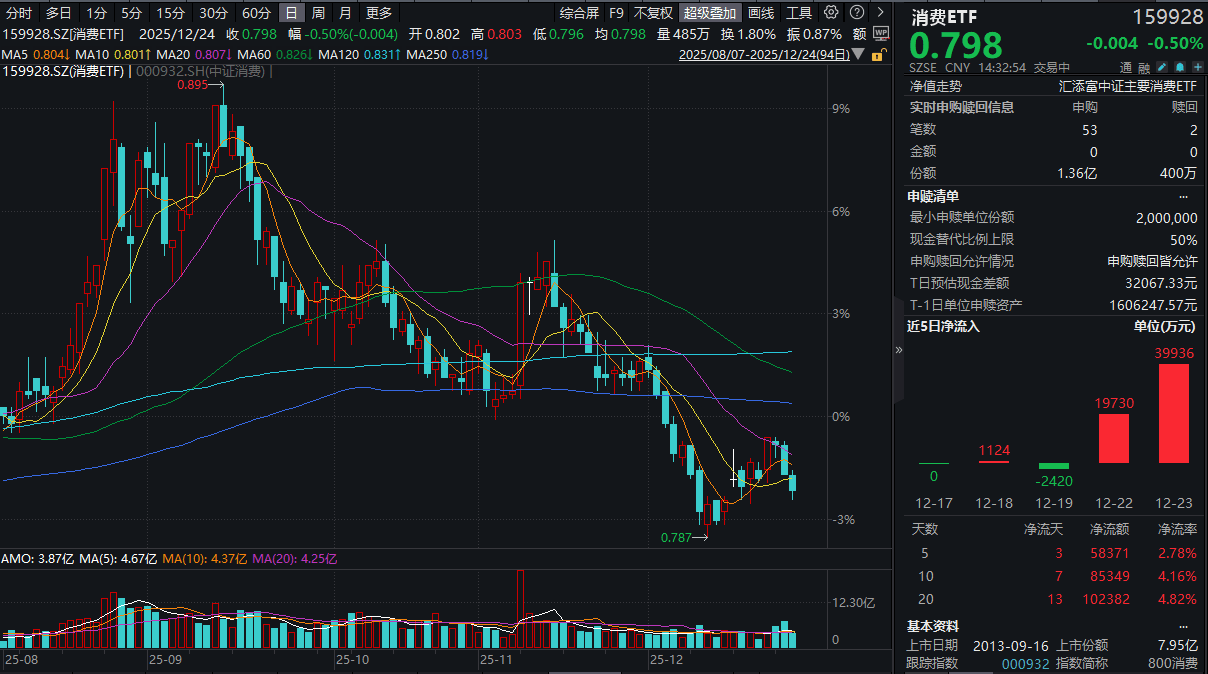
Market Overview - A-shares experienced a rebound, with the consumption ETF (159928) declining by 0.5% and a trading volume exceeding 380 million yuan [1] - The consumption ETF has seen a net subscription of over 130 million units during the day, accumulating a significant net inflow of over 700 million yuan over three days [1] Spring Market Expectations - As the year-end approaches, discussions about the spring market are intensifying, with analysts expecting positive policies to boost investor confidence [3] - The anticipated improvement in corporate earnings and favorable liquidity conditions are expected to contribute to a "spring rally," with technology growth and domestic consumption identified as key investment themes [3] Valuation Insights - The consumption ETF's underlying index has a TTM price-to-earnings ratio of 19.32, placing it in the 2.8% percentile over the past decade, indicating a high valuation attractiveness [5] - Seasonal trends in Q4 suggest a potential shift in market style towards undervalued sectors, particularly in December [5] Investment Themes - The rotation between domestic demand and technology themes is noted, with significant inflows into sectors like dairy, retail, and food processing [7] - External factors such as the Federal Reserve's interest rate cuts and the Bank of Japan's rate hikes are expected to stabilize market risk appetite [7] AI Applications - The domestic AI industry is entering a phase of large-scale demonstration applications, driven by advancements in computing architecture and product iterations [8] - Notable developments include the launch of new GPU architectures and AI health applications achieving significant user engagement [8] Commercial Aerospace - The upcoming launch of the Long March 12 rocket and advancements in satellite networking are highlighted as key developments in China's commercial aerospace sector [9] - The National Space Administration's action plan aims to support the development of new technologies and applications in commercial aerospace [9] Hainan Free Trade Zone - The Hainan Free Trade Port has officially launched its full island closure, with significant foreign investment projects commencing operations [9] - The first day of customs supervision saw substantial imports benefiting from zero tariffs, indicating a positive start for the free trade zone [9] Domestic Consumption - Policies aimed at boosting consumption are being implemented, with new consumption scenarios emerging in sports events, tourism, and cultural activities [10] - The expected growth in ice and snow sports consumption is projected to exceed 187.5 billion yuan, reflecting a 25% year-on-year increase [10] New Consumption Trends - The Chinese consumption market is characterized by structural highlights despite overall weak demand, with new products and channels gaining traction [11] - Health-conscious consumption trends are accelerating, particularly in sectors like health supplements and functional foods [11] ETF Composition - The consumption ETF's top ten constituent stocks account for over 68.55% of its weight, with leading liquor brands and major agricultural companies prominently featured [12]
智通港股沽空统计|12月24日
智通财经网· 2025-12-24 00:23
Group 1 - The top short-selling stocks include China Resources Beer (80291) with a short-selling ratio of 100.00%, Lenovo Group (80992) at 91.04%, and BYD Company (81211) at 90.24% [1][2] - The highest short-selling amounts are led by Alibaba (09988) at 1.293 billion, Tencent Holdings (00700) at 1.057 billion, and Xiaomi Group (01810) at 0.925 billion [1][2] - The stocks with the highest deviation values are China Resources Beer (80291) at 31.62%, Lenovo Group (80992) at 17.55%, and BYD Company (81211) at 32.51% [1][2] Group 2 - The top short-selling ratio rankings show that China Resources Beer has the highest ratio at 100.00%, followed by Lenovo Group at 91.04% and BYD Company at 90.24% [2] - The top short-selling amounts indicate that Alibaba leads with 1.293 billion, followed by Tencent at 1.057 billion and Xiaomi at 0.925 billion [2] - The highest deviation values are recorded for China Resources Beer at 31.62%, Xiaomi at 35.05%, and BYD at 32.51% [2]





华润啤酒(00291) - 重续持续关连交易订立二零二六年框架贷款协议
2025-12-23 10:32
香港交易及結算所有限公司及香港聯合交易所有限公司對本公告的內容概不負責, 對其準確性或完整性亦不發表任何聲明,並明確表示,概不對因本公告全部或任何 部分內容而產生或因倚賴該等內容而引致的任何損失承擔任何責任。 背景 茲提述本公司日期為二零一三年十二月二十日、二零一六年十二月二十二日、二零 一九年十二月十七日及二零二三年三月二十四日的公告,內容有關(其中包括)訂 立二零一三年框架貸款協議、二零一六年框架貸款協議、二零一九年貸款框架協議 及二零二三年框架貸款協議。由於二零二三年框架貸款協議將於二零二五年十二月 三十一日屆滿,且預期本集團將於其屆滿後繼續進行其項下擬進行的交易,故本公 司已於二零二五年十二月二十三日根據二零二六年框架貸款協議訂立新貸款安排, 據此經考慮本集團的經營規模及現金水平後更新年度貸款上限。 (於香港註冊成立的有限公司) ( 股 份 代 號: 291( 港 幣 櫃 台 )及 80291( 人 民 幣 櫃 台 )) 重續持續關連交易 訂立二零二六年框架貸款協議 二零二六年框架貸款協議 茲提述本公司日期為二零一三年十二月二十日、二零一六年十二月二十二日、二 零一九年十二月十七日及二零二三年三月二十 ...
智通港股沽空统计|12月23日
智通财经网· 2025-12-23 00:25
Group 1 - The top short-selling ratios are led by China Resources Beer (80291) at 100.00%, Meituan (83690) at 93.03%, and CNOOC (80883) at 85.70% [1][2] - The highest short-selling amounts are recorded for Alibaba (09988) at 1.293 billion, Tencent (00700) at 1.242 billion, and Xiaomi (01810) at 1.084 billion [1][3] - The highest deviation values are noted for Far East Development (00035) at 56.81%, CNOOC (80883) at 55.68%, and Meituan (83690) at 52.53% [1][2] Group 2 - The top short-selling amount rankings show Alibaba at 1.293 billion with a short-selling ratio of 15.00%, Tencent at 1.242 billion with a ratio of 14.58%, and Xiaomi at 1.084 billion with a ratio of 16.39% [3] - The short-selling ratio rankings indicate that China Resources Beer has the highest ratio at 100.00%, followed by Meituan at 93.03%, and CNOOC at 85.70% [2] - The deviation values highlight that Far East Development has the highest deviation at 56.81%, followed by CNOOC at 55.68%, and Meituan at 52.53% [3]




静水深流,大象无形 - 食品饮料行业2026年度投资策略
2025-12-22 15:47
Summary of the Food and Beverage Industry Conference Call Industry Overview - The food and beverage industry is expected to end its deep adjustment cycle by 2026, with consumer goods having largely completed inventory destocking [1][4] - The liquor sector, particularly baijiu, is projected to reach a new equilibrium by Q2 2026, with CPI stabilizing to alleviate price deflation pressures [1][4] - Companies with innovation or supply chain optimization capabilities are expected to stand out in the recovery phase [1][4] Key Insights and Arguments - The liquor sector is currently in a bottoming process, with mid-term investment value being significant [1][5] - Consumer goods are benefiting from an efficiency revolution and the transition between old and new growth drivers, with emerging channels and cost advantages continuing [1][5] - In 2025, the food and beverage sector showed mixed performance, with yellow wine, soft drinks, dairy products, and meat products leading in growth, while baijiu faced significant downward pressure from high-end price declines [1][6] Market Dynamics - The CPI and PPI differential has been volatile, with weak price increase expectations; however, a future stabilization of CPI could relieve downward price pressures [1][7] - The liquor price average has returned to a high level, indicating limited future downward space, necessitating companies to maintain a balance between volume and price [1][8] Sector-Specific Trends Liquor Industry - The baijiu sector is expected to reach a new balance by Q2 2026, with a characteristic of low-to-high price movement [1][5] - Companies are advised to focus on maintaining volume-price balance during the destocking phase [1][8] Consumer Goods - The industry is currently in a "channel is king" phase, necessitating the exploration of structural opportunities to meet changing consumer demands for health, personalization, convenience, and cost-effectiveness [1][9] - After completing inventory destocking, traditional sectors may rebound, with new emerging segments expected to thrive [1][9] Dairy Industry - The dairy sector is in a stabilization phase, with raw milk supply expected to contract in 2026, leading to a potential improvement cycle [1][11] - Key companies to watch include Yili, Mengniu, and Miaokelando, which are expected to show growth potential [1][11] Beer and Yellow Wine - The beer industry is stable but experiencing changes due to the rise of new channels, suggesting a focus on leading companies like Qingdao Beer and Yanjing Beer [1][12] - The yellow wine sector is seeing a concentration of market share among leading companies, with structural upgrades expected to continue [1][12] Soft Drinks and Snacks - The soft drink market is facing intensified competition, with notable segments like glucose tea and sports drinks showing promise [1][13] - The snack sector is benefiting from new channel transformations, with companies like Weilong and Chacha expected to perform well [1][13] Restaurant Supply Chain and Food Chains - The restaurant supply chain is recovering from regulatory impacts, with companies like Anji Food and Gaoli Co. being highlighted for their growth potential [1][14] - Food chain companies are accelerating their expansion through optimization and innovation, presenting investment opportunities [1][14] Health Products - The health product market shows potential for significant growth, with key products like coenzyme Q10 and probiotics gaining traction [1][15] Conclusion - Each sub-sector within the food and beverage industry presents unique opportunities and challenges, necessitating tailored investment strategies to capture alpha opportunities and achieve stable returns [1][16]