
美的集团

Search documents
美的集团与达飞集团签署战略合作备忘录
Xin Lang Cai Jing· 2026-02-10 11:19
Core Insights - Midea Group and CMA CGM have signed a strategic cooperation memorandum to enhance global collaboration [1] - The partnership aims to explore logistics and technological innovations [1] - The focus is on creating smarter, more efficient, and sustainable end-to-end supply chain solutions [1]

场景化成消费核心导向 京东家电家居“巅峰24小时”IP联合品牌高管共探增长新机遇
Sou Hu Wang· 2026-02-10 10:24
Core Insights - The integration of AI technology into daily life is shifting consumer expectations of "home" from mere functional spaces to emotional and healing "lifestyle solution spaces" [1] - The competition logic in the home appliance and furniture industry is evolving from a focus on product performance to a comprehensive competition involving experiential scenarios, emotional connections, and holistic service capabilities [1] Group 1: Consumer Trends - The core trend in home consumption is evolving towards creating "meta scenarios," where the demand for "rituals" shifts from social display to self-care, making "home" a sanctuary for emotional connections [2] - Brands are increasingly collaborating to align with this trend, as seen in Midea's thematic participation in the "Peak 24 Hours" event, which aimed to elevate the product experience into a healing space [2] - The personalization of smart appliances is emerging as a new consumer trend, with brands like Casarte and AUX creating products tailored to specific family scenarios [2] Group 2: Service and Marketing Innovations - Service capability is becoming a new competitive advantage for brands, with companies like Hisense and TCL focusing on integrating consumer needs with technology [3] - Marketing strategies have shifted from traditional advertising to interactive, emotional, and scenario-based communication, exemplified by JD and TCL's "Champion China Tour" event [3] - The collaboration between JD and brands like Lin's Home focuses on creating immersive experiences that blend online and offline interactions, enhancing brand effectiveness [3] Group 3: Future Industry Outlook - Industry leaders agree that the home appliance and furniture sector will evolve towards greater intelligence, personalization, and a focus on holistic value [4] - The future of manufacturing is centered on creating better consumer experiences, as emphasized by Hisense's commitment to enhancing life quality [4] - JD's "Peak 24 Hours" IP is redefining the concept of "home" as a comprehensive carrier of emotions, life renewal, and self-realization, positioning itself as an enabler and co-builder in the industry [4]

家电行业2025年报业绩前瞻:以旧换新催化延续,海外产能陆续达产出口链盈利改善
Shenwan Hongyuan Securities· 2026-02-10 09:31
Investment Rating - The report maintains a positive outlook on the home appliance industry, particularly for major players in the white goods sector, indicating a favorable investment environment for 2025 [3][5][6]. Core Insights - The home appliance sector is expected to benefit from the continuation of the "trade-in" policy and improvements in overseas production capacity, leading to enhanced profitability in the supply chain [2][5]. - The report highlights three main investment themes: 1. **Dividend**: Major white and black appliance companies are characterized by low valuations, high dividends, and stable growth, providing a high margin of safety and significant elasticity in stock prices [6][7]. 2. **Technology**: Core component manufacturers are transitioning into emerging tech fields such as robotics and semiconductor cooling, seeking cross-industry growth [7]. 3. **Export**: Recovery in export demand and sustained domestic sales of new products, particularly in the small appliance sector, are expected to drive growth [7]. Summary by Sections 1. White Goods and Components - In 2025, the air conditioning sector is projected to produce 195.37 million units, a 3% year-on-year decline, while sales are expected to reach 198.39 million units, down 1% year-on-year, with domestic sales increasing by 1% [5][13]. - The average price of white goods is declining due to high base effects from the trade-in policy, with air conditioning prices dropping by 13% year-on-year [23][24]. 2. Kitchen Appliances - The kitchen appliance sector is experiencing a recovery driven by real estate and trade-in policies, with online sales of range hoods and gas stoves increasing by 7.9% and 1.7% respectively in 2025 [33][34]. - Major companies like Boss Electric and Vatti are leveraging trade-in policies to boost sales, with Boss Electric maintaining a leading market share in range hoods [35][36]. 3. Small Appliances - The small appliance sector is seeing a revival due to the trade-in policy, with significant growth in cleaning appliances, although overall market consumption remains subdued [6][7]. - Companies like Roborock and Ecovacs are expected to benefit from high demand for new products, with projected revenue growth of 34% and 12% respectively in Q4 2025 [5][7]. 4. New Displays and Lighting - The emerging display sector is at a turning point, while the lighting industry is anticipated to see growth as it awaits market recovery [6][7]. - Companies like Hisense and OP Lighting are expected to experience revenue declines in Q4 2025, with projections of -10% and -2% respectively [6][7]. 5. Investment Highlights - The report recommends a combination of leading white goods companies such as Haier, Midea, and Gree, along with Hisense, as they are currently undervalued and offer stable growth prospects [6][7]. - The report also emphasizes the importance of component manufacturers adapting to new technologies and markets, with companies like Huaxiang and Sanhua expected to see significant growth in their respective sectors [7][29][30].




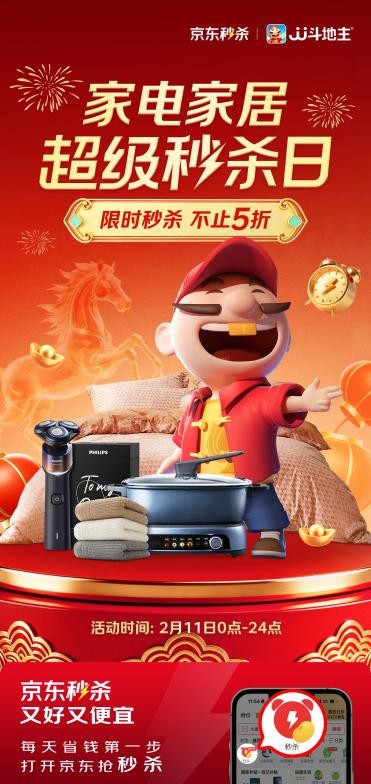
京东家电家居超级秒杀日 2月11日开启,家电家居限时不止5折
Sou Hu Wang· 2026-02-10 08:36
Core Insights - JD.com is currently running a major promotional event called the "Home Appliances and Home Super Flash Sale Day," which features significant discounts and various promotional offers for consumers [1][5] - The event includes a combination of flash sales, government subsidies, and additional discounts, making it an attractive opportunity for consumers to purchase goods at reduced prices [1][5] Group 1: Promotional Details - The flash sale will feature a wide range of products, from small household items to large appliances, with discounts reaching up to 50% or more [1][3] - Specific products highlighted include a red sandalwood chopstick gift set priced at 1 yuan during the sale, down from a regular price of 59.9 yuan, and a 100% Xinjiang cotton towel also available for 1 yuan [3][4] - Other notable items include a bedding set reduced from 539.9 yuan to 107 yuan, a learning desk lamp from 199 yuan to 79 yuan, and a heating appliance from 250 yuan to 125 yuan [4][5] Group 2: Logistics and Consumer Experience - JD.com is enhancing its logistics services to ensure timely delivery even in rural areas, facilitating easier access for consumers to purchase their New Year goods [1][5] - The promotional event is designed to cater to the festive season, encouraging consumers to refresh their homes and create a warm atmosphere for family gatherings [4][5] - The sale is set to take place on February 11, providing a convenient platform for consumers to access quality products at competitive prices through the JD.com app [1][5]

智通AH统计|2月10日
智通财经网· 2026-02-10 08:16
Core Viewpoint - The report highlights the AH premium rates of various companies, indicating significant discrepancies between their H-shares and A-shares, with some companies showing extremely high premiums while others exhibit negative premiums [1]. Group 1: Top AH Premium Rates - Northeast Electric (00042) has the highest AH premium rate at 831.03%, with H-share priced at 0.290 HKD and A-share at 2.25 CNY [1]. - Sinopec Oilfield Service (01033) follows with a premium rate of 296.70%, H-share at 0.910 HKD and A-share at 3.01 CNY [1]. - Beijing Jingcheng Machinery Electric (00187) ranks third with a premium of 285.05%, H-share at 4.280 HKD and A-share at 13.76 CNY [1]. Group 2: Lowest AH Premium Rates - Contemporary Amperex Technology (03750) has the lowest AH premium rate at -13.27%, with H-share priced at 511.000 HKD and A-share at 370 CNY [1]. - China Merchants Bank (03968) shows a premium of -4.06%, H-share at 49.300 HKD and A-share at 39.49 CNY [1]. - WuXi AppTec (02359) has a premium of -2.14%, with H-share at 120.800 HKD and A-share at 98.7 CNY [1]. Group 3: Top Deviation Values - Jinju Group (02009) has the highest deviation value at 24.42%, with a premium of 212.05% [1]. - Beijing Jingcheng Machinery Electric (00187) has a deviation value of 21.92%, with a premium of 285.05% [1]. - Longpan Technology (02465) ranks third with a deviation value of 19.68%, and a premium of 101.01% [1]. Group 4: Lowest Deviation Values - JunDa Co., Ltd. (02865) has the lowest deviation value at -70.56%, with a premium of 176.15% [2]. - Changfei Optical Fiber (06869) follows with a deviation of -45.38%, and a premium of 105.94% [2]. - Chenming Paper (01812) has a deviation of -26.81%, with a premium of 190.80% [2].


益普索中国智能家电市场趋势洞察
益普索· 2026-02-10 08:14
Investment Rating - The report does not explicitly provide an investment rating for the smart home appliance industry. Core Insights - The Chinese home appliance market is transitioning from scale expansion to quality upgrades, with a focus on deep competition driven by changing demand structures [3] - Generation Z is becoming the new consumer driving force, shifting the consumption logic towards emotional value, personalization, and aesthetic appeal [4] - Consumers are moving from external display to internal experience, emphasizing the need for brands to innovate based on local user demands [5] - Companies need to build a forward-looking insight system to identify future opportunities amidst market changes [5] - The focus on sustainable growth and core competitiveness is essential, guiding product innovation and brand communication [6] Summary by Sections Market Trends - The market is experiencing a "micro-segmentation" wave, moving away from universal big-ticket items to innovative product categories that match the evolving lifestyle and spatial needs of Chinese consumers [9][19] - The demand for personalized appliances is increasing, with a significant portion of consumers willing to invest in products that cater to individual preferences [26] Design and Aesthetics - Home appliance design is undergoing a revolution towards "de-industrialization," aiming for seamless integration with home environments and visual subtlety [11][35] - Aesthetic appeal is becoming a key factor in purchasing decisions, with 84% of consumers considering appearance and 69% willing to pay more for aesthetically pleasing products [36] Functionality and User Experience - Functionality remains a critical consideration for consumers, but its definition is evolving to include emotional and experiential aspects [12][86] - The demand for "zero-maintenance" solutions is rising, with consumers seeking appliances that require minimal user intervention [99][101] Health and Wellness - Health has become a core value in home appliances, with consumers increasingly focused on products that enhance both physical and mental well-being [111][113] - There is a growing expectation for appliances to provide proactive health management solutions, moving beyond basic functionality [113] Smart Home Integration - The shift from isolated smart devices to interconnected home ecosystems is a significant trend, with consumers desiring seamless, intuitive interactions [135][138] - AI is expected to play a crucial role in enhancing user experience by predicting needs and providing personalized services [140]



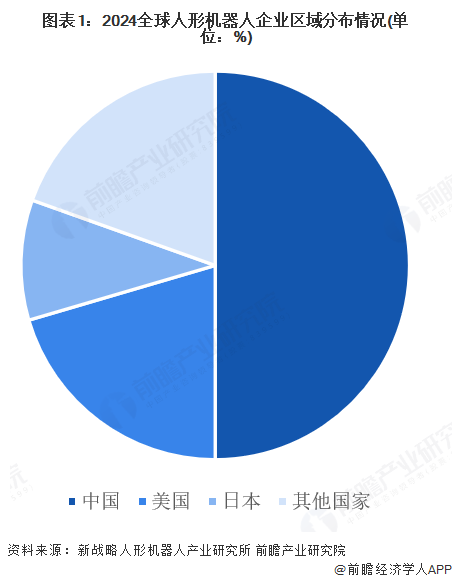
2025年全球人形机器人行业竞争分析 中国领跑硬件与集成端【组图】
Qian Zhan Wang· 2026-02-10 07:12
Core Insights - The global humanoid robot industry is predominantly led by China, which houses over 110 companies, accounting for more than 50% of the total 220 humanoid robot manufacturers worldwide [1] - China excels in hardware and integration segments, while the US leads in the "brain" segment, focusing on AI models and software [4][5] - China has filed approximately five times more humanoid robot patents than the US, with a total of 7,705 patents, indicating a strong emphasis on innovation and technology development [6] - The competition among China, the US, and Japan in the humanoid robot industry is characterized by distinct strategies and market focuses [9] Industry Overview - Major listed companies in China's humanoid robot sector include Huichuan Technology, Sanhua Intelligent Control, Lens Technology, Hengli Hydraulic, Top Group, Linying Intelligent Manufacturing, Zoomlion Heavy Industry, and Jinli Permanent Magnet [1] - The global humanoid robot industry is expected to reach a market size of 861 billion yuan by 2027, with China aiming for a fully controllable supply chain and over 70% localization of core components [9][11] Competitive Landscape - Chinese companies like Zhiyuan Robotics and UTree Technology are rapidly advancing in mass production and cost control, while US firms like Boston Dynamics and Tesla focus on core technology breakthroughs [11][12] - The strategic direction for Chinese firms includes low-cost strategies to expand into consumer and industrial markets, while US companies are investing heavily in AI and technology development [11] - Japan's approach is centered on precision manufacturing and specialized components, targeting healthcare and industrial applications [9][11] Patent and Innovation - China leads in humanoid robot patent applications, with 7,705 patents compared to the US's 1,561 and Japan's 1,102, showcasing its dominance in core technology areas [6] - The focus of Chinese patents includes body structure, intelligent perception, and drive control, indicating a comprehensive approach to technology development [6] Market Projections - By 2027, the humanoid robot market is projected to achieve significant growth, with China aiming for a market scale of 861 billion yuan and the US targeting over 40% of the global market share [9][11]




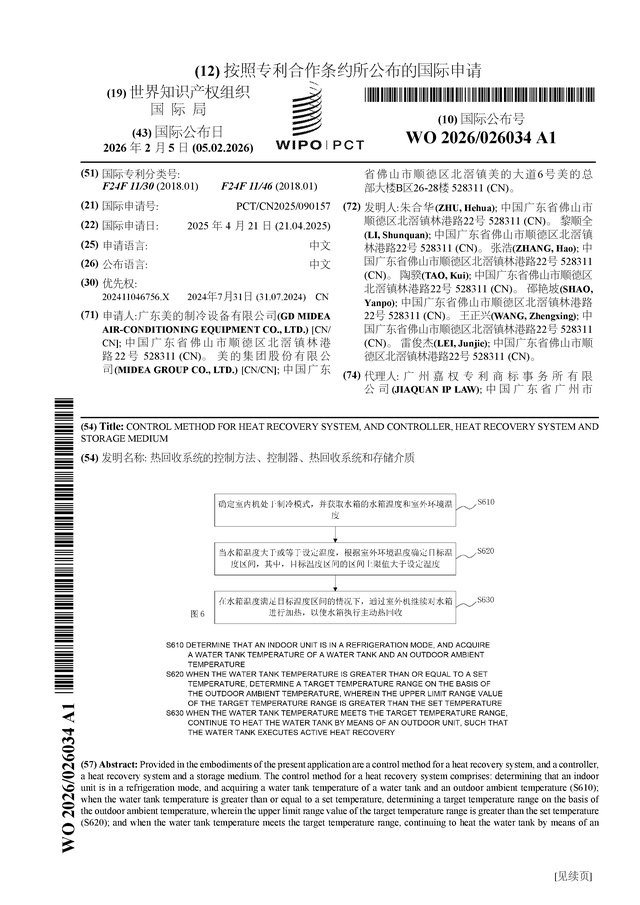
美的集团公布国际专利申请:“热回收系统的控制方法、控制器、热回收系统和存储介质”
Sou Hu Cai Jing· 2026-02-10 06:40
Core Viewpoint - Midea Group has filed an international patent application for a heat recovery system, indicating a focus on innovation in energy efficiency and sustainability [1][2]. Group 1: Patent Application Details - The patent titled "Control Method for Heat Recovery System, and Controller, Heat Recovery System and Storage Medium" was filed under the application number PCT/CN2025/090157, with an international publication date set for February 5, 2026 [1][2]. - The patent includes a control method that determines the operational mode of an indoor unit and manages the temperature of a water tank based on outdoor conditions, aiming to enhance energy recovery [2]. Group 2: R&D Investment and Patent Trends - In 2023, Midea Group has published 25 international patent applications, a decrease of 44.44% compared to the same period last year [3]. - The company invested 8.767 billion yuan in research and development in the first half of 2025, reflecting a year-on-year increase of 14.41% [3].
300ESGETF华夏(159791)涨0.36%,半日成交额3913.80元
Xin Lang Cai Jing· 2026-02-10 05:35
300ESGETF华夏(159791)业绩比较基准为沪深300ESG基准指数收益率,管理人为华夏基金管理有限 公司,基金经理为张金志,成立(2022-02-24)以来回报为11.93%,近一个月回报为-0.49%。 来源:新浪基金∞工作室 声明:市场有风险,投资需谨慎。本文基于第三方数据库自动发布,不代表新浪财经观点,任何在本文 出现的信息均只作为参考,不构成个人投资建议。如有出入请以实际公告为准。如有疑问,请联系 biz@staff.sina.com.cn。 2月10日,截止午间收盘,300ESGETF华夏(159791)涨0.36%,报1.118元,成交额3913.80元。 300ESGETF华夏(159791)重仓股方面,贵州茅台截止午盘跌0.89%,中际旭创跌0.48%,宁德时代跌 0.76%,招商银行跌0.23%,中国平安跌0.90%,美的集团涨1.00%,长江电力涨0.26%,紫金矿业涨 0.28%,兴业银行跌0.21%,比亚迪涨1.22%。 ...
美的旗下医疗板块推出DR智能体 释放医生70%重复性劳动
Zheng Quan Ri Bao Wang· 2026-02-10 04:43
Core Viewpoint - Midea Group, through its subsidiary Beijing Wandong Medical, has launched the Wandong DR Intelligent System, which aims to automate the entire imaging workflow, enhancing efficiency and accuracy in clinical diagnostics [1] Group 1: Product Development - The Wandong DR Intelligent System integrates advanced technologies from Midea's AI Research Institute, Central Research Institute, and Alibaba's Damo Academy [1] - The system automates imaging processes, including intelligent positioning, image capture, AI quality control, and automatic detection of common chest diseases, generating structured diagnostic reports seamlessly [1] Group 2: Technological Innovation - The system leverages over 4 million cross-domain chest DR imaging data from Wanliyun, enabling the development of a multimodal diagnostic model that surpasses traditional AI's single-point recognition limitations [1] - It introduces a deep reasoning engine that simulates clinical thought processes, allowing for multi-step logical deductions in complex cases [1] Group 3: Quality and Consistency - The model includes standardized report templates to ensure terminological accuracy and traceability, significantly improving the professionalism and consistency of reports [1] - Continuous integration of diagnostic experiences from imaging and clinical experts into the model allows for iterative upgrades, aligning the system's logic closer to real clinical thinking [1]
