
默沙东

Search documents
港股医药新股增发规模破纪录,资本涌入下是业绩潮还是减持潮?
2 1 Shi Ji Jing Ji Bao Dao· 2025-06-06 08:05
Core Viewpoint - The pharmaceutical industry in China is experiencing a significant influx of capital, driven by a wave of refinancing and large business development (BD) transactions, which are reshaping the funding landscape for innovative drug development [1][6][10] Company Summary - Kolon Biotech (科伦博泰) announced a placement of 5.918 million H-shares at a price of HKD 331.8, raising approximately USD 250 million (around CNY 1.796 billion), setting a record for new share placements in the Hong Kong biopharmaceutical market this year [1] - The company has completed three rounds of financing, raising a total of approximately CNY 2.894 billion, with the latest placement supported by existing shareholders and new heavyweight investors [5] - Kolon Biotech has a strong pipeline with over 30 candidates in development, including three products in commercialization, which are under continuous cash flow pressure due to the high costs associated with drug development [4][5] Industry Summary - The Chinese pharmaceutical sector is transitioning from a phase of "scale expansion" to "value creation," with R&D investments growing at an average annual rate exceeding 20% during the 14th Five-Year Plan period [6][7] - The total R&D expenditure in China's pharmaceutical industry reached USD 32.6 billion in 2022, accounting for 13.5% of global pharmaceutical R&D spending, and is projected to reach USD 67.5 billion by 2030 [6][7] - The recent surge in refinancing and BD transactions indicates a structural shift in the market, allowing innovative drug companies to secure funding earlier in the development process, thus shortening the investment return cycle [2][10]
万泰生物九价HPV疫苗获批上市 10亿研发成果转化业绩有望修复
Chang Jiang Shang Bao· 2025-06-05 23:31
Core Viewpoint - WanTai Biologics has received approval for its nine-valent HPV vaccine, making it the first domestic and second globally to be approved for market release, which is expected to help restore the company's financial performance after recent declines [1][2][7]. Group 1: Product Approval and Market Impact - The nine-valent HPV vaccine, named "Xinkening 9," is approved for women aged 9 to 45, with different dosing schedules for different age groups [2][3]. - The vaccine covers seven high-risk HPV types and two low-risk types, aiming to prevent related diseases, including cervical cancer, which is the most common malignant tumor among women [2][3]. - WanTai Biologics has invested approximately 1 billion yuan in the development of the nine-valent HPV vaccine [1][6]. Group 2: Financial Performance and Challenges - WanTai Biologics previously achieved significant revenue growth, with annual revenues of 23.54 billion yuan, 57.50 billion yuan, and 111.85 billion yuan from 2020 to 2022, alongside net profits of 6.77 billion yuan, 20.21 billion yuan, and 47.36 billion yuan during the same period [4]. - However, in 2023, the company faced a sharp decline in performance, with revenues and net profits dropping to 55.11 billion yuan and 12.48 billion yuan, respectively, marking decreases of 50.73% and 73.65% [5]. - The vaccine segment's revenue fell by 53.37% to 39.60 billion yuan, with the two-valent HPV vaccine's revenue declining by approximately 4.2 billion yuan compared to the previous year [5]. Group 3: Market Sentiment and Future Outlook - The approval of the nine-valent HPV vaccine is seen as a potential catalyst for revenue growth, although concerns remain about the sustainability of this growth due to previous price wars in the two-valent HPV vaccine market [7][8]. - The stock price of WanTai Biologics has recently surged, reaching a new high of 78.36 yuan per share, reflecting a 30% increase over two months [8].

2025年ASCO中国之声:映恩生物公布两项ADC药物最新试验结果 首次评估时肿瘤缩小
Mei Ri Jing Ji Xin Wen· 2025-06-05 11:32
Core Viewpoint - The article discusses the preliminary results of clinical trials for DB-1310 and DB-1311 by the Chinese ADC company, InnoCare Pharma, presented at the 2025 ASCO annual meeting, highlighting the potential of these drugs in treating advanced solid tumors and castration-resistant prostate cancer. Group 1: Clinical Trial Results - DB-1310, an HER3 ADC drug, is currently in Phase I/IIa clinical trials, focusing on safety, tolerability, pharmacokinetics, and preliminary anti-tumor activity in patients with advanced/metastatic solid tumors [2] - Among 123 evaluable patients, the preliminary objective response rate (ORR) was 31%, with a disease control rate (DCR) of 84%, indicating that nearly one-third of patients showed tumor shrinkage upon first evaluation [2] - In the subgroup of patients with EGFR mutation non-small cell lung cancer (NSCLC), the ORR reached 44%, and the DCR was 91%, with a median progression-free survival of 7 months and a median overall survival of 18.9 months [3] Group 2: Competitive Landscape - In the ADC field, Chinese companies are leading, with 11 HER3 ADC drugs in clinical stages globally, 8 of which are from domestic firms, including InnoCare Pharma [4] - The Japanese company Daiichi Sankyo reported Phase III trial results for its HER3 ADC, Patritumab deruxtecan, showing a median progression-free survival of 5.8 months and an ORR of 35.2% [4] - The withdrawal of the BLA for Patritumab deruxtecan by Merck and Daiichi Sankyo may impact the competitive landscape for similar drugs being developed by InnoCare Pharma [5][6] Group 3: Future Directions - The company is optimistic about the therapeutic potential of HER3 as a target across various cancers, including breast cancer, melanoma, ovarian cancer, and pancreatic cancer, which are associated with poor prognosis and resistance to existing therapies [6] - DB-1310's molecular design differs significantly from that of Daiichi Sankyo's drug, allowing it to block HER2 and HER3 dimerization and inhibit NRG binding to HER3, suggesting a unique mechanism of action [6] - The company plans to release more data on DB-1310's efficacy in EGFR wild-type lung cancer and breast cancer in the future [6]
首个国产九价HPV疫苗来了!馨可宁9获批,会是万泰生物的业绩解药吗?
Bei Jing Shang Bao· 2025-06-04 13:04
Core Viewpoint - Wantai Biological's approval of the nine-valent HPV vaccine marks a potential turning point for the company, which has been facing significant performance pressure [2][7]. Company Summary - Wantai Biological's subsidiary, Xiamen Wantai Canghai Biotechnology Co., Ltd., has received approval for the nine-valent HPV vaccine (brand name: Xinkening 9), making it the first domestically approved nine-valent HPV vaccine in China [2]. - The company has passed the GMP compliance inspection for the production line of the nine-valent HPV vaccine, which is a prerequisite for its market launch [2]. - The nine-valent HPV vaccine covers seven high-risk types (HPV 16/18/31/33/45/52/58) and two low-risk types (HPV 6/11), aimed at preventing related diseases caused by these virus types [5][6]. - The vaccine is suitable for females aged 9 to 45, with a two-dose regimen for ages 9 to 17 and a three-dose regimen for ages 18 to 45 [6]. Industry Summary - The nine-valent HPV vaccine is expected to enhance Wantai Biological's product line and core competitiveness, providing a solid foundation for sustainable development [6]. - The market for high-valent HPV vaccines is anticipated to expand due to increasing public health awareness and consumer purchasing power [6]. - Wantai Biological's financial performance has been under pressure, with a significant decline in revenue and net profit for 2023 and 2024, attributed to market adjustments and government procurement policies [7]. - Other companies, including Shanghai Bowei, Jiangsu Ruike, Watson Bio, and Kangle Health, are also competing in the nine-valent HPV vaccine market, indicating a potential increase in market competition [7].

万泰生物摘得首个国产HPV九价疫苗 市场争夺战再升级
Mei Ri Jing Ji Xin Wen· 2025-06-04 12:46
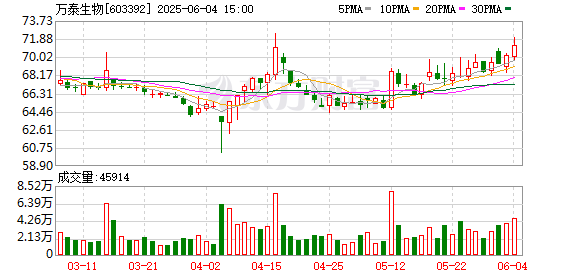
在国产HPV九价疫苗竞速中,万泰生物抢到首发位。 6月4日,万泰生物(SH603392,股价71.24元,市值901亿元)宣布公司旗下九价人乳头瘤病毒疫苗 (大肠埃希菌)(商品名:馨可宁9)获批上市,打破默沙东在人乳头瘤病毒(HPV)九价疫苗领域的 垄断地位。万泰生物的九价疫苗为我国第一款、全球第二款九价HPV疫苗。 在九价HPV疫苗整体接种量下滑的大背景下,一场存量争夺战或将展开。 据了解,这款国产九价HPV疫苗为厦门大学、翔安创新实验室夏宁邵团队和万泰生物联合研制。此前, 万泰生物获批的二价HPV疫苗就由万泰生物携手夏宁邵团队研发。 2007年,团队成员便开始投入到九价HPV疫苗的研发工作中,历时18年研制成功。自2019年起,九价 HPV疫苗已在全国开展了5项临床试验,累计纳入1.1万余名9~45岁健康志愿者。 在18~45岁女性中开展的大规模随机对照Ⅲ期临床试验结果显示,九价疫苗继承了二价疫苗对HPV16、 18型感染和病变的保护,对于二价疫苗未能覆盖的HPV31、33、45、52和58型相关持续感染(12个月以 上)的保护率超过98%,其中针对宫颈部位感染的保护率为100%。在整个临床研究观察期间, ...
首款国产九价HPV疫苗获批上市了,打破进口疫苗市场垄断格局
第一财经· 2025-06-04 10:20
Core Viewpoint - WanTai Biologics has received approval for its nine-valent HPV vaccine, marking it as the first domestically approved nine-valent HPV vaccine in China, breaking the monopoly of imported vaccines [1][3]. Group 1: Product Approval and Market Impact - WanTai Biologics' nine-valent HPV vaccine is approved for women aged 9-45, with a two-dose schedule for ages 9-17 and a three-dose schedule for ages 18-45 [1]. - The nine-valent HPV vaccine covers seven high-risk types (HPV16/18/31/33/45/52/58) and two low-risk types (HPV6/11), providing broader protection compared to the previously available bivalent HPV vaccine [3]. - The approval of the nine-valent HPV vaccine is crucial for WanTai Biologics to reverse its declining performance, as the revenue from its bivalent HPV vaccine has been decreasing due to intensified competition in the domestic market [1][3]. Group 2: Financial Performance - In the first quarter of 2025, WanTai Biologics reported a net loss of 52.78 million yuan attributed to declining sales of its bivalent HPV vaccine [2]. - The company is in urgent need of new product launches to stabilize its financial performance amidst increasing competition [3]. Group 3: Market Context and Vaccination Rates - Cervical cancer, primarily caused by high-risk HPV infections, is one of the most common malignancies among women, and vaccination is the most effective preventive measure [4]. - The vaccination rate for HPV among the 9-14 age group in China was only 4% in 2022, indicating significant room for growth in the market [4]. Group 4: Shareholding Structure - As of the end of the first quarter of 2025, Zhong Shanshan directly holds 224 million shares of WanTai Biologics, with his wholly-owned company, Yangshengtang, being the largest shareholder with 706 million shares, together accounting for approximately 73.5% of the total shares [5]. Group 5: Market Valuation - As of the latest closing, WanTai Biologics' stock price is 71.24 yuan per share, with a total market capitalization of 90.127 billion yuan [8].

国产九价HPV疫苗,重大突破!钟睒睒或成最大赢家
21世纪经济报道· 2025-06-04 09:59
Core Viewpoint - The first domestically produced nine-valent HPV vaccine in China has been approved for market release, which is expected to enhance the company's product line and core competitiveness, providing a solid foundation for sustainable development [2][8]. Group 1: Product Approval and Market Position - Wantai Biological's nine-valent HPV vaccine, named "Xinkening 9," has received approval for market release after approximately 10 years of development, including clinical trials [4][5]. - The vaccine is designed to prevent cervical cancer, which is the most common malignant tumor among women, and is the only cancer that can be effectively prevented through vaccination [2][4]. - Wantai is the second company globally and the first in China to apply for clinical trials of a nine-valent cervical cancer vaccine, with the only other competitor being Merck's Gardasil 9 [5][15]. Group 2: Pricing and Market Potential - The expected peak sales for Wantai's nine-valent HPV vaccine could reach 22.8 billion yuan, with projections for revenue growth from 3.5 billion yuan in 2025 to 60.1 billion yuan by 2027 [7][10]. - The pricing for the imported nine-valent HPV vaccine is approximately 4,380 yuan for three doses, with a single dose costing around 1,331 yuan [6]. Group 3: Competitive Landscape - Currently, Merck holds over 80% market share in the HPV vaccine sector in China, dominating both the four-valent and nine-valent vaccine markets [15]. - The nine-valent vaccine is expected to capture a larger market share due to its ability to prevent approximately 90% of cervical cancer cases, compared to the 70% prevention rate of two-valent and four-valent vaccines [16]. Group 4: Financial Impact and Future Outlook - Wantai Biological's net profit has significantly declined from 47.36 billion yuan in 2022 to an estimated 1.06 billion yuan in 2024, indicating financial pressure prior to the vaccine's approval [9]. - Analysts predict that the nine-valent HPV vaccine will become a core driver of the company's performance, potentially leading to a market valuation of 865 billion yuan based on projected sales [10][11].

翰森制药:GLP-1/GIP授权再生元,BD拓新章-20250604
HTSC· 2025-06-04 02:35
Investment Rating - The report maintains a "Buy" rating for the company [8] Core Views - The company has entered into a global exclusive licensing agreement with Regeneron for HS-20094, receiving an upfront payment of $80 million and potential milestone payments of up to $1.93 billion, along with a future sales revenue share [1][2] - The company is focused on innovation and business development (BD) to drive stable growth, with a strong pipeline of over 40 new molecular entities in development [3][4] - The expected sales for HS-20094 and other key products are projected to significantly contribute to the company's revenue growth in the coming years [5] Summary by Sections Licensing and Collaboration - The company has secured a licensing deal for HS-20094, which is expected to enhance its product portfolio and revenue potential [1][2] Product Pipeline and Clinical Trials - HS-20094 has shown promising results in clinical trials, with significant reductions in HbA1c and weight observed [2] - The company is advancing multiple products through various stages of clinical trials, including HS-20093 and HS-20089, which are expected to enter critical phases soon [4] Financial Projections - The company forecasts net profits of RMB 47.18 billion, RMB 42.03 billion, and RMB 47.43 billion for 2025-2027, with corresponding EPS of RMB 0.79, RMB 0.71, and RMB 0.80 [5][7] - The target price for the company's stock is set at HKD 28.95, reflecting an increase from the previous target of HKD 23.82 [5][9]
整理:每日美股市场要闻速递(6月3日 周二)
news flash· 2025-06-03 13:01
Group 1: Electric Vehicles - The Chinese Ministry of Industry and Information Technology has released a directory of electric vehicles for rural areas by 2025, including Tesla's Model 3 and Model Y [2] - NIO reported Q1 2025 revenue of 12.035 billion yuan, up from 9.91 billion yuan in the same period last year, but incurred a net loss of 6.89 billion yuan compared to a loss of 5.258 billion yuan a year earlier; the company expects Q2 deliveries to be between 72,000 and 75,000 units [2] Group 2: Technology and Manufacturing - TSMC's CEO expressed concerns about high tariffs increasing production costs in the U.S. and noted ongoing communication with the U.S. Department of Commerce regarding tariff issues [2] - Credo Technology reported Q4 revenue for fiscal year 2025 at $170.3 million, exceeding market expectations [2] - Meta Platforms plans to enable brands to create and launch advertisements entirely through artificial intelligence by the end of next year [3] Group 3: Mergers and Acquisitions - Merck's over $3 billion acquisition offer was rejected, leading to a 20% surge in MoonLake's stock after-hours [3] - Robinhood completed a $200 million acquisition of Bitstamp to enhance its cryptocurrency business transformation [3] Group 4: Strategic Partnerships - Microsoft and CrowdStrike are collaborating to share information on cyber attackers [3] - Uber appointed its first COO in six years to assist in advancing its autonomous driving strategy [3] Group 5: Market Developments - Circle has increased its IPO size, aiming to raise $880 million [3] - Boeing is set to launch its first 737 MAX aircraft with a production capacity of 38 units per month [3]
BMS与BNT达成90亿交易 狂赚普米斯“筹码”差价 中国创新药价值重塑进行时
Xin Lang Cai Jing· 2025-06-03 11:05
Core Insights - Bristol-Myers Squibb (BMS) acquired BioNTech's PD-L1/VEGF dual antibody BNT327 for $9 billion, highlighting the increasing interest in Chinese biotech firms and their innovative drug pipelines [1][2] - The rapid financial success of BioNTech, which earned over $8 billion from the initial $55 million licensing deal with Chinese firm Pumice Biologics, raises questions about the pricing strategies of Chinese pharmaceutical companies in the global market [1][2][3] - The trend of multinational corporations (MNCs) aggressively acquiring Chinese dual antibodies is reshaping the global landscape of innovative drugs, with significant deals such as the $6.05 billion agreement between 3SBio and Pfizer [1][4] Group 1: Major Transactions - BMS's deal with BioNTech includes a $1.5 billion upfront payment, a record for oncology licensing agreements, along with additional milestone payments totaling $76 billion [2] - 3SBio's licensing of its PD-1/VEGF dual antibody SSGJ-707 to Pfizer for $6.05 billion, with an upfront payment of $1.25 billion, sets a new record for domestic innovative drug licensing [4][5] - Other notable transactions include Merck's $3.3 billion investment in LianBio and the anticipated $5 billion deal involving Shijiazhuang Yiling Pharmaceutical [5][6] Group 2: Market Dynamics - The surge in MNCs acquiring Chinese dual antibodies is driven by the expiration of patents for existing blockbuster drugs and the need for new products [6][7] - Chinese innovative drug companies benefit from lower development costs and a large patient pool, making them attractive targets for MNCs seeking to enhance their product pipelines [6][7] - The total value of outbound licensing deals for Chinese innovative drugs reached $45.5 billion since early 2025, with 42% of high-value projects coming from China [5][6] Group 3: Future Outlook - The ongoing trend of MNCs partnering with Chinese biotech firms is expected to bolster the confidence of domestic companies in pursuing research and development [7][8] - The ability of Chinese innovative drug companies to negotiate higher prices in licensing deals will depend on their negotiation skills and market positioning [8] - The need for a "pricing power revolution" in the Chinese pharmaceutical industry is emphasized, as companies face challenges from rising R&D costs and stringent domestic pricing policies [9]


