欧莱雅

Search documents
“美谷指数”首发!超30家美妆产业集群谁占鳌头?
FBeauty未来迹· 2025-11-30 02:43
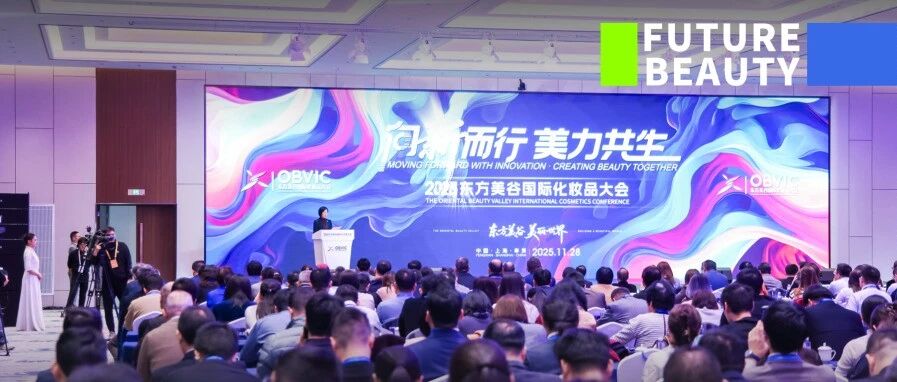
Core Viewpoint - The "2025 Oriental Beauty Valley International Cosmetics Conference" aims to outline new paths for the development of China's beauty industry, emphasizing the transition from mere aggregation to a more integrated and collaborative approach in industry clusters [2][6][9]. Group 1: Industry Development and Challenges - Since 2015, over 30 beauty clusters have emerged across China, but mere aggregation is no longer the goal [5]. - The industry faces structural contradictions, with a lack of strong R&D investment and reliance on foreign core materials and technologies [6]. - The "high-quality development index" reveals five common challenges for beauty clusters: weak innovation foundation, lagging green transformation, lack of long-term strategic planning, scarcity of innovative talent, and weak international competitiveness [17][18]. Group 2: Success Factors of Oriental Beauty Valley - The Oriental Beauty Valley has developed a complete ecosystem with over 3,000 enterprises and a scale exceeding 100 billion yuan, supported by favorable policies and location advantages [9]. - The "fund + base + industry" model has empowered enterprises to achieve explosive growth, while innovation platforms have been established to enhance collaboration between industry, academia, and research [9][22]. - The need for differentiated development among beauty clusters is emphasized, advocating for a "national chessboard" approach to consolidate development efforts [11]. Group 3: Future Directions and Innovations - The future of China's beauty industry is expected to form a nationwide network characterized by horizontal division of labor and vertical collaboration, rather than isolated breakthroughs [29]. - The "1+6+X" innovation system in Oriental Beauty Valley aims to enhance R&D efficiency and facilitate resource flow within the cluster [26]. - The focus on brand building is crucial, with domestic brands gaining market share, particularly among younger consumers [30]. Group 4: Key Themes from the Conference - The conference highlighted the importance of technological innovation, collaborative coexistence, digital transformation, and brand enhancement as key drivers for high-quality development in the beauty industry [30][31]. - The discussion underscored the need for beauty clusters to transition from competition to cooperation, leveraging their unique strengths to avoid redundancy [27]. - The integration of ESG principles into industry management is seen as essential for sustainable development [30].

2025生成式营销产业研究报告:从营销供给到营销决策(从AIGC到AIGD)
Sou Hu Cai Jing· 2025-11-29 18:51
Core Insights - The report titled "2025 Generative Marketing Industry Research: From AIGC to AIGD" highlights the evolution of generative AI in marketing, transitioning from AIGC (AI-Generated Content) focused on content creation to AIGD (AI-Generated Decision) centered on decision support, indicating a shift from AI as an "efficiency tool" to a "strategic partner" in marketing [2][4]. AIGC: Marketing Supply Explosion - By 2025, generative AI has matured in creating marketing content, including copy, images, videos, and digital personas, significantly enhancing content supply [3]. - The emergence of new models and products like DeepSeek and Manus has lowered technical barriers, evolving AI from a "creative assistant" to an "execution agent" [3]. - However, the explosion of content supply raises challenges for businesses in selecting optimal solutions and ensuring the authenticity and reliability of AI-generated content, as AIGC addresses production issues but not effectiveness [3]. AIGD: Systematic Upgrade in Marketing Decisions - AIGD aims to resolve decision-making challenges from the AIGC era by integrating classic marketing theories with AI tools, creating a complete loop from "insight—generation—validation—decision" [4]. - On the consumer side, over 68% of consumers are influenced by AI recommendations in their purchasing decisions, indicating a shift in decision-making power towards AI [4]. - On the enterprise side, AI is utilized for core marketing tasks such as environmental analysis, brand positioning, and demand exploration, enhancing the scientific and efficient nature of marketing decisions [4]. AI Practices: Deepening Industry Applications - Generative AI has been implemented across various industries: - **Food and Beverage**: Companies like Mengniu and Yili use AI for health models and ad testing [5]. - **Beauty and Personal Care**: L'Oréal optimizes formula development with AI, while Proya builds ROI-driven decision systems [5]. - **Automotive**: AI enhances lead management and user profiling [5]. - **Alcohol Industry**: AI integrates into brewing processes and enhances cultural experiences through digital personas and the metaverse [5]. - **Dining and Retail**: Smart ordering and AI-driven site selection are core to digital transformation [5]. - **Apparel, Home Appliances, and Digital Products**: AI assists in design, sales forecasting, virtual fitting, and customer service [5]. Future Outlook: Human-AI Collaboration with Decision Priority - The future of generative marketing emphasizes human-AI collaboration rather than AI replacing humans, necessitating organizations to build "AI-ready" structures that deeply integrate AI into strategy, operations, and innovation processes [6]. - The transition from AIGC to AIGD represents a shift from "content-driven" to "decision-driven" approaches, where effective use of AI for decision-making will determine market success [6].
2025年第47周:美妆行业周度市场观察
艾瑞咨询· 2025-11-29 00:03
Group 1: Market Trends - The beauty retail industry is experiencing a dichotomy between price increases and decreases, with brands adopting different pricing strategies to cope with cost pressures from tariffs and market changes [3] - Some brands, like Elf Beauty, are opting for transparent price increases while others, such as BeautyStat, are lowering prices to boost sales, particularly in high-end channels where consumers are more price-sensitive [3] - The market for anti-aging skincare is projected to reach 85 billion yuan by 2025, growing at 11%, with a shift towards systematic scientific management and consumer preference for long-term efficacy [4] Group 2: Consumer Behavior - Color cosmetics are becoming a key driver for attracting younger consumers in shopping malls, with a focus on emotional expression and social attributes, particularly among women aged 18-35 [5] - The trend of "experiential marketing" is evident, as consumers engage in try-on experiences that create a loop of offline experience leading to online sharing [5] - The demand for high-efficacy products is rising, with live-streaming platforms like Douyin playing a significant role in driving sales, particularly for domestic brands [9] Group 3: Brand Performance - Domestic brands are showing strong performance during promotional events, with Pechoin entering the top 4 on Douyin and domestic brands dominating the top 10 in the beauty category [6][8] - The beauty industry is facing challenges, with many brands experiencing revenue declines, while Marubi Biotech reported a 25.51% increase in revenue, attributed to its focus on R&D and a strong product strategy [14] - Natural Hall, a veteran domestic brand, is struggling with growth, facing challenges such as over-reliance on its main brand and high marketing costs, which are squeezing profits [15] Group 4: Innovation and Technology - La Roche-Posay has introduced a new supermolecular technology in its skincare products, emphasizing scientific innovation and skin health [10][11] - The emergence of new skincare brands focusing on light medical beauty and anti-aging solutions reflects a broader trend towards personalized and scientifically-backed skincare [12] - The industry is witnessing a shift towards age-appropriate skincare, with brands advocating for simpler, more effective routines for children, amidst concerns over the commercialization of children's skincare products [13]



破解“伪跨界”困境,SIA科盟构建皮肤健康产业新生态
FBeauty未来迹· 2025-11-28 12:13
Core Insights - The skin health industry in China is transitioning from a phase of external variable exploitation to a focus on internal structural refinement, emphasizing the need for continuous solutions from medical treatment to home care [2] - The theme of the SIA2025 conference is "Beauty Across Borders, Professionalism Without Boundaries," highlighting the industry's consensus on cross-disciplinary collaboration [3][5] Group 1: SIA Alliance and Its Initiatives - The SIA Alliance aims to address the challenges of effective collaboration across systems and languages by establishing itself as an "industrial operating system" [5] - The SIA Think Tank has gathered 193 experts from various fields, providing a foundation for quality content and professional insights within the industry [5][6] - The SIA100 scientific evaluation system serves as a bridge between laboratories and the market, establishing unified standards for product evaluation [6] Group 2: Key Reports and Findings - The "2025 China Medical Skincare Clinical Insight Report" was released, translating complex clinical language into actionable guidelines for the industry, focusing on common skin issues [9][11] - The results of the "SIA100 Scientific Products and Technology Achievements Collection" were announced, showcasing significant improvements in the quality and scale of entries compared to 2024 [11][12] Group 3: Research and Innovation - The conference highlighted a shift from "ingredient claims" to "mechanism claims" in efficacy skincare, with research showcasing the neurobiological mechanisms of skin conditions [12][18] - The "Regenerative Medicine Frontier" report illustrated the path from basic research to industrial application, emphasizing advancements in stem cell and exosome research [18] Group 4: Industry Collaboration and Future Directions - The "Medical Research Co-Creation Forum" aims to bridge clinical needs with industry innovations, showcasing the importance of collaborative efforts in addressing unmet clinical demands [19] - The SIA2025 conference reflects a clear industry shift towards cross-disciplinary integration, with success depending on the depth and systematic nature of professional collaboration [20]

蔓迪国际IPO前夕突击分红7.7亿元超过前三年分红总额 “脱发经济”冠军面临可持续发展考验
Xin Lang Zheng Quan· 2025-11-28 08:34
Core Viewpoint - Mandis International, a subsidiary of Sanofi Pharmaceutical focusing on hair loss treatment, has submitted its IPO application to the Hong Kong Stock Exchange, but a significant pre-IPO dividend of 770 million yuan raises concerns about the company's future prospects [1][3][7] Financial Performance - Mandis International has maintained a leading position in China's hair loss medication market, with its main brand "Mandis" holding a 57% market share in 2024 [2] - The company's revenue grew from 982 million yuan in 2022 to 1.455 billion yuan in 2024, with a compound annual growth rate of 21.7%, while net profit increased from 202 million yuan to 390 million yuan during the same period [2] - The gross profit margin has consistently exceeded 80%, reaching 82.7% in 2024, significantly higher than the industry average [2] Dividend Strategy - The company declared a sudden dividend of 770 million yuan in the first half of 2025, which is 4.4 times its net profit of 174 million yuan for that period, surpassing the total dividends of the previous three years [3] - This dividend payout has drastically reduced the company's net current assets from 595 million yuan at the end of 2024 to just 400,000 yuan in the first half of 2025 [3] - The primary beneficiaries of this dividend are the controlling shareholders, who hold 87.16% of the company [3] Research and Development - Despite the high dividend, the company's R&D expenditure has decreased significantly, dropping to 19.5 million yuan in the first half of 2025, only one-third of the amount from the same period in 2024 [3] - The R&D team has also shrunk to 46 members, contrasting sharply with the high sales expenses, which reached 374 million yuan in the first half of 2025, accounting for 50.4% of revenue [3] Market Challenges - The company faces significant challenges as its core patent is set to expire in 2028, which may lead to an influx of generic drugs and potential price wars [4] - Competitive pressures are already evident, with a 52% drop in the bidding price for its core product in provincial drug procurement in 2024 [4] - Additionally, the company is contending with competition from consumer brands that have entered the hair loss treatment market [4] Future Strategy - The IPO proceeds are intended to enhance R&D capabilities, strategic business collaborations, digital operations, and brand building [6] - The company is expanding its product line with new treatments, including D2501 for vitiligo and WS2505 for obesity, with the latter expected to enter clinical trials soon [6] - However, these new products are unlikely to contribute significantly to revenue in the short term, leaving the company heavily reliant on its minoxidil product line during a critical period of patent expiration and increased competition [6] Conclusion - Mandis International has established a strong market position and profitability in the hair loss treatment sector, but faces challenges from its pre-IPO dividend strategy, high sales costs, declining R&D investment, and impending patent expiration [7] - Investors should consider both the short-term financial metrics and the long-term growth potential, as sustained innovation and product diversification will be crucial for maintaining long-term value [7]
靠米诺地尔撑起脱发生意!蔓迪国际冲刺港股“防脱第一股”
Nan Fang Du Shi Bao· 2025-11-27 12:41
Core Viewpoint - Mandi International has submitted its prospectus to the Hong Kong Stock Exchange, aiming to become the "first stock in anti-hair loss" amid a growing consumer healthcare market and increasing youth hair loss issues [1]. Company Overview - Mandi International, originally Zhejiang Wansheng Pharmaceutical Co., launched the first 5% minoxidil solution in China in 2001 and has maintained a leading position in the hair loss treatment market for the past decade [4]. - The company is planning to spin off and independently list on the Hong Kong Stock Exchange, with its parent company, 3SBio, holding an 87.16% stake prior to the split [4]. Financial Performance - Mandi International's revenue is projected to grow from RMB 981.54 million in 2022 to RMB 1.45 billion in 2024, reflecting a compound annual growth rate (CAGR) of 21.7% [5]. - Net profit is expected to increase from RMB 202 million in 2022 to RMB 390 million in 2024, with gross margins improving from 80.3% to 82.7% during the same period [5]. - The company's revenue from its main product line, the Mandi series, accounted for over 90% of total revenue, indicating a heavy reliance on this product line [6]. Market Dynamics - The hair health management market in China is projected to grow from RMB 19.8 billion in 2018 to RMB 52.7 billion by 2024, with an expected CAGR of 11.3% until 2035 [10]. - The competitive landscape is intensifying, with traditional pharmaceutical companies and international giants entering the market with new products [10]. Marketing and R&D Expenditure - Marketing expenses have been increasing, with sales and marketing costs rising from RMB 476.39 million in 2022 to RMB 633.80 million in 2024, representing a significant portion of revenue [8]. - In contrast, R&D spending is projected to decrease significantly in 2025, raising concerns about the company's long-term innovation capabilities [10]. Future Plans - The company plans to use the net proceeds from its IPO for enhancing R&D capabilities, digital operations, brand building, and working capital [11].
「深度原理」完成超亿元A轮融资,AI for Science持续突破
Sou Hu Cai Jing· 2025-11-27 11:02
Core Insights - Deep Principle has completed over 100 million RMB Series A financing, led by AEF Greater Bay Area Fund and Ant Group, with participation from existing shareholders including Lenovo Ventures and Baidu Ventures [1] - The funding will accelerate the development of Agent Mira™ for materials discovery, advance the construction of the AI Materials Factory™, and deepen collaborations with leading domestic and international clients [1] Group 1: Technology Leadership - Deep Principle is founded by a team with a strong background from MIT, focusing on AI for Science, and has published groundbreaking diffusion models in top journals [4][7] - The company introduced OA-ReactDiff, a 3D chemical reaction diffusion model, achieving transition state structure predictions in 6 seconds on a single GPU, significantly reducing traditional quantum chemistry computation time [4] - The upcoming React-OT model, set for release in early 2025, is expected to reduce prediction time to 0.4 seconds and improve accuracy by over 25% [4] Group 2: Product Upgrades - The company has developed six algorithm modules integrated into the ReactiveAI platform, which has recently been upgraded to Agent Mira, capable of molecular design and chemical reaction prediction through natural language commands [6] - Agent Mira aims to transform materials research from "trial-and-error" to "intelligent design," facilitating the integration of advanced AI technologies into industry practices [6] Group 3: Commercialization - Deep Principle has secured over 10 million RMB in commercial orders within its first year, demonstrating significant market traction [9] - Collaborations with industry leaders like Shanhai Innovation and L'Oréal have led to the development of AI-driven platforms for materials prediction and optimization, resulting in reduced R&D cycles and improved accuracy [9] - The company is expanding its projects in sectors such as new energy and fine chemicals, continuously broadening its industry reach [9] Group 4: Strategic Initiatives - The company is launching the L4 High-Throughput Autonomous Lab, AI Materials Factory, to create a closed-loop system for materials discovery, integrating AI model predictions with experimental validation [10] - This initiative aims to enhance the efficiency of transitioning from model predictions to experimental applications across various strategic fields [10] - The recent financing will serve as a new starting point for the company to deepen the integration of technological innovation with industry needs, contributing to the advancement of global materials science [11]

安徽公布2025“守护消费”铁拳行动第十批典型案例(保护知识产权专刊)
Zhong Guo Zhi Liang Xin Wen Wang· 2025-11-27 08:39
Core Viewpoint - The Anhui Provincial Market Supervision Administration has launched a series of actions to combat intellectual property infringement and the sale of counterfeit goods, highlighting the importance of protecting innovation and consumer rights [1][2]. Group 1: Case Summaries - A case in Huainan involved the sale of counterfeit Marshall audio products, with a total transaction amount exceeding 14 million yuan and over 10,760 transactions recorded [1][2]. - In Huaibei, a group was found selling counterfeit "lululemon" clothing, with over 30,000 items seized and a total value of more than 20 million yuan involved [3][4]. - The Ma'anshan case involved the sale of infringing guide rail blocks, with a total illegal operating amount of 2,338 yuan, leading to a fine of 15,000 yuan [5][6]. - In Hefei, a seller was found with 765 counterfeit items from brands like NIKE and Adidas, with an estimated illegal operating amount of 200,000 yuan [6][7]. - A case in Anqing involved the sale of counterfeit Siemens automatic door devices, with a total value of 45,300 yuan, resulting in a fine of 80,000 yuan [8]. - In Tongling, a seller was found with 1,735 counterfeit hair care products, with total sales amounting to 172,900 yuan [9]. - A case in Wuhu involved a packaging company that printed counterfeit Panasonic tape, leading to a fine of 21,500 yuan [10][11]. - In Bengbu, a company was found producing counterfeit plastic hangers, with a total value of 446,800 yuan involved [13]. - A case in Huangshan involved a company using the "Sinopec" name without authorization, leading to a fine of 15,000 yuan [14][15]. Group 2: Enforcement Actions - The market supervision departments are enhancing their enforcement mechanisms to combat intellectual property crimes and protect consumer rights [2][4][7]. - The cases illustrate a coordinated effort between market supervision and law enforcement agencies to address the challenges of online sales of counterfeit goods [2][8]. - The actions taken reflect a commitment to creating a fair market environment and safeguarding the interests of legitimate businesses and consumers [4][7][15].
深度 | 蹿红的PDRN,只发挥了一成功力?
FBeauty未来迹· 2025-11-26 13:24
Core Viewpoint - The PDRN anti-aging market is rapidly gaining traction, with major beauty brands like L'Oréal launching products centered around PDRN, indicating a significant shift in the skincare industry towards this ingredient [3][5][7]. Market Dynamics - L'Oréal's recent release of the "PDRN Skincare Application: Technology and Innovation White Paper (2025)" marks a strategic move to establish authority in the PDRN space, a rare occurrence for the company [5][13]. - The global PDRN market is projected to grow from approximately 180 million in 2023 to 3 billion by 2030, with a compound annual growth rate (CAGR) of 43% from 2024 to 2030, showcasing strong growth potential [7][10]. - PDRN is anticipated to become a benchmark skincare ingredient, similar to hyaluronic acid and collagen, due to its robust biological activity and high development ceiling [7][10]. Competitive Landscape - Numerous brands are entering the PDRN market, including domestic brands like Zhenmei and Huaxi Biology, as well as Unilever's AHC brand, which is targeting the medical beauty segment with new product launches [5][10][25]. - Zhenmei has established a first-mover advantage in the topical PDRN segment, utilizing proprietary technology to enhance skin penetration [17][19]. - Unilever's AHC brand has successfully launched products like the "B5 Star Mask," leveraging consumer demand for "water-light skin" effects while maintaining a strong medical beauty positioning [23][25]. Scientific and Technical Considerations - PDRN's entry into traditional beauty products is facilitated by its established efficacy and safety in the medical beauty sector, reducing the need for extensive consumer education [10][11]. - However, the scientific evidence supporting PDRN's efficacy in traditional skincare remains insufficient, necessitating further research to build consumer trust [14][15][16]. - The lack of standardized quality for PDRN raw materials poses challenges, as variations in source, preparation methods, and molecular weight can affect efficacy [15][31]. Future Outlook - The PDRN market is entering a phase of intensified competition, with brands focusing on research and development to establish technological barriers and enhance product efficacy [29][30]. - Companies are exploring diverse sources of PDRN, including plant and microbial origins, to differentiate their offerings and improve product stability [30][31]. - The potential applications of PDRN extend beyond facial care to include scalp health and eye care, indicating a broadening of its market scope [33].


盘前大涨!新帅掌舵步入正轨 柯尔百货(KSS.US)连番上调指引重振市场信心
Zhi Tong Cai Jing· 2025-11-25 13:20
Core Insights - Kohl's Corporation reported better-than-expected Q3 earnings, indicating a positive turnaround under new CEO Michael Bender's leadership [1][2] - The company raised its fiscal 2025 adjusted EPS guidance significantly, reflecting improved performance despite ongoing challenges [1][2] Financial Performance - Q3 sales decreased by 2.8% year-over-year to $3.41 billion, surpassing analyst expectations of $3.32 billion [1] - Same-store sales fell by 1.7%, better than the anticipated decline of 3.9% [1] - Gross margin improved by 51 basis points compared to the previous year, with operating profit at $73 million, down from $98 million year-over-year [1] - Adjusted net income was $11 million, translating to an EPS of $0.10, significantly exceeding the market expectation of a loss of $0.17 [1] Future Outlook - The adjusted EPS forecast for fiscal 2025 was raised from $0.50-$0.80 to $1.25-$1.45, while the annual sales decline expectation was narrowed from 5%-6% to 3.5%-4% [1] - The company emphasized that its value proposition is gaining consumer recognition, despite facing challenges with 15 consecutive quarters of year-over-year revenue decline [2] Strategic Initiatives - Bender is continuing the strategic initiatives set by his predecessor, focusing on revitalizing the jewelry business and increasing the supply of small-sized apparel [2] - The company has strengthened partnerships with brands like Sephora, introducing trendy products to attract younger consumers [2] Market Trends - The retail industry is witnessing a trend where some consumers are cutting back on spending, while higher-income shoppers are shifting towards affordable products, which may benefit Kohl's due to its competitive pricing [2] Competitor Response - Following Kohl's positive earnings report, competitor Macy's saw its stock price rise by over 5% in pre-market trading [3]