星展银行

Search documents
沪新携手探索银龄经济新未来
Zhong Guo Qing Nian Bao· 2025-07-09 03:31
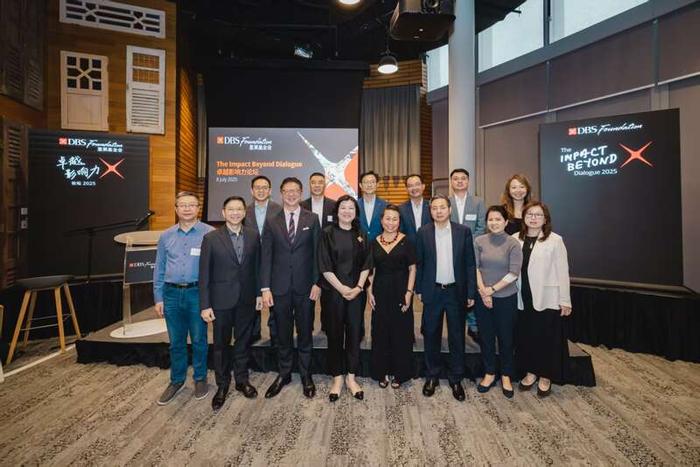
Group 1 - The forum titled "Innovative Cooperation between Shanghai and Singapore: New Future for Silver Economy" was held by the DBS Foundation in Singapore, focusing on cross-border collaboration and innovative solutions for aging issues [1][2] - Participants included government representatives from Singapore and Shanghai, as well as business leaders and academic experts from the aging sector, discussing experiences in elderly care, healthcare, and age-friendly industries [1][2] - The forum highlighted opportunities and innovative practices in real estate, finance, and consumption models related to aging society, and initiated discussions on future bilateral enterprise cooperation [1][2] Group 2 - The Consul-General of Singapore in Shanghai emphasized the shared challenges of rapid aging faced by both Singapore and many Chinese cities, indicating significant potential for cooperation in the aging sector [2] - DBS Bank's China CEO stated that aging should be viewed as an opportunity to reconstruct the silver economy value chain, promoting sustainable growth and social value through cross-sector resource linkage [2] - The forum featured insights from various aging-related enterprises supported by the DBS Foundation, including award-winning companies from Singapore and China, showcasing innovative solutions for the aging society [2][4] Group 3 - The DBS Foundation announced the first "Excellence Impact Award" winners, with four companies from mainland China, Hong Kong, Singapore, and India receiving a total of 3 million SGD (approximately 16.82 million RMB) to implement innovative solutions for the aging society [4]

深圳外资银行,再添新成员
Zhong Guo Ji Jin Bao· 2025-07-08 11:33
Group 1 - Santander Bank has received approval to establish a branch in Shenzhen, marking the establishment of a new European-funded bank in the region [1] - Santander Bank, founded in 1857, is the largest commercial bank in Spain and a globally significant bank, with total assets of €1.8 trillion and a net profit of €13.744 billion as of the end of 2024 [1] - The establishment of the new branch signals foreign investors' confidence in the Chinese economy and the Guangdong-Hong Kong-Macao Greater Bay Area market [1] Group 2 - China has been actively expanding high-level financial openness, implementing over 50 measures since 2018 to attract foreign investment and improve the business environment [2] - Recent policies have removed foreign ownership limits in various financial sectors, allowing foreign institutions to enjoy national treatment and expand their business scope [2] Group 3 - Shenzhen is a key destination for foreign financial institutions, with over 35 foreign banks operating in the city, holding total assets exceeding 400 billion yuan [3][7] - The presence of foreign banks in Shenzhen has significantly contributed to the development of the local financial industry, enhancing management practices and technological innovation [7][10] Group 4 - Foreign banks in Shenzhen have been actively involved in cross-border financing and settlement, with nine banks participating in the "Cross-Border Wealth Management Connect" pilot program [8] - These banks have facilitated cross-border investment channels and improved efficiency in corporate account opening and credit approval processes [8][9] Group 5 - Foreign banks are supporting Chinese enterprises in their global expansion by providing a range of financial services, including credit, bond issuance, and risk management [9] - They are also assisting in building supply chains and connecting with local governments and service providers in foreign markets [9] Group 6 - Foreign banks are playing a significant role in promoting green finance in Shenzhen, participating in various sustainable finance initiatives and projects [10] - They are collaborating with local governments to issue offshore RMB bonds, including green bonds and social responsibility bonds, to support urban development and sustainability [10]
深圳外资银行,再添新成员!
中国基金报· 2025-07-08 11:20
Core Viewpoint - The approval for Banco Santander to establish a branch in Shenzhen signals foreign investors' confidence in the Chinese economy and the Guangdong-Hong Kong-Macao Greater Bay Area market [1] Group 1: Banco Santander's Expansion - Banco Santander, established in 1857, is Spain's largest commercial bank and a globally significant bank, with total assets reaching €1.8 trillion and net profit of €13.744 billion by the end of 2024 [1] - The bank has been actively expanding in China, having previously established branches in Shanghai and Beijing in 2008 and 2014, respectively [1] Group 2: Foreign Investment in China's Financial Sector - Since 2018, over 50 measures have been introduced to enhance foreign investment in China's financial sector, including the removal of foreign ownership limits in various financial services [2] - The recent notification from the financial regulatory authority further expands the business scope for foreign banks, encouraging more foreign institutions to invest in China [2] Group 3: Foreign Banks in Shenzhen - Shenzhen is a key destination for foreign financial institutions, with 35 foreign banks operating 5 legal entities and 33 branches, totaling over ¥400 billion in assets by the end of 2024 [8] - The presence of foreign banks has significantly contributed to the advancement of Shenzhen's financial industry, enhancing management practices and technological innovation [8] Group 4: Cross-Border Financial Services - Nine foreign banks in Shenzhen are participating in the "Cross-Border Wealth Management Connect" pilot program, facilitating cross-border investment for residents in the Greater Bay Area [9] - These banks are also involved in cross-border data verification and credit information sharing, improving efficiency in corporate financing processes [9] Group 5: Support for Chinese Enterprises Going Global - Foreign banks leverage their global resources to provide comprehensive financial services for Chinese enterprises expanding overseas, including credit, bond issuance, and risk management [11] - Collaborations between foreign banks and Chinese companies are evident in various international markets, such as Southeast Asia [11] Group 6: Green Finance Initiatives - Foreign banks in Shenzhen are actively participating in the green finance sector, supporting low-carbon transitions and sustainable development projects [13] - Initiatives include issuing offshore RMB bonds and facilitating ESG-linked loans, showcasing the banks' commitment to environmental sustainability [13]
星展银行:3个月期港元Hibor到年底将升至2.05%
news flash· 2025-07-08 07:25
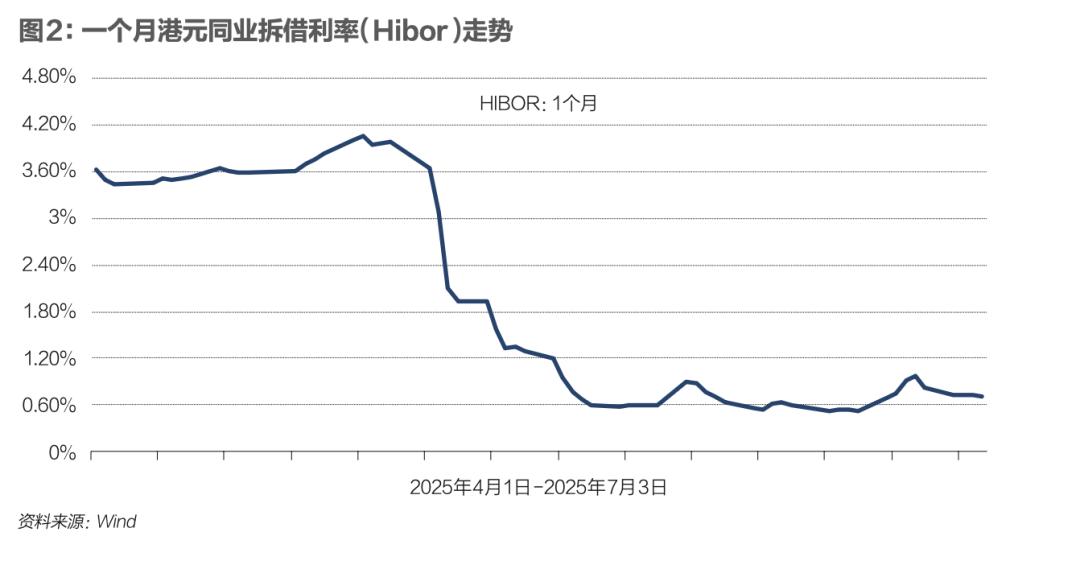
Core Viewpoint - DBS Bank predicts that the 3-month Hong Kong Interbank Offered Rate (Hibor) will rise to 2.05% by the end of the year due to expected market changes [1] Group 1: Hibor Trends - Current low levels of Hibor are attributed to ample liquidity in Hong Kong's banking system [1] - The 3-month Hibor is expected to gradually rebound in the coming months, reaching 2.05% by year-end [1] - The 1-month Hibor is also anticipated to increase slightly, projected to reach 1.55% by the end of the year [1] Group 2: Currency and Intervention - The USD/HKD exchange rate remains around 7.85, prompting the Hong Kong Monetary Authority to continue its intervention in the short term [1] - A spread of over 250 basis points between 3-month Hibor and SOFR will help maintain the HKD within its weak trading range [1] - The expected weakening of the USD may lead to a moderate pace of intervention [1] Group 3: Federal Reserve Influence - Anticipated interest rate cuts by the Federal Reserve are expected to cushion the upward movement of Hong Kong interest rates [1]
华尔街到陆家嘴精选丨关税大限临近 市场何去何从?美国会发生滞涨?美元无可替代?AI芯片与主权AI双驱动 HBM赛道持续火热?
Di Yi Cai Jing· 2025-07-08 01:39
Group 1: Tariff and Economic Impact - The U.S. has extended the tariff suspension period to August 1, with new tax rates announced for 14 countries, impacting market expectations and causing a sell-off in U.S. stocks and bonds [1] - The current U.S. economy faces challenges such as declining GDP, high effective tax rates, and record fiscal and trade deficits, leading to speculation about potential tariff reductions [2] - The volatility in policy expectations, particularly regarding tariffs, is a significant factor behind the recent decline in U.S. stocks, with predictions of a further 5% adjustment if tariff threats remain unresolved [2] Group 2: Inflation and Economic Outlook - Renowned economist Nouriel Roubini predicts a "mini-stagflation shock" in the U.S. economy, with core PCE potentially reaching 3.5% by year-end, and suggests that the Fed may not lower interest rates until December [3] - Despite concerns about stagflation, corporate earnings remain strong, with S&P 500 companies reporting a 13% year-over-year profit increase, indicating resilience in certain sectors [3] Group 3: HBM Market Dynamics - The HBM (High Bandwidth Memory) market is expected to experience supply-demand tightness until 2027, driven by AI chip demand and technological advancements [7] - Major players like SK Hynix and Micron dominate the HBM market, which is projected to grow significantly, with a compound annual growth rate of 90% from $2.3 billion in 2022 to $30 billion by 2026 [7] Group 4: Japanese Economic Challenges - Japan's real wages have seen a significant decline of 2.9% year-over-year, the largest drop in 20 months, indicating challenges in consumer purchasing power despite a rise in consumer spending [9][10] - The disparity in wage growth between unionized and non-unionized workers highlights structural imbalances in the Japanese economy, which may be further impacted by U.S. tariff policies [10][11]


香港“超级联系人”进阶,靠什么抢占全球财富C位?
3 6 Ke· 2025-07-07 10:56
Core Viewpoint - Hong Kong is emerging as a significant financial hub amidst global market volatility, driven by capital inflows and the need for alternative financing options due to the ongoing tariff wars and the depreciation of the US dollar [2][23]. Group 1: Market Dynamics - The Hang Seng Index rose over 20% following the announcement of "reciprocal tariffs," while the Hong Kong dollar reached a strong exchange rate of 7.75 against the US dollar [1]. - In the first half of 2025, net inflows from mainland China into the Hong Kong stock market exceeded 710 billion HKD, significantly higher than previous years [2]. - The Hong Kong IPO market saw a 700% year-on-year increase in funds raised, driven by international capital [2]. Group 2: Currency and Financial Stability - The US dollar index fell over 10% in the first half of 2025, marking its worst performance since 1973, leading to significant capital outflows from the US [3][23]. - The Hong Kong Monetary Authority intervened multiple times to stabilize the Hong Kong dollar, injecting approximately 129 billion HKD into the financial system [5][10]. - The Hong Kong dollar's exchange rate fluctuated between strong and weak zones, prompting discussions on the benefits and drawbacks of the linked exchange rate system [5][39]. Group 3: Wealth Management and Investment Trends - Boston Consulting Group predicts that by 2029, Hong Kong will surpass Switzerland as the largest cross-border wealth management center globally [4]. - Wealth management revenues in Hong Kong increased significantly, with HSBC reporting a 14% rise in wholesale banking income in the first quarter [17][30]. - The average wealth of adults in mainland China is projected to continue growing, enhancing cross-border investment potential [32]. Group 4: RMB and Trade Financing - Hong Kong is the largest offshore RMB business hub, handling about 80% of global offshore RMB payments [18]. - Cross-border RMB settlements between China and ASEAN countries grew by 35% year-on-year, indicating a shift towards RMB financing [22]. - The demand for RMB in trade financing is increasing, reflecting a broader trend of "de-dollarization" in international trade [26]. Group 5: Future Outlook - The financial landscape in Hong Kong is expected to evolve with increased focus on offshore RMB markets and digital financial infrastructure [38][45]. - The capital from the Middle East is becoming a significant source of wealth for Hong Kong, with sovereign wealth funds projected to grow substantially [37]. - Hong Kong's unique position as a "super connector" between China and international markets is likely to enhance its financial stability and growth prospects [46].
星展银行:美越贸易协议降低风险,但缺乏细节
news flash· 2025-07-03 03:05
金十数据7月3日讯,星展银行高级经济学家Chua Han Teng说,美越贸易协定减轻了越南经济增长的风 险,但可能无法阻止未来几个季度的经济放缓。根据协议条款,美国商品将免税进入越南,作为交换, 越南商品将被征收20%的关税,其他国家经越南出口到美国的商品将被征收40%的关税。但细节很少。 首先,对转运的解释是不明确的。虽然美国对越南商品征收20%的关税比最初担心的要低得多,但这仍 然是贸易摩擦的升级。越南仍然高度依赖美国市场,运往美国的货物占越南出口的近30%。 星展银行:美越贸易协议降低风险,但缺乏细节 ...
30.8亿美元!外汇局新发放一批QDII额度
券商中国· 2025-06-30 15:24
Core Viewpoint - The recent issuance of QDII quotas totaling $3.08 billion aims to enhance the functionality of the Qualified Domestic Institutional Investor (QDII) system, facilitating cross-border investment for qualified institutions and meeting domestic investors' overseas wealth allocation needs [1][2]. Group 1: QDII Quota Issuance - The State Administration of Foreign Exchange (SAFE) has issued a total of $3.08 billion in QDII quotas to eligible institutions, supporting their legal and compliant cross-border investment activities [1]. - As of June 30, 2025, a total of 191 QDII institutions have been approved, with a cumulative quota of $170.87 billion [3]. Group 2: Market Reactions and Implications - Market sentiment towards the recent QDII quota issuance is positive, with firms like CICC stating that it provides strong support for asset management institutions to meet the growing demand for global asset allocation and risk diversification among domestic residents [5]. - CITIC Securities noted that the quota issuance will help Chinese asset management institutions expand their overseas investments and enhance their global asset management capabilities [5]. Group 3: QDII System Benefits - The QDII system allows qualified domestic institutions to invest in overseas securities markets within a certain quota, promoting financial market openness and diversifying investment channels for domestic residents [4][6]. - The system has effectively balanced the expansion of openness with risk prevention, establishing comprehensive regulatory rules across various aspects such as qualification, product issuance, and information disclosure [7]. Group 4: Enhancing International Competitiveness - The QDII system has positively impacted the international competitiveness of domestic financial institutions, enabling them to familiarize themselves with and explore international markets [8]. - Since its implementation in 2006, the QDII system has become a common channel for domestic investors to engage in global asset allocation, reflecting an increasingly international investment perspective [8].

大消息!超30亿美元额度!外汇局最新发放
Zheng Quan Shi Bao Wang· 2025-06-30 14:19
Core Viewpoint - The recent issuance of QDII quotas totaling $3.08 billion aims to enhance the cross-border investment capabilities of qualified domestic institutional investors, thereby supporting the diversification of asset allocation for domestic investors and promoting China's financial market openness on a global scale [1][2]. Group 1: QDII Quota Issuance - The State Administration of Foreign Exchange (SAFE) has issued a total of $3.08 billion in QDII quotas to eligible institutions, facilitating their compliance with cross-border investment regulations [1]. - As of June 30, 2025, a total of 191 QDII institutions have been approved, with a cumulative quota of $170.87 billion [1]. Group 2: Market Response and Institutional Impact - Market sentiment is positive regarding the recent QDII quota issuance, with firms like CICC stating it provides strong support for asset management institutions to meet the growing global asset allocation and risk diversification needs of domestic residents [2]. - CITIC Securities noted that the quota expansion will help Chinese asset management institutions enhance their overseas investment capabilities and improve their global asset management skills [2]. Group 3: Future Outlook and Regulatory Framework - SAFE officials indicated that future QDII quota issuance will be managed carefully to balance financial openness and security, ensuring that only institutions with strong management capabilities and compliance awareness are supported [3]. - The QDII system has been effective since its implementation in 2006, promoting financial market openness and broadening investment channels for domestic residents [4][5].
大消息!超30亿美元额度!外汇局最新发放
证券时报· 2025-06-30 13:53
Core Viewpoint - The recent issuance of a total of $3.08 billion in QDII quotas by the State Administration of Foreign Exchange (SAFE) aims to enhance the functionality of the Qualified Domestic Institutional Investor (QDII) system, facilitating cross-border investment and meeting the overseas wealth allocation needs of domestic investors [1][3]. Group 1: QDII System Overview - The QDII system allows qualified domestic institutions to invest in overseas securities markets within a certain quota, promoting financial market openness and providing diverse investment channels for domestic residents [3][6]. - Since its implementation in 2006, the QDII system has played a significant role in expanding financial market openness and supporting domestic financial institutions in international operations [6][7]. Group 2: Recent Developments - The recent quota issuance is seen positively by the market, with firms like CICC and CITIC Securities highlighting its role in meeting the growing global asset allocation and risk diversification needs of domestic residents [3][4]. - The total approved QDII quotas reached $170.87 billion as of June 30, 2025, with 191 institutions approved [1]. Group 3: Future Outlook - SAFE officials indicated that future QDII quota issuances will be managed carefully to balance financial openness and security, supporting institutions with strong management capabilities and compliance awareness [4]. - The expansion of QDII quotas is expected to enhance the international competitiveness of domestic financial institutions and improve their global asset management capabilities [5][7].