
隆基绿能

Search documents
光伏行业动态点评:国内反内卷+马斯克太空光伏扩产共振,关键仍在设备、材料
Bank of China Securities· 2026-01-29 10:57
Investment Rating - The report maintains an "Outperform" rating for the photovoltaic industry, indicating that the industry index is expected to perform better than the benchmark index over the next 6-12 months [11]. Core Insights - The report highlights that Elon Musk has announced plans to build 100GW of photovoltaic capacity, which may extend upstream to silicon materials and wafers, benefiting core equipment in silicon materials, wafers, batteries, and modules. Long-term, material companies are expected to have market expansion opportunities [1][3]. - The Ministry of Industry and Information Technology of China has clarified the "anti-involution" theme for the photovoltaic industry, suggesting that the industry is likely to self-limit production, optimizing the battery and module landscape [1][3]. - The acceleration of the industrialization of space photovoltaic technology in China is noted, with multiple technological routes progressing simultaneously [1][3]. Summary by Sections Industry Dynamics - The report discusses the "anti-involution" strategy as a key theme for the photovoltaic industry, aiming to prevent monopolistic risks and promote rational development through capacity control and market-oriented measures. This is expected to lead to a self-limiting production scenario within the industry [5]. - The potential for Musk's integrated photovoltaic capacity expansion is emphasized, with expectations for increased orders for domestic photovoltaic equipment manufacturers as overseas manufacturers clarify their expansion plans [5]. Investment Recommendations - The report recommends several companies for investment, including Foster, JinkoSolar, JinDa Co., Maiwei, and others, while suggesting to pay attention to companies like Aotewi, Shuangliang Energy, and Dongfang Risen [3].
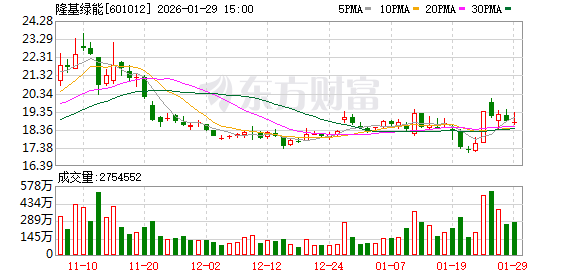
隆基绿能:目前替代银浆技术中试已经完成,已开始规模化产能建设
Mei Ri Jing Ji Xin Wen· 2026-01-29 10:16
Group 1 - The core viewpoint of the article is that the company is actively advancing the commercialization of silver paste replacement technology in response to the recent surge in silver prices [2][3] - The company has completed pilot testing for the replacement silver paste technology and has begun scaling up production capacity [2]


白银彻底杀疯了
商业洞察· 2026-01-29 09:36
Core Viewpoint - The article discusses the recent surge in silver prices, which have reached approximately $118 per ounce, marking a significant increase of over 175% from early 2025 when prices were below $30 per ounce. This surge is attributed to structural changes in the silver market, driven by industrial demand and supply constraints [5][10][22]. Group 1: Price Surge - Silver prices have continued to rise, reaching around $118 per ounce, following a weekend where prices surpassed $100 [5][9]. - The increase in silver prices has outpaced that of gold, with silver's price rising over 175% in the past year compared to gold's performance [10][22]. - The gold-silver ratio has narrowed to approximately 50, indicating that silver is breaking free from its historical role as a mere companion to gold [10][12]. Group 2: Demand Drivers - Industrial demand for silver now accounts for over 60% of total silver demand, with solar energy, artificial intelligence, and electric vehicles being the primary drivers [14][16]. - The solar industry has seen a significant increase in silver consumption due to technological advancements, with silver usage in solar cells rising by 30% to 100% depending on the technology [15][16]. - The demand for silver in AI infrastructure and electric vehicles is also growing, with AI servers consuming up to 30 kg of silver per unit and electric vehicles using 25 to 50 grams of silver each [16][18]. Group 3: Supply Constraints - Over 70% of global silver production comes from by-products of copper, lead, and zinc mining, making silver supply dependent on the market cycles of these primary metals [18][20]. - The average grade of ore from existing silver mines has decreased by 30% over the past two decades, leading to increased costs and reduced efficiency in silver extraction [18][20]. - A structural shortage in the silver market has persisted for five consecutive years, with a projected supply of 32,100 tons in 2025 against a demand of 35,700 tons, resulting in a shortfall of 3,600 tons [18][20]. Group 4: Policy Changes and Market Dynamics - China's new silver export policy, effective January 1, 2026, is expected to reduce annual silver exports by 4,500 to 5,000 tons, equating to a 15% reduction in global supply [20][22]. - The global silver inventory has reached critical levels, with stock at the London and Shanghai exchanges covering only about 1.2 months of global consumption, below the three-month safety line [20][22]. Group 5: Financial Implications - The financial attributes of silver are changing as industrial demand and supply limitations reshape market dynamics, prompting investors to reassess silver as both a precious metal and an industrial commodity [22][24]. - Major financial institutions have revised their silver price forecasts significantly, with predictions ranging from $110 to $170 per ounce for the first quarter of 2026 [22][24]. - There is a growing trend of silver accumulation globally, with increased demand for physical silver and rising holdings in silver ETFs, indicating heightened interest from both institutional and individual investors [23][24].
白银市场供需危机国际银升高
Jin Tou Wang· 2026-01-29 06:59
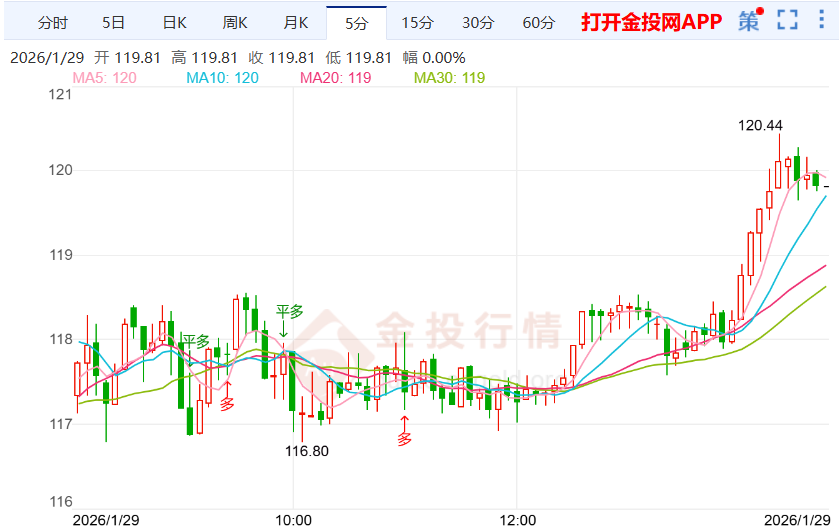
另外根据芝商所(CME)1月27日的最新库存报告,COMEX认证仓库的白银总库存降至4.117亿盎司。更致命的数据在 于"注册仓单"(Registered Inventory)——即那些立即可用于期货交割的金属——已跌至1.077亿盎司。 仅在一天之内,就有470万盎司的白银从注册仓单中消失,它们要么被直接提走,要么被转为不可用于期货交割的"符 合资格"状态。 【最新国际白银行情解析】 今日周四(1月29日)欧盘时段,国际白银目前交投于119.34一线上方,今日开盘于116.60美元/盎司,截至发稿,国际白银 暂报119.87美元/盎司,上涨2.80%,最高触及120.44美元/盎司,最低下探115.59美元/盎司,目前来看,国际白银盘内短 线偏向震荡走势。 【要闻速递】 目前,白银已占到太阳能电池板生产总成本的29%,创下历史新高(去年为14%,2023年仅为3.4%)。白银现已超越铝、 玻璃和硅,成为光伏制造中最大的单一成本项。 虽然隆基绿能(601012)宣布将在2026年第二季度量产铜基电池以替代银,但行业分析师指出,这种技术替代通常需 要数年才能形成规模。在短期内,光伏行业对实物白银的刚性需求将继续 ...
工信部召开座谈会,强调以产能调控等手段破除光伏“内卷”
Di Yi Cai Jing· 2026-01-29 06:08
Core Viewpoint - The Chinese photovoltaic industry is undergoing a governance initiative to combat "involution" and promote rational competition, with the government emphasizing the need for coordinated efforts across various departments to address issues such as overcapacity, low-price competition, and quality control [1][3]. Group 1: Industry Governance and Regulation - The Ministry of Industry and Information Technology (MIIT) held a meeting on January 28, 2026, to discuss the "anti-involution" measures in the photovoltaic sector, highlighting the need for collaboration among departments to ensure a return to healthy competition [1]. - The MIIT aims to utilize market-oriented and legal methods to regulate the industry, including capacity control, standard setting, quality supervision, and intellectual property protection [1][3]. - The government has initiated multiple actions since the second half of 2025 to address the chaotic state of the photovoltaic industry, including a meeting on August 19, 2025, to emphasize capacity regulation and support industry self-discipline [3]. Group 2: Industry Performance and Financial Impact - The domestic photovoltaic manufacturing output value surged from 750 billion yuan in 2021 to 1.75 trillion yuan in 2023, with expectations to maintain over 1 trillion yuan in 2024 [1]. - However, the industry faces significant challenges, including a supply-demand mismatch and severe low-price competition, leading to widespread losses since the fourth quarter of 2023 [2]. - Major companies like Longi Green Energy, JinkoSolar, and Tongwei Co. are projected to incur substantial losses in 2025, with estimates ranging from 60 billion to 100 billion yuan [2]. Group 3: Quality and Compliance Issues - The photovoltaic industry has seen a decline in product quality, with the overall qualification rate of photovoltaic modules dropping from 100% in 2019 to 62.9% in 2024, indicating that over one-third of products have quality issues [2]. - In 2025, nearly 16% of the components tested from 36 companies were found to be non-compliant, with significant issues related to mechanical load and power misrepresentation [2]. Group 4: Market Recovery and Profitability - The ongoing "anti-involution" efforts are beginning to show positive effects, with the profitability of the main photovoltaic industry chain improving in the first three quarters of 2025, despite a total loss of 310.39 billion yuan among 31 companies [4]. - The gross profit margin for the main industry chain reached 5.61% in the third quarter of 2025, an increase from 3.64% in the previous quarters [4]. - By November 2025, the average prices of polysilicon, silicon wafers, battery cells, and modules had increased by 38.9%, 2.2%, 0.4%, and 2.3%, respectively, compared to the beginning of the year [4].


新能源如何应对资源上涨-银价上涨倒逼降本-光伏铜代银趋势已来
2026-01-29 02:43
Summary of Key Points from the Conference Call Industry Overview - The conference call focuses on the **photovoltaic (PV) industry** and its relationship with **silver prices** and **copper substitution technologies**. The global silver consumption in the PV sector is projected to reach **7,000 tons** by **2025**, corresponding to an annual production of **600-700 GW** of PV modules, with each GW consuming approximately **10 tons** of silver [1][2]. Core Insights and Arguments - **Silver's Role in PV**: Silver is crucial for manufacturing silver paste used in solar cells, enhancing efficiency by reducing contact resistance. The recent surge in silver prices, driven by industrial demand, has significantly impacted the cost structure of PV modules, with silver costs now accounting for nearly **30%** of total costs, surpassing silicon and glass [1][2][3]. - **Copper Substitution Necessity**: The rising silver prices have made copper substitution a pressing need. The copper substitution technologies include: 1. **Silver-coated copper paste**: Currently the most mature and fastest-implementing solution, allowing for a silver content of **20%-30%** while maintaining cost-effectiveness and performance [1][3]. 2. **Electroplated copper**: A long-term ideal solution that eliminates silver entirely, with companies like Aiko achieving mass production [2][4]. 3. **Copper paste**: An emerging solution still in the R&D phase, facing challenges related to oxidation and welding stability [4]. - **Cost Reduction Strategies**: The transition to copper alternatives is expected to accelerate, with silver-coated copper technology projected to increase its market share from **10%-20%** to **45%-50%** by **2026** [5]. Additional Important Insights - **Market Dynamics**: The demand for silver in the PV industry is approximately **18%-20%** of total silver demand, indicating a significant impact on the silver market due to fluctuations in PV demand [2][3]. - **Challenges in Copper Technologies**: The electroplated copper technology faces challenges such as copper oxidation, migration risks, and production stability, which need to be addressed for successful implementation [4][6]. - **Impact on Equipment Manufacturers**: Equipment manufacturers, particularly those producing copper electroplating devices, are expected to see increased orders as the industry shifts towards copper technologies [6][7]. - **Long-term Beneficiaries**: Companies with advanced technologies, quality products, and strong customer relationships are likely to benefit the most from the transition to copper alternatives. This includes firms focused on material R&D and equipment manufacturing [8]. - **Profitability and Market Relationships**: While rising silver prices may increase material costs, they also present opportunities for profit release for silver-coated copper manufacturers. Establishing strong ties with end customers is crucial for the acceptance of new technologies [7][8].
中国电力:2025 年风光装机超预期;电力需求增长符合预期-China – Power-2025 More Wind and Solar Installation Than Expected; Power Demand Growth In-line
2026-01-29 02:42
Summary of Key Points from the Conference Call Industry Overview - The report focuses on the **China Power** sector, specifically highlighting the growth in **wind and solar energy installations** in 2025, which exceeded expectations [1][5]. Core Insights and Arguments - **Power Demand Growth**: - National power consumption increased by **5.0% year-over-year (yoy)** in 2025, aligning with the China Electricity Council's (CEC) projections [8]. - Power demand by sector showed varied growth: - Primary: **9.9%** - Secondary: **3.7%** - Tertiary: **8.2%** - Residential: **6.3%** - This represents a moderation compared to 2024's growth rates [2]. - **Power Generation Statistics**: - Total power generation rose by **2.2% yoy** to **9,716 billion kWh** in 2025. - Solar and wind power generation increased significantly, with solar up **24.4%** and wind up **9.7%**, contributing **17%** of total generation (up from **14%** in 2024) [3]. - Thermal generation decreased by **1.0% yoy** to **6,295 billion kWh**, while hydro and nuclear generation rose by **2.8%** and **7.7%** respectively [3]. - **Capacity Additions**: - China added **543 GW** of power capacity in 2025, marking a **26.5% yoy** increase. This included: - **315 GW** of solar (up **13.7%**) - **119 GW** of wind (up **50.4%**) - **95 GW** of thermal, which accelerated from previous years [4]. - By the end of 2025, total installed power capacity reached **3,891 GW**, with solar and wind comprising **47.3%** of this total [4]. - **Sector-Specific Drivers**: - The major drivers for tertiary power consumption were identified as **electric vehicle (EV) charging** and **software & IT services**, which grew by **48.8%** and **17.0% yoy** respectively [8]. Additional Important Insights - The report indicates that the growth in renewable energy installations was higher than previously forecasted, with cumulative solar and wind capacity reaching **1,202 GW** and **640 GW** respectively by the end of 2025 [8]. - The thermal power installation for 2025 was below the CEC's forecast of **106 GW**, indicating a potential area of concern for future thermal energy investments [8]. This summary encapsulates the key findings and insights from the conference call regarding the state of the power sector in China, particularly focusing on the growth of renewable energy sources and the overall demand for power.
研判2026!中国光伏储能行业政策、产业链、装机规模、产值、市场规模、企业布局情况及发展趋势:未来十年光伏储能市场规模有望迎来爆发式增长[图]
Chan Ye Xin Xi Wang· 2026-01-29 01:28
Core Viewpoint - The photovoltaic energy storage industry is experiencing rapid growth, with significant advancements in technology and market potential, projected to become a core sector in the new energy revolution over the next decade [1][2]. Industry Definition and Classification - Photovoltaic energy storage systems combine solar power generation with storage technology, enhancing energy efficiency and grid stability [2]. - The main components include photovoltaic arrays, storage devices, inverters, and control systems [2]. Current Development Status - The supply of core hardware for photovoltaic energy storage systems is now capable of large-scale production, with a compound annual growth rate of 51.25% in industry output value from 2020 to 2024 [2][3]. - By the end of 2024, the cumulative installed capacity of photovoltaic energy storage projects in China is expected to reach 15.55 GW/36.60 GWh, with new installations of 7.31 GW/18.42 GWh [3]. Market Size and Fluctuations - The market size for photovoltaic energy storage in China is projected to grow from 22.30 billion yuan in 2020 to 115.68 billion yuan in 2024, indicating significant volatility influenced by installation numbers and system price changes [4]. Industry Chain - The upstream of the photovoltaic energy storage industry includes key materials like polysilicon and silicon wafers, while the midstream consists of system integrators responsible for design and assembly [4][6]. Policy Environment - Various policies have been introduced to promote the development of new energy storage technologies, including support for virtual power plants and smart microgrids [6]. Competitive Landscape - As of the end of 2025, there are 10,357 manufacturing enterprises in the photovoltaic energy storage sector in China, with 1,813 new companies added in 2025 [8]. - Major players in the industry include Trina Solar, Canadian Solar, and JinkoSolar, with a trend towards vertical integration in production [8]. Development Trends - The integration of photovoltaic and storage technologies is leading to optimized energy utilization and system stability [9]. - Accelerated technological advancements are evident, with breakthroughs in high-efficiency batteries and new storage technologies like sodium-ion and flow batteries [9]. - The market mechanisms are maturing, allowing energy storage to participate as an independent market entity [10]. - The industry is witnessing increased concentration, with leading companies expanding their market share through mergers and acquisitions [11]. - Chinese companies are actively expanding into international markets, enhancing their global influence in the photovoltaic energy storage sector [12].




光伏行业月报:全年新增装机超300GW,关注太空光伏商业化进展
Zhongyuan Securities· 2026-01-28 13:25
Investment Rating - The report maintains an "Outperform" rating for the power equipment and new energy sector [1] Core Insights - The photovoltaic industry index rebounded strongly in January, influenced by space photovoltaic themes, with an increase of 15.65%, significantly outperforming the CSI 300 index, which had a return of -0.26% during the same period [3][10] - The total newly installed photovoltaic capacity exceeded 300GW in 2025, with a year-on-year growth of 13.67% [4][20] - The cancellation of the export VAT rebate for photovoltaic products is expected to accelerate the exit of high-cost production capacity [7][19] - The rise in silver prices has significantly increased the production costs of photovoltaic cells, leading to price hikes in battery and component prices [7][40] Industry Performance Review - The photovoltaic industry index showed a strong performance in January, with a daily average transaction amount of 89.662 billion yuan, a significant increase compared to previous months [10] - All sub-sectors within the photovoltaic industry experienced growth, with conductive silver paste and photovoltaic equipment leading the gains [13] - Notable stock performances included companies like Aotewi, Dike, and Maiwei, which saw substantial increases in their stock prices [16][18] Industry and Company Dynamics - The cancellation of the export VAT rebate for photovoltaic products is set to take effect on April 1, 2026, which may lead to accelerated exports before the policy change [7][19] - SpaceX plans to build 200GW of photovoltaic capacity in the U.S. over the next three years, primarily for powering satellites and data centers [19] - The domestic photovoltaic market saw a total export volume of approximately 246.2GW in 2025, with a slight decrease in December [22] Key Segment Data - In December 2025, the newly installed photovoltaic capacity reached 40.18GW, a month-on-month increase of 82.47%, although it showed a year-on-year decline of 43.30% [20] - The average price of polysilicon increased to 54 yuan/kg, reflecting a slight upward trend in the market [39] - The price of N-type solar cells has significantly increased, with prices reaching 0.42 yuan/W, driven by rising silver prices [40][43] New Technology Iteration and Commercialization Progress - A new solid-state molecular imprint annealing strategy has been proposed to enhance the stability of perovskite solar cells, achieving efficiencies of up to 26.6% in small devices [53] - The launch of the world's first rollable photovoltaic curtains at CES 2026 represents a significant technological breakthrough in flexible photovoltaic products [53]
光伏行业月报:全年新增装机超300GW,关注太空光伏商业化进展-20260128
Zhongyuan Securities· 2026-01-28 12:40
Investment Rating - The report maintains an "Outperform" rating for the power equipment and new energy sector [1] Core Insights - The photovoltaic industry index rebounded strongly in January, influenced by space photovoltaic themes, with an increase of 15.65%, significantly outperforming the CSI 300 index, which had a return of -0.26% during the same period [3][10] - The total newly installed photovoltaic capacity exceeded 300GW in 2025, with a year-on-year growth of 13.67% [4][20] - The cancellation of the export VAT rebate for photovoltaic products is expected to accelerate the exit of high-cost production capacity [7][19] - The rise in silver prices has significantly increased the production costs of photovoltaic cells, leading to price hikes in battery and component prices [7][40] Industry Performance Review - The photovoltaic industry index showed a strong performance in January, with a daily average transaction amount of 89.662 billion yuan, a significant increase compared to previous months [10] - All sub-sectors within the photovoltaic industry experienced growth, with conductive silver paste and photovoltaic equipment leading the gains [13] - Notable stock performances included companies like Aotewi, Dike Co., and Jun Da Co., which saw substantial increases in their stock prices [16][18] Industry and Company Dynamics - The cancellation of the export VAT rebate for photovoltaic products is set to take effect on April 1, 2026, which may lead to accelerated exports before the policy change [7][19] - SpaceX plans to build a significant amount of photovoltaic capacity for space satellites and data centers, aiming for 200GW within three years [19] - The domestic photovoltaic market saw a total of 315.07GW of new installations in 2025, with December alone contributing 40.18GW, marking an 82.47% month-on-month increase [20][22] Key Segment Data - The domestic photovoltaic market is experiencing a supply-side contraction, with a reduction in production capacity for polysilicon and silicon wafers due to seasonal demand fluctuations [33][35] - The average price of polysilicon has slightly increased to 54 yuan per kilogram, while N-type solar cell prices have risen significantly due to increased production costs [39][40] - The price of photovoltaic glass has shown a downward trend, reflecting weak demand and increased inventory levels [43]