龙大美食

Search documents
“预制菜”新国标来袭 概念股闻风而起
Mei Ri Shang Bao· 2025-09-15 23:00
Core Viewpoint - The ongoing dispute between Luo Yonghao and Xibei Catering has heightened public interest in the pre-prepared food industry, leading to a significant surge in related stocks as the national standard for pre-prepared food is set to be released soon [1][2]. Market Reaction - The pre-prepared food index rose by 1.63%, with several stocks hitting their daily limit, including Delisi (涨停) and Guolian Aquatic (涨超7%) [1][2]. - A total of 31 companies in the A-share market are categorized under the pre-prepared food concept, with notable firms like Shuanghui Development and Jinlongyu included [2]. Regulatory Developments - The draft national standard for pre-prepared food, led by the National Health Commission, has passed review and will soon seek public opinion, marking a significant regulatory step [1][3]. - The new standard will require restaurants to disclose their use of pre-prepared foods, which is expected to reshape the industry landscape [1][3]. Industry Growth Potential - The pre-prepared food market in China is projected to reach 4.85 trillion yuan in 2024, with a year-on-year growth of 33.8%, and is expected to exceed 6.17 trillion yuan by 2025 [4]. - E-commerce platforms reported a 160% increase in pre-prepared food sales in 2023, with over 60% of consumers being from the younger demographic [4]. Company Landscape - There are currently over 74,000 registered pre-prepared food companies in China, with approximately 9,500 new registrations in 2025 alone [5]. - The introduction of the national standard may increase costs by 15% to 30%, potentially leading to the consolidation of smaller firms unable to meet the new requirements, while larger companies could benefit from economies of scale [5].
罗永浩与西贝之争折射预制菜亟需统一标准
Zheng Quan Shi Bao· 2025-09-15 18:40
Core Viewpoint - The debate between Luo Yonghao and Xibei highlights the issues within the rapidly growing prepared food industry in China, revealing both challenges and opportunities for healthy industry development [1][2]. Industry Growth - The prepared food industry in China is projected to reach a market size of 485 billion yuan in 2024, with a year-on-year growth of 33.8%, and is expected to exceed 749 billion yuan by 2026 [1]. - The industry plays a crucial role in integrating agriculture and promoting efficiency, increasing farmers' income, standardizing the catering industry, and meeting consumer demand for convenience [1]. Industry Challenges - The industry faces several challenges, including inconsistent standards, food safety concerns, and an incomplete regulatory framework [2]. - The debate over the definition and standards of prepared food reflects the lack of unified standards in the industry, which is essential for resolving misunderstandings [3]. Regulatory Developments - A draft of the "National Standard for Food Safety of Prepared Foods," led by the National Health Commission, has passed review and will soon seek public opinion, aiming to establish a unified definition and mandatory disclosure for the use of prepared foods in restaurants [2]. Market Response - Following the news of the upcoming national standards, related stocks in the prepared food sector saw significant gains, with companies like Delisi hitting the daily limit, and others like Tiankang Biological and Longda Meishi rising over 5% [2]. Quality and Consumer Trust - Quality is identified as the lifeline of the prepared food industry, with consumer anxiety over quality being a central issue. Companies must prioritize quality to gain market respect and consumer choice [3]. - The establishment of standards and transparency is crucial for the healthy development of the industry, enabling consumers to make informed choices and pushing companies to enhance product quality [3].



风波中的预制菜行业!门槛低竞争大,上市公司利润普遍下滑
Nan Fang Du Shi Bao· 2025-09-15 13:33
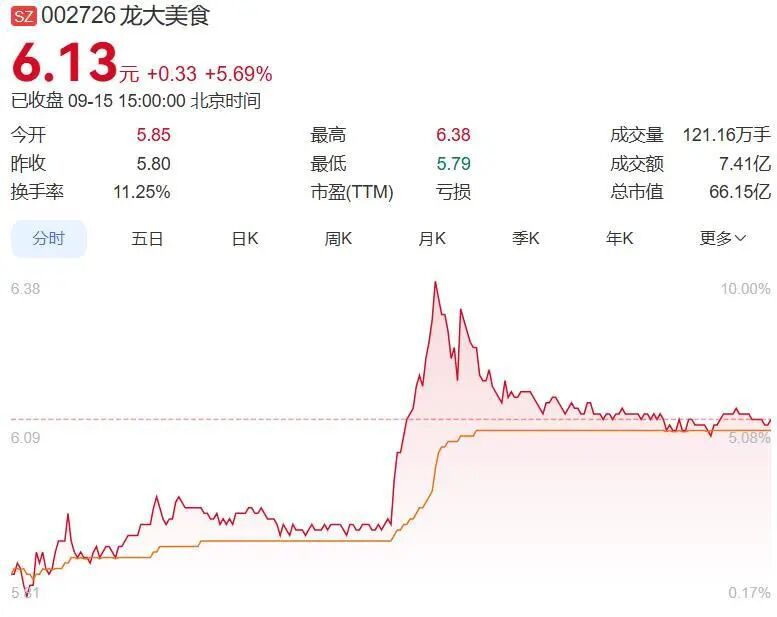
Group 1 - The recent events involving Luo Yonghao and Xibei have sparked renewed consumer interest in the "pre-prepared dishes" industry, leading to significant stock price increases for related listed companies [1] - Companies such as Delisi (002330), Huifa Food (603536), and Longda Meishi (002726) saw their stocks hit the daily limit, while Guolian Aquatic (300094) experienced a peak increase of 12.43% during trading [1] - The pre-prepared dishes market in China is projected to reach a scale of 485 billion yuan in 2024, with a year-on-year growth of 33.8%, and is expected to reach 749 billion yuan by 2026 [6] Group 2 - The regulatory framework for the pre-prepared dishes industry has begun to take shape, with various standards and regulations being established to promote high-quality development [4][5] - The National Market Supervision Administration and other ministries issued a notification in March 2024, providing clear definitions and standards for pre-prepared dishes [4] - Despite the rapid growth of the market, challenges such as low entry barriers, product homogeneity, and consumer trust issues have intensified competition, leading to a general decline in profits across the industry [7] Group 3 - Financial reports from several pre-prepared dish companies for the first half of 2025 indicate a decline in net profit, with Guolian Aquatic reporting a loss of 550 million yuan [9] - Most companies have experienced a decrease in gross profit margins, with notable declines in revenue for companies like Longda Meishi and Huifa Food [8][9] - The high-gross-margin companies, such as Anjixin Food and Sanquan Food, are identified as industry leaders, while others like Guangzhou Restaurant and Xianyin Food have restaurant operations that may affect their performance [10] Group 4 - The customer base for pre-prepared dishes includes a wide range of dining establishments, from fast food chains to high-end restaurants, indicating the widespread acceptance of these products in the food service industry [11] - Companies are exploring new profit growth points, with some, like Haodangjia, venturing into the health and wellness sector by developing marine product-based health supplements [11]


罗永浩大战贾国龙,预制菜闷声发大财
3 6 Ke· 2025-09-15 13:25
Core Viewpoint - The recent surge in the stock prices of pre-prepared food companies in A-shares is attributed to the public's renewed interest in the pre-prepared food industry, sparked by the apology from Jia Guolong and the upcoming national food safety standards for pre-prepared foods [1][5]. Group 1: Stock Performance - As of September 15, several companies, including Huifa Food, Guolian Aquatic, and Tiankang Biological, saw stock price increases of over 5%, with Delisi reaching a daily limit increase [2]. - Among the rising stocks, suppliers of pre-prepared food, such as Qianwei Yangchun and Longda Meishi, are also noted [3]. Group 2: Regulatory Developments - The significant stock price increase is linked to the approval of the draft national food safety standards for pre-prepared foods by the National Health Commission on September 13, which will provide a unified "identity certification" and safety baseline for the industry [5]. - The pre-prepared food industry has seen regulatory developments only in the past three years, with standards being gradually established [8]. Group 3: Industry History and Trends - The pre-prepared food industry in China dates back to the 1990s, with significant developments occurring between 2000 and 2005, when many of the currently rising companies were registered [6]. - The rise of pre-prepared foods has been facilitated by the emergence of central kitchens and cold chain logistics since 2008, allowing for standardization and wider adoption across various restaurant types [12]. Group 4: Consumer Perception and Market Dynamics - Consumers express concerns about the safety of pre-prepared foods, reflecting a deeper frustration over the loss of transparency regarding food preparation [10]. - The convenience and cost-effectiveness of pre-prepared foods make them appealing to both large and small restaurants, leveling the playing field in the food service industry [12].
罗永浩大战贾国龙,预制菜闷声发大财
36氪· 2025-09-15 13:03
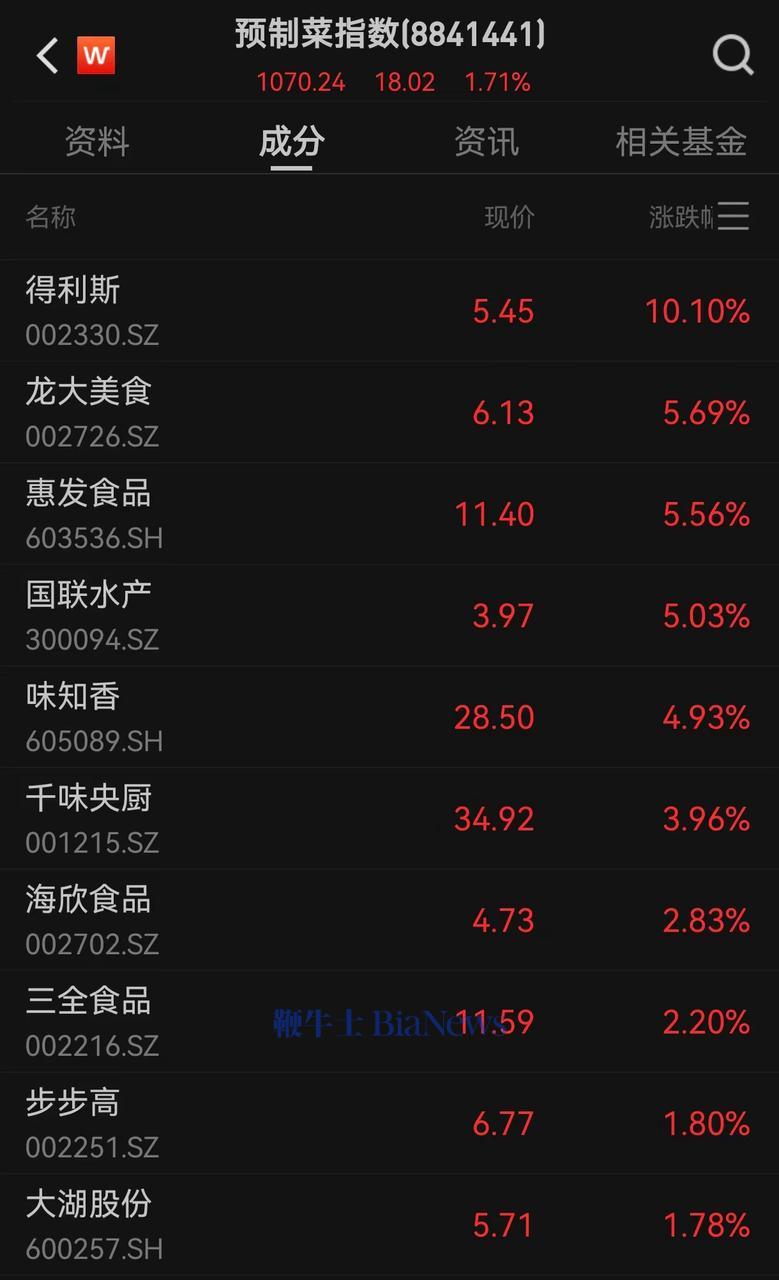
Core Viewpoint - The article discusses the recent surge in the stock prices of pre-prepared food companies in China, driven by the introduction of national food safety standards for pre-prepared dishes, which has brought renewed attention to the industry and its controversies [3][8]. Industry Overview - The pre-prepared food index has shown a growth of 1.71%, reaching a value of 1070.24 [6]. - Notable stock price increases include: - Delisi: 10.10% increase to 5.45 - Longda Food: 5.69% increase to 6.13 - Huifa Food: 5.56% increase to 11.40 - Guolian Aquatic: 5.03% increase to 3.97 [7]. Regulatory Developments - On September 13, the National Health Commission approved a draft for national food safety standards for pre-prepared dishes, which will soon be open for public consultation. This marks the first time the industry will have a unified standard and safety baseline [8]. - The regulatory framework for pre-prepared food has been evolving over the past three years, with significant milestones including the release of group standards by the China Cuisine Association in 2022 and the inclusion of pre-prepared food definitions in the Central Document No. 1 in 2023 [9][10]. Market Dynamics - The pre-prepared food industry in China has been developing since the 1990s, with significant growth occurring between 2000 and 2005, when many current companies were established [9]. - The rise of pre-prepared food has been facilitated by the advent of central kitchens and cold chain logistics, making it more accessible for various restaurants, including small eateries [12]. - The article highlights a shift in consumer sentiment, where the demand for pre-prepared food is driven by convenience, especially among busy individuals who may not have time to cook [10][12]. Consumer Sentiment - There is a growing concern among consumers regarding the safety and transparency of pre-prepared food, reflecting a deeper frustration with the lack of knowledge about what they are consuming [10]. - The article suggests that the nostalgia for traditional cooking methods and the "smoky" essence of home-cooked meals is prevalent among consumers, indicating a potential market for authentic dining experiences [13].

[e公司观察]罗永浩与西贝之争:预制菜产业健康发展迎契机
Zheng Quan Shi Bao· 2025-09-15 11:27
Core Insights - The debate between Luo Yonghao and Xibei highlights significant issues within the prepared food industry, revealing both reputational concerns and opportunities for healthy industry development [1] - The prepared food industry in China is experiencing rapid growth, with a projected market size of 485 billion yuan in 2024, reflecting a year-on-year increase of 33.8%, and expected to exceed 749 billion yuan by 2026 [1] - The lack of standardized definitions and regulations in the prepared food sector is a critical issue, as evidenced by the disagreement between Luo Yonghao and Xibei's founder regarding what constitutes prepared food [1] Industry Challenges - The prepared food industry faces challenges such as inconsistent standards, food safety risks, and an incomplete regulatory framework, which are exacerbated by increasing consumer demand and competition [2] - The upcoming national food safety standards for prepared foods, led by the National Health Commission, aim to address these issues by providing a unified definition and mandatory disclosure requirements for restaurants using prepared foods [2] - The market's positive response to the news of these standards indicates a potential for growth and increased investor interest in the prepared food sector [2] Quality and Consumer Trust - Quality is identified as a vital aspect of the prepared food industry, with consumer anxiety over product quality being a significant concern [3] - Companies must elevate quality to become a core competitive advantage, transitioning from merely fulfilling basic needs to offering value that consumers actively choose [3] - The anticipated introduction of the national food safety standards is expected to gradually resolve long-standing issues in the industry, promoting a more regulated and healthier market environment [3]
风波中的预制菜行业:门槛低竞争加剧,上市公司利润普遍下滑
Sou Hu Cai Jing· 2025-09-15 11:21
Core Viewpoint - The recent events involving Luo Yonghao and Xibei have sparked renewed consumer interest in the "pre-prepared dishes" industry, leading to significant stock price increases for related listed companies on September 15, 2025 [1][10]. Industry Overview - The pre-prepared dishes industry is gradually entering a path of standardized development, with regulations and standards being established in recent years. However, challenges such as low entry barriers and varying consumer perceptions complicate market entry for new players [3][4]. - In March 2024, a joint notification from several government departments outlined clear definitions and standards for pre-prepared dishes, marking the beginning of a standardized development path for the industry [4]. Market Growth - According to iMedia Consulting, the market size of China's pre-prepared dishes reached 485 billion yuan in 2024, reflecting a year-on-year growth of 33.8%. The market is expected to grow to 749 billion yuan by 2026 due to technological advancements and supportive policies [5]. Competitive Landscape - Despite rapid market growth, the industry faces intense competition, characterized by low entry barriers, product homogeneity, and a crisis of consumer trust, leading to declining profits across many companies [6][9]. - Financial reports from various pre-prepared dish companies for the first half of 2025 indicate a general decline in net profits, with several companies reporting losses. For instance, Guolian Aquatic Products reported a loss of 550 million yuan [7][9]. Company Performance - Key financial metrics from several pre-prepared dish companies for the first half of 2025 include: - Longda Meishi: Revenue of 782 million yuan (-19.5% YoY), gross margin of 12.43% (+1.24% YoY) - Guolian Aquatic Products: Revenue of 1.65 billion yuan (-18.36% YoY), net loss of 550 million yuan - Huifa Food: Revenue of 734 million yuan (-17.75% YoY), net loss of 31 million yuan - Aixin Food: Revenue of 7.604 billion yuan (+0.8% YoY), gross margin of 20.52% (-3.39% YoY) [7][9]. Consumer Insights - Consumers express a desire for transparency and choice regarding pre-prepared dishes, indicating that they are not opposed to the concept but seek better information about the products [10].


预制菜国标或将出台,多只概念股走强,得利斯一字涨停
Nan Fang Du Shi Bao· 2025-09-15 11:02
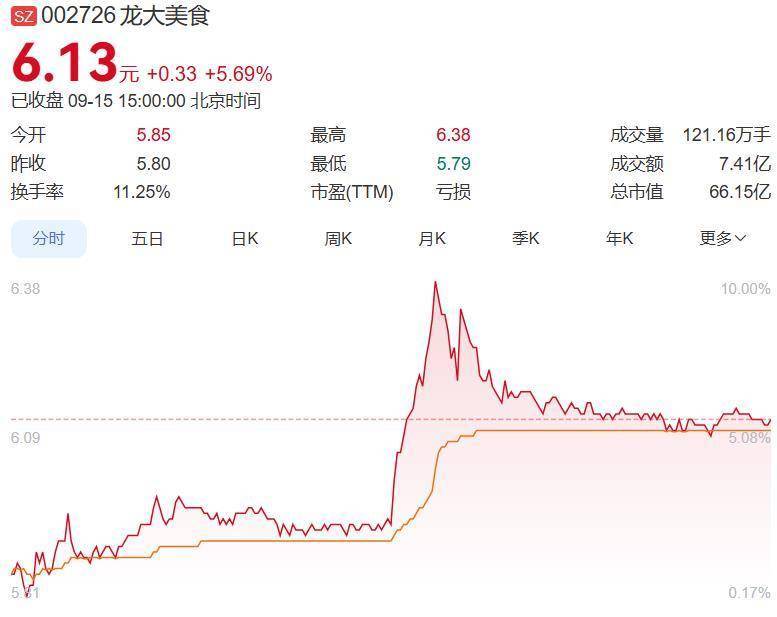
Core Viewpoint - The recent controversy surrounding pre-prepared dishes, sparked by comments from entrepreneur Luo Yonghao, has led to increased attention on the pre-prepared food sector, particularly with the upcoming national food safety standards set to clarify the definition and disclosure requirements for pre-prepared dishes [2][4] Industry Summary - The National Health Commission has successfully passed the draft of the "National Standards for Food Safety of Pre-prepared Dishes," which will soon be open for public consultation, aiming to establish a unified standard for the industry [2][4] - The introduction of these standards is expected to enhance industry self-regulation and benefit leading brands, allowing them to consolidate their market advantages [3][4] Company Summary - Following the news, several A-share pre-prepared dish concept stocks experienced significant gains, with Delisi reaching a 10.10% increase, closing at 5.45 yuan, and projecting that pre-prepared dish revenue will account for 21.67% of its total revenue in 2024 [3] - Other notable stocks included Weizhi Xiang, which saw a 4.93% increase, and Longda Meishi, a supplier to Xibei, which rose by 5.69% after signing a strategic cooperation agreement with Xibei [3]


A股两大板块走强,超100亿资金流入超级赛道
Zheng Quan Shi Bao· 2025-09-15 09:48
Market Overview - The A-share market experienced slight fluctuations, with the Shenzhen Component Index closing above 13,000 points for the first time in nearly three years, while the ChiNext Index and CSI 300 also reached multi-year highs [1] - The Shanghai Composite Index and SSE 50 showed minor declines, with a total trading volume shrinking to 2.3 trillion yuan [1] Sector Performance - The battery, gaming, pork, and film sectors saw significant gains, while aerospace equipment, rare metals, communication devices, and consumer electronics faced declines [1] - The automotive industry attracted over 10.4 billion yuan in net inflows, making it the only sector with net inflows exceeding 10 billion yuan for the day [2] - Other sectors like media, machinery, and power equipment received over 2 billion yuan in net inflows, while electronics and non-ferrous metals experienced significant net outflows of over 7.1 billion yuan and 4.3 billion yuan, respectively [2] Pork Sector Insights - The pork sector saw a strong performance, with the index reaching a one-and-a-half-year high, driven by stocks like Delisi and Aonong Biological, which saw gains of over 10% [3][4] - The Ministry of Agriculture and Rural Affairs is set to hold a meeting on September 16 to discuss production capacity control in the pig farming industry, which may lead to a gradual exit of inefficient capacity and an increase in price levels [5] - Huaxi Securities noted that the ongoing measures to curb overproduction in the pig industry could enhance the profitability of companies with high breeding efficiency and cost control [5] Gaming Sector Developments - The gaming sector surged over 4%, reaching an eight-year high, with stocks like Xinghui Entertainment and Perfect World hitting significant gains [6] - The DOTA2 International Championship recently concluded, with a Chinese team finishing as runners-up, and the next championship is scheduled to be held in Shanghai in 2026 [7] - Citic Securities anticipates a noticeable increase in gaming companies' Q3 performance due to strong summer revenues and the release of popular games in Q2 [7]
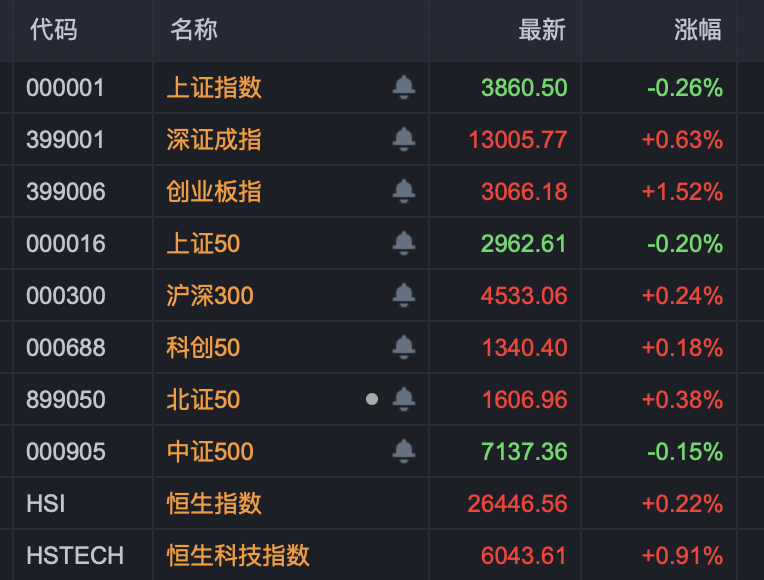
A股收评:创业板指涨1.52%,游戏、猪肉板块涨幅居前
Nan Fang Du Shi Bao· 2025-09-15 09:45
Market Overview - The three major A-share indices showed mixed results on the 15th, with the Shanghai Composite Index down by 0.26%, the Shenzhen Component Index up by 0.63%, and the ChiNext Index up by 1.52% [2] - The total trading volume in the Shanghai and Shenzhen markets was 23,031 billion yuan, a decrease of 2,452 billion yuan compared to the previous day [2] Sector Performance - Over 3,300 stocks in the market experienced declines [2] - The gaming, pork, film and television, automotive parts, and CRO concept stocks saw the largest gains [2] - Conversely, the precious metals, military equipment, and copper cable high-speed connection sectors faced the most significant declines [2] Notable Stocks - The automotive parts sector had multiple stocks surge, with companies like Shanzhi Gaoke, Zhejiang Sebao, and Wanxiang Qianchao hitting the daily limit [2] - The gaming sector experienced high volatility, with Xinghui Entertainment reaching the daily limit and Perfect World also closing strong [2] - Pork stocks saw afternoon gains, with Aonong Biological and Delisi hitting the daily limit, while Tiankang Biological, Lihua Shares, and Longda Meishi showed notable increases [2] Sector Movements - Semiconductor, battery, and computing power sectors exhibited fluctuations during the trading session [2] - On the downside, the precious metals sector saw multiple stocks adjust, with Xiaocheng Technology dropping over 5% at the close [2] - The military equipment sector also faced downward pressure, with China Satellite, Aerospace Hongtu, and LIGONG Navigation showing significant declines [2]