
水晶光电

Search documents
贝莱德基金神玉飞清仓卸任2只基金 其中一只基金任职回报为负
Xi Niu Cai Jing· 2025-09-28 08:30
Group 1 - The core point of the news is that Shen Yufei, the Chief Equity Investment Officer at BlackRock Fund, has resigned from managing the BlackRock China New Horizons Mixed Fund and the BlackRock Industry Preferred Mixed Fund due to personal reasons [2][4] - Shen Yufei's management returns for the BlackRock China New Horizons Mixed Fund and the BlackRock Industry Preferred Mixed Fund are reported as 22.18% and -1.34% respectively [1][2] - The BlackRock Industry Preferred Mixed Fund, which was established in March 2023, has seen a decline of 13% in its unit net value since inception, underperforming its benchmark by 15.9 percentage points [1][3] Group 2 - As of the end of the second quarter, the BlackRock Industry Preferred Mixed Fund had a stock allocation of 91.43% and did not hold any bonds [3] - The fund's top ten holdings include China Galaxy, Haili Wind Power, Juhua Co., Jiangsu Bank, Yifang Bio, China Ping An, Sanmei Co., Crystal Optoelectronics, Guorui Technology, and Zijin Mining [3] - The fund's semi-annual report indicates that while the operational strategies around tariff impacts were generally effective, there were shortcomings in the depth and breadth of research coverage, which the fund aims to improve in the future [3]


水晶光电股价跌5.09%,圆信永丰基金旗下1只基金重仓,持有40.39万股浮亏损失56.55万元
Xin Lang Cai Jing· 2025-09-26 07:16
Company Overview - Crystal Optoelectronics, established on August 2, 2002, and listed on September 19, 2008, is located in Taizhou, Zhejiang Province. The company specializes in the research, production, and sales of optical imaging, film optical panels, automotive electronics (AR+), reflective materials, and related products [1]. - The main business revenue composition is as follows: Consumer Electronics 84.20%, Automotive Electronics (AR+) 8.00%, Reflective Materials 6.21%, and Others 1.60% [1]. Stock Performance - On September 26, Crystal Optoelectronics' stock fell by 5.09%, closing at 26.13 CNY per share, with a trading volume of 1.428 billion CNY and a turnover rate of 3.94%. The total market capitalization is 36.337 billion CNY [1]. Fund Holdings - According to data from the top ten holdings of funds, one fund under Yuanxin Yongfeng has a significant position in Crystal Optoelectronics. The Yuanxin Yongfeng Multi-Strategy Fund (004148) held 403,900 shares in the second quarter, accounting for 3.01% of the fund's net value, making it the sixth-largest holding. The estimated floating loss today is approximately 565,500 CNY [2]. - The Yuanxin Yongfeng Multi-Strategy Fund (004148) was established on March 29, 2017, with a current scale of 268 million CNY. Year-to-date returns are 48.59%, ranking 1303 out of 8171 in its category; the one-year return is 82.31%, ranking 1083 out of 8004; and since inception, the return is 132.02% [2]. Fund Management - The fund manager of Yuanxin Yongfeng Multi-Strategy Fund (004148) is Hu Chunxia, who has been in the position for 7 years and 191 days. The total asset scale of the fund is 2.59 billion CNY, with the best fund return during her tenure being 79.27% and the worst being -25.6% [3].

智能眼镜出货量暴增,光峰科技、利亚德等A股企业竞逐AR光学赛道
Xin Lang Cai Jing· 2025-09-25 09:11
Core Insights - The global smart glasses market is experiencing a significant surge, with shipments expected to increase by 110% year-on-year in the first half of 2025, and AI-enabled smart glasses accounting for 78% of this growth [1][4] - Major companies in the AR and AI glasses sector, including Guangfeng Technology, Liyade, and BOE, are launching innovative products and solutions that address industry pain points and enhance user experience [1][2] Company Developments - Guangfeng Technology introduced a pioneering "LCoS + PVG optical solution" for AR glasses, which utilizes a single optical engine to drive dual displays, potentially disrupting the current pricing structure of AR glasses [1] - Liyade has developed AR glasses that integrate Micro LED technology with AI capabilities, focusing on B2B applications in sectors like tourism and healthcare, and aims to provide customized solutions [1][2] - BOE's Huacan showcased a 0.13-inch Micro LED display module, emphasizing low power consumption and high brightness, alongside a 6.2-inch full-color HUD for automotive applications [1][2] - NewXiangwei is expanding its product matrix to include high-end display chips for AR glasses, with a focus on domestic and automotive applications [2] - Omnivision's LCoS microdisplay technology is being utilized in Meta's first AR glasses, indicating a strategic partnership in the XR technology space [2] - GoerTek announced a capital increase to enhance its micro-nano optical capabilities, strengthening its competitive position in the VR/AR market [2] - Jiahe Intelligent's acquisition of Beyerdynamic aims to enhance its AR/AI glasses business through synergies in audio technology [2] - Luxshare Precision showcased a new generation of full-color AR glasses and has initiated mass production of PVG polarized AR glasses designed for outdoor use [2] - Lens Technology is positioning itself as a core supplier for AI glasses, with significant involvement in the assembly and supply chain for major clients [2] - Crystal Optoelectronics reported a 79% revenue increase in automotive AR applications, highlighting its growth in the next-generation terminal market [2][3] Industry Trends - The AR optical technology landscape is dominated by reflective waveguides and surface relief gratings, with the former leading in efficiency but facing manufacturing challenges [3] - The industry is transitioning from conceptual exploration to mass production, with a notable increase in demand for AI glasses, particularly in the Chinese market [4]


智能眼镜出货量暴增,光峰科技、利亚德等A股企业竞逐 AR 光学赛道
Xin Lang Zheng Quan· 2025-09-25 08:25
Group 1: Industry Overview - AI glasses are emerging as the next potential category following smartphones and smartwatches, with global shipments expected to exceed 10 million units within 2-3 years due to lower price barriers and improved application ecosystems [1] - In the first half of 2025, global smart glasses shipments surged by 110% year-on-year, with AI-enabled smart glasses accounting for 78% of the total, a significant increase from 46% in the first half of 2024 and 66% in the second half of 2024 [1] Group 2: Company Developments - Guangfeng Technology launched an innovative "LCoS + PVG optical waveguide" AR glasses solution, which reduces hardware costs and complexity by using a single optical engine for dual-eye display, potentially lowering retail prices to the range of 1500-2000 yuan [2][3] - Leyard's AR glasses, integrating Micro LED technology and AI, are set to launch in October 2025, targeting B-end customers in sectors like tourism and healthcare, with a focus on customized solutions [4][5] - BOE and Huacan's Micro LED display module was showcased, featuring a peak brightness of 400W nit, indicating advancements in display technology for AR applications [6] - NewXiangwei is expanding its product matrix to include display driver chips for AR glasses, aiming to cover multiple display scenarios and enhance its market presence [8] - OmniVision's LCoS microdisplay is being supplied to Meta's first AR glasses, with an expected shipment of 150,000 to 200,000 units over two years [9] - GoerTek is investing 400 million yuan to strengthen its micro-nano optics layout, enhancing its competitiveness in the VR/AR sector [10][11] - Jiahe Intelligent's acquisition of Beyerdynamic aims to enhance its AR/AI glasses capabilities, leveraging Beyerdynamic's expertise in audio technology [12] - Luxshare Precision showcased a new generation of full-color AR glasses with extended battery life and advanced features, while also ramping up production for Meta's next-generation AR glasses [13][14][15] - Lens Technology is accelerating the mass production of AI glasses, positioning itself as a core supplier in the North American market [16][17] - Crystal Optoelectronics reported a 79% revenue increase in automotive AR applications, indicating strong growth potential in this segment [18] - United Optoelectronics is focusing on building a comprehensive AR glasses production system, collaborating with Yiwentech to enhance its technological capabilities [20]
国信电子团队 | 年度研究成果精选
剑道电子· 2025-09-24 14:50
Core Viewpoint - The article highlights the achievements and expertise of the electronic research team at Guosen Securities, emphasizing their recognition in the industry and their focus on semiconductor and consumer electronics sectors [2][3][4][5][6][7]. Group 1: Team Achievements - The electronic research team has received multiple awards, including the 2024 Securities Analyst Golden Bull Award for Best Industry Analyst Team and the 2024 Sina Finance Golden Unicorn Elite Analyst ranking 4th in the semiconductor and consumer electronics sectors [2]. - The team has consistently ranked highly in various analyst competitions, showcasing their expertise and recognition in the electronic industry [2][3][4][5][6][7]. Group 2: Industry Focus - The team covers key areas such as semiconductor technology, AI computing, and consumer electronics, indicating a strategic focus on sectors poised for growth [8][11][12][13]. - Reports on semiconductor market trends and investment strategies highlight the potential for AI-driven innovations and the importance of domestic alternatives in the industry [10][11][12][16]. Group 3: Key Company Research - Notable companies such as Industrial Fulian, Demingli, and Zhongke International have shown significant revenue growth, with Industrial Fulian reporting a 51% year-on-year profit increase in Q2 [15][17]. - The semiconductor sector is experiencing a rebound, with companies like SMIC and Jiewa Technology achieving record revenues and high capacity utilization rates [15][17].
智能车革命改变社会生产力和生产关系,500质量成长ETF(560500)红盘蓄势
Xin Lang Cai Jing· 2025-09-24 02:52
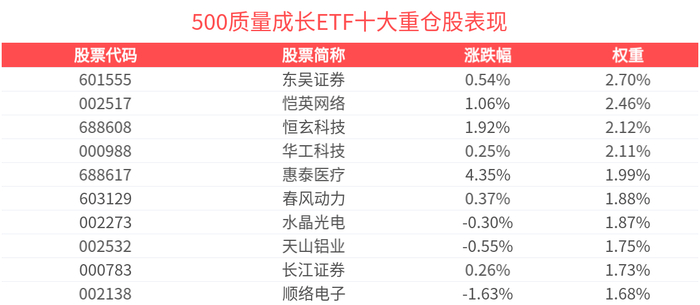
Group 1 - The core viewpoint of the articles highlights the growth and potential of the smart vehicle industry, particularly in the context of AI advancements and the upcoming World Intelligent Connected Vehicles Conference [1][2] - The Ministry of Industry and Information Technology has released safety requirements for intelligent connected vehicle auxiliary driving systems, indicating a regulatory push towards standardization in this sector [1] - The smart vehicle market is projected to reach a scale of 83.1 billion yuan by 2030 and grow to 709.6 billion yuan by 2035, emphasizing the significant growth potential in the Robotaxi segment [2] Group 2 - The CSI 500 Quality Growth Index has shown a positive performance, with notable increases in constituent stocks such as Blu-ray Technology (5.65%) and Hisense Visual (5.20%) [1] - The top ten weighted stocks in the CSI 500 Quality Growth Index account for 21.48% of the index, with East Wu Securities being the highest at 2.70% [3][4] - The CSI 500 Quality Growth ETF closely tracks the CSI 500 Quality Growth Index, providing investors with diversified investment options focused on companies with strong profitability and sustainable cash flow [2][6]
美银:全球智能眼镜竞赛已加速 中国牢牢占领制造中心地位
智通财经网· 2025-09-23 13:39
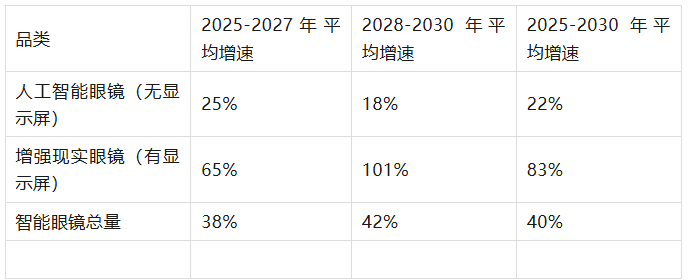
Core Insights - The smart glasses industry is approaching a "critical point of explosion" with major tech companies like Meta launching new smart glasses [1] - Bank of America predicts that AI glasses will dominate growth from 2025 to 2027, while AR glasses are expected to take over as the main growth driver starting in 2028 [1][2] - China is positioned as a key player in the global smart glasses supply chain, controlling over 80% of core components [4] Industry Trends - The smart glasses market is entering a phase of accelerated demand release, characterized by a "two-phase differentiation" growth logic [2] - Phase one (2025-2027): AI glasses, which do not have displays, are expected to lead growth with an average annual shipment growth rate of 25% due to their mature technology and cost-effectiveness [2] - Phase two (2028 onwards): AR glasses are projected to replace AI glasses, with an average annual shipment growth rate of 101% as display technology and optical solutions improve [3] Market Outlook - The global smart glasses shipment volume is expected to have a compound annual growth rate (CAGR) of 40% from 2025 to 2030, with a potential doubling point around 2027 driven by consumer electronics replacement cycles and enterprise applications [3] Supply Chain Dynamics - The global smart glasses supply chain is characterized by "China dominance and regional division of labor," with Chinese suppliers covering key areas such as cameras, optical waveguides, MEMS, and batteries [4] - Major manufacturing bases for smart glasses are concentrated in China, while some non-core assembly processes are gradually moving to Southeast Asia to mitigate supply chain risks [5] Technological Barriers - The core competitive focus in the industry is on two technological directions: drug delivery efficiency and user adaptability, with companies holding key technology patents establishing differentiated barriers [6] Key Company Analysis - **GoerTek (歌尔股份)**: Recognized as a global assembly leader with over 70% of orders from major clients like Meta and Sony, target price set at 42 RMB based on a 34x PE ratio for 2026 [7][8] - **Crystal Optoelectronics (水晶光电)**: Core supplier of AR optical waveguide plates with a target price of 30 RMB based on a 27x PE ratio for 2026, supported by a stable 22% CAGR in earnings from 2024 to 2027 [10] - **Sunny Optical Technology (舜宇光学)**: Major supplier of camera modules with over 60% global market share, target price set at 104 HKD based on a 25x PE ratio for 2026 [12]

大行报告|美银:全球智能眼镜竞赛已加速,中国牢牢占领制造中心地位
智通财经网· 2025-09-23 13:32
Core Viewpoint - The smart glasses industry is approaching a "breakout critical point" with major tech companies like Meta launching new smart glasses, and AI glasses expected to dominate growth from 2025 to 2027, followed by AR glasses from 2028 onwards. China is positioned as a key player in the global supply chain with over 80% supplier representation [1]. Industry Trends - The smart glasses market is entering a phase of accelerated demand release, characterized by a "two-stage differentiation" growth logic: - **First Stage (2025-2027)**: AI glasses will lead growth with an expected annual shipment growth rate of 25%, focusing on lightweight applications such as voice interaction and health monitoring [2]. - **Second Stage (2028 onwards)**: AR glasses will take over with an anticipated annual shipment growth rate of 101%, driven by advancements in display technology and computational power [2]. - The overall global smart glasses shipment compound annual growth rate (CAGR) from 2025 to 2030 is projected to reach 40%, with a doubling point expected around 2027 due to consumer electronics replacement cycles and enterprise applications [2]. Supply Chain Dynamics - The global smart glasses supply chain is characterized by "China dominance and regional division of labor": - **Supply Side**: Chinese companies control over 80% of core components, including cameras, optical waveguides, MEMS, and batteries, with significant market shares in camera modules, optical coatings, and assembly [3]. Manufacturing Landscape - China remains the core manufacturing base for smart glasses, with major production hubs in Shandong and Guangdong. However, electronic manufacturing services (EMS) are gradually shifting some non-core assembly operations to Southeast Asia to mitigate supply chain risks, while retaining core component production in China [4]. Technological Barriers - The industry's core competitive focus is on two main technological directions: - Drug delivery efficiency (e.g., optical transmittance for AR glasses, voice recognition accuracy for AI glasses) - User adaptability (e.g., lightweight design, battery life, and matching usage scenarios for different demographics) [5]. Key Company Analysis - **GoerTek**: Recognized as the global leader in smart glasses assembly, with over 70% of orders from major clients like Meta and Sony. The target price is set at 42 RMB based on a projected PE of 34 times for 2026, reflecting a 30% annual growth expectation in the smart glasses assembly business [6]. - **Crystal Optoelectronics**: A core supplier of optical waveguides for AR glasses, with a target price of 30 RMB based on a PE of 27 times for 2026. The company is expected to achieve a stable 22% CAGR in earnings from 2024 to 2027 [7]. - **Sunny Optical**: A leading supplier of camera modules for smart glasses, with a target price of 104 HKD based on a PE of 25 times for 2026. The company is positioned for growth due to improvements in the optical industry and the potential of smart glasses as a second growth curve [10].

美银:全球智能眼镜竞赛已加速,中国牢牢占领制造中心地位
Zhi Tong Cai Jing· 2025-09-23 13:18
Core Insights - The smart glasses industry is approaching a "breakout critical point" with major tech companies like Meta launching new smart glasses [1] - Bank of America predicts that AI glasses will dominate growth from 2025 to 2027, while AR glasses are expected to take over as the main growth driver starting in 2028 [1] - China is positioned to play a crucial role in the global smart glasses supply chain, controlling over 80% of suppliers [1] Industry Trends - The smart glasses market is entering a phase of accelerated demand release, characterized by a "two-stage differentiation" growth logic [2] - **First Stage (2025-2027)**: AI glasses will lead growth with an expected annual shipment growth rate of 25% due to their high technological maturity and cost control [2] - **Second Stage (2028 onwards)**: AR glasses are projected to replace AI glasses, with an anticipated annual shipment growth rate of 101% as display technology and optical solutions improve [2] - The overall market is expected to see a compound annual growth rate (CAGR) of 40% from 2025 to 2030, with a doubling point in shipments around 2027 driven by consumer electronics replacement cycles and enterprise applications [2] Supply Chain Dynamics - The global smart glasses supply chain is characterized by "China dominance and regional division of labor" [3] - **Supply Side**: Chinese companies control over 80% of core components, including cameras, optical waveguides, MEMS, and batteries, with significant market shares in key areas [3] - **Manufacturing Side**: China remains the core manufacturing base, while EMS companies are gradually shifting some non-core assembly operations to Southeast Asia to mitigate supply chain risks [3] - The industry focuses on two main technological directions: drug delivery efficiency and user adaptability, with companies holding core technology patents establishing differentiated barriers [3] Key Company Analysis - **GoerTek**: Upgraded to "Buy" due to its position as the world's largest smart glasses assembler, with over 70% of assembly orders from major clients like Meta and Sony. Target price set at 42 RMB based on a 34x PE ratio for 2026 [4] - **Crystal Optoelectronics**: Maintained "Buy" rating as a core supplier of AR optical waveguide plates, with a target price of 30 RMB based on a 27x PE ratio for 2026 [6] - **Sunny Optical**: Also rated "Buy," recognized for its dual capabilities in camera modules and optical waveguides, with a target price of 104 HKD based on a 25x PE ratio for 2026 [9]

水晶光电(002273):一站式光学解决方案专家,AR打造增长新引擎
HUAXI Securities· 2025-09-23 11:26
Investment Rating - The report assigns a "Buy" rating to the company [4] Core Views - The company has established a diversified layout in optical technology, focusing on three major growth curves: consumer electronics, automotive optics, and metaverse optics [1][15] - The company is positioned as a leading provider of one-stop optical solutions, leveraging its core technologies in thin film optics, optical cold processing, semiconductor optics, and optical system design [1][15] Summary by Sections Company Overview - Founded in 2002 and listed in 2008, the company has deepened its expertise in optics and has expanded into various sectors including consumer electronics, automotive optics, and metaverse optics [1][15] - The company has a well-structured governance model with a focus on long-term incentives for core talent [22][25] Consumer Electronics - The company has achieved significant milestones in optical technology, particularly with its coating filter project, which became the only mass production in China in 2021 [2] - The micro-prism module was successfully mass-produced in June 2023, making the company the first global supplier of quadruple reflection prism modules [2] Automotive Optics - The company has developed a comprehensive range of products for Head-Up Displays (HUD), with a focus on AR-HUD technology [3] - The company has secured multiple new project orders from leading domestic and joint venture brands, expanding its market coverage [3] AR Glasses - The company has established a product development layout for optical display systems, optical components, and other optical components, positioning itself as a key player in the AR market [4] Financial Forecast and Valuation - The company is projected to achieve revenues of 75.04 billion, 89.18 billion, and 103.36 billion yuan for the years 2025, 2026, and 2027, respectively, with year-on-year growth rates of 19.53%, 18.83%, and 15.91% [8] - The net profit attributable to shareholders is expected to be 12.58 billion, 15.55 billion, and 18.61 billion yuan for the same years, with growth rates of 22.15%, 23.59%, and 19.70% [8]