
艾为电子

Search documents
行业点评报告:AI大模型厂商加速导入硬件入口,端侧AI产业链投资机遇可期
KAIYUAN SECURITIES· 2025-09-16 02:34
Investment Rating - The industry investment rating is "Positive" (maintained) [1] Core Insights - The AI model continues to iterate, with edge-side AI becoming a core direction, emphasizing lightweight and efficient models [5][6] - Major global AI models are rapidly iterating through algorithm optimization and data accumulation, enhancing capabilities and optimizing inference effects [5][6] - The collaboration between cloud and edge computing is expected to optimize costs, energy consumption, and performance, shifting the focus of AI processing from the cloud to devices like smartphones and PCs [5][6] Summary by Sections Industry Trends - The importance of terminal hardware entry is highlighted, with major AI model manufacturers accelerating the integration of hardware to facilitate the rapid deployment of various AI functions and applications [6] - Companies like Google, Alibaba, and Apple are actively developing AI hardware and applications, indicating a strong push towards integrating AI technology into consumer devices [6] Technological Developments - AI terminals are evolving with advancements in hardware, energy efficiency, and interaction forms, focusing on enhancing local computing power and user experience [7] - The integration of NPU in SoC is improving local computing capabilities, while storage technology is advancing towards high bandwidth and low latency [7] Investment Opportunities - Beneficial targets for investment include brands like Transsion Holdings, Xiaomi Group, and various component manufacturers such as Lens Technology and Sunyu Optical Technology [8] - The edge-side AI model market is expected to grow rapidly, with projections indicating that by 2025, the AI smartphone market share in China will reach approximately 30% [6][8]
心智观察所| 反倾销“双响炮”:中国打响模拟芯片保卫战
Guan Cha Zhe Wang· 2025-09-16 00:36
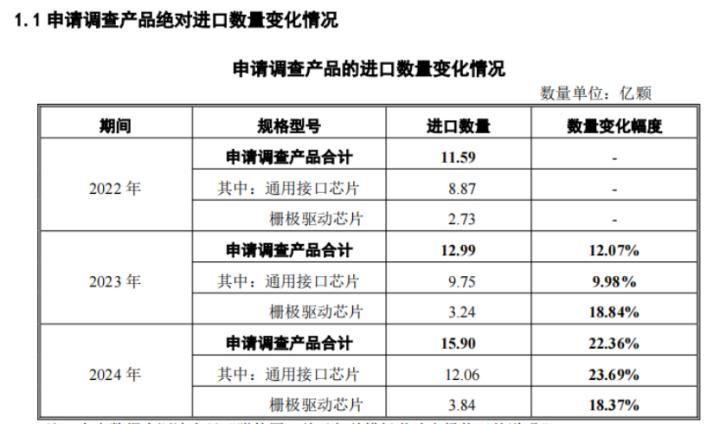
Core Viewpoint - The Chinese Ministry of Commerce has initiated anti-dumping investigations against U.S. analog chips and anti-discrimination investigations regarding U.S. measures in the integrated circuit sector, marking a new phase in the semiconductor competition between China and the U.S. [1][2] Group 1: Strategic Context - The timing of China's anti-dumping investigation is a direct response to the tightening of U.S. technology restrictions under the Trump administration, which is considering adding several Chinese chip manufacturers to an export blacklist [2][3] - The anti-dumping investigation is seen as a means to protect China's semiconductor industry and is supported by the Jiangsu Semiconductor Industry Association, reflecting the industry's demand for fair competition [2][4] Group 2: Product Focus - The investigation targets two specific product categories: general interface chips and gate driver chips, which are critical components in electronic systems and power management [3][4] - General interface chips serve as essential connectors in data transmission, while gate driver chips are crucial for controlling power semiconductor devices in applications like electric vehicles and industrial automation [3][4] Group 3: Market Data - From 2022 to 2024, the market share of U.S. analog chip products in China increased from 35.40% to 44.98%, with general interface chips rising from 36.94% to 48.63% and gate driver chips from 31.19% to 36.39% [4][9] - The import volume of the investigated products has shown significant growth, with a total of 11.59 billion units imported in 2022, increasing to 15.90 billion units projected for 2024 [5][7] Group 4: Pricing Dynamics - The average price of U.S. products has dropped dramatically from 3.36 yuan per unit to 1.62 yuan per unit, a decline of 51.77%, indicating a classic "price drop with volume increase" scenario typical of dumping practices [7][9] Group 5: Domestic Industry Challenges - Despite being the largest consumer market for analog chips, China's domestic production capability remains weak, with a local market share of only about 10% [10][14] - The complexity of analog chip design, which relies heavily on experienced engineers and specialized manufacturing processes, poses significant barriers to domestic companies [11][12] Group 6: Strategic Implications - The investigation is expected to create a more equitable competitive environment for domestic manufacturers like Sanan Optoelectronics and Aihua Electronics, particularly in the automotive and industrial control sectors [15][16] - The focus on products with a process technology of 40nm and above is strategic, as it aligns with China's existing manufacturing capabilities and market demand [15][16] Group 7: Long-term Industry Outlook - The anti-dumping measures are seen as a necessary step to protect and develop China's semiconductor industry, fostering a shift from merely filling gaps to building a robust technological foundation [16][17] - The investigation may catalyze a broader reevaluation of supply chains, encouraging more companies to consider domestic suppliers and enhancing the resilience of China's semiconductor ecosystem [16][17]

反倾销“双响炮”:中国打响模拟芯片保卫战
Guan Cha Zhe Wang· 2025-09-16 00:27
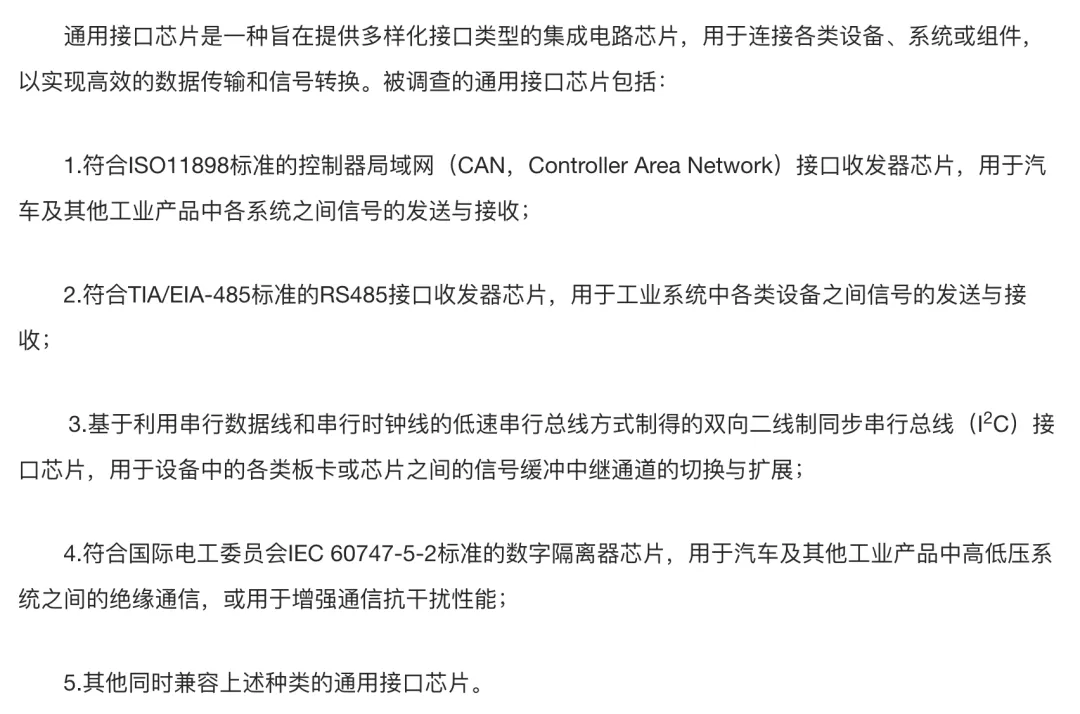
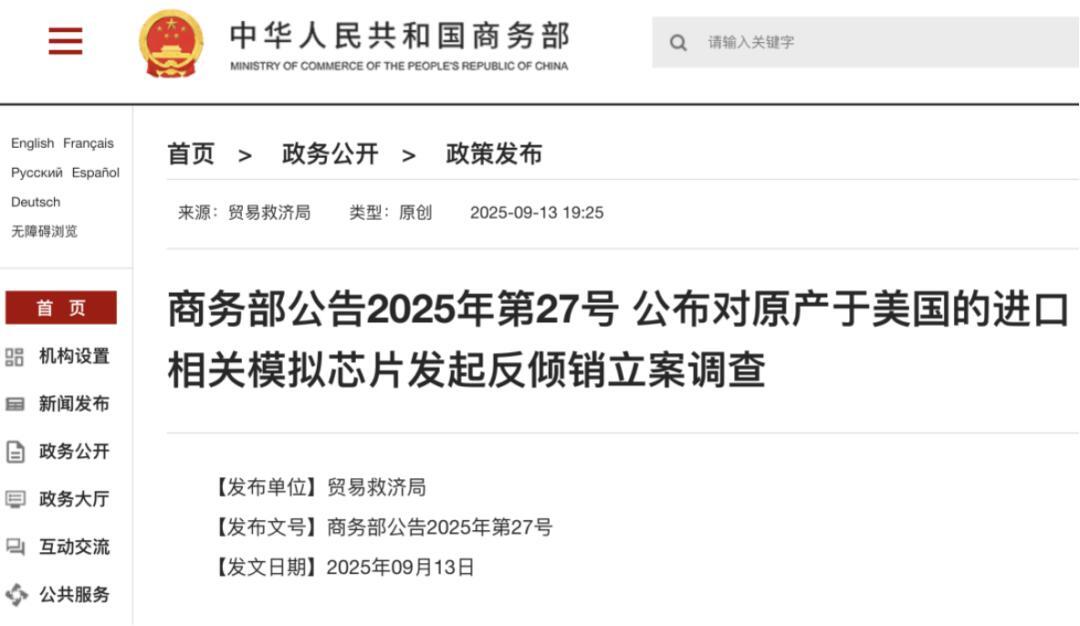
Core Viewpoint - The Chinese Ministry of Commerce has initiated anti-dumping investigations against U.S. semiconductor products, marking a new phase in the U.S.-China semiconductor competition [1][2]. Group 1: Strategic Context - The timing of China's anti-dumping investigation is a direct response to the tightening of U.S. technology restrictions under the Trump administration, which is considering adding several Chinese chip manufacturers to an export blacklist [2]. - The anti-dumping investigation serves three strategic purposes: compliance with WTO rules, economic retaliation against U.S. measures, and targeted action against specific products to avoid broader conflict escalation [2][3]. Group 2: Product Focus - The investigation targets two specific product categories: general interface chips and gate driver chips, which are critical components in various electronic systems [3][4]. - General interface chips are essential for data transmission and system interconnectivity, while gate driver chips manage power semiconductor devices, particularly in rapidly growing sectors like electric vehicles and industrial automation [3][4]. Group 3: Market Dynamics - U.S. semiconductor products have seen a significant increase in market share in China, rising from 35.40% in 2022 to 44.98% in 2024, with specific increases in general interface chips from 36.94% to 48.63% and gate driver chips from 31.19% to 36.39% [3][4]. - The average price of U.S. products has dropped dramatically, with a 51.77% decline from 3.36 yuan to 1.62 yuan per unit, while import volumes increased by 37%, indicating a classic "price drop with volume increase" dumping scenario [6][8]. Group 4: Domestic Industry Challenges - China is the largest consumer market for analog chips, accounting for approximately 36% of the global market, but the domestic production rate is only about 10%, highlighting a significant supply-demand gap [10]. - The complexity of analog chip design and manufacturing, which relies heavily on experienced engineers and specialized processes, poses substantial barriers to domestic companies attempting to scale up [11][12]. Group 5: Implications of the Investigation - The investigation specifically targets products with a process technology of 40nm and above, which aligns with China's existing capabilities, potentially allowing for domestic companies to gain market share in these segments [13]. - If anti-dumping duties are implemented, U.S. companies like Texas Instruments and ADI may face increased costs and reduced competitiveness in the Chinese market, which could impact their global operations [13][14]. Group 6: Strategic Opportunities - The anti-dumping investigation is seen as a strategic opportunity for China's semiconductor industry to accelerate innovation and strengthen its supply chain resilience in response to external pressures [16]. - The shift in perception among downstream companies towards domestic suppliers is expected to enhance the growth potential for local analog chip manufacturers, particularly in automotive and industrial applications [14][15].
艾森股份大宗交易成交498.72万元
Zheng Quan Shi Bao Wang· 2025-09-15 13:46
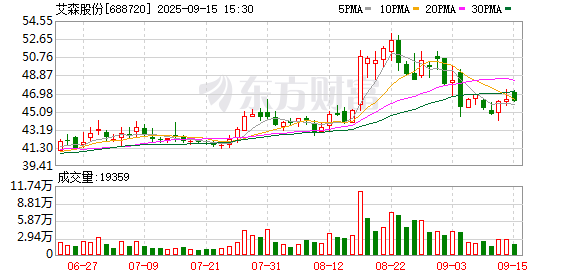
Group 1 - The core transaction of Aisen Co., Ltd. on September 15 involved a block trade of 118,800 shares, amounting to 4.9872 million yuan, with a transaction price of 41.98 yuan, representing a discount of 9.08% compared to the closing price of the day [2][4] - In the last three months, Aisen Co., Ltd. has recorded a total of 12 block trades, with a cumulative transaction amount of 51.0149 million yuan [3] - The closing price of Aisen Co., Ltd. on the day of the report was 46.17 yuan, reflecting a decrease of 0.47%, with a daily turnover rate of 3.50% and a total transaction amount of 90.0311 million yuan [3] Group 2 - The latest margin financing balance for Aisen Co., Ltd. is 201 million yuan, with a decrease of 912,200 yuan over the past five days, representing a decline of 0.45% [4] - Aisen Co., Ltd. was established on March 26, 2010, with a registered capital of 88.133334 million yuan [4]

对美反倾销调查,国产模拟芯片板块大涨
Hu Xiu· 2025-09-15 13:37
Core Viewpoint - The Ministry of Commerce has initiated an anti-dumping investigation into imported analog chips from the United States, leading to a significant rise in the A-share analog chip sector on September 15, 2023 [1][4]. Group 1: Investigation Details - The anti-dumping investigation was formally requested by the Jiangsu Semiconductor Industry Association on July 23, 2023, targeting analog chips imported from the U.S. [2]. - The investigation involves four major U.S. manufacturers: Texas Instruments, Analog Devices, Broadcom, and ON Semiconductor [3]. - Preliminary evidence indicates that the price of the investigated products has significantly decreased, with a dumping margin exceeding 300%, and these products account for an average market share of 41% in China [4]. Group 2: Market Impact - Following the announcement, the A-share market saw stocks like Shengbang Co. and Shanghai Beiling hit the daily limit, while Naxinwei and SIRUI experienced gains of 10.79% and 9.68% respectively [1]. - The investigation is expected to benefit domestic companies such as Naxinwei and SIRUI, which are well-positioned in the automotive and industrial sectors [11]. Group 3: Industry Reactions - The China Semiconductor Industry Association expressed support for the investigation, emphasizing the need for a fair environment for the semiconductor industry's development [6]. - The China Communication Enterprise Association criticized the U.S. government's unilateral actions that harm Chinese companies and called for necessary measures to protect their rights [7]. Group 4: Product Scope - The investigation covers general-purpose interface chips and gate driver chips produced using 40nm and above process technology, including both finished chips and raw materials like wafers and die [9][13]. - The products are primarily used in automotive and industrial systems [10]. Group 5: Market Dynamics - Despite an increase in domestic analog chip self-sufficiency, major players like Texas Instruments and Analog Devices still dominate the market [17]. - Texas Instruments reported a revenue of approximately $3 billion from China in 2024, a 9% decrease year-on-year, while Analog Devices reported about $2.1 billion, down 5% [16].



反倾销落地,国产模拟芯片迎转机
Tai Mei Ti A P P· 2025-09-15 11:21
Core Viewpoint - The Chinese Ministry of Commerce has initiated anti-dumping investigations against imported analog chips from the United States, responding to domestic industry applications and aligning with WTO rules. The investigations focus on general interface and gate driver chips, revealing a significant increase in import volume and a drastic decrease in import prices, which have negatively impacted domestic sales prices and operations [1][2][4]. Group 1: Market Overview - The global semiconductor market reached $346 billion in the first half of 2025, marking an 18.9% year-on-year growth, with analog chips growing by 4% [4]. - In the A-share market, the semiconductor industry reported revenues of 321.2 billion yuan and a net profit of nearly 24.5 billion yuan, reflecting a year-on-year growth of approximately 30% [4]. - The demand for analog chips, particularly in mobile fast charging and power management, is significantly increasing, with domestic products rapidly capturing market share [4]. Group 2: Company Performance - Companies like Xilin Micro and Chipone reported substantial revenue growth, with Xilin Micro achieving a 36.83% increase and a 131.25% rise in net profit [6]. - Chipone's revenue grew by 40.32%, with net profit increasing by 106.02%, driven by new product categories and market expansion [7]. - Jiewa Tech reported a 58.2% revenue increase, primarily from power and signal chain chips, with a total revenue of 11.87 billion yuan [7]. Group 3: Profitability and Margins - The analog chip industry's gross margin improved, with the median gross margin rising from 34.72% in Q1 to 35.05% in Q2 of 2025 [11]. - Leading companies like Saimo Micro and Shengbang Co. maintain gross margins above 50%, showcasing their competitive advantage in the market [11]. - Companies such as Naxin Micro and Aiwai Electronics reported significant improvements in gross margins due to high-value product offerings and operational efficiencies [12][13]. Group 4: Inventory Management - The inventory turnover days for most analog chip companies decreased significantly in 2025 compared to 2024, indicating improved inventory management efficiency [16]. - Companies like Jiewa Tech and Xilin Micro saw their inventory turnover days reduced by over 100 days, reflecting enhanced operational performance [16]. Group 5: Mergers and Acquisitions - The anti-dumping investigations have prompted domestic analog chip companies to pursue mergers and acquisitions to enhance their technological capabilities and market presence [17][19]. - Recent acquisitions include Biyimei's purchase of Shanghai Xingan Semiconductor for approximately 295 million yuan and Jingfeng Mingyuan's acquisition of Yichong Technology for 3.283 billion yuan [18][19]. - These strategic moves aim to consolidate resources, fill technological gaps, and improve competitiveness against international giants [19].


芯片大战,再次爆发
水皮More· 2025-09-15 09:26
Core Viewpoint - The article discusses the new round of competition between China and the United States in the semiconductor sector, particularly focusing on the implications of the U.S. adding 23 Chinese companies to its export control entity list, which includes several semiconductor firms [4][5][8]. Semiconductor Industry Impact - Among the 23 companies listed, 13 are related to semiconductors and integrated circuits, including notable firms like Fudan Microelectronics and Shanghai Hualing Integrated Circuit [7]. - The U.S. Department of Commerce's announcement indicates that these semiconductor companies will be unable to access supplies from the overseas industry chain, effectively cutting off their supply [8]. - The article highlights the significance of analog chips, which are crucial for processing continuous signals and are widely used across various sectors, including consumer electronics and automotive [11]. Market Opportunities - The U.S. anti-dumping investigation may create market opportunities for domestic analog chip companies such as Sanan Optoelectronics, Nanjing Semiconductor, and others, as it raises the import costs and barriers for U.S. analog chips [12]. - The article suggests that the current geopolitical climate may allow Chinese companies to gain a competitive edge in the semiconductor market, potentially leading to a more self-sufficient industry in the next decade [12]. Strategic Signals - The ongoing competition signals a broader trend of decoupling in core technology sectors, with China beginning to establish its own market barriers to foster domestic growth [12]. - The article posits that within ten years, China may achieve parity with the U.S. in the semiconductor field, as non-100% self-controlled chips will gradually be replaced by fully autonomous solutions [12]. Upcoming Negotiations - A significant upcoming meeting between Chinese and U.S. officials is scheduled to discuss trade issues, including unilateral tariffs and export controls, indicating ongoing diplomatic efforts despite the competitive landscape [14][16].

民生证券-半导体行业点评:商务部发起反倾销调查,模拟IC迎国产替代新机遇-250915
Xin Lang Cai Jing· 2025-09-15 06:32
Core Viewpoint - The Chinese Ministry of Commerce announced anti-dumping investigations on U.S. imported analog chips and anti-discrimination investigations related to U.S. measures in the integrated circuit sector, effective from September 13, 2025 [1][2]. Industry Summary - The domestic analog chip market has a low localization rate, with U.S. manufacturers holding significant market shares. In 2024, Texas Instruments (TI) is expected to generate approximately $3.012 billion from Chinese customers, accounting for 19% of its revenue, while Analog Devices, Inc. (ADI) is projected to earn around $2.129 billion, representing about 23% [2]. - The combined revenue from TI and ADI in 2024 from the Chinese market exceeds $5 billion, indicating a substantial presence of U.S. companies in the analog chip market and highlighting the potential for domestic alternatives [2]. Company Summary - The anti-dumping investigation is a response to the significant increase in imports of general interface and gate driver chips from the U.S., which rose by 37% from 2022 to 2024, while import prices dropped by 52%. This has severely impacted the gross margins of domestic companies [2]. - The investigation marks a policy escalation aimed at promoting domestic production of analog chips, reflecting a clear commitment to accelerate the localization of the analog IC industry [2][3]. - Companies likely to benefit from this trend include Sirepu, Naxin Micro, Shengbang Co., Nanchip Technology, Aiwei Electronics, Jiewate, Jingfeng Mingyuan, and Meixin Sheng [3].
模拟芯片公司普涨:上海贝岭一字封板,圣邦股份午后涨停
Di Yi Cai Jing· 2025-09-15 06:15
15日多家模拟芯片公司跳空高开,涨幅明显。 开盘势头较猛的圣邦股份(300661.SZ)股价跳空高开,逼近"20CM"涨停,开盘后股价一路下探,午后 重回涨停。公司产品覆盖信号链和电源管理两大领域,可广泛应用于工业控制、汽车电子、通讯设备、 医疗仪器和消费类电子等领域,以及人工智能、机器人、新能源和物联网等新兴市场。2025年上半年, 公司实现营业收入181,878.03万元,同比增加15.37%;实现净利润19,367.23万元,同比增加11.95%,其 中,归属于母公司股东的净利润20,083.91万元,同比增加12.42%。 类似还有艾为电子(688798.SH)开盘时逼近涨停,是一家专注于高性能数模混合信号、电源管理、信 号链的集成电路设计企业,主营业务为集成电路芯片研发和销售。2025年上半年公司实现营业收入 136,955.81万元,较上年同期下降13.4%;实现归属于母公司所有者的净利润15,652.16万元,较上年同 期上升71.09%;实现归属于母公司所有者的扣除非经常性损益的净利润12,283.24万元,较上年同期上 升81.88%。 此外,思瑞浦(688536.SH)、纳芯微(68805 ...
半导体行业点评:商务部发起反倾销调查,模拟IC迎国产替代新机遇
Minsheng Securities· 2025-09-15 06:01
Investment Rating - The report recommends a positive investment outlook for companies involved in the simulation IC industry, particularly those benefiting from the domestic substitution trend [3][4]. Core Insights - The Ministry of Commerce has initiated anti-dumping investigations against imported simulation chips from the United States, indicating a strong governmental push for domestic alternatives in the simulation IC sector [1][2]. - The report highlights that U.S. manufacturers have long held significant market shares in the simulation chip market in China, with major companies like TI and ADI generating substantial revenues from this market [2]. - The domestic simulation companies are poised to benefit from the ongoing trend of domestic substitution, especially in the context of increased competition and declining prices from U.S. firms [2]. Summary by Sections Section 1: Industry Overview - The anti-dumping investigation targets simulation chips, particularly those using 40nm and above process technologies, which include various interface and gate driver chips [1]. - The investigation period for dumping is set from January 1, 2024, to December 31, 2024, while the period for industry damage assessment spans from January 1, 2022, to December 31, 2024 [1]. Section 2: Market Dynamics - U.S. companies, including TI and ADI, accounted for over $5 billion in revenue from the Chinese market in 2024, indicating a significant opportunity for domestic manufacturers to capture market share [2]. - The report notes a 37% increase in the import volume of relevant chips from the U.S. and a 52% decrease in import prices from 2022 to 2024, which has severely impacted the profit margins of domestic companies [2]. Section 3: Investment Recommendations - The report suggests focusing on companies that have a high proportion of general interface and gate driver chips, which have been under pressure from U.S. competition, as they are likely to be the primary beneficiaries of the domestic substitution trend [3]. - Specific companies recommended for investment include SiRuPu, NaXinWei, ShengBang, NanXin Technology, AiWei Electronics, JieHuaTe, JingFengMingYuan, and MeiXinSheng [3][4].
