星展银行

Search documents
最高收益达12%,黄金结构性存款走热
Di Yi Cai Jing Zi Xun· 2026-01-25 04:17
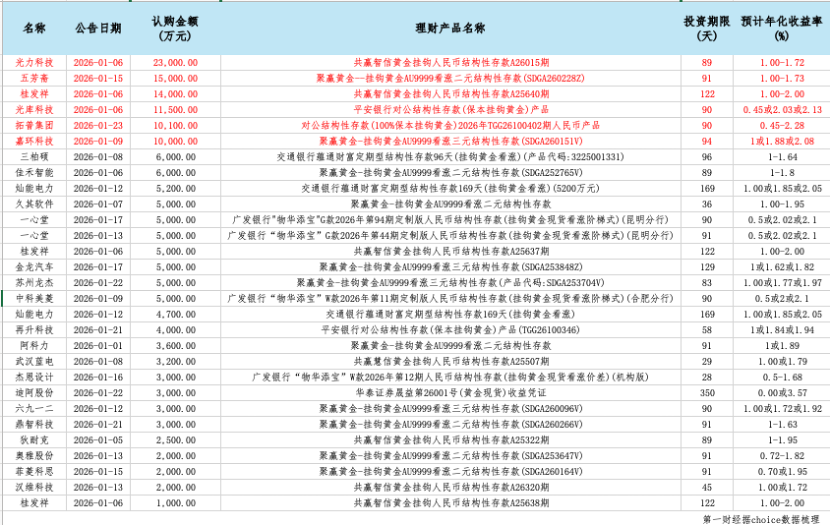
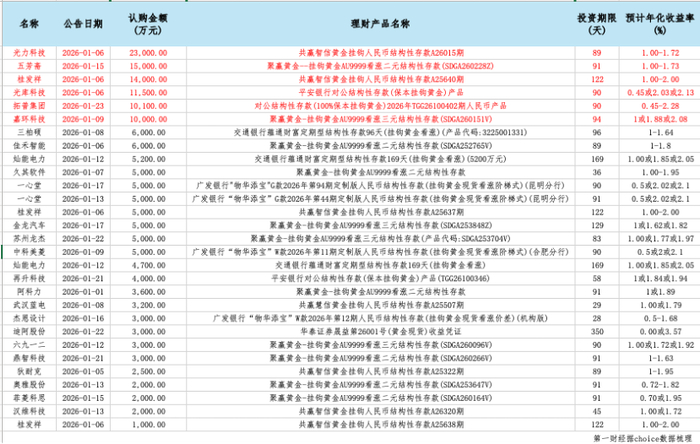
2026.01.25 本文字数:3430,阅读时长大约6分钟 作者 |第一财经 王方然 金价持续攀升,1月23日,伦敦金现盘中最高突破4990美元/盎司,创下历史新高。 随着国际金价持续走强,与黄金相关标的挂钩的银行结构性存款产品正在悄然走热。近期,包括国有大 行、股份行及外资银行均密集推出此类产品,部分热门产品甚至出现"一上架即售罄"的景象。 第一财经调研发现,这类产品普遍具备万元起步、期限灵活、收益分档等特点。既有挂钩黄金价格的常 规产品,也有挂钩矿业公司股票、预期收益上限可达12%的复杂结构产品。在定期存款集中到期、金价 预期持续看强的背景下,从普通投资者到上市公司都对此表现出浓厚兴趣。Choice数据显示,今年以 来,上市公司相关认购金额已达17.28亿元。 尽管产品供给增加,挂钩黄金的结构性存款仍出现额度紧张、提前售罄的情况,尤其是预期收益率较高 的产品。例如,交通银行"稳添慧"系列中一款黄金看涨64天产品已于1月16日提前售罄,该产品规模上 限为10亿元,预期收益率区间为0.5%至3.2%。 不少投资者表示,近期有增购结构性存款的计划。一名深圳投资者对记者透露,多笔存款即将到期,正 考虑配置挂钩黄 ...

最高收益达12%、上市公司购入十余亿 黄金结构性存款走热
Di Yi Cai Jing· 2026-01-25 03:57
金价持续攀升,1月23日,伦敦金现盘中最高突破4990美元/盎司,创下历史新高。 随着国际金价持续走强,与黄金相关标的挂钩的银行结构性存款产品正在悄然走热。近期,包括国有大行、股份行及 外资银行均密集推出此类产品,部分热门产品甚至出现"一上架即售罄"的景象。 第一财经调研发现,这类产品普遍具备万元起步、期限灵活、收益分档等特点。既有挂钩黄金价格的常规产品,也有 挂钩矿业公司股票、预期收益上限可达12%的复杂结构产品。在定期存款集中到期、金价预期持续看强的背景下,从 普通投资者到上市公司都对此表现出浓厚兴趣。Choice数据显示,今年以来,上市公司相关认购金额已达17.28亿元。 然而,看似美好的收益背后却暗藏玄机。不同产品在挂钩标的、收益结构设计上千差万别,实际获得高收益的概率也 大相径庭。投资者在追逐黄金热的同时,更需要冷静审视产品条款中的收益实现条件和潜在风险。 挂钩黄金的结构性存款受热捧 近期金价持续上涨,带动挂钩黄金的银行结构性存款产品迅速走红。结构性存款通常被视为"存款+金融衍生品"的组 合型产品,其本金一般投向存款等低风险资产,收益部分则用于投资衍生品,以争取更高回报。 据第一财经不完全统计,20 ...
最高收益达12%、上市公司购入十余亿,黄金结构性存款走热
第一财经网· 2026-01-25 03:45
Core Viewpoint - The continuous rise in gold prices has led to a surge in bank structured deposit products linked to gold, attracting significant interest from both individual investors and listed companies [1][3]. Group 1: Market Trends - On January 23, gold prices reached a historic high of $4,990 per ounce, prompting banks to launch various structured deposit products linked to gold [1]. - Major banks, including state-owned and foreign banks, have introduced over 20 types of these products since 2026, with many experiencing rapid sell-outs upon launch [2][3]. - The typical investment threshold for these products is over 10,000 yuan, with flexible terms and varying expected annual returns ranging from 0.05% to 12% [2][3]. Group 2: Investor Interest - There has been a notable increase in inquiries about gold-linked structured deposits, driven by rising gold prices and the expiration of traditional fixed-term deposits [3][6]. - Listed companies have also shown significant interest, with a total subscription amount of 1.728 billion yuan reported in 2026, which is substantially higher than the previous year [3][4]. Group 3: Product Characteristics - Structured deposits linked to gold typically combine low-risk assets with derivatives to seek higher returns, with varying designs affecting potential yields [1][5]. - Common product types include those linked directly to gold prices, gold-related indices, and gold derivatives, with returns significantly influenced by the underlying asset's performance [6][7]. - Some products feature complex structures, such as touch-type designs that can trigger early termination based on price movements, potentially leading to higher returns [8][13]. Group 4: Performance and Risks - Despite the growing supply of gold-linked structured deposits, there have been reports of tight quotas and early sell-outs, particularly for products with higher expected returns [3][15]. - Historical data indicates that while many investors achieve moderate returns, the likelihood of reaching the highest return tier is relatively low, with only 6.54% of investors achieving maximum returns in certain products [16]. - Investors are advised to carefully review product terms and understand the conditions for achieving expected returns, as well as the associated risks of short-term price volatility [15][16].
外资机构看好中国资产 科技板块引力突显
Xin Lang Cai Jing· 2026-01-23 15:50
Group 1 - The core viewpoint of the articles is that China's financial capital market is expected to regain global attention in 2026, with foreign institutions expressing confidence in the long-term investment value of Chinese assets [1][2] - The technology sector, particularly AI, semiconductors, and biomedicine, is highlighted as having strong appeal for investment [1][5] - The consumption sector, especially in new consumption areas, is also seen as presenting more investment opportunities [1][8] Group 2 - Factors contributing to the attractiveness of Chinese assets include a favorable economic outlook and a stable policy environment, which are expected to support a structural recovery in the market [2] - The expectation of a rebound in fixed asset investment, supported by government funding and new projects, is anticipated to solidify growth foundations and benefit related industries [2] - The valuation of A-shares and H-shares remains attractive compared to developed markets, with foreign capital expected to increase its allocation to Chinese assets [2][4] Group 3 - The influx of overseas funds into the A-share market is anticipated due to the decline of the "dollar siphon" effect and subsequent interest rate cuts [3] - There are already signs of foreign capital accelerating its allocation to Chinese assets, with significant recovery noted in Hong Kong stock issuance [4] - The current foreign investment in China is below 10%, indicating substantial room for growth as governance structures improve [4] Group 4 - The AI sector is viewed as a core investment theme, with expectations for significant growth in applications and market potential in 2026 [5][6] - The differentiation between Chinese and U.S. AI companies is noted, with Chinese firms focusing on algorithmic advantages, which may mitigate concerns about investment bubbles [7] - Long-term improvements in profitability and operational efficiency in Chinese tech firms are expected to support their valuations [7] Group 5 - The new consumption sector is undergoing profound changes, driven by younger consumers who prioritize experience and emotional value in their purchasing decisions [8] - The characteristics of "light spending and high feedback" are emerging, leading to more diversified market demands [8] - The consumer sector is projected to experience a "K" shaped recovery, with essential and high-end consumer goods expected to rebound [8]
挂钩黄金结构性存款何以受“热捧”
Xin Lang Cai Jing· 2026-01-23 15:50
Core Viewpoint - The recent surge in international gold prices and rising risk aversion have led to a significant increase in the popularity of gold-linked structured deposits among banks and investors [1][5]. Group 1: Market Activity - Since the beginning of 2026, multiple banks, including both domestic and foreign institutions, have launched gold-linked structured deposit products, with terms ranging from 3 months to 12 months and minimum investment thresholds from 10,000 yuan to 10,000 USD [1][2]. - Notable products include the "Point Gold" series from China Merchants Bank, offering annualized returns of 1% to 1.78% based on gold price fluctuations, and the "Stable Add Wisdom" series from Bank of Communications, with returns ranging from 0.5% to 3.2% [2][3]. - Foreign banks like DBS Bank and HSBC China have also introduced gold-linked structured deposits, with DBS offering a 12-month product with returns of 1.5% and 4%, and HSBC linking its product to mining companies rather than directly to gold [3]. Group 2: Investor Behavior - Companies are increasingly investing in gold-linked structured deposits as part of their financial strategies, with firms like Fudan Zhangjiang and Geer Software disclosing significant investments in these products [5]. - The appeal of these structured deposits lies in their ability to provide capital protection while offering the potential for higher returns, making them attractive to both individual and institutional investors [5][6]. Group 3: Risk Considerations - Experts highlight the asymmetric nature of the returns from these structured deposits, where investors may only receive lower or middle-tier returns during significant price fluctuations, thus creating opportunity costs [4][8]. - The structured deposits are subject to liquidity risks, as they typically cannot be redeemed early, locking in funds for the duration of the investment [8]. - Investors are advised to carefully assess the terms of these products, including the conditions for achieving maximum returns and the potential for losses [8].

“看涨,还是看跌?”这类存款产品受关注
Zhong Guo Zheng Quan Bao· 2026-01-23 15:15
Core Viewpoint - The gold market has seen a significant increase in interest, with many investors turning to gold ETFs and structured deposits as gold prices continue to rise, reaching nearly $5000 per ounce [1][2]. Group 1: Market Trends - Since the beginning of 2026, international gold prices have maintained a strong upward trend, with COMEX gold futures reaching $4970 per ounce [1]. - The rising gold prices have led to increased attention on structured deposit products linked to gold offered by various banks [2]. Group 2: Product Offerings - Banks are introducing a variety of gold-linked structured deposit products, with different risk levels and potential returns. For example, the "稳添息" series from Bank of Communications offers a maximum annualized return of 1.66% [2]. - Standard Chartered Bank has launched a structured deposit linked to SPDR Gold Trust with a potential annualized return of 0% to 5%, emphasizing that returns are not guaranteed and depend on market performance [3]. Group 3: Investor Sentiment - The design of structured deposits, which guarantees principal safety while allowing for potential higher returns, appeals to investors who are cautious about market volatility [3]. - Investors express concerns about potential market corrections, with some feeling anxious about the rapid increase in gold prices [4]. Group 4: Future Outlook - Analysts remain optimistic about the future of gold prices, citing factors such as anticipated interest rate cuts by the Federal Reserve, issues with U.S. dollar credibility, and geopolitical uncertainties as supporting elements for continued price increases [6]. - The long-term outlook for gold remains positive, despite short-term volatility risks, suggesting that investors may consider strategic positioning in the market [6].
2025年债券承销机构成绩单出炉:中国银行、中信证券领跑
2 1 Shi Ji Jing Ji Bao Dao· 2026-01-23 11:43
Core Insights - The bond underwriting market in 2025 shows a clear trend of "the strong getting stronger," with market share concentrated among a few leading institutions [1][4][8] - Competition among underwriters is intensifying, with banks and securities firms leveraging their unique strengths to differentiate themselves [2][6] - Regulatory bodies are taking steps to ensure market order and prevent irrational competition, particularly in pricing and underwriting practices [2][6] Group 1: Market Overview - The total bond issuance in 2025 reached 89.76 trillion yuan, a year-on-year increase of approximately 11% [2] - The issuance of interest rate bonds was 33.80 trillion yuan, up 18%, while credit bonds reached 21.95 trillion yuan, growing by 8% [2] - The market is characterized by a large total volume, diverse categories, and differentiated competition [2] Group 2: Competitive Landscape - In the banking sector, China Bank led with over 16 trillion yuan in underwriting, capturing more than 10% of the market share [4] - The top four state-owned banks collectively hold nearly 40% of the market share, indicating a strong position [4] - In the securities sector, CITIC Securities topped the list with 22,496.07 billion yuan in underwriting and a market share of 14.08% [4][5] Group 3: Sector-Specific Insights - Local government bond issuance reached a record high of approximately 10.29 trillion yuan, reflecting a year-on-year growth of 5.2% [6] - The financial bond market is predominantly led by securities firms, with CITIC Securities holding a market share of 17.56% [6] - The asset-backed securities (ABS) market shows a concentration of resources among leading firms, with CITIC Securities leading at 12.32% market share [7] Group 4: International Market Dynamics - The offshore bond market saw a total issuance of approximately $307.07 billion, a year-on-year increase of about 15.75% [7][8] - The market features a mix of domestic and foreign institutions, with China Bank leading at $14.70 billion in underwriting [8] - The competitive landscape in the offshore market is relatively dispersed, with no single institution dominating [8]


星展银行:FOMO情绪驱动资金回流中国资产
2 1 Shi Ji Jing Ji Bao Dao· 2026-01-22 13:14
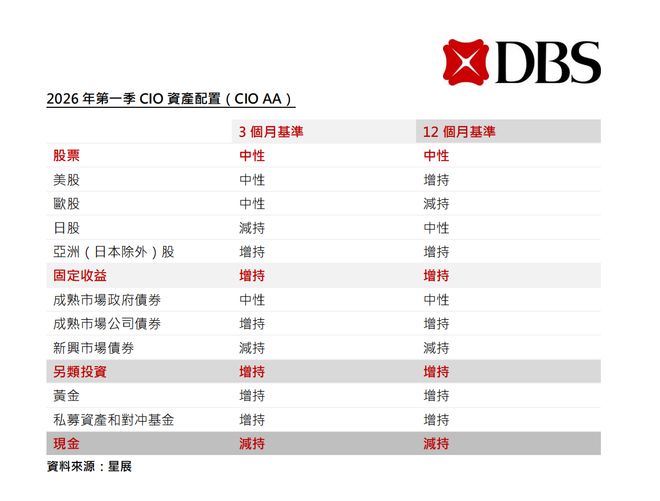
Group 1: Gold Market Insights - Current gold prices are approaching the $5000 mark, with a constructive outlook for the gold market in 2026 due to persistent catalysts such as U.S. fiscal concerns, geopolitical uncertainties, and dollar depreciation [1] - International gold prices have recently experienced a significant pullback, currently fluctuating between $4780 and $4830 per ounce [1] - Strong central bank demand for gold and ETF inflows are expected to support gold prices over the next year [1] Group 2: Asset Allocation Recommendations - DBS Bank recommends investors to increase allocation to physical assets, as infrastructure, real estate, commodities, and precious metals typically perform well in inflationary environments [2] - The flagship investment portfolio of DBS Bank recorded a net return of 20.5% in 2025, utilizing a "barbell strategy" that emphasizes heavy allocation in yield-generating assets and long-term growth stocks while including gold for risk diversification [2] Group 3: Market Positioning and Predictions - The CIO asset allocation for Q1 2026 indicates a "hold" position for stocks, with specific recommendations for U.S. stocks to be "overweight" and European stocks to be "underweight" [3] - There is significant growth potential for Chinese assets, with a potential 21% increase in the Chinese stock market if 1% of global funds are reallocated from the U.S. stock market [5] - The Asian markets, particularly in the AI sector, are expected to see higher earnings growth than global peers, driven by leading companies in North Asia [5][6] Group 4: AI Sector Insights - The AI-related capital expenditures announced over the past two years are entering a phase of substantial investment, benefiting equipment manufacturers, particularly in the core equipment sector [6] - The AI ecosystem is characterized by strong overall profit growth potential, with key players in the supply chain showing significant stock performance due to their irreplaceable roles [6]
宇伟观察|新加坡:从“无” 到“有” 的逆袭传奇
Jing Ji Guan Cha Bao· 2026-01-22 10:46
Group 1 - Singapore's development is characterized by three key concepts: "nothing," "something," and "creating something from nothing," which reflect its journey from survival challenges to becoming a global hub [2][3] - The country faces significant natural resource limitations, including a lack of freshwater, minerals, and arable land, which are critical constraints on its development [4][5] - Singapore's initial economic challenges included a high unemployment rate of 12% and a low GDP per capita of $428 at independence in 1965, compounded by a lack of industrial infrastructure and regional trade barriers [5][6] Group 2 - Singapore has built core advantages through strategic positioning and institutional innovation, establishing itself as a bridge between East and West [7][8] - The country has developed a highly efficient and transparent institutional framework, which includes strict anti-corruption measures and a meritocratic governance model, contributing to a stable business environment [8][9] - Singapore's geographical location has been leveraged to create a global trade and shipping hub, with its port's throughput increasing from under 10 million tons in 1965 to 615 million tons by 2025 [10][11] Group 3 - The nation has implemented a dual talent strategy, attracting global talent while nurturing local capabilities, which is essential for its economic growth [11][12] - Singapore's water management innovations have transformed its water scarcity into a thriving industry, with a water services sector generating over 8 billion SGD annually [13] - The country has strategically shifted its industrial focus over the decades, moving from labor-intensive industries to high-tech sectors like biomedicine and digital economy, maintaining an annual growth rate of over 15% in the biomedicine sector [14][15] Group 4 - Singapore's international influence has grown significantly, participating actively in global governance and trade agreements, which enhances its role as a key player in the global economy [16] - The country has successfully transitioned from a resource-scarce nation to a global hub, achieving a GDP per capita exceeding $94,000 and ranking among the wealthiest countries [17][18]
全球央行连续15年净购入黄金,如何重塑国际储备格局!中国外储优化:四年购金超350吨,官方黄金储备约2306.32吨
Sou Hu Cai Jing· 2026-01-22 03:39
Group 1 - As of the end of Q3 2025, global official gold reserves reached approximately $3.69 trillion, accounting for 28.9% of total official reserves, marking a new high since 2000 [4][27]. - The International Monetary Fund (IMF) reported that the dollar's share in global foreign exchange reserves fell to 56.92% in Q3 2025, the lowest level since 1995, continuing a trend of being below 60% for over ten consecutive quarters [4][27]. - The People's Bank of China (PBOC) has been increasing its gold reserves consistently, with a total increase of 1,151 million ounces (approximately 358 tons) since November 2022 [3][11]. Group 2 - The trend of central banks increasing gold reserves has been ongoing for 15 years, with a notable increase in purchases from emerging market central banks, which accounted for over 45% of net gold purchases in 2023 [5][23]. - In 2022, global central banks purchased a total of 1,081.9 tons of gold, with purchases remaining above 1,000 tons annually through 2024 [18][20]. - The World Gold Council's report indicates that the demand for gold from central banks has significantly increased since 2022, driven by geopolitical tensions and a shift in reserve asset preferences [23][24]. Group 3 - The PBOC's gold reserve stood at 7,415 million ounces (approximately 2,306.32 tons) by the end of December 2025, reflecting a year-on-year increase of 86 million ounces (approximately 26.75 tons) [8][11]. - The PBOC's strategy of increasing gold reserves is part of a broader trend among central banks to diversify their reserve assets, with gold being viewed as a stable and secure investment [12][15]. - The World Gold Council's survey indicates that over 90% of central banks expect to increase their gold reserves in 2026, with a significant portion anticipating a decline in the dollar's share of global reserves over the next five years [35][36].