
OneWeb

Search documents
Gogo(GOGO) - 2025 Q3 - Earnings Call Transcript
2025-11-06 14:30
Financial Data and Key Metrics Changes - Total revenue for Q3 was $224 million, down 1% year-over-year on a pro forma basis, and total service revenue increased 132% over the prior year to $190 million [24][25] - Adjusted EBITDA was $56.2 million, with an adjusted EBITDA margin of 25%, consistent with long-term expectations [29][30] - Free cash flow generated in Q3 was $31 million, totaling $94 million year-to-date [31] Business Line Data and Key Metrics Changes - Total ATG aircraft online at the end of Q3 was 6,529, a decline of approximately 7% year-over-year [24] - Advanced AOL increased 12% year-over-year, now comprising 75% of the total ATG fleet [25] - Total equipment revenue in Q3 was $33.6 million, up 80% year-over-year, with ATG equipment shipments reaching a record 437 units [25][26] Market Data and Key Metrics Changes - Global business jet flights are about 30% above pre-COVID levels, with major OEMs reporting strong backlogs [5] - The global addressable market of 41,000 business aircraft is less than 25% penetrated with broadband connectivity, indicating significant growth potential [5][6] - The MilGov segment is expected to grow from 13% to 20% of total revenue over the long term [20] Company Strategy and Development Direction - The company aims to grow its position in the under-penetrated market by delivering new products that significantly improve performance [6] - Recent contract wins with major global fleet operators and OEMs validate the company's multi-orbit, multi-band strategy [8][12] - The focus on 5G and Galileo investments is expected to drive future service revenue growth [22][34] Management's Comments on Operating Environment and Future Outlook - Management expressed confidence in achieving long-term sustained revenue and free cash flow growth due to new product launches and contract wins [4] - The company anticipates a return to modest year-over-year revenue growth in Q4, despite expected declines in adjusted EBITDA and free cash flow due to strategic investments [23][33] - Management noted that industry trends may pressure ATG online counts in the near term, but new product ramps and MilGov market progress are key to returning to service revenue growth [17] Other Important Information - The company received $6.6 million in FCC grant funding in Q3, bringing the total to $59.9 million [28] - The company expects to achieve over $30 million in annualized synergies from the SatCom acquisition, exceeding previous guidance [30] - The anticipated LTE cutover is expected in May 2026, with significant upgrades planned for the classic fleet [16][32] Q&A Session Summary Question: Can you elaborate on the fourth quarter implied guidance? - Management indicated that the ATG pressure continues, but they expect a less aggressive decline compared to previous quarters, with revenue anticipated to increase [36] Question: How is the transition from Classic to C1 expected to unfold? - Management noted that the transition is a mix, with customers looking forward to 5G and the C1 serving as a placeholder product [39] Question: What are the expectations for ARPU trends going into next year? - Management expects ARPU to increase as 5G services, which have higher pricing, begin to roll out [40] Question: Are there any impacts from the government shutdown on the business? - Management confirmed that while there has been some slowdown in government approvals, it has not significantly affected revenue outlook [44]

炸场太空赛道,低轨卫星兵家必争
3 6 Ke· 2025-11-06 10:30
Core Insights - The low Earth orbit (LEO) satellite sector is emerging as a new investment hotspot, driven by significant market interest and capital inflow, particularly in the context of China's strategic push and technological advancements in satellite communication [1][2] Group 1: Market Dynamics - The LEO satellite industry is experiencing a collective surge across the entire value chain, from satellite manufacturing and rocket launches to core components and application services, making it a leading sector after AI chips [1] - Key companies in the sector have shown impressive stock performance, with China Satellite up 57%, Holleywo up 32%, and Shanghai Hanxun up 17% year-to-date [1] Group 2: Catalysts for Growth - Three major factors are accelerating the LEO satellite sector: 1. Policy support from the "14th Five-Year Plan," which prioritizes the construction of LEO satellite constellations [2] 2. Technological breakthroughs, including the successful launch of multiple satellites by China Star Network and the integration of satellite communication features in Huawei and Apple devices [2] 3. Recent successful launches, such as the Long March 6 rocket deploying 12 LEO communication satellites, which have heightened market enthusiasm [2] Group 3: Competitive Landscape - The global LEO satellite race is characterized by the scarcity of orbital and frequency resources, with the U.S. and China leading the charge. SpaceX's Starlink has 8,371 satellites in orbit, while China's GW and Qianfan constellations plan to deploy a total of 25,000 satellites by 2027 [5] - The competition for these resources is driving rapid development in the industry, with satellite manufacturing and launch capacities being significantly expanded [5] Group 4: Market Projections - The global LEO satellite market is projected to exceed $300 billion by 2025 and reach $1.79 trillion by 2035, with a compound annual growth rate (CAGR) of 9%. The Chinese market is expected to grow even faster, reaching 280 billion yuan in 2024 and surpassing 350 billion yuan in 2025, with a CAGR exceeding 25% [7] Group 5: Strategic Directions - Companies are advised to focus on three core areas for investment: 1. Satellite manufacturing and launch services, which are the most stable segments benefiting from large-scale deployments [13] 2. Core components and testing equipment, which are critical for satellite development and are expected to see significant demand growth [14] 3. Terminal and application services, which are poised for commercial success as satellite communication becomes more mainstream [15]


Geopolitical Tensions Escalate in Middle East, Cyber Warfare Accusations Mount, and Meta Fuels AI Expansion
Stock Market News· 2025-10-19 07:08
Geopolitical Developments - Israel is conducting its largest military maneuver on the northern border with Lebanon since the October 7 attack, involving ground, air, and naval units, scheduled to run until Thursday [2] - Hamas has rejected U.S. claims of ceasefire violations in Gaza, labeling them as misleading and asserting that Israel is responsible for forming and funding criminal gangs against Palestinian civilians [3] - Israeli forces have completed a 10-hour operation in Tubas and 30 Emirati aid trucks are en route to Gaza to address the humanitarian situation [4] Technology and Investment - Meta Platforms (META) and Blue Owl Capital (OWL) have finalized a $30 billion private capital deal to fund an AI data center in Louisiana, marking the largest private capital deal for AI data infrastructure [5] - Meta retains a 20% equity stake in the Hyperion data center, which is expected to be completed by 2029 and will draw up to 5 gigawatts of power [5] Cybersecurity and Espionage - China has accused the U.S. of cyber breaches at its national time center, alleging that the U.S. NSA has conducted cyberattacks over an extended period, escalating tensions between the two nations [6] - Russian security services have exposed the UK's covert support for Ukraine's Black Sea strikes, claiming the use of OneWeb's satellite system for unmanned surface vehicles [7][8] Economic Commentary - Treasury Secretary Bessent has reiterated that tariffs are a surcharge, not a tax, amidst ongoing trade discussions, despite some economists suggesting otherwise [9] - The cryptocurrency market is experiencing mixed movements, with Bitcoin (BTC) trading at $106,947.5, down 0.07%, while Ether (ETH) is up 0.28% at $3,896.95 [10]



连续三月陷入“断网魔咒”!马斯克星链又双叒崩了,超过4.3万美国用户遭遇网络中断【附卫星互联网行业市场分析】
Qian Zhan Wang· 2025-09-17 13:52
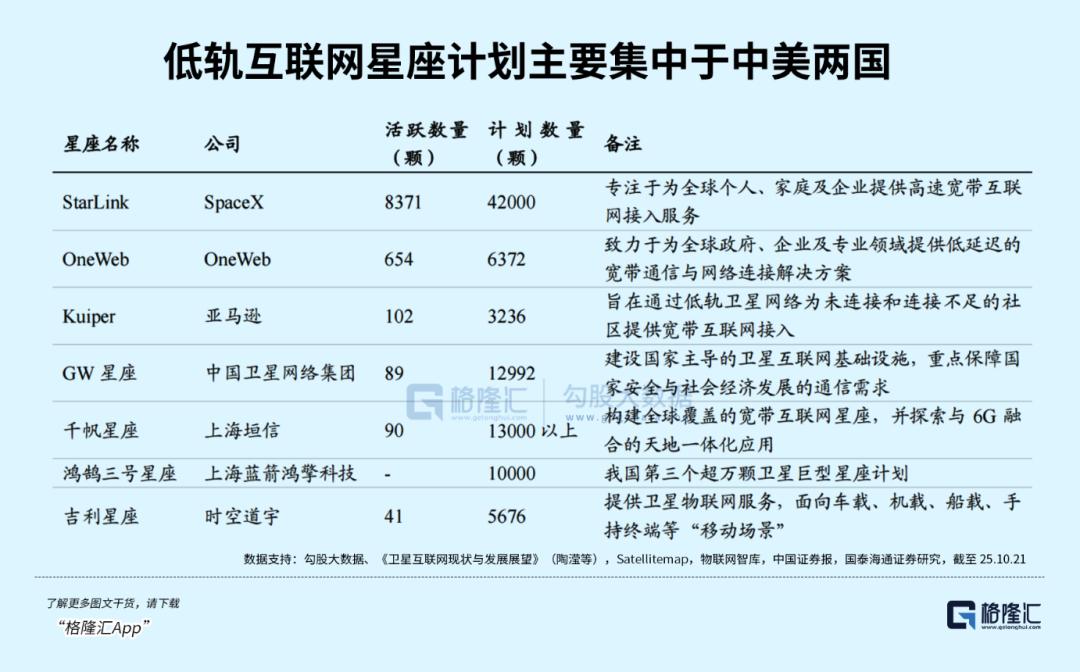
Core Insights - SpaceX's Starlink experienced a significant service disruption on September 15, affecting over 43,000 users in the U.S., marking the third consecutive month of service issues [2][5] - Starlink aims to provide global high-speed internet through a network of low Earth orbit satellites, with 5,650 satellites launched as of December 2023, covering over 60 countries and serving more than 2.3 million users [5][9] Company Overview - SpaceX, founded by Elon Musk in June 2002, focuses on aerospace activities including rocket launches and satellite communications [2] - Starlink is a global satellite internet project under SpaceX, designed to offer reliable communication services in remote areas and regions with inadequate traditional internet coverage [5] Competitive Landscape - The low Earth orbit satellite internet market is characterized by a "one strong, many strong" dynamic, with Starlink as the leading player, followed by OneWeb and Amazon's Project Kuiper [7] - As of now, Starlink has launched 5,815 satellites, while OneWeb has 633, and Amazon plans to deploy 3,236 satellites by 2026 [7][9] Strategic Importance - The strategic value of satellite internet is recognized globally, with experts emphasizing its integration with technologies like 5G and IoT to enhance application scenarios [11] - Accelerating the development of satellite internet is seen as a significant move to align with national strategic goals and technological advancements [11]

2025年国防军工行业新时代的中国航天:卫星互联网产业――以星织网路,天堑变通途(附下载)
Sou Hu Cai Jing· 2025-09-10 16:40
Group 1 - The global satellite communication industry has entered a rapid development phase driven by advancements in high-throughput satellites (HTS) and non-geostationary satellite orbits (NGSO) since 2020 [1] - Major players in the industry include established operators like Viasat and Telesat, as well as new entrants such as SpaceX and OneWeb, with SpaceX's Starlink leading in satellite launches [1][11] - The urgency to develop satellite internet is underscored by its strategic military value and the need to secure space resources before they are monopolized by foreign entities [3][10] Group 2 - China's satellite internet construction has commenced, with significant policy support from the government to foster the industry, including encouraging private investment and promoting commercial satellite applications [2] - The Central Economic Work Conference in December 2023 highlighted commercial aerospace as a strategic emerging industry, indicating a shift in focus towards satellite internet as a key component of the digital economy [3] Group 3 - SpaceX's Starlink has demonstrated substantial commercial viability, with user numbers growing from 10,000 in 2021 to 4.6 million in 2024, generating diverse revenue streams [15][16] - The introduction of direct satellite connectivity for consumer mobile phones marks a significant advancement, allowing existing 4G LTE devices to communicate directly with satellites [17] Group 4 - The satellite internet industry is experiencing rapid growth due to breakthroughs in technologies such as high-throughput satellites, reusable rocket technology, and advanced propulsion systems [19][20] - The competition for orbital resources is intense, with the International Telecommunication Union's "first come, first served" principle emphasizing the need for timely satellite deployment to avoid losing access to critical frequencies and orbits [10][14]
周末重点速递 | 华鑫证券:A股强势上攻背后,居民存款是增量资金主力;券商聚焦卫星通信产业、先进封装领域的投资机会
Mei Ri Jing Ji Xin Wen· 2025-08-31 04:54
Group 1: Major Developments - The DexonomySim dataset, designed for dexterous robotic grasping tasks, has been released, containing over 9.5 million high-quality grasping poses covering more than 10,000 objects and 31 common grasp types, representing the largest open-source dataset in the field of embodied intelligence [1] Group 2: Market Analysis - The A-share market has seen a strong rally, with the Shanghai Composite Index breaking through key levels and reaching a ten-year high, driven by increased risk appetite and a shift in funding dynamics, with retail deposits becoming a significant source of market liquidity [2][3] - The policy focus has shifted from monetary easing to fiscal measures, with ongoing relaxation in real estate policies and expectations of two RRR cuts totaling 100 basis points and two interest rate cuts totaling 35 basis points by mid-2025 [2] - The M1 growth rate has expanded, indicating improved liquidity in the market, while the PPI remains a crucial factor influencing A-share profitability [2] Group 3: Industry Insights - The satellite communication industry is poised for growth, with the Ministry of Industry and Information Technology issuing guidelines to optimize business access and accelerate the issuance of licenses, indicating a strategic importance for national security and economic development [4][5] - The satellite internet sector is expected to see significant advancements, with the first low-orbit satellite group launched in December 2024 and ongoing acceleration in satellite deployment [6] - The semiconductor industry is projected to experience substantial growth, with global semiconductor revenue expected to reach $697.18 billion in 2025, driven by high demand for high-performance computing and storage chips [7][8] - The advanced packaging market is anticipated to grow from $37.8 billion in 2023 to $69.5 billion by 2029, reflecting the increasing importance of advanced packaging technologies in enhancing chip performance [8] - Domestic advanced packaging manufacturers are expected to achieve breakthroughs in high-end packaging, with significant improvements in yield and capacity utilization anticipated in 2025 [9]
中信证券:业务准入工作正持续优化 卫星产业拐点在即
智通财经网· 2025-08-28 00:55
Core Viewpoint - The Ministry of Industry and Information Technology (MIIT) has issued guidelines to optimize business access and promote the development of the satellite communication industry, highlighting its strategic importance and clear policy direction [2][3]. Group 1: Policy and Strategic Importance - The satellite communication industry is recognized for its strategic position, with the allocation of satellite orbits and frequencies being a critical national resource that impacts network security [3]. - The guidelines aim to stimulate high-quality development in the satellite communication sector, fostering innovation in commercial aerospace and supporting the construction of a manufacturing and digital power [2][3]. Group 2: Business Access and Licensing - The business access for satellite communication is being continuously optimized, with expectations for accelerated licensing processes to support commercial applications of satellite internet [4]. - The MIIT has emphasized the importance of market access as a foundation for further industry development, aiming to enhance resource supply and governance capabilities [4]. Group 3: Industry Development and Technological Advancements - The industry is approaching a critical turning point, with significant advancements in satellite launches and the resolution of bottlenecks related to rocket capacity and launch costs expected in the near future [5]. - Several private rocket companies are planning to conduct test flights of medium-sized reusable rockets in the latter half of 2025, which could significantly contribute to the construction of satellite internet constellations [5].

大单不断!马斯克星链席卷航空Wi-Fi市场,全球顶级航司扎堆签约【附卫星互联网行业市场分析】
Qian Zhan Wang· 2025-08-25 12:05
Core Insights - SpaceX's Starlink is rapidly transforming the in-flight Wi-Fi sector, with major airlines like Alaska Airlines and Virgin Atlantic adopting its satellite internet services [2] - The Middle East is becoming a strategic focus for SpaceX, with ongoing negotiations with Emirates Airlines, which operates the largest Boeing 777 and Airbus A380 fleets [2][3] - Starlink's low Earth orbit satellite network offers seamless global internet access with latency of 20-40 milliseconds, significantly better than traditional satellite systems [2][6] Company Overview - SpaceX, founded by Elon Musk in June 2002, is a leading player in the aerospace industry, focusing on rocket launches, low Earth orbit communications, and deep space transport [3] - Starlink aims to provide high-speed, low-latency internet access globally, particularly in remote areas, and is also targeting the aviation and maritime sectors [6][8] - Starlink has established a significant presence, covering 57 countries and serving over 2 million users, positioning itself as a dominant player in the satellite internet market [6] Competitive Landscape - The satellite internet market is highly competitive, with players like OneWeb and Amazon's Project Kuiper also aiming to deploy low Earth orbit satellites for global internet services [6][8] - Starlink's first-mover advantage and scale have allowed it to maintain a leading position despite increasing competition [6] Industry Trends - The development of satellite internet is seen as a crucial next phase in internet evolution, driven by growing demands for communication capacity and coverage [8][9] - In China, low Earth orbit satellite internet construction is accelerating, with initial commercial applications expected to target industries like maritime shipping [9]

Starlink Dominates as Low Earth Orbit Satellite Race Intensifies
Bloomberg Television· 2025-08-04 14:17
Market Overview & Competition - The LEO (Low Earth Orbit) satellite market is valued at $15 billion and is expected to grow to $108 billion by 2035 [3] - Starlink, owned by SpaceX, currently has 7,600 satellites and plans to expand to as many as 48,000, holding a significant lead in the LEO satellite race [4] - Project Kuiper, owned by Amazon, has fewer than 80 satellites in orbit due to manufacturing issues and launch delays [12] - Eutelsat acquired OneWeb in 2023, operating a constellation of about 640 satellites, pursuing a strategy that combines GEO (Geostationary Orbit) and LEO satellites [13] Cost & Technology - Manufacturing a LEO satellite costs between $250,000 to $500,000, with launch costs adding another $250,000 to $500,000 per satellite [5] - LEO satellites orbit at an altitude of 300 kilometers to 1,200 kilometers, allowing for a signal round-trip time of 100 milliseconds or less [7][8] - Maintaining a LEO constellation requires launching as many as 25% of the satellites every year just to maintain the replacement cost [11] - A single GEO satellite can be up to 1,000 times more expensive than a LEO satellite to manufacture [9] Business Models & Government Involvement - Starlink focuses on providing internet access primarily to rural areas globally [5] - OneWeb targets the B2B (business-to-business) and government connectivity market, expecting to grow from just north of 5 million connections to close to 15 million by 2033 [15] - Eutelsat plans to invest 4 billion euros in CapEx between now and 2029, largely to replace its current LEO constellation [19] - The UK government plans to invest 163 million euros in Eutelsat, joining France and other investors in a major funding round, bringing the total raise to 1.5 billion euros, or $1.8 billion [18]

甲烷革命:价值向上游转移,重塑太空发射投资版图
Haitong Securities International· 2025-06-27 09:22
Investment Rating - The report suggests a focus on upstream suppliers that provide core technologies and high barriers to entry, rather than direct investment in launch vehicle companies that face significant market and capital expenditure risks [4][50]. Core Insights - The global aerospace launch market is undergoing a profound and irreversible structural expansion driven by a revolution in cost structures, shifting from a government budget-dominated paradigm to a commercially driven era focused on high launch frequency and cost efficiency [1][7]. - The key catalyst for this transformation is SpaceX's disruptive cost reductions achieved through reusable rocket technology, which has set new price benchmarks and operational expectations for the market [1][7]. - Future launch demand will be supported by three solid pillars: the large-scale deployment of commercial broadband constellations (e.g., Starlink and Kuiper), increasing geopolitical competition and national security needs, and the revival of scientific and deep space exploration missions represented by the Artemis program [1][10]. Industry Background and Market Drivers - The report highlights a significant increase in global orbital launches, with a record of 259 launches expected in 2024, up from 223 in 2023, and a forecast of over 300 launches in 2025 [7][10]. - The transition to a commercial-driven market is exemplified by SpaceX's 138 launches in 2024, which accounted for half of the global market, establishing a new operational rhythm [7][10]. Core Technology Path Analysis - The competition in the launch market is fundamentally a competition of underlying propulsion technologies, converging on the "Methalox + Reusability + Additive Manufacturing" combination [2][13]. - Methalox engines are recognized as the future mainstream path due to their clean combustion characteristics and ability to simplify the reuse process, addressing the carbon buildup issues of traditional kerosene fuels [15][19]. Value Chain and Supply Chain Analysis - The report identifies a shift in value and profit concentration towards upstream suppliers of core technologies and high-barrier components, moving away from midstream assembly integration [3][36]. - The "smile curve" analysis indicates that high-value areas are concentrated at the upstream and downstream ends of the value chain, while midstream assembly faces profit margin pressures [36][37]. Investment Recommendations - The report recommends focusing on companies such as Howmet Aerospace, LOAR, VSE Corporation, BAE Systems, Rolls-Royce, Safran, L3Harris Technologies, and Velo3D, which are positioned as key technology enablers in the supply chain [4][50].


