华能国际

Search documents
电价预期逐步明朗,如何看待火电行情表现?
Changjiang Securities· 2025-12-28 15:40
Investment Rating - The investment rating for the industry is "Positive" and maintained [7] Core Insights - The annual electricity price expectations are gradually becoming clearer, with multiple factors constraining electricity price levels. The average transaction price for Guangdong's annual electricity trading in 2026 has reached the lower limit of the medium to long-term trading price, indicating a downward price expectation [2][6] - Despite the clear downward expectation for electricity prices, the thermal power sector has shown relative stability, outperforming the hydroelectric sector, which is less impacted by price fluctuations [2][6] - The recent decline in coal prices and the expected increase in capacity prices for 2026 are expected to provide a buffer against the downward trend in long-term contract prices, supporting market expectations for thermal power company profitability [2][6] Summary by Sections Electricity Price Expectations - The electricity supply and demand situation is at risk of deterioration, and there are non-seasonal risks associated with coal prices. The market's expectation for the 2026 annual electricity price has been negatively impacted by weak monthly and spot electricity prices in some provinces [2][7] - The average monthly prices for Guangdong and Jiangsu this year were 373 and 377 cents/kWh, respectively, down by 47 and 52 cents/kWh year-on-year. The announcement of the annual trading results has confirmed the market's previous pessimistic expectations [2][6] Thermal Power Sector Performance - The thermal power sector has shown resilience despite the downward price expectations, driven by two main factors: a significant "inverted V" trend in coal prices since October and the expected stepwise increase in capacity prices for 2026 [2][6] - The price of Qinhuangdao Q5500 thermal coal peaked at 834 yuan/ton in late November but has since dropped to 672 yuan/ton by December 26, a decrease of 162 yuan/ton [2][6] - The expected increase in capacity prices by approximately 65 yuan/year·kW across provinces is anticipated to enhance the profitability stability of thermal power companies [2][6] Investment Recommendations - Recommended companies include Huaneng International, Datang Power, Guodian Power, Huadian International, China Power, China Resources Power, and Funiu Co., as well as Inner Mongolia Huadian, which represents "coal-electricity integration" thermal power [2][12][13] - For the hydroelectric sector, recommended companies include Yangtze Power, Guotou Power, Chuan Investment Energy, and Huaneng Hydropower [2][12][14] - In the renewable energy sector, companies such as Longyuan Power H, Xintian Green Energy H, China Nuclear Power, and Zhongmin Energy are recommended due to their potential for growth [2][12][15]




吉林新能源:风光无限 其势已成
Xin Lang Cai Jing· 2025-12-28 13:32
Core Viewpoint - Jilin Province is experiencing a significant transformation in its energy sector, with wind and solar power becoming dominant sources of energy, contributing to a shift from coal dependency to green electricity by 2025 [1][14]. Group 1: Resource Development and Capacity - As of the end of October, wind and solar power generation accounted for 32% of Jilin's total energy output, ranking fourth in the country [1][15]. - The installed capacity of renewable energy in Jilin has surpassed 25 million kilowatts, making it the largest power source in the province, with nearly 10 billion kilowatt-hours of renewable energy exported in the first three quarters of the year [2][17]. - Jilin's green ammonia and green alcohol production capacity has reached 430,000 tons, representing a significant portion of the national supply [1][15]. Group 2: Innovative Projects and Models - Jilin is exploring diverse integration models such as "fishing and solar" projects, which combine fish farming with solar power generation, producing 466 megawatts of solar energy to power 200,000 households [5][20]. - The province is also developing pumped storage power stations to complement wind and solar energy generation [5][20]. - Distributed solar projects are proliferating, allowing households to benefit from solar energy, enhancing local income [5][20]. Group 3: Industrial Cluster Development - Jilin has established a complete wind and solar energy industrial chain, from raw materials to downstream applications, with local production of wind turbine components [6][23]. - The province is promoting the construction of 10 provincial-level and 9 municipal-level green energy industrial parks to enhance collaboration and efficiency within the industry [8][23]. - The successful launch of projects like the integrated green methanol production facility in Tiaonan demonstrates the effectiveness of industrial clustering, significantly increasing local supply chain efficiency [10][25]. Group 4: Policy Support and Mechanism Innovation - Continuous policy support has streamlined project approvals and enhanced the economic viability of renewable energy projects, with a focus on breaking down barriers to resource monetization [11][26]. - The introduction of a "green electricity + consumption" model provides tailored solutions for energy utilization, ensuring that renewable energy is effectively integrated into the market [12][27]. - Jilin is advancing the establishment of a unified electricity market, fostering a competitive environment that maximizes the potential for renewable energy consumption [13][28]. Group 5: Socioeconomic Impact - The growth of wind and solar industries is not only transforming Jilin's energy structure but also revitalizing the local economy and enhancing the quality of life for residents [14][29]. - The province aims to leverage its green energy resources to support industrial upgrades and improve public welfare, contributing to the broader goal of sustainable development [14][29].

央企雄安总部项目集中开工
Xin Hua Wang· 2025-12-28 07:18
作为承接北京非首都功能疏解的集中承载地,雄安新区"十四五"期间承接疏解成效显著。中国星网总部 及所属企业已于2024年10月入驻办公;中国中化、中国华能于今年10月9日正式迁驻雄安办公;中国矿 产总部项目主体结构封顶,正抓紧进行室内精装修等工作;中国大唐雄安总部项目已于今年启动建设。 截至目前,已有8家央企总部疏解落户雄安。 12月25日至28日,中国农业发展集团有限公司、中国华电集团有限公司和中国诚通控股集团有限公司先 后在雄安新区举行总部项目开工仪式。截至目前,第二批疏解至雄安的4家央企总部已全部开工建设。 雄安新区党工委副书记、管委会常务副主任吴波介绍,雄安新区坚持以承接疏解带动区域发展、引领科 技创新、加速产业和要素集聚,推动科技创新和产业创新深度融合,当前已有400多家央企分支机构、 4000多家北京来源企业落地雄安。 (文章来源:新华网) ...
公用事业行业周报(2025.12.22-2025.12.26):用电增速维持高位,长协电价或存压力-20251228
Orient Securities· 2025-12-28 05:41
Investment Rating - The report maintains a "Positive" investment rating for the utility sector [4] Core Views - Electricity consumption growth remains high, but there are signs of pressure on long-term contract electricity prices due to falling coal prices and high inventory levels [7] - The utility sector is viewed as a defensive asset, with low-priced utility assets worth attention [7] - The report suggests that the electricity market will gradually allow for better pricing of electricity attributes to support the complex new power system [7] Summary by Sections Electricity Consumption - In November 2025, total electricity consumption increased by 6.2% year-on-year, a recovery from October's 4.2 percentage point decline, with a cumulative growth of 1.0% for January to November 2025 [10] - The growth rates for different sectors in November 2025 were: primary industry +7.9%, secondary industry +4.4%, tertiary industry +10.3%, and residential consumption +9.8% [10] - The report anticipates that December 2025 will see electricity consumption growth maintain around 5-6% due to ongoing growth in sectors like charging services and information technology [10] Electricity Prices - From December 19 to December 26, 2025, the average clearing price in Guangdong's electricity market was 308 RMB/MWh, up by 3.9% year-on-year [21] - In contrast, Shanxi's average market price dropped to 179 RMB/MWh, down 54.9% year-on-year [21] Coal Prices - Port coal prices continue to decline, with the Qinhuangdao Q5500 coal price at 672 RMB/ton, down 4.4% week-on-week [24] - The report notes a divergence in pit coal prices, with Shanxi's Q5500 coal price stable at 550 RMB/ton, while Inner Mongolia's price fell by 1.7% [24] Hydrology - The Three Gorges Reservoir's water level was 171 meters, with a year-on-year increase of 3.1 meters, while inflow rates decreased by 13.7% year-on-year [31] Market Performance - The utility sector index rose by 0.8% but underperformed compared to the Shanghai and Shenzhen 300 index, which increased by 1.9% [40] - Among sub-sectors, gas showed the highest weekly increase at +2.6%, while hydropower decreased by 0.8% [42] Investment Recommendations - The report recommends focusing on utility stocks, particularly in thermal power, hydropower, and nuclear power, citing improved business models and growth potential [7]




官方严查电力交易违规行为,全球海洋油气勘探开发投资连续5年增长
Xinda Securities· 2025-12-27 08:18
Investment Rating - The investment rating for the utility sector is "Positive" [2] Core Insights - The utility sector has shown a weekly increase of 0.8%, underperforming the broader market, which rose by 1.9% [4][12] - The power sector specifically increased by 0.65%, while the gas sector saw a larger increase of 2.59% [4][16] - The report highlights a continuous growth in global offshore oil and gas exploration and development investments, with a compound annual growth rate of 11% over the past five years [5] Summary by Sections Market Performance - As of December 26, the utility sector's performance was below the market average, with the power sector up by 0.65% and the gas sector up by 2.59% [4][12] - The top-performing sub-sectors included thermal power generation, which rose by 2.45%, while hydropower saw a decline of 0.77% [16] Power Industry Data Tracking - The price of thermal coal at Qinhuangdao Port (Q5500) was 677 CNY/ton, down 34 CNY/ton week-on-week [4][21] - Coal inventory at Qinhuangdao Port decreased to 6.97 million tons, a drop of 310,000 tons week-on-week [30] - Daily coal consumption in inland provinces increased to 3.967 million tons, up 5.56% week-on-week [30] Natural Gas Industry Data Tracking - Domestic LNG prices decreased to 3,937 CNY/ton, a 3.39% decline week-on-week [57] - European TTF gas prices rose by 5.4% week-on-week, while U.S. HH prices fell by 10.4% [61] - The EU's natural gas supply for week 50 was 6.11 billion cubic meters, a 0.9% increase week-on-week [65] Key Industry News - Guangdong Electric Trading Center reported a total transaction volume of 359.44 billion kWh for 2026, with an average transaction price of 372.14 CNY/kWh [5] - The report indicates that the power sector is expected to see profitability improvements and value reassessment due to ongoing supply-demand tensions [5] Investment Recommendations - The report suggests focusing on national coal power leaders such as Guodian Power, Huaneng International, and Huadian International, as well as regional leaders in tight supply areas [5] - For natural gas, companies with low-cost long-term gas sources and receiving station assets are recommended for potential profit growth [5]
2025上市公司碳排放排行榜暨双碳领导力榜
Cai Jing Wang· 2025-12-26 14:51
Core Insights - The total carbon emissions of the top 100 listed companies in China for 2024 are projected to be 5.134 billion tons, a decrease of 2.7 million tons compared to 2023, indicating a potential peak in emissions [1][6][11] - The disclosure rate of carbon emissions among these companies has increased from 43% in 2021 to an expected 80% by 2025, reflecting a growing awareness and commitment to carbon reduction [1][5][23] Group 1: Carbon Emissions Overview - The carbon emissions of the top 100 listed companies in 2024 are 5.134 billion tons, which is a 0.52% decrease from 5.161 billion tons in 2023 [6][11] - The top ten companies account for approximately 38% of the total emissions, highlighting the concentration of emissions among a few major players [2][6] - The threshold for inclusion in the carbon emissions ranking has decreased to 10.3128 million tons in 2024, down from 11.5329 million tons in 2023, indicating a reduction in emissions intensity among leading high-carbon companies [6][11] Group 2: Industry Emission Trends - The power industry remains the largest contributor to carbon emissions, accounting for approximately 2.29 billion tons in 2024, maintaining a significant share of the total emissions [15] - The cement industry follows with emissions of about 770 million tons, continuing a downward trend for four consecutive years [15] - The steel industry has seen a notable decrease in emissions, returning to levels close to those of 2022, with emissions around 580 million tons [15][18] Group 3: Carbon Efficiency Metrics - The average carbon efficiency of the top 100 companies in 2024 is 0.399 million yuan per ton, remaining stable compared to 0.40 million yuan per ton in 2023 [20][21] - The carbon efficiency has improved by 10.83% from 2021 to 2024, indicating a positive trend in decoupling economic output from carbon emissions [20] - Seven industries have shown improvements in carbon efficiency, with the chemical industry achieving the most significant increase, reaching 0.39 million yuan per ton, the highest in three years [20][21] Group 4: Disclosure and Transparency - In 2024, 80 companies disclosed their carbon emissions data, an increase from 65 in 2023, achieving the highest disclosure rate in four years [23] - The disclosure rate for the power industry is 77.42%, while the cement industry leads with 85.71%, consistently above the average [26] - A-share companies have seen a significant rise in disclosure rates, from 16.67% in 2021 to 70.97% in 2024, indicating improved transparency in carbon reporting [26][27]




11月电力数据:火电出力由增转降,用电增速同比+6.2%
CHINA DRAGON SECURITIES· 2025-12-26 13:41
Investment Rating - The industry investment rating is "Recommended" (maintained) [2] Core Viewpoints - In November, electricity consumption increased by 6.2% year-on-year, with total electricity consumption reaching 835.6 billion kilowatt-hours [6] - The report highlights a shift in electricity generation, with thermal power output declining while hydropower and renewable energy sources like nuclear, solar, and wind power showed growth [6] - The report suggests that the demand for electricity across various industries has remained stable, with significant growth in sectors such as high-tech and equipment manufacturing [6] Summary by Relevant Sections Electricity Generation Data - In November, the industrial electricity generation was 779.2 billion kilowatt-hours, a year-on-year increase of 2.7%. The average daily generation was 25.97 billion kilowatt-hours [6] - For the first eleven months, the total industrial electricity generation was 8,856.7 billion kilowatt-hours, up 2.4% year-on-year [6] - Breakdown of generation types in November: - Thermal power decreased by 4.2% year-on-year - Hydropower increased by 17.1% - Nuclear power grew by 4.7% - Wind power increased by 22.0% - Solar power surged by 23.4% [6] Electricity Consumption Data - Total electricity consumption for the first eleven months was 94,602 billion kilowatt-hours, reflecting a year-on-year growth of 5.2% [6] - Breakdown of consumption by sector in November: - Primary industry: 11.3 billion kilowatt-hours, up 7.9% - Secondary industry: 5,654 billion kilowatt-hours, up 4.4% - Tertiary industry: 1,532 billion kilowatt-hours, up 10.3% - Urban and rural residential consumption: 105.7 billion kilowatt-hours, up 9.8% [6] Investment Recommendations - The report recommends focusing on companies in the thermal and renewable energy sectors, including Huaneng International, Huadian International, Guodian Power, and Datang Power, as well as hydropower companies like Huaneng Hydropower and State Power Investment Corporation [6]
国家发改委、国家能源局重磅发布!
中国能源报· 2025-12-26 12:45
Core Viewpoint - The article discusses the release of the "Basic Rules for the Medium and Long-term Electricity Market" by the National Development and Reform Commission and the National Energy Administration, emphasizing the need for a unified national electricity market and the importance of balancing long-term supply and demand in the electricity sector [1][2]. Group 1: General Principles - The rules aim to accelerate the construction of a unified national electricity market system, standardize medium and long-term trading behaviors, and protect the legitimate rights and interests of market participants [5]. - The medium and long-term electricity market is defined as a market where registered entities conduct electricity trading for future delivery periods, including various time dimensions such as years, months, and weeks [5][6]. Group 2: Overall Requirements - The rules promote the integration of medium and long-term electricity markets with spot markets, ensuring smooth transitions in trading sequences, clearing, and market settlements [8]. - There is a focus on adapting to the volatility of renewable energy output, enabling flexible continuous trading, and promoting long-term power purchase agreements to stabilize consumption [8]. Group 3: Market Participants - Market participants include generation companies, electricity users, and new types of operators, all of whom must adhere to market rules and avoid manipulating prices [12][15]. - Generation companies have rights to participate in the market, sign contracts, and receive fair access to grid services [13]. Group 4: Trading Types and Price Mechanism - Medium and long-term trading includes various delivery periods, with different trading methods such as centralized trading and bilateral negotiations [25][30]. - The pricing mechanism for the medium and long-term market is determined by market forces, with specific provisions for green electricity trading [29][30]. Group 5: Trading Organization - Cross-regional electricity trading will be organized by designated electricity trading centers, with a focus on ensuring continuous operation and timely publication of trading calendars [32][34]. - The rules stipulate that key parameters for trading must be clearly defined before trading begins, and adjustments cannot be made during the trading process [44]. Group 6: Contract Management - All market participants must sign medium and long-term trading contracts, which serve as the basis for execution and help stabilize market expectations [64]. - Green electricity trading contracts must specify the traded electricity volume and pricing, including the environmental value of green electricity [66]. Group 7: Measurement and Settlement - The settlement of the medium and long-term market will generally occur on a monthly basis, with provisions for different types of settlements [72][76]. - Green electricity trading will involve separate settlements for energy and environmental value, ensuring compliance with sustainability pricing mechanisms [78]. Group 8: Information Disclosure - Market information will be disclosed periodically, with a retention period of at least two years, ensuring transparency for all market participants [81][83]. Group 9: Technical Support System - The electricity trading platform must include various functional modules to support market operations, ensuring interoperability and data exchange among different systems [84][88].
关于印发《电力中长期市场基本规则》的通知
国家能源局· 2025-12-26 11:07
Group 1 - The article outlines the issuance of the "Basic Rules for the Long-term Electricity Market" by the National Development and Reform Commission and the National Energy Administration to accelerate the establishment of a unified national electricity market [2][3] - The revised rules aim to deepen the construction of the long-term electricity market and standardize trading behaviors in response to the needs of electricity reform and development [3][4] - Local electricity trading institutions are required to draft implementation details for the long-term electricity market by March 1, 2026, and submit them for record to the National Development and Reform Commission and the National Energy Administration [4]

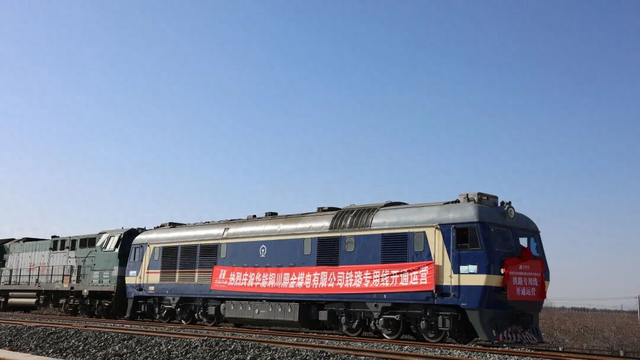
华能铜川照金煤电有限公司铁路专用线正式开通运营
Xin Lang Cai Jing· 2025-12-26 08:48
Core Viewpoint - The successful operation of Huaneng Tongchuan Zhaojin Coal Power Co., Ltd.'s dedicated railway line marks a significant step in implementing the national "shift from road to rail" strategy for energy transportation [1][6]. Group 1: Project Overview - The dedicated railway line is one of the first key demonstration projects for Huaneng Group's "shift from road to rail" initiative, spanning 14.67 kilometers with a designed speed of 80 km/h [3]. - The line has an annual capacity to receive 1.8 million tons and dispatch 700,000 tons of coal [3]. Group 2: Construction Challenges - The project team overcame multiple challenges during construction, including complex terrain, geological conditions, pandemic control, land acquisition, and external coordination [5]. - Significant infrastructure includes two major bridges, two tunnels, and modifications to the roadbed and unloading station, with over 50% of the line consisting of bridges and tunnels [3][5]. Group 3: Operational Significance - The official opening of the dedicated railway line ends the company's long-standing reliance on road transport for coal supply, enhancing the stability of regional coal supply for power generation [6]. - This development supports the national "dual carbon" goals and contributes to the high-quality economic and social development of the local area [6].