
柯力传感

Search documents
英伟达机器人“新大脑”即将揭晓,重点关注产业链龙头奥比中光、柯力传感
Tianfeng Securities· 2025-08-24 14:15
Investment Rating - Industry Rating: Outperform the market (maintained rating) [5] Core Insights - Nvidia is set to unveil its new "brain" for robotics on August 25, which is expected to enhance humanoid robot technology and lead to a surge in domestic robot industry orders [1] - The global humanoid robot industry is anticipated to expand significantly, driven by advancements in physical AI, with Nvidia's developments potentially unlocking a trillion-dollar market [1] - The Shanghai government has released an implementation plan to accelerate the practical deployment of humanoid robots in manufacturing, aiming for 3,000 companies to adopt intelligent applications within three years [2] Summary by Sections Industry Overview - The humanoid robot sector has seen a notable increase in demand, with over 83 publicly disclosed projects in the first half of 2025, totaling nearly 330 million yuan in contracts, a significant rise from the previous year [1] - Major companies like Ubtech, Yushun Technology, and Zhiyuan Robotics dominate the market, collectively accounting for over 60% of the total contract value [1] Key Companies to Watch - **Aobi Zhongguang**: A leading company in 3D visual perception with over 70% market share in domestic service robot visual sensors, closely partnered with Microsoft and Nvidia [3] - **Keli Sensor**: A top domestic strain sensor manufacturer, specializing in the development of sensors for humanoid robots, having completed product series for various robotic applications [3]


柯力传感(603662) - 柯力传感关于股权激励部分限制性股票回购注销实施公告
2025-08-24 08:01
证券代码:603662 证券简称:柯力传感 公告编号:2025-029 宁波柯力传感科技股份有限公司 关于股权激励部分限制性股票回购注销实施公告 本公司董事会及全体董事保证本公告内容不存在任何虚假记载、误导性陈述 或者重大遗漏,并对其内容的真实性、准确性和完整性承担法律责任。 重要内容提示: 回购注销的原因:根据《上市公司股权激励管理办法》(以下简称"管 理办法")及宁波柯力传感科技股份有限公司(以下简称"公司")《2022 年 限制性股票激励计划》(以下简称"激励计划")等相关规定,因公司层面业绩未 达标及激励对象离职等因素,公司将对已授予但尚未解除限售的 829,558 股限制 性股票进行回购注销。 本次注销股份的有关情况: | 回购股份数量 | 注销股份数量 | 注销日期 | | | | | --- | --- | --- | --- | --- | --- | | 股 829,558 | 股 829,558 | 2025 8 27 | 年 | 月 | 日 | 一、本次限制性股票回购注销的决策与信息披露 (一)2025 年 4 月 26 日,公司召开第五届董事会第九次会议和第五届监事 会第六次会议,审议 ...
柯力传感(603662) - 君合律师事务所上海分所关于柯力传感2022年限制性股票激励计划部分限制性股票回购注销实施的法律意见书
2025-08-24 08:01
上海市石门一路 288 号 兴业太古汇香港兴业中心一座 26 层 邮编:200041 电话:(86-21) 5298-5488 传真:(86-21) 5298-5492 君合律师事务所上海分所 关于宁波柯力传感科技股份有限公司 2022 年限制性股票激励计划部分限制性股票回购注销实施情况 的法律意见书 宁波柯力传感科技股份有限公司: 君合律师事务所上海分所(以下简称"本所")接受宁波柯力传感科技股份 有限公司(以下简称"公司"或"上市公司"或"柯力传感")的委托,作为公 司 2022 年限制性股票激励计划(以下简称"本次激励计划")的特聘专项法律 顾问,根据《中华人民共和国公司法》(以下简称"《公司法》")、《中华人 民共和国证券法》(以下简称"《证券法》")、《上市公司股权激励管理办法》 (以下简称"《管理办法》")等中国(为本法律意见书之目的,"中国"不包 括香港特别行政区、澳门特别行政区和台湾地区)现行法律、法规、规范性文件 的有关规定,就公司本次激励计划部分限制性股票回购注销(以下简称"本次回 购注销")实施情况,出具本法律意见书。 为出具本法律意见书,本所审查了公司提供的有关文件及其复印件,核对了 ...
浙江宁波数实融合向智前行
Jing Ji Ri Bao· 2025-08-23 22:13
Core Insights - The rapid development of artificial intelligence (AI) technology is expanding its applications across various industries, with Ningbo, a major manufacturing and digital economy hub in China, actively promoting "AI+" initiatives to create a trillion-yuan intelligent economy engine [1] Group 1: AI and Robotics Development - Ningbo is showcasing advancements in humanoid robotics, with the "NAVIAI" robot demonstrating new skills in industrial settings and customer service at the 2025 World Robot Conference [2] - The "Jarvis 2.0" humanoid robot, designed for industrial applications, is capable of complex tasks and has received praise for its ability to detect scents, enhancing safety management in chemical industries [2] - Ningbo has become a significant player in the global humanoid robotics industry, with five companies listed among the top 100 worldwide, contributing to key components for robots [3] Group 2: Data Utilization and AI Models - Ningbo is focusing on data collection, application, and sharing, with a strong emphasis on the value of data throughout its lifecycle, particularly in the field of intelligent driving [4] - The city has developed a multimodal dataset covering over 200 real-world scenarios, achieving industry-leading accuracy in facial recognition and gesture detection [5] - Ningbo's public data resources have grown significantly, with over 1 trillion data entries collected, marking a 30% increase from the previous year [6] Group 3: Infrastructure and Policy Support - The rapid growth of Ningbo's AI industry is supported by coordinated efforts in policy guidance and infrastructure development, including a city-level computing power network with a capacity of 2,650P [7] - The city has launched the "NBopen" open-source community to foster collaboration between enterprises and educational institutions, enhancing the innovation ecosystem [7] - An upcoming action plan aims to cultivate influential vertical AI models across various sectors, targeting a core industry scale exceeding 100 billion yuan by 2027 [8]
造机器人:一场“谁都能干”的“全民运动”?
经济观察报· 2025-08-23 10:47
Core Viewpoint - The threshold for entering the robotics industry has significantly lowered, leading to a surge of diverse companies from various sectors attempting to manufacture robots, raising questions about the sustainability and viability of this trend [4][5][6]. Group 1: Industry Trends - The nature of "building robots" is changing, evolving from a complex task to a more accessible one, where assembling a robot is becoming a reality rather than a joke [3][6]. - The number of humanoid robot-related companies in China reached 834 by late July 2025, with over half having registered capital exceeding 10 million [6][11]. - The growth in registrations of humanoid robot companies surged by over 180% in the first half of 2025 compared to the previous year [6]. Group 2: New Players and Cross-Industry Involvement - Companies from various backgrounds, including traditional manufacturing and investment sectors, are entering the robotics field, such as Vision Technology and Jiuding Investment [4][5][13]. - Midea Group, leveraging its ownership of KUKA, is developing humanoid robots for home and factory applications, showcasing a strategic approach to robotics [15]. - Automotive companies like GAC Group are also entering the robotics space, emphasizing the technological synergies between automotive and robotics [15]. Group 3: Technological Advancements - The availability of standardized components for robots, such as sensors and actuators, has made it easier for companies to assemble robots [6][11]. - Domestic suppliers are beginning to break the monopoly of foreign brands in critical components like harmonic reducers and planetary roller screws [8][9]. - The development of specialized components, such as the BrainCo bionic hand and advanced laser radar from Hesai Technology, indicates significant progress in the robotics supply chain [7][8]. Group 4: Market Dynamics and Challenges - The influx of capital into the robotics sector has led to a competitive environment, with many companies seeking to establish themselves amid rising expectations [6][19]. - Despite the enthusiasm, the integration of various components and ensuring system stability remains a significant challenge for the industry [19][20]. - The industry is still in its early commercial stages, with many companies relying on external funding rather than self-sustaining business models [21]. Group 5: Future Outlook - The future of the robotics industry may lead to a diverse ecosystem where specialized companies coexist, focusing on niche applications while core component suppliers support the overall market [21]. - The successful companies will likely be those that can identify real-world applications and maintain resilience in a capital-intensive environment [21].



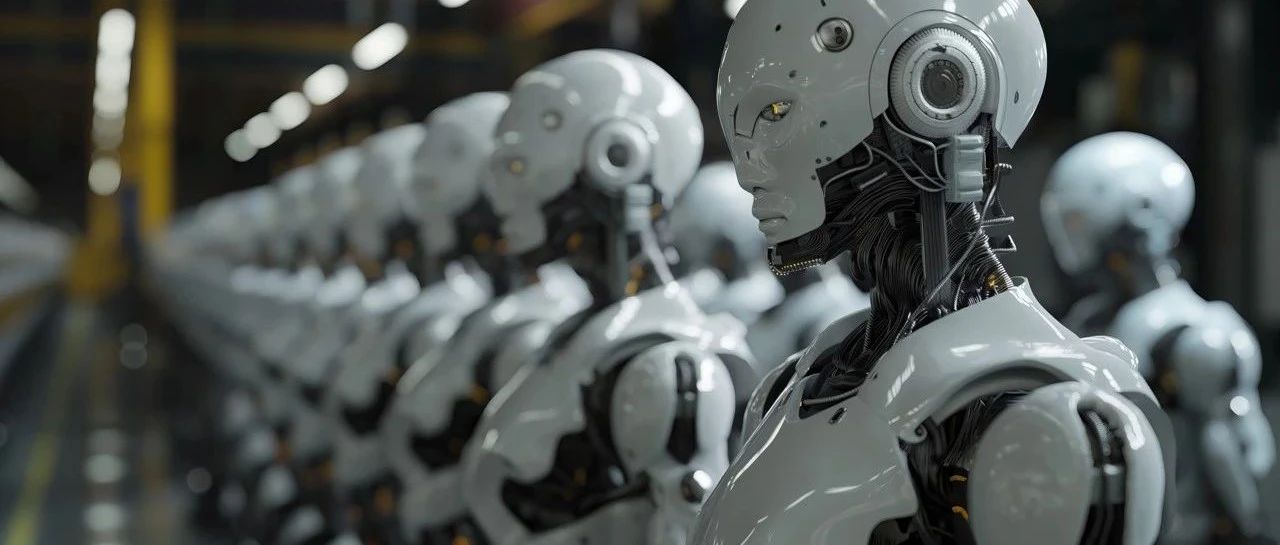
“攒一台机器人”,谁都能?
Jing Ji Guan Cha Wang· 2025-08-23 06:45
Core Insights - The robot industry is witnessing a surge of diverse players entering the market, ranging from traditional manufacturing companies to investment firms and even liquor producers, indicating a significant shift in the landscape of robotics [2][3][9] - The barriers to entry for building robots have decreased, with a growing number of companies providing standardized components, making it easier for various industries to participate in robot manufacturing [3][8] - The market is experiencing a rapid increase in the number of humanoid robot-related companies, with 834 existing firms as of late July 2025, and a year-on-year growth of over 180% in registrations [3][8] Industry Trends - The emergence of specialized suppliers for critical robot components, such as sensors and actuators, is facilitating the assembly of robots from off-the-shelf parts, leading to the concept of "building a robot" becoming more feasible [4][8] - Companies like Hesai Technology are leading in the production of 3D laser radar for robots, with significant sales figures indicating a robust demand for such components [4][8] - The domestic market is beginning to break the monopoly of foreign manufacturers in key components like harmonic reducers and planetary roller screws, with local firms investing heavily in R&D [6][8] Investment Activity - Numerous companies in the robotics sector have secured new rounds of financing, indicating strong investor interest and confidence in the industry's growth potential [3][8] - Notable investments include Jiuding Investment's acquisition of a controlling stake in a robot core component company and Kweichow Moutai's investment in a robotics startup [2][9] Company Strategies - Traditional manufacturers, such as Zhongjian Technology, are pivoting towards robotics to find new growth opportunities, while companies like Midea Group leverage existing robotics expertise from their subsidiary KUKA [10][11] - Automotive companies are also entering the robotics space, emphasizing the technological synergies between automotive and robotics, as seen with GAC Group's humanoid robot [11][12] Market Dynamics - The industry is characterized by a mix of established players and new entrants, each with different motivations, from seeking new revenue streams to enhancing existing product lines [9][10] - The competition is expected to lead to a diverse ecosystem where specialized companies focus on niche applications, while a few giants may dominate the general humanoid robot market [16]




技术场景双突破,头部订单激活产业链 | 投研报告
Zhong Guo Neng Yuan Wang· 2025-08-21 09:13
Core Viewpoint - The humanoid robot sector is experiencing significant growth, with a 5.4% increase in the robot index (884218) from July 1 to July 31, indicating a sustained upward trend in the industry [1][2]. Industry Progress - The industry has made important advancements in new technology applications, scenario implementation, and industry standards [2]. - The humanoid robot market is characterized as a "long slope, thick snow" sector, suggesting substantial long-term growth potential [2]. Key Developments - Several significant developments are expected in the humanoid robot field by July 2025, including: 1. The release of the QL humanoid robot product matrix by national and local centers. 2. The publication of the "Humanoid Robots and Embodied Intelligence Data Collection Cooperation Initiative" at the 2025 World Artificial Intelligence Conference. 3. The announcement of Zhiyuan Robotics' intention to acquire at least 63.62% of Shanghai Weiqi New Materials. 4. The winning of the largest global order by UBTECH in the humanoid robot sector [2]. Software and Policy Initiatives - Shanghai has introduced an implementation plan for the development of the embodied intelligence industry, aiming to accelerate the establishment of a self-innovative technology system for the entire chain of embodied intelligence [2]. Component Innovations - The use of polytetrafluoroethylene (PTFE) sheaths in tendon ropes has gained attention for reducing heat generated during operation [3]. - Metal Injection Molding (MIM) is expected to be applied in the dexterous hand components of humanoid robots, offering advantages over traditional CNC processes [3]. - Gallium Nitride (GaN) semiconductors are recognized for their potential to enhance robot performance, particularly in joint drive precision and power density [3]. Application Milestones - The domestic embodied large model has achieved full-scene verification in automotive manufacturing, marking a significant milestone [3]. - The Weapon Industry Group's exercises have sparked interest in unmanned equipment in land operations [3]. Investment Recommendations - The report suggests focusing on leading companies in the humanoid robot supply chain, including: 1. T-chain: Sanhua Intelligent Control, Top Group, Beite Technology, Mingzhi Electric, Zhaowei Electromechanical. 2. Huawei chain: Efort, Yijiahe, Keli Sensor, Zhaowei Electromechanical. 3. Yushu chain: Changsheng Bearing, Obsidian Light. 4. Figure chain: Mingzhi Electric, Zhaowei Electromechanical, Green Harmonic, Lingyi Intelligent Manufacturing. 5. 1X: Zhongjian Technology. 6. Leading companies in niche segments: Suochen Technology, Hanwei Technology, Lingyun Light, Aofei Entertainment, Fulai New Materials, Xinhongye, Nanshan Zhizhang, Xinjie Electric, Guomao Co. [4].
柯力传感(603662)8月19日主力资金净流入1051.18万元
Sou Hu Cai Jing· 2025-08-19 11:47
金融界消息 截至2025年8月19日收盘,柯力传感(603662)报收于70.5元,上涨0.84%,换手率6.03%, 成交量16.93万手,成交金额11.88亿元。 资金流向方面,今日主力资金净流入1051.18万元,占比成交额0.88%。其中,超大单净流出1139.64万 元、占成交额0.96%,大单净流入2190.82万元、占成交额1.84%,中单净流出流出242.87万元、占成交 额0.2%,小单净流出808.31万元、占成交额0.68%。 柯力传感最新一期业绩显示,截至2025一季报,公司营业总收入3.16亿元、同比增长27.08%,归属净利 润7565.43万元,同比增长75.85%,扣非净利润4266.00万元,同比增长10.07%,流动比率2.036、速动比 率1.532、资产负债率29.89%。 通过天眼查大数据分析,宁波柯力传感科技股份有限公司共对外投资了48家企业,参与招投标项目183 次,知识产权方面有商标信息12条,专利信息257条,此外企业还拥有行政许可30个。 来源:金融界 天眼查商业履历信息显示,宁波柯力传感科技股份有限公司,成立于2002年,位于宁波市,是一家以从 事计算机、 ...
2025年中国力矩传感器行业相关政策、产业链、发展现状、竞争格局及发展趋势研判:下游机器人技术快速发展,带动力矩传感器规模达9.5亿元[图]
Chan Ye Xin Xi Wang· 2025-08-19 01:23
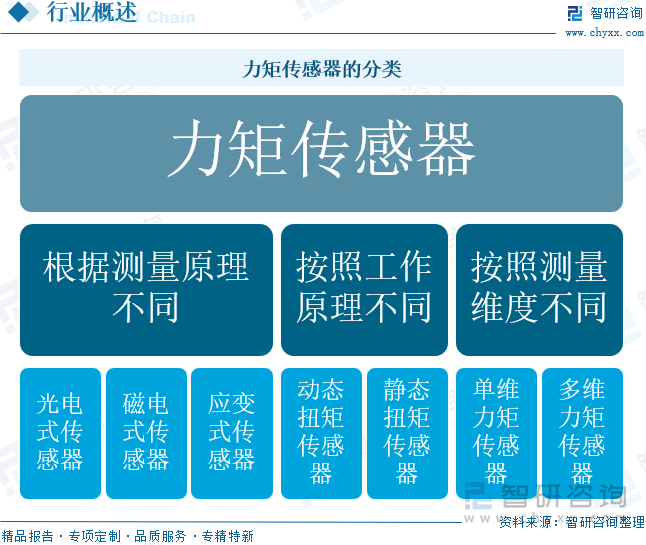
Industry Overview - The torque sensor industry is crucial for advanced equipment in sectors such as automotive, aerospace, and robotics, converting physical torque changes into precise electrical signals for data recording and real-time monitoring [1][15] - The market size of China's torque sensor industry is projected to grow from 120 million yuan in 2019 to 550 million yuan in 2024, with a compound annual growth rate (CAGR) of 35.59% [1][15] - By 2025, the market size is expected to reach 950 million yuan, driven by increasing demand from aerospace, automotive crash testing, and flexible robotics [1][15] Industry Development History - The development of torque sensors began in 1856 with the discovery of resistance change in metal wires under mechanical strain, leading to the creation of strain gauges [5] - Significant advancements occurred in the 1980s with the introduction of new types of torque sensors, including magnetic and piezoelectric sensors [5] - Recent innovations include non-contact measurement methods and multi-dimensional torque sensors, enhancing performance and application range [5] Industry Policies - Recent government policies support the development of the torque sensor industry, including initiatives to accelerate technological breakthroughs in high-end equipment like humanoid robots [7][8] - Investment funds are encouraged to support strategic and technologically advanced projects in the high-end instrument and sensor sectors [7][8] Industry Value Chain - The torque sensor industry has a relatively simple value chain, with upstream components including materials like elastic bodies and strain gauges, midstream focusing on manufacturing, and downstream applications in robotics, automation, and aerospace [9] Key Companies - Leading companies in the torque sensor market include ATI, Kunwei Technology, Keli Sensor, and Haoshi Electromechanical, which dominate the first tier due to their technological advantages [17] - The second tier includes companies like Blue Point Touch and Haibosen, which have specific technological strengths in automotive electronics and industrial automation [17] - Smaller regional firms and startups make up the third tier, competing through customized services and pricing strategies [17] Market Trends - The torque sensor industry is moving towards miniaturization, allowing integration into compact devices like robots and medical instruments while maintaining high precision [23] - There is a trend towards smart sensors that utilize AI and IoT technologies for real-time data collection and analysis, enhancing automation and predictive maintenance capabilities [24] - Future products are expected to offer multi-dimensional and multi-parameter measurements, catering to complex data needs in high-precision fields like aerospace and new energy vehicles [25]

PCB设备人形机器人商业航天及巨星科技推荐
2025-08-18 01:00
Summary of Key Points from Conference Call Records Industry or Company Involved - **PCB Equipment and Robotics Industry** [1][2][3][4][5][6][7][8] - **Commercial Aerospace Industry** [20][21][22][23][24][25] - **Electric Tools Business of Juxing Technology** [10][11][13] Core Insights and Arguments PCB Equipment - Domestic high-end PCB equipment is expected to achieve breakthroughs due to insufficient overseas supply, particularly in ultra-fast laser drilling and horizontal three-in-one electroplating [1] - The market has not fully considered the performance elasticity brought by domestic substitution, indicating potential valuation increases for leading companies [1][3] - Investment opportunities in PCB equipment are driven by orders, with domestic mechanical drilling and electroplating equipment benefiting from HDI expansion [2] - The reliance on imported CO2 drilling and horizontal three-in-one electroplating equipment remains at 100%, creating a gap for domestic manufacturers to fill [2] - The expected growth rate for leading PCB companies is between 50% to 100% over the next two years, with a valuation of 23 to 26 times earnings by 2026 [3] Robotics and Lightweight Materials - The focus on lightweight materials in humanoid robots is driven by the need to overcome endurance limitations, with PEEK and magnesium alloys being key materials [1][4][5] - The use of magnesium alloys is increasing due to breakthroughs in semi-solid die-casting technology, which enhances yield rates [6] - PEEK material is projected to have a market size of 2 to 3 billion RMB by 2025, with significant potential for application in humanoid robots [7] - The lightweight design of humanoid robots can reduce weight by over 20%, improving endurance and reliability [4][5] Commercial Aerospace - The recent failure of the Zhuque-2 rocket launch is viewed as a normal occurrence and is not expected to significantly impact the overall industry development trend [20][21] - Investment opportunities in satellite manufacturing and application segments are highlighted, with companies like China Satellite and Haige Communication being of interest [20][25] - The commercial aerospace industry is experiencing accelerated development, with key technological and policy advancements [20] Electric Tools Business - Juxing Technology's electric tools business is projected to grow from 300 million USD in 2025 to 1 billion USD in the next 3-4 years, driven by low-cost advantages [1][10][11] - The company is leveraging long-term partnerships and a low-cost supply chain to enter the market through large supermarkets [10] Other Important but Possibly Overlooked Content - The potential for domestic PCB equipment to fill gaps left by imported products is significant, especially as domestic manufacturers work to close the technology gap [2][3] - The robotics industry is expected to see a shift from technology validation to large-scale deployment, with a notable increase in demand and technological advancements [14] - The market for lightweight materials, particularly PEEK and magnesium alloys, is expanding, with specific companies like Weike Technology and Zhejiang Huaye being highlighted for their potential [7][8] - The electric tools market is characterized by a significant price advantage for Juxing Technology's products compared to competitors, which may enhance market penetration [10]
