TikTok

Search documents
X @TechCrunch
TechCrunch· 2025-12-22 14:03
TikTok Shop launches digital gift cards to challenge Amazon and eBay https://t.co/fipgjIs4LW ...
当亚马逊被“围猎”,谁在瓜分新的万亿蛋糕?
3 6 Ke· 2025-12-22 11:44
Group 1: Core Insights - The disparity in online retail penetration between China (30%) and the U.S. (16%) is significant, indicating different market dynamics and maturity levels [1][2] - U.S. e-commerce is not merely lagging behind but is in a mature market with strong offline competitors like Walmart and Costco, leading to structural differentiation rather than total growth [2][3] - The U.S. retail landscape is characterized by a robust offline infrastructure that complicates the growth of e-commerce, as traditional retailers provide high efficiency and experience [4][5] Group 2: Market Dynamics - The U.S. e-commerce market, valued at over $1.1 trillion, is supported by a $7 trillion retail base, despite a lower penetration rate [4] - The competition in the U.S. e-commerce space is shifting towards specific niches where traditional retailers cannot compete, such as extreme low pricing, traffic stimulation, and fresh food delivery [4][10] - Amazon, while still a leader, faces challenges from low-cost competitors and content-driven e-commerce platforms like TikTok Shop, which leverage social media for sales [5][9] Group 3: Competitive Landscape - Companies like Temu and Shein are disrupting the U.S. market by utilizing Chinese supply chains to offer low prices without the burden of high logistics costs [7][8] - TikTok Shop is transforming its video content into e-commerce opportunities, presenting a new avenue for merchants seeking alternatives to Amazon [9] - Walmart has successfully adapted to the e-commerce landscape by utilizing its extensive store network for efficient fresh food delivery, surpassing Amazon in this segment [12] Group 4: Key Companies - **Amazon (AMZN)**: Despite facing competition, Amazon maintains a strong retail market share of approximately 37% and continues to perform well in core categories like consumer electronics [13][14] - **Walmart (WMT)**: Walmart is evolving into a full-channel giant, with its e-commerce business growing over 20% for seven consecutive quarters, driven by its fresh food offerings [15] - **PDD Holdings (PDD)**: Temu is transitioning to a model that enhances its pricing power and logistics efficiency, targeting Amazon's mid-tier merchant ecosystem [16] - **Shopify (SHOP)**: Shopify is leveraging AI to enhance traffic distribution and improve monetization rates, moving beyond its initial role as a platform provider [17] - **Instacart (CART)**: Instacart dominates the U.S. third-party fresh food delivery market, with a significant portion of its revenue coming from high-margin advertising [18]


AI面试,正在变成一场没有人的表演
3 6 Ke· 2025-12-22 11:14
Core Insights - The recruitment process is increasingly dominated by AI technologies, leading to a competitive landscape where both employers and job seekers utilize AI to gain advantages [3][18][22] - A complex arms race has emerged, with companies deploying AI for efficiency in screening candidates, while job seekers employ AI tools to enhance their applications and interview performances [4][19][28] Group 1: AI in Recruitment - At least 88% of companies are using AI for candidate screening, with 23% employing AI for interviews [3][18] - AI tools are being used to automate the entire recruitment process, from resume parsing to video interview scoring, significantly increasing efficiency [18][19] - The reliance on AI in recruitment may lead to a loss of human insight, as the focus shifts from identifying talent to recognizing data patterns [18][28] Group 2: Job Seekers' Strategies - Job seekers are adapting by using AI to optimize resumes and prepare for interviews, including embedding invisible keywords to manipulate AI screening systems [6][19] - Some candidates are employing AI interview software that can generate responses in real-time during interviews, making it difficult for interviewers to detect [7][9] - The use of deepfake technology to create digital avatars for interviews has been reported, complicating the detection of AI-assisted cheating [9][12] Group 3: Challenges and Responses - Interviewers are developing strategies to counteract AI cheating, such as implementing "closed-eye" questions to test candidates' authenticity [12][14] - The emergence of "trap questions" designed to expose AI-generated responses highlights the ongoing battle between AI systems and human evaluators [12][14] - The recruitment landscape is becoming increasingly complex, with both sides investing heavily in identifying and countering each other's tactics [14][28] Group 4: Ethical Considerations and Future Directions - The proliferation of AI in recruitment raises ethical concerns about the potential for misrepresentation and the erosion of genuine human interaction [22][29] - Companies are encouraged to return to human-centric evaluation methods, emphasizing the importance of personal interaction in assessing candidates [28][29] - The industry must address the need for transparency in AI systems, including clear scoring logic and the ability for candidates to appeal decisions based solely on algorithmic outcomes [29]
当亚马逊被“围猎”,谁在瓜分新的万亿蛋糕?
格隆汇APP· 2025-12-22 11:12
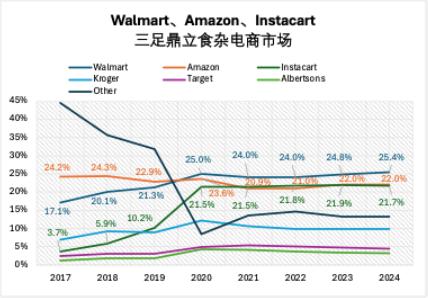
Core Viewpoint - The article discusses the significant disparity in online retail penetration between China and the U.S., with China's online retail sales approaching 30% while the U.S. remains around 16%. This difference is attributed to the maturity of the U.S. retail market, which is dominated by strong offline players like Walmart and Costco, leading to a more complex competitive landscape for e-commerce in the U.S. [4][5][6] Group 1: Market Dynamics - The U.S. e-commerce market is not simply lagging behind China but is characterized by a mature offline retail system that provides high efficiency and experience, making it difficult for e-commerce to replace traditional retail. Instead, e-commerce serves as a supplement to offline shopping [5][6]. - The U.S. retail market, valued at $7 trillion, supports a substantial e-commerce sector worth over $1.1 trillion, despite a lower penetration rate [6]. - The competitive landscape in the U.S. is shifting from total growth to structural differentiation, focusing on specific niches where traditional retailers cannot compete effectively, such as extreme low prices, traffic stimulation, and fresh food delivery [6][13]. Group 2: Competitive Challenges - Amazon, while still a leader in infrastructure, faces significant challenges from low-cost competitors and new traffic sources, particularly from companies like Temu and Shein, which leverage Chinese supply chains to offer lower prices without the need for expensive logistics in the U.S. [8][10][11]. - TikTok Shop is emerging as a powerful player in the e-commerce space, converting its vast short video traffic into purchasing power, contrasting with Amazon's traditional search-based model [12]. - In the fresh grocery segment, Walmart has overtaken Amazon with a 25% market share compared to Amazon's 22%, due to Walmart's effective use of its extensive store network to reduce delivery costs and enhance customer experience [15]. Group 3: Key Companies - **Amazon (AMZN)**: Despite facing competition, Amazon maintains a strong retail market share of around 37% and continues to perform well in core categories, such as consumer electronics [17]. - **Walmart (WMT)**: Walmart is transforming from a traditional supermarket to a full-channel giant, with its e-commerce business growing over 20% for seven consecutive quarters, now accounting for 20% of its total retail sales [20]. - **PDD Holdings (PDD)**: Temu is evolving from a fully managed model to a semi-managed one, enhancing its supply chain capabilities and integrating local inventory to compete with Amazon [21]. - **Shopify (SHOP)**: Shopify is shifting its growth narrative, focusing on AI-driven traffic distribution and financial services to enhance its revenue model [22]. - **Instacart (CART)**: Instacart dominates over 70% of the U.S. third-party grocery delivery market, with a growing high-margin advertising business contributing to its revenue [23].

TikTok在美国支棱起来了?
虎嗅APP· 2025-12-22 11:08
Core Viewpoint - TikTok has reached a temporary resolution regarding its regulatory issues in the U.S. by forming a joint venture with Oracle, Silver Lake, and MGX, which will address data security and compliance while allowing TikTok to continue its commercial operations [4][5]. Group 1: Joint Venture Structure - The new structure consists of two entities: TikTok U.S. for commercial activities and a new joint venture focused on data security and compliance [5][6]. - The joint venture will be responsible for user data protection, algorithm security, content review, and software assurance to meet U.S. regulatory requirements [5][6]. - The ownership structure has evolved, with U.S. investors holding about 50% of the joint venture, while ByteDance retains a 19.9% direct stake, enhancing its influence compared to earlier proposals [8]. Group 2: Business Performance and Challenges - TikTok's U.S. e-commerce performance has lagged, with a target of $15.5 billion in 2024 but only achieving approximately $8.5 billion [12][13]. - The overall global GMV target for 2025 has been revised down from $95 billion to $87 billion due to underperformance in the U.S. market [13]. - Despite challenges, TikTok Shop's U.S. sales are projected to grow by 108% in 2025, reaching $15.82 billion, with an increase in market share [15]. Group 3: Competitive Landscape - TikTok faces intense competition in the U.S. e-commerce market, with Amazon and Walmart holding two-thirds of the market share, while Temu and SHEIN dominate a significant portion of the remaining third [28]. - The U.S. e-commerce market growth is stabilizing, with future growth expected to be around 10%, indicating a shift towards a more competitive environment [29]. - TikTok Shop's profit margins are constrained compared to competitors, with a gross margin of approximately 13%, limiting its pricing strategies [31][33]. Group 4: Operational Implications of New Structure - The new joint venture structure may complicate TikTok's operational efficiency, as data access for decision-making has become slower and more fragmented [35][36]. - The reliance on algorithms and A/B testing for content distribution and advertising may be hindered by the new data governance model, potentially impacting overall business performance [37]. - While TikTok has secured its presence in the U.S., the future of its operational effectiveness remains uncertain as it navigates this new phase [38].
TikTok美区200亿GMV攻坚:社交电商增量王遇“难越之峰”
Sou Hu Cai Jing· 2025-12-22 08:20
Core Insights - TikTok aims for a GMV target of $20 billion in the U.S. for 2025, but market research firm eMarketer predicts it will only reach $15.82 billion, reflecting a growth of 108% year-over-year, which indicates a potential shortfall in achieving its ambitious goal [1][4][5] Group 1: Market Performance - The first half of 2025 was challenging for TikTok in the U.S., facing issues such as regulatory scrutiny, tax increases, and internal layoffs, which increased operational pressures on sellers [2][4] - The second half showed improvement with user growth, surpassing 18 million monthly active users, and significant sales during the Black Friday event, where transactions exceeded $500 million [2][4] - Despite strong performance in the latter half, the overall annual target remains difficult to achieve due to earlier setbacks [4][5] Group 2: User Engagement and Growth - TikTok has become the fastest-growing social media platform in the U.S., with a monthly active user count of 183 million, reflecting a 16% growth rate [6][7] - The platform's user engagement is high, with users spending over 90 minutes daily on TikTok, significantly more than on competitors like Facebook and Instagram [8][6] Group 3: Competitive Landscape - TikTok holds an 18.2% market share in the U.S. social e-commerce sector, making it the third-largest player, while Facebook and Instagram dominate with a combined 75% share [9][10] - The platform's unique content ecosystem allows it to attract and retain users effectively, despite competition from established players [8][10] Group 4: Future Projections - eMarketer forecasts that TikTok Shop's sales will continue to grow at double-digit rates, potentially exceeding $30 billion by 2028, indicating resilience in its content-driven e-commerce model [5][4] - The U.S. e-commerce market is projected to reach $1.34 trillion by 2025, with TikTok aiming to capture a significant portion of this growth [12][11] Group 5: Brand Strategy and Market Positioning - TikTok is focusing on brand partnerships and content quality to enhance its market position, moving away from a purely volume-driven approach to a more strategic brand-building model [25][30] - The platform's internal communications indicate a commitment to maintaining control over its core business operations, which may boost confidence among sellers and brands [23][30]

TikTok CEO周受资内部信:TikTok美国业务调整
Sou Hu Cai Jing· 2025-12-22 02:51
当地时间12月18日,TikTok CEO周受资的内部信被曝出,详细阐述了TikTok美国业务的重大调整方案。 根据信件内容, TikTok将成立一家新的合资公司——TikTok美国数据安全合资有限责任公司(TikTok USDS Joint Venture LLC), 专门负责数据保护、算法 安全等内容,而由字节跳动全资控股的实体继续主导电商、广告等商业活动。这一调整旨在应对美国监管要求,同时确保TikTok美国业务的持续运营。 根据内部信,TikTok美国业务的重组涉及两大主体:一是专注于数据安全的新合资公司,二是延续商业运营的字节跳动实体。 新合资公司由甲骨文、银湖等投资者持股45%,字节跳动部分现有投资者持股30.1%,字节跳动自身保留19.9%的股份,使其仍为最大单一股东。整个方案 预计在2026年1月22日前完成。 易仓ERP作为跨境电商ERP解决方案, 已深度对接TikTok生态,其TikTok管理模块可帮助卖家统一监控销售、广告、达人等数据,确保在业务调整中保持 运营稳定性。例如,通过易仓ERP的 TikTok首页看板,卖家能追踪TikTok美国业务的销售趋势和订单履约进度,避免因平台变动导致 ...
【数智周报】MiniMax和智谱通过港交所聆讯;OpenAI据悉计划以8300亿美元估值筹资至多1000亿美元;寒武纪:拟使用27.78亿元资本公积金弥补亏损
Tai Mei Ti A P P· 2025-12-21 04:23
Group 1 - Elon Musk publicly criticized nuclear fusion power, stating that building small fusion reactors on Earth is economically foolish, as the sun itself is a massive, free fusion reactor capable of meeting all energy needs in the solar system [2] - Musk plans to deploy 100GW of solar-powered AI satellites annually, which is equivalent to about a quarter of the total electricity consumption of the United States [2] Group 2 - Zhongke Shuguang unveiled the scaleX Wanka supercluster at the HAIC2025 conference, marking the first appearance of a domestic 10,000-card AI cluster system in physical form [3] - Unisoc announced the establishment of a Central Research Institute to focus on new architectures and models for edge AI chips, particularly for applications in autonomous driving and robotics [3] Group 3 - Cambricon announced plans to use 2.778 billion yuan of its capital reserve to cover cumulative losses, with the aim of bringing its negative retained earnings to zero by the end of 2024 [4] Group 4 - MiniMax has passed the Hong Kong Stock Exchange hearing and plans to go public in January 2026, potentially becoming the fastest AI company to IPO globally within four years of its establishment [6] - Zhiyuan Technology has officially passed the Hong Kong Stock Exchange IPO hearing, with CICC as the sole sponsor [6] Group 5 - Tencent has established an AI Infra department to enhance its large model research framework, with Vincesyao appointed as the chief AI scientist [6][7] - The AI Infra department will focus on building technical capabilities for large model training and inference platforms [7] Group 6 - ByteDance is advancing a collaboration with Lenovo to develop AI smartphones, aiming to pre-install AIGC plugins to gain user access [8] - Doubao released version 1.8 of its large model, enhancing its capabilities for multi-modal agent scenarios [9] Group 7 - Qianwen APP has integrated with Alibaba's ecosystem, enabling it to access underlying services like Gaode Map for enhanced geographical understanding [10] - Alibaba launched the new generation of the Wanxiang 2.6 model, which supports role-playing functions for video production [11] Group 8 - Baidu launched the Wenxin Health Manager, positioning it as a 24/7 "all-in-one family doctor" service [14] - The application offers a comprehensive AI health service system covering light symptom consultations and complex disease planning [14] Group 9 - Aishi Technology signed a comprehensive cooperation agreement with Alibaba Cloud to enhance global deployment and compliance capabilities for its video generation model [15] - Xiaomi open-sourced its MiMo-V2-Flash model, which boasts competitive capabilities at a significantly lower inference cost compared to closed-source models [16] Group 10 - Muxi Technology officially listed on the Shanghai Stock Exchange's Sci-Tech Innovation Board, aiming to raise 4.197 billion yuan to accelerate the development of "Chinese chips" [17] - The company focuses on high-performance general-purpose GPU products for AI training and inference [17] Group 11 - Meituan released and open-sourced the LongCat-Video-Avatar model, which supports multiple video generation tasks [18] - The model has achieved significant breakthroughs in action realism and video stability [18] Group 12 - Chinese scientists achieved a breakthrough in optical computing chips, enabling large-scale semantic media generation [19][20] - The LightGen chip demonstrates significant improvements in performance and energy efficiency compared to traditional digital chips [20] Group 13 - Baidu's Kunlun chip business is reportedly nearing completion of its restructuring, aiming for a potential listing in Hong Kong [20] - SenseTime's Seko series models have successfully adapted to the domestic AI chip Cambricon [20] Group 14 - Nvidia's CEO revealed that the company has not yet made any payments to OpenAI as part of a planned $100 billion investment [22] - Nvidia launched the Nemotron 3 open-source model series, significantly improving throughput compared to its predecessor [23] Group 15 - OpenAI plans to raise up to $100 billion, potentially valuing the company at $830 billion [24] - The new image model GPT-image-1.5 was launched, enhancing image generation capabilities significantly [25] Group 16 - Intel is in talks to acquire AI chip startup SambaNova for approximately $1.6 billion [30] - Multiple AI companies have recently completed significant funding rounds to support their growth and technology development [31][32][33][34][35][36][37]



Leaked Memo Reveals Why TikTok's New US Owners May Have Less Power Than Expected
Yahoo Finance· 2025-12-20 22:01
Core Insights - TikTok has finalized a joint-venture agreement with Oracle, MGX, and Silver Lake, focusing on national security-related tasks, while ByteDance retains control over key business lines [1][2][5]. Ownership Structure - The new investors will hold a combined 45% stake in the US joint venture, while ByteDance will maintain just under 20% ownership of the US business [4]. - ByteDance will continue to oversee global operations and manage TikTok's e-commerce, advertising, and marketing strategies [4][6]. Operational Focus - The US joint venture will operate independently, focusing on US data protection, algorithm security, content moderation, and software assurance [3][6]. - TikTok's CEO has emphasized that the new investors will not control core business lines like TikTok Shop or ad sales, although they may share in the profits [2][5]. Strategic Implications - This deal represents a significant shift in TikTok's US operations, ensuring ByteDance retains influence over strategic direction while addressing US government concerns regarding data privacy and security [5][6]. - The arrangement may set a precedent for similar structures in other tech companies facing national security scrutiny [6].
外交部例行记者会 / MFA Regular Press Conference (2025年12月19日)
Xin Lang Cai Jing· 2025-12-20 05:46
Group 1 - The U.S. has approved large-scale arms sales to Taiwan, which China views as a serious interference in its internal affairs and a threat to its sovereignty and territorial integrity [5][6][9] - China has lodged a strong protest against the U.S. arms sales, emphasizing that any actions to arm Taiwan will face serious consequences and disrupt peace in the Taiwan Strait [7][10] - The Chinese government asserts that the real threat to peace in the Taiwan Strait comes from Taiwan's independence movements and external interference, not from China's actions [8][9] Group 2 - The "National Defense Authorization Act for Fiscal Year 2026" signed by the U.S. includes negative content regarding China, which China strongly opposes and has protested [15][16] - China urges the U.S. to adopt a rational view of China's development and to refrain from implementing negative provisions in the Act, warning of strong measures if the U.S. continues its current course [17] Group 3 - Reports indicate that Japan is considering acquiring nuclear weapons, which China views as a dangerous ambition that undermines international law and stability [18][19] - China criticizes Japan's militaristic tendencies and urges Japan to reflect on its historical actions and adhere to international commitments regarding nuclear non-proliferation [20][23] Group 4 - China expresses concern over the situation in Bangladesh ahead of its parliamentary elections, wishing for a safe and stable electoral process [31] - The Chinese government emphasizes the importance of maintaining national unity and stability in Bangladesh during this critical period [31]