
平安人寿

Search documents
银行股,突然爆发
Zheng Quan Shi Bao Wang· 2025-06-10 04:37
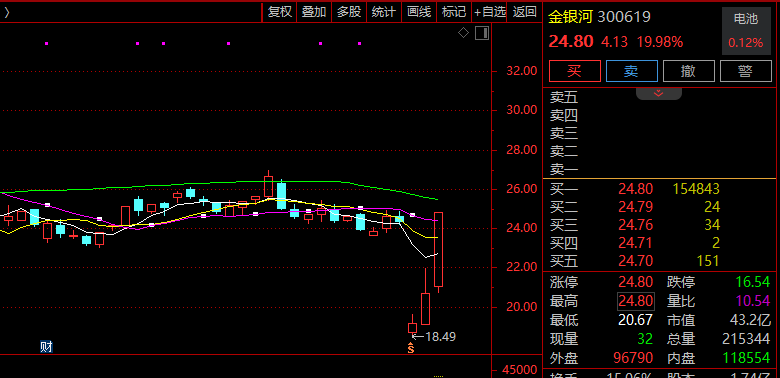
Market Overview - A-shares experienced slight fluctuations with major indices showing mixed results, as the Shanghai Composite Index rose for the sixth consecutive day, surpassing 3400 points [1] - The banking sector saw significant gains, with several banks reaching historical highs [6][7] Battery Industry - The battery industry chain showed strong performance, particularly in the sodium battery sector, which led the gains with a rise of over 1%, reaching a two-and-a-half-month high [2] - Companies such as Jin Yinhe and Keheng Co. saw their stocks hit the daily limit, with increases exceeding 10% [2] - Solid-state batteries, lithium mining, and battery recycling also experienced upward trends, with multiple companies achieving strong stock performance [4] Sodium-Ion Battery Developments - The "2025 High-Performance Sodium Battery Industry Summit" introduced a new high-energy density lithium-sodium hybrid battery, expected to launch in Q1 2026 [4] - A large-scale lithium-sodium hybrid energy storage station with a capacity of 400 MWh has been commissioned, capable of adjusting 580 million kWh of electricity annually, with a green energy ratio of 98% [4] - Sodium is abundant in nature, with reserves approximately 400 times that of lithium, making sodium-ion batteries easier to source and potentially more cost-effective [4] Market Demand for Sodium-Ion Batteries - The sodium-ion battery market in China is projected to demand approximately 11.9 GWh in 2024, increasing to 28.2 GWh in 2025 and reaching 95.6 GWh by 2028 [5] - The rapid development in energy storage and electric vehicle sectors presents a vast market opportunity for sodium-ion batteries, benefiting all segments of the supply chain during initial mass production [5] Banking Sector Performance - The banking sector index rose over 1%, reaching a historical high, with banks like Minsheng Bank and Zhejiang Commercial Bank leading the gains [6][8] - Hong Kong banking stocks also surged, with the Hang Seng Mainland Banks Index hitting a historical high [8] - Ping An Asset Management has been actively increasing its holdings in various banks, including Agricultural Bank of China, indicating strong institutional interest in the banking sector [9] Investment Outlook - Analysts suggest that the recent adjustments in the CSI 300 index have led to increased trading volumes for smaller banks, reflecting optimistic market sentiment [10] - Long-term investment demand from institutional investors remains strong, indicating that the absolute value of bank stocks is likely to persist in the second and third quarters [10]

500亿,又一险资巨头出手了
投中网· 2025-06-10 04:03
Core Viewpoint - The article highlights the increasing enthusiasm of insurance capital entering the capital market, exemplified by China Pacific Insurance's establishment of two large-scale funds totaling 500 billion yuan, indicating a significant trend in the insurance sector's investment strategies [3][4][12]. Fund Establishment - China Pacific Insurance has launched two funds: the Taibao Zhanxin M&A Fund with a target size of 300 billion yuan and the Taibao Zhiyuan No. 1 Private Securities Investment Fund with a target size of 200 billion yuan [4][7]. - The Taibao Zhanxin M&A Fund aims to focus on the reform of state-owned enterprises and the construction of a modern industrial system in Shanghai, emphasizing mergers and acquisitions as a key strategy [8][9]. - The Taibao Zhiyuan No. 1 Fund is designed to invest in the secondary market, responding to national calls for expanding insurance institutions' participation in private securities investment funds [10]. Market Trends - Since 2022, various policies have been introduced to encourage insurance capital to enter the market, making insurance funds a significant source of long-term capital, especially in the primary market [4][12]. - The insurance sector's participation in M&A funds has surged, with a reported increase of over 60% year-on-year in 2024 [9]. Financial Performance - In 2024, China Pacific Insurance reported a revenue of 404.09 billion yuan, a year-on-year increase of 24.74%, and a net profit of 46.44 billion yuan, up 66.39% [13]. - The group's total investment income reached 120.39 billion yuan, reflecting a substantial year-on-year growth of 130.5%, highlighting the importance of investment as a growth driver [13]. Policy Support - Recent regulatory changes have facilitated insurance capital's entry into equity investments, with significant policy shifts allowing higher investment limits in venture capital funds [14]. - By the end of 2024, the scale of insurance capital participating in equity investments is expected to reach 1.92 trillion yuan, with indirect equity investments through funds and products amounting to 950 billion yuan [14]. Investment Challenges - Despite the growing interest, insurance capital has stringent requirements for fund management scale, past performance, and investment focus, making it challenging for many funds to secure investment [15]. - The article suggests that as policies continue to loosen, more insurance funds are likely to enter the primary market, providing additional capital to the sector [15].


单日成交额不足百万元 超180只ETF流动性堪忧
Shang Hai Zheng Quan Bao· 2025-06-08 18:07
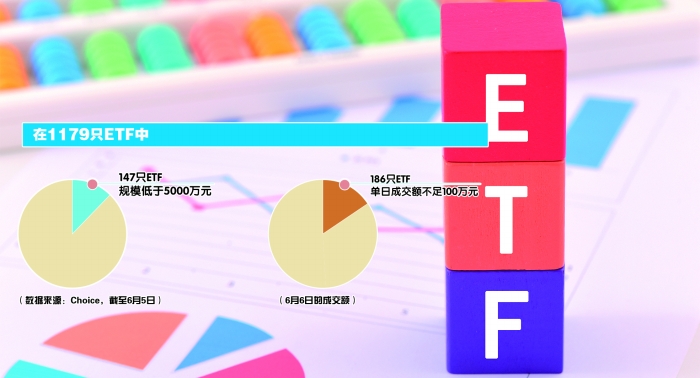
Core Viewpoint - The ETF market is facing significant challenges due to low liquidity and a high number of ETFs struggling to maintain their scale, leading to potential liquidation risks for many funds [2][3][4]. Group 1: Current Market Situation - Over 180 ETFs have daily trading volumes below one million yuan, with some even below ten thousand yuan, indicating a liquidity crisis [2][3]. - As of June 5, among 1179 ETFs, 147 have assets below 50 million yuan, and 39 have assets below 20 million yuan, with some ETFs having only a few hundred thousand yuan [3][6]. - The liquidity of ETFs is critical, especially during market volatility, as low liquidity can lead to "liquidity exhaustion" [4][5]. Group 2: Competitive Landscape - The ETF market exhibits a significant disparity in scale, particularly among core broad-based indices like the CSI 300 ETF, where the top four ETFs exceed 100 billion yuan, while many others struggle to reach 10 million yuan [6][7]. - The head effect is pronounced, with larger ETFs attracting more capital, while smaller ETFs often go unnoticed, leading to a continuous decline in their scale [7][8]. - Many fund companies are facing intense competition and are unable to cover costs, with a significant portion of ETFs operating at a loss [8]. Group 3: Need for Differentiation - Industry experts emphasize the necessity for fund companies to pursue differentiated strategies rather than blindly entering the ETF market [8][9]. - There is a call for innovative product designs that cater to specific investor needs, such as stable income products for insurance funds, and the development of thematic ETFs [9]. - The potential for innovation in ETF products is vast, with strategies like options for downside protection and transparent active ETFs gaining traction in overseas markets [9].
险资年内举牌15次,半年不到举牌超过去全年意味着什么?
3 6 Ke· 2025-06-07 09:22
Group 1 - The core point of the article highlights the significant increase in insurance capital's stake acquisitions in listed companies, with 15 instances recorded in less than six months, surpassing the total for the entire previous year [3][4][7] - Insurance companies involved in these acquisitions include Ping An Life, China Life, Xinhua Insurance, Sunshine Life, Great Wall Life, Ruizhong Life, and China Post Life [4][5] - The current wave of acquisitions marks the third surge in the past decade, following similar trends in 2015 and 2020, indicating a sustained interest in equity investments by insurance capital [5][13] Group 2 - The rapid increase in stake acquisitions suggests a strategic shift in insurance capital's investment approach, moving from aggressive takeover attempts to a more financially motivated investment strategy [13] - Insurance capital typically seeks long-term stability and high dividend yields, favoring companies with strong financial health and sustainable profit generation [9][10] - The majority of the recent acquisitions target bank stocks, which align with insurance capital's preference for large-cap, low-valuation, and high-dividend yield investments [10][13]

“长钱”入市步伐提速 保险机构积极参与长期投资试点
Zhong Guo Zheng Quan Bao· 2025-06-04 20:35
Core Viewpoint - The long-term investment pilot program for insurance funds is progressing, with several insurance companies launching new private equity funds to enhance capital market participation and optimize asset allocation [1][2][5]. Group 1: Investment Fund Developments - China Pacific Insurance has launched the Tai Bao Zhi Yuan No. 1 private equity fund with a target size of 20 billion yuan, marking it as one of the second batch of long-term investment pilot funds [1][2]. - The total approved and proposed pilot scale for the long-term investment program has reached 222 billion yuan across three batches [2]. - Other insurance companies, including China Life and New China Life, have also received approval for new funds, with China Life and New China Life establishing the Hong Hu Fund Phase II with a size of 20 billion yuan [2][3]. Group 2: Stock Investment Growth - As of the end of Q1 2025, the stock investment balance for life insurance companies reached 2.65 trillion yuan, an increase of 377.5 billion yuan from the end of 2024, representing 8.43% of their total investment [4]. - Property insurance companies reported a stock investment balance of 171.9 billion yuan, up 11.8 billion yuan from the end of 2024, accounting for 7.56% of their total investment [4]. - Insurance companies have been actively increasing their positions in high-dividend and technology innovation stocks, with a notable rise in equity investments [4]. Group 3: Long-term Performance Assessment - The shift towards long-term performance assessment mechanisms is expected to enhance the investment enthusiasm of insurance funds, allowing for a greater focus on equity investments [5][6]. - Many insurance institutions are optimizing their assessment mechanisms to emphasize long-term performance, which is anticipated to support the stable operation of capital markets [5][6]. - Insurance companies have conducted extensive research on over 1,300 A-share listed companies, focusing on sectors such as electronics, pharmaceuticals, and machinery [6].
中国太保发布200亿元私募基金,险资“入市潮”升级
Hua Er Jie Jian Wen· 2025-06-03 14:14
Group 1 - China Pacific Insurance has launched the Taibao Zhiyuan No. 1 private securities investment fund with a target size of 20 billion yuan, responding to the national call to expand the establishment of private securities investment funds by insurance institutions [1] - The company also announced the Taibao Zhansheng M&A private fund with a target size of 30 billion yuan, with an initial scale of 10 billion yuan [1] - The insurance sector is increasingly investing in A-shares and H-shares, diversifying their investment strategies beyond traditional insurance products [1][2] Group 2 - The investment strategy focuses on enhancing long-term equity asset allocation, emphasizing core investment strategies centered on dividend value to support the sustainable development of the capital market [2] - Recent policy changes allow more qualified insurance asset management companies and insurers to participate in private securities investment fund trials [2] Group 3 - Major insurance companies have established private securities funds since the reform pilot began, with China Life and Xinhua Insurance jointly creating the Honghu private fund with an initial scale of 50 billion yuan, targeting high market-cap, liquid, and influential listed companies [3] - Xinhua Insurance and China Life have committed a total of 20 billion yuan to the second phase of the Honghu private fund, which is currently working on the third phase of funding [3] Group 4 - Sunshine Life plans to invest 20 billion yuan in the Sunshine Heyuan private securities investment fund, while Taikang Life intends to invest 12 billion yuan in a privately issued fund managed by Taikang [4] - Hengyi Holding will issue a private securities investment fund to Ping An Life with an initial fund size of 30 billion yuan [5] Group 5 - Regulatory authorities have approved several insurance companies, including PICC Life and Taiping Life, to participate in the second batch of long-term investment pilot programs [6] - Both large and small insurance companies are engaging in the investment reform, with companies like Zhongyou Insurance and Zhongyou Asset Management approved for a 10 billion yuan pilot program [6] Group 6 - As of the end of May, the scale of the insurance capital long-term investment reform pilot has exceeded 200 billion yuan, indicating an increased willingness to allocate equity assets [7] - A report from Changjiang Securities highlights that the decline in liability costs benefits insurance capital's allocation to equity assets, as lower liability costs reduce the required returns on risk assets [7]
第三次举牌潮持续!险资年内举牌15次,涉及这些股票
券商中国· 2025-06-02 09:11
举牌涉及这些股票 从险资举牌标的来看,保险公司今年举牌的股票包括北京控股、电投产融、东方物流,中国儒意、中国水务、 大唐新能源、中国神华、杭州银行以及邮储银行、招商银行、农业银行、中信银行等银行H股,其中9只股票 为H股。 险资持续举牌上市公司,引发市场广泛关注。 据券商中国记者统计,截至5月31日,7家保险公司共实施15次举牌,超过2023年全年举牌量,并接近2024年全 年举牌数。这场从2024年启动的举牌潮已经持续一年多,且丝毫没有减弱趋势,去年至今险资举牌已超30次。 第三次举牌潮持续 5月19日,平安人寿发布举牌公告,平安资管受托该公司资金投资农业银行H股股票,5月12日达到农业银行H 股股本的10%。 这是平安人寿今年第5次举牌。其他举牌保险公司还包括中国人寿,新华保险、阳光人寿、长城人寿、瑞众人 寿、中邮人寿等。 险资投资上市公司股票并不鲜见,但只有达到一定规模才能称得上"举牌"。根据相关规定,保险公司举牌上市 公司股票,是指保险公司持有或者与其关联方及一致行动人共同持有一家上市公司已发行股份的5%,以及之 后每增持达到5%时,按照相关法律法规规定,在3日内通知该上市公司并予以公告的行为。 近1 ...




当南向资金转向红利配置
Sou Hu Cai Jing· 2025-05-29 10:58
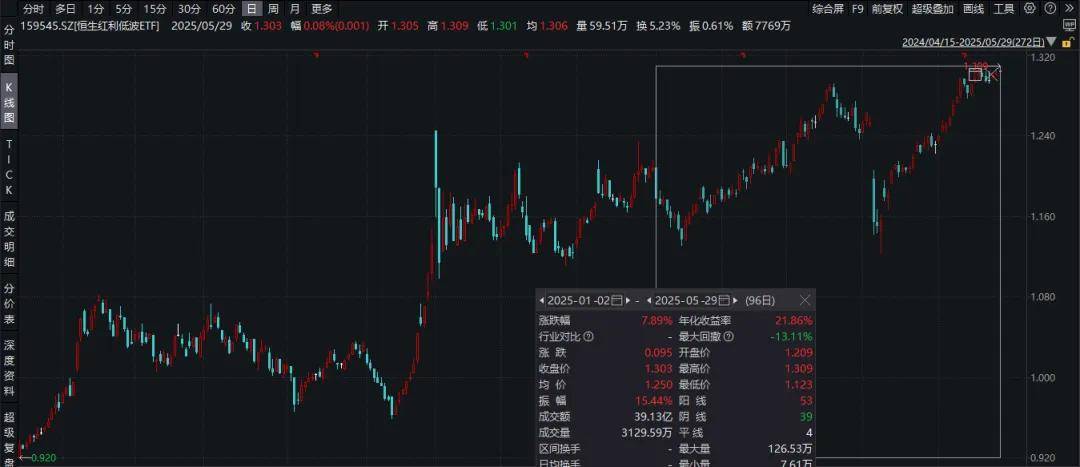
Core Viewpoint - The trading style of southbound funds has shifted from aggressive investments in technology stocks to defensive investments in dividend stocks following tariff disruptions and the first-quarter earnings reports of internet companies [1][5]. Summary by Sections Southbound Fund Activity - From April 27 to May 27, southbound funds purchased dividend assets, particularly bank stocks, amounting to HKD 24.9 billion [2]. - The Hang Seng Dividend Low Volatility ETF (159545) reached a new high, with a year-to-date increase of 7.9% and an overall return of nearly 10% when including dividends [2]. Shift in Investment Focus - In the first quarter, the top ten net inflows for southbound funds were primarily in Hang Seng Technology stocks [4]. - Since April, following tariff tensions, the top ten inflows have shifted to high-dividend stocks [5]. Market Conditions - The decline in internet companies' AI revenue and increased competition among major players like Meituan, JD, and Alibaba have led to reduced inflows into technology stocks [6]. - The domestic interest rate cuts and the lowest 10-year government bond yield at 1.65% have prompted a preference for high-dividend stocks as risk appetite decreases [7][9]. Insurance Capital Involvement - The recent trend shows that the inflow of funds into dividend stocks is primarily driven by insurance capital, which seeks to increase allocations to high-yield stocks in a declining interest rate environment [11]. - Insurance companies are encouraged to increase equity allocations, with the cap on equity assets raised from 30% to 35% or higher [11]. Future Projections - Goldman Sachs estimates that southbound funds will have a net inflow of approximately HKD 100 billion into dividend stocks for the year, based on current trends [17]. - The insurance sector is expected to release about RMB 646.1 billion in incremental funds, with 20%-30% likely to flow into the Hong Kong stock market [18][19].
加速入市!2220亿增量资金来袭,多家中小险企新模式入局
券商中国· 2025-05-28 08:40
Core Viewpoint - The article discusses the expansion of the insurance fund long-term investment pilot program, highlighting the inclusion of more small and medium-sized insurance companies in the third batch of trials, which aims to innovate investment models and inject additional capital into the market [2][4][12]. Group 1: Pilot Program Expansion - The third batch of the long-term investment pilot program will include new small and medium-sized insurance companies, differing from previous batches that primarily involved large insurers [2][3]. - The Financial Regulatory Administration plans to approve an additional 600 billion yuan for the pilot program, increasing the total scale to 2,220 billion yuan [2][11]. - Among the newly approved participants is China Post Insurance, which will contribute 100 billion yuan to the pilot [4]. Group 2: New Investment Models - The third batch will see a new model where private fund managers and investors come from different insurance systems, allowing smaller insurers to invest in funds managed by established insurance asset management companies [5][6]. - This model allows smaller insurers without their own asset management companies to participate in the pilot by investing in existing private funds [6][7]. - The establishment of private fund companies incurs significant costs, prompting smaller insurers to prefer investing in existing funds rather than creating their own [7]. Group 3: Market Interaction and Benefits - The pilot program aims to alleviate investment barriers for insurance funds, enabling better interaction between insurance capital and the market [12]. - The program's accounting methods, such as equity method accounting and OCI asset measurement, help reduce the impact of market volatility on insurers' profit statements [12]. - The pilot also offers preferential policies for participating private funds, enhancing the stability of insurance companies' profits and promoting long-term investment [12].



【Fintech 周报】京东消金来了;小雨伞母公司通过上市聆讯;建行原副行长被逮捕
Tai Mei Ti A P P· 2025-05-26 09:18
Regulatory Dynamics - Seven departments, including the Ministry of Science and Technology and the People's Bank of China, jointly issued policies to support the development of a technology finance system, focusing on venture capital, monetary credit, capital markets, technology insurance, and bond markets with 15 policy measures proposed [1] - The Financial Regulatory Bureau announced modifications to certain regulations to align with the latest requirements of the Company Law, including changes to the management of supervisory boards and related party transactions [1] Industry Dynamics - Several banks and insurance institutions are planning to abolish or not establish supervisory boards, with the audit committee of the board taking over their functions [4] - Three consumer finance companies have raised their maximum loan limits to 300,000 yuan, following a notification from the Financial Regulatory Bureau aimed at boosting consumption [4] Corporate Developments - China Construction Bank's former vice president, Zhang Gengsheng, was arrested for bribery and illegal loan issuance, with the case currently under further investigation [2] - The Beijing Financial Dispute Mediation Committee, the first of its kind in the financial industry, was established to provide mediation services and resolve financial disputes [3] - JD Group has taken over a consumer finance company, now named Tianjin JD Consumer Finance Co., Ltd., marking a significant shift in ownership [6] - Huaxia Bank's board chairman's qualifications were approved, and Ping An Life welcomed a new female general manager, signaling leadership changes in major financial institutions [7][8] Financial Performance - Ant Group reported a net profit of 38.3 billion yuan for 2024, a 61% increase year-on-year [11] - Xiaoying Technology's first-quarter net profit reached 458 million yuan, up 26.16% year-on-year, while its revenue grew by 60.39% [12] - Jia'nan Technology reported a first-quarter net loss of 86.43 million USD, a 119% increase in losses compared to the previous year [13] Overseas Dynamics - The SEC chairman announced plans to enhance cost-benefit analysis and develop a reasonable regulatory framework for the cryptocurrency market, emphasizing the need for transparency and accountability in digital asset regulation [10]