蔚来

Search documents
蔚来宣布召回24万余辆汽车,“可能出现仪表及中控屏黑屏”
Xin Lang Cai Jing· 2026-02-10 03:41
Core Viewpoint - NIO Inc. is recalling 246,229 electric vehicles due to software issues that may cause temporary blackouts of the instrument panel and central control screen under specific conditions, posing safety risks [1] Group 1: Recall Details - The recall affects ES8, ES6, and EC6 models produced between March 16, 2018, and January 16, 2023 [1] - The recall plan has been filed with the State Administration for Market Regulation in accordance with the relevant regulations [1] Group 2: Safety Concerns - The software issue may prevent the display of critical vehicle information and functions, such as speed information and fault alerts, which could compromise safety [1] Group 3: Remedial Actions - NIO will utilize over-the-air (OTA) technology to upgrade the software for the recalled vehicles to versions Aspen 3.5.6, Alder 2.1.0, or higher at no cost [1] - For vehicles that cannot be upgraded via OTA, NIO will contact users through service centers to implement the recall [1] - Some vehicles that have already received software upgrades will not require further updates during this recall [1]

蔚来-25 年第四季度盈利预警:非 GAAP 运营利润首次转正
2026-02-10 03:24
Summary of NIO Inc. (NIO) Conference Call Company Overview - **Company**: NIO Inc. (NIO) - **Industry**: Electric Vehicles (EV) Key Financial Highlights - **4Q25 Profit Alert**: NIO announced a non-GAAP operating profit between Rmb700 million and Rmb1,200 million, marking the first positive quarterly non-GAAP operating profit in the company's history [1] - **Sales Volume Growth**: Achieved 124,000 units sold in 4Q25, representing a 71% year-over-year increase [1] - **Product Mix Improvement**: The ES8 model contributed 32% to total sales in 4Q25, a significant increase from 2%-5% in the previous three quarters [1] - **Cost Reduction Efforts**: Ongoing initiatives have contributed to the positive operating profit [1] Future Outlook - **2026 Expectations**: Anticipated launches of ES9 and ONVO L80, along with a facelift of ES7, are expected to drive 46% volume growth and 48% revenue growth [2] - **Vehicle Margin Projection**: Expected to increase to 16.7% in 2026 from 14.5% in 2025 due to scale economics and cost optimization [2] - **Raw Material Price Concerns**: Recent increases in raw material prices (Lithium, Aluminum, Copper, and DRAM) may pressure margins, depending on cost-sharing with suppliers and the ability to pass costs to consumers [2] Investment Rating and Price Target - **Current Rating**: Neutral with a 12-month price target of $7.0 for ADR and HK$55.0 for H-share [3][6] - **Market Capitalization**: Approximately $10.8 billion [8] - **Revenue Forecast**: Projected revenues for 2026 are Rmb127.87 billion, with a gradual increase in subsequent years [8] Competitive Landscape - **Market Share Decline**: NIO's NEV market share has decreased from 3.9% in 2020 to 2.0% in 2024 due to intensified competition [4] - **Model Competitiveness**: Improved competitiveness expected with new model launches, similar to the success of L90 and ES8 [4] Risks and Considerations - **Key Risks**: Potential for stronger government support for the auto industry and better order momentum on the upside; conversely, risks include lower-than-expected sales volume and higher-than-expected price cuts on the downside [6][7] Additional Insights - **Cost Control Measures**: Management has focused on cost reduction since March 2025, contributing to the first positive operating profit in 4Q25 [4] - **Premium Valuation**: NIO is trading at a premium EV/Sales compared to peers, justified by its free cash flow turnaround and near-term product momentum [6] This summary encapsulates the critical financial metrics, future outlook, competitive positioning, and associated risks for NIO Inc. as discussed in the conference call.
蔚来-盈利利好消息;第四季度业绩超预期,维持跑赢大市评级
2026-02-10 03:24
Summary of NIO Inc. Conference Call Company Overview - **Company**: NIO Inc. - **Industry**: China Autos & Shared Mobility - **Date of Call**: February 5, 2026 Key Financial Highlights - NIO expects a GAAP net profit of **Rmb200-700 million** in 4Q, a significant improvement from a GAAP net loss of **Rmb3.7 billion** in 3Q25, exceeding market expectations and the company's target of non-GAAP profit breakeven in 4Q [2][3] - Non-GAAP net profit is projected to be between **Rmb0.7-1.2 billion** [2] - Vehicle margin is estimated to have grown by **4-6 percentage points** quarter-over-quarter (QoQ) to nearly **20%** [2] - R&D and SG&A expenses are expected to remain largely steady QoQ [2] Factors Contributing to Profit Turnaround 1. **Record Deliveries**: NIO achieved a record delivery of **125,000 units**, representing a **43% QoQ increase** [3] 2. **Sales Mix**: A strong sales mix with the ES8 model accounting for approximately **32%** of 4Q deliveries, which has a gross margin exceeding **20%** [3] 3. **Operational Efficiency**: Improved operational efficiency following restructuring efforts [3] Market Sentiment and Stock Performance - NIO's share price has decreased by **35%** over the past three months, contrasting with the Hang Seng Index's **4%** increase [4] - The potential for a share price recovery is linked to broader electric vehicle (EV) demand recovery in China [4] - Investors are advised to monitor announcements regarding new models (ES9, ES7, Onvo L80) post-Chinese New Year [4] Valuation and Price Target - **Rating**: Overweight (OW) - **Current Share Price**: **US$4.44** (as of February 4, 2026) - **Price Target**: **US$7.00**, indicating a potential upside of **58%** [4] Financial Projections - **Market Capitalization**: **Rmb148.9 billion** (estimated for 12/25) [4] - **Revenue Projections**: Expected to grow from **Rmb65.732 billion** in 2024 to **Rmb154.873 billion** by 2027 [4] - **EBITDA**: Projected to improve from a loss of **Rmb15.999 billion** in 2024 to a profit of **Rmb1.947 billion** in 2027 [4] Risks and Considerations - **Upside Risks**: Introduction of new models, stronger-than-expected sales volume, and better operational efficiency [10] - **Downside Risks**: Weaker-than-expected sales volume, lack of efficiency improvements, and moderating auto sales growth impacting industry valuations [10] Conclusion NIO Inc. is showing signs of recovery with a positive profit outlook for 4Q, driven by strong delivery numbers and improved operational efficiency. However, the stock has faced significant downward pressure, and future performance will depend on broader market conditions and the successful launch of new models. Investors should remain cautious but optimistic about potential growth in the EV sector in China.
债市早报:资金面整体平稳,债市延续暖意
Sou Hu Cai Jing· 2026-02-10 03:05
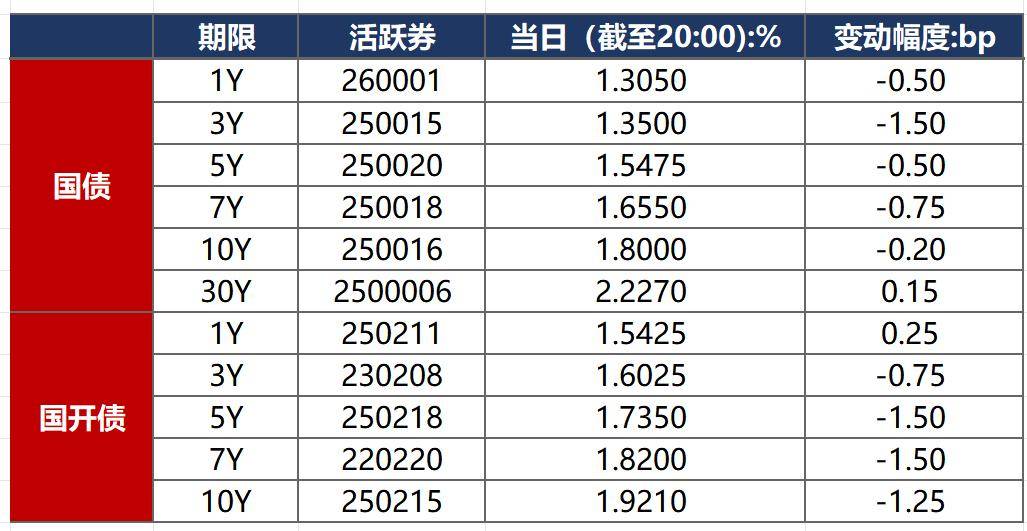
Group 1: Domestic News - The Shanghai and Shenzhen Stock Exchanges have launched a package of measures to optimize refinancing, aimed at enhancing flexibility and better serving technological innovation and new productivity development. The measures emphasize support for high-quality listed companies and clarify the refinancing interval requirements for unprofitable innovative enterprises [2] - The Ministry of Finance and other departments announced tax incentives for cross-border e-commerce export return goods, exempting import duties and VAT for goods returned within six months due to unsold or returned reasons, effective from January 1, 2026, to December 31, 2027. This policy aims to reduce costs for cross-border e-commerce enterprises and support the development of new foreign trade formats [3] Group 2: International News - U.S. Treasury Secretary Basant indicated that the Federal Reserve may not quickly reduce its balance sheet, suggesting a cautious and observant approach to asset management. He mentioned that it could take up to a year for the Fed to decide on its balance sheet adjustments, alleviating concerns about rapid monetary tightening impacting market liquidity [4] Group 3: Bond Market Dynamics - On February 9, the bond market showed a warm trend, with the yield on the 10-year government bond falling to 1.8000%, down 0.20 basis points. The 10-year policy bank bond yield also decreased to 1.9210%, down 1.25 basis points [9][10] - The secondary market for credit bonds saw significant price deviations, with some bonds experiencing price changes exceeding 10%. For instance, "H9 Long Control 01" fell over 16%, while "H1 Vanke 04" rose over 13% [11] Group 4: Convertible Bonds - The convertible bond market followed the equity market's upward trend, with major indices rising. The China Convertible Bond Index, Shanghai Convertible Bond Index, and Shenzhen Convertible Bond Index increased by 1.25%, 1.16%, and 1.42%, respectively. The trading volume in the convertible bond market was 857.98 billion, down 29.57 billion from the previous trading day [21][22]

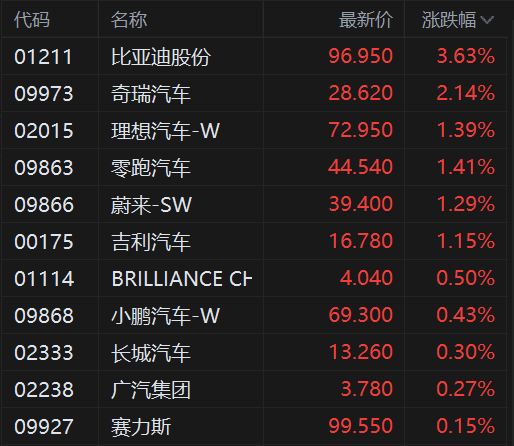
汽车股普涨 比亚迪股份涨约4% 商务部召开座谈会推动汽车消费
Ge Long Hui· 2026-02-10 03:02
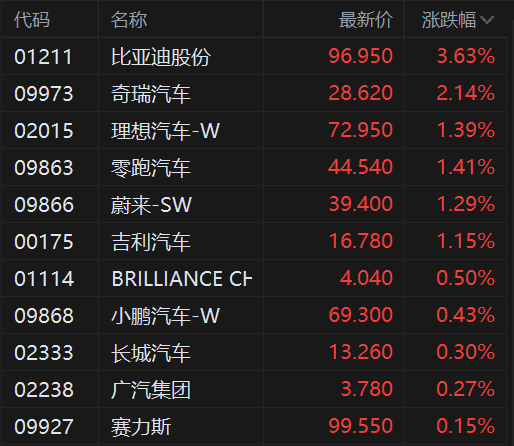
Group 1 - The core viewpoint of the news is that the Hong Kong automotive stocks experienced a collective rise, driven by positive signals from the Ministry of Commerce regarding future automotive consumption policies [1] - The Ministry of Commerce held a meeting to discuss automotive circulation and consumption, indicating a commitment to support and reform the automotive sector by 2026 [1] - Analysts interpret the signals from the meeting as a positive indication for automotive consumption support policies, providing a clear expectation for industry stabilization and structural growth direction [1] Group 2 - BYD shares rose approximately 4% to a latest price of 96.950, while Chery Automobile increased by over 2% to 28.620 [2] - Other automotive companies also saw gains, including Li Auto (1.39% increase), Leap Motor (1.41% increase), NIO (1.29% increase), and Geely (1.15% increase) [2] - The overall positive trend in the automotive sector reflects investor confidence in the upcoming policy changes and market support initiatives [1][2]



续写辉煌!人口增量第一城,增速第一
3 6 Ke· 2026-02-10 02:55
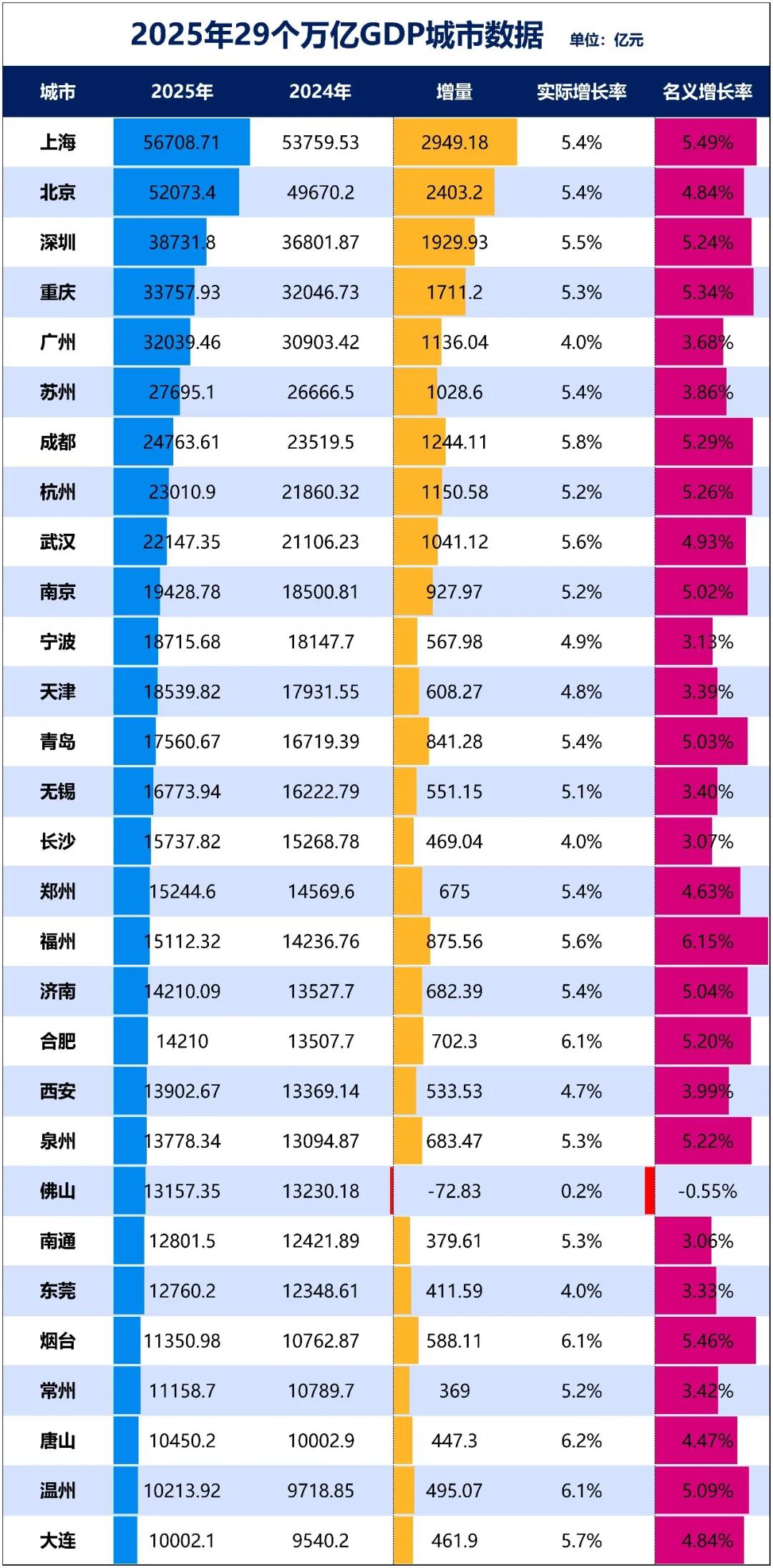
Core Viewpoint - Hefei continues to demonstrate remarkable economic growth, with a GDP of 14,210 billion yuan in 2025, reflecting a year-on-year increase of 6.1%, positioning it as a leading city among those with a GDP exceeding 10 trillion yuan [1][3]. Economic Performance - In 2025, Hefei's GDP reached 14,210 billion yuan, marking a growth of 702.3 billion yuan from the previous year, which is the second-highest growth rate among major cities, only behind Tangshan [1][3]. - The industrial sector is a significant contributor to Hefei's economic performance, with the added value of the secondary industry (broadly defined as industry) increasing by 8.7% to 5,221.9 billion yuan [4]. Industrial Growth - Hefei's industrial output value growth reached 17.6%, the highest among cities with a GDP over 10 trillion yuan [4]. - The computer, communication, and other electronic equipment manufacturing sectors saw a staggering growth of 60.6%, while the automotive manufacturing sector grew by 11.1% [4]. - Strategic emerging industries experienced a production value increase of 16.6%, accounting for 60.4% of the industrial output, an increase of 2.7 percentage points year-on-year [4]. Population Growth - Hefei's population has seen significant growth, with an increase of 219,000 residents in 2023, the highest in the country, and a total increase of 537,000 over the past three years [6][20]. - The city has surpassed Nanjing and Ningbo in population size within the Yangtze River Delta, reaching a population of over 10 million in 2024 [6]. Historical Context and Development Strategy - Over the past 20 years, Hefei has transformed from a relatively small city to a major economic player, with its GDP increasing from 896.67 billion yuan in 2004 to 13,507.7 billion yuan in 2024, a nominal increase of 1,406.43% [5][6]. - The city's development strategy, initiated in 2005, focused on industrialization and attracted significant investments, notably from BOE Technology Group, which catalyzed the growth of the display industry [12][17]. Future Prospects - Hefei aims to become a leading city in the new energy vehicle sector, with plans to achieve a production capacity of 1.5 million vehicles by 2025, accounting for over 25% of the national total [14][15]. - The city is also focusing on semiconductor production, with partnerships established to enhance its capabilities in this critical industry [15][16]. Strategic Positioning - Hefei's economic strategy includes a strong provincial capital approach, with over 26.9% of the province's GDP generated in the city, significantly outpacing other cities in Anhui [20][21]. - The city has effectively integrated into the Yangtze River Delta economic region, enhancing its development through collaboration with neighboring cities [22][23].
港股汽车股普涨 比亚迪股份涨约4%
Jin Rong Jie· 2026-02-10 02:43
本文源自:金融界AI电报 港股汽车股集体上涨,其中,比亚迪股份涨约4%,奇瑞汽车涨超2%,零跑汽车、蔚来汽车、吉利汽车 涨超1%,小鹏汽车、长城汽车、赛力斯皆有涨幅。 ...
仪表及中控屏可能出现黑屏,蔚来召回24万辆车
Xin Lang Cai Jing· 2026-02-10 02:30
责任编辑:王翔 召回原因是这部分车辆存在软件问题,可能在特定条件下出现短时间的仪表及中控屏黑屏,期间无法为 驾驶员提供必要的车辆信息及功能(如车速信息、故障报警提示、除霜除雾功能等),存在安全隐患。 召回原因是这部分车辆存在软件问题,可能在特定条件下出现短时间的仪表及中控屏黑屏,期间无法为 驾驶员提供必要的车辆信息及功能(如车速信息、故障报警提示、除霜除雾功能等),存在安全隐患。 蔚来将通过远程升级(OTA)技术,免费为召回范围内的车辆升级软件至Aspen 3.5.6、Alder 2.1.0或更 高版本,对于无法通过OTA技术升级的车辆,将通过蔚来服务中心联系相关用户实施召回,以消除安全 隐患。 据市场监管总局召回中心消息,日前,上海蔚来汽车有限公司根据《缺陷汽车产品召回管理条例》和 《缺陷汽车产品召回管理条例实施办法》的要求,受委托向国家市场监督管理总局备案了召回计划。 据市场监管总局召回中心消息,日前,上海蔚来汽车有限公司根据《缺陷汽车产品召回管理条例》和 《缺陷汽车产品召回管理条例实施办法》的要求,受委托向国家市场监督管理总局备案了召回计划。 本次召回涉及2018年3月16日至2023年1月16日期间生 ...
港股异动丨汽车股普涨 比亚迪股份涨约4% 商务部召开座谈会推动汽车消费
Ge Long Hui· 2026-02-10 02:29
Group 1 - The core viewpoint of the news is that Hong Kong automotive stocks have collectively risen, with significant gains observed in companies like BYD, Chery, and others, following a meeting held by the Ministry of Commerce regarding automotive consumption policies for 2026 [1] - The Ministry of Commerce plans to implement a series of measures to boost automotive consumption, including optimizing the vehicle trade-in program and conducting pilot reforms in automotive circulation [1] - Analysts interpret the signals from the Ministry's meeting as positive, viewing it as a "starting gun" for supportive automotive consumption policies in 2026, which provides a clear expectation for industry support and structural growth direction [1] Group 2 - BYD shares rose approximately 4% to a latest price of 96.950, while Chery Automotive increased by over 2% to 28.620 [2] - Other automotive companies also saw gains, with Li Auto up 1.39%, Leap Motor up 1.41%, NIO up 1.29%, and Geely up 1.15% [2] - The overall positive sentiment in the automotive sector is reflected in the stock performance of various companies, indicating investor confidence in future growth driven by government policies [1][2]
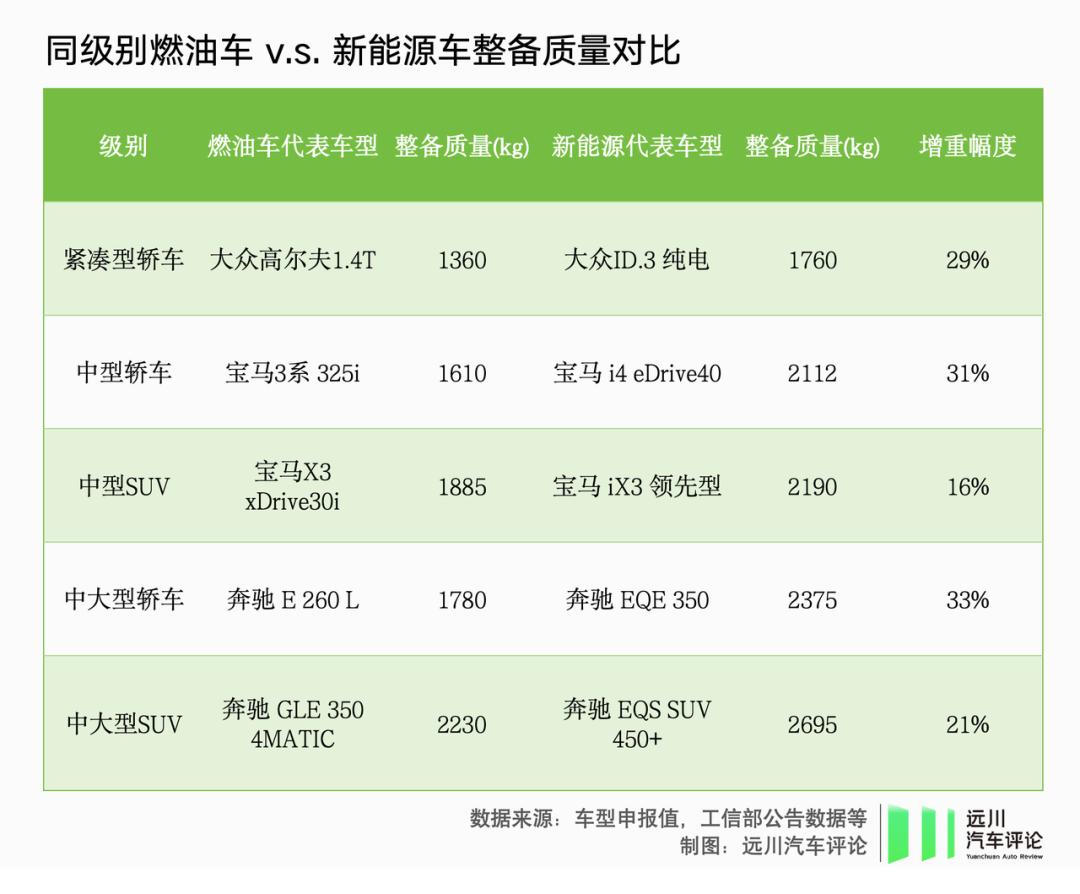
电动车不能再胖下去了
3 6 Ke· 2026-02-10 02:26
Core Viewpoint - The automotive industry is facing a significant challenge with the increasing weight of electric vehicles (EVs), which contradicts the industry's goal of lightweight design for better efficiency and performance. Group 1: Weight Increase in Electric Vehicles - The average weight of new energy vehicles in China has increased by over 300 kilograms in recent years, with some models weighing as much as traditional fuel SUVs [2][12] - Electric vehicles are becoming heavier due to consumer demand for longer range, which requires larger and heavier battery packs [2][5] - For instance, the BYD Yangwang U7 requires a 135 kWh battery pack weighing 900 kilograms to achieve a range of 700 kilometers, while a comparable fuel vehicle only needs a 50-kilogram fuel tank [5][7] Group 2: Implications of Increased Weight - The increase in vehicle weight leads to higher energy consumption; for every 100 kilograms added, the average energy consumption increases by 0.6 kWh per 100 kilometers [8][22] - Heavier vehicles require longer braking distances, which can increase accident risks, especially in emergency situations [20][22] - The perception that heavier vehicles are safer is outdated; modern safety relies more on structural integrity and design rather than just weight [16][20] Group 3: Market Trends and Consumer Preferences - Consumers in China prefer larger vehicles, prompting manufacturers to increase the size and features of electric vehicles, which adds weight [12][14] - The trend of adding luxury features to lower-priced models has further contributed to the weight increase, with some models gaining over 100 kilograms from added configurations [12][14] Group 4: Challenges in Weight Reduction - Reducing vehicle weight while maintaining cost and features is a significant challenge for manufacturers, as seen in the case of BMW's i3, which used expensive materials to achieve a lightweight design [26] - The introduction of new technologies, such as solid-state batteries, could potentially reduce weight by 50%, but cost and lifespan issues remain unresolved [29][30] - Recent regulations in China are pushing for stricter energy consumption limits based on vehicle weight, indicating a shift towards prioritizing lightweight designs [32]