吉利汽车

Search documents
从百辆验证到10万辆定制车规划,曹操出行已搭好整套Robotaxi运营系统
21世纪经济报道· 2026-03-17 01:10
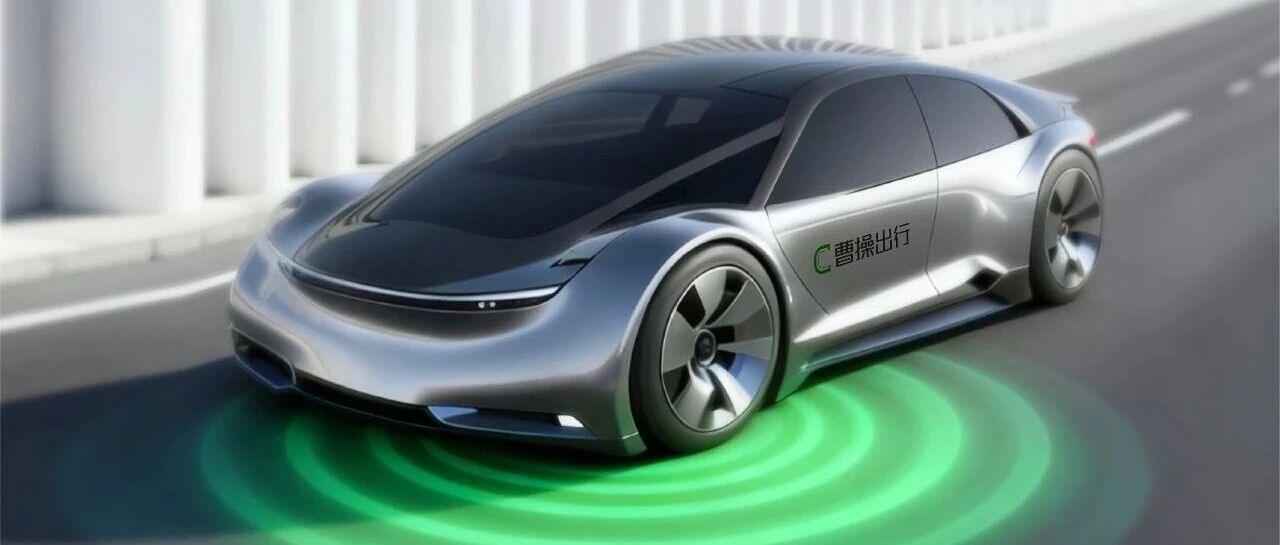
Core Viewpoint - The article emphasizes that the successful commercialization of Robotaxi relies not only on autonomous driving technology but also on operational capabilities such as efficient pick-up/drop-off points, fleet management, and cost control [1][2][15] Group 1: Operational Infrastructure - Cao Cao Mobility has launched over 3,600 virtual pick-up and drop-off points in Hangzhou, indicating a shift from testing to actual operations, aiming for a ride-hailing experience with higher density and frequency [1][3] - The deployment of these points is based on extensive travel data analysis, focusing on high-demand areas to enhance user experience and operational efficiency [2][3] - The establishment of a dense network of pick-up/drop-off points allows for improved passenger experience, reduced empty driving rates, and more stable dispatching, which are crucial for the success of Robotaxi operations [3][11] Group 2: Cost Control and Fleet Management - Total Cost of Ownership (TCO) is a critical factor for the sustainability of Robotaxi services, with vehicle costs significantly impacting profitability [6][7] - Cao Cao Mobility has emphasized a customized vehicle strategy, owning over 37,000 customized vehicles across 31 cities, which helps optimize service cost structures [6][8] - The average TCO of Cao Cao's customized vehicles is approximately 36.4% lower than typical electric vehicles used in shared mobility, demonstrating enhanced operational efficiency [7][8] Group 3: Technological Integration and Future Planning - The company is developing a fully customized Robotaxi model in collaboration with Geely, aiming to deploy 100,000 units by 2030, which will be designed specifically for autonomous operations [14][15] - The integration of smart driving technology, customized vehicles, and intelligent operations is crucial for achieving long-term operational success and cost efficiency [14][15] - The establishment of ground operational support and cloud-based safety services is essential for transitioning to a fully autonomous service model, addressing daily operational challenges [11][12]

氢能新政:重卡高功率与低氢价驱动“自我造血”
Zhao Yin Guo Ji· 2026-03-17 01:04
Investment Rating - The report assigns a "Buy" rating to several companies in the automotive sector, indicating a potential upside of over 15% in the next 12 months [8]. Core Insights - The new hydrogen policy aims to stimulate the hydrogen energy industry by extending the application trial period and focusing on high-power fuel cell heavy-duty trucks, which is expected to significantly reduce hydrogen refueling costs and promote self-sustainability in the industry [2][3]. - The maximum subsidy for fuel cell heavy-duty trucks has increased from 110 kW to 280 kW, reflecting a positive policy direction towards long-range and high-power applications [3]. - The total subsidy amount is limited to 8 billion yuan, indicating a shift from blind expansion to high-quality, self-sustaining applications [3]. - The target hydrogen price is set to drop to 25 yuan/kg by 2030, which is crucial for the competitiveness of fuel cell vehicles [3]. - The report highlights that companies with comprehensive industry chain integration, such as Refire (2570 HK), are expected to benefit significantly from the new policies [3]. Company Summaries - Xpeng Motors (XPEV US, 9868 HK): Buy rating with a target price of 29 and 113 respectively [2]. - Geely Automobile (175 HK): Buy rating with a target price of 25 [2]. - Great Wall Motors (2333 HK, 601633 CH): Buy rating with target prices of 20 and 28 respectively [2]. - BYD (1211 HK, 002594 CH): Buy rating with a target price of 125 [2]. - GAC Group (2238 HK, 601238 CH): Buy rating with target prices of 4.3 and 10 respectively [2]. - Leap Motor (9863 HK): Buy rating with a target price of 73 [2]. - Ideal Automotive (LI US, 2015 HK): Hold rating with target prices of 18 and 70 respectively [2]. - NIO (NIO US): Hold rating with target prices of 6 and 47 respectively [2].





刚刚,英伟达龙虾登场,黄仁勋暴论频出,「人车家天地芯」冲击万亿收入
3 6 Ke· 2026-03-17 00:50
Core Insights - The central theme of NVIDIA's GTC 2023 is the emergence of Agentic AI, with a focus on the new Vera Rubin architecture designed to enhance AI capabilities [1][4][10] Group 1: Agentic AI and Vera Rubin Architecture - The Vera Rubin architecture is specifically designed for Agentic AI, enabling machines to perform tasks rather than just process information [4][11] - NVIDIA introduced the Vera CPU, which is twice as efficient as traditional CPUs and offers a 50% speed increase, marking a significant advancement in processing capabilities [9][11] - The architecture includes seven chips and five rack systems, with a focus on high memory capacity and bandwidth, achieving 260 TB/s [10][13] Group 2: Performance Enhancements - The combination of Vera Rubin and Groq LPU allows for a 35-fold increase in performance at the high-end inference level, significantly improving throughput and efficiency [20][17] - NVIDIA's new software, Dynamo, integrates prefill and attention mechanisms to optimize AI inference, addressing the challenges of latency and throughput [17][15] Group 3: OpenClaw and Ecosystem Development - OpenClaw is introduced as a potential game-changer in the AI landscape, likened to Linux for its impact, enabling companies to develop Agent-as-a-Service models [21][22] - NVIDIA is building a comprehensive ecosystem around Agentic AI, with a focus on security and collaboration with top experts to ensure safe deployment [23][26] Group 4: Data Processing Innovations - NVIDIA is redefining data processing with cuDF and cuVS, which enhance the speed of handling structured and unstructured data, respectively [43][44] - The company emphasizes the importance of algorithms and libraries in its strategy, positioning itself as a key player in the AI infrastructure market [46][48] Group 5: Future Projections and Market Impact - NVIDIA anticipates that its Blackwell and Rubin chips will generate at least $1 trillion in revenue by the end of 2027, driven by increasing AI inference demands [50][52] - The company is also exploring opportunities in space with the development of radiation-hardened chips for satellite applications, indicating a broad vision for future AI capabilities [58][60] Group 6: Autonomous Driving and Physical AI - NVIDIA's partnerships with major automotive manufacturers for RoboTaxi Ready platforms signify a strong push into the autonomous driving sector [61][63] - The integration of AI in industrial robotics and heavy machinery showcases the company's commitment to advancing physical AI applications [63][64]

黄仁勋抢吃龙虾:英伟达新核弹10倍算力提升,OpenClaw自由了
3 6 Ke· 2026-03-17 00:16
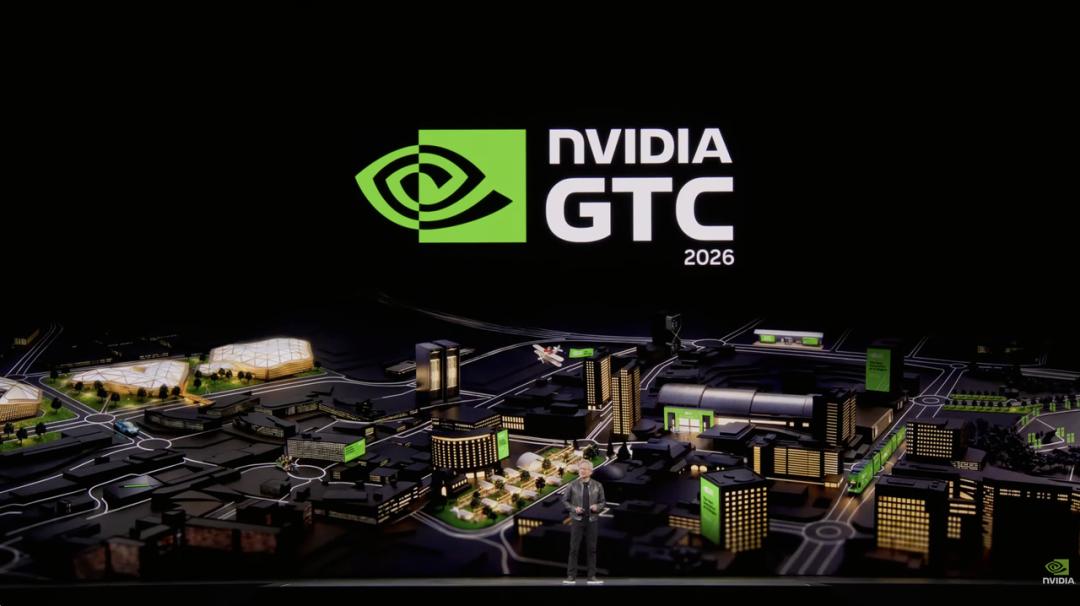
Core Insights - NVIDIA's GTC conference highlighted a significant transformation in computing, likening it to the personal computer and internet revolutions, with a projected market growth to $1 trillion between 2025 and 2027, primarily driven by large-scale cloud computing [3][5]. Group 1: AI and Computing Transformation - NVIDIA's CEO Jensen Huang emphasized that AI has reached an "inference inflection point," marking a shift from training to reasoning and generation, indicating a surge in demand for computational power [5][6]. - The new Vera Rubin architecture, specifically the NVL72 system, is designed to optimize AI inference tasks, achieving a 50-fold increase in token performance per watt compared to previous architectures [6][13]. - The data center's role is evolving from mere file storage to becoming factories for generating tokens, with inference workloads becoming the new commodity [10][12]. Group 2: Vera Rubin Architecture - The Vera Rubin NVL72 system integrates 72 Rubin GPUs and 36 Vera CPUs, achieving a tenfold increase in inference throughput while reducing the cost per token to one-tenth of previous systems [13][14]. - The architecture is tailored for large-scale AI factories, allowing seamless expansion with Quantum-X800 InfiniBand and Spectrum-X Ethernet, enhancing GPU cluster utilization and reducing overall ownership costs [15][20]. - The upcoming Vera Rubin Ultra NVL576 will connect multiple NVL racks, enabling developers to scale up to 576 GPUs, showcasing NVIDIA's commitment to high-performance computing [16][18]. Group 3: Language Processing Unit (LPU) - The introduction of the LPU, developed in collaboration with Groq, aims to enhance low-latency inference and token decoding efficiency, addressing challenges faced by traditional GPU servers [21][22]. - The Groq LPX architecture, optimized for trillion-parameter models, can potentially increase inference throughput by up to 35 times, unlocking significant revenue potential for AI service providers [21][22]. - The LPX rack features a fully liquid-cooled design and is built on the MGX infrastructure, allowing for seamless integration into the next-generation Vera Rubin AI factory [24]. Group 4: NemoClaw and OpenClaw - NVIDIA introduced NemoClaw, a secure enterprise-level platform built on OpenClaw, designed to facilitate the deployment of AI agents while ensuring data security [29][31]. - NemoClaw allows for the integration of local and cloud-based models, providing a robust framework for AI agents to operate under privacy and security constraints [33][35]. - The platform supports various coding agents and is designed to enhance the capabilities of AI agents in executing complex tasks efficiently [31][35]. Group 5: Physical AI and Robotics - NVIDIA showcased advancements in physical AI, partnering with major automotive manufacturers to implement NVIDIA DRIVE Hyperion technology for L4 autonomous vehicles [38][40]. - The company plans to launch a fully autonomous fleet powered by NVIDIA DRIVE AV software in 28 cities by 2028, indicating a significant step towards widespread adoption of AI in transportation [40]. - NVIDIA's new Isaac simulation framework and Cosmos models aim to enhance the development and deployment of next-generation intelligent robots, further solidifying its position in the physical AI landscape [38][40].
英伟达:比亚迪、吉利、五十铃、日产正基于DRIVE Hyperion平台开发L4级自动驾驶汽车
Xin Lang Cai Jing· 2026-03-17 00:08
Core Insights - NVIDIA DRIVE Hyperion™ platform has been widely adopted by various automotive manufacturers and mobility service providers [1] Group 1: Partnerships and Collaborations - Partners include major automotive manufacturers such as BYD, Geely, Isuzu, Nissan, and mobility service providers like Bolt and Grab [1] - BYD, Geely, and Nissan are developing next-generation Level 4 autonomous driving projects based on NVIDIA DRIVE Hyperion with Wayve software [1] - Isuzu is collaborating with TIER IV to develop Level 4 autonomous driving buses using NVIDIA DRIVE Hyperion's AGX Thor system-on-chip [1]

英伟达:将与比亚迪、吉利等展开自动驾驶业务合作
第一财经· 2026-03-16 23:33
Core Viewpoint - Nvidia expands its autonomous driving business partnerships to include Hyundai, Nissan, Isuzu, and Chinese companies BYD and Geely, focusing on the "Drive Hyperion" platform for L4 level autonomous driving capabilities [1] Group 1 - Nvidia's "Drive Hyperion" platform supports the development and deployment of L4 level assisted driving and autonomous driving functions [1] - The system enables fully autonomous driving in predefined areas or conditions without human intervention [1]

英伟达GTC大会全文:黄仁勋宣告推理时代到来,龙虾就是新操作系统!
美股IPO· 2026-03-16 23:32
Core Insights - Nvidia's CEO Jensen Huang positions the company as a builder of "AI factories," predicting a demand of at least $1 trillion by 2027 [1][29] - The concept of "Token factory economics" is introduced, emphasizing that performance per watt is central to commercial monetization [1][32] - Huang asserts that Agents will end traditional SaaS models, with "salary + Token budget" becoming the new workplace standard [1] Group 1: Nvidia's Strategic Vision - Nvidia's strategy is built on a vast installation base of CUDA-enabled GPUs, which has attracted developers and spurred breakthroughs in deep learning [7][9] - The company has established a significant presence in the cloud service market, with 60% of its business coming from major cloud providers [30] - Nvidia's CUDA architecture has evolved over 20 years, integrating into mainstream ecosystems and supporting a wide range of applications [6][10] Group 2: AI Factory and Token Generation - The AI factory model is transforming data centers from mere storage facilities to production hubs for Tokens, with Vera Rubin architecture expected to enhance revenue by approximately five times at each service level [46][62] - Token generation rates are projected to increase dramatically, with a potential rise from 22 million to 700 million in a two-year period [46] - The company has achieved significant breakthroughs in inference performance, with actual performance improvements reaching up to 50 times [31] Group 3: OpenClaw and Agentic Systems - OpenClaw is introduced as an operating system for Agentic systems, which will become essential for every company, similar to the need for Linux strategies in the past [50][52] - The transition from traditional IT models to Agentic as a Service (AaaS) is highlighted, emphasizing the need for companies to develop strategies around Agentic systems [53][54] - Nvidia is collaborating with top security experts to create a secure enterprise version of OpenClaw, named NemoClaw, to address security challenges in Agentic systems [54] Group 4: Physical AI and Robotics - Nvidia is actively involved in the physical AI and robotics sectors, with partnerships in autonomous driving and industrial robotics [60][61] - The company has announced collaborations with major automotive manufacturers to integrate its technology into RoboTaxi platforms, aiming for significant market penetration [60] - Innovations in AI-driven robotics are showcased, including a collaboration with Disney to develop a robot that adapts to real-world physics [61]
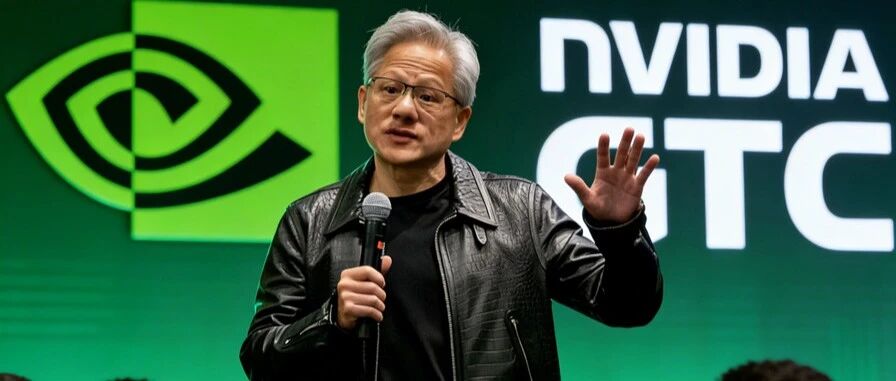
英伟达:将与比亚迪、吉利等展开自动驾驶业务合作
Di Yi Cai Jing· 2026-03-16 23:29
Core Insights - Nvidia announced an expansion of its autonomous vehicle development partnerships with Hyundai, Nissan, Isuzu, and Chinese automakers BYD and Geely [1] Group 1 - The new collaboration focuses on Nvidia's "Drive Hyperion" autonomous driving platform [1] - The system enables companies to develop and deploy Level 4 (L4) driver assistance and autonomous driving features [1] - These features allow for fully autonomous driving in predefined areas or conditions without human intervention [1]
【读财报】港股2月回购透视:合计回购超64亿港元 中通快递、金山软件等年内首度回购
Xin Hua Cai Jing· 2026-03-16 23:29
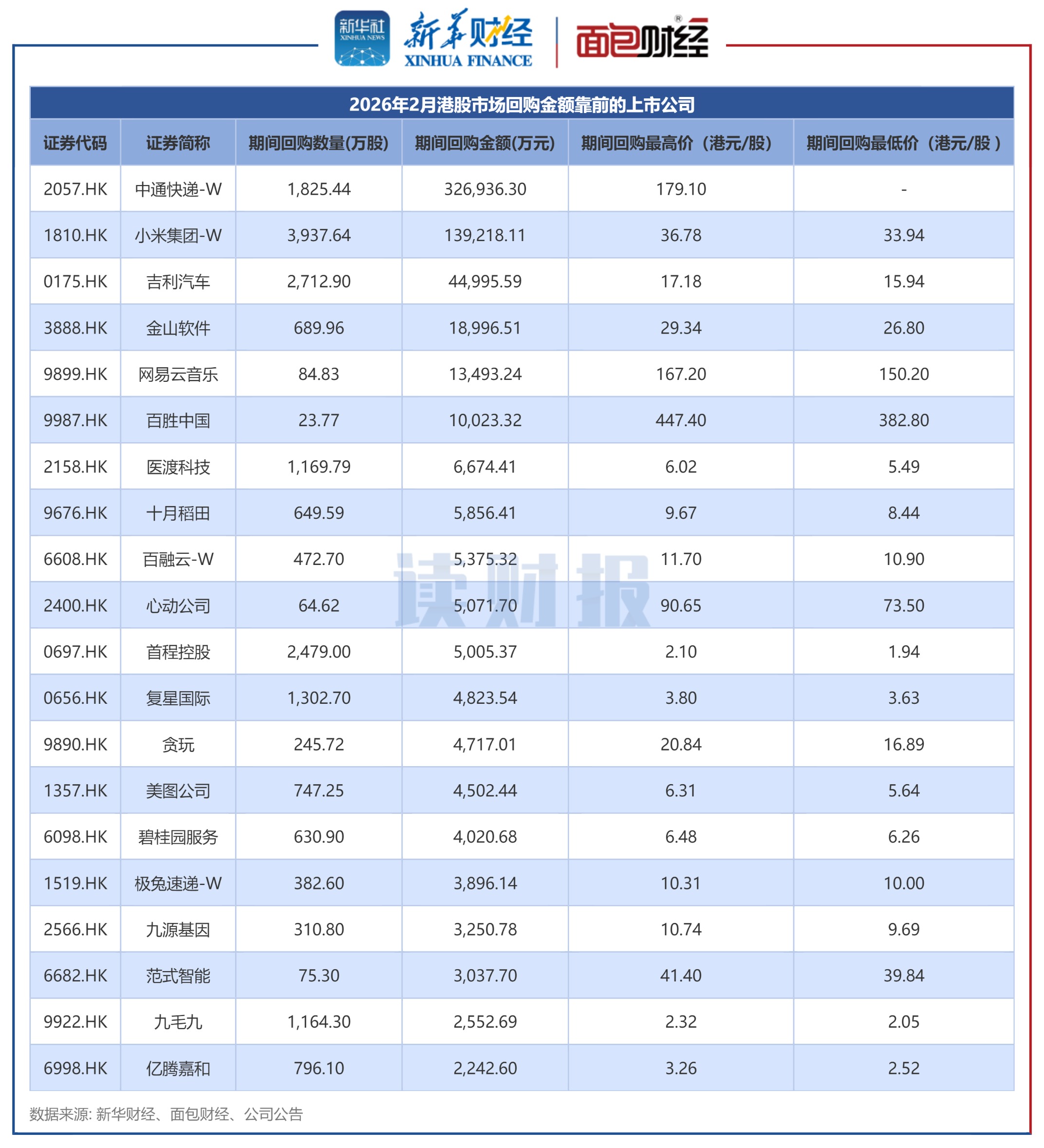
Summary of Key Points Core Viewpoint - In February 2026, Hong Kong stock market saw a total of 69 listed companies initiating share buybacks, with a cumulative repurchase of 263 million shares and a total amount of 6.478 billion HKD, representing a 12.4% decrease compared to 7.395 billion HKD in the same period last year [1][2]. Company-Specific Insights - ZTO Express led the buyback amount in February, repurchasing shares worth 3.269 billion HKD, with 18.2544 million shares bought back at a price of 179.1 HKD per share [3][4]. - Xiaomi Group followed with a buyback amount of 1.392 billion HKD, repurchasing 39.3764 million shares at prices ranging from 33.94 HKD to 36.78 HKD per share [5]. - Geely Automobile also participated, repurchasing shares worth 449.96 million HKD, totaling 27.129 million shares [3][4]. - Kingsoft and NetEase Cloud Music made their first buybacks of the year in February, with amounts of 189.9651 million HKD and 134.9324 million HKD respectively [2][5]. Industry Insights - The majority of buybacks in February 2026 were concentrated in the software services and industrial transportation sectors [6][9]. - The industrial transportation sector had the highest buyback amount, totaling 3.308 billion HKD, with companies like ZTO Express and Jitu Express leading the efforts [6][8]. - In the software services sector, 15 companies initiated buybacks, including Kingsoft and Fan Shi Intelligent, marking their first buybacks of the year [9].
蔚来吉利先后退出,车企造手机失败了吗?
汽车商业评论· 2026-03-16 23:06
Core Viewpoint - Meizu is undergoing a significant organizational adjustment, with over 50% of its employees expected to leave, as the company shifts from hardware-driven development to AI-driven software and services [3][4][5] Group 1: Organizational Changes - Meizu plans to integrate remaining employees into its Flyme automotive team and AI software division, while officially denying rumors of bankruptcy or business suspension [3] - The company has paused its domestic smartphone hardware development projects and is actively seeking third-party hardware partnerships [3][4] Group 2: Strategic Shift - Meizu's strategic transformation aims to transition from a hardware-centric model to one focused on AI-driven software products, establishing a sustainable business ecosystem based on the Flyme platform [3][4] - The automotive industry has seen a trend where car manufacturers initially attempted to create smartphones, but this approach has not met expectations, leading to a reevaluation of strategies [4][5] Group 3: Industry Context - The smartphone market is currently facing intense competition, with rising memory and storage chip prices impacting new product commercialization [5] - In contrast to the struggles of car manufacturers entering the smartphone market, smartphone companies like Huawei and Xiaomi are successfully expanding into the automotive sector [5][21] Group 4: Acquisition Insights - The acquisition of Meizu by Geely was seen as a strategic move to enhance Geely's technological capabilities and user experience design, rather than a direct intention to compete in the smartphone market [12][13] - Geely's decision to step back from Meizu's smartphone business reflects the achievement of its initial strategic goals, focusing on integrating mobile technology into its automotive systems [13][23] Group 5: Future Considerations - The automotive industry's need to adapt to new technological paradigms emphasizes the importance of ecosystem integration, with successful strategies relying on market conditions and technological advancements [27][28] - The contrasting motivations and commitments between automotive and smartphone companies highlight the challenges faced by car manufacturers in the smartphone domain [28][29]