
泰格医药

Search documents
医药2026年度策略报告:黎明渐显,创新为纲-20251130
China Post Securities· 2025-11-30 11:51
Investment Strategy Overview - The core investment strategy for the pharmaceutical sector in 2026 emphasizes innovation and the recovery of profitability within the industry, as the sector has shown signs of stabilization after a period of volatility [4][30]. Innovative Drug Industry Chain - The domestic innovative drug sector is gaining global recognition, with a significant increase in the attention from multinational corporations (MNCs) towards domestic assets. The demand for new products is strong, driven by the approaching patent cliffs for MNCs and favorable policies for domestic drugs entering international markets [5][44]. - The market for PD-(L)1/VEGF bispecific antibodies is experiencing heightened interest, with complementary mechanisms to antibody-drug conjugates (ADCs) expected to drive synergy and growth [5][51]. - The demand for new therapeutic modalities such as peptides, ADCs, small nucleic acids, and cell and gene therapies (CGT) is projected to maintain high growth rates, supported by a recovering outsourcing demand during the overseas interest rate decline [6][43]. Non-Pharmaceutical Sector - The medical device sector is showing signs of recovery, with some companies reporting improved performance in Q3 2025. The bidding for medical equipment is expected to continue recovering, leading to better performance in 2026 [6][7]. - The traditional Chinese medicine sector is anticipated to benefit from ongoing adjustments to the essential drug list, with opportunities for price increases and improved profit margins for leading companies [6][7]. Retail Pharmacy Sector - The retail pharmacy industry is undergoing accelerated consolidation, with leading pharmacies optimizing their store structures to alleviate profit pressures. This is expected to result in a noticeable improvement in profit margins in 2026 [7]. Market Performance and Valuation - The pharmaceutical sector has shown a rebound since early 2025, with a notable increase in the market index, outperforming the broader market indices. As of November 21, 2025, the CITIC Pharmaceutical Index had risen by 14.68% [15][30]. - The valuation of the pharmaceutical sector is at a historical median since 2010, with a price-to-earnings (PE) ratio of 48.38X, indicating a high premium compared to the broader market [17][30]. - The scale of pharmaceutical funds reached a record high of 226 billion yuan by Q3 2025, although the market capitalization of pharmaceutical stocks remains below historical peaks, suggesting potential for growth [20][24]. Financial Performance - The pharmaceutical sector's revenue for the first three quarters of 2025 was 185.46 billion yuan, reflecting a year-on-year decline of 1.34%. However, Q3 2025 showed a revenue increase of 1.18% compared to the previous quarter, indicating signs of recovery [30][31]. - The net profit attributable to shareholders for the pharmaceutical sector in the first three quarters of 2025 was 14.06 billion yuan, down 1.69% year-on-year, but with a positive growth of 3.61% in Q3 2025 compared to the previous quarter [30][31].

时迈药业IPO:核心产品研发投入逐年走低 四年四换CFO估值已超行业水平
Xin Lang Zheng Quan· 2025-11-28 08:00
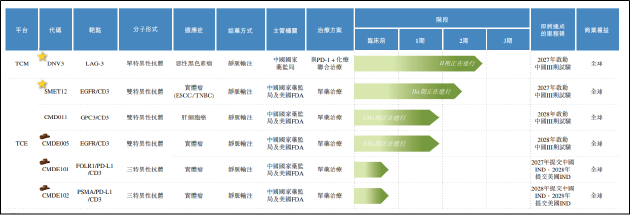
Core Viewpoint - Zhejiang Shimai Pharmaceutical Co., Ltd. has submitted its prospectus to the Hong Kong Stock Exchange, aiming for an IPO under Rule 18A, with Huatai International as the sole sponsor. The company focuses on T-cell engagers (TCE) therapies and has attracted investments from notable firms like Betta Pharmaceuticals and Tigermed, achieving a post-Series C valuation of 2.23 billion yuan. However, it faces multiple risks, including reduced R&D investment, frequent changes in financial leadership, and safety concerns regarding core products [1][2]. Financial Performance - The company's revenue for 2023, 2024, and the first half of 2025 is projected to be 14.65 million yuan, 6.62 million yuan, and 2.28 million yuan, respectively, indicating minimal income. Concurrently, net losses are expected to be 74.94 million yuan, 59.89 million yuan, and 25.42 million yuan, leading to cumulative losses exceeding 160 million yuan over two and a half years. Historical cumulative losses since inception are nearing 500 million yuan [2][4]. - R&D expenses have significantly decreased, with figures of 76.11 million yuan, 53.38 million yuan, and 22.39 million yuan for the respective years, reflecting a downward trend. The R&D investment for core products DNV3 and SMET12 has also seen a notable decline [2][4]. Product Development - The company has four clinical-stage candidates, including core products DNV3 and SMET12, which are currently in critical Phase II trials. The reduction in R&D spending during this pivotal phase raises concerns about the company's financial health and ability to validate drug efficacy and safety [4][5]. - DNV3's Phase I trial involved 11 patients, with an adverse event rate of 81.8%, while SMET12's trial included 16 patients, with 93.8% experiencing adverse events. These results raise questions about the safety of the products [6]. Market Position and Valuation - The global TCE market is projected to be only $3 billion in 2024, with the domestic market at 700 million yuan, indicating that TCE therapies are still in the early stages of development compared to the larger oncology market [5]. - The post-Series C valuation of 2.23 billion yuan places the company above industry averages, with a market-to-research ratio of approximately 42 times based on 2024 R&D expenditures. This is significantly higher than the median of 23.21 times for similar unprofitable biotech firms listed under Rule 18A [7].

2025 中国医疗健康考察要点-创新、全球化与订单反弹-China Healthcare-2025 China Healthcare Tour Takeaways – Innovation, Globalization and Orders Rebound
2025-12-01 00:49
Summary of Key Points from China Healthcare Conference and Tour Industry Overview - **Industry**: China Healthcare - **Focus**: Innovation, Globalization, and Recovery in Medical Technology (Medtech) Core Insights 1. **Innovation Hub**: China is establishing itself as a global innovation hub, particularly in novel modalities such as IO bispecific, ADC, and siRNA [1][2] 2. **Medtech Globalization**: Leading Chinese medical equipment companies are moving beyond simple exports to establish localized production and direct sales networks [1][3] 3. **IVD Market Recovery**: The domestic In-Vitro Diagnostics (IVD) market is showing signs of bottoming out, with hospitals incentivized to switch to cost-effective domestic solutions due to pricing pressures [1][4] 4. **CXO Sector Performance**: Strong orders in the CXO sector are sustained, with potential price recovery in domestic clinical CROs expected to improve gross margins in 2026 [1][5] Company-Specific Highlights 1. **Abbisko (2256.HK)** - Focus on clinical progress of irpagratinib and ABSK043, with a strong pipeline that remains undervalued in the market [15] - Irpagratinib's Phase 3 study for HCC is on track, and ABSK043 shows promise in combination therapies [16][17] 2. **Huadong Medicine (000963.SZ)** - Innovative drugs contributed Rmb1,675 million in sales for 9M25, up 62% YoY, with a focus on oncology and metabolic diseases [19] - Ongoing discussions for potential out-licensing of GLP-1 candidates and ADC [20] 3. **MicroPort MedBot (2252.HK)** - YTD overseas orders exceeded 70, indicating rapid commercialization in international markets [23] - Targeting cash flow breakeven in 2026, with a focus on increasing revenue from high-margin consumables [24][25] 4. **Shanghai Fosun Pharma (2196.HK)** - Optimistic about the inclusion of CAR-T therapy Yescarta in the innovative drug catalog of commercial insurance, expected to accelerate coverage [28] - Increasing R&D investment by 20% YoY, focusing on new modalities like radiopharmaceuticals [30] 5. **Henlius (2696.HK)** - HLX43 shows promising data in NSCLC, with plans for multiple registrational trials [31][33] - Developing a new platform for radiopharmaceuticals and small nucleic acids [32] 6. **Shenzhen Mindray (300760.SZ)** - Aiming to double its current 10% market share in IVD within three years, leveraging comprehensive lab solutions [37] - Global strategy focuses on localization and diversification of manufacturing [38] 7. **Tigermed (3347.HK)** - Positive revenue growth guidance for 2025, with strong orders in Phase 1/2 trials [40][42] - Expanding overseas operations, with significant growth in the US and Japan [43] 8. **United Imaging (688271.SS)** - Achieving robust growth in developed markets, with a CAGR of 50% for overseas markets expected [44][48] - Strong positioning in high-end MRI and molecular imaging sectors [47] Additional Insights - **siRNA Modality**: The siRNA field is at an inflection point, attracting significant interest from multinational corporations due to its long-dosing interval potential [2][9] - **Market Dynamics**: The domestic IVD market is experiencing a structural shift favoring domestic leaders, with hospitals seeking cost-effective solutions [4][14] - **Globalization Trends**: Chinese medtech firms are successfully executing globalization strategies, with significant growth in emerging markets [3][13] This summary encapsulates the key takeaways from the China Healthcare Conference and Tour, highlighting the industry's focus on innovation, globalization, and recovery, along with specific insights into leading companies within the sector.



泰格医药(03347.HK)获摩根大通增持50.15万股
Ge Long Hui A P P· 2025-11-27 23:39
Group 1 - JPMorgan Chase & Co. increased its stake in Tiger Medical (03347.HK) by purchasing 501,547 shares at an average price of HKD 38.9488 per share, totaling approximately HKD 19.535 million [1] - Following this transaction, JPMorgan's total holdings in Tiger Medical rose to 10,340,515 shares, increasing its ownership percentage from 7.99% to 8.39% [1]

小摩增持泰格医药约50.15万股 每股作价约38.95港元
Zhi Tong Cai Jing· 2025-11-27 11:21
Group 1 - JPMorgan increased its stake in Tiger Medical (300347) by 501,547 shares at a price of HKD 38.9488 per share, totaling approximately HKD 19.5347 million [1] - After the increase, JPMorgan's total shareholding in Tiger Medical is approximately 10.3405 million shares, representing a holding percentage of 8.39% [1]
小摩增持泰格医药(03347)约50.15万股 每股作价约38.95港元
智通财经网· 2025-11-27 11:17
Core Viewpoint - JPMorgan has increased its stake in Tiger Medical (03347) by acquiring 501,547 shares at a price of HKD 38.9488 per share, totaling approximately HKD 19.5347 million, resulting in a new holding of about 10.3405 million shares, representing 8.39% of the company [1] Group 1 - JPMorgan's recent acquisition of shares indicates a bullish sentiment towards Tiger Medical [1] - The total investment made by JPMorgan in this transaction is approximately HKD 19.5347 million [1] - After the increase, JPMorgan's total shareholding in Tiger Medical stands at approximately 10.3405 million shares [1]
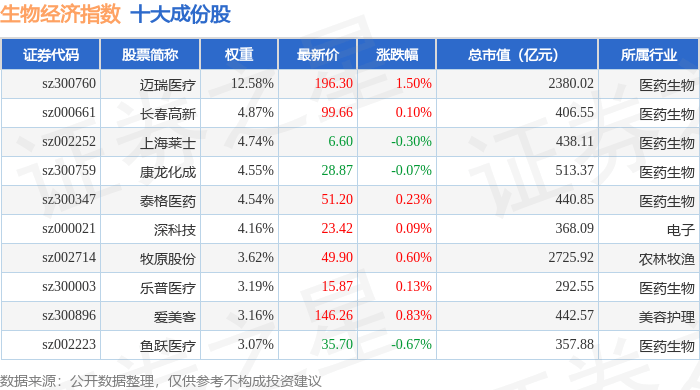
11月27日生物经济(970038)指数跌0.06%,成份股京新药业(002020)领跌
Sou Hu Cai Jing· 2025-11-27 10:52
Core Points - The Biotech Index (970038) closed at 2134.66 points, down 0.06%, with a trading volume of 13.045 billion yuan and a turnover rate of 0.95% [1] - Among the index constituents, 22 stocks rose while 27 fell, with Hualan Vaccine leading the gainers at 2.57% and Jingxin Pharmaceutical leading the decliners at 5.97% [1] Index Constituents Summary - The top ten constituents of the Biotech Index include: - Mindray Medical (12.58% weight, latest price 196.30 yuan, market cap 238 billion yuan) [1] - Changchun High-tech (4.87% weight, latest price 99.66 yuan, market cap 40.655 billion yuan) [1] - Shimi Aoshi (4.74% weight, latest price 6.60 yuan, market cap 4.3811 billion yuan) [1] - Kanglong Chemical (4.55% weight, latest price 28.87 yuan, market cap 51.337 billion yuan) [1] - Tigermed (4.54% weight, latest price 51.20 yuan, market cap 44.085 billion yuan) [1] - Deep Technology (4.16% weight, latest price 23.42 yuan, market cap 36.809 billion yuan) [1] - Muyuan Food (3.62% weight, latest price 49.90 yuan, market cap 272.592 billion yuan) [1] - Lepu Medical (3.19% weight, latest price 15.87 yuan, market cap 29.255 billion yuan) [1] - Aimeike (3.16% weight, latest price 146.26 yuan, market cap 44.257 billion yuan) [1] - Seeyou Medical (3.07% weight, latest price 35.70 yuan, market cap 35.788 billion yuan) [1] Capital Flow Analysis - The Biotech Index constituents experienced a net outflow of 84.2481 million yuan from institutional investors, while retail investors saw a net inflow of 67.1618 million yuan [1] - Notable capital flows include: - Muyuan Food: 104 million yuan net inflow from institutional investors, but net outflows from retail and speculative investors [2] - Aimeike: 46.9918 million yuan net inflow from institutional investors, with outflows from retail and speculative investors [2] - Mindray Medical: 33.0761 million yuan net inflow from institutional investors, with outflows from retail and speculative investors [2]



泰格医药投出一家创新药IPO,恒瑞前员工创办,估值39亿
格隆汇APP· 2025-11-27 10:46
Core Viewpoint - The article discusses the IPO of an innovative drug company founded by a former employee of Heng Rui, with a valuation of 3.9 billion [1] Group 1 - The innovative drug company is backed by Tai Ge Pharmaceutical, indicating strong industry support [1] - The founder's previous experience at Heng Rui suggests a solid background in the pharmaceutical sector, which may enhance investor confidence [1] - The valuation of 3.9 billion highlights the potential market interest and growth prospects for the company [1]
明宇制药冲击IPO,“肿瘤+自免”双轨并行,面临制药巨头的竞争
Ge Long Hui A P P· 2025-11-27 10:25
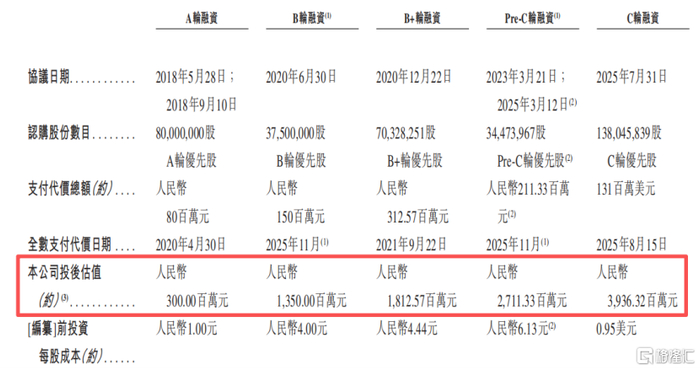
Core Insights - The innovative drug sector is currently focused on GLP-1 weight loss drugs and PD1/VEGF bispecific antibodies, both expected to reach a global market size of over $100 billion [1] - Mingyu Pharmaceutical Co., Ltd. has filed for an IPO on the Hong Kong Stock Exchange, seeking to capitalize on its dual growth engines in oncology and autoimmune diseases [1][2] Company Overview - Mingyu Pharmaceutical was established in March 2018 and operates with dual headquarters in Shanghai and Hangzhou, China [1] - The company has raised approximately $240 million through five rounds of financing, with a post-money valuation of about 3.936 billion yuan ($0.54 billion) as of July 2025 [2][3] Leadership - The largest shareholder group holds approximately 36.27% of voting rights, including founder Dr. Cao Guoqing and his wife [3] - Dr. Cao has over 30 years of experience in drug development and management, previously working at Eli Lilly and Hengrui Medicine [4] Product Pipeline - Mingyu has 13 candidate products, with 10 in clinical stages, including 5 in Phase II or later [4][6] - Key oncology product MHB036C (TROP-2 ADC) has shown a 43% objective response rate in a Phase I trial for triple-negative breast cancer [6] - The TROP-2 ADC market is projected to grow from $1.5 billion in 2024 to $42.5 billion by 2035, with a CAGR of 35.4% [6] Competitive Landscape - The company faces competition from several multinational pharmaceutical companies in the ADC space, with three TROP-2 ADCs already approved globally [6][7] - Mingyu's MHB039A (PD-1/VEGF bispecific antibody) is positioned to potentially replace PD-(L)1 monoclonal antibody therapies, with a projected market size of $12.61 billion by 2035 [11] Financial Performance - Mingyu has not yet commercialized any products, reporting cumulative losses of 587 million yuan ($82 million) over two and a half years [14] - The company recorded revenues of 264 million yuan ($37 million) in the first half of 2025, with significant R&D expenditures [14][15] Future Outlook - The company is focused on advancing its clinical trials and commercialization efforts in both oncology and autoimmune disease sectors, which require substantial funding [19] - The ability to navigate competitive pressures and successfully bring products to market will be critical for the company's future [20]
海通国际:海外创新药产业链已呈结构性复苏趋势
智通财经网· 2025-11-27 06:05
Core Viewpoint - The overseas CXO industry has shown resilience under macroeconomic pressure, with overall sentiment stabilizing after hitting a bottom, suggesting a recovery in the domestic CXO sector as macro indicators like interest rates and financing improve [1] Group 1: Industry Overview - The overseas CXO industry has confirmed its bottom and is showing a structural recovery trend, with significant differentiation in recovery across sectors [2] - Clinical CROs, represented by companies like IQVIA and Medpace, are leading the recovery due to strong orders and forward guidance [2] - CDMOs, exemplified by Lonza, demonstrate resilience through long-term contracts, while preclinical CROs and research services are still in a bottoming phase [2] Group 2: Clinical CRO Insights - IQVIA shows positive data with a net book-to-bill ratio of 1.15 and a 20% year-on-year increase in RFP flow, with cancellations returning to a normalized $2.2 billion from over $3 billion [3] - Medpace exhibits the strongest performance with a net book-to-bill ratio of 1.20 and a pre-backlog exceeding $3 billion, indicating high revenue visibility for 2026 [3] - ICON is experiencing demand recovery, but short-term performance is affected by project execution volatility, with a net book-to-bill ratio of 1.02 due to $900 million in project cancellations [3] Group 3: CDMO Insights - Lonza maintains stable performance with strategic long-term contracts and a structure that provides immunity to biotech financing fluctuations [4] - Samsung Biologics keeps its revenue growth guidance unchanged at approximately 25%-30%, with total contract amounts exceeding $20 billion, showcasing strong order reserves [4] - Syngene faces short-term profitability pressure but is entering a critical phase of capacity upgrades and order increases with new global clinical orders [4] Group 4: Investment Recommendations - Companies with global competitive advantages in the CXO sector include WuXi AppTec, WuXi Biologics, and others [4] - Focus on innovative drug industry chain companies with improving profitability, such as Haoyuan Pharmaceutical [4] - Attention is also recommended for companies primarily generating domestic revenue, expected to recover as innovative drugs expand internationally, like Tigermed [4]