中国生物制药

Search documents
ETF盘中资讯|续创阶段新低,港股通创新药ETF(520880)溢价逆向走高,千万资金逢跌揽筹!机构:2026年战略性布局创新药
Sou Hu Cai Jing· 2025-12-31 03:36
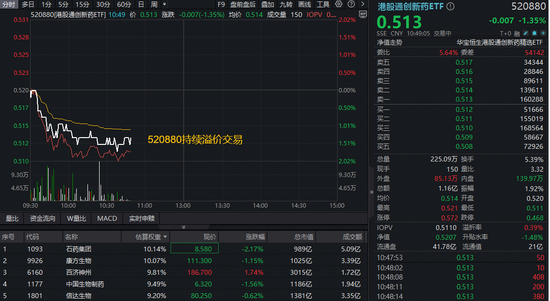
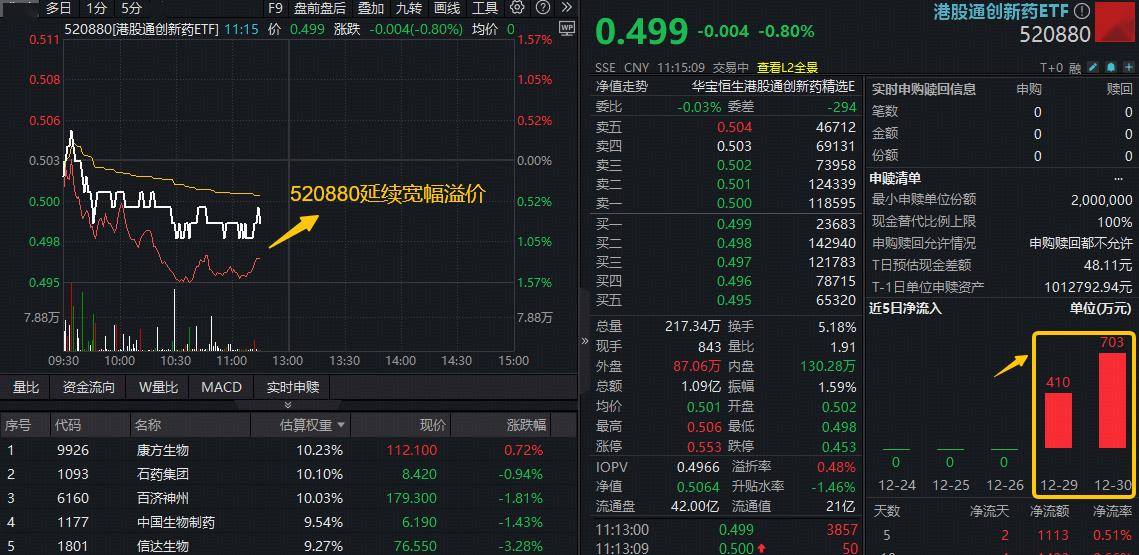
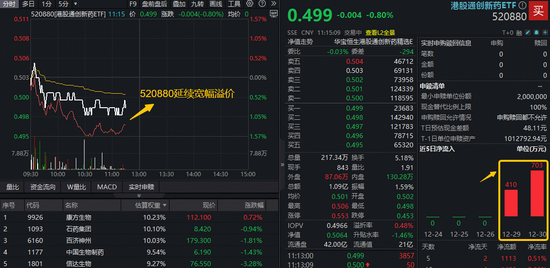
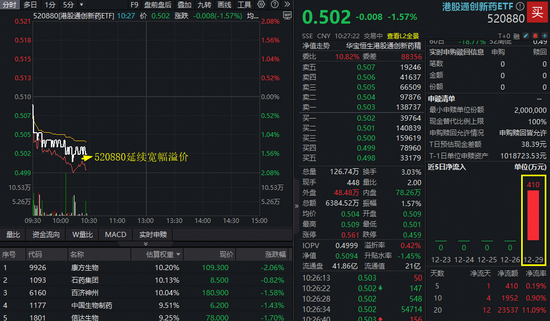
Core Viewpoint - The Hong Kong Stock Connect Innovative Drug ETF (520880) has experienced a continuous decline for four days, reaching a new low since July 10, indicating a strong buying interest despite the downturn [1][2]. Group 1: Market Performance - The Hong Kong Stock Connect Innovative Drug ETF (520880) has seen a price drop of 0.80%, currently priced at 0.499, with a trading volume of 124,339 shares [1]. - The ETF has been in a downward trend since September, with the current adjustment lasting over three months, leading to the ETF trading below its issuance price [2]. Group 2: Investment Strategy - Analysts suggest that 2026 will be a strategic year for investing in innovative drugs, as the current market conditions may present a favorable entry point for investors [2]. - The ETF tracks the Hang Seng Hong Kong Stock Connect Innovative Drug Select Index, which has three key advantages: it exclusively includes innovative drug companies, has a high concentration of leading firms (over 72% in the top ten), and offers better risk control by reducing the weight of less liquid stocks [2][3]. Group 3: Composition and Risk Management - The top ten holdings of the ETF account for 72.57% of its total weight, showcasing a significant concentration in leading innovative drug companies [3]. - The ETF is designed to mitigate risks associated with less liquid stocks by enforcing a forced reduction in their weight, thus controlling tail risks effectively [2][3].

续创阶段新低,港股通创新药ETF(520880)溢价逆向走高,千万资金逢跌揽筹!机构:2026年战略性布局创新药
Xin Lang Cai Jing· 2025-12-31 03:25
Group 1 - The Hong Kong innovation drug sector continues to experience a downturn, with leading companies like BeiGene and China Biologic falling over 1%, and Innovent Biologics and 3SBio dropping more than 3% [1][7] - The Hong Kong Innovation Drug ETF (520880) has seen a decline for four consecutive days, reaching a new low since July 10, with a premium rising inversely, indicating strong buying interest [8][1] - Recent analysis from Zhongyou Securities indicates that the innovation drug sector is in a continuous correction phase, primarily driven by a retreat from previously optimistic business development (BD) expectations [3][10] Group 2 - Looking ahead to 2026, the maturity of clinical data is expected to be a key factor driving the innovation drug market, with BD being a necessary outcome of enhanced competitiveness of domestic new drugs [3][10] - Dongwu Securities suggests that the current period may represent a favorable configuration window for the Hong Kong innovation drug sector, which has been in adjustment since September, lasting over three months [10] - The Hong Kong Innovation Drug ETF (520880) and its associated funds track the Hang Seng Hong Kong Innovation Drug Select Index, which has three unique advantages: it is purely focused on innovation drugs, has a high concentration of leading companies, and offers better risk control [10][11] Group 3 - The top ten holdings in the Hong Kong Innovation Drug ETF account for over 72% of the index, highlighting the dominance of leading companies in the sector [4][10] - The total market capitalization of the top ten companies in the ETF is approximately HKD 12.87 billion, with BeiGene having a weight of 11.51% and a market cap of HKD 3.07 billion [4][10] - For investors looking to reduce volatility while still focusing on innovation drugs, the only drug ETF in the market (562050) is recommended, which emphasizes both innovation drugs and traditional Chinese medicine [12][13]
年内最大港股Biotech IPO!港股通创新药ETF(159570)跌超1%再创阶段新低,昨日净流入超1100万元!JPM大会有哪些值得关注?
Xin Lang Cai Jing· 2025-12-30 09:56
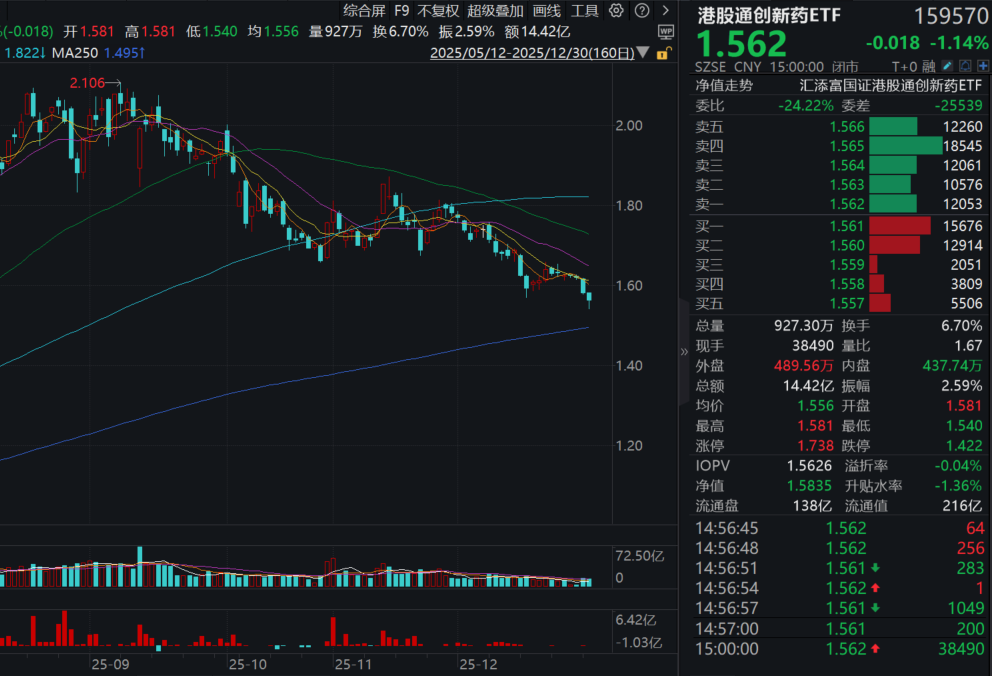
Core Viewpoint - The Hong Kong pharmaceutical market is experiencing a downturn, with the Hong Kong Stock Connect Innovation Drug ETF (159570) declining by 1.14% and over 25% from its previous high, despite a significant trading volume of over 1.44 billion yuan [1][4]. Group 1: Market Performance - The Hong Kong Stock Connect Innovation Drug ETF (159570) has seen a three-day decline, reaching a new low, with a total trading volume exceeding 14.4 billion yuan [1]. - As of December 29, the latest scale of the Hong Kong Stock Connect Innovation Drug ETF (159570) is over 21.9 billion yuan, leading among its peers [1]. - Major stocks within the ETF, such as King’s Bio and Kelun-Bio, have experienced declines, with King’s Bio dropping over 3% [4][5]. Group 2: IPO Activity - On December 30, Insilico Medicine, a generative AI-driven biopharmaceutical company, successfully listed on the Hong Kong Stock Exchange, marking it as the first AI biopharmaceutical company to do so under the main board listing rules [3]. - The IPO raised a total of 2.277 billion Hong Kong dollars, making it the highest fundraising biopharmaceutical IPO in Hong Kong for the year [3]. Group 3: Industry Trends - The upcoming J.P. Morgan Healthcare Conference in January 2026 is expected to attract over 8,000 global participants, featuring more than 500 listed companies and thousands of startups, focusing on "capital + strategy" discussions [6]. - Key trends highlighted for the industry include the continued rise of gene and cell therapies, deep integration of AI in pharmaceuticals, and the emergence of new market forces from China [7]. Group 4: Investment Insights - Multinational corporations (MNCs) are willing to pay higher prices for innovative drugs and technology platforms from China, with average total deals from China reaching 2.756 billion USD compared to 1.289 billion USD from overseas [8]. - The pressure from patent expirations, estimated at around 300 billion USD in sales, is driving MNCs to seek high-potential assets in China, particularly in advanced fields like ADCs and cell therapies [9]. - MNCs are shifting their focus from merely acquiring products to obtaining platforms and technologies that can yield new molecules, indicating a strategic evolution in their investment approach [10]. Group 5: Key Investment Areas - Key investment areas include ADCs, GLP-1 for metabolic diseases, bispecific antibodies, and neuroscience, with a focus on companies that can deliver competitive clinical data and innovative platforms [12][13].
ETF盘中资讯|乐观BD预期退潮?港股通创新药ETF(520880)创5个半月新低!场内延续宽幅溢价,机构:基本面无虞
Jin Rong Jie· 2025-12-30 02:53
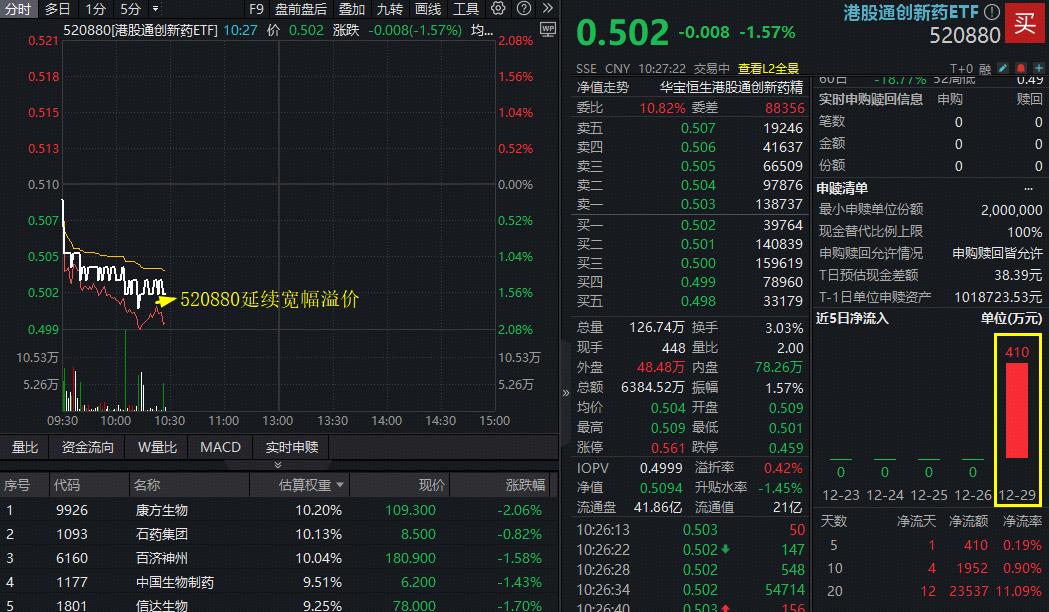
权重龙头股呈普跌态势,康方生物、科伦博泰生物-B跌超2%,百济神州、中国生物制药、信达生物、三生制药等集体跌逾1%。 1、纯粹,全面。不含CXO,纯正创新药!全面覆盖创新药研发类公司。 2、龙头占比大。前十大创新药龙头权重超72%,表征创新药硬核力量。 3、风险更可控。对流动性较差的成份股强制降权,有力管控尾部风险。 | | | 港股通创新药ETF (520880) 标的指数 | | | --- | --- | --- | --- | | | | 前十成份股权重高达72.57%,龙头优势显著 | | | 代码 | 简称 | 权重(%) | 总市值(亿港元) | | 6160.HK | 百济神州 | 11.51 | 3,070 | | 1801.HK | 信达生物 | 10.19 | 1,613 | | 1177.HK | 中国生物制药 | 9.47 | 1,323 | | 9926.HK | 康方生物 | 8.99 | 1,132 | | 1093.HK | 石药集团 | 8.39 | 911 | | 1530.HK | 三生制药 | 8.32 | 760 | | 3692.HK | 翰森制药 | 6.63 ...
乐观BD预期退潮?港股通创新药ETF(520880)创5个半月新低!场内延续宽幅溢价,机构:基本面无虞
Xin Lang Cai Jing· 2025-12-30 02:42
Core Viewpoint - The Hong Kong innovation drug sector continues to adjust, with the Hong Kong Innovation Drug ETF (520880) falling over 1.5%, reaching a new low since July 11, indicating strong buying interest despite the downturn [1][7]. Market Performance - The leading stocks in the sector are experiencing a broad decline, with notable drops including Kangfang Biotech and Kelun-B, both down over 2%, and others like Baijie Shenzhou, China Biopharmaceutical, and Innovent Biologics all falling over 1% [1][8]. - Recent trading data shows that 4.1 million yuan entered the market as investors took advantage of the price drop [1][7]. Sector Analysis - According to Zhongyou Securities, the innovation drug sector is in a continuous correction phase, primarily driven by a retreat from previously optimistic business development (BD) expectations [1][10]. - Despite the downturn, recent clinical data from events like ESMO Asia and ASH conferences have validated the trends for domestic new drugs, aligning with expectations [1][10]. Future Outlook - Looking ahead to 2026, the maturity of clinical data is expected to be a key factor driving the innovation drug market, with BD becoming a necessary outcome of enhanced competitiveness for domestic new drugs [1][10]. - The current adjustment phase, which began in September and has lasted over three months, presents a favorable configuration window for the Hong Kong Innovation Drug sector, with the ETF price nearing its issuance price [1][10]. ETF Characteristics - The Hong Kong Innovation Drug ETF (520880) tracks the Hang Seng Hong Kong Innovation Drug Select Index, which has three unique advantages: it is purely focused on innovative drugs, has a high concentration of leading companies (over 72% in the top ten), and offers better risk control by reducing the weight of less liquid stocks [1][10][11]. - The top ten holdings in the ETF account for 72.57% of the total weight, highlighting the dominance of leading firms in the sector [1][12].
2025年中国医药产业十大谜团
3 6 Ke· 2025-12-29 13:40
Group 1: Industry Overview - The Chinese innovative drug industry is experiencing a significant recovery in 2025, with record high external BD totals and an increase in the number of drug approvals [1][2] - Despite the positive trends, there are concerns about the sustainability of the market, high valuations of some companies, and the potential for structural differentiation in the industry [2][3] Group 2: IPO Market - The IPO market for innovative drug companies has seen a resurgence, with many firms successfully listing on the Hong Kong stock exchange and exceeding fundraising expectations [3][4] - However, the market experienced a downturn in December, with initial public offerings facing challenges such as market sentiment cooling and stricter regulatory scrutiny [4] Group 3: Commercial Insurance and Drug Pricing - The introduction of a commercial insurance directory for innovative drugs aims to address the payment challenges associated with high-priced therapies, with 24 drugs participating in price negotiations [4][5] - The negotiated price reductions for these drugs range from 15% to 50%, but the effectiveness of this new payment model in promoting clinical use remains to be seen [5] Group 4: BD Opportunities and Challenges - The trend of significant BD transactions continues, with companies like 3SBio and Innovent Biologics leading the way, prompting speculation about the next major BD opportunities [6][7] - There is a growing concern about the legal risks associated with BD transactions, as the industry may face an increase in litigation related to these deals [8] Group 5: Future Prospects and Uncertainties - Key questions remain regarding the future of companies like Summit, including potential acquisitions and the performance of their clinical trials [9][10] - The domestic vaccine sector is struggling, with significant declines in stock prices and ongoing challenges related to product differentiation and commercialization [11] - Geopolitical factors continue to pose risks to the innovative drug sector, with ongoing uncertainties regarding regulatory policies and market access [12] Group 6: Unexpected Developments - Some biotech companies have made surprising decisions, such as the acquisition of Lixte Biotechnology by China National Pharmaceutical Group, which deviated from expectations of an independent IPO [13][14] - The sudden dissolution of Run Biotech highlights the high-risk nature of the industry and the challenges of balancing short-term financial returns with long-term innovation [15]

维他动力创始人余轶南:60人团队一年量产机器狗,如何舍九取一踩准AI 2.0爆发点?
混沌学园· 2025-12-29 10:58
Core Viewpoint - The article discusses the launch of Vbot, a consumer-grade embodied intelligence product, highlighting its significance in the context of the AI 2.0 era and the opportunities it presents for the robotics industry [4][12][70]. Group 1: Background and Development - Vbot is the world's first smart robotic dog that operates without remote control, designed for family and personal use, showcasing the integration of intelligent robotics into daily life [5][6]. - The development of Vbot was achieved by a 60-person team within a year, marking a significant breakthrough from strategic decision-making to product mass production [6][10]. Group 2: Industry Opportunities - The current era is characterized by a significant technological revolution, with AI 2.0 marking a new cycle of rapid development, particularly following the emergence of models like ChatGPT [12][13]. - Embodied intelligence is experiencing a historic opportunity, driven by the maturity of core capabilities such as power, computing, and algorithms, which are essential for the robotics industry [15][24]. Group 3: Technological Maturity - Key advancements in battery technology have doubled energy density over the past decade, significantly enhancing the performance of electric vehicles [15]. - Computing power continues to follow Moore's Law, with the latest semiconductor processes approaching 3 nanometers, indicating rapid progress in the industry [15]. - AI algorithms are improving at an unprecedented rate, with performance doubling approximately every 100 days, which is reshaping the landscape of AI applications [16]. Group 4: Market Demand - In China, the aging population and declining labor force participation are driving an exponential increase in demand for home services, particularly from the elderly [23]. - Younger consumers are increasingly willing to pay for time-saving services, indicating a shift in consumer behavior towards automation and robotics [23][24]. Group 5: Strategic Focus - Companies must navigate a complex landscape of choices in the robotics industry, focusing on user scenarios, technological pathways, and product definitions to find their unique market position [26][29]. - The article emphasizes the importance of strategic decision-making in selecting the right technology and market segment, particularly in the context of embodied intelligence [30][32]. Group 6: Product Development and Positioning - The Vbot product is positioned as a "little brother" for families, designed to provide companionship and safety for children while also serving practical functions like carrying items and taking photos [51][62]. - The choice of a quadruped robotic dog was based on its technological maturity and adaptability to outdoor environments, making it suitable for various family activities [48][62]. Group 7: Competitive Landscape - The robotics industry is currently characterized by a lack of competition in certain segments, particularly in consumer-oriented products, allowing for strategic entry points for new companies [58][60]. - The focus on the C-end market, particularly outdoor scenarios, is seen as a significant opportunity for growth, with the potential for high consumer acceptance [60][62].

医药行业周报(25/12/22-25/12/26):2026年行业催化密集,重点关注脑机接口机会-20251229
Hua Yuan Zheng Quan· 2025-12-29 06:00
Investment Rating - The investment rating for the pharmaceutical industry is "Positive" (maintained) [4] Core Insights - The report emphasizes the potential of brain-computer interface (BCI) technology and AI medical applications, predicting significant developments in 2026. It suggests focusing on innovative drug stocks and medical technology themes, particularly in the context of an aging population and the recovery of consumer spending in healthcare [3][5][42]. Summary by Sections 1. Policy Catalysts and BCI Application Potential - The brain-computer interface (BCI) technology is highlighted as a key area of growth, with the market expected to reach approximately $2.62 billion by 2024 and grow to $12.4 billion by 2034, reflecting a compound annual growth rate (CAGR) of 17.4% from 2025 to 2034 [12][18]. - The medical sector is projected to account for about 46% of the BCI application market in 2024, focusing on areas such as neurological rehabilitation and sensory diagnostics [13][18]. 2. Industry Perspective: Innovation and Global Expansion - The pharmaceutical index has shown a decline of 0.18% from December 22 to December 26, 2025, with a year-to-date increase of 14.29%. The report notes a significant number of stocks experiencing both gains and losses during this period [25][30]. - The report identifies key stocks to watch, including innovative drug companies and those involved in the BCI and AI medical sectors, suggesting a focus on companies like Heng Rui Medicine, Zai Lab, and others [42][45]. 3. Investment Opportunities - The report suggests that the pharmaceutical industry has completed a transition from old to new growth drivers, with innovative drugs leading the way. It highlights the increasing global competitiveness of Chinese pharmaceutical companies and their growing capabilities in international markets [41][42]. - Specific recommendations include focusing on innovative drugs, medical devices, and companies involved in the BCI sector, with a particular emphasis on those with strong fundamentals and potential for recovery in 2026 [42][44].





ETF盘中资讯|跨国药企发起降价潮?港股通创新药逆市走低,520880溢价高企!机构力挺国产创新药:重点关注2026年Q1
Sou Hu Cai Jing· 2025-12-29 03:25
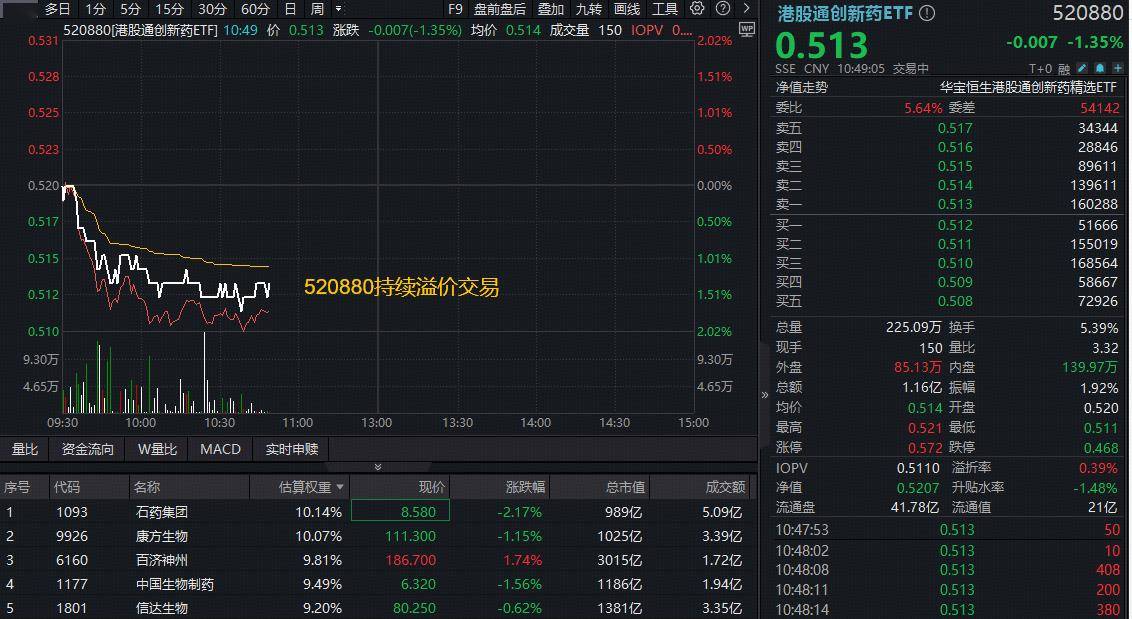
Core Viewpoint - The Hong Kong stock market opened positively, with the Hang Seng Index rising, but the innovative drug sector unexpectedly declined, indicating potential volatility in this segment [1]. Group 1: Market Performance - The Hang Seng Index showed a rise, with the Hang Seng Technology Index increasing by over 2% at one point [1]. - The Hong Kong Stock Connect innovative drug ETF (520880) fell by more than 1.5% during trading, with major stocks like CSPC Pharmaceutical Group and CanSino Biologics dropping over 1% [1]. Group 2: Investment Sentiment - Despite the decline, the Hong Kong Stock Connect innovative drug ETF (520880) continued to trade at a premium, suggesting that there may be investors looking to buy on dips [2]. - Analysts remain optimistic about domestic innovative drugs, noting that the past two years have been significant for Chinese innovative drugs entering international markets, with record highs in both the number and value of licensing deals [3]. Group 3: Future Outlook - The industry is expected to see continued positive catalysts in 2026, including major industry conferences, significant business development transactions, and breakthroughs in new technologies [3]. - The innovative drug sector has been in a phase of adjustment since September, with risks being sufficiently released, leading to improved cost-effectiveness for investments [3]. Group 4: ETF Characteristics - The Hong Kong Stock Connect innovative drug ETF (520880) has a significant concentration in leading companies, with the top ten stocks accounting for over 72% of its weight, indicating a strong representation of the innovative drug sector [4]. - The ETF is designed to exclude CXO companies, focusing solely on innovative drug firms, which enhances its appeal to investors seeking pure exposure to this segment [3][4].
跨国药企发起降价潮?港股通创新药逆市走低,520880溢价高企!机构力挺国产创新药:重点关注2026年Q1
Xin Lang Cai Jing· 2025-12-29 03:11
Core Viewpoint - The Hong Kong stock market opened positively on December 29, with the Hang Seng Index rising, but the innovative drug sector unexpectedly declined, indicating potential investment opportunities amidst market fluctuations [1][7]. Group 1: Market Performance - The Hang Seng Index and the Hang Seng Tech Index saw gains, with the latter rising over 2% at one point [1][7]. - The Hong Kong Stock Connect Innovative Drug ETF (520880) experienced a drop of over 1.5%, with major stocks like CSPC Pharmaceutical Group falling more than 2% [1][7]. - Despite the decline, the Innovative Drug ETF continued to trade at a premium, suggesting that there may be buying interest from investors looking to capitalize on lower prices [1][8]. Group 2: Industry Developments - A price reduction trend initiated by multinational pharmaceutical companies Novo Nordisk and Eli Lilly is expected to take place by the end of 2025, with actual transaction prices nearly halved compared to six months ago [3][10]. - Experts suggest that this price setting is a defensive strategy ahead of the expiration of the patent for semaglutide in 2026 and the impending competition from domestic innovative drugs and biosimilars [3][10]. - Many institutions remain optimistic about domestic innovative drugs, highlighting that the past two years have been significant for Chinese innovative drugs entering international markets, with record-high licensing transactions [3][10]. Group 3: Investment Opportunities - The Hong Kong Stock Connect Innovative Drug sector has been in a phase of adjustment for over three months, with high-level risks being fully released, thus improving the cost-effectiveness of investments [3][10]. - The Hang Seng Stock Connect Innovative Drug ETF (520880) and its associated funds are recommended for investors, as the underlying index has unique advantages, including a focus on pure innovative drug companies and a high concentration of leading firms [3][10][11]. - The top ten holdings in the ETF account for over 72% of the index, indicating a strong representation of leading innovative drug companies [4][11].