地平线

Search documents
江苏晶圆测试“小巨人”冲刺科创板,华为哈勃持股,拟募资15亿
3 6 Ke· 2025-11-07 07:00
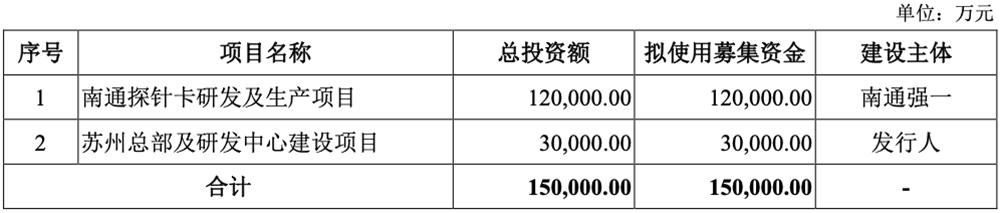
Core Viewpoint - Qiangyi Co., Ltd., a leading MEMS probe card manufacturer in Suzhou, Jiangsu, has submitted its IPO application to the Sci-Tech Innovation Board, with a review scheduled for November 12, 2023. The company aims to raise 1.5 billion yuan for R&D and production projects [1][2][31]. Company Overview - Founded in August 2015, Qiangyi Co., Ltd. has a registered capital of 97.1694 million yuan and is recognized as a national-level "little giant" enterprise specializing in advanced manufacturing [1][2]. - The company focuses on the R&D, design, production, and sales of probe cards, breaking the monopoly of foreign manufacturers in the MEMS probe card sector [1][31]. Market Position - Qiangyi ranks ninth in the global semiconductor probe card industry in 2023 and sixth in 2024, being the only domestic company to enter the top ten [1][2]. - The probe card products are used in both non-storage fields (SoC chips, CPUs, GPUs, RF chips) and storage fields (DRAM, NAND Flash) [1][2]. Financial Performance - In 2022, the company reported revenue exceeding 600 million yuan, with a net profit increase of 1149% [4]. - For the first nine months of 2025, Qiangyi's revenue reached 647 million yuan, a year-on-year increase of 65.88%, with a net profit of 248 million yuan, up 100.13% [6][7]. Future Projections - Qiangyi expects its 2025 revenue to be between 950 million and 1.05 billion yuan, representing a growth of 48.12% to 63.71% year-on-year [7][9]. - The company plans to enhance its R&D capabilities and production capacity for MEMS probe cards, particularly in the storage sector, to improve competitiveness [31]. Client Base - The company has over 400 clients, including major chip design firms and foundries, with significant sales to top clients like Company B, which accounts for over 80% of revenue [2][13][18]. - Qiangyi's major clients include well-known companies such as ZTE Micro, Fudan Microelectronics, and others in the semiconductor industry [2][17]. R&D and Innovation - As of September 30, 2025, Qiangyi had 159 R&D personnel, accounting for 19.85% of its total workforce, and held 182 authorized patents [13][14]. - The company has developed various types of probe cards, including 2D/2.5D MEMS probe cards, and is actively expanding its product offerings [15][16]. Supply Chain and Procurement - Qiangyi's procurement is concentrated, with the top five suppliers accounting for a significant portion of its total procurement costs [22][23]. - The company is working to enhance supply chain stability by sourcing core components domestically, while still relying on imports for certain materials [25][31].

日产汽车拟出售总部大楼;大众汽车布局自研芯片
Mei Ri Jing Ji Xin Wen· 2025-11-06 23:11
Group 1 - Nissan Motor Company will sell its global headquarters building in Yokohama for 97 billion yen (approximately 4.5 billion RMB), continuing to lease the property post-sale as part of its operational restructuring efforts [1] - This sale reflects Nissan's commitment to optimizing its asset structure and may improve its financial situation, enhancing market confidence [1] - The strategic adjustment could serve as a model for other automotive companies, raising awareness of financial health within the industry and impacting overall market sentiment [1] Group 2 - Volkswagen Group (China) announced the establishment of a joint venture, CARIZON, with Horizon Robotics to design and develop System-on-Chip (SoC) for next-generation smart connected vehicles [2] - This collaboration signifies a shift in foreign companies' strategies in China from technology export to local integration, enhancing supply chain autonomy and cost advantages for Volkswagen [2] - The partnership is expected to stimulate the domestic smart driving industry chain, potentially reshaping the competitive landscape of the automotive sector and attracting capital market interest in technology integration [2] Group 3 - Jiangsu Li Auto Battery Co., Ltd. has been established with a registered capital of 70 million RMB, focusing on battery manufacturing, sales, and electric vehicle charging infrastructure [3] - The new company is wholly owned by Shandong Li Auto Battery Co., Ltd., which is jointly held by Beijing Li Auto Co., Ltd. and Xinwanda Power Technology Co., Ltd. [3] - This establishment enhances Li Auto's competitiveness in the electric vehicle market and supports the development of charging infrastructure, potentially boosting investor interest in battery-related enterprises [3] Group 4 - Pony.ai and Toyota have jointly established Chuangfeng Intelligent Technology (Shenzhen) Co., Ltd., with a registered capital of 28 million RMB, focusing on smart instruments and charging equipment [4] - This partnership highlights the commitment of both companies to collaborate in the smart automotive sector, emphasizing the importance of electric vehicle infrastructure [4] - The initiative may increase market attention on smart transportation and electric vehicle-related companies, fostering collaborative development across related industry sectors [4]


从路演舌战到同场敲钟 自动驾驶双子星港股“一笑泯恩仇”
Xin Jing Bao· 2025-11-06 13:29
Core Viewpoint - The recent dual listing of autonomous driving companies, WeRide and Pony.ai, on the Hong Kong Stock Exchange marks a significant milestone in the commercialization of Robotaxi services, amidst a competitive landscape and public disputes over operational claims [2][3][4]. Group 1: Company Overview - WeRide and Pony.ai are both autonomous driving unicorns that have recently gone public, with WeRide founded in 2017 and Pony.ai established in 2016 [5]. - Both companies have a strong connection to Baidu, with their founders having held key positions within Baidu's autonomous driving division [5]. - The companies are now part of a growing trend of Robotaxi enterprises listing on the Hong Kong Stock Exchange, alongside others like Xiaoqi Mobility and Hezhong Technology [2][11]. Group 2: Financial Performance - From 2022 to 2024, Pony.ai reported total revenue of 1.527 billion RMB with a net loss of 3.878 billion RMB, while WeRide had total revenue of 1.291 billion RMB and a net loss of 5.764 billion RMB [7]. - In the second quarter of 2025, Pony.ai achieved revenue of 154 million RMB, a 75.9% year-on-year increase, while WeRide reported revenue of 127 million RMB, a 60.8% increase [9]. - The net losses for both companies remain significant, with WeRide's losses being higher than those of Pony.ai [9]. Group 3: Market Dynamics - The competition in the Robotaxi sector is intensifying, with multiple players entering the market and the technology requirements for fully autonomous vehicles being high [12][13]. - The current environment is characterized by a shift from technology validation to large-scale commercialization, with significant policy support and infrastructure development [13]. - The Hong Kong market is particularly sensitive to local policies, which enhances growth expectations for these companies [10]. Group 4: IPO Details and Fund Allocation - WeRide raised approximately 2.932 billion HKD in its IPO, with 40% allocated for the development of autonomous driving technology and another 40% for the commercialization of L4-level fleets [9]. - Pony.ai raised about 7.194 billion HKD, with 50% earmarked for market entry strategies and the large-scale commercialization of L4 autonomous driving technology [9].
直击进博会|地平线与大众进入“后联姻时代” 联手造“芯”打造下一代“车脑”
Zhong Guo Jing Ying Bao· 2025-11-06 07:07
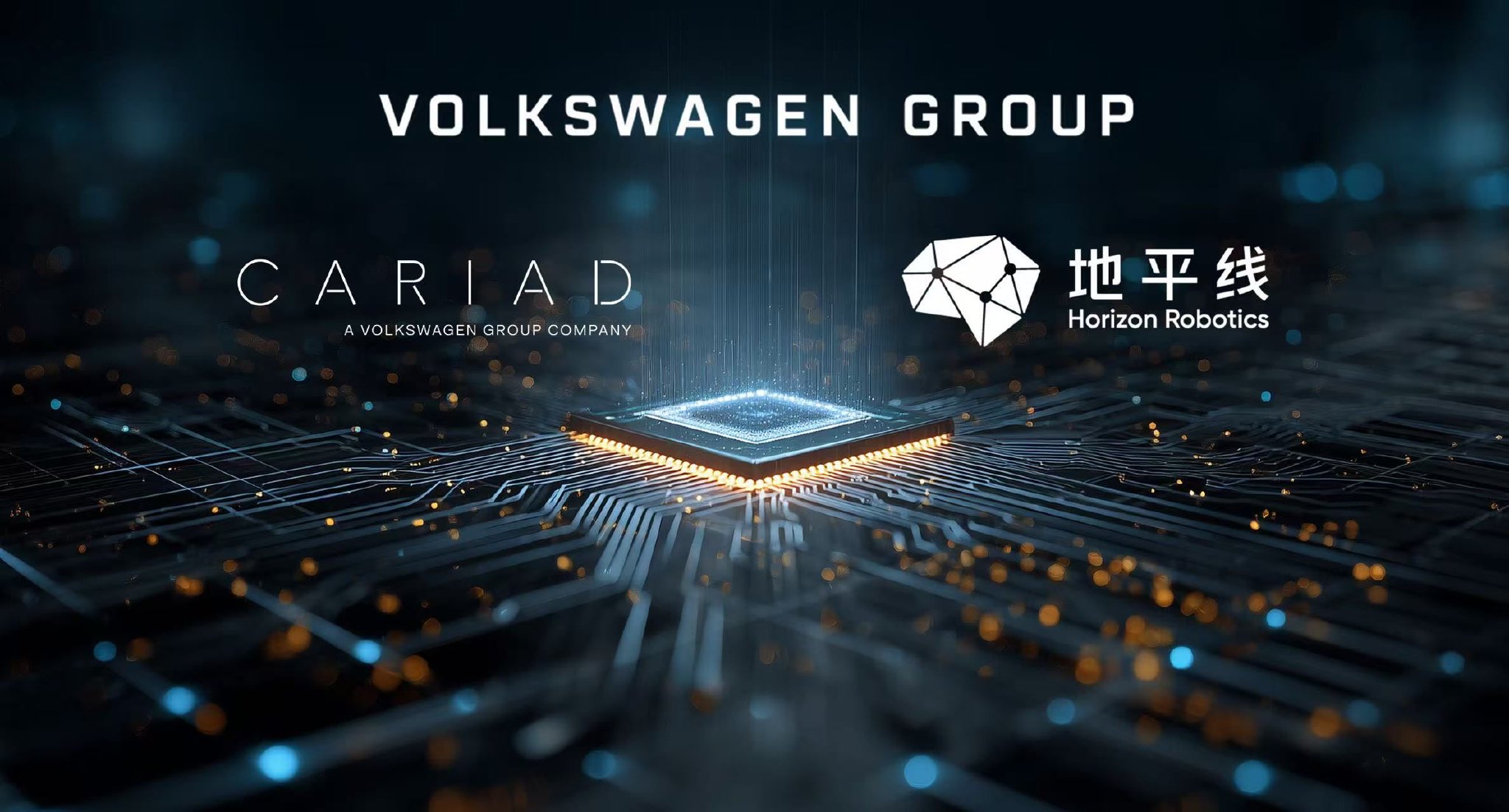
Core Insights - The collaboration between Volkswagen Group (China) and Horizon Robotics marks a significant step in the development of autonomous driving technology in China, focusing on local design and development of system-level computing solutions [1][4][5] Group 1: Joint Venture and Investment - Volkswagen's software company CARIAD and Horizon Robotics have established a joint venture named CARIZON to design and develop system-level chips in China, with an investment of approximately $200 million [1][4] - The new system-on-chip (SoC) is expected to achieve mass production within 3 to 5 years, boasting a computing power of 500-700 TOPS, which is more than double that of the current leading Nvidia Orin-X chip [1][2] Group 2: Strategic Goals and Local Adaptation - The strategic goal of the joint venture is to create a "smart brain" for the next generation of intelligent connected vehicles, enhancing real-time decision-making and safety in complex driving conditions [2][3] - Volkswagen aims to localize core technology development in China, recognizing the market's critical role in future innovations and adapting to local driving habits and traffic conditions [4][6] Group 3: Phased Development and Future Plans - The first advanced driver assistance system solution from CARIZON is set to enter mass production in 2025, marking the completion of the first phase of their collaboration [3][5] - The second phase will focus on enhancing Volkswagen's local R&D capabilities in intelligent driving, aiming for large-scale production and commercial deployment of integrated intelligent driving solutions [3][7] Group 4: Industry Context and Competitive Landscape - The partnership reflects a shift in strategy among multinational automotive companies in China, moving from reliance on overseas R&D to integrating local innovation capabilities [6][8] - The collaboration is seen as a response to the rapid innovation pace of domestic brands in the fields of new energy and intelligent driving, aiming to shorten the iteration cycle of intelligent driving technologies [6][7]
广州,刚刚迎来一个超级IPO
Xin Lang Cai Jing· 2025-11-06 02:13
Core Insights - Company successfully listed on Hong Kong Stock Exchange after 12 months of being listed in the US, achieving an IPO price of HKD 27.10 per share and a market capitalization of HKD 247.21 billion [1] - The company is recognized as a "super unicorn" in the autonomous driving sector, having received significant backing from major investors [1][4] - The listing coincided with another autonomous driving company, Xiaoma Zhixing, also going public, highlighting the competitive landscape in the sector [1] Company Overview - Founded by Han Xu, a technology expert with a PhD in Computer Engineering, the company has rapidly developed its technology and market presence since its establishment in 2017 [2] - The company has achieved significant milestones in autonomous driving, including being the first to launch L4 autonomous taxis in China [2][3] - Currently, the company operates in multiple sectors including smart mobility, smart logistics, and smart sanitation, and has entered the commercialization phase of autonomous driving [3] Financial Performance - The company reported a revenue of CNY 127 million for Q2 2025, marking a 60.8% year-on-year increase, with Robotaxi services contributing significantly to this growth [6] - Despite rapid revenue growth, the company reported a net loss of CNY 792 million in the first half of the year, primarily due to high R&D expenses [6] - The funds raised from the IPO will be allocated towards further development of autonomous driving technology, scaling L4 vehicle production, and enhancing global marketing efforts [6] Industry Context - The autonomous driving sector is experiencing a resurgence in investment, with over CNY 10 billion raised in the past month alone [7][8] - The market is projected to grow significantly, with McKinsey forecasting that China will become the largest market for autonomous driving by 2030, generating over USD 500 billion in revenue [8] - The current investment landscape is shifting towards established players in the sector, with a focus on companies that have progressed beyond early funding stages [8]

大众自研“中国芯”,本土化战略驶向“深水区”
Zhong Guo Qi Che Bao Wang· 2025-11-06 01:20
Core Insights - Volkswagen Group (China) announced a significant partnership with Horizon Robotics to establish a joint venture, CARIZON, focusing on the design and development of system-on-chip (SoC) technology in China, marking a strategic shift towards local innovation in smart mobility [1][4] Group 1: Strategic Shift - The new SoC chip, designed for next-generation smart connected vehicles, is seen as the "digital engine" of future smart cars, featuring a processing power of 500 to 700 TOPS, enabling real-time data processing for safer and smarter decision-making in complex Chinese traffic conditions [4] - Volkswagen aims to create a "Chinese chip" that understands local driving habits, allowing the company to regain control over product experience in the competitive smart electric vehicle market [4][5] - The collaboration with Horizon Robotics represents a deep integration of local technology capabilities, transitioning from traditional joint ventures to advanced co-development of core technologies [4][5] Group 2: Commitment to Local Innovation - The launch of the self-developed SoC project is a key step in Volkswagen's "In China, For China" strategy, emphasizing the company's commitment to shaping core technologies for future mobility in the Chinese market [5] - The partnership is a recognition of Horizon's technical strength and production capabilities, aiming to combine Volkswagen's global engineering expertise with Horizon's local development advantages to create high-performance, reliable integrated solutions [5] - Volkswagen's vision includes a comprehensive local R&D system covering chips, software, systems, and vehicles, with plans to offer around 30 pure electric models by 2030, supported by this technological foundation [5]

大众汽车集团布局自研芯片 为高级驾驶辅助提供强大支持
Xin Lang Cai Jing· 2025-11-05 14:56
2025年11月5日,在第八届中国国际进口博览会开幕当日,大众汽车集团(中国)正式宣布:集团旗下软件公司CARIAD与中国智驾科技公司地平线联合成 立的合资企业——酷睿程(CARIZON),将在中国自主设计与研发系统级芯片(System-on-Chip,SoC)。 这款系统级芯片专为集团的新一代智能网联汽车打造,为高级驾驶辅助和自动驾驶系统提供强大支持。它赋予车辆"思考"的能力,能够实时处理来自摄像头 和传感器的大量数据,从而在复杂路况下做出更安全、顺畅、智能的决策。这将让大众汽车集团更好地借力中国创新生态,打造真正符合本地道路交通与用 户驾驶习惯的出行体验。 2025年,酷睿程的首款高级驾驶辅助系统解决方案将正式投入量产,为集团在华智能驾驶自主研发的第一阶段画上圆满句号。随着自研系统级芯片的发 布,"第二阶段"正式开启,集团将进一步强化本土智驾全栈研发能力,加速推进规模化量产与商业落地,为中国客户提供更智能、更安全、更具价值的出行 解决方案。 4 日本 13 3 135 22 the state the first and 1133 2 2 the first the 1 the state 11 the ...
地平线与小鹏:中国技术“武装”大众
Jing Ji Guan Cha Bao· 2025-11-05 11:48
Core Insights - Volkswagen is restructuring its software development in China by collaborating with local tech companies Horizon and Xpeng to enhance its intelligent driving capabilities [1][8] - The establishment of the joint venture CARIZON with Horizon aims to develop system-level computing solutions for advanced driving assistance and autonomous driving systems [1][2] - Volkswagen's sales in China have significantly declined from over 4 million units in 2018 to an expected 2.75 million units in 2024, losing its long-standing market leadership [1][8] Group 1: Collaboration with Horizon - Horizon is a key partner in Volkswagen's adjustment, focusing on hardware-software synergy and large-scale production [2] - The joint venture CARIZON will develop Volkswagen's first self-developed intelligent driving chip, with a computing power range of 500 to 700 TOPS, planned for mass production within three to five years [2][3] - This chip will utilize a 3 to 4 nanometer process and will be integrated into Volkswagen's third-generation Chinese electronic and electrical architecture (CEA), with 80% of new cars sold in China by 2030 based on this architecture [2][3] Group 2: Collaboration with Xpeng - Volkswagen's second software route involves a $700 million investment in Xpeng, marking it as the first foreign carmaker to enter the local new energy vehicle market through equity cooperation [4][8] - Xpeng's second-generation Visual Language Action model (VLA) enhances vehicle decision-making capabilities without high-precision maps, with Volkswagen as one of the first partners [4][7] - The VLA model, trained on 30,000 computing cards from Alibaba Cloud, has a parameter scale of 72 billion and iterates every five days, significantly improving the vehicle's ability to navigate complex scenarios [7] Group 3: Strategic Implications - The collaboration with Horizon focuses on building a robust system while Xpeng emphasizes algorithm-driven advancements, creating a complementary relationship for Volkswagen in China [5][7] - The partnerships reflect a shift in the automotive industry's competitive landscape, moving from manufacturing efficiency to system and ecosystem competition [8][9] - Volkswagen's strategy to co-create with local tech firms allows it to adapt to the fast-paced, data-driven environment of the Chinese market, positioning itself to regain software capabilities [8][9]
大众中国启动智驾芯片自研,加速本土化落地
半导体芯闻· 2025-11-05 10:30
Core Viewpoint - Volkswagen Group (China) announced the establishment of a joint venture, CARIZON, with Horizon Robotics to design and develop system-on-chip (SoC) for smart connected vehicles in China [2][4]. Group 1: Joint Venture and Chip Development - The newly established joint venture, CARIZON, will focus on creating SoC specifically for Volkswagen's next-generation smart connected vehicles, featuring a powerful computing capability of 500 to 700 TOPS [4]. - The SoC will enhance advanced driver assistance systems (ADAS) and autonomous driving functions, improving decision-making efficiency and safety during high-frequency usage [4]. - The first ADAS solution from CARIZON is expected to be mass-produced within this year, marking the completion of the first phase of Volkswagen's autonomous driving R&D in China [4][6]. Group 2: Strategic Goals and Future Plans - Volkswagen Group is accelerating its "In China, For China" strategy, aiming to establish a comprehensive local R&D system covering chips, software, systems, and vehicles [8]. - Starting in 2026, the first models equipped with the new regional control electronic architecture (CEA) and CARIZON's advanced driving assistance features will be delivered to Chinese consumers [10]. - By 2027, Volkswagen plans to launch over 20 electrified models, and by 2030, approximately 30 pure electric models, significantly advancing its transition to the smart connected vehicle era [10].
L2+智驾市占率正处于“引爆点”,业内预计明年将迈入L3级“人机共驾”时代
Mei Ri Jing Ji Xin Wen· 2025-11-05 09:36
Core Insights - The industry is approaching a critical point for the large-scale application of L2+ level intelligent driving, with expectations for the initial implementation of L3 and L4 functionalities next year [1][12] Group 1: Current State of Intelligent Driving - Experts believe that intelligent driving technology is transitioning from "human-machine co-driving" to conditional automation, marking a key stage in its evolution [1] - The rapid advancement of autonomous driving this year is largely attributed to developments in artificial intelligence technology, positioning smart vehicles as a reliable application scenario for AI [3] - The current challenges include safety regulations, user education, and the lack of standards, which are seen as core obstacles to the widespread and sustainable development of intelligent driving [4] Group 2: Levels of Automation - The automotive industry categorizes automation into levels L1 to L5, with L3 being the most controversial. L2+ is derived from L2 and is characterized by features like NOA (Navigate on Autopilot), which is fundamentally different from traditional L2 [5][6] - L2+ is currently at a critical point of potential explosion in market share, with L3 expected to enhance user experience continuity [8][12] Group 3: Market Dynamics and Consumer Perception - The market share of L2 level auxiliary functions may exceed 60%, but they are perceived as lacking in continuous functionality compared to L2+, which fosters a sense of dependency among users [8] - The pricing of intelligent driving systems is a concern, as consumers feel the current offerings do not provide sufficient value, leading to a disconnect between perceived value and price [7][10] Group 4: Future Outlook - L3 and L4 level autonomous driving functionalities are anticipated to be implemented next year, with Europe already making strides in L3 certification [12] - The transition from L2+ to L3 is expected to be a gradual process, with a focus on safety and the ability of the system to accurately assess driving conditions [12][13] - The establishment of safety standards for intelligent driving systems is still in progress, with expectations that consumers may not be able to rely on national standards for safe intelligent driving vehicles until 2027 or later [13]