云南白药

Search documents
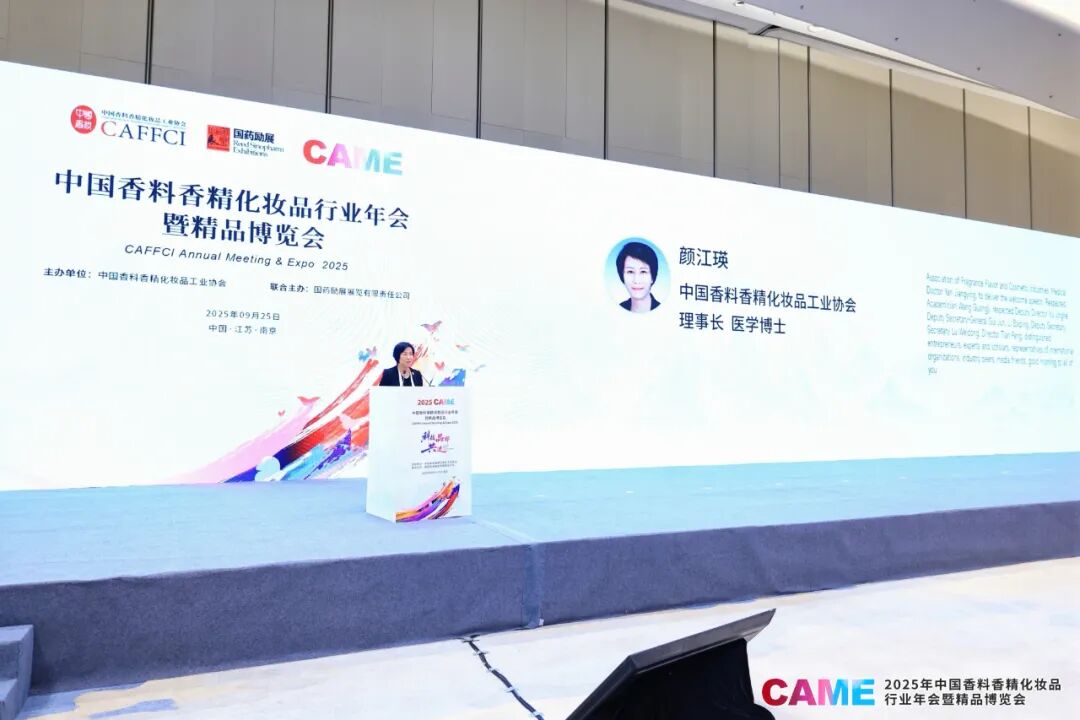
现场直击香妆产业“超级会展”: 品牌比拼科技,药企跨界美妆
Di Yi Cai Jing· 2025-09-27 09:25
Core Insights - The Chinese fragrance and cosmetics industry is entering a golden era, characterized by high-quality development and the necessity for collaboration to address global challenges and opportunities [1][8]. Industry Trends - The 2025CAME conference focused on "Technology, Brand, and Collaboration," showcasing cutting-edge technology projects from various companies, highlighting the trend of technology empowering fragrance and cosmetics brands [3][4]. - Major companies like Shanghai Jahwa and Shiseido presented innovative technologies, such as non-invasive skin glycation level analysis and advanced skin analysis techniques, indicating a shift towards scientific validation in product development [3][4]. Regulatory Environment - The regulatory landscape for the cosmetics industry in China is becoming increasingly stringent, with the implementation of comprehensive regulations aimed at promoting standardization and scientific development [8]. - New industry standards are being established, requiring companies to validate product efficacy scientifically, which is pushing the industry towards a more research-driven approach [8]. Consumer Demand - There is a notable shift in consumer demand towards products that emphasize safety, efficacy, and scientific backing, moving beyond basic cosmetic functions [8][9]. - Consumers are increasingly favoring products with medical endorsements and high technological content, driving the industry to align more closely with pharmaceutical and medical device sectors [9]. Cross-Industry Collaboration - Pharmaceutical companies are entering the cosmetics space, leveraging their established research and quality control systems to innovate in the beauty sector [9][10]. - While pharmaceutical firms have advantages in R&D and safety validation, they face challenges in brand establishment and market competition due to the saturated nature of the cosmetics industry [10].

云南白药:以全产业链布局向价值驱动转型的中药企业典型样本
2 1 Shi Ji Jing Ji Bao Dao· 2025-09-26 12:18
Core Insights - The Chinese medicine industry is undergoing a significant transformation, with the centralized procurement of traditional Chinese medicine (TCM) products acting as a catalyst for change, prompting major companies to integrate their supply chains to adapt to market pressures and regulatory shifts [1][2] Group 1: Industry Trends - The centralized procurement led by Hubei allows for a 60% price component and 40% based on technical factors, emphasizing the importance of quality and innovation in TCM [2] - The State Council's 2025 report highlights the need for high-quality development in the TCM sector, indicating a shift from resource-driven competition to quality-driven value [2][12] - The TCM industry has experienced a volatile price environment, with the index rising from over 2000 points in 2019 to a peak of 3600 points, followed by a decline due to oversupply and market speculation [3] Group 2: Company Performance - Yunnan Baiyao reported a revenue of 21.257 billion yuan in the first half of 2025, a year-on-year increase of 3.92%, with net profit reaching 3.633 billion yuan, up 13.93% [4] - In 2024, Yunnan Baiyao achieved a revenue of 40.033 billion yuan, a 2.36% increase, and a net profit of 4.523 billion yuan, reflecting a 20.18% growth [4] Group 3: Supply Chain Integration - Yunnan Baiyao's strategy involves integrating the entire supply chain, from seed selection to processing, ensuring quality and stability in raw materials [5][6] - The company has developed a model that promotes collaboration with local farmers, allowing them to sell fresh herbs directly to Yunnan Baiyao, thus enhancing quality and income for farmers [10] Group 4: Digital Transformation - Yunnan Baiyao is leveraging digital platforms to enhance supply chain transparency and efficiency, enabling full-process collaboration and traceability in TCM production [8] - The company has introduced a data product for tracing Yunnan's unique TCM materials, promoting industry-wide data sharing and collaboration [8] Group 5: Future Outlook - Yunnan Baiyao aims to expand its market presence internationally, utilizing its geographical advantages and establishing a new international trading center for medicinal materials [11] - The company has initiated a 10 billion yuan industry fund to support the development of the TCM sector, indicating a commitment to long-term growth and innovation [11][12]

【招银研究|House View】政策有望“空中加油”,风险偏好仍有支撑——招商银行研究院HouseView(2025年四季度)
招商银行研究· 2025-09-26 11:04
Group 1: Economic Overview - The U.S. economy is showing strong growth driven by consumer spending, with a projected GDP growth rate of 3.3% for Q3, significantly higher than the previous half-year average [14][26] - However, employment figures are declining, with an average of only 27,000 new jobs added from May to August, leading to a rise in the unemployment rate to 4.3% [16][19] - The divergence between strong economic performance and weak employment is attributed to structural factors and the lag in hiring adjustments by companies [21][22] Group 2: Monetary Policy - The Federal Reserve has restarted its rate-cutting cycle, lowering the policy rate by 25 basis points to a range of 4.0-4.25% [16][26] - The dual monetary and fiscal easing is expected to support economic resilience, although inflationary pressures remain a concern [32][26] - The Fed's cautious approach to further rate cuts is influenced by the need to balance employment and inflation risks [32][26] Group 3: International Economic Context - The European Central Bank and the Bank of Japan have maintained their interest rates, with the ECB indicating no immediate need for further cuts [36][46] - The Eurozone is experiencing a mixed economic recovery, with manufacturing underperforming while services remain stable [36][37] - Japan's central bank is showing signs of potential policy normalization, with discussions around interest rate hikes becoming more prominent [46][47] Group 4: Asset Allocation Recommendations - The investment strategy suggests maintaining a balanced allocation in equities, particularly in sectors like technology and consumer goods, while being cautious of high valuations [49][50] - Fixed income investments are recommended to focus on short to medium-term bonds due to the uncertain long-term interest rate outlook [56][57] - Gold is expected to continue its bullish trend, supported by the Fed's rate cuts and ongoing central bank purchases [71][72] Group 5: Market Trends - The U.S. stock market is projected to continue its upward trend, driven by strong corporate earnings, particularly in the technology sector [49][50] - The bond market is expected to experience a steepening yield curve, with short-term rates declining while long-term rates remain under pressure [56][58] - Currency markets are anticipated to see the U.S. dollar maintain a range-bound trading pattern, influenced by the Fed's monetary policy and global economic conditions [62][63]

香港国际中医药大会启幕!
Zhong Guo Ji Jin Bao· 2025-09-25 14:44
Core Insights - The 2025 Hong Kong International Traditional Chinese Medicine Conference has commenced, focusing on promoting the high-quality global development of traditional Chinese medicine (TCM) [1] - The event gathered nearly 500 experts, scholars, and industry leaders from various regions, showcasing the practical value and development prospects of TCM through diverse activities [1][4] - The conference aims to explore new paths and opportunities for the internationalization of TCM, emphasizing collaboration among government, industry, academia, and research sectors [1] Group 1: Event Overview - The conference features a variety of activities, including rare herbal exhibitions, cultural experiences, product showcases, and lectures by renowned doctors, providing a platform for extensive communication [1][4] - The opening ceremony included a performance of "Ba Duan Jin" and Tai Chi, demonstrating the practicality of TCM in daily health management [4][6] Group 2: Key Speakers and Their Messages - Xu Zhengzhong, Chairman of the Zijing Cultural Group, highlighted TCM as a treasure of the Chinese nation, emphasizing its integration into Hong Kong's healthcare system and its role in the Greater Bay Area [8] - Liang Zhenying, Vice Chairman of the National Committee of the Chinese People's Political Consultative Conference, noted that Hong Kong's TCM sector has developed a complete and advanced system, integrating into the overall healthcare and wellness system [10] - Jia Zhongwu, Director of the Comprehensive Department of the National Administration of Traditional Chinese Medicine, stated that the Chinese government places high importance on the development of TCM, promoting its unique advantages in health initiatives [12] Group 3: Government Support and Future Directions - Chen Guoki, Secretary for Administration of the Hong Kong SAR Government, expressed the government's commitment to promoting high-quality TCM development, leveraging Hong Kong's unique advantages [15] - Wang Cuijun, General Manager of China Resources Group, emphasized the global collaboration needed for TCM's innovation and its role in building a healthy community [17] - The conference also launched the "High-Quality Development of the Traditional Chinese Medicine Industry Chain" initiative, aiming to foster collaborative development and cultural dissemination of TCM [21] Group 4: Conference Activities and Impact - The conference will last four days, featuring exhibitions, international summits, and community health services, showcasing TCM's cultural charm and development achievements [23] - The event aims to contribute to human health and well-being by promoting the innovative and open development of TCM [23]
香港重磅大会启幕!
Zhong Guo Ji Jin Bao· 2025-09-25 13:51
Core Points - The "2025 Hong Kong International Traditional Chinese Medicine Conference" commenced in Hong Kong, focusing on promoting the high-quality global development of traditional Chinese medicine (TCM) [2][23] - The event gathered nearly 500 experts, scholars, and industry leaders from various regions, including over 130 exhibiting organizations, showcasing the practical value and development prospects of TCM [2][23] - The conference featured diverse activities such as rare herbal exhibitions, cultural experiences, product showcases, and lectures by renowned doctors, facilitating discussions on the internationalization of TCM [2][23] Group 1: Event Overview - The conference opened with a half-hour performance of "Ba Duan Jin" and Tai Chi, integrating traditional practices into modern urban life, which received enthusiastic responses from attendees [2][3] - Key figures in attendance included national and local government officials, industry leaders, and TCM experts, highlighting the significance of the event [4][6][9] Group 2: Government and Industry Support - The chairman of the organizing group emphasized TCM as a treasure of the Chinese nation, supported by the Hong Kong government through initiatives like establishing TCM hospitals and research centers [6][14] - The Hong Kong government is committed to promoting high-quality TCM development, leveraging its unique advantages in cultural resources and international medical systems [14][16] Group 3: Collaborative Initiatives - A "High-Quality Development of the Chinese Medicine Industry Chain and Cultural Co-Link Initiative" was launched, with representatives from major companies signing to promote collaborative development and cultural dissemination of TCM [21] - The conference aims to serve as a platform for global cooperation in TCM, enhancing product development, talent exchange, and market expansion [19][21] Group 4: Future Activities - The conference will last four days, featuring exhibitions, international summits, and community health services, showcasing TCM's cultural charm and development achievements [23]

香港重磅大会启幕!
中国基金报· 2025-09-25 13:45
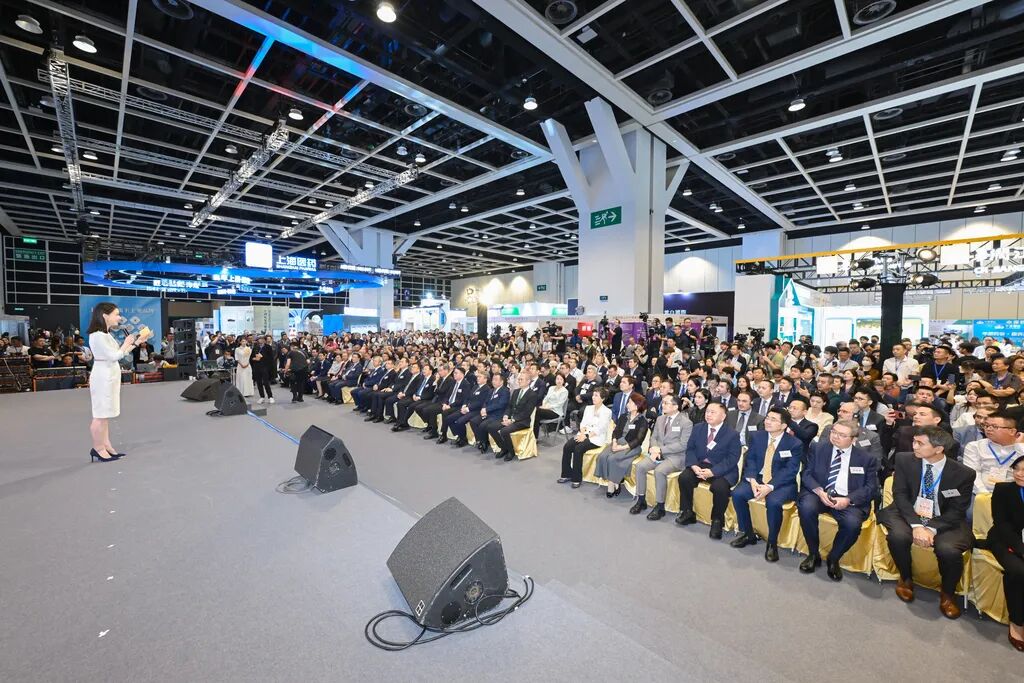
【导读】 2025香港国际中医药大会在港启幕,以全球智慧共谋中医药高质量走向世 中国基金报记者 郭玟君 9月25日,由紫荆文化集团主办、紫荆杂志社承办的"2025香港国际中医药大会"在香港会议 展览中心盛大启幕。本次大会以"推动中医药高质量走向世界"为主题,汇聚来自中国内地及 港澳台地区、东南亚等"一带一路"沿线国家和地区的近500位专家学者、行业领袖及企业代 表,包括20余位院士、国医大师、岐黄学者,以及超过130家参展机构。大会通过稀有中药 材展览、中医药文化体验、中医药产品展销、名医讲座等多元形式,展现中医药的实用价值 与发展前景,吸引"政、产、学、研"各界代表参与,共商中医药国际化发展的新路径与新机 遇。 大会开幕式现场 大会以近半小时的港式"八段锦"暨太极养生六式功法、坐式养生功法作为开场。表演者将八 段锦、太极融入现代都市生活场景,为繁忙的"上班族"提供了简易的健身方式,现场观众反 应热烈,并纷纷跟学模仿,展现了中医文化在日常健康管理中的实用性。会场同步开设诸多 名企展区,展出多种珍贵中药材,配以图文解说,帮助参观者深入了解药材特性与临床应 用,为大家提供了广阔的交流平台。 全国政协副主席梁振英, ...
达仁堂、雷允上等中药老字号“集体承压”!天津中成药降价划 “红黄线”,“优质优价”还能否延续
Hua Xia Shi Bao· 2025-09-25 07:59
Core Insights - The Tianjin Municipal Medical Procurement Center has initiated a price risk management program targeting 104 traditional Chinese medicine products, highlighting the increasing pressure on pricing in the industry [2][6] - A strict pricing control system has been established, categorizing products into yellow and red labels based on their price relative to the lowest price of similar products, which could lead to suspension from the market if prices remain excessively high [2][6] - The traditional Chinese medicine market is undergoing significant changes as nearly 20 provinces have joined the price governance movement, indicating a nationwide trend towards price adjustments [2][6] Pricing Control Measures - The new pricing control measures classify products with prices exceeding three times the lowest price as yellow label, and those exceeding five times as red label, with a direct suspension for prices above ten times [2][6] - The focus of this governance is on the commonly used Da Huo Luo Wan, which has seen drastic price variations, with some brands priced as high as 200 yuan per box compared to around 40 yuan for others [2][3] Market Dynamics - Major traditional brands like Tong Ren Tang and Da Ren Tang have been able to maintain higher prices due to their use of premium raw materials, but they are now facing increased scrutiny and pressure to lower prices [3][4] - The market share of these brands is concentrated in regions outside Tianjin, with significant sales in provinces like Jiangsu and Hebei, indicating a potential vulnerability to price governance measures [4][6] Financial Performance - The financial performance of traditional Chinese medicine companies has been under pressure, with 36 companies reporting declines in profits in the first half of 2025, and notable drops in net profits for companies like Huasheng Technology and Weikang Pharmaceutical [7][8] - Tong Ren Tang reported a slight increase in revenue but a decrease in net profit, while Da Ren Tang's profit growth was largely due to one-time gains from asset sales [7][8] Industry Challenges - The complexity of traditional Chinese medicine, with its varied ingredients and production processes, complicates pricing governance, as it cannot be easily evaluated like chemical drugs [5][6] - There are concerns that strict price controls may lead to a decline in quality, as companies may be forced to cut costs to comply with pricing regulations [5][6] Future Directions - Experts suggest that establishing a pricing evaluation system that considers raw material costs, production complexity, and clinical value is essential for balancing price governance and maintaining quality [9][10] - The case of Da Huo Luo Wan illustrates the need for a value-based pricing system rather than simple price cuts, aiming to benefit patients while ensuring the sustainability of quality products [10]



当守正遇上创新:“既要又要”的国药企业如何破局?
Mei Ri Jing Ji Xin Wen· 2025-09-24 13:13
Core Insights - The Chinese traditional medicine industry is experiencing significant growth driven by favorable policies and increasing market demand, with the market size expected to reach 1.05 trillion yuan in 2024, a year-on-year increase of 11.6% [1][3] - The industry is facing two major opportunities: policy dividends and market explosion, with a focus on balancing tradition and innovation [3][21] Policy and Market Dynamics - The government has introduced several policies to support the development of the traditional Chinese medicine industry, including the "Opinions on Improving the Quality of Traditional Chinese Medicine" and the "Implementation Plan for the Digital Transformation of the Pharmaceutical Industry" [3][4] - The market demand for traditional Chinese medicine is increasing due to rising health awareness and spending among consumers, particularly in areas such as aging, sub-health management, and chronic disease treatment [3][17] Quality Control and Innovation - Leading companies are enhancing quality control across the entire supply chain, with examples like Tong Ren Tang establishing a traceability system for medicinal materials and Guangzhou Pharmaceutical Group utilizing blockchain technology [4][19] - Companies are focusing on product innovation and adapting traditional formulas to meet contemporary health needs, with a strong emphasis on maintaining quality through traditional methods [6][10] Digital Transformation and E-commerce - The integration of digital technologies is crucial for the pharmaceutical industry, with companies like JD Health playing a significant role in transforming traditional medicine through e-commerce and data analytics [13][14] - The shift towards online platforms is helping traditional medicine brands reach younger consumers and adapt to changing market dynamics [10][13] Global Expansion and Future Directions - The internationalization of traditional Chinese medicine is becoming a key growth area, with products being registered in numerous countries and regions, reflecting a growing global acceptance [15][19] - Companies are focusing on three main strategic directions: deepening research and development, expanding into the "Chinese medicine +" health ecosystem, and accelerating digital integration [15][21]

一买就套,一卖就飞,云南白药把自己活成了散户?
Hu Xiu· 2025-09-24 09:31
Core Viewpoint - Yunnan Baiyao, once a highly profitable company earning over 2 billion annually, has faced significant challenges leading to its decline in the stock market and subsequent exit from trading, raising questions about the underlying reasons for its performance issues [1] Group 1 - Yunnan Baiyao was celebrated for its extraordinary profits, achieving over 2 billion in earnings in a single year, which contributed to its reputation as a remarkable investment opportunity in the A-share market [1] - The company has experienced a drastic shift from being a "stock god" to becoming a "韭菜" (a term used to describe retail investors who suffer losses), indicating a severe downturn in its market performance [1] - Following its withdrawal from the stock market, Yunnan Baiyao has encountered new challenges within its core business operations, suggesting a deeper issue beyond just stock market performance [1]
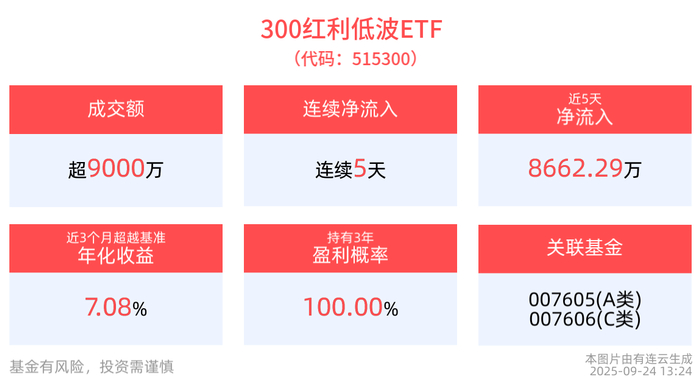
9月市场进入震荡调整窗口期,300红利低波ETF(515300)连续5天净流入
Xin Lang Cai Jing· 2025-09-24 05:48
Core Viewpoint - The market is currently experiencing short-term fluctuations, but the medium-term upward trend is likely to remain intact, with low-cycle dividend stocks showing potential for sustained attention due to their profitability elasticity and supply clearing in the context of policy changes against "involution" [3][4]. Group 1: Market Performance - As of September 24, 2025, the CSI 300 Dividend Low Volatility Index decreased by 0.16%, with mixed performance among constituent stocks [1]. - The CSI 300 Dividend Low Volatility ETF (515300) has seen a cumulative increase of 12.49% over the past year as of September 23, 2025 [1]. Group 2: Liquidity and Fund Flows - The CSI 300 Dividend Low Volatility ETF recorded an intraday turnover of 2.06%, with a transaction volume of 94.14 million yuan [3]. - Over the past five days, the ETF has experienced continuous net inflows, with a maximum single-day net inflow of 31.97 million yuan, totaling 86.62 million yuan [3]. Group 3: Fund Performance and Returns - The latest scale of the CSI 300 Dividend Low Volatility ETF reached 4.57 billion yuan, with a five-year net value increase of 54.34%, ranking in the top 9.90% among index equity funds [3]. - Since its inception, the ETF has achieved a maximum monthly return of 13.89%, with the longest consecutive monthly increase lasting five months and an average monthly return of 3.57% [3]. Group 4: Sector Insights - High dividend sectors are becoming a primary safe haven for short-term funds, benefiting from the reinforced policy direction against "involution" [4]. - The top ten weighted stocks in the CSI 300 Dividend Low Volatility Index account for 35.14% of the index, including major companies like China Shenhua, Gree Electric, and Sinopec [4][6].