
珀莱雅

Search documents
东北兄弟卖美妆,6个月收入10亿,冲刺国货高端护肤第一股
2 1 Shi Ji Jing Ji Bao Dao· 2025-12-06 12:18
Core Viewpoint - Lin Qingxuan, a domestic beauty brand, has resubmitted its IPO application to the Hong Kong Stock Exchange, highlighting significant revenue growth and a rebranding to position itself as a high-end skincare brand in China [1][2]. Group 1: Company Performance - In the first half of 2025, Lin Qingxuan reported total revenue of 1.05 billion RMB, representing a remarkable year-on-year growth of 98% compared to the first half of 2024 [1]. - The company's gross margin reached 82.4% in the first half of 2025, up from 81.9% in the same period of 2024, indicating strong pricing power and operational efficiency [3]. - The revenue contribution from the essence oil product line accounted for 45.5% of total revenue in the first half of 2025, showing a consistent upward trend in its importance to overall sales [2]. Group 2: Market Positioning - Lin Qingxuan emphasizes its high-end positioning, ranking first among domestic high-end skincare brands in China by retail sales in 2024, and is the only domestic brand among the top 15 high-end skincare brands [2]. - The high-end skincare market in China is relatively concentrated, with the top 15 brands holding 66.1% of the market share, indicating a competitive landscape [2]. Group 3: Marketing and Sales Strategy - The company has significantly increased its sales and distribution expenses, which rose by 100.2% to 580.6 million RMB in the first half of 2025, driven by enhanced online and offline marketing activities [4]. - Lin Qingxuan's marketing strategy has been questioned for being "heavy on marketing and light on R&D," but industry experts suggest that marketing and brand strength are crucial competitive factors in the cosmetics industry [3]. Group 4: Investment and Shareholding - The founder, Sun Laichun, holds 38.21% of the shares directly and approximately 79.27% in total, indicating strong founder control [5]. - Notable external investors include Yagao Fashion, Country Garden Venture Capital, and others, with Yagao holding 4.49% of the shares [5]. - Recent share acquisitions before the IPO have led to an estimated pre-IPO valuation of approximately 3.846 billion RMB for Lin Qingxuan [6]. Group 5: Industry Trends - The trend of domestic beauty brands pursuing IPOs in Hong Kong has intensified, with Lin Qingxuan following other brands like Natural Hall and Proya, reflecting a strategic move to access capital markets for growth [7]. - The domestic cosmetics market is expected to see increased demand for plant-based essential oils, indicating a potential growth area in the coming years [8].
东北兄弟卖美妆,6个月收入10亿,冲刺国货高端护肤第一股
21世纪经济报道· 2025-12-06 10:24
Core Viewpoint - Lin Qingxuan, a domestic beauty brand, has resubmitted its IPO application to the Hong Kong Stock Exchange, highlighting a significant revenue growth of 98% year-on-year for the first half of 2025, reaching 1.05 billion yuan [1]. Company Overview - Founded in 2003 and headquartered in Shanghai, Lin Qingxuan focuses on high-end anti-aging skincare products, with core product prices ranging from 200 to 800 yuan [3]. - The company has rebranded itself from "Shanghai Lin Qingxuan Biotechnology Co., Ltd." to "Shanghai Lin Qingxuan Cosmetics Group Co., Ltd." to align with its positioning as a high-end domestic skincare brand [2]. Market Position and Performance - Lin Qingxuan ranks first among domestic high-end skincare brands in China by retail sales, and is the only domestic brand among the top 15 high-end skincare brands [3]. - The high-end skincare market in China is concentrated, with the top 15 brands holding 66.1% of the market share [3]. - The company's revenue from its essence oil product line accounted for 45.5% of total revenue in the first half of 2025, showing a rising trend from previous years [3]. Financial Metrics - Lin Qingxuan achieved a gross margin of 82.4% in the first half of 2025, up from 81.9% in the same period of 2024, indicating strong pricing power [4]. - Sales and distribution expenses increased significantly, from 290.1 million yuan in the first half of 2024 to 580.6 million yuan in the first half of 2025, primarily due to increased marketing activities [4]. Investment and Shareholding - The founder, Sun Laichun, holds 38.21% of the shares directly and approximately 79.27% in total, making him the largest shareholder [6]. - External investors include prominent names such as Yagao Fashion and Country Garden Venture Capital, with Yagao holding 4.49% of the shares [6]. Industry Trends - The trend of domestic beauty brands going public in Hong Kong is increasing, with Lin Qingxuan following other brands like Natural Hall and Proya in seeking capital for growth [9]. - The domestic beauty market is expected to see a shift towards plant-based essential oils, indicating a growing consumer demand in the coming years [10].


林清轩再度递表港交所,“国货高端护肤第一股”成色几何?
2 1 Shi Ji Jing Ji Bao Dao· 2025-12-06 09:16
Core Viewpoint - Lin Qingxuan, a domestic beauty brand, has resubmitted its IPO application to the Hong Kong Stock Exchange, highlighting significant revenue growth and a strategic rebranding to position itself as a high-end skincare brand in China [1][2]. Group 1: Financial Performance - In the first half of 2025, Lin Qingxuan reported total revenue of 1.05 billion yuan, representing a remarkable year-on-year growth of 98% compared to the first half of 2024 [1]. - The gross profit margin for Lin Qingxuan reached 82.4% in the first half of 2025, up from 81.9% in the same period of 2024, indicating strong pricing power and operational efficiency [2]. Group 2: Market Positioning - Lin Qingxuan emphasizes its high-end positioning, ranking first among domestic high-end skincare brands in China by retail sales in 2024, and is the only domestic brand among the top 15 high-end skincare brands [2]. - The brand's revenue is heavily reliant on its single product category, with essence oil contributing 45.5% of total revenue in the first half of 2025, up from 37% in 2024 [2]. Group 3: Marketing and Growth Strategy - The company has significantly increased its sales and distribution expenses, which rose by 100.2% to 580.6 million yuan in the first half of 2025, driven by enhanced online and offline marketing activities [4]. - Lin Qingxuan's growth is largely attributed to its brand reputation and market recognition, with a focus on marketing and brand strength rather than heavy R&D investment [3][4]. Group 4: Shareholder Structure and Investments - The founder, Sun Laichun, holds 38.21% of the shares directly and approximately 79.27% in total, while external investors include notable entities like Yagao Fashion and Country Garden Venture Capital [5][6]. - The estimated valuation of Lin Qingxuan before the IPO is around 3.846 billion yuan, with significant investments from entities including L'Oréal through a joint fund [7]. Group 5: Industry Trends - The trend of domestic beauty brands pursuing IPOs in Hong Kong is increasing, with Lin Qingxuan joining other brands like Natural Hall and Proya in seeking capital to enhance competitiveness and global presence [8]. - The domestic market for plant essential oils is expected to grow, with increasing consumer demand anticipated in the coming years [9].
老牌上游企业30年转身,如何在美谷里孵化未来工厂?
FBeauty未来迹· 2025-12-06 08:03
Core Viewpoint - The article discusses the establishment of Shangcheng (Shanghai) Enterprise Development Co., Ltd., which aims to create a "smart manufacturing ecosystem" for daily chemical products, aligning with the theme of the 2025 Oriental Beauty Valley International Cosmetics Conference, "Moving Towards New, Beauty Coexists" [2][6][20]. Company Overview - Shangcheng was founded in 2024, with Shanghai Chengxing Machinery Electronics Co., Ltd. holding 60% and Guangzhou Tashan Zhiyu Industrial Holdings Co., Ltd. holding 40% [6]. - The company focuses on four core areas: research and development of daily chemical equipment, cosmetics production and sales, brand operation management, and software services, aiming to create an integrated ecosystem [6][11]. Industry Context - The 2025 Oriental Beauty Valley International Cosmetics Conference highlighted the importance of industry collaboration for high-quality development in the cosmetics sector [6]. - The establishment of Shangcheng reflects a response to unmet needs in the industry, particularly in addressing the challenges brands face when considering self-built factories [4][11]. Business Model - Shangcheng's business model is centered on building a "smart manufacturing ecosystem" that provides comprehensive solutions, including brand incubation, production, team training, warehousing, logistics, and information support [11][12]. - The company offers three differentiated service models: 1. "Shared Production Base" allows brands to operate in Shangcheng's facilities before investing in their own factories [11]. 2. "Capacity Elastic Support" provides temporary production resources to brands facing short-term order peaks [12]. 3. Comprehensive support services reduce coordination costs for clients [12]. Project Development - The "Smart Manufacturing Base for Daily Chemical Equipment" project was launched in November 2025, with a total investment of 240 million yuan and covering an area of 35 acres [12][14]. - The base will include five core areas: smart manufacturing center, R&D innovation platform, information service platform, brand operation and marketing center, and talent training center [14]. Growth Expectations - Shangcheng anticipates an average annual growth rate of around 15% over the next three years, leveraging the existing customer base and reputation of its parent company, Chengxing [19]. - The company aims to convert traditional equipment clients into users of its comprehensive service ecosystem while expanding into new OEM and brand operation businesses [19]. Challenges and Market Dynamics - The company faces significant competition in the market, with a need for differentiation due to the high level of service homogeneity and oversupply [19]. - The success of Shangcheng's ecosystem model will depend on its ability to integrate into the broader regional industrial ecosystem and collaborate with various stakeholders in the Oriental Beauty Valley [20].
欧莱雅中国研发和创新中心扬帆20年:本土实验室正孵化产业公共属性的迭代引擎
Cai Jing Wang· 2025-12-05 13:37
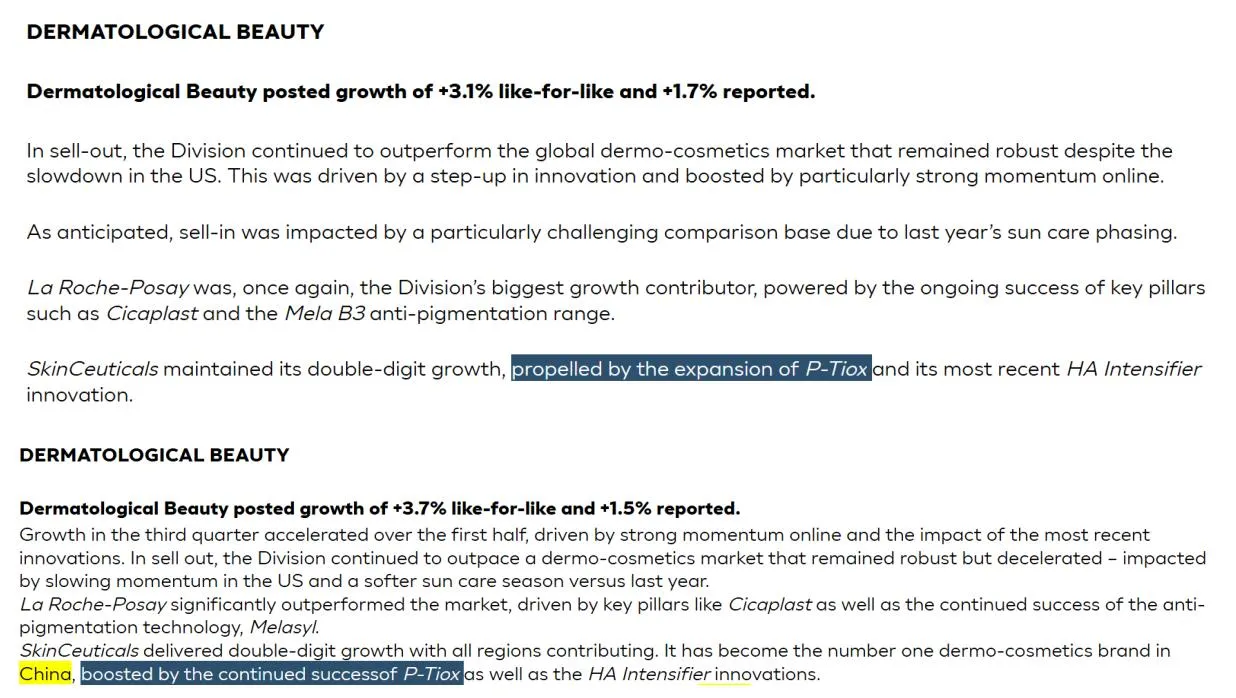
Core Insights - L'Oréal's China R&D and Innovation Center is driving global beauty giant's performance through localized product innovations tailored for Chinese consumers [1][2] - The center has evolved into a key pillar in L'Oréal's global R&D landscape, emphasizing collaboration with local scientific institutions and startups to enhance innovation capabilities [4][5] Group 1: Product Innovations - Customized products such as a jasmine-scented cream and a lip gloss inspired by local culinary flavors are examples of L'Oréal's localized approach [1] - The "P-TIOX" peptide serum, developed by the Chinese R&D team, has been highlighted as a major contributor to sustained double-digit growth for the brand [2] Group 2: R&D Achievements - Over the past 20 years, L'Oréal's China R&D has conducted approximately 35 large-scale foundational research projects, involving over 100,000 Chinese consumers annually [7] - In 2024, the center is set to publicly file 372 patents, with 81 of those being inventions from the Chinese R&D team [7] Group 3: Collaborations and Investments - L'Oréal has engaged in strategic investments in local biotech firms, such as "Unnamed Light," to co-develop innovative bioactive ingredients and promote sustainable production methods [10][11] - The establishment of the "Academician Workstation" in collaboration with Shanghai Jiao Tong University marks a significant milestone in L'Oréal's commitment to local scientific advancement [9] Group 4: Market Strategy - L'Oréal's investment strategy includes backing emerging local brands like LANlan, which aligns with the company's long-term vision of investing in the future of the Chinese market [15][16] - The company aims to leverage its R&D capabilities to support the commercialization of innovative products and enhance the overall beauty ecosystem in China [12][16]

“中国PDRN护肤第一品牌”绽媄娅,正在决定潮水的方向
FBeauty未来迹· 2025-12-05 06:09
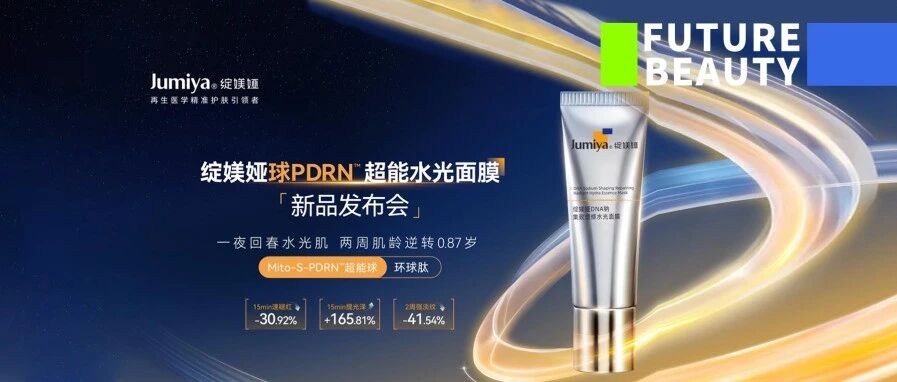
Core Viewpoint - The PDRN skincare market is experiencing rapid growth, prompting the industry to consider its future direction and potential applications more thoughtfully [2][4][28]. Group 1: Market Position and Growth - Zhanmiya has been recognized as the leading brand in China's PDRN skincare market, receiving certification from Frost & Sullivan for having the highest sales in this segment [6][7]. - The market for PDRN products is projected to reach $289 million by 2025, with a significant increase in the number of registered PDRN products from over 1,700 in 2022 to 17,000 in the first half of this year [28][30]. - Zhanmiya's products have shown strong performance in both online and offline channels, achieving high order and repurchase rates, particularly during major sales events like Double Eleven [7][8]. Group 2: Product Innovation and Technology - Zhanmiya has developed proprietary technologies such as "球PDRN™" to enhance the transdermal absorption of PDRN, addressing previous technical challenges in the application of this ingredient [8][12]. - The newly launched 球PDRN™超能水光面膜 incorporates patented components that target mitochondrial repair and collagen synthesis, demonstrating significant efficacy in improving skin hydration and reducing signs of aging [17][19]. - The product's performance metrics include a 197.62% increase in ATP production efficiency and a 31.35% increase in type I collagen expression, showcasing its advanced formulation [17][19]. Group 3: Industry Standards and Compliance - The lack of standardized regulations in the PDRN skincare sector has raised concerns about product efficacy and safety, highlighting the need for clear guidelines [30][34]. - Zhanmiya and its parent company, Baihong Group, are actively involved in establishing industry standards, including the recently released guidelines for PDRN raw material testing [31][33]. - The establishment of these standards aims to ensure high-quality applications of PDRN, providing a framework for brands to measure effectiveness and maintain compliance, thus fostering a healthier market environment [34][35].
美妆行业周度市场观察-20251205
Ai Rui Zi Xun· 2025-12-05 05:36
Investment Rating - The report does not explicitly provide an investment rating for the beauty industry Core Insights - The beauty retail industry is experiencing a dichotomy of price increases and decreases, influenced by cost pressures from tariffs and varying consumer preferences for high-end and value products [4] - Anti-aging skincare is projected to grow to a market size of 85 billion yuan by 2025, with an 11% year-on-year increase, driven by scientific advancements and consumer demand for long-term efficacy [4] - The color cosmetics segment is becoming a key driver for attracting younger consumers, with a focus on experiential marketing and social engagement [6] Industry Environment - The beauty retail sector is facing contrasting pricing strategies, with brands like Elf Beauty opting for transparent price increases while others like BeautyStat are lowering prices to boost sales. Brands are also focusing on product line optimization and e-commerce partnerships to reach price-sensitive consumers [4] - The anti-aging skincare market is shifting towards systematic scientific management, with international brands focusing on cellular repair and longevity science, while domestic brands are leveraging precision intervention and synthetic biology [4] - Color cosmetics account for 21.3% of the Chinese cosmetics market and are crucial for attracting young consumers, with a significant presence in top shopping malls, particularly in East China [6] Top Brand News - During the Double 11 shopping festival, domestic brands like Pechoin and TILOWE outperformed international brands, indicating a shift in market dynamics towards local products [6][7] - Li Jiaqi's live streaming sessions have become a significant trendsetter in the beauty category, with high-efficacy products gaining popularity among consumers [8] - Marubi Biological's revenue grew by 25.51% year-on-year during the Double 11 period, attributed to its focus on R&D and a successful single-product strategy [11]


开源晨会-20251204
KAIYUAN SECURITIES· 2025-12-04 14:43
Group 1: Fixed Income Market Insights - The report suggests that December 2025 bond yields are likely to rise, as historical patterns indicate that December yields typically decline only during a bond bull market or after significant increases in November yields, neither of which applies to 2025 [3][10][12] - The analysis indicates that the bond market in 2025 is not in a bull phase, and the yield curve has steepened, contradicting the conditions for a typical December yield decline [9][11] - Historical years with similar yield patterns to 2025, such as 2006 and 2009, experienced rising yields in December, reinforcing the expectation for December 2025 [13] Group 2: Fund Management and Asset Allocation - In November 2025, a total of 131 fund advisory products adjusted their allocations, with significant increases in coal, electric equipment, and basic chemicals sectors, while reducing exposure to pharmaceuticals, electronics, and non-ferrous metals [17] - The performance of various fund types in November showed that pure bond and multi-asset advisory products performed relatively well, while equity assets underperformed [15][16] - The report highlights that the overall absolute return averages for different fund types in November were: pure bond (0.1%), multi-asset (-0.2%), and equity (-1.8%) [15] Group 3: Beauty and Aesthetic Medicine Industry - The aesthetic medicine sector saw notable stock performance in November, with *ST Suwu leading at +25.3%, followed by Langzi and Huadong Pharmaceutical [28] - The beauty sector also performed well, with Kedi and Jiaheng Home Care showing significant gains of +18.9% and +13.0%, respectively [28] - The report discusses the strategic acquisition of 100% of Siyanli by Meili Tianyuan, which consolidates three leading brands in the beauty service industry, enhancing competitive positioning [31][33] Group 4: E-commerce and Consumer Trends - The Double Eleven shopping festival in 2025 generated a total e-commerce sales of 16,950 billion yuan, marking a 14.2% increase from 2024, with beauty products achieving a GMV of 1,325 billion yuan [32] - The report notes that domestic brands like Proya and Han Shu dominated sales during the festival, indicating a strong market presence for local products [32] - Consumer trends show a shift towards high-value and efficacy-driven beauty products, with premium segments experiencing notable growth [32]
商贸零售行业点评报告:医美化妆品11月月报:美丽田园收购思妍丽100%股权,双十一大促落幕美妆表现亮眼-20251203
KAIYUAN SECURITIES· 2025-12-03 14:45
Investment Rating - The investment rating for the industry is "Positive" (maintained) [1] Core Insights - The report highlights the acquisition of 100% equity of Siyuanli by Meili Tianyuan for 1.25 billion RMB, which consolidates the top three brands in the Chinese beauty service industry, enhancing market share and competitive positioning [8][37] - The Double Eleven shopping festival saw a total e-commerce sales of 1.695 trillion RMB, a 14.2% increase from 2024, with beauty products generating 132.5 billion RMB in sales [9][41] - The report emphasizes the trend of "emotional consumption" driving growth in high-quality companies within the medical beauty and cosmetics sectors [10][66] Summary by Sections Medical Beauty - Meili Tianyuan's acquisition of Siyuanli aims to create a "triple strong alliance" in the high-end beauty market, with a projected market share increase in 20 major cities [8][37] - The report recommends focusing on upstream medical beauty product manufacturers and expanding chain medical beauty institutions, highlighting companies like Aimeike and Kedi-B as key investment targets [10][66] Cosmetics - The Double Eleven sales performance was strong, with beauty products leading the way, particularly domestic brands like Proya and Han Shu, which dominated sales across multiple platforms [9][41][48] - The report identifies a shift towards high-priced and multifunctional skincare products, with a significant increase in sales for premium beauty items during the festival [57][66] Investment Recommendations - The report suggests investing in companies that cater to emotional value and innovative safe ingredients, particularly domestic brands like Proya, Shangmei, and Marumi, which are expected to continue their growth trajectory [10][66] - It also highlights the importance of integrating AI technology into e-commerce platforms to enhance consumer experience and operational efficiency [62][66]
开源晨会-20251203
KAIYUAN SECURITIES· 2025-12-03 14:44
Group 1: Wind Power Industry - The domestic wind power demand is stable, driven by the "dual carbon" goals and the 2035 plan for 360 GW of installed capacity, with a projected addition of 86.99 GW in 2024 and a total of 272.1 GW from 2021 to 2024, significantly higher than the 145.5 GW added during the 13th Five-Year Plan period [7][8][9] - The "15th Five-Year Plan" aims for annual new installed capacity of no less than 120 GW, with offshore wind power expected to contribute at least 15 GW annually, indicating a robust growth trajectory for the wind power sector [7][8] - The industry is recovering from price wars, with a 9% increase in the average bid price for onshore wind projects in 2025 compared to 2024, suggesting improved profitability for wind turbine manufacturers [9] Group 2: Retail Industry - The retail sector is slowly recovering in 2025, with segments like high-end gold and fashion jewelry experiencing higher demand due to rising gold prices, while cosmetics and medical aesthetics face intense competition [13][15] - "Emotional consumption" is identified as a key driver of market dynamics, with a focus on brands that can leverage consumer insights and differentiate their products [13][15] - Investment strategies should prioritize high-quality segments with both short-term recovery potential and long-term growth prospects, emphasizing companies with competitive advantages and brand strength [13][15] Group 3: Coal Mining Industry - Yongtai Energy's Hai Zetan coal mine project is progressing ahead of schedule, with plans to repurchase shares worth 300-500 million yuan for cancellation, signaling confidence in long-term growth [20][21][22] - The Hai Zetan project has significant resource advantages, with reserves of 1.145 billion tons and a planned production capacity of 6 million tons per year, expected to reach 10 million tons annually upon completion [21][22] - The company maintains profit forecasts for 2025-2027, projecting net profits of 580 million, 1.05 billion, and 1.47 billion yuan, respectively, with a corresponding EPS of 0.03, 0.05, and 0.07 yuan [20][21] Group 4: Chemical Industry - Wankai New Materials is advancing its rPET and oxalic acid projects, which are expected to drive diversified growth, maintaining a "buy" rating [5][23] - The rPET project, in collaboration with Carbios, aims for an initial capacity of 50,000 tons, with a total investment of approximately 922 million yuan, showcasing strong partnership commitment [23][24] - The oxalic acid project, utilizing low-cost natural gas, aims to establish a production capacity of 100,000 tons, enhancing the company's competitive edge in the market [24]
