
妆养合一

Search documents
知行数据观察:粉底液/膏品类
知行战略咨询· 2026-03-15 06:22
Investment Rating - The report indicates a strong growth potential in the foundation makeup industry, with a compound annual growth rate (CAGR) of over 15% from 2022 to 2026, suggesting a positive investment outlook [9][10]. Core Insights - The Chinese foundation market is projected to grow from 73.2 billion yuan in 2022 to 121.6 billion yuan by 2026, with a total increase of 48.4 billion yuan over four years [9][10]. - The shift from basic coverage to functional and high-end skincare products is identified as a core growth driver, with sunscreen and complexion-enhancing products showing significant growth rates of 34% and 29% respectively [11][12]. - Consumer preferences are evolving towards natural and lightweight makeup, with 70% of users favoring a natural look, indicating a demand for products that combine skincare benefits with makeup [14]. Market Overview - The foundation makeup category is defined as products that provide coverage and enhance skin appearance, including liquid foundations and cream foundations, each serving different consumer needs [7][8]. - The report highlights a saturation in basic foundation functions, with traditional benefits like color correction experiencing negative growth, while multifunctional products are gaining traction [11][12]. Consumer Behavior - Key consumer demands include lightweight and long-lasting formulations, with 63% prioritizing breathability and 59% focusing on long-lasting wear [15]. - Major pain points for consumers include issues like caking and quick fading, with 60% experiencing these problems, indicating a need for improved product performance [14][15]. Online Market Trends - The online foundation market is expected to grow significantly, with sales on platforms like Tmall and Douyin projected to increase from 10.16 billion yuan in 2023 to 14.94 billion yuan by 2025, reflecting a compound annual growth rate of approximately 21% [17][18]. - Douyin is emerging as a dominant platform, capturing a significant market share and driving growth through competitive pricing and high sales volume [19][25]. Brand Analysis - Estee Lauder leads the market with a 17.1% share on Tmall, while domestic brands are gaining ground on Douyin, indicating a shift in consumer preferences towards local products [23][24]. - The report identifies key brands like TILOWEI, which has seen explosive growth, particularly in the online space, highlighting the effectiveness of targeted marketing strategies and influencer partnerships [32][36]. Product Performance - The report notes that TILOWEI's core product matrix includes cushion foundations, liquid foundations, and setting powders, with a focus on maintaining a diverse product lineup to reduce reliance on single bestsellers [39][41]. - Price positioning is crucial, with the brand focusing on mid-range products priced between 100 to 300 yuan, which constitute over 60% of their sales [41].

4541.8亿美妆护肤全景扫描:从规模竞争到技术竞争
FBeauty未来迹· 2026-02-07 10:54
Core Viewpoint - The beauty and skincare industry is undergoing a transformation where consumers are redefining what is worth spending on, shifting from impulsive buying to more rational decision-making focused on efficacy and long-term value [3][4]. Market Overview - By 2025, the beauty and skincare market is projected to reach a sales volume of 454.18 billion yuan, with a year-on-year growth of 9.7%, driven by both volume and price increases [5]. - The market growth is characterized by structural price changes, with a notable increase in the average transaction price due to a rise in the share of functional and mid-to-high-end products [8]. Consumer Behavior - Consumers are increasingly focused on efficacy, experience, and certainty of value, leading to a multi-tiered market with diverse price segments and consumer needs [4][8]. - The low-price segment (0-300 yuan) accounts for 74.1% of the beauty market, while the skincare market sees 56.3% in the same range, with the sub-100 yuan segment experiencing the fastest growth at 20.6% year-on-year [8]. Brand Dynamics - Leading brands are shifting from scale expansion to product innovation, with high-end anti-aging products becoming a significant growth driver, resulting in increased market concentration and share [11][12]. - Mid-tier brands face pressure but can achieve growth through targeted strategies, such as focusing on specific consumer needs like sensitive skin repair or anti-aging for younger demographics [14]. Anti-Aging Market Insights - The anti-aging market is entering a new phase driven by precise technology and widespread demand, with sales expected to reach 129.83 billion yuan in 2025, reflecting a year-on-year growth of 26.3% [15][17]. - Facial anti-aging products dominate the market, with facial care sets and serums leading in sales, emphasizing the importance of ingredient efficacy [19]. Product Trends - The demand for anti-aging products is increasingly focused on core functions such as hydration, wrinkle reduction, and skin repair, indicating a blend of basic skincare and anti-aging needs [24]. - New product innovations in the anti-aging segment are centered around collagen enhancement and multi-functional benefits, with brands like L'Oréal and Estée Lauder leading the way [28][29]. Makeup Market Trends - The makeup market is seeing a shift towards natural beauty and health-focused aesthetics, with sales growth of 15.8% year-on-year, reflecting changing consumer preferences [30]. - The demand for lightweight, hydrating makeup products is rising, with cushion foundations experiencing significant growth, indicating a balance between efficiency and effectiveness [35]. Marketing and Consumer Engagement - Social media platforms are becoming crucial for trend amplification, with discussions around natural beauty and individual expression reshaping consumer decision-making [43][44]. - The beauty and skincare industry is moving towards a competitive landscape focused on technology credibility, efficacy perception, and user understanding, indicating a shift from price-based competition to value-driven strategies [44].

美妆行业周度市场观察-20260204
Ai Rui Zi Xun· 2026-02-04 06:45
Investment Rating - The report does not explicitly provide an investment rating for the beauty industry Core Insights - The beauty industry is undergoing significant changes due to various factors including policy shifts, consumer preferences, and technological advancements Industry Trends - Hainan's "zero tariff, low tax rate, and simplified tax system" policy is expected to transform the region into a global beauty industry hub, allowing international brands to penetrate the market while enhancing the competitiveness of domestic brands [1] - The beauty sector is experiencing a shift from price competition to value competition, driven by the need for genuine product efficacy and core ingredient transparency [4] - The clean beauty segment is facing polarization, with some brands exiting the market while major players continue to invest, indicating a potential growth opportunity in this area [5] - The emergence of beauty robots is seen as a blue ocean market, with companies testing consumer acceptance in 2026 [5] - Multi-functional makeup products that combine skincare benefits are gaining popularity, reflecting a trend towards efficiency and convenience among consumers [6] - The men's skincare market is projected to grow significantly, with domestic brands gaining traction in a traditionally dominated space [8] - The beauty industry is transitioning to a "hardcore metrics" era, emphasizing scientific validation and emotional resonance in branding [8] - The withdrawal of foreign beauty brands from the Chinese market indicates a shift in competitive dynamics, with local brands rising and online costs increasing [9] - ESG (Environmental, Social, Governance) considerations are becoming crucial for brand differentiation and competitive advantage in the beauty sector [10] - The global beauty market is witnessing increased mergers and acquisitions, reshaping the competitive landscape [11] - The Chinese beauty market is expected to reach a transaction volume of over 1.1 trillion yuan, with domestic brands capturing a significant market share [12] Brand Dynamics - New domestic brands are successfully leveraging unique ingredients and precise marketing strategies to thrive in the competitive landscape [14] - The brand "C咖" has emerged as a leader in the oil skin care segment by focusing on scientific innovation and consumer needs [15] - The brand "半亩花田" is seeking to go public, reflecting the trend of marketing optimization and product upgrade in the domestic beauty industry [15] - The introduction of high-end fragrance cleaning products indicates a shift towards quality in the home cleaning market, targeting the upgrading consumer demand [16]

值得买消费产业研究院联合鲸鸿动能发布2025彩妆报告,以消费洞察驱动产业高质量发展
Zhong Guo Zhi Liang Xin Wen Wang· 2025-12-26 05:44
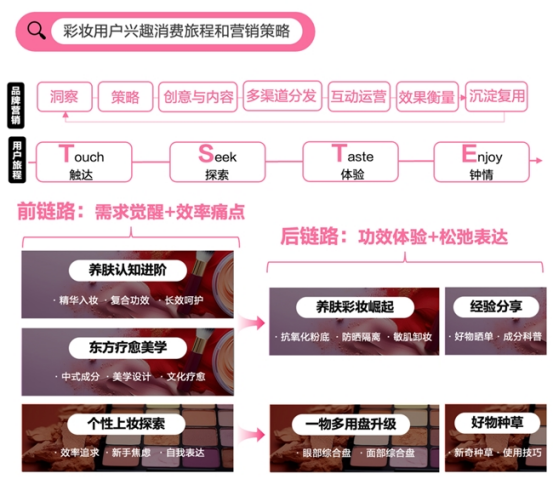
Core Insights - The report highlights the transformation of the Chinese cosmetics industry from "traffic dividends" to "mind dividends" [1] - It provides a comprehensive marketing solution for beauty brands through the "TSTE user scientific management theory" and "Whale Index" [1] Industry Trends - The cosmetics industry is undergoing a value reconstruction, with makeup evolving from a standardized beauty tool to a personalized self-expression and emotional carrier [3] - Consumers are shifting from passive following to active research, focusing on core value dimensions such as ingredients and experience rather than superficial factors like price and marketing [3] - Two major consumer trends have been identified: 1. Consumers are seeking products that offer both makeup and skincare benefits, aiming for long-lasting skin nourishment and improvement [3] 2. In a fast-paced lifestyle, consumers embrace the philosophy of "minimalism is the new sophistication," driving the demand for multifunctional products like face and eye palettes [3] Collaboration and Future Directions - The report marks the first outcome of the deep collaboration between Zhidingbuy Technology and Whale Energy, combining vast content and consumer data insights with a comprehensive analysis model [3] - The executive director of Zhidingbuy Consumer Industry Research Institute expressed intentions to further explore consumer insights and produce more trend reports to support high-quality and sustainable industry development [3] - Future collaborations will involve partnerships with universities, think tanks, and industry associations to generate valuable research outcomes for market reference and industry upgrades [3]

美妆行业周度市场观察-20251205
Ai Rui Zi Xun· 2025-12-05 05:36
Investment Rating - The report does not explicitly provide an investment rating for the beauty industry Core Insights - The beauty retail industry is experiencing a dichotomy of price increases and decreases, influenced by cost pressures from tariffs and varying consumer preferences for high-end and value products [4] - Anti-aging skincare is projected to grow to a market size of 85 billion yuan by 2025, with an 11% year-on-year increase, driven by scientific advancements and consumer demand for long-term efficacy [4] - The color cosmetics segment is becoming a key driver for attracting younger consumers, with a focus on experiential marketing and social engagement [6] Industry Environment - The beauty retail sector is facing contrasting pricing strategies, with brands like Elf Beauty opting for transparent price increases while others like BeautyStat are lowering prices to boost sales. Brands are also focusing on product line optimization and e-commerce partnerships to reach price-sensitive consumers [4] - The anti-aging skincare market is shifting towards systematic scientific management, with international brands focusing on cellular repair and longevity science, while domestic brands are leveraging precision intervention and synthetic biology [4] - Color cosmetics account for 21.3% of the Chinese cosmetics market and are crucial for attracting young consumers, with a significant presence in top shopping malls, particularly in East China [6] Top Brand News - During the Double 11 shopping festival, domestic brands like Pechoin and TILOWE outperformed international brands, indicating a shift in market dynamics towards local products [6][7] - Li Jiaqi's live streaming sessions have become a significant trendsetter in the beauty category, with high-efficacy products gaining popularity among consumers [8] - Marubi Biological's revenue grew by 25.51% year-on-year during the Double 11 period, attributed to its focus on R&D and a successful single-product strategy [11]

美妆“神仙打架”,争什么?内生养肤!|世研消费指数品牌榜Vol.87
Sou Hu Cai Jing· 2025-11-25 19:12
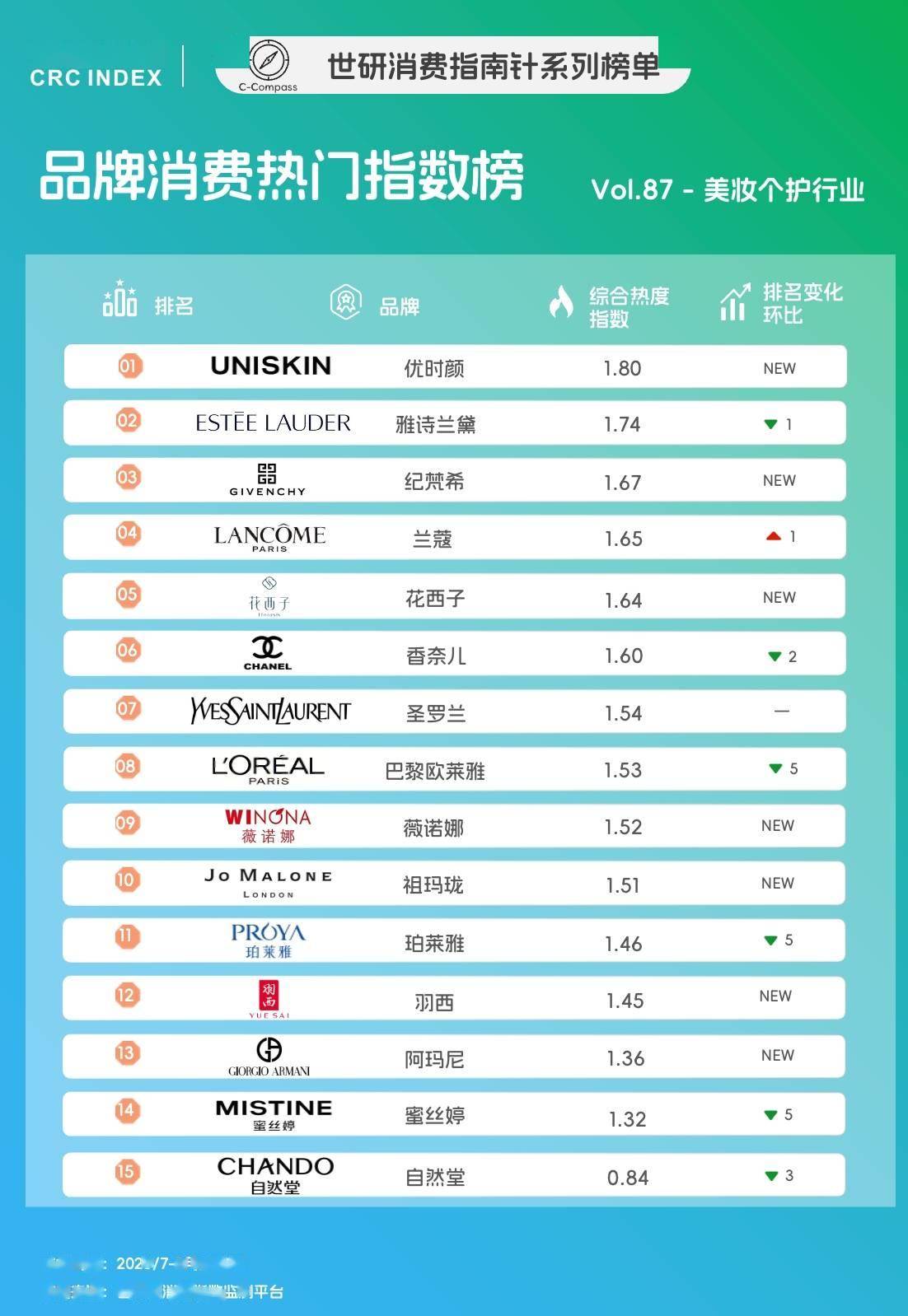
Core Insights - The beauty industry is witnessing a trend where international giants are intensifying their focus on technological anti-aging solutions, while local brands are deepening their commitment to Eastern skincare practices, leading to a shift in competition from traffic acquisition to a comprehensive battle of technological strength, cultural influence, and user engagement [1] Group 1: Brand Performance - The top three brands in the beauty and personal care sector based on comprehensive popularity scores are UNISKIN (1.80), ESTEE LAUDER (1.74), and GIVENCHY (1.67) [3][4] - UNISKIN has gained significant attention through its marketing strategies, including the announcement of a new series featuring a popular youth group, focusing on the core concept of "researching skin aging in Chinese individuals" [5] Group 2: Market Trends - The concept of "makeup and skincare integration" is becoming a key driver in the cosmetics industry, with consumers increasingly seeking long-term skincare benefits rather than just immediate cosmetic effects [5] - Local brands like Huaxizi and Yuxi are emphasizing the skincare functions of their makeup products, with Huaxizi launching a new skincare series based on original technologies [5] Group 3: International Brands' Strategies - Estee Lauder is focusing on "scientific anti-aging" and "local co-creation" strategies in the Chinese market, launching high-end products and immersive experience events to strengthen its market position [6] - Givenchy has appointed Zhao Liying as its first Chinese global makeup ambassador and is launching a new lipstick product that emphasizes self-expression, aiming to deepen emotional connections with consumers [6]
美妆行业公私域融合经营白皮书
Sou Hu Cai Jing· 2025-10-30 02:53
Core Insights - The beauty industry is transitioning from "traffic competition" to "full-domain operation," driven by refined consumer demand and diverse touchpoints [5][11] - The report highlights the integration of public and private domains in the beauty sector, emphasizing the importance of Tencent's ecosystem in facilitating this transition [5][11] Market Overview - The retail scale of China's cosmetics market is projected to reach 435.7 billion yuan in 2024, with online sales surpassing offline for the first time, accounting for over 51% [11][12] - The industry is experiencing a slowdown, with a forecasted growth rate of -1.1% in 2024, marking a shift to structural growth [11][12] Consumer Insights - Skincare products dominate consumer purchases, with 87.3% of users buying them, followed by color cosmetics (50.7%) and perfumes (49.0%) [24][25] - There is a notable generational difference in purchasing behavior, with younger consumers (post-00s and post-90s) being more influenced by KOLs and collaborations, while older generations prioritize efficacy and personal enjoyment [24][25] Channel Dynamics - Traditional e-commerce remains the leading channel (62.6%), but the WeChat ecosystem is rapidly gaining traction, with 56.2% of transactions occurring through it [11][24] - WeChat mini-programs are becoming the primary transaction entry point, and social trust significantly influences purchasing decisions, with 45.5% of users buying based on friends' recommendations [11][24] Product Trends - High-end functional skincare products and male skincare (projected market size of 17 billion yuan in 2024, with a CAGR of 11% from 2025 to 2029) are experiencing significant growth [11][12] - Multi-functional and "makeup and skincare combined" products are gaining popularity, reflecting a trend towards convenience and efficiency in beauty routines [16][26] Brand Strategies - Leading brands are leveraging public-private domain integration to drive growth, with examples including Huahua Xizi and Proya utilizing mini-programs and KOLs for effective marketing [11][24] - Future strategies should focus on product innovation, targeted audience engagement, and leveraging video content for brand awareness and conversion [11][24]

魔镜洞察:2025年,美妆人必须关注三大趋势
FBeauty未来迹· 2025-08-31 11:14
Core Viewpoint - The beauty and skincare industry experienced a subtle performance in the first half of 2025, with sales increasing by 10.1% year-on-year, indicating a shift in market dynamics towards lower-priced skincare and a rapid rise of mid-tier brands, while high-end brands maintained steady growth [3][5]. Group 1: Market Performance - The beauty and skincare market achieved a sales figure of 235.23 billion yuan in the first half of 2025, with a year-on-year increase of 10.1%, and a volume of 2.564 billion units sold, up by 5.5% [5]. - The low-price segment of the beauty market saw a market share increase of 0.5%, while the skincare market's segment of products priced at 100 yuan and below grew by 3.9% [7]. - The top 10 brands' sales increased by 3.3%, but their market share decreased by 1.0%, while mid-tier brands expanded their market share by 2.1% and saw a sales increase of 7.5% [7]. Group 2: Trends in Anti-Aging Products - The total sales of anti-aging products reached 65.49 billion yuan, reflecting a year-on-year increase of 30.3%, with significant attention on these products across social media platforms [12]. - The demand for anti-aging products has transcended age barriers, with younger consumers (25+) increasingly aware of anti-aging needs, and male consumers showing an 83.7% year-on-year increase in interest [15]. - The anti-aging market is expanding into new consumer demographics, including lower-tier cities, indicating a broadening appeal [15]. Group 3: Shifts in Makeup Trends - The concept of "naked makeup" has evolved into "authentic aesthetics," shifting consumer logic from concealing flaws to expressing individuality [4][27]. - The sales of products that combine makeup and skincare saw a year-on-year growth of 94.3%, indicating a rising consumer demand for products that serve dual purposes [37]. - The beauty market is characterized by a strong consumer preference for natural looks and personalized expressions, with keywords like "high-end" and "natural" dominating discussions [25]. Group 4: Brand Performance - L'Oréal remains the market leader with a sales figure of 5.34 billion yuan, showing a slight increase of 0.3%, while the brand La Mer experienced the highest growth among the top 10, achieving a 27.3% year-on-year increase [8]. - The brand Kiehl's saw a remarkable growth of 204.5% in the first half of 2025, driven by innovative marketing strategies and product offerings [10]. - Lancôme and La Mer maintained steady growth, while Helena Rubinstein's flagship products saw a decline in sales by 17.2% [21].
底妆市场与消费者洞察报告-青眼情报
Sou Hu Cai Jing· 2025-07-25 14:23
Market Overview - The Chinese foundation makeup market is expected to grow steadily, with the market size increasing from 73.19 billion yuan in 2022 to 93.70 billion yuan in 2024, and is projected to exceed 100 billion yuan in 2025, indicating a healthy and active industry phase [1][9][10] - Online sales are dominated by Douyin, which holds a 51.23% share of the online GMV, followed by Taobao with 29.02%, while Pinduoduo has surpassed JD, highlighting the potential of lower-tier markets [1][12][15] Consumer Insights - The core consumer group is aged 31-35, with 37.54% residing in third-tier cities or below; nearly 90% of consumers have skin blemishes, emphasizing the demand for coverage and long-lasting makeup [2][5] - Daily commuting (64.36%) and social gatherings (85.64%) are the primary usage scenarios, with consumers preferring natural makeup (70.24%) and valuing lightweight, breathable, and long-lasting products [2][5] Product Trends - The market is witnessing continuous upgrades in long-lasting makeup technology, with brands like Caitang and Laose achieving 24-hour wear through patented technologies; the trend of combining makeup with skincare is becoming mainstream [2][7] - Scene-specific innovations, such as mini portable products and exclusive solutions for different occasions, are gaining popularity, along with cultural empowerment and IP collaborations enhancing product appeal [2][7] Competitive Landscape - The foundation makeup category is primarily dominated by basic foundation products, with Douyin users showing a strong preference for three-dimensional makeup effects [1][16] - Estee Lauder leads the foundation liquid market on Taobao, while Douyin is dominated by brands like Passional Lover; in the cushion category, YSL has a significant advantage on Taobao, while Douyin is a stronghold for domestic brands like Ruikefu and Laose [1][25][29] Category Performance - The foundation makeup products can be categorized into four main types: base makeup, makeup primer, local touch-up products, and setting products [7] - The basic foundation category holds a dominant position across platforms, with Douyin's local touch-up category accounting for 8.7%, reflecting users' pursuit of a three-dimensional makeup look [1][16]

2025年中国男士护肤品行业概览:细分市场崛起,解锁男性护肤新蓝海(精华版)
Tou Bao Yan Jiu Yuan· 2025-05-09 12:23
Investment Rating - The report does not explicitly provide an investment rating for the men's skincare industry in China. Core Insights - The men's skincare market in China is rapidly growing, with a market size of approximately 170 billion yuan in 2024, representing a year-on-year growth of 17%. It is projected to reach 292 billion yuan by 2029, indicating significant potential for expansion [4][35][36]. Summary by Sections Industry Overview - The skincare market in China is characterized by diversification, precision, and technological advancement. The market is expected to grow from approximately 3,635 billion yuan in 2024 to 4,337 billion yuan by 2028, driven by e-commerce innovations, technological advancements, and a growing demand for natural ingredients [3][29][31]. Men's Skincare Market Insights - The men's skincare market is expanding due to changing social perceptions and increasing awareness among men regarding skincare. The market is diversifying with a variety of products, and the demand for functional products is on the rise. The market is expected to see a significant increase in high-end products [4][35][36]. Market Size - The men's skincare market in China is projected to grow to approximately 170 billion yuan in 2024, with a year-on-year growth rate of 17%. The market is expected to reach 292 billion yuan by 2029, with significant growth in categories such as masks and sunscreens [4][35][36]. Product Efficacy - The primary focus of men's skincare products is on moisturizing, cleansing, and oil control. The market is evolving towards more specialized and personalized products, with innovations in technology and formulation [38][40]. Brand Performance - In the online sales channels for men's skincare, platforms like Taobao and Douyin lead in sales. While foreign brands dominate the market, domestic brands are experiencing rapid growth, indicating a potential shift in the competitive landscape [5][35]. Consumer Demographics - The consumer base for men's skincare products is diverse, with a significant portion of male consumers aged 18-35 developing systematic skincare habits. The market is also seeing a rise in demand from older male consumers for advanced skincare solutions [35][43][46]. Development Trends - The market is witnessing a trend towards younger consumers, with an increasing number of males starting to use skincare products at a younger age. The popularity of natural ingredients is also on the rise, driven by the values of the younger generation [52][56].