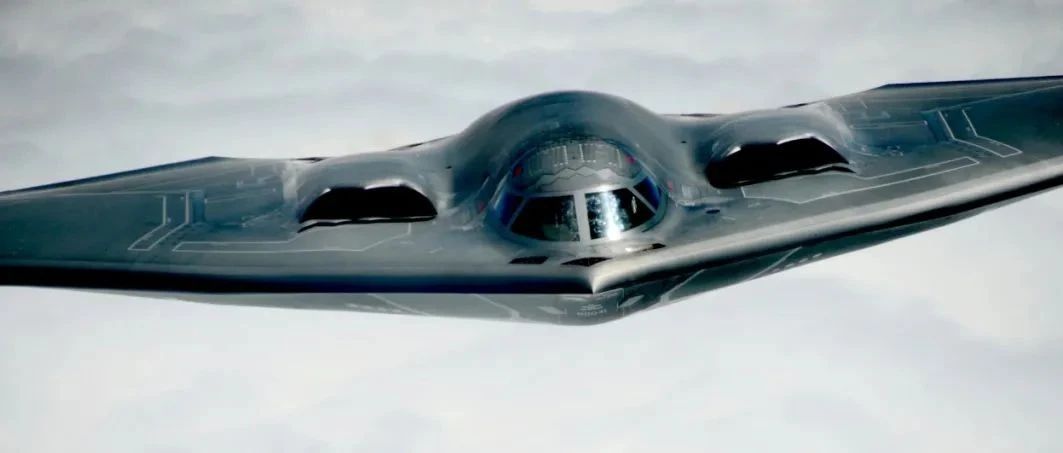
中航工业

Search documents
创世纪:富士康、立讯精密、领益智造、中航工业等已成为公司重要客户
Mei Ri Jing Ji Xin Wen· 2025-09-25 05:39
Core Viewpoint - The company has received high recognition for its CNC machine tools and services from several leading clients, indicating strong market demand and customer trust in its products [2]. Group 1: Clientele - The company's CNC machine tools are supplied to several prominent listed companies, including BYD Electronics, Foxconn, Luxshare Precision, Linyang Precision, CRRC, SAIC General Motors, and AVIC [2].



AI+军用: 新时代智权赛,重塑战场新生态
2025-09-23 02:34
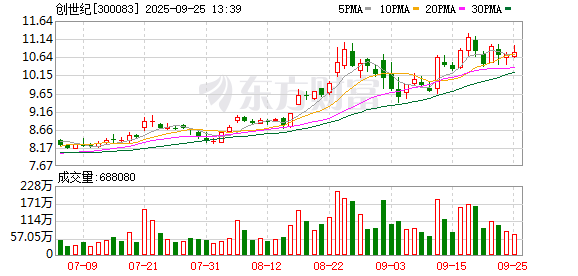
Summary of Key Points from Conference Call Records Industry Overview - The military industry in China is mature and has significant international market potential, with foreign trade becoming a focal point [1][2] - The end of the 14th Five-Year Plan has catalyzed policies, leading to a recovery in upstream military electronics orders, although challenges remain [1][2] - The 15th Five-Year Plan will commence in 2026, with a goal of military modernization by 2027, emphasizing the need for new combat capabilities [1][2] Core Insights and Arguments - Increased global military equipment demand due to rising geopolitical tensions and conflicts, validating the performance of domestic equipment in international markets [1][2] - The integration of AI in military applications is driving modernization, with China aiming for AI development goals by 2030 [1][2][5] - The 2025 military parade showcased advanced military technologies, including hypersonic weapons and unmanned systems, indicating a shift towards joint operations and modern combat systems [1][6] AI Applications in Military - AI applications in the military encompass various areas, including command operations, equipment maintenance, autonomous drones, and logistics management [5][7] - The U.S. leads in military AI, with significant investments in AI companies and rapid decision-making enhancements within NATO [5][9] - China's military AI development involves numerous companies, including aerospace and navigation firms, contributing to a comprehensive upgrade of military capabilities [9] Emerging Technologies and Equipment - The 2025 military parade highlighted new technologies such as AI-enabled drones and ground robots, enhancing overall military effectiveness [8][9] - Specific advancements include lightweight automatic rifles and smart wearable devices for soldiers, improving operational efficiency [8][9] Long-term and Short-term Outlook - Long-term prospects for military informationization and intelligence construction in foreign trade are promising, potentially expanding the domestic military market [10] - Short-term recovery in foreign trade requires time, with the military sector showing thematic investment trends [11] New Production Forces and Trends - Key development areas include commercial aerospace, low-altitude economy, and deep-sea technology, which are prioritized in national development plans [12][14] - The deep-sea technology sector is crucial for national security and economic interests, with ongoing advancements in underwater research and resource development [13][14] Investment Recommendations - Focus on military AI industrialization, with attention to emerging themes in commercial aerospace and unmanned intelligence [16][17] - Key companies to watch include those involved in national defense and aerospace, as well as firms specializing in AI and information technology [16][17]
联合精密(001268) - 2025年9月19日投资者关系活动记录表
2025-09-19 09:26
Group 1: Acquisition and Business Direction - The acquisition of Mite Aviation is a strategic move to enhance the company's presence in the aerospace precision components manufacturing industry, with a focus on market demand and future development opportunities [1] - The company aims to cultivate new profit growth points through this acquisition, indicating a potential dual business model of "home appliances + military industry" [2] - The target company is a supplier to major manufacturers under AVIC, which includes Chengfei and Shenyang Aircraft [3] Group 2: Financial Performance and Projections - The net profit for Q1 2025 was approximately ¥19.2 million, representing a year-on-year increase of 20.04% [2] - The net profit for the first half of 2025 reached approximately ¥51.4 million, showing a year-on-year growth of 52.80% [2] - The company had 8,513 shareholders as of September 10, 2025 [2] Group 3: Market Reactions and Stability Measures - Following the announcement of the acquisition, the company's stock price fell over 8% on September 16, indicating market skepticism [1] - The board is actively seeking measures to stabilize the stock price and boost investor confidence, alongside the acquisition [1][2] - The company will continue to focus on its core business while exploring external cooperation opportunities [2]
产业升级下一局:不拼故事,改拼「精耕」|36氪2025产业未来大会金句集锦
36氪· 2025-09-17 13:35
会上,36氪合伙人、副总裁李政分享了其对行业的前瞻观察:今年一级市场募资端和投资端呈现同比双升态势,投资方向也逐步 转向符合国家战略导向的硬科技领域,从关注用户量、GMV到频繁地讨论起技术参数、良品率,创投市场已经从上一个"创新模 式"周期进入"硬核时代"。硬科技创业者除了需要在各自的技术领域上深耕,他们也需要产业资本多维度的赋能,更需要社会共同 搭建起一个适合创新产业发展的生态环境,而这也是产业资本的未来方向。 此外,参与本次大会的国资与财务基金掌舵人、明星创业公司及产业龙头创始人们分别带来了最前沿的理论洞察、最敏锐的资本 洞察、最真实的产业需求以及最鲜活的实战经验。一句点睛,或许就得以窥见未来一隅。让我们回顾大会嘉宾的精彩洞见—— 此刻,我们正站在产业逻辑被彻底重塑的时代转折点。 2025 产业未来大会 中国·厦门 | 9.10-9.11 9月10日,由36氪主办的2025年36氪产业未来大会在中国厦门盛大启幕。本次大会重磅携手商务部主办的"中国国际投资贸易洽谈 会",以"精耕时代,潮涌嘉禾"为核心主题,倾力打造一场兼具国家高度、产业深度与市场热度的高规格、高价值、高影响力产业 盛典。大会紧密锚定国家战略 ...

产业升级下一局:不拼故事,改拼“精耕”|36氪2025产业未来大会金句集锦
3 6 Ke· 2025-09-17 07:33
Group 1 - The conference focused on five core sectors: artificial intelligence, low-altitude economy, advanced manufacturing, new energy, and large consumption, aiming to align with national strategic directions and industry development frontiers [1] - The investment landscape in the primary market has shown a year-on-year increase in both fundraising and investment, with a shift towards hard technology sectors that align with national strategies [4][1] - Industry capital is expected to provide multidimensional empowerment to hard technology entrepreneurs, who need to cultivate an ecosystem conducive to innovation [4][1] Group 2 - The low-altitude economy is emerging as a significant investment area, with many companies generating substantial revenue and preparing for IPOs [12] - Investment in the low-altitude economy is characterized by early-stage funding, continuous support for leading companies, and a shift in focus from manufacturers to upstream core technologies and key components [16] - The low-altitude economy aims to create a comprehensive transportation network that integrates cargo and passenger transport, potentially leading to a trillion-level market scale [17] Group 3 - The importance of integrating technology with market demand is emphasized, as entrepreneurs must balance technical breakthroughs with real-world applications to achieve cash flow stability [8] - The role of government as a "scene provider" and market investment institutions as observers is crucial for reducing industrialization barriers and facilitating technology commercialization [11] - The investment strategy should focus on concentrated investments in leading industries and supporting innovative enterprises to enhance technological capabilities and drive growth [5]

大道笃行向未来
Shan Xi Ri Bao· 2025-09-07 00:27
Core Insights - The Xi'an International Port is experiencing high activity with a train departing every 80 minutes, totaling 16.9 trains per day, reflecting the growth of the China-Europe Railway Express (Xi'an) [1][3] - The 30,000th train of the China-Europe Railway Express (Xi'an) was dispatched, marking a significant milestone since its inception in November 2013 [2][3] - The port has established a modern logistics system with 18 international transport routes covering Eurasia and has maintained the highest volume of operations in the country for seven consecutive years [5][6] Group 1: Operational Efficiency - The Kazakhstan-Xi'an terminal has reduced logistics costs by 30% to 50% for goods such as electronic devices and home appliances, with over 200,000 tons of goods transshipped in just over a year [4][5] - The new "hub-to-hub" model has significantly shortened overseas container allocation cycles, enhancing efficiency and reducing costs [5][6] - In the first half of the year, the China-Europe Railway Express (Xi'an) operated 3,055 trains, a year-on-year increase of 28.8% [5] Group 2: Trade and Economic Impact - In the first half of the year, Shaanxi's imports and exports with Belt and Road countries reached 132.37 billion yuan, accounting for 54.1% of the province's total trade [6] - The Xi'an International Material Supply Chain Management Center has facilitated over 1.7 billion yuan in international trade, collaborating with major companies like Safran and Honeywell [7] - The Shaanxi Free Trade Zone has generated 985 innovative cases and has become a key engine for integrating into the Belt and Road Initiative [7][12] Group 3: Future Prospects - The upcoming 2025 Eurasian Economic Forum will gather representatives from various countries to discuss topics such as green energy and logistics hubs, further promoting international cooperation [9][10] - Shaanxi has established extensive cooperation with over 40 countries and regions, enhancing its global trade relationships and agricultural technology collaborations [12][13] - The province's agricultural exports to SCO countries have increased from 640 million yuan in 2021 to 2.14 billion yuan in 2024, a growth of over 230% [12]
方正富邦基金吴昊:为什么军工的机会,没有结束?
Zhong Guo Jing Ji Wang· 2025-08-26 08:45
Group 1 - The military industry is experiencing a significant increase in attention and stock performance, particularly following the announcement of the 80th anniversary of the victory in the Anti-Japanese War, with the defense industry index rising by 23.94% from June 24 to August 25 [1] - The defense industry index has recorded three consecutive monthly gains, with August likely to be positive, marking the longest continuous increase since mid-2021 [1] - Key companies such as Guangqi Technology, AVIC Shenyang Aircraft Corporation, and Feilihua have reached historical stock price highs, indicating strong market performance [1] Group 2 - The military industry is shifting towards a fundamental-driven market, with military expenditure growth being a key driver; the 2025 defense budget is set at 1,784.665 billion yuan, reflecting a 7.2% increase [2] - China's defense budget as a percentage of GDP remains low compared to developed countries, suggesting significant growth potential for the military sector [2] - The military trade sector is emerging as a secondary growth avenue for military enterprises, with nine Chinese companies making it to the global top 100 military enterprises list, generating a total of 102.89 billion USD in weapon sales [2] Group 3 - The current year marks the end of the 14th Five-Year Plan, with the upcoming 15th Five-Year Plan (2026-2030) expected to drive a peak in equipment upgrades [3] - The first and last years of the Five-Year Plan are typically critical for performance, indicating that these periods may warrant closer attention from investors [3]
军工巨兽觉醒!中国新厂区堪比6百个球场,制造优势再次碾压美国
Sou Hu Cai Jing· 2025-08-26 04:06
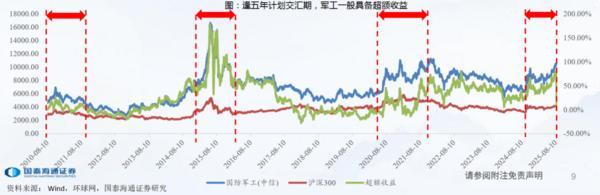
Core Insights - China's defense industry is undergoing a qualitative leap, supported by a comprehensive manufacturing ecosystem that enhances its military capabilities [1][3][8] - The rapid development of China's naval and aerial forces, including the production of advanced aircraft and naval vessels, highlights the effectiveness of its industrial system [3][8] Group 1: Industrial Ecosystem - China's defense industrial advantage lies in its complete industrial ecosystem, which includes the entire supply chain from rare mineral extraction to high-end equipment manufacturing [3] - The country dominates global defense-related mineral production, with 18 out of 37 critical minerals concentrated in China, and its casting output surpasses that of the next nine countries combined [3] Group 2: Military Production and Flexibility - The dual-use capability of China's aviation industry allows for flexible production of both military and civilian aircraft, ensuring that capacity can be adjusted according to demand [3] - In contrast, the U.S. defense industry faces challenges due to reliance on global supply chains, leading to higher costs and limited wartime production capacity [3] Group 3: Strategic Implications - Modern warfare emphasizes industrial capacity and supply chain resilience, as evidenced by the ongoing conflicts in Ukraine and the Middle East [5] - China's ability to rapidly produce advanced military equipment, such as aircraft and missiles, through its pulse assembly lines may provide a decisive advantage in high-end conflicts [5] Group 4: Challenges and Investments - Despite its strengths, China's defense industry still relies on external technologies for high-end chips and advanced semiconductor manufacturing [5] - The country is increasing its R&D investment by 10% annually, focusing on cutting-edge fields like semiconductors, artificial intelligence, and quantum computing, although achieving complete self-sufficiency will take time [5] Group 5: Regional Impact - The rise of China's defense industry is reshaping the strategic balance in the Asia-Pacific region, with a naval fleet of 370 vessels and an air force of 3,150 aircraft [8] - China's modernization path emphasizes overall manufacturing upgrades to enhance defense capabilities, which can promote economic growth in peacetime and quickly convert to defense production in wartime [8]
低空经济,新消息
Zheng Quan Shi Bao· 2025-08-16 11:36
Core Insights - Shanghai Low Altitude Economic Industry Development Co., Ltd. aims to establish an innovative ecosystem for the low-altitude industry this year, with a focus on creating the Shanghai Low Altitude Industry Fund to lead project investments [1][3] - The company plans to set up a standard system for low-altitude operations, spearheaded by the establishment of the Shanghai Low Altitude Economic Industry Standardization Technical Committee and the Low Altitude Economic Standard Innovation Alliance [1][4] - A key project includes the construction of the Minhang Low Altitude Testing Base in the Wujing area of Shanghai, which will focus on creating a collaborative environment for testing unmanned aerial vehicles [1][4] Company Overview - Shanghai Low Altitude Economic Industry Development Co., Ltd. was established in December 2024 with a registered capital of 900 million yuan, backed by several well-known state-owned enterprises in Shanghai [2] - The company is positioned as a functional state-owned enterprise platform that combines investment and technological innovation, focusing on building and operating the "four networks" of low-altitude operations [2] Strategic Initiatives - The company plans to create the Shanghai Low Altitude Economic Research Institute and the East China Low Altitude Economic Industry Alliance, forming a closed-loop operational system that integrates government, academia, research, industry, investment, and application [3] - The establishment of a city-level low-altitude flight service center is also a priority for the company this year [4] Testing and Development - The Minhang Low Altitude Testing Base is in the planning stage, designed to address the lack of standards in the low-altitude industry and to create a realistic testing environment for urban scenarios [4] - The company aims to collaborate with national testing facilities to provide various environmental conditions for testing [4] Market Potential - Shanghai has significant advantages for developing the low-altitude economy, including a concentration of 70% of aviation talent and over 50% of eVTOL companies originating from the city [5] - According to the "Shanghai Low Altitude Economic Industry High-Quality Development Action Plan," the goal is to establish a complete industrial system for low-altitude new aircraft by 2027, with a core industry scale exceeding 50 billion yuan [5]
大国博弈下的隐形战场:隐身材料技术与投资机遇深度解析
材料汇· 2025-07-22 15:54
Core Viewpoint - Stealth materials are essential for modern military technology, significantly enhancing the survivability and effectiveness of weapon systems by reducing detection rates and improving combat capabilities [3][4][45]. Group 1: What are Stealth Materials - Stealth materials are the foundational elements of stealth technology, allowing for reduced detection rates while maintaining the shape of military equipment [3][4]. - They can be categorized by spectrum (radar, infrared, visible light, laser, and sound) and by purpose (stealth coatings and structural materials) [5]. Group 2: Types of Stealth Materials - Radar Absorbing Materials (RAM) are crucial for stealth, designed to absorb radar waves and minimize reflection [8][9]. - Structural RAM serves dual purposes, acting as both structural components and stealth materials, with advancements in composite materials enhancing their effectiveness [9][10]. - Infrared stealth materials are increasingly important due to their ability to evade detection by infrared systems, with developments in both single and composite types [17][19]. Group 3: Future Prospects - The development of stealth materials is focused on practical applications, lightweight designs, multi-spectrum capabilities, multifunctionality, smart materials, and high-temperature resistance [36][38][39][40][41][43]. - The demand for stealth materials is driven by geopolitical tensions, modernization of military equipment, and the need for advanced stealth capabilities across various platforms [46][48]. Group 4: Investment Logic - The investment in stealth materials is supported by strong demand from military modernization, high technical barriers, and significant market potential due to increasing defense budgets [45][46][48]. - Key investment considerations include technological strength, engineering capabilities, core supplier status, and the sustainability of orders [52][53].