华为云

Search documents
脑机接口+AI诊断火热!全市场规模最大的医疗器械ETF(159883)盘中获资金大幅申购超2.6亿
Sou Hu Cai Jing· 2026-01-09 06:53
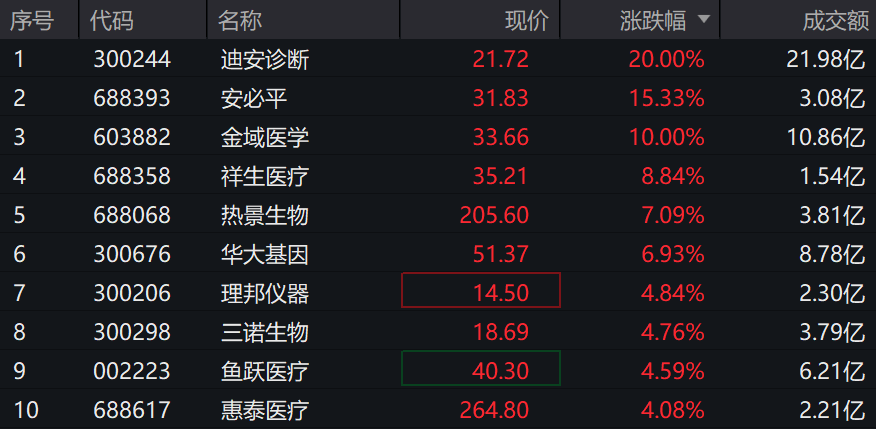
Core Viewpoint - The medical device sector is experiencing significant growth, with key stocks showing strong performance and substantial capital inflow into related ETFs, indicating a bullish market sentiment in this industry [1][4]. Group 1: Market Performance - The CSI All-Medical Device Index (H30217) rose by 1.59%, with notable stocks such as Di'an Diagnostics (300244) hitting a 20% limit up, and Kingmed Diagnostics (603882) reaching a 10% limit up [1]. - The largest medical device ETF (159883) saw a 1.53% increase, with over 260 million yuan in capital inflow during the afternoon session [1]. - Over the past four days, the medical device ETF has experienced continuous net inflows, totaling 1.232 billion yuan, with an average daily net inflow of 308 million yuan [1]. Group 2: Key Stock Movements - Di'an Diagnostics (300244) closed at 21.72 yuan, with a 20% increase and a transaction volume of 2.198 billion yuan [2]. - Anbiping (688393) rose by 15.33% to 31.83 yuan, with a transaction volume of 308 million yuan [2]. - Kingmed Diagnostics (603882) increased by 10% to 33.66 yuan, with a transaction volume of 1.086 billion yuan [2]. Group 3: Technological and Policy Developments - Shenzhen Hanyu Pharmaceutical and Huawei Cloud launched a "Peptide AI Process Optimization Assistant," reducing R&D cycles by 45% and improving decision-making efficiency by 90% [3]. - Guangzhou's new plan emphasizes biomedicine and health as a key emerging industry, aiming to build high-level innovation platforms around cell and gene technology [3]. - The Beijing action plan for 2026-2027 aims for widespread application of AI products in healthcare institutions by 2027 [3]. Group 4: ETF Characteristics - The medical device ETF (159883) has the highest brain-computer interface content in the market, accounting for over 23%, and is the largest ETF focused on the medical device sector [4]. - The ETF includes a strong representation of innovative domestic companies, with over 80% of its components from the Sci-Tech Innovation Board and the Growth Enterprise Market [4]. - The Hong Kong medical ETF (159366) tracks the CSI Hong Kong Stock Connect Medical Theme Index, providing exposure to high-quality assets in the medical sector [4].



国家队重注,押出普惠算力“中国答案”
Tai Mei Ti A P P· 2026-01-07 11:50
Core Viewpoint - The article emphasizes the critical importance of computing power as a national strength in the context of global AI competition, highlighting China's strategic shift towards making computing power more accessible and efficient for a broader range of users [1][4]. Group 1: Investment and Strategic Shifts - China's computing power industry is at a historic turning point, with domestic GPU penetration expected to exceed 59% by 2025, and significant investments in infrastructure driven by initiatives like "East Data West Computing" [3]. - The recent joint investment by two major AI state-owned funds in the AI infrastructure provider Jiuzhang Cloud is seen as a strategic decision to enhance computing sovereignty and promote efficiency and innovation [1][3][9]. - The focus of China's computing strategy is shifting from merely increasing capacity to maximizing the efficient use of existing computing resources, aiming for a utilization rate increase from 30% to potentially 70% or 80% [5][8]. Group 2: Challenges in the Industry - Despite the growth in computing power, high costs remain a barrier for many small and medium enterprises (SMEs) and research teams, with over 70% of R&D budgets directed towards computing power procurement [4][10]. - The current model of computing resource allocation often leads to underutilization, with many computing centers operating at less than 30% capacity, indicating a structural mismatch between supply and demand [4][5]. - The need for a dual innovation in business models and technical architecture is critical to address the high costs and inefficiencies in the current computing power market [10]. Group 3: Jiuzhang Cloud's Role and Innovations - Jiuzhang Cloud is positioned as a unique full-stack platform provider focused on "inclusive computing," aiming to democratize access to computing resources for a wide range of users, including SMEs and individual developers [16][17]. - The company has introduced a new pricing model, defining "1 degree of computing power" to allow users to access resources in a more flexible and cost-effective manner, akin to utilities like water and electricity [10][12]. - Jiuzhang Cloud's technological innovations, including a serverless architecture and AI-native cloud infrastructure, aim to enhance resource utilization and reduce complexity for users [12][14]. Group 4: Market Potential and Future Growth - The inclusive computing market in China is projected to experience significant growth, with estimates suggesting it could reach 410 billion yuan by 2028, driven by increasing demand across various sectors [8][9]. - The successful implementation of inclusive computing solutions is expected to unlock substantial economic potential, benefiting not only large enterprises but also a vast number of SMEs and research institutions [18]. - As computing power becomes more accessible, it is anticipated to catalyze innovation across multiple industries, including autonomous driving, AI pharmaceuticals, and smart city initiatives, thereby reinforcing the strategic importance of Jiuzhang Cloud in the national computing landscape [18].
政产学研医聚力!慕思“数字人体与智慧睡眠创新联合体”正式启航
Xin Lang Cai Jing· 2026-01-07 04:51
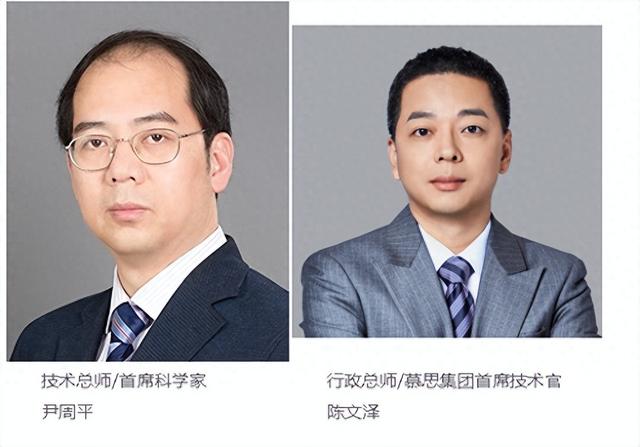
Group 1 - The "Dongguan Digital Human and Smart Sleep Innovation Consortium" led by Mousse Group has been officially registered with the Dongguan Science and Technology Bureau, marking a significant step in building a collaborative innovation platform focused on sleep health technology [1] - The consortium responds to the national strategy aimed at enhancing public health, bringing together industry players like Guangdong Sigu and Huawei Cloud, top universities such as Huazhong University of Science and Technology and Beihang University, and clinical institutions including Peking University Third Hospital [1] - The consortium aims to leverage Dongguan's strong furniture manufacturing base to focus on cutting-edge areas in artificial intelligence and health, developing a digital human and smart sleep technology system [1] Group 2 - Professor Yin Zhouping, the chief scientist of the consortium, has been elected as an academician of the Chinese Academy of Sciences, providing strong intellectual support for the consortium's development [2] - The consortium operates under a "dual leadership" model, with Professor Yin and Administrative Chief Chen Wenze at the helm, comprising over a hundred high-level talents from various fields including AI, clinical medicine, and industrial design [4] - The team will focus on seven core research topics related to smart health monitoring and sleep management, promoting technological innovation and product transformation [4] Group 3 - The consortium aims to advance sleep health management into a new phase of predictability and intervention, establishing a new paradigm for national health sleep [6] - It will deepen a collaborative innovation mechanism that integrates clinical guidance, technical breakthroughs, and design empowerment, focusing on overcoming key technological bottlenecks [6] - The initiative seeks to accelerate the transformation of cutting-edge research into internationally leading health sleep products, providing a replicable model for technological innovation and upgrading in China's health sleep industry [6]


2025信创产业发展趋势及50强报告
Sou Hu Cai Jing· 2026-01-05 15:58
Core Insights - The Xinchuang industry and generative AI security are in a rapid development phase, with technological innovation and compliance becoming the core development themes [1] - The Xinchuang industry has established a complete industrial chain covering basic hardware, software, cloud services, and application software, focusing on key areas such as chips, servers, databases, and industrial software [1] - Generative AI models are evolving from "call-type" to "intelligent agent" integration, embedding deeply into critical processes across various industries, while facing multiple risks [1] - A comprehensive compliance system based on three major data security laws has been formed in China, with global regulatory frameworks being established through laws like the "Artificial Intelligence Act" [1] Industry Development Status - By 2025, the Xinchuang industry is expected to enter a deep-water phase, with standards becoming more refined and product varieties continuously enriching [6] - The industry is characterized by a stepwise advancement in construction, led by state-owned enterprises with collaboration from SMEs [6] - The application of AI, particularly large models, is driving the growth of the Xinchuang industry, becoming a new growth engine [6] Key Focus Areas - The Xinchuang industry is seeing rapid growth in sectors such as finance, telecommunications, transportation, and energy, with significant advancements in core systems and standards [10][11] - AI is driving structural adjustments in Xinchuang products, with large models accelerating their application in government, telecommunications, finance, and education [12][17] Technological Insights - The Chinese CPU market is projected to reach 250 billion by 2025, with a competitive landscape evolving [25][26] - The demand for domestic databases is increasing, with a significant rise in the production of data and a growing need for non-relational databases [31][41] - The integration of AI with Xinchuang cloud services is becoming a key trend, enhancing the capabilities of various sectors [42][46] Ecosystem Development - The open-source community is playing a crucial role in enhancing the technological ecosystem of Xinchuang, facilitating faster integration of AI capabilities [19][23] - The ability of Xinchuang products to go global is improving, supported by the growing digital infrastructure investments in regions like Southeast Asia and Africa [19][23] Application Software Trends - Application software is transitioning from basic adaptation to value creation, with a focus on accelerating scene-based implementation and intelligent upgrades [44][47] - Industrial software is identified as a core area for Xinchuang, with increasing demand driven by manufacturing upgrades and smart manufacturing initiatives [44][47]

2026泛目录零基础入门教程:从搭建到收录全流程详解
Sou Hu Cai Jing· 2026-01-03 12:13
1. 泛目录是什么? 泛目录本质是通过程序模板与关键词库结合,批量生成具有独立URL的目录页面的技术。简单来说,就是为每个目标长尾词生成一个专属的 目录页面,这些页面如同网站的"子栏目",既能够被搜索引擎独立收录,又能通过内部链接互相赋能,提升整体权重。与传统手动创建栏目 不同,泛目录可实现"一键批量生成",大幅降低运营成本与时间成本,尤其适合长尾词覆盖需求旺盛的行业。 2. 2026年泛目录核心运营逻辑 当前泛目录的核心不是"多生成页面",而是"生成能被收录、有流量的优质页面"。搜索引擎算法已能精准识别低质垃圾页面,若单纯堆砌无意 义内容,不仅无法收录,还可能导致主站降权。因此,2026年做泛目录需遵循"三核心原则":主题强相关、内容有价值、操作合规化。 对于SEO新手或中小站长而言,泛目录是快速拓展网站页面数量、覆盖长尾词流量的高效工具。但2026年搜索引擎算法对泛目录的要求已 从"数量堆砌"升级为"质量优先",传统粗放式操作早已无法见效。本文专为零基础用户打造,以"步骤化+实操性"为核心,从前期准备、程序 选型、搭建配置、内容优化、收录推进到后期维护,全面拆解2026泛目录的完整操作流程,让新手也能轻松 ...

舒勇:智能革命带来统筹发展和治理新课题
Jing Ji Ri Bao· 2025-12-30 00:32
Core Insights - The article emphasizes that artificial intelligence (AI) is a disruptive general-purpose technology that will significantly impact human societal development, akin to the steam and electrical revolutions [1] Group 1: AI Technology and Economic Transformation - AI technology is being widely applied, lowering the technical barriers for enterprises, especially small and medium-sized enterprises (SMEs), allowing them to access advanced AI services through cloud platforms like Alibaba Cloud, Baidu Smart Cloud, and Huawei Cloud [1] - The value of data as a key asset is becoming more pronounced in the AI era, facilitating data circulation and transaction systems, and leading to the emergence of a data factor market that enhances resource allocation efficiency [2] - Personalized production methods are gaining traction in manufacturing, transforming consumers from passive recipients to active creators, thereby reducing resource waste and altering traditional supply-demand relationships [2] Group 2: Changes in Economic Logic and Labor Market - AI technology is fundamentally altering economic development logic by enhancing human cognitive abilities and significantly improving total factor productivity, positioning countries that quickly adopt AI for competitive advantage [3] - The widespread application of AI is reshaping labor market dynamics, with routine jobs at risk of automation while new roles such as prompt engineers and AI trainers are emerging, necessitating lifelong learning for workers [3] - Data and algorithms are becoming critical to corporate competitiveness, reinforcing the advantages of platform-based companies and intensifying market competition, leading to more flexible organizational structures [3] Group 3: Risks and Challenges of the AI Revolution - The AI revolution presents risks such as digital divides, algorithmic biases, and security threats from autonomous systems, which require systemic innovation across various levels to address [4] - It is essential to maintain a human-centered approach in technological development to enhance quality of life while recognizing that challenges posed by the AI revolution cannot be solved by individual nations alone, necessitating international cooperation and the establishment of common technical standards and ethical norms [4]
智能革命带来统筹发展和治理新课题
Jing Ji Ri Bao· 2025-12-29 22:22
Group 1 - Artificial intelligence is a disruptive general-purpose technology that will significantly impact human social development, similar to the steam and electrical revolutions [1] - The rise of AI cloud services has lowered the technical barriers for enterprises, especially small and medium-sized enterprises, allowing them to access advanced AI technologies without building their own R&D teams [1] - Major platforms like Alibaba Cloud, Baidu Smart Cloud, and Huawei Cloud are providing localized solutions and low entry barriers, effectively addressing the challenges faced by SMEs in utilizing AI technology [1] Group 2 - The value of data as a key asset is becoming more prominent in the AI era, driving the creation of data circulation, trading systems, and a data factor market [2] - Personalized production methods are emerging in the manufacturing sector, where consumer participation in production reduces resource waste and transforms traditional supply-demand relationships [2] - AI technology enhances human cognitive abilities and overall productivity by automating repetitive tasks and analyzing vast amounts of information [3] Group 3 - The widespread application of AI is reshaping labor market dynamics, with a shift in demand for skills and the emergence of new job roles such as prompt engineers and AI trainers [3] - Data and algorithms are becoming critical to corporate competitiveness, reinforcing the advantages of platform-based companies while providing opportunities for data-rich enterprises [3] - The transition towards more flexible, networked, and platform-based organizational structures is intensifying market competition [3] Group 4 - The smart revolution presents risks and challenges, including the digital divide, algorithmic bias, and security risks from autonomous systems, necessitating systemic innovation across various levels [4] - A human-centered approach is essential to ensure that technological advancements serve the comprehensive development of individuals and improve quality of life [4] - International cooperation and the establishment of common technical standards and ethical guidelines are crucial for addressing the challenges posed by the smart revolution [4]
被“截胡”二十年:马来西亚如何在中美夹缝中复兴?
财富FORTUNE· 2025-12-29 13:11
Core Viewpoint - Malaysia's Johor state is actively seeking to attract Chinese investments, particularly in sectors like semiconductors, special chemicals, and aerospace materials, amidst a global supply chain restructuring due to US-China trade tensions and the COVID-19 pandemic [6][9]. Group 1: Investment Opportunities - The Johor delegation is meeting with Chinese companies to encourage them to invest in the state, with a focus on bringing their supply chains along [11][12]. - Chinese companies are motivated to invest in Malaysia due to lower tariffs on products labeled as "Made in Malaysia," which significantly reduces export costs to the US compared to products exported from China [12][13]. - The Malaysian government has identified five key industries for development by 2030: aerospace, data centers, electronics manufacturing, special chemicals, and medical devices [9][16]. Group 2: Challenges and Considerations - Despite the attractive investment landscape, Chinese companies face challenges such as higher labor costs in Malaysia compared to neighboring countries like Vietnam and Indonesia [14][15]. - Concerns about the completeness of the local supply chain in certain sectors, such as pharmaceuticals, may deter investment despite favorable export conditions [15]. - The potential for increased scrutiny from the US regarding Chinese investments in Malaysia, particularly in technology sectors, poses a risk for companies considering expansion [19]. Group 3: Strategic Positioning - Malaysia aims to position itself as a middle power that can serve both the US and China, focusing on industries that can thrive regardless of geopolitical tensions [9][19]. - The establishment of the "Johor-Singapore Economic Zone" is intended to replicate the success of Shenzhen by attracting investment and technology from Singapore while utilizing Johor's lower operational costs [16][17]. - The rapid growth of data centers in Johor, driven by the overflow from Singapore, highlights the state's potential as a new hub for technology infrastructure [17][18]. Group 4: Historical Context and Future Outlook - Malaysia's industrialization efforts have faced setbacks, particularly after China's entry into the WTO, which redirected investment and technology away from Malaysia [8][9]. - The "Forest City" project, initially a symbol of hope for Chinese investment, serves as a cautionary tale about the complexities and risks of cross-border investments [20][21]. - The evolving landscape of global competition, particularly between the US and China, necessitates that both Malaysian and Chinese companies adopt strategies to mitigate risks and ensure sustainable growth [22][23].

阿里云为什么要为一篇自媒体文章下场辟谣?
Sou Hu Cai Jing· 2025-12-26 21:02
Core Viewpoint - Alibaba Cloud officially refuted rumors regarding its benchmark client Xiaohongshu allegedly migrating away from its services, indicating the significance of the situation [1]. Group 1: Rumor and Response - The article that sparked the controversy was titled "Xiaohongshu's Benchmark Client Migrates from Alibaba Cloud," which contained absolute language that could be interpreted as a major client leaving, potentially damaging to Alibaba Cloud's reputation [4]. - The article's absolute statements and implications were deemed high-risk in the business context, leading to its removal due to the lack of evidence supporting the claims [5]. Group 2: Business Implications - Xiaohongshu's data migration to Alibaba Cloud is substantial, with 500PB of data expected to be moved by the end of 2024, making a sudden departure unlikely and impractical [5]. - The article's narrative suggested that Xiaohongshu's decision-making regarding cloud services is more nuanced, focusing on cost-effectiveness and operational efficiency rather than a binary choice of staying or leaving [7]. Group 3: Multi-Cloud Strategy - The trend of using multiple cloud service providers is becoming common among businesses, including smaller companies, to optimize costs, ensure backup, and maintain flexibility [14][15]. - Xiaohongshu, as a large enterprise, is likely to adopt a hybrid cloud strategy, utilizing both self-built and cloud-based solutions, similar to smaller companies that employ multiple cloud services [15].

钛媒体「年度全球化公司」榜单重磅发布 | 2025 EDGE AWARDS
Tai Mei Ti A P P· 2025-12-25 02:06
Group 1 - In 2025, Chinese companies are shifting from cross-border operations to deeper localization and accelerating globalization in response to changing overseas policies [2] - The U.S. government has implemented policies such as the cancellation of tax exemptions for cross-border packages under $800 and reciprocal tariffs, while the EU has introduced the New Battery Law [2] - Chinese enterprises are transitioning from "single product exports" to "full-chain system output," with market strategies evolving from a focus on Europe and the U.S. to a dual-driven approach involving emerging and traditional markets [2] Group 2 - The EDGE AWARDS recognizes companies that have achieved significant breakthroughs in overseas markets despite fluctuating international conditions, highlighting their contributions to globalization [3] - ECARX has achieved large-scale production and delivery in global markets, securing over $1 billion in overseas orders and achieving profitability in Q3 [3] - Alibaba Cloud is enhancing its global infrastructure to support Chinese enterprises' overseas development, focusing on AI product internationalization and building a global cloud computing network [4] Group 3 - HLA has expanded its global strategy, opening new stores in Southeast Asia, Central Asia, and the Middle East, with overseas revenue increasing by 27.42% [4] - Kudi Coffee has expanded its international presence to 33 countries, with over 18,000 stores globally, ranking third worldwide in the coffee and tea sector [4] - United Imaging Healthcare has seen overseas revenue grow from $40 million to over $2 billion in seven years, with a compound annual growth rate of 93% [5] Group 4 - Pop Mart has experienced explosive growth in overseas revenue, which increased by 437.5% in the first half of 2025, accounting for 40.3% of total revenue [6] - Century Huatong, a leading gaming company, has achieved over $3.8 billion in global revenue from its game "Whiteout Survival" and is actively exploring AI gaming applications [7] - Tongwei Group has a global market share of approximately 30% in polysilicon, with significant growth in component sales across various regions [8] Group 5 - Yanghe Distillery has established a comprehensive international communication system focusing on high-end, platform-based, and localized strategies, covering 86 countries and regions [9] - Yiling Pharmaceutical has successfully registered 17 innovative traditional Chinese medicines in over 50 countries, promoting a multi-faceted approach to global healthcare [10] - The trend of collaborative globalization is emphasized, with companies providing reliable service networks to support Chinese enterprises in overseas markets [11] Group 6 - Amazon Global Selling has facilitated the entry of numerous Chinese sellers into international markets, signing cooperation agreements with various provincial commerce departments [12] - XTransfer offers cross-border financial and risk control services to over 800,000 enterprises, enhancing global competitiveness for small and medium-sized businesses [13] - Huawei Cloud has expanded its global presence with 34 geographic regions and 101 available zones, supporting local industry upgrades in various countries [14] Group 7 - Stripe provides programmable financial services to millions of businesses, enabling Chinese brands to establish payment channels and innovative revenue models as they expand globally [15]