华侨城集团

Search documents
华侨城集团被曝大量员工资金被套,有人称投8万拿回9000
Qi Lu Wan Bao· 2025-07-29 10:09
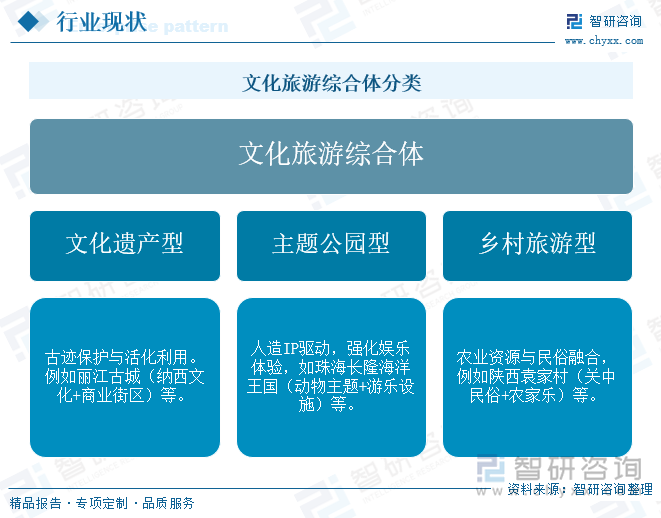
房企跟投事件再次引发了舆论关注。日前,华侨城集团前员工向南都·湾财社记者反映,在企业推行的"强制"跟投制度下,大量员工资金被卷入地产项 目,如今因项目停工、资金未回正等原因难以返还,尤其部分被裁员工数额不菲的跟投本金被套牢。 "即便已与企业解除劳动关系,仍要按原规则等待漫长的返还流程。"在他看来,这种"人走钱留"的状况让本就因失业而陷入生活困境的自己更添焦虑。 而针对前员工反映的跟投本金无法追回等问题,华侨城方面在接受记者采访时表示—— 跟投实质属于投资行为,有盈利也有亏损的情况,无论跟投人员在职或离职,项目盈利时均会按照相关跟投协议及跟投制度予以分红,项目亏损时也需共 担风险。 另外对于员工关切,公司一直高度重视,与相关员工保持紧密、充分、友善的沟通,后续也将持续积极稳妥推进相关工作。 "强制"跟投? 南都·湾财社记者了解到,华侨城的跟投制度始于2019年。当年,企业发布《深圳华侨城股份有限公司项目跟投管理办法》的公告,对跟投相关事项作出 明确规定。 其中第一条明确提到,原则上所有投资项目必须实施跟投,确因项目类型、性质不适合开展跟投的,应经公司党委会审批同意。 而在跟投人员上,必须跟投人包括项目公司负责人 ...


康佳易主华润 半导体业务整合成最大看点
Nan Fang Du Shi Bao· 2025-07-24 23:07
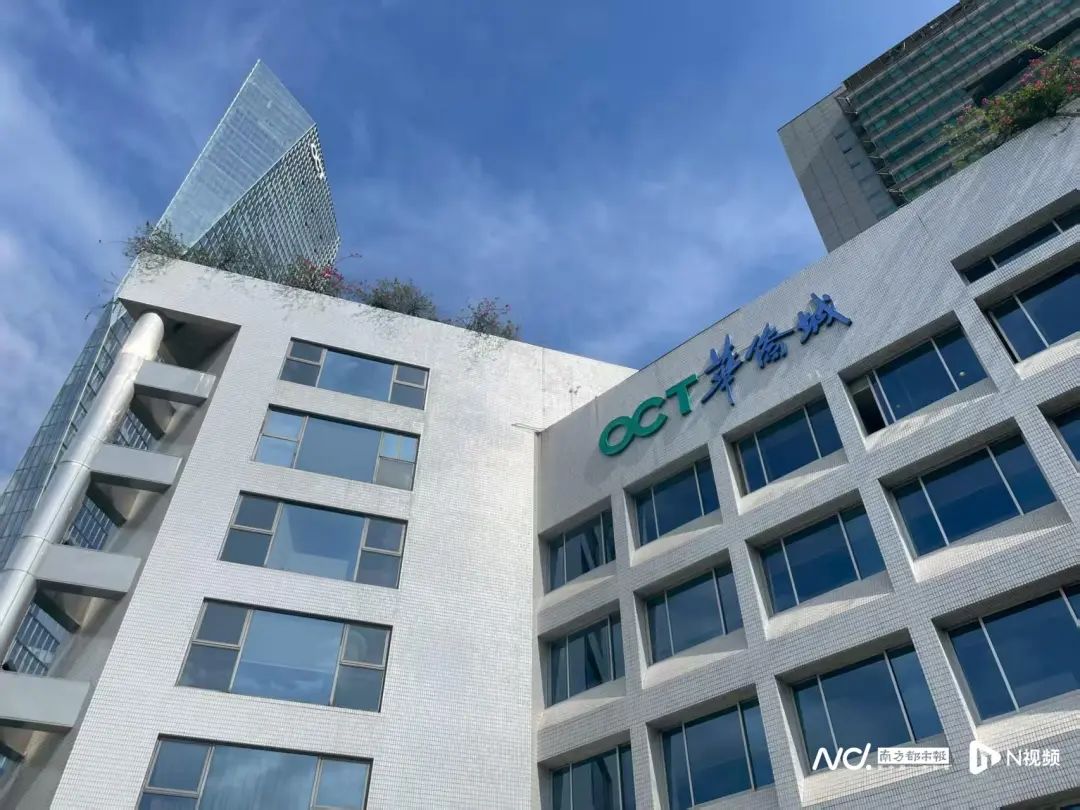
Core Viewpoint - The transfer of control of Konka Group to China Resources has been completed, marking a significant shift in ownership and strategic direction for the company, which faces ongoing challenges in its core business despite a reduction in net losses [2][3][4]. Shareholding Structure - China Resources now holds a total of 30% of Konka Group's shares, with its subsidiary, Panshi Run Chuang, owning approximately 21.76% of A-shares and another subsidiary, Hemai Co., Ltd., holding about 8.24% of B-shares [3]. - The transfer process began on April 29, 2025, and was completed in July after passing antitrust reviews and receiving approval from the State-owned Assets Supervision and Administration Commission [3]. Financial Performance - Konka Group expects a net loss of between 360 million to 500 million yuan for the first half of 2025, a significant improvement from a loss of 1.088 billion yuan in the same period last year [4]. - However, the core business remains under pressure, with a projected net loss of 950 million to 1.1 billion yuan when excluding non-recurring gains, indicating that the reduction in losses is largely due to non-operational factors [4][5]. Business Challenges - The consumer electronics segment continues to struggle due to intensified competition, delays in new product launches, and misalignment with national subsidy policies, leading to ongoing losses [5]. - The semiconductor business, seen as a potential growth area, is still in its early stages and has not yet achieved scale or profitability, contributing to the overall financial strain [5]. Strategic Outlook - The transition to China Resources presents both opportunities and challenges, with the potential for industrial synergy, particularly in the semiconductor sector, where integration with China Resources' existing capabilities could enhance Konka's prospects [6][7]. - Effective internal governance and strategic focus will be critical for the new management team to address ongoing losses and reposition the company for future growth [6][7].

华侨城集团,彻底退出!昔日“彩电大王”易主
Nan Fang Du Shi Bao· 2025-07-24 14:47
Core Viewpoint - The transfer of control of Konka Group to China Resources has been completed, marking a significant shift in ownership and strategic direction for the company, which faces ongoing challenges in its core business despite a reduction in losses compared to the previous year [1][5][8]. Group 1: Ownership Transition - The transfer of shares from the former controlling shareholder, Overseas Chinese Town Group, to China Resources was finalized after a lengthy process involving antitrust reviews and approvals [2]. - Following the transfer, China Resources, through its subsidiaries, holds a total of 30% of Konka's shares, making it the new controlling shareholder [3][4]. - The actual controller of Konka has shifted from Overseas Chinese Town Group to China Resources, with the ultimate control still resting with the State-owned Assets Supervision and Administration Commission [5]. Group 2: Financial Performance - Konka Group's half-year performance forecast indicates a net loss of between 360 million to 500 million yuan, a significant improvement from a loss of 1.088 billion yuan in the same period last year [5]. - However, the reduction in losses is primarily attributed to non-recurring gains of 450 million to 700 million yuan, suggesting that the core business remains under pressure [6]. - The forecasted net loss, excluding non-recurring items, is expected to be between 950 million to 1.1 billion yuan, nearly unchanged from the previous year's loss of 1.103 billion yuan [6]. Group 3: Business Challenges - The consumer electronics segment continues to face challenges due to intensified competition, delays in new product launches, and a mismatch with national subsidy policies, leading to ongoing losses [7]. - The semiconductor business, seen as a potential growth area, is still in its early stages and has not yet achieved scale or profitability [7]. - High financial costs due to significant interest-bearing liabilities are placing additional strain on the company's operations [7]. Group 4: Future Prospects - The entry of China Resources presents both opportunities and challenges for Konka, with potential for industrial synergy, particularly in the semiconductor sector [8]. - Analysts highlight the importance of effective integration between China Resources' existing semiconductor operations and Konka's capabilities to enhance technological and resource synergies [9]. - The success of the transition will depend on addressing internal governance and strategic focus issues, with expectations for a clearer reform roadmap emerging in the following year [9].
康佳易主华润:半年预亏收窄难掩主业失血,华润能否开出药方
Nan Fang Du Shi Bao· 2025-07-24 08:10
Core Viewpoint - The transfer of control of Konka Group has been completed, marking the end of the era of the former major shareholder, Overseas Chinese Town Group, and the beginning of a new chapter under China Resources, which now holds a 30% stake in the company. However, the company faces significant challenges as its core business continues to struggle despite a reduction in net losses compared to the previous year [1][5]. Group 1: Shareholder Transition - The transfer of shares was first disclosed on April 29, 2025, and completed in July after undergoing antitrust review and approval from the State-owned Assets Supervision and Administration Commission [2]. - Following the transfer, China Resources' subsidiary, Panshi Run Chuang, holds approximately 524 million A-shares, accounting for 21.76% of the total share capital, making it the controlling shareholder [3]. - Another subsidiary, Hemai Co., Ltd., holds approximately 198 million B-shares, representing 8.24% of the total share capital [4]. Group 2: Financial Performance - Konka Group's semi-annual performance forecast indicates a projected net loss of between 360 million to 500 million yuan for the first half of 2025, a significant reduction from a loss of 1.088 billion yuan in the same period last year [5]. - However, the improvement in net loss is primarily attributed to non-recurring gains estimated between 450 million to 700 million yuan, which masks the ongoing struggles of its core business [5]. - The company reported that its consumer electronics business continues to face pressure due to intensified competition, delays in new product launches, and inventory clearance losses, resulting in sustained losses in this key segment [5]. Group 3: Business Challenges - The semiconductor business, seen as a potential growth area, is still in its early stages of industrialization and has not yet achieved scale or profitability, leading to overall operational losses [6]. - The company acknowledges a high level of interest-bearing debt, contributing to a heavy financial cost burden on operations [7]. Group 4: Future Prospects - The transition to China Resources presents both opportunities and challenges for Konka, with the potential for industrial synergy, particularly in the semiconductor sector, where China Resources has a complete supply chain [8]. - Analysts suggest that effective integration of Konka's semiconductor operations with China Resources' capabilities could accelerate the industrialization process, representing a significant opportunity for growth [9]. - However, turning around a large manufacturing enterprise like Konka will require addressing internal governance and strategic focus issues, with a clear reform roadmap expected to take time to develop [9].
104天央企整合完成!华侨城彻底退出,中国华润正式控制康佳集团
Sou Hu Cai Jing· 2025-07-22 04:05
Core Viewpoint - Konka Group has officially completed the change of its actual controller after a 104-day process of professional integration among state-owned enterprises, with China Resources becoming the new actual controller [1][3][4] Group 1: Share Transfer Completion - The share transfer involved approximately 29.999997% of Konka Group's total share capital, with Panshi Run Chuang holding about 5.24 billion A-shares, accounting for 21.76% of the total share capital [3] - Hemaotong Limited, through CITIC Securities Brokerage (Hong Kong) Co., Ltd., holds approximately 1.98 billion B-shares, representing 8.24% of the total share capital [3] - Following the completion of the B-share transfer, Overseas Chinese Town Group and its action-in-concert party no longer hold any shares in Konka Group [3] Group 2: Background and Significance of State-Owned Enterprise Integration - Konka Group, established in 1980, was the first Sino-foreign joint venture electronics company after China's reform and opening up, with Overseas Chinese Town Group as the largest shareholder since its restructuring in 1991 [4] - The professional integration process began on April 8, initiated by Overseas Chinese Town Group to optimize resource allocation among state-owned enterprises [4] - The approval process for the share transfer was supported by regulatory authorities, with the National Market Supervision Administration issuing a non-prohibition decision on June 27 and the State-owned Assets Supervision and Administration Commission formally approving the transfer on June 30 [4]

深康佳A上半年度预亏最高5亿,华润入主能否力挽狂澜?
Guo Ji Jin Rong Bao· 2025-07-15 15:20
Core Viewpoint - Deep Konka A is facing significant financial challenges, with a projected net loss for the first half of 2025, despite a slight improvement in year-on-year loss percentages. The company is struggling in both its consumer electronics and semiconductor businesses, leading to a substantial decline in revenue and profitability [1][2][3]. Financial Performance - As of July 15, Deep Konka A's stock closed at 4.98 CNY per share, down 5.14%, with a market capitalization of 12 billion CNY [1]. - The company expects a net loss of 360 million to 500 million CNY for the first half of 2025, a year-on-year improvement of 54.03% to 66.90% [1]. - For 2024, the total revenue was 11.115 billion CNY, a decrease of 37.73% from 17.849 billion CNY in 2023, with a net loss of 3.296 billion CNY, widening by 52.31% year-on-year [2][3]. - The consumer electronics segment generated 10.137 billion CNY in revenue, accounting for 91.2% of total revenue, but showed a slight decline of 0.67% year-on-year [3]. Business Challenges - The consumer electronics sector is experiencing intensified competition, and the launch of new products has not met expectations, leading to a mismatch with national subsidy policies [1]. - The semiconductor business is still in its early stages of industrialization, with revenue plummeting by 94.99% from 340 million CNY to 170 million CNY, contributing only 1.53% to total revenue [3]. - The company's asset-liability ratio reached a record high of 92.65% by the end of 2024, indicating significant debt pressure [3]. Strategic Developments - In 2023, Deep Konka A announced a new development strategy focusing on consumer electronics and semiconductors, but the operational situation continues to deteriorate [2]. - The company has undergone a significant change in ownership, with the largest shareholder transferring 30% of its shares to two wholly-owned subsidiaries of China Resources, which may impact future strategic direction [4][5]. - An industry observer noted that this could be a critical transformation opportunity for the company, emphasizing the need for effective resource allocation and reform measures from the new controlling entity [5].
华侨城A:控股股东华侨城集团拟1.11亿元-2.2亿元增持公司股份
news flash· 2025-07-14 10:31
华侨城A公告,控股股东华侨城集团计划自公告披露之日起6个月内,以自有资金或自筹资金通过集中 竞价或大宗交易方式增持公司股份,增持金额不低于1.11亿元人民币且不超过2.2亿元人民币。华侨城集 团目前持有公司39.21亿股A股股份,占公司已发行总股本的48.78%。本次增持计划未设定价格区间, 增持主体将基于对公司股票价值的合理判断,并结合公司股票价格波动情况及资本市场整体趋势,择机 逐步实施增持。 ...
【财闻联播】朱民:中国将出现超百项“DeepSeek式突破”!李在明称韩国经济陷入绝境
券商中国· 2025-06-26 12:02
★ 宏观动态 ★ 国办印发《关于进一步完善信用修复制度的实施方案》 据新华社,国务院办公厅印发的《关于进一步完善信用修复制度的实施方案》6月26日对外发布。方案着眼于 信用修复制度的有效实施,从十个方面对信用修复进行了全面系统的规范。方案提出,统一信用信息公示平 台,完善失信信息分类标准,明确信用修复申请渠道,简化信用修复申请材料,压实信用修复办理责任,明确 信用修复办理期限,同步更新信用修复结果,健全异议申诉处理机制,协同推动破产重整、破产和解企业高效 修复信用,规范征信机构使用信用信息行为。 国家外汇管理局:3月末我国银行业对外金融资产16980亿美元 国家外汇管理局公布2025年3月末中国银行业对外金融资产负债数据。2025年3月末,我国银行业对外金融资产 16980亿美元,对外负债15118亿美元,对外净资产1862亿美元,其中,人民币净负债3092亿美元,外币净资产 4954亿美元。 上交所召开落实科创板"1+6"政策保荐机构座谈会 据上交所发布消息,为深入贯彻党的二十届三中全会、中央金融工作会议、中央经济工作会议和全国两会精 神,认真落实新"国九条"、"科创板八条"、科创板"1+6"政策要求,加强 ...

康佳集团终止收购宏晶微电子78%股权 加码半导体业务未果
Mei Ri Jing Ji Xin Wen· 2025-06-10 13:39
每经记者|陈鹏丽 每经编辑|文多 6月10日下午,深康佳A(SZ000016,股价4.93元,市值118.7亿元,以下称康佳集团)公告宣布,由于 与交易对方就收购宏晶微电子科技股份有限公司(以下简称宏晶微电子)78%股权并募集配套资金的部 分核心条款未达成一致,从维护全体股东特别是中小股东权益及公司利益的角度出发,公司经审慎研究 后,决定终止这次收购。 康佳集团称,公司终止本次交易事项是综合考虑行业及资本市场整体环境等因素,并经公司与交易对方 充分沟通、审慎分析和友好协商后作出的审慎决定,不存在需要公司承担相关违约责任的情形。终止本 次交易不会对公司现有生产经营活动和财务状况造成重大不利影响,不存在损害公司及中小股东利益的 情形。 去年末,康佳集团便披露了筹划资产重组停牌事宜,并初步透露要收购宏晶微电子的控股权(相关报 道:《深康佳A正筹划收购宏晶微电子控股权 标的公司曾在新三板挂牌》)。 康佳集团还计划于6月20日下午召开终止发行股份购买资产并募集配套资金事项投资者说明会,就终止 本次交易的相关情况与投资者进行交流。 据康佳集团此前描述,收购宏晶微电子控股权,是为了注入优质资产,完善康佳集团在半导体领域的布 ...
研判2025!中国文化旅游综合体行业产业链、行业现状及市场规模分析:“文旅+”模式驱动产业升级,科技赋能与IP运营助力二次消费[图]
Chan Ye Xin Xi Wang· 2025-05-16 01:36
Core Viewpoint - The Chinese cultural tourism complex industry is entering a transformation and upgrading phase, becoming a significant engine for driving domestic demand growth and promoting industrial upgrades. The market size is projected to reach 2.59 billion yuan in 2024, with a year-on-year growth of 16.11% [1][12]. Industry Overview - Cultural tourism complexes integrate culture as the core driving force, combining tourism, commerce, leisure, and residential functions into a comprehensive space. They aim to meet tourists' needs for cultural experiences, leisure vacations, and shopping while promoting regional cultural heritage and tourism industry upgrades [2]. Industry Development History - The industry has gone through four stages: 1. **Emergence Stage (1978-1999)**: Focused on sightseeing with limited cultural integration. 2. **Initial Exploration Stage (2000-2009)**: Increased emphasis on cultural tourism with early projects combining cultural performances and tourism. 3. **Rapid Development Stage (2010-2019)**: Cultural tourism complexes became key for local economic transformation, supported by national strategies. 4. **Transformation and Upgrading Stage (2020-Present)**: Shift towards high-quality, diversified, and technology-driven experiences, accelerated by the pandemic [4][5][6]. Industry Value Chain - The industry value chain includes: - **Upstream**: Resource development, planning, design, and cultural resource/IP development. - **Midstream**: Operation services of cultural tourism complexes. - **Downstream**: Tourists and consumers [8]. Market Size - The market size of the cultural tourism complex industry is expected to reach 2.59 billion yuan in 2024, with a year-on-year growth of 16.11%. The industry is witnessing trends of cross-industry integration, such as "cultural tourism + technology" and "cultural tourism + commerce" [12]. Key Enterprises - Major players in the industry include: - **China Overseas Chinese Town**: Leading enterprise with a comprehensive business model covering theme parks and cultural performances. - **Sunac Culture**: Known for its "ice and snow world + commercial complex" model. - **China Youth Travel Service**: Focuses on integrated tourism services with projects like Wuzhen and Gubei Water Town. - **Yunnan Tourism**: Leverages rich cultural resources for unique tourism projects [14][16][17]. Industry Development Trends 1. **Integration of Immersive Experiences and Smart Operations**: The industry is transitioning from resource-driven to technology-driven, utilizing advancements in 5G, AI, and the metaverse to enhance visitor experiences [20]. 2. **Demand Differentiation Driven by Generational Changes**: The Z generation and the elderly are shaping the market, leading to a focus on unique experiences and wellness tourism [21][22]. 3. **Green Concepts and Industrial Synergy**: The industry is moving towards low-carbon and industrialized upgrades, with a focus on sustainable practices and collaboration across sectors [23].