珀莱雅

Search documents
中国化妆品市场月报(1月)-20260211
青眼情报· 2026-02-11 11:05
▶ 国家统计局:统计局:2025 年全年化妆品类零售额 4653 亿元,同比增长 5.1%。 出品方: 青眼情报 化妆品行业月报由青眼情报出品,每月 15 日发布。报告聚焦上一个月美妆行业动态, 内容涵盖中国美妆行业重大事件(包括本土及外资头部企业动态、渠道平台变革、产业园 及峰会等)、相关政策法规,以及行业资本事件(融资、并购、上市退市情况)、新品介 绍及新原料备案/注册情况,旨在为行业从业者提供全面及时的资讯参考。 一、 中国化妆品市场零售数据 中国化妆品市场月报(1 月) ► 朝云拟最高 4.5 亿元收购河北康达 100%股权,旨在进一步提升该集团在家 居护理品类在北方区域的市场竞争力。 ► 毛戈平与路威凯腾签订战略合作框架协议,双方将共同组建专注于全球高端 美妆领域的股权投资基金。 ► 锦波生物向养生堂定向发行股票的注册申请获批,本次发行股票的募资金额 不超过 20 亿元。 该战略投资落地,养生堂系将成为锦波生物第二大股东。 ► 中国化工企业天津利安隆集团在马来西亚投资约 21.7 亿元建设化妆品化工 研发中心及现代化生产工厂。 本土头部企业大事件 1. 投融资 ► 嘉亨家化控股股东曾本生向杭州拼便宜 ...
快手电商启动“心动情人节”活动,联合大牌美妆打造节日礼赠消费狂欢
Sou Hu Cai Jing· 2026-02-11 07:54
Core Insights - The upcoming Valentine's Day has led to a surge in consumer demand for gifting, particularly in the beauty sector, which is seen as a key medium for expressing emotions and intentions [1][5] - Kuaishou E-commerce is launching a themed campaign titled "New Spring, New Look, Big Brand Gifts for Loved Ones" from February 7 to 14, featuring various promotions and live-streaming events with major beauty brands [1][5] Group 1: Campaign Details - The campaign includes participation from numerous beauty brands such as Naturando, Han Shu, Gu Yu, Orange Du, Marubi, Oushiman, and Proya, offering special live-streaming events and discounted beauty products [1][3] - Users can engage in interactive activities on Kuaishou, such as sharing videos related to Valentine's Day gifts, with opportunities to win prizes like gold bracelets and Kuaishou merchandise [3][4] Group 2: Consumer Behavior and Trends - Kuaishou reported significant growth in Valentine's Day-related metrics, with a 310.8% month-over-month increase in total video views and a 70.7% increase in GMV for beauty purchases driven by search behavior [2][4] - The demand for beauty products is strong, with notable increases in searches for gift sets and practical items like facial cleansers and sunscreens, reflecting a trend towards more refined and practical gift choices [4][5] Group 3: Market Insights - The Valentine's Day celebration has evolved into a significant marketing opportunity, intertwining emotional expression with consumer behavior, as evidenced by the rising popularity of related topics and search terms [3][4] - The "he economy" is gaining traction, with men's skincare sets emerging as a notable category, indicating potential growth in this segment during Valentine's Day [4]


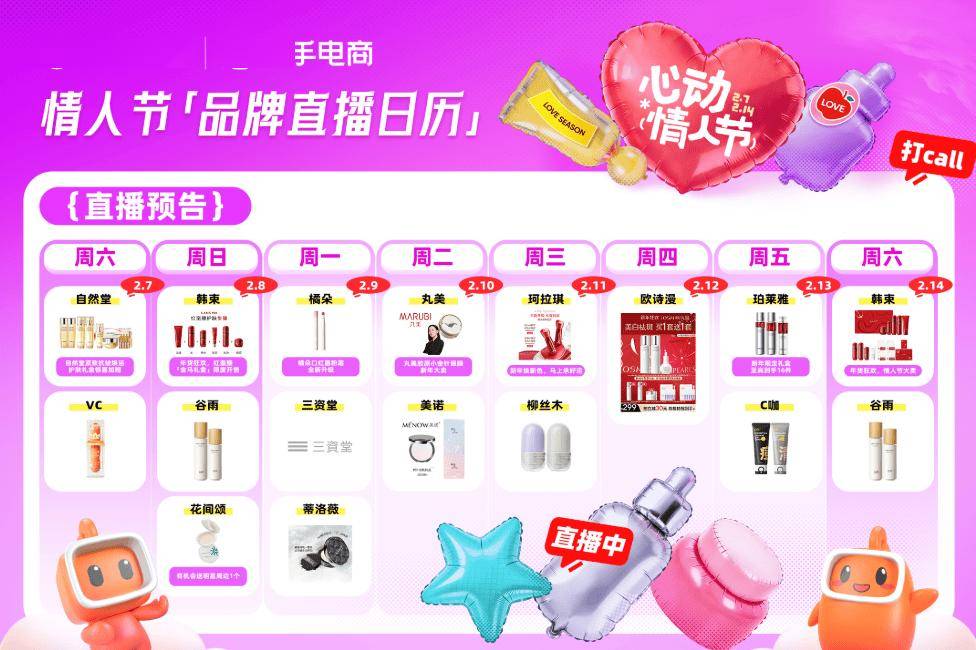
快手电商启动“心动情人节”活动 联合大牌美妆打造节日礼赠消费狂欢
Sou Hu Cai Jing· 2026-02-11 07:48
Core Insights - The upcoming Valentine's Day has led to a surge in consumer demand for gifting, particularly in the beauty sector, which is seen as a key medium for expressing emotions and intentions [1][3] - Kuaishou E-commerce is launching a themed event titled "New Spring, New Look, Big Brand Gifts for Loved Ones" from February 7 to 14, featuring various promotions and live broadcasts from major beauty brands [1][3] Group 1: Event Details - Kuaishou E-commerce is collaborating with numerous beauty brands to create a Valentine's Day shopping extravaganza, offering subsidies and various promotional activities [1][3] - Brands such as Naturando, Han Shu, Gu Yu, Ju Duo, Marubi, Oushiman, and Proya will host special live broadcasts featuring discounted beauty products, including makeup gift boxes and skincare sets [1][3] Group 2: Consumer Engagement - Users can participate in the HeartfeltValentine'sDay topic on Kuaishou, sharing videos about gifting ideas and Valentine's moments, with opportunities to win prizes like gold bracelets [3][4] - The platform has seen a significant increase in engagement metrics related to Valentine's Day, with topic playback volume rising by 310.8% and search frequency increasing by 64.4% month-over-month [3][4] Group 3: Consumer Trends - The demand for beauty products during Valentine's Day is strong, with a notable increase in searches for gift sets and practical items like cleansers and sunscreens, reflecting a trend towards more refined and practical gift choices [5] - The "he economy" is gaining traction, with men's skincare sets emerging as a popular choice, indicating a shift in gifting dynamics during Valentine's Day [5]
植物医生IPO:增长停滞营收增速跑输行业 左手分红套现右手募资IPO动机或存疑
Xin Lang Cai Jing· 2026-02-11 07:44
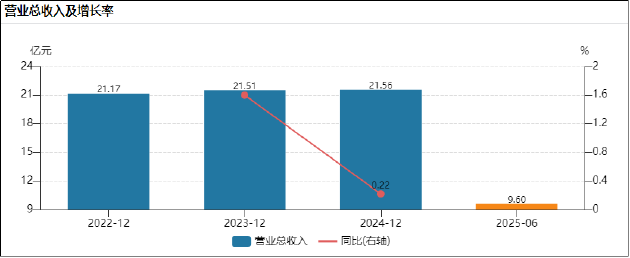
Core Viewpoint - The IPO process of Beijing Plant Doctor Cosmetics Co., Ltd. is progressing, but the company faces significant challenges including stagnating growth, compliance risks, business model pressures, and governance issues in a highly competitive domestic beauty market [1][12]. Financial Performance - From 2022 to 2024, the company's revenue was 2.117 billion, 2.151 billion, and 2.156 billion yuan, with a declining growth rate from 1.60% to 0.22%, resulting in a three-year compound growth rate of only 0.91%, indicating near stagnation [2][13]. - Net profit figures for the same period were 158 million, 230 million, and 243 million yuan, with growth rates fluctuating dramatically, dropping from 45.35% in 2023 to 5.79% in 2024, raising uncertainties about achieving positive growth in 2025 [4][15]. - The company's performance has lagged behind the industry, with the Chinese beauty market expected to grow from 590 billion yuan in 2019 to 850 billion yuan in 2024, reflecting a compound annual growth rate of 7.6% [6][17]. Cash Flow and Investment Structure - The net cash flow from operating activities showed significant volatility, with figures of 341 million, 501 million, 381 million, and 194 million yuan, and a notable decline of 23.97% in 2024 [7][17]. - The company has heavily relied on marketing over research and development, with sales expenses reaching 703 million, 739 million, 743 million, and 365 million yuan, consistently accounting for 33%-38% of revenue, totaling nearly 2.185 billion yuan over three years [7][18]. - Research and development expenditures were 73.77 million, 75.88 million, 66.33 million, and 29.69 million yuan, decreasing from 3.48% to 3.08% of revenue, with the number of R&D personnel dropping from 166 to 117 [7][18]. Business Model and Market Position - The company's sales heavily depend on a distribution model, with revenue from distributors accounting for 62%-65% of total sales, leading to lower gross margins compared to direct sales competitors [8][18]. - The gross margins for the company were 55.23%, 60.35%, 58.9%, and 60.99%, while comparable companies with direct sales had gross margins between 66.69% and 72.16% [8][18]. - The inventory turnover rate decreased from 4.96 times per year to 4.27 times per year, indicating a slowdown in product sales and accumulating price risk [8][18]. Compliance and Governance Issues - The company has faced multiple administrative penalties, including fines for false advertising and product safety violations, reflecting weak internal controls [9][20]. - As of October 31, 2025, 26 of the company's direct stores have not obtained the necessary health permits, posing ongoing compliance risks [10][21]. - Consumer complaints have reached 417, indicating a crisis in brand reputation due to issues like false advertising and poor service [10][21]. IPO Motivation and Financial Strategy - The company holds significant financial assets, including 853 million yuan in trading financial assets and 202 million yuan in cash, suggesting it is not in urgent need of funds [22]. - The company distributed a total of 180 million yuan in cash dividends in 2024 and 2025, raising questions about the rationale behind seeking nearly 1 billion yuan through the IPO while simultaneously providing large dividends to the controlling shareholder [11][22]. - The IPO plan includes allocating over half of the raised funds for marketing, which raises concerns about the urgency and justification of the fundraising effort [11][22].
研报掘金丨国海证券:首予珀莱雅“买入”评级,有望通过大单品打造与品类扩展实现稳定增长
Ge Long Hui· 2026-02-11 07:26
Core Insights - The report from Guohai Securities highlights the growth momentum of Proya, emphasizing the importance of a big product strategy that focuses on channels, marketing, and customer demographics [1] - Proya has effectively captured market opportunities and addressed the pain points of young consumers through its "early C, late A" big product launches [1] Group 1: Big Product Strategy - The three core elements of the big product strategy are channels, marketing, and customer demographics [1] - The company has optimized its customer structure and enhanced brand positioning through product iteration, category expansion, and emotional marketing combined with direct sales channel operations [1] Group 2: Market Trends and Performance - The rise of Douyin has led to a trend where product sets composed of big products are becoming popular, with 95% of sales for Estee Lauder's Little Brown Bottle and 85% for La Mer's Black Essence coming from product sets on Douyin by 2025 [1] - Different sub-brands in the beauty industry continue to innovate products targeting various pain points of the young demographic, with Cai Tang experiencing sustained high growth and Hua Zhixiao accelerating its overseas expansion, expecting over 100 million yuan in overseas revenue by 2024 [1] Group 3: Financial Performance - The hair care sub-brand OR is positioned as a mid-to-high-end brand, achieving revenue of 279 million yuan in the first half of 2025, representing a year-on-year increase of 102.52% [1] - As a pioneer of the "early C, late A" big product strategy, Proya is expected to achieve stable growth through continuous development of big products and category expansion [1]

珀莱雅:上新红宝石微珠精华,建议关注后续新品表现-20260211
Guolian Minsheng Securities· 2026-02-10 13:25
Investment Rating - The report maintains a "Buy" rating for Proya (603605.SH) with a current price of 75.51 CNY [3]. Core Insights - Proya launched a new product, the Ruby Microbead Essence, priced at 299 CNY for 30ml, targeting a broad customer base with its unique formulation [9]. - The company is actively expanding its product matrix across multiple brands, including skincare, makeup, and hair care, which is expected to enhance growth potential [9]. - Proya's revenue projections for 2025-2027 are 109.94 billion CNY, 126.65 billion CNY, and 139.95 billion CNY, with respective growth rates of 2.0%, 15.2%, and 10.5% [9]. Financial Forecasts - Revenue (in million CNY) is projected to be 10,778 for 2024, 10,994 for 2025, 12,665 for 2026, and 13,995 for 2027, with growth rates of 21.0%, 2.0%, 15.2%, and 10.5% respectively [2]. - Net profit attributable to shareholders (in million CNY) is expected to be 1,552 for 2024, 1,592 for 2025, 1,859 for 2026, and 2,063 for 2027, with growth rates of 30.0%, 2.5%, 16.8%, and 11.0% respectively [2]. - Earnings per share (CNY) are forecasted to be 3.92 for 2024, 4.02 for 2025, 4.69 for 2026, and 5.21 for 2027 [2]. Product Development and Strategy - Proya is focusing on new product launches to cater to diverse consumer needs, including the MED series for specific skin repair scenarios and a new men's skincare line [9]. - The company is also implementing a share buyback plan to demonstrate confidence in its future growth, with a total buyback amounting to 0.8-1.5 billion CNY [9].
珀莱雅(603605):上新红宝石微珠精华,建议关注后续新品表现
Guolian Minsheng Securities· 2026-02-10 12:01
Investment Rating - The report maintains a "Buy" rating for Proya, indicating a positive outlook for the company's stock performance relative to the benchmark index [3][12]. Core Insights - Proya launched a new product, the Ruby Microbead Essence, priced at 299 RMB for 30ml, targeting a broad customer base with its unique formulation [9]. - The company is actively expanding its product matrix across multiple brands, including skincare, makeup, and hair care, which is expected to enhance growth potential [9]. - Proya's revenue projections for 2025-2027 are 10.994 billion, 12.665 billion, and 13.995 billion RMB, with corresponding net profits of 1.592 billion, 1.859 billion, and 2.063 billion RMB, reflecting growth rates of 2.0%, 15.2%, and 10.5% respectively [2][10]. Financial Forecasts - Revenue and profit forecasts for Proya are as follows: - 2024A: Revenue of 10,778 million RMB, net profit of 1,552 million RMB - 2025E: Revenue of 10,994 million RMB, net profit of 1,592 million RMB - 2026E: Revenue of 12,665 million RMB, net profit of 1,859 million RMB - 2027E: Revenue of 13,995 million RMB, net profit of 2,063 million RMB [2][10]. - Earnings per share (EPS) are projected to be 3.92, 4.02, 4.69, and 5.21 RMB for the years 2024A to 2027E, respectively [2][10]. Market Position and Strategy - Proya's multi-brand strategy is designed to capture a wider consumer base and enhance market presence, with a focus on new product launches and brand collaborations [9]. - The company has initiated a share buyback program, reflecting confidence in its future growth and plans for employee stock ownership [9].
美护板块进入击球区-如何挖掘个股机会
2026-02-10 03:24
Summary of Conference Call Records Industry Overview - The beauty and personal care sector is showing resilience after adjustments, with strong fundamentals and high historical valuation averages. The sector is expected to benefit from numerous new product launches and marketing activities in Q1 2026, particularly from companies like Proya and Betaini, as well as new materials approved in the medical beauty segment [1][2][3]. Key Points on Companies Proya - Proya's management has been adjusted, and new products are set to launch, with a high confidence level for revenue recovery. The current valuation is around 17 times earnings, significantly lower than the average cosmetics valuation of 25 times, indicating substantial room for valuation recovery [1][3]. - The company has successfully executed marketing strategies, particularly in the sunscreen category, achieving notable results even in off-peak seasons. The launch of upgraded product lines is expected to drive growth [4][5]. Betaini - Betaini has shown a clear turning point since Q4 of last year, with expected double-digit revenue growth and potentially higher profit growth. The new e-commerce head has driven high-quality growth in the main brand's e-commerce business [6]. - New brands like OXYNAT and Winona Baby, along with the acquisition of the Israeli beauty device brand Tripollar, are expected to contribute approximately 1 billion yuan in revenue this year, reducing reliance on a single brand [6]. Aimeike - Aimeike has recently obtained approval for botulinum products, which have significant growth potential. The company has established distribution channels that could lead to strong sales performance, similar to competitors that have achieved over 1 billion yuan in revenue from similar products [7]. Market Trends - The personal care industry has substantial room for growth in e-commerce penetration. Domestic companies are leveraging innovation to increase average transaction values and rapidly grow through high-leverage e-commerce channels. Notable performers include Ru Yuchen and Dengkang Oral Care [8]. - Smaller companies like Jieya, Yanjiang, and Nuobang are gaining attention as they are positioned to benefit from improved downstream demand, leading to performance growth [9]. Noteworthy Companies in the Hong Kong Market - Companies like Juzi, Shangmei, and Maogeping are highlighted for their resilience post-pandemic. Juzi and Shangmei have effectively managed public relations, maintaining brand strength and channel capabilities. Maogeping is recognized for its strong brand power and stable offline channels, despite a higher valuation [10][11]. Investment Outlook - The cosmetics industry is characterized by varying performances among companies. Brands with strong market presence and stable channels, like Maogeping, are expected to show less volatility and maintain growth potential in the long term [12]. This summary encapsulates the key insights from the conference call records, focusing on the beauty and personal care industry, specific company performances, and market trends.
美护大涨-关注高成长与边际改善
2026-02-10 03:24
Summary of Conference Call Records Industry Overview - The beauty and personal care sector is expected to see significant growth in 2026, driven by industry rotation and positive changes in certain companies. The market has experienced adjustments since the second half of 2025, particularly after the peak of new consumption trends, leading to declines of over 30% in some companies' stock prices. However, many companies are now at low valuation levels, and with the influence of style rotation, stock prices have rebounded significantly [2][3][4]. Key Companies and Performance - **Proya (珀莱雅)**: The main brand achieved a 24% growth in January 2026, with its OR brand doubling in growth. The company has undergone management changes and is launching new product lines, which are expected to contribute to stable growth [5][10][11]. - **Betaini (贝泰妮)**: The company has seen a recovery in e-commerce sales and profitability, with its main brand stabilizing in revenue and profit margins. The sub-brand Oksman is projected to grow over three times, indicating strong future potential [12]. - **Lurich (陆雨辰)**: Despite recent stock price adjustments due to industry style changes and regulatory uncertainties, the company remains optimistic about its growth potential, especially as it benefits from compliance with regulations [7]. - **Shangmei (尚美)**: The company has maintained good growth rates, with its sub-brands achieving significant increases in sales [6]. Market Trends and Consumer Behavior - The overall demand in the beauty sector is expected to bottom out and gradually recover in 2026. External shocks and subsidy reductions have already impacted business demand, and if housing prices stabilize and CPI rises in the second half of the year, consumer opportunities will increase [2][3]. - The growth of beauty products on platforms like Douyin (抖音) has been notable, with a 25% year-on-year increase in January 2026. This growth is attributed to organizational adjustments and operational improvements within companies [5][6]. Investment Opportunities - The focus for 2026 should be on companies that are at the bottom of their valuation with positive changes. Companies like Proya, Betaini, and Lurich are highlighted as having reflected the most pessimistic expectations in their stock prices, and any positive developments could lead to significant stock performance [4][5][6]. - The investment strategy should prioritize companies with strong fundamentals and those that have undergone structural or organizational adjustments, as these are likely to show marginal improvements and high growth potential [2][3][6]. Regulatory Environment - The regulatory landscape for NMN (Nicotinamide Mononucleotide) is evolving, with expectations that future policies will not be overly stringent. This is seen as beneficial for compliant large enterprises in the industry [8]. Conclusion - The beauty and personal care industry is poised for recovery and growth in 2026, with several companies showing promising signs of improvement. Investors are encouraged to focus on companies with strong fundamentals and positive changes, as these are likely to yield significant returns in the coming year [2][3][4].

——化妆品医美行业周报20260209:雅诗兰黛在华业绩双位数增长,1月天猫美妆品类高增-20260210
Shenwan Hongyuan Securities· 2026-02-10 03:05
Investment Rating - The report maintains a positive outlook on the cosmetics and medical beauty sector, indicating strong performance compared to the market [2][3]. Core Insights - Estee Lauder reported a double-digit growth in China, with net sales reaching RMB 29.35 billion, a year-on-year increase of 6%, and profits improving by 127% to RMB 1.12 billion [2][6]. - The Tmall beauty category saw a significant increase of 24% year-on-year in January 2026, indicating a strong start to the year for the beauty market [2][25]. - The report highlights the government's focus on promoting service consumption, which is expected to drive growth in key sectors, including beauty and personal care [7][8]. Summary by Sections Industry Performance - The cosmetics and medical beauty sector outperformed the market, with the Shenwan Beauty Care Index rising by 3.7% from January 30 to February 6, 2026 [3]. - The top-performing stocks in the sector included Betaini (+13.5%), Huaxi Biological (+12.0%), and Beijia Clean (+10.8%) [3]. Company Performance - Estee Lauder's sales in mainland China surged by 13% to RMB 6.44 billion, confirming the recovery of international beauty brands in the Chinese market [2][6]. - The report notes that the overall retail sales of cosmetics in December 2025 grew by 8.8%, with a total retail sales of RMB 465.3 billion for the year, reflecting a steady recovery in consumer spending [18][19]. Market Trends - The report emphasizes the shift in consumer focus towards personalized and high-quality services, with emotional and experiential services becoming new consumption hotspots [8][10]. - The government is implementing measures to stimulate service consumption, which is expected to play a crucial role in driving economic growth [7][8]. E-commerce Insights - The report discusses the acquisition of Beijing Lianshi by Yiwang Yichuang, which aims to enhance AI-driven marketing capabilities, indicating a trend towards digital transformation in the industry [12][13]. - The report highlights the competitive landscape in the e-commerce sector, with domestic brands gaining market share against international competitors [26].