
福耀玻璃

Search documents
中央定调:2026年楼市出现重磅信号,今明两年,该买房还是卖房?
Sou Hu Cai Jing· 2026-02-18 18:25
Core Viewpoint - The central government is sending strong signals regarding the real estate market as it enters the "14th Five-Year Plan" period, with measures aimed at stabilizing the market and addressing the needs of millions of families [1][5][29] Group 1: Market Dynamics - The recent statements from the founder of Fuyao Glass, Cao Dewang, emphasize the need for caution among ordinary people when buying homes, as subtle changes in national statistics create confusion about whether to buy or sell [3][29] - The 2025 Central Economic Work Conference highlighted the importance of stabilizing the real estate market, with the Ministry of Housing and Urban-Rural Development (MOHURD) focusing on high-quality development and new models in 2026 [5][9] - The current policy approach balances stability and transition, aiming to prevent market risks while addressing public needs, with a focus on "controlling increment, reducing inventory, and optimizing supply" [7][9] Group 2: Price Trends and Regional Disparities - Data from the National Bureau of Statistics indicates a slowing decline in housing prices across 70 major cities, with first-tier cities experiencing a 0.3% decrease in new residential prices and a narrowing decline in second-hand homes [9][11] - The real estate market is characterized by increasing regional disparities, with core cities maintaining price stability while third- and fourth-tier cities face significant inventory pressures [13][15] - The demand for housing is shifting, with improved housing needs becoming more prominent, as the proportion of improvement-driven demand is expected to exceed 60% in 2026 [19][21] Group 3: Investment Considerations - The cost of holding properties is rising, with many homeowners facing increased financial burdens due to maintenance and operational costs, which can reach thousands of yuan annually for a 100㎡ property [23][25] - The average rental prices have decreased by 10%-15%, particularly in third- and fourth-tier cities, making the "rent-to-own" model increasingly unviable [25][27] - Investors are advised to focus on core cities and premium properties, as the era of speculative price increases has ended, and only high-quality assets in prime locations are likely to retain value [27][29]


突发!马年楼市大逆转,全国行情一片红,买房红利倒计时
Xin Lang Cai Jing· 2026-02-18 13:09
Core Viewpoint - The Chinese real estate market is experiencing a significant turnaround in the Year of the Horse, marking the end of a prolonged adjustment period and entering a new phase of structural recovery, driven by a combination of policy support, market confidence, and financial stability [1][15]. Policy Support - The central government has shifted to a proactive approach in stabilizing the real estate market, with comprehensive policies aimed at supporting housing demand and reducing costs for buyers [3][4]. - Key measures include extending personal income tax refunds for home purchases until the end of 2027 and reducing the VAT rate on property sales, significantly easing the financial burden on homeowners [4][6]. Market Activity - The real estate market is showing signs of recovery, with national average new home prices rising by 0.18% month-on-month and 2.52% year-on-year in January [7]. - Major cities like Beijing and Shanghai are leading the recovery, with significant increases in transaction volumes and prices in core areas [9][10]. Financial Environment - The financial landscape remains supportive, with continued liquidity and historically low mortgage rates, which have decreased to around 3.5% to 4% for first-time homebuyers [4][11]. - The implementation of a "white list" for real estate financing has alleviated cash flow pressures for developers, contributing to a more stable market environment [11]. Regional Dynamics - The recovery is characterized by regional differentiation, with first-tier cities experiencing the most significant price increases, while second and third-tier cities are gradually catching up as inventory pressures ease [10][12]. - The overall market is expected to see price increases of 5% to 8% in first-tier cities and 4% to 7% in strong second-tier cities, while third-tier cities may see more modest gains of 2% to 5% [10][15]. Investment Opportunities - The current market conditions present a unique opportunity for buyers, with favorable policies and low prices creating a potential "last golden window" for purchasing homes [13][15]. - Investors are advised to focus on high-quality assets in core urban areas, avoiding speculative purchases in less desirable locations [14].
2026 年楼市生变!曹德旺发声:普通人买房慎之又慎
Xin Lang Cai Jing· 2026-02-16 08:49
Core Viewpoint - The real estate market in China is undergoing a significant transformation, moving away from the era of guaranteed appreciation to a more cautious and rational investment approach, as highlighted by industry expert Cao Dewang [1][12]. Group 1: Market Trends - The national housing price adjustment has lasted over 40 months, with the number of second-hand homes listed exceeding 8.5 million, indicating a shift from real estate as a wealth generator to a burden for some families [1]. - By 2026, the real estate market is expected to undergo fundamental restructuring, with a warning from Cao Dewang that ordinary people should be cautious when purchasing homes to avoid potential wealth loss [1][4]. - The core contradiction in the housing market is highlighted by the demographic shift, with over 200 million people aged 65 and above and fewer than 10 million newborns, leading to a shrinking home-buying demographic [4][7]. Group 2: Regional Disparities - The past two decades saw a "same rise and fall" pattern in real estate across cities, but this will collapse by 2026, with population and industry becoming the key determinants of property value [4][5]. - Core cities like Shenzhen and Hangzhou continue to attract population inflows, with Shenzhen's net inflow nearing 500,000 in 2025, supporting price resilience in these areas [5]. - In contrast, third and fourth-tier cities are experiencing significant population outflows, with a net loss of 3.12 million in 2025, leading to prolonged inventory cycles and potential price declines of 10% in 2026 [5][6]. Group 3: Demand Structure Changes - The demand for housing is shifting qualitatively, with the proportion of improvement-driven demand rising from 35% in 2020 to an expected 60% in 2026, indicating a preference for larger, quality homes [6][7]. - Older homes in third and fourth-tier cities are becoming "abandoned assets" due to outdated designs and lack of investment value, with many properties remaining unsold even after significant price reductions [6][7]. - The changing demographics and housing preferences, particularly among younger generations who favor "light asset" lifestyles, are contributing to a decline in overall housing demand [7]. Group 4: Rising Holding Costs - The cost of holding properties is expected to rise significantly in 2026, with mortgage payments, property fees, and maintenance costs becoming burdensome for homeowners [8][9]. - For homeowners who purchased at high prices between 2020 and 2021, monthly mortgage payments could consume over 50% of household income, increasing the risk of default [8]. - The average annual operating costs for a 100 square meter property could reach tens of thousands of yuan, exacerbated by a soft rental market where rental income fails to cover expenses [9]. Group 5: Home Buying Guidance - Ordinary buyers are advised to focus on core areas and avoid risky investments, prioritizing properties in first and strong second-tier cities that meet basic living needs and have strong anti-depreciation potential [10][11]. - For those looking to upgrade, 2026 presents an opportunity to sell older properties and invest in quality developments that offer better living conditions and potential for value retention [11]. - Investors are urged to abandon speculative strategies and focus on core areas, with a shift in goals from appreciation to preservation of value, particularly avoiding investments in third and fourth-tier cities [11].
福建春晚IP“破圈出海”
Xin Lang Cai Jing· 2026-02-15 23:22
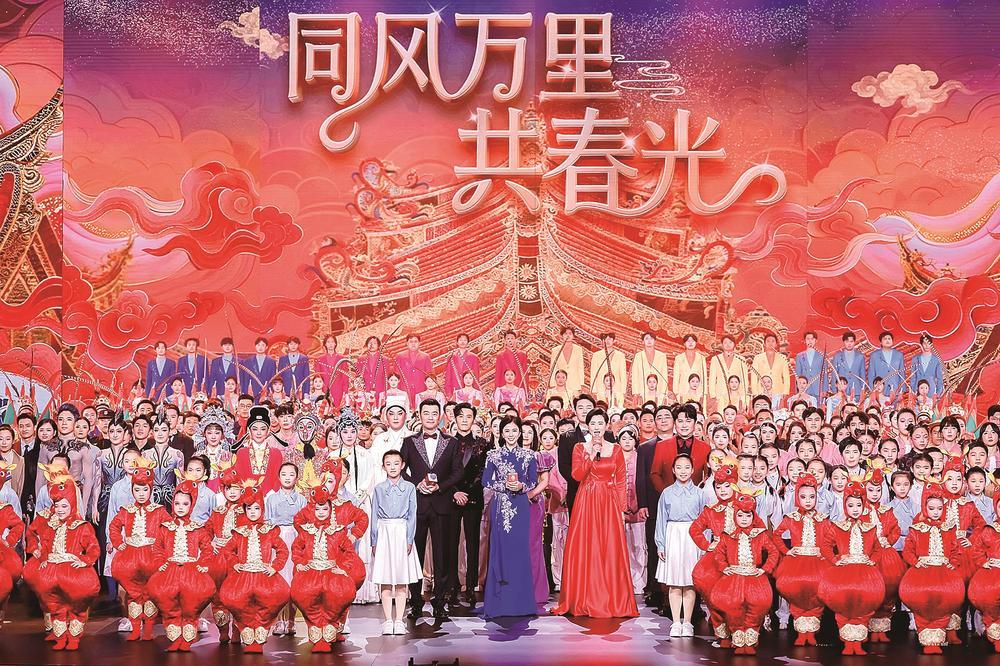
Group 1 - The 2026 Fujian Spring Festival Gala will premiere globally on Southeast TV and Straits TV on the first day of the Lunar New Year, showcasing innovative stage design and artistic methods that blend technology with tradition [6] - The gala features a dynamic stage design called "Tech Fujian Rhythm: Mountain and Sea Flowing Light," utilizing CNC screens and digital visuals to create a visually impactful representation of the theme [6] - The opening segment includes a short film titled "Same Root, Same Heart, Same Dream," performed by the Quanzhou Gaojia Opera Heritage Center, followed by a large-scale song and dance performance that highlights the historical richness and openness of Fujian [6] Group 2 - The second segment, "Harmonious Winds," includes a variety of traditional Chinese opera performances, showcasing Fujian's rich cultural heritage, and features a poignant story about family reunion during the New Year [7] - A children's choir from Ningxia, in collaboration with actress Yao Chen, performs the song "Ningxia," adding a contemporary touch to the traditional themes of the gala [7] - The final segment, "Riding the Wind," features a grand performance titled "Great Undertakings," with notable artists and representatives from various sectors in Fujian, symbolizing the collective aspirations of the people for the future [7] Group 3 - Following its premiere, the gala will be broadcast on various overseas platforms, including Malaysia, the Philippines, Europe, the United States, and Brazil, from February 17 to February 19 [8]
【汽车零部件&机器人主线周报】敏实“牵手”绿的谐波,极智嘉发布仓储机器人Gino 1
东吴汽车黄细里团队· 2026-02-15 15:16
Investment Highlights - The SW Auto Parts Index increased by 1.69% this week, ranking 3rd among SW Auto sectors, with a year-to-date increase of 4.94% [3][12] - The latest PE (TTM) for SW Auto Parts is at the 85.68% historical percentile, while the PB (LF) is at the 79.62% historical percentile [3][35] - The trading activity in the auto parts sector has shown a gradual increase since February [3][30] Robotics Sector Review - The Wande Robotics Index rose by 2.27% this week, with a year-to-date increase of 2.54%, outperforming the SW Auto Parts sector by 0.58% [4][12] - The latest PE (TTM) for the robotics sector is at the 73.90% percentile for the past year, and the PB (LF) is at the 78.31% percentile [4][46] - The trading heat in the robotics sector is at a low point since 2025 [4][40] Key Company Developments - Sensible Group will establish a joint venture in North America with Green Harmony for robotic joint modules [5] - Top Group forecasts 2025 revenue between 28.75 billion to 30.35 billion yuan, with a net profit of 2.6 billion to 2.9 billion yuan [5] - Feilong Co. increased its investment in Longtai Company by 732 million yuan [5] - New Spring established a wholly-owned subsidiary in Shanghai [5] Top Performers of the Week - The top five gainers this week include: - Precision Forging Technology +28.98% - Sensible Group +17.05% - Naisite +16.22% - Yinlun Co. +7.73% - Changhua Group +7.34% [6][54] Major Events - The release of the world's first warehouse robot Gino 1 by Jizhi Jia [8] - Xiaomi open-sourced its first-generation robot VLA large model [8] - UBTECH and the humanoid robot innovation center launched the full-size research humanoid robot "Tiangong Walker DEX" [8] Investment Recommendations - For auto parts, focus on structural opportunities by selecting product-oriented companies and those entering high-value sectors to increase ASP, with a priority on companies expanding capacity in Europe, North America, and Southeast Asia [9] - For robotics, look for certainty in opportunities, especially with the anticipated release of Optimus V3 in Q1 2026, and monitor the order timeline and application deployment by domestic companies like Xiaopeng, Yuzhu, and Zhiyuan [9] - Recommended stocks based on EPS include: Fuyao Glass, Xingyu Co., Sensible Group, Junsheng Electronics, and Xingyuan Zhuomei, with New Spring as a focus [9] - Recommended stocks based on PE include: Top Group, Junsheng Electronics, Shuanghuan Transmission, Sensible Group, Yinlun Co., and Feilong Co., with a focus on Yapu Co. and Daimai Co. [9]


天弘永定成长基金经理换将,产品业绩不达标是主因?
Xin Lang Cai Jing· 2026-02-15 11:54
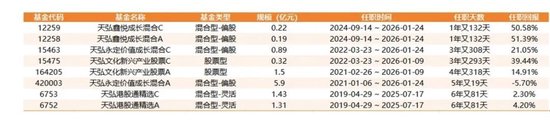
Core Viewpoint - Tianhong Fund Management announced the departure of fund manager Liu Guojiang from the Tianhong Yongding Value Growth Mixed Securities Investment Fund due to personal reasons, following a period of underperformance in fund returns [1][7]. Group 1: Fund Performance - During Liu Guojiang's management, the Tianhong Yongding Growth Fund recorded a return of -5.7% and an annualized return of -1.15%, significantly underperforming compared to the average of similar products [1][8]. - The fund's annual returns from 2021 to 2025 were -4.94%, -15.98%, -15.31%, 17.44%, and 19.32%, indicating a volatile performance with recent recovery [3][10]. - The fund has a total scale of approximately 6.79 billion yuan as of the end of 2025, with the Tianhong Yongding Value Growth Fund being the largest at 5.9 billion yuan [2][11]. Group 2: Manager Background and Transition - Liu Guojiang joined Tianhong Fund in April 2017 and took over the Tianhong Yongding Growth Fund in January 2021, having previously worked at several other asset management firms [2][8]. - Following Liu's departure, Wang Haishan, who has a dual bachelor's degree in economics and engineering and is a CPA and CFA holder, will continue to manage the fund [5][11]. - Liu Guojiang's exit is seen as a response to investor demands for better performance, highlighting the importance of consistent returns in building trust in the asset management industry [6][12].
有一家中国企业,拿下34%的全球市场,却拿到全球55%利润
Sou Hu Cai Jing· 2026-02-15 09:41
Core Insights - Fuyao Glass holds a remarkable 34% share of the global automotive glass market, capturing 55% of the industry's profits, while its competitors collectively hold 66% of the market but only share 45% of the profits [1][3][5] Group 1: Market Position and Profitability - Fuyao's net profit margin of 23.6% significantly exceeds the typical range of 3% to 10% for manufacturing companies, showcasing its exceptional profitability [5][7] - In 2024, Fuyao's revenue reached 39.25 billion yuan, marking an 18.37% increase from 2023, with net profit growing by 33.2% to 7.498 billion yuan [7][19] - Over the past 20 years, Fuyao's net profit has increased nearly 90 times, highlighting its financial success compared to century-old competitors [7][19] Group 2: R&D and Innovation - Fuyao invests over 4% of its revenue in R&D, amounting to nearly 1 billion yuan annually, which is significantly higher than its competitors' R&D investment ratios [5][9] - The company has transformed from a traditional manufacturer to a high-tech player, developing high-value products like smart panoramic roofs and HUD glass, which command higher profit margins [15][17] Group 3: Operational Efficiency - Fuyao's founder, Cao Dewang, emphasizes extreme cost control while being generous in R&D spending, leading to a highly efficient production system [9][11] - The company has implemented advanced accounting systems since 1999, which have proven crucial in legal disputes and maintaining transparency [11][13] Group 4: Strategic Expansion - Fuyao is diversifying its operations by entering the aluminum trim business and the photovoltaic glass sector, enhancing its market presence and production capacity [17] - The company has established a global footprint with production bases in 11 countries, reflecting its strategic growth and international collaboration [13][17] Group 5: Shareholder Returns - Fuyao has distributed a total of 34.7 billion yuan in cash dividends since its IPO, which is 48 times its financing amount, with a dividend payout ratio of 62.65% in 2024 [19] - The company's commitment to shareholder returns is complemented by significant charitable contributions from its founder, illustrating a focus on both profit and social responsibility [19]

福建上市公司ESG-V评级|上市公司观察
Sou Hu Cai Jing· 2026-02-14 14:04
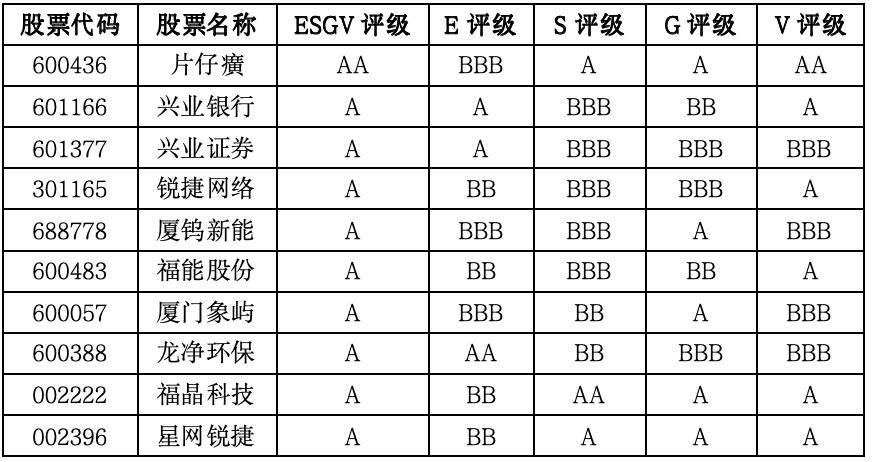
Core Insights - Fujian's economy is characterized by a vibrant private sector, high degree of outward orientation, and strong industrial resilience, with notable companies like CATL and Fuyao Glass leading the market [1] - The recent ESG-V rating by Jinan Jinxin highlights the transformation of market advantages into sustainable governance and long-term value for Fujian companies [1] ESG-V Rating Overview - Three companies, Ruixin Microelectronics, Yilian Network, and Gibit, achieved the highest AAA rating, representing the leading tier in Fujian's ESG-V landscape [2] - These AAA-rated companies are concentrated in the technology and digital economy sectors, indicating that long-term capital recognition is awarded to firms that integrate technological advantages with governance and value realization [2] Value Realization in Manufacturing - The AA tier includes a diverse range of companies from sectors such as power batteries, automotive parts, biomedicine, and food consumption, showcasing strong value realization capabilities [3] - Notable companies like CATL and Fuyao Glass demonstrate robust profitability and clear capital return structures, making them attractive investment opportunities [3] Social Responsibility as a Core Value - High ratings in the social dimension (S) are a common highlight among Fujian-listed companies, reflecting a deep-rooted "Min business culture" that emphasizes reputation, employee care, and community support [4] - This cultural foundation has evolved into a modern social responsibility management system, leading to superior performance in employee rights, product quality, and data privacy [4] Environmental Performance and Green Transition - Fujian companies excel in governance (G) and value (V) dimensions, but environmental (E) performance shows significant variation [5] - Companies with resource-intensive operations, such as Zijin Mining and Xiamen Tungsten, face challenges in meeting environmental standards, while firms in the environmental sector, like Longjing Environmental Protection, are emerging as leaders [5] Investment Implications - The ESG-V rankings reveal that social responsibility translates into trust premiums, which are crucial for building brand loyalty and stable cash flows [6] - Strong governance structures are essential for navigating market fluctuations, while environmental performance will increasingly differentiate competitive advantages in the future [7] - The challenge for Fujian lies in balancing excellence across all ESG dimensions to achieve sustainable development without sacrificing business efficiency [7]




汽车行业周报:1月新能源车出口量同比翻倍,创历史同期新高
KAIYUAN SECURITIES· 2026-02-14 10:20
Investment Rating - The investment rating for the automotive industry is "Positive" (maintained) [2] Core Insights - In January 2026, China's new energy vehicle (NEV) exports doubled year-on-year, reaching a historical high for the month, with a growth rate of 103.6%. NEVs accounted for 49.6% of total exports, an increase of 12.5 percentage points year-on-year. BYD led the exports with nearly 100,000 units, while traditional automakers like Geely, Chery, and SAIC also saw over 200% growth in NEV exports [3][25][22]. Summary by Sections New Energy Vehicle Exports - In 2025, China's NEV exports grew by 70%, with plug-in hybrid vehicles (PHEVs) being the core growth driver. The growth rate for PHEVs was 127.5%, significantly higher than the 32.5% for pure electric vehicles (EVs) [14][15]. - January 2026 saw NEV exports reach 28.6 million units, with a year-on-year increase of 103.6%. BYD's exports approached 100,000 units, while Geely, Chery, and others also reported significant growth [25][27]. Industry News - The retail market for passenger vehicles in January 2026 was 1.544 million units, a decline of 13.9% year-on-year. February is expected to see the lowest sales of the year due to the impact of the Spring Festival [31]. - The Ministry of Industry and Information Technology is seeking public opinion on five mandatory national standards related to intelligent connected vehicles and autonomous driving systems [35]. Market Performance - The automotive sector outperformed the market, with the Shanghai and Shenzhen 300 index rising by 0.36% and the automotive sector increasing by 1.74%, ranking 9th among A-share industries [5][40]. - The passenger vehicle index rose by 1.21%, while the commercial vehicle index saw a significant increase of 6.28% [5]. Investment Recommendations - For passenger vehicles, the demand for high-end domestic luxury cars is exceeding expectations, with recommendations for companies like JAC Motors and Seres. Beneficiaries include Geely [6]. - In the auto parts sector, profitability is expected to improve, with recommendations for companies such as Desay SV and Zhejiang Xiantong, while beneficiaries include Weichai Power and Fuyao Glass [6].



摩根大通下调福耀玻璃评级 股价近期表现疲软
Jing Ji Guan Cha Wang· 2026-02-14 07:57
Group 1 - Morgan Stanley downgraded Fuyao Glass (600660) from "Overweight" to "Neutral" with a target price reduction from 80 HKD to 70 HKD due to intensified industry competition, slowing domestic automobile production growth, and cost pressures [1] - The current consensus target price for Fuyao Glass is 74.89 CNY, indicating an upside potential of approximately 19.56% from the latest stock price [1] Group 2 - Recent stock performance has been weak, with Fuyao Glass A-shares dropping by 2.03% to close at 59.26 CNY on February 12, with a net outflow of 73.10 million CNY in principal funds; on February 13, it slightly decreased by 0.07% to close at 59.38 CNY, with a net outflow of 2.39 million CNY [2] - Over the past five days, the stock has cumulatively declined by 2.01%, and the year-to-date decline stands at 8.32%, with a turnover rate of 0.78%, indicating short-term capital outflow pressure [2] Group 3 - On February 12, the company announced progress in solar technology and automotive applications, achieving mass production capability for solar sunroof glass, which can power vehicle electronics through laminated solar cell components [3] - The company clarified that it has not participated in the construction or investment of the Fuyao Technology University chip production line, emphasizing its business independence [3]